
Magazine for Europe, AI, digitalization & society

Current contributions

Recognize TMD early and self-test: Why the jaw, neck, head and ears are often connected

TMD self-test

There are complaints that cannot be classified for a long time. A pulling sensation in the jaw that you initially ignore. A headache that you blame on stress. A slight cracking sound when you open your mouth that eventually becomes a habit. And then suddenly there is neck pain, perhaps a slight feeling of pressure in the ear - all explainable in themselves, but strangely unclear in the overall picture. This is exactly how it starts for many people. You go to the dentist, perhaps later to the orthopaedist or ENT specialist. Everyone looks at their own area, and often nothing clear is found. The complaints remain - sometimes for years.

I have experienced this path myself. And it was only when I was intensively involved with the topic of TMD, particularly when I was setting up a structured self-test, that I realized how many of the typical symptoms I had actually experienced over time. Individual points that seem harmless on their own suddenly form an overall picture. This article is intended to help with exactly that: to make the connections visible. Because the decisive step is often not in the treatment, but in recognizing the pattern.

Read more

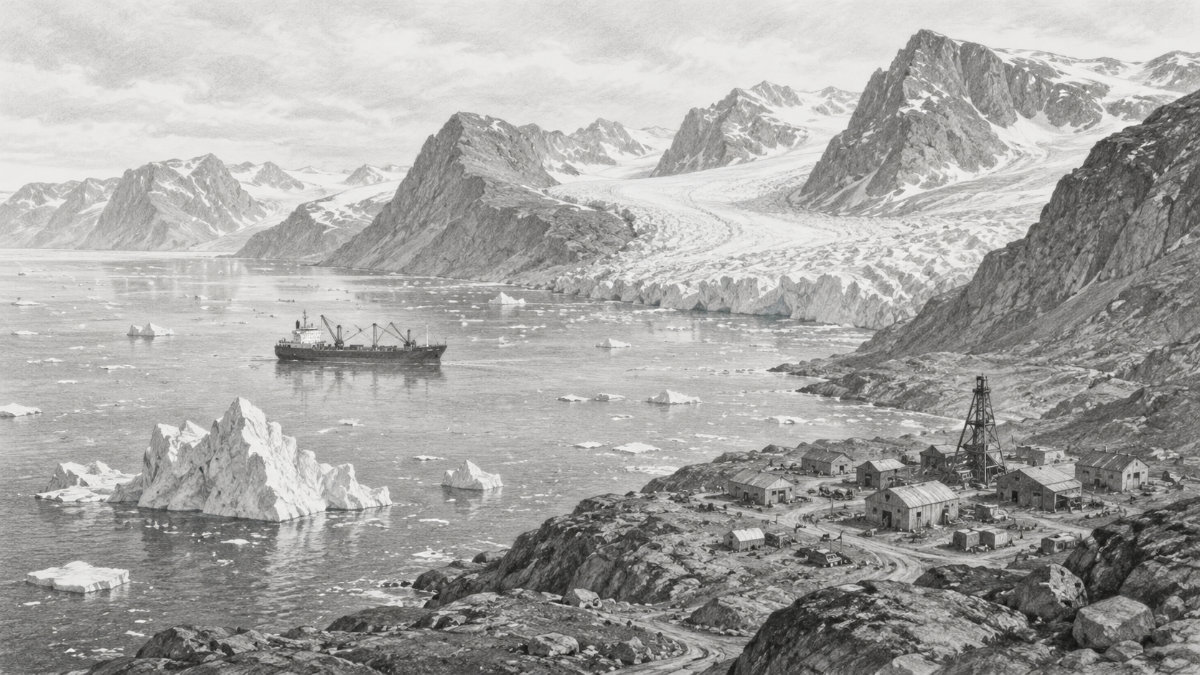
Fracking, LNG and energy policy: a sober analysis of risks, opportunities and reality

Natural gas fracking and energy policy

There are political and social discussions that are not linear. They come in waves. Fracking is one such issue. For years, the matter in Germany seemed settled. With the legislative package of 2016 and the resulting regulation from 2017, the framework was clear: commercial fracking in unconventional reservoirs will not take place. The debate calmed down and the issue largely disappeared from the public eye. It was as if a lid had been put on it.

But this impression was deceptive. Because while the debate in Germany was dying down, the world was changing in the background. The energy supply, which had long been considered relatively stable, came under increasing pressure. Prices began to fluctuate, supply chains became more fragile and geopolitical tensions increased. The events from 2022 at the latest made it clear that energy is not a matter of course, but a strategic commodity.

Read more

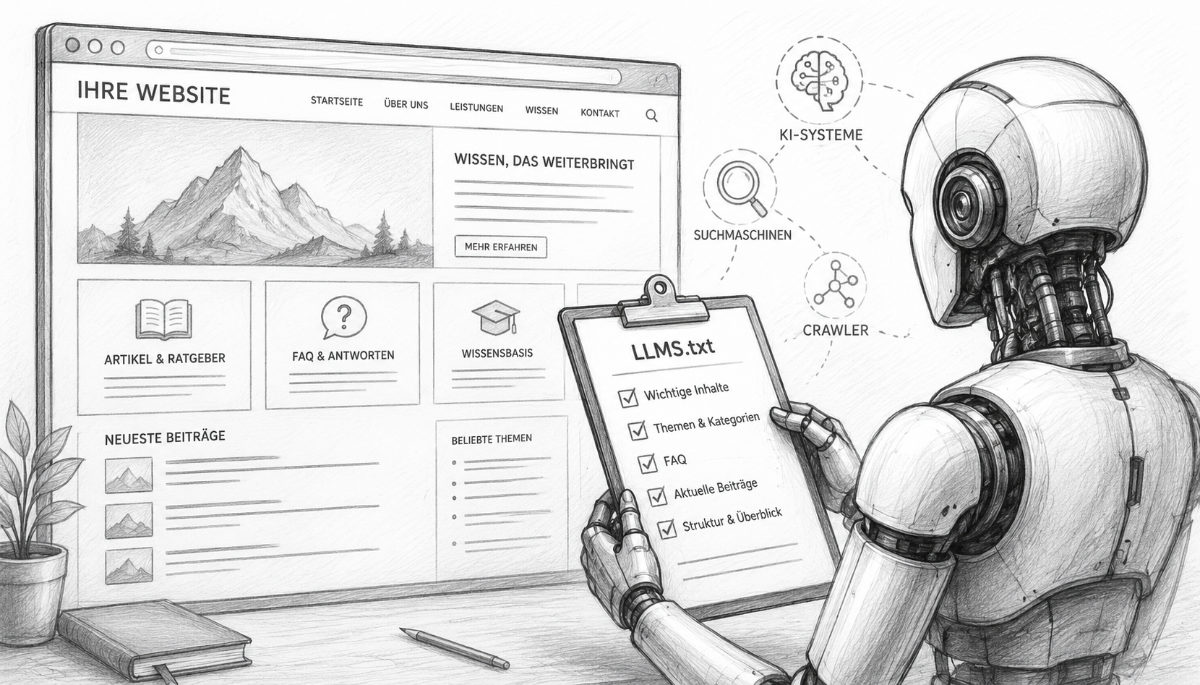
From ChatGPT data export to your own knowledge AI: step-by-step with Ollama and Qdrant

The path to your own AI memory

In the first part of this article series, we saw that the ChatGPT data export is much more than just a technical function. Your exported data contains a collection of thoughts, ideas, analyses and conversations that have accumulated over a long period of time. But as long as this data is only stored as an archive on your hard disk, it remains just that: an archive. The crucial step is to make this information usable again. This is exactly where the development of a personal knowledge AI begins.

The idea is actually surprisingly simple: an AI should not only work with general knowledge, but also be able to access your own data. It should search through previous conversations, find suitable content and incorporate this into new answers. This turns an ordinary AI into a kind of digital memory. This is the second part of the article series, which now looks at the practical aspects.

Read more

Apple in transition: Early devices, personal experiences and an exhibition at the OCM

Apple Macintosh Classic and Color Classic

If you are interested in computer history, a visit to the Oldenburg Computer Museum is particularly worthwhile. The museum is one of those places that doesn't have to be loud to make an impression and will be hosting a special exhibition from April under the motto „50 years of the Apple computer“. For many years, technology has not only been exhibited there, but kept alive. Devices are not behind glass, but often ready for use on tables - just as they were actually used in the past.

That's what makes the difference. You don't just see old computers, you get a feeling for what it was like to work, play and think with these machines. From early home computers to classic office computers and special one-offs, everything is represented - carefully collected, maintained and, above all, clearly arranged.

Read more

Who actually is J. D. Vance? A portrait of his origins, career, contradictions and future

Who is J. D. Vance?

International reporting on the United States is usually dominated by the big, loud figures. Names that polarize, that provoke, that generate headlines. For many European observers, politics in the USA is therefore often an interplay of escalation, conflict and clearly recognizable opposites. And then suddenly a name appears that doesn't fit into this picture at all: J. D. Vance.

Not a classic loudspeaker. Not a man of grand gestures. Not a politician who immediately attracts attention with pithy words. And yet he is suddenly there - in interviews, in analyses, in political debates. Not as a marginal figure, but as someone who obviously plays a role that is bigger than it appears at first glance. For many readers in Germany or Europe, this is precisely where the real question begins: who is this man anyway - and why has he suddenly become so important?

Read more

Sympathetic nervous system, parasympathetic nervous system and cortisol - how stress controls our body

Cortisol, sympathetic nervous system and stress

Stress is part of life. Without stress, we would probably hardly get out of bed in the morning, avoid challenges and simply not get many things done. For thousands of years, the human body has been designed to be able to react quickly in certain situations: Recognize danger, mobilize energy, act. In such moments, the organism runs at full speed - heart rate, breathing, alertness and muscle tension increase. This state can even be life-saving.

However, stress becomes problematic when it no longer ends. Many people today live in a state that no longer feels like acute stress, but rather like a permanently elevated baseline level. Deadlines, conflicts, a flood of information, constant availability - the body often reacts as if it is constantly in a potentially dangerous situation. However, while our ancestors were able to calm down again after a short period of tension, this phase of real relaxation is often missing today.

Read more

ChatGPT data export explained: How your AI chats become a personal knowledge system

ChatGPT data export

If you regularly work with an AI, then you probably know this: one thought leads to the next. You ask a question, get an answer, reformulate, develop an idea further. A short question suddenly turns into a longer dialog. Sometimes it even leads to entire projects.

But most of these conversations disappear again. They lie somewhere in the chat list, slide down and are forgotten over time. This is precisely one of the great features of modern AI systems: While previous conversations with colleagues, friends or advisors only existed in our memories, AI dialogs are completely preserved.

This means something crucial: With every conversation, a digital archive of your thinking is created. This is the first part of a small series of articles that will allow you to export your chat history from ChatGPT and use it effectively as a personal treasure trove of knowledge with your local AI system.

Read more

The Iran-Israel conflict: Why this escalation is the West's strategic nightmare

Israel-Iran - Strategic nightmare

There are moments in the story when you sense that something is shifting. Not abruptly, not with a single decision, but like a line that slowly but inexorably runs through the dust of old certainties. The past few days have been such moments. I wondered for a long time whether I should really write this editorial - after all, I have already dealt with Iran in detail once before and made it clear that you can only understand this country and its power structures if you look at the decades-old lines. But it is precisely these lines that have now become visible again, more clearly than ever.

What makes me sit up and take notice is not just the hard facts: the nightly strikes, the overloading of Israeli missile defenses, the rhetoric of political leaders, the increasing shift of power in the background. It is the underlying pattern - the sense that here is a conflict entering a phase that will be a nightmare for any strategist. And that is precisely why I am writing this article: because many see the surface, but hardly anyone understands what is brewing underneath.

Read more