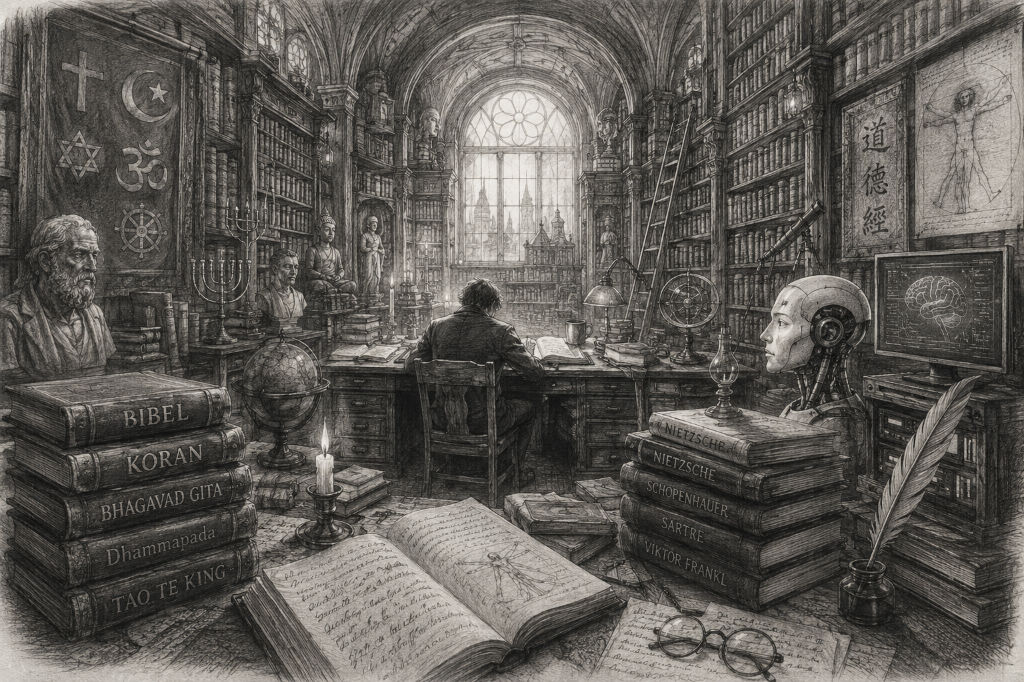
There are questions that have been with mankind for thousands of years. Questions that never really go away, no matter how modern our world becomes. One of these questions is probably quite simple: What is actually the meaning of life?
Interestingly, the answer „42“ appears again and again today - usually with a little smile. The background comes from „The Hitchhiker's Guide to the Galaxy“ by Douglas Adams. In the story, a highly developed civilization builds a gigantic supercomputer that is supposed to calculate the „answer to the ultimate question about life, the universe and the rest“ over millions of years. In the end, the result is simply: 42. The absurd thing about it is that no one actually knows exactly what the original question was in the end.
That's exactly why this scene became world famous. It is funny, but at the same time surprisingly profound. Because perhaps it describes a basic human problem quite aptly: we often desperately search for answers without even knowing exactly what question we are actually asking.

Why I am interested in this topic
Incidentally, I'm not a particularly religious person myself. Although I was baptized a Protestant, religion has never played a particularly big role in my everyday life. Nevertheless, at some point you realize that these questions automatically occupy you. Perhaps not every day and not always consciously. But they are always there somewhere.
This often becomes particularly noticeable as we get older. Some time ago, my stepmother said to me: „Now that I'm 84, I'm naturally thinking more and more about death.“ This sentence stuck with me. Many people probably feel the same way. As long as you are young, life often seems endless. But at some point you realize that time is not unlimited. And suddenly you ask yourself questions that you may have suppressed in the past:
- What actually remains at the end?
- What was really important?
- And is there perhaps something bigger than ourselves?
A journey through religions, philosophies and world views
That's exactly why this article was written. Not to give you a definitive answer. That would be rather presumptuous. But rather to calmly and comprehensibly compile the answers that religions, philosophers and various world views have found to this question.
Because the longer you look into it, the more exciting something else becomes: although many religions and philosophies strongly contradict each other on some points, certain ideas keep cropping up. Responsibility. Compassion. Community. Love. Inner growth. The desire to leave something meaningful behind.
In this article, we therefore look not only at the major religions such as Christianity, Islam, Buddhism and Hinduism, but also at philosophical movements such as Stoicism, Existentialism or Humanism. We also take a look at modern topics such as consumer society, self-optimization, AI and Transhumanism - So the question is whether the search for meaning has perhaps only found new forms today.
And we may end up realizing that humanity is much more similar than it often believes when it comes to the question of meaning.

Why people search for meaning in the first place
When people think about the meaning of life, it is often about much more than simply being happy. Happiness is something that almost everyone knows. It can be a good meal, a nice vacation, a moment in love or simply a quiet evening without stress. But meaning usually feels different. Deeper. More lasting. Sometimes heavier.
A person can appear happy and still feel empty inside. At the same time, there are people who go through difficult times and still feel that their lives are meaningful. This difference is probably one of the reasons why the question of meaning has preoccupied mankind for so long.
Interestingly, humans seem to be one of the few creatures that consciously deal with such questions at all. A bird builds its nest. A deer searches for food. A cat lies in the sun. But as far as we know, no animal sits awake at night wondering whether its life fulfills a deeper purpose. Humans, on the other hand, think about the past, the future, guilt, responsibility, death and meaning. It is precisely this ability that probably makes them strong and vulnerable at the same time. Because those who can think about themselves automatically start to ask questions at some point:
Why am I actually here?
Awareness of one's own finiteness
A key point here is probably the realization that one's own life is limited. Children hardly ever think about this. For them, time seems almost endless. But as they get older, this often changes slowly. People experience loss, illness, separation or death in their environment. Parents get older. Friends disappear from their lives. Your own body changes. And suddenly an abstract idea becomes a real experience: life is not unlimited.
It is precisely at this point that the question of meaning often begins to become more serious. This probably also explains why many religions, philosophies and world views deal so intensively with death. Because without finiteness, the question of meaning might not even exist in the same form. If time were infinite, everything could be postponed again and again. Decisions would carry less weight, relationships less depth. It is precisely because life is limited that it takes on meaning.
This does not automatically mean that death is a positive thing. But it does seem to give many things their value. A conversation with a loved one often becomes precious precisely because you know that such moments won't last forever.
Crises as a trigger for a search for meaning
It is also noticeable that people often look for meaning in times of crisis. As long as everything is working, we hardly think about many things. We work, go about our daily lives, plan our next vacation or deal with the small problems of everyday life. But when something suddenly collapses, our view of life often changes.
It can be a serious illness. A separation. The loss of a loved one. A war. Unemployment. Loneliness. Or simply the feeling of having become empty inside despite external success.
It is precisely at such moments that many people begin to question their lives anew. Some then turn to religion. Others turn to philosophy or psychology. Still others seek answers in meditation, spirituality or modern self-help concepts. Some find solace in community. Others in books, conversations or memories.
The point is that the question of meaning often becomes less theoretical the closer it gets to real life experiences. Then it is no longer about abstract discussions, but about very concrete questions:
- Why do I get up in the morning?
- Why is it worth continuing?
- What sustains me when things get difficult?
Modern man and the old question
You might think that the question of meaning should have long since lost its significance in modern affluent societies. Never before have so many people had access to comfort, entertainment and technical possibilities as they do today. Nevertheless, the question of orientation seems to have become bigger rather than smaller.
This may also be due to the fact that modern societies have weakened many traditional structures. Religion, family, village communities or fixed role models often used to play a stronger role. Today, many things have become more open. This creates freedom, but sometimes also insecurity.
Modern man can theoretically become almost anything. But it is precisely this freedom that often creates new pressure. When there are no longer any clear guidelines, everyone has to make up their own mind, so to speak. And that is much more difficult than many people initially think.
This could also be one reason why, despite all the differences, people have been dealing with the same questions again and again for thousands of years. Not because they are weak or backward. But because the question of meaning is obviously something deeply human.
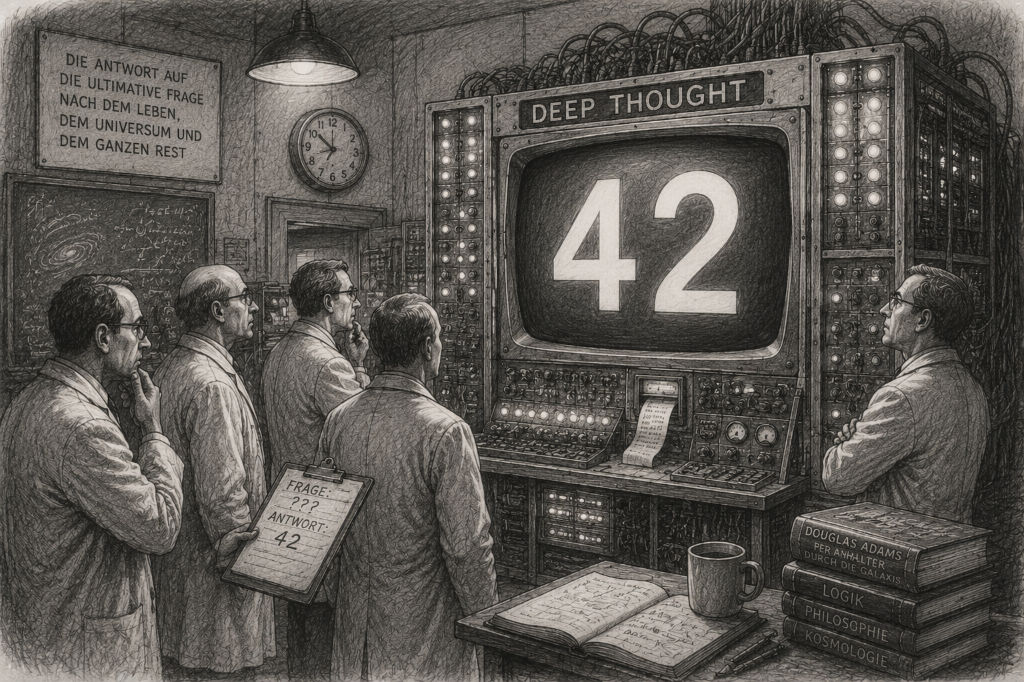
Why humor is sometimes closer to the truth
There are few numbers that so many people around the world spontaneously associate with the same idea as the number 42. „Answer to the ultimate question about life, the universe and all the rest“ from The Hitchhiker's Guide to the Galaxy.
However, the fascinating thing about it is not the number itself. The real point lies much deeper. In the story, a gigantic supercomputer is built to calculate the answer to the biggest question of all over millions of years. When the result is finally presented, it is completely unspectacular:
42
It then turns out that no one knows exactly what the actual question was in the first place. It was precisely this absurd moment that made the scene world-famous. Because suddenly a simple joke turns into a rather unpleasant realization: perhaps people are sometimes desperate for definitive answers, even though they don't fully understand their own questions.
Why people laugh at serious things
Paradoxically, humor often appears where people are confronted with uncertainty, fear or existential issues. This can be seen not only in philosophical questions, but also in everyday life. People make jokes about getting older, about death, about relationships, about illness or about crises. Outsiders sometimes see this as disrespectful. In fact, however, there is often something completely different behind it.
Humor helps people to deal with things that they cannot fully control. Especially when it comes to topics such as death or the search for meaning, a certain amount of pressure quickly arises. Many people feel they have to find the perfect answer. But this is exactly what they usually fail to do. Humor can relieve this pressure for a moment. It allows us to endure difficult questions in the first place.
Perhaps this also explains why some of humanity's most profound thoughts are also somewhat comical. Good philosophy and good humor are sometimes surprisingly close to each other. Both often try to make contradictions visible. Both hold a mirror up to people. And both occasionally show how limited human control and human knowledge actually are.
Between irony and honesty
Modern societies in particular often use humor as a protective mechanism. Irony is present almost everywhere today. People make fun of politics, social developments or their own problems. This is often not due to indifference, but rather insecurity or excessive demands.
It is interesting to note that humor can sometimes be more honest than big, serious speeches. A little joke sometimes gets to the heart of a situation more precisely than a complicated philosophical book.
The reason „42“ still works so well today is that it is both silly and profound at the same time. You can laugh at it and still have the feeling that there is some truth in it. Not necessarily about the meaning of life itself, but about people and their eternal search for simple answers to complicated questions.
The human search for meaning
In the end, the story of the „42“ shows something else: humanity will probably never stop searching for meaning. Even people who consider themselves to be completely rational will at some point ask themselves questions about happiness, responsibility, love, transience or their own place in the world.
And that is probably the real point behind this famous joke. Not that there is no answer. But that the search itself could be part of what makes us human in the first place.
Current survey on the meaning of life
What religions say about the meaning of life - Humanity in search of answers
When you ask yourself about the meaning of life, you almost automatically come across religions and spiritual traditions. This is hardly surprising. For thousands of years, religions were not only belief systems, but often also the most important explanatory models for human life in general. They answered questions about birth, suffering, love, guilt, death and hope. And they tried to explain why humans exist at all.
It is noticeable that the answers of the various religions sometimes differ greatly. Nevertheless, certain ideas keep cropping up. Many religions do not see people as products of chance, but as beings with responsibility, dignity and a task. Almost everywhere it is about community, compassion, self-control or the question of how to lead a good life.
It is also interesting to note that religions rarely just tried to make people „happy“. It was often more about giving meaning to life even under difficult circumstances. Especially in times of war, illness or loss, religious world views were a kind of inner support for many people.
Christianity - love, responsibility and hope
The Christianity is still one of the most influential religions in the world today. At its core is the idea that human beings do not exist by chance, but are intended by God. According to the Christian understanding, the meaning of life lies above all in the relationship with God and with other people.
Concepts such as love, forgiveness, compassion and responsibility play a central role in this. The idea of charity became particularly influential. This means not only being kind, but also taking responsibility for other people - especially the weaker ones.
It is also interesting to note that Christianity gives suffering a special place. Suffering is not simply ignored or seen as a mere mistake in life. Instead, the idea that people can maintain dignity and grow inwardly even in difficult times has developed over the centuries.
At the same time, the hope of life after death plays a major role. For many Christians, life does not end with biological death, but continues in a different form.
Islam - devotion, order and community
Also in the Islam focuses on the relationship between man and God. The term „Islam“ means devotion or submission to God. The meaning of life therefore lies very much in consciously living according to divine principles.
This is not just about prayers or religious rituals, but also about everyday life. Family, honesty, helpfulness, responsibility and social justice play an important role in Islamic thinking.
The strong connection between community and faith is also striking. People are not just seen as individuals, but as part of a larger community with mutual responsibility.
As in Christianity, the idea of life after death also plays an important role in Islam. The present life is often seen as a kind of test or preparation.
Judaism - remembrance, learning and responsibility
The Judaism is one of the oldest monotheistic religions in the world and differs significantly from later religious traditions in a number of respects. The strong emphasis on learning, discussion and remembrance is particularly striking.
The meaning of life here often lies less in abstract redemption and more in conscious and responsible living itself. Family, community, education and moral behavior have a high priority.
It is also interesting to note that Judaism traditionally has a strong culture of debate. Questions, doubts and different interpretations are not automatically seen as a problem, but often even as an important part of religious debate. This makes Judaism seem surprisingly modern and true-to-life to many people.
Buddhism - Overcoming suffering
The Buddhism differs in many ways from the monotheistic religions. The focus here is less on a personal God and more on the question of human suffering.
According to Buddhist beliefs, people often suffer because they cling to things that are impermanent: Possessions, status, power, desires or certain ideas about one's own life. The purpose of life is therefore not to accumulate as much as possible, but to develop inner freedom and knowledge. It is particularly interesting how modern some Buddhist ideas seem today. Many themes are reminiscent of psychological approaches:
- Mindfulness,
- conscious perception,
- Control over your own thoughts,
- Compassion,
- inner peace.
The ultimate goal is liberation from the cycle of suffering and rebirth.
Hinduism - The great cycle of life
The Hinduism is one of the most complex religious traditions of all. Unlike many Western religions, it does not have a uniform doctrine, but rather encompasses numerous currents and ideas.
Karma and rebirth play a central role in this. According to Hinduism, a person's actions have a long-term effect on later existences. A person goes through many lives and continues to develop in the process.
The purpose of life is often to fulfill one's own dharma - that is, one's personal task or duty in life - and to free oneself from the cycle of rebirths in the long term.
This creates a world view that takes a very long-term view. Human life is not just seen as a single short stage, but as part of a much larger process.
Taoism - living in harmony
The Taoism from China initially seems difficult to grasp for many Westerners. One of the reasons for this is that it works less with fixed rules than many other religions.
The focus is on the so-called Tao - the natural path or flow of life. People should not constantly fight against the world, but learn to live in harmony with it.
The emphasis on simplicity, serenity and naturalness is interesting. Many Taoist ideas seem almost like a counter-movement to the modern society of achievement and control. The meaning of life here lies less in achieving great goals and more in harmony, balance and inner peace.
Sikhism - equality and service to people
The Sikhism originated in India and combines elements of various religious traditions. Equality, honesty, community and service to others are particularly important.
According to this idea, people should live neither extremely ascetic nor selfish lives, but rather take responsibility in the midst of everyday life. Work, family and spirituality belong together.
It is also interesting to note the strong rejection of caste thinking and social inequality. Many Sikh communities still run public kitchens where people can eat together free of charge, regardless of their origin or religion.
Confucianism - order and human relationships
The Confucianism is often regarded as a philosophy rather than a classical religion. Nevertheless, it has shaped large parts of Asia for thousands of years.
The focus here is less on metaphysical questions and more on human relationships. Family, respect, education, responsibility and social order play a central role.
According to Confucian thinking, the meaning of life is created above all through responsible behavior towards other people. Harmony within the family and society is considered particularly important. It is interesting to note that this view still influences many Asian societies today.
Different paths - similar questions
The longer one studies these world views, the clearer something surprising becomes: Although the answers differ in many details, the basic questions remain surprisingly similar.
Almost everywhere it is about dealing with suffering, responsibility, community, compassion and transience. Almost everywhere there are warnings against reducing life to possessions, power or short-term pleasure.
This is perhaps one of the most exciting points of all. For thousands of years, humanity does not necessarily seem to have agreed on the same answers - but apparently keeps coming back to the same questions.

The philosophers - meaning without religion?
Not everyone finds answers to the question of meaning in religions or spiritual traditions. Since ancient times, there have been philosophers who have tried to understand life through thought, observation and human experience alone. Some believed in a higher order, others largely rejected religious ideas. But almost all of them dealt with the same basic questions at some point:
- What makes a good life?
- How do you deal with suffering?
- What remains at the end?
- And how do you find your bearings in an uncertain world?
It is interesting to note that many philosophical answers seem surprisingly modern. Some ideas are over two thousand years old and yet they fit amazingly well into today's world. Perhaps this is why some philosophical schools of thought are experiencing something of a renaissance today.
The Stoics - calm in a chaotic world
Stoicism originated in Ancient Greece and was later developed further in the Roman Empire. Well-known representatives included Seneca, Epictetus and Marcus Aurelius.
The basic idea of the Stoics seems simple at first: people should learn to distinguish between what they can control - and what they cannot. According to the Stoics, many problems arise because people try to control things that are beyond their control:
- the behavior of other people,
- the past,
- death,
- Diseases,
- social developments or coincidences.
The meaning of life therefore does not lie in the permanent struggle against reality, but in the development of character, inner stability and reason. People should try to live with dignity and responsibility, even if the world remains chaotic.
Especially today, this idea seems surprisingly topical. In a time of constant news, crisis reports and digital overload, many people are once again looking for inner peace instead of more and more external control.
Existentialism - Man must create his own meaning
While religions often assume that there is a predetermined meaning, existentialists turned the question around to a certain extent. Philosophers such as Jean-Paul Sartre and Albert Camus assumed that life initially has no fixed meaning.
That sounds gloomy at first, but was not necessarily meant to be pessimistic. According to existentialist thinking, people are thrown into a world without any ready-made instructions. However, this is precisely where freedom lies. People have to decide for themselves who they want to be and what meaning their lives should have.
Albert Camus became particularly famous with his image of Sisyphus. In Greek mythology, Sisyphus is condemned to roll a rock up a mountain again and again, only for it to roll down again just before the summit. Camus saw this as a symbol of human existence. Nevertheless, he comes to a surprising conclusion: man can find dignity even in a seemingly absurd world by consciously continuing to live and creating his own meaning.
Modern societies in particular contain many existentialist elements. Freedom, self-realization and individual life paths play a much greater role today than in the past. At the same time, it is precisely this freedom that often creates new insecurity.
Humanism - The focus is on people
Humanism attempts to justify meaning and ethics without a compelling reference to God. Instead of divine commandments, the focus here is on human dignity, reason, freedom and responsibility.
According to humanist ideas, people should not act morally out of fear of punishment, but because compassion, fairness and mutual respect improve coexistence.
Many modern democracies and ideas of human rights have been strongly influenced by humanism. Education, science, freedom of expression and individual freedom are considered important foundations of a meaningful life.
It is interesting that humanists often do not see the meaning of life in a single big answer, but rather in conscious interaction with one another, in learning, in helping and in trying to leave the world a little bit better.
Nihilism - When everything seems meaningless
Hardly any other philosophical direction is as frequently misunderstood as nihilism. It is often simply equated with hopelessness or depression. In fact, the basic idea is initially more sober: according to the nihilist view, there is no objective, universal meaning to life. Values, morals and meanings are ultimately human constructs.
That sounds harsh, but historically it also arose as a reaction to the loss of traditional religious certainties. In the modern age in particular, many people wondered what was left when old belief systems lost their significance.
Nihilism does not necessarily lead to despair. Some people even find the idea liberating. When there is no predetermined meaning, there is the opportunity to create meaning yourself.
At the same time, however, this also reveals a danger of modern societies: When everything seems arbitrary, some people lose their bearings. This is precisely why later philosophers focused intensively on the question of how to live a meaningful life despite uncertainty.
Schopenhauer - The endless human will
Arthur Schopenhauer developed a decidedly gloomy view of human life. In his opinion, people are constantly driven by new desires and needs. As soon as one goal is achieved, the next desire arises. As a result, according to Schopenhauer, people are often caught between stress, dissatisfaction and boredom.
It is interesting to note, however, that Schopenhauer was not only pessimistic in his thinking. He saw ways out in art, compassion, experiencing nature and temporarily letting go of constant desire. Many of his thoughts are surprisingly reminiscent of Buddhist ideas.
Especially in modern consumer societies, his observations seem almost prophetic at times. New products, new goals and new promises of self-optimization often only generate short-term satisfaction.
Nietzsche - Man as the creator of his own values
Friedrich Nietzsche is still one of the most influential and at the same time most misunderstood thinkers of modern times. Among other things, his statement „God is dead“ became famous. This was less an attack on religion than an observation that traditional belief systems are losing their binding power in modern societies.
Nietzsche saw this as an enormous challenge. When old values break down, there is a threat of disorientation. At the same time, however, there is also the opportunity to create new values. According to Nietzsche, people should not simply follow existing rules, but take responsibility for their own lives and develop the courage to think for themselves.
It is interesting to note that Nietzsche warned early on against an inwardly empty materialism. A society that only focuses on comfort, security and convenience would lose its inner drive in the long term.
Viktor Frankl - Meaning even in suffering
Hardly any philosopher or psychologist fits the question of meaning as well as Viktor Frankl. Frankl survived several Nazi concentration camps and later developed what is known as logotherapy. His central observation was that people can continue to live even under extreme conditions if they see a meaning. His statement became famous:
„If you have a why to live, you can endure almost any how.“
For Frankl, meaning did not only consist of happiness or success. Meaning could also come from responsibility, love, attitude or the way a person deals with suffering. This is precisely why his ideas are still so powerful today. They combine philosophy not only with theory, but with real human experience.
Different answers - same search
Whether stoics, existentialists, humanists or nihilists - in the end, philosophers also deal with the same basic questions as religions. How does one live meaningfully? What sustains a person in times of crisis? And how do you deal with transience?
The answers vary. Some see meaning as something given, others as something self-created. However, almost all philosophical approaches ultimately show the same thing: people do not seem to be made to live completely meaningless lives.
| World view | The meaning of life | Core motif |
|---|---|---|
| Christianity | People should live in love, responsibility and relationship with God and find hope beyond death. | Charity, redemption and hope |
| Catholic Christianity | The meaning lies in faith, community, sacraments and a life according to Christian values. | Tradition, community and redemption |
| Evangelical Christianity | People find meaning through faith, conscience, responsibility and a personal relationship with God. | Faith and personal responsibility |
| Helmut Thielicke / Protestant existential theology | Man finds meaning in responsibility before God, in conscience, in love of neighbor and in dealing with guilt, fear and finiteness. | Dignity, responsibility and purpose despite uncertainty |
| Islam | People should serve God, act morally and treat other people fairly. | Dedication, order and responsibility |
| Judaism | The meaning lies in living consciously, learning, remembering and acting responsibly within the community. | Tradition, responsibility and community |
| Buddhism | People should overcome suffering and develop inner freedom through knowledge and compassion. | Recognizing and overcoming suffering |
| Hinduism | People should fulfill their dharma and free themselves from the cycle of rebirths in the long term. | Karma, development and liberation |
| Taoism | The meaning lies in living in harmony with the natural flow of life. | Harmony and serenity |
| Sikhism | People should live honestly, work, share and serve other people. | Equality and service to others |
| Confucianism | Meaning comes from responsible relationships, education and social harmony. | Order, family and responsibility |
| Stoicism | People should develop inner peace and learn to accept the uncontrollable. | Serenity and character development |
| Existentialism | Life has no predetermined meaning. People have to create meaning themselves. | Freedom and personal responsibility |
| Humanism | The meaning lies in humanity, education, freedom and responsible action. | Dignity and humanity |
| Nihilism | There is no objective meaning. Meanings are created by people themselves. | Radical openness and criticism of meaning |
| Arthur Schopenhauer | People should recognize the endless will and find peace through compassion, art and inner distance. | Suffering, compassion and letting go |
| Friedrich Nietzsche | People should create their own values and take responsibility for their lives. | Self-conquest and independence |
| Viktor Frankl / Logotherapy | Meaning is created through responsibility, love, attitude and the way people deal with suffering. | Sense as an inner source of strength |
| Agnosticism | People accept that the big questions may never be fully answered. | Openness and doubt |
| Atheism | People create meaning themselves through relationships, experiences and responsible action. | Personal responsibility in this world |
| Materialistic atheism | Life is unique and its finiteness gives it meaning. | Transience and reality |
| Epicureanism | The meaning lies in a calm, fear-free life with friendship and inner peace. | Simplicity and serenity |
| Transhumanism | Humans should overcome their biological limits through technology and continue to develop. | Progress and self-optimization |
| Modern consumer society | Meaning is often defined by success, status, reach and consumption. | Performance and self-presentation |
| Spiritual modernity / New Age | People should find inner harmony, awareness and personal development. | Self-discovery and spirituality |
What almost all world views have in common
The longer one studies religions, philosophies and world views, the more surprising a certain observation becomes: the differences are often great, but some basic ideas keep reappearing. In some cases, these ideas emerged independently of each other in completely different cultures and eras. Nevertheless, for thousands of years people have surprisingly often come to similar conclusions about what constitutes a meaningful life.
Of course, this does not mean that all religions or philosophies say the same thing. The differences on topics such as God, reincarnation, morality or life after death are sometimes considerable. But beneath the surface, certain recurring patterns can be recognized.
Perhaps this is precisely one of the most exciting points of all. When completely different cultures develop similar values over long periods of time, we should at least consider whether there is more to it than mere coincidence.
Responsibility instead of boundless selfishness
One of the most striking common denominators is the question of responsibility. Almost all major worldviews warn against living exclusively selfishly. Christianity speaks of love for one's neighbor. Buddhism speaks of compassion. In Islam, responsibility towards God and the community. Humanism speaks of moral responsibility towards other people. Even Stoicism demands that we act rationally and responsibly.
It is interesting to note that modern societies often place great emphasis on personal freedom. Freedom is undoubtedly important. However, many older traditions associate meaning less with complete independence and more with responsibility. Family, community, children, friendships or caring for other people are considered important almost everywhere.
This does not mean that individuality is unimportant. But many worldviews seem to warn that a life that revolves exclusively around one's own ego can become inwardly empty in the long term.
Ownership alone does not seem to be enough
Another noteworthy point concerns the approach to material wealth. Although religions and philosophies contradict each other on many issues, a surprising number of them warn against a purely materialistic lifestyle.
Buddhism says that attachment to possessions and desires causes suffering. Christianity warns against greed. Stoics criticize dependence on external things. Schopenhauer describes the endless human will. Even modern psychologists today speak of the so-called hedonistic treadmill - the effect that people very quickly become accustomed to new successes or consumption and then become dissatisfied again.
However, this does not always automatically mean that possessions or wealth are bad. Many traditions do not reject wealth in principle. It usually only becomes critical when consumption becomes the actual purpose of life.
Modern societies in particular sometimes seem to have partially forgotten this point. Never before have so many technical possibilities, entertainment and consumer offers been available. At the same time, many people report inner emptiness, disorientation or loneliness despite external prosperity. Perhaps this is one of the oldest observations of mankind: comfort alone does not create meaning.
Community as a basic human need
The enormous importance of community is also striking. Almost all traditional worldviews view people not as isolated individuals, but as part of larger social contexts.
Family, friendship, community or mutual help play an important role practically everywhere. Even philosophers who place a strong emphasis on individual freedom usually recognize that people are social beings.
It is interesting to note that although modern societies appear to be increasingly networked in terms of technology, many people feel lonelier at the same time. Digital communication does not automatically replace real closeness. This probably also explains why topics such as community, belonging and relationships still have such a strong emotional impact today. People do not seem to be made to live completely alone in the long term.
Inner growth instead of stagnation
Another common point is the idea that people should develop internally. Although the terms used for this vary greatly, the basic idea always recurs.
Buddhism speaks of enlightenment. Christianity speaks of spiritual growth or sanctification. Stoics talk about virtue and character building. Humanists emphasize education and personal development. Nietzsche calls for the overcoming of inner comfort. Almost everywhere, man appears as an unfinished being. Meaning is therefore not only created through external success, but also through inner maturation.
This is particularly interesting because modern societies often associate development mainly with career, status or achievement. In contrast, many older traditions tended to understand growth in terms of character, wisdom, self-control or compassion. This probably also explains why some people develop the feeling that they have come to an inner standstill despite their professional success.
Compassion as an amazingly universal value
Few things come up as often as the idea of compassion. Although religions and philosophies have completely different world views, an astonishing number of them regard compassion as a central human virtue.
Christianity emphasizes charity. Buddhism even places compassion at the center of many teachings. In Islam, compassion plays a major role. Humanists argue morally on the basis of human empathy. Even many non-religious philosophies recognize that people can hardly form stable communities without compassion.
That is remarkable. Because theoretically, human cultures could have developed much more in the direction of pure power or competition systems. Instead, the idea that consideration, care and compassion are part of being human emerges again and again.
Perhaps this is one of the strongest indications that, for many people, meaning comes not only from personal success, but also from connecting with others.
Finiteness makes life valuable
The preoccupation with death and transience also connects many world views. Some believe in life after death, others do not. But almost all of them recognize that the finite nature of life plays a central role.
Precisely because time is finite, decisions take on weight. Relationships become precious. Memories become meaningful. Many philosophers and religions therefore see death not only as a biological end, but also as something that gives depth to life in the first place.
Interestingly, modern societies often largely suppress the topic of death from everyday life. At the same time, the fear of transience does not seem to be diminishing as a result. Perhaps even greater. Humanity is probably more similar than it thinks
In the end, an astonishing observation remains. Despite all the differences, people seem to have searched for similar things again and again over thousands of years:
- Proximity,
- Significance,
- Community,
- Responsibility,
- Love,
- Orientation,
- inner peace
and the feeling that one's own life is more than mere coincidence.
Perhaps this is the real core of the question of meaning. Not necessarily that all people find the same answer. But rather that humanity has apparently been circling around the same fundamental experiences for thousands of years.
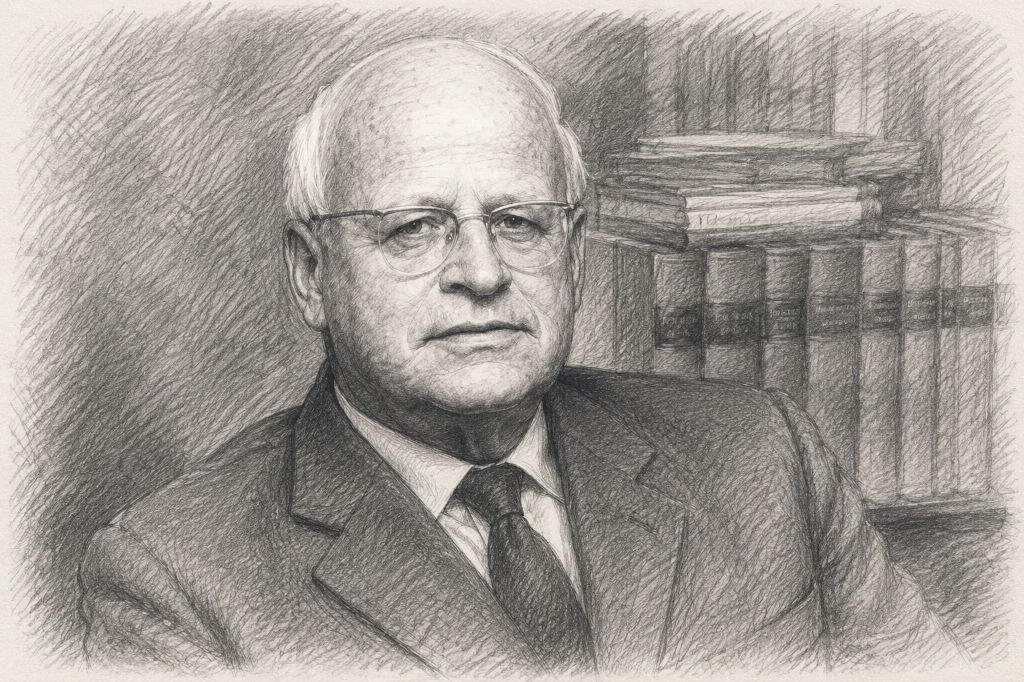
Helmut Thielicke - The theologian of the post-war period
When you talk about the question of meaning, sooner or later you inevitably come across great religions, philosophers and world-famous thinkers. However, sometimes it is not the most internationally famous names that leave a particularly lasting impression, but people who were able to convey their thoughts in an unusually human and true-to-life way.
Therefore, in this article I would like to go into a little more detail about Helmut Thielicke to enter into. There are several reasons for this. Firstly, I myself come from a Protestant background, at least culturally, even if I was never a particularly religious person. Secondly, there is even a certain personal connection. My stepparents lived in Hamburg around fifty years ago and heard Thielicke speak back then. He gave lectures and sermons there, including around Hamburg's Michel church, and must have had an extraordinary effect on many people.
What is particularly interesting is that even people who were not strictly religious still remember him today. That alone says a lot.
A theologian in difficult times
Helmut Thielicke was born in 1908 and lived through practically the entire dramatic 20th century:
- Empire,
- Weimar Republic,
- National Socialism,
- War,
- Reconstruction,
- Student movement
- and the beginning of the modern affluent society.
This alone made his generation very different from many of today's thinkers. People like Thielicke did not just deal with crises, fear or loss of meaning in theory. They experienced war, destruction and social upheaval directly.
Thielicke studied theology and philosophy and later became a professor. But he was obviously never just a university man. He didn't just want to write complicated specialist texts, he wanted to reach people. This is precisely why he became known far beyond academic circles.
Especially after the Second World War, he struck a chord with the times. Many people had experienced how a highly developed society could completely derail morally. Traditions were shaken, trust destroyed and millions of people were disoriented. It was precisely at this time that Thielicke spoke about responsibility, conscience, dignity, fear, hope and the question of what actually sustains people when external certainties are shattered.
Hamburg's Michel and the „last chancellor prince“
Thielicke later had particularly close ties with Hamburg. Among other things, he worked at the university there and became known as a preacher at Hamburg's Michel church. This church is still one of the city's most famous landmarks today.
Thielicke did not come across as an aloof church functionary, but as a speaker who was able to put even difficult issues into understandable language. Many described him as an exceptionally strong speaker who could explain complicated topics in an understandable way. Deutschlandfunk radio later even described him as the „last prince of the pulpit“. That sounds a bit pathetic at first, but probably simply describes the fact that he had an enormous presence.
His lectures and sermons are said to have been so well attended that people had to stand close together to hear him at all.
That is remarkable. Even then, many people were slowly beginning to move away from traditional church structures. Nevertheless, Thielicke clearly managed to appeal to modern and skeptical listeners. Perhaps this was because he did not give any simple feel-good answers.
Why Thielicke is still interesting today
What makes Thielicke particularly exciting from today's perspective is his way of taking existential questions seriously. He spoke not only about faith, but also about fear, guilt, loneliness, nihilism and loss of meaning. This made him seem surprisingly modern at times.
Despite prosperity and technical possibilities, many people today experience a certain inner disorientation. Thielicke was already thinking about this decades ago. He observed that material progress alone does not automatically lead to inner stability.
What is particularly interesting is that he was neither a pure cultural pessimist nor a blind optimist. He did not romanticize the world, but at the same time he did not try to deprive people of all hope. Instead, he was always preoccupied with the question: what remains of people when success, possessions or social roles suddenly disappear?
This is precisely why it fits surprisingly well into an article about the question of meaning.
Illness, war and human fragility
In addition, Thielicke himself had serious health problems at an early age. Even as a young man, he suffered from a severe thyroid condition and was probably even in mortal danger at times. This probably also explains why he dealt so intensively with finiteness and human fragility. Some people think about such topics purely theoretically. With Thielicke, one often had the impression that these questions were truly existential for him.
His experiences during the Nazi era and the war are also likely to have had a strong influence on him. In one of his best-known stories, he continued preaching during an air raid while chaos was already raging outside. At one point, people are said to have even laid down on the floor during the sermon while church hymns were sung at the same time.
This mixture of seriousness, fear, humor and human improvisation is almost symbolic of his entire generation.
Not a simple preacher, but an observer of people
This is probably the reason why people who were not particularly religious still remember him today. Thielicke came across less as someone who merely wanted to proclaim rules and more as a precise observer of human insecurity. He spoke about things that people often suppress:
- the fear of death,
- the search for orientation,
- the failure,
- the blame,
- the desire for meaning.
And perhaps that was his real strength: he didn't try to convince people that life was easy. But he obviously didn't try to take away their hope either.
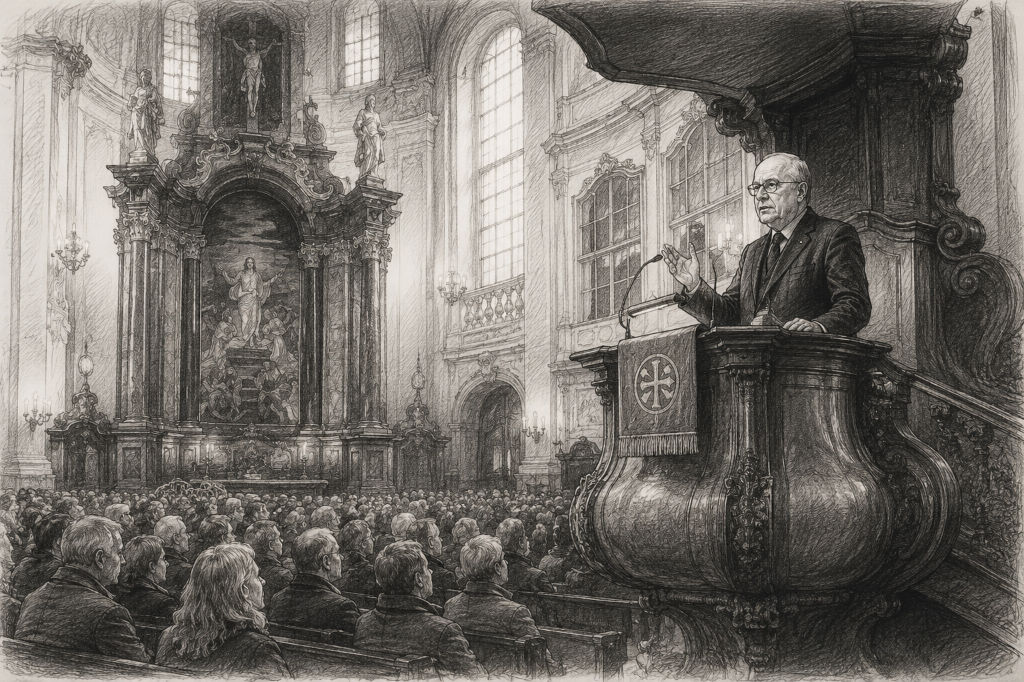
Helmut Thielicke and the fear of modern man
When you read texts or lectures by Helmut Thielicke, you quickly notice something: Many of his thoughts seem surprisingly modern, even though they are often decades old. This is probably due to the fact that he dealt intensively with problems that have become even more visible today:
Disorientation, inner emptiness, fear, loneliness, loss of meaning and the question of what people can actually still rely on.
Thielicke spoke about such topics long before terms such as „burnout“, „self-optimization“ or „digital overload“ even existed. Nevertheless, he was already describing a person who has more and more possibilities on the outside, but is often more insecure on the inside. Perhaps this is precisely what makes him relevant again today.
Prosperity alone does not make people stable
One of Thielicke's most fascinating observations was that material progress does not automatically make people internally stable. After the Second World War, prosperity slowly returned to Germany. Houses were built, the economy and technology developed rapidly and many people hoped for a better future.
But at the same time, another question arose: What actually happens when people possess more and more, but lose their inner stability?
This is precisely where Thielicke came in. He apparently observed that modern societies tend to define people primarily in terms of performance, success or external status. The problem with this is that such things can break away at any time. A company can fail. Health can be lost. Relationships can break up. Careers can end.
And even social recognition is often surprisingly unstable. If a person bases their entire value solely on such things, anxiety easily arises. Perhaps even permanent fear.
The modern fear of insignificance
It is interesting to note that many of the fears of modern societies no longer relate solely to existential hardship. In affluent countries, it is often less about hunger or immediate survival and more about psychological insecurity. People ask themselves:
- Am I successful enough?
- Am I interesting enough?
- Will I be seen?
- Am I interchangeable?
- Was my life even important in the end?
Today, this is sometimes particularly evident in social media. People are constantly comparing themselves with others. Reach, attention and self-presentation suddenly become benchmarks for importance.
Thielicke would probably have seen this as a typical symptom of modern disorientation. After all, when a person's value depends mainly on how visible or successful they appear, inner pressure almost inevitably arises.
It is interesting to note that modern societies often appear very self-confident on the outside, but at the same time produce enormous insecurity on the inside.
Why Thielicke took nihilism seriously
One term that Thielicke dealt with intensively was nihilism. He did not simply mean a bad mood or pessimism, but the loss of binding values and meanings. He probably observed that modern people are finding it increasingly difficult to believe in something greater, such as truth, moral orientation, community, responsibility or enduring values.
This does not automatically mean that everyone has to become religious. However, Thielicke obviously saw the danger that people could become disoriented if everything only seems relative.
Especially today, this observation seems astonishingly topical. Many social discussions now revolve almost exclusively around individual perspectives. Everyone has „their own truth“, their own reality and their own moral viewpoint. Although this creates freedom, it can also mean that at some point people no longer feel they have any solid inner ground.
Helmut Thielicke between ethics, humor and credibility
A particularly interesting lecture on Helmut Thielicke was given by Professor Dr. Arndt Schnepper from the Theological University of Ewersbach. In his contribution, Schnepper describes Thielicke not only as a well-known preacher, but also as an extraordinary mediator between academic theology and the very practical questions of human life.

Helmut Thielicke and the path through ethics - Master Sermon 11 | thinking by faith
It is particularly exciting that topics such as ethics, humor, credibility and rhetoric are explicitly addressed. The point „humor and cheerfulness“ in particular is remarkable because it fits in well with the picture that many contemporary witnesses paint of Thielicke: not a distant dogmatist, but a theologian with an understanding of human nature and linguistic proximity. The lecture also shows why Thielicke had an impact far beyond church circles. He evidently knew how to formulate complicated existential questions in such a way that they also reached skeptical or non-strictly religious people.
Against superficial feel-good beliefs
Interestingly, Thielicke not only criticized modern societies, but also the church itself to some extent. He was more bothered by a superficial faith that simply represses or softens difficult issues.
He did not want to pretend that life was always harmonious or easy to understand. War, guilt, suffering, fear and death were obviously part of human reality for him.
This is probably why he seemed more credible to many people than pure „feel-good preachers“. He didn't try to talk people out of any insecurity. Instead, he took their fears seriously.
This is probably one of the reasons why even people who were not strictly religious remember him to this day.
People need more than just to function
One central idea runs through Thielicke's thinking time and again: people are more than their function. They are not just: workers, consumers, performers, career projects or social roles.
Modern societies in particular sometimes run the risk of evaluating people primarily on the basis of efficiency and performance. But at some point, this way of thinking reaches its limits. Especially in times of crisis, many people suddenly realize that success alone is not enough.
This is probably one of Thielicke's most important observations: people not only need comfort and security, but also meaning.
Why his thoughts could appeal to people again today
Perhaps many of his thoughts would even be better understood today than they were a few decades ago. After all, many of the problems he described have become more acute: constant digital stimulation, social isolation, constant comparison, insecurity, disorientation and the fear of becoming meaningless inside.
Thielicke was never just interested in instructing people religiously. Rather, he tried to take a fundamental human question seriously:
What really sustains people when external certainties fall away?
And that is precisely why it fits so well in an article about the question of meaning.
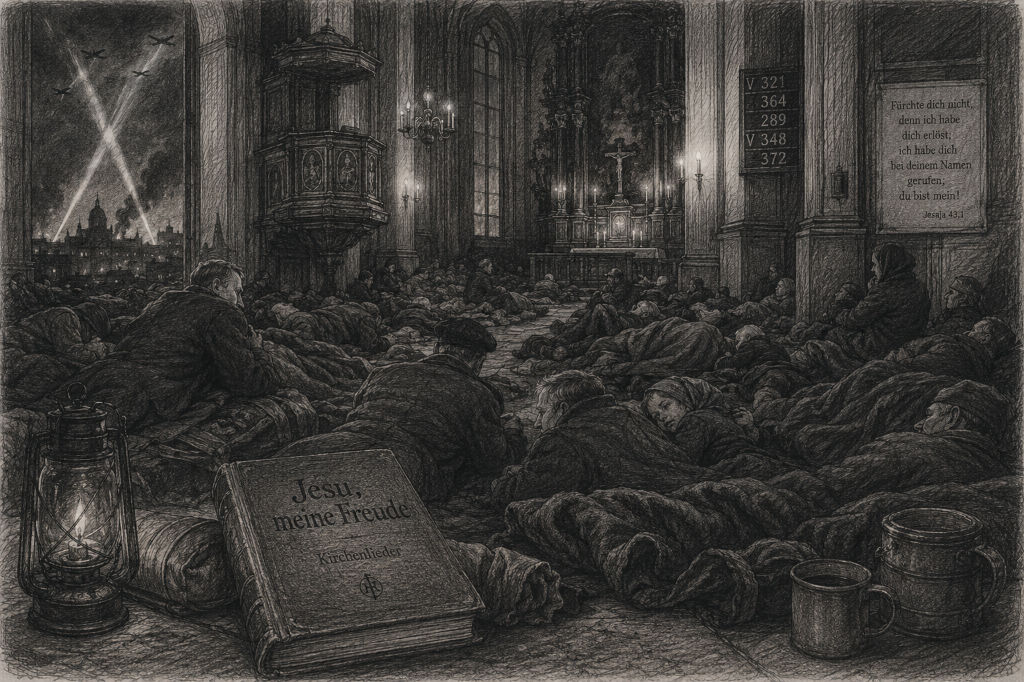
Air raid, chaos and „Jesus, my joy“ - a church service during the war
There are stories that seem almost absurd at first glance, which is precisely why they stay with you for so long. One such story is told about Helmut Thielicke.
It takes place during the Second World War. According to stories, Thielicke was holding a service or a sermon in a church near Stuttgart at the time. There was a war going on outside. Many people had already been living with fear, uncertainty and constant tension for years. Air raids were almost part of everyday life for many cities and regions at the time.
But on this day, the war suddenly moved directly into the church. During the sermon, an air raid began outside. Planes could be heard. Machine gun fire. Anti-aircraft guns. Panic. Actually, there was probably a prepared procedure for such situations. Normally, when the alarm was sounded, a certain song should be sung quietly so that the congregation could leave in an orderly fashion.
But this time it was probably already too late.
People on the church floor
You have to imagine this situation. People sitting in a church. Outside, the sounds of war and chaos. Nobody knows for sure if bombs are going to hit. There may be children. Old people. Families. People who have been terrified for years anyway. And in the middle of this situation, Thielicke is said to have suddenly shouted:
„Everyone lie down on the floor! We sing ‚Jesus, my joy‘!“
This image alone seems almost unreal. People lie on the floor of a church during an air raid and sing a hymn together.
You could look at this scene in different ways. Some would probably see deep faith in it. Others would see it as a bizarre war scene full of human improvisation. But perhaps there is something very human in this mixture. Because moments like this often show how people try to find some form of stability even in chaos.
Between fear and humor
It is also interesting that this story has an almost tragicomic quality despite its serious background. This is probably why it sticks in the memory so well. In extreme situations, people often react not only with fear, but sometimes also with a strange mixture of humor, improvisation and pragmatism. Probably because people could hardly deal with such situations any other way.
Older generations in particular, who experienced war or severe times of crisis, often developed a very special sense of humor. Not because they wanted to trivialize the suffering, but because humour sometimes helps them to remain mentally stable.
This also explains why the story about Thielicke fits so well with this article. It combines several things at once: fear, death, community, faith, humanity and an almost absurd form of inner attitude.
When the big questions suddenly become real
In quiet times, many philosophical questions often seem abstract. People then discuss meaning, morality or religion as they would theoretical concepts. But in borderline situations, this often changes abruptly. Suddenly it is no longer about elegant formulations or complicated theories. It's about very simple questions:
- What sustains a person?
- What provides support?
- What connects people with each other?
- And what remains when security disappears?
Perhaps this is precisely where the real power of such stories lies. They do not show people in perfect moments, but in situations full of uncertainty and vulnerability. This is precisely why they often seem more credible than many perfect life guides.
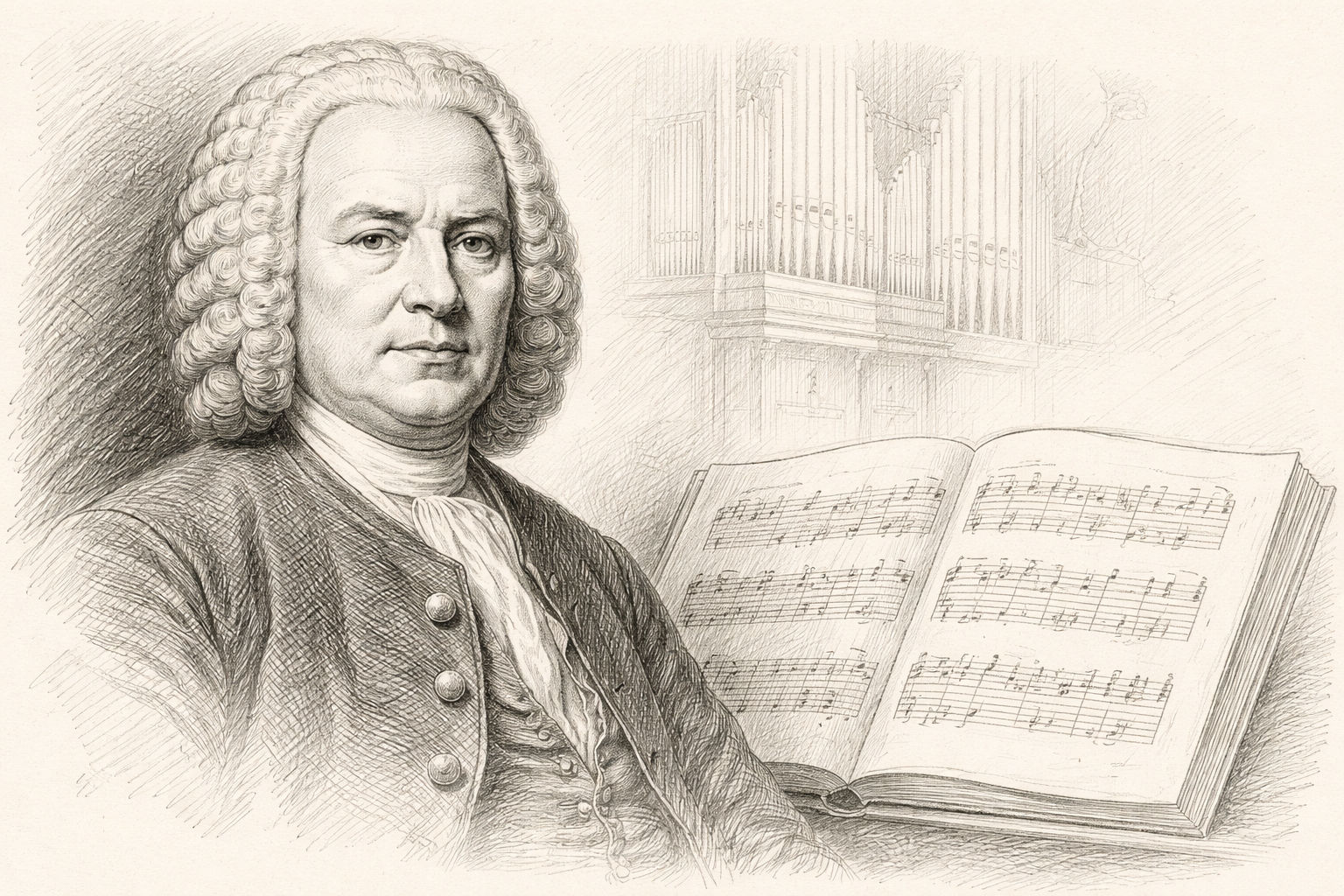
The Bach motet ‚Jesu, meine Freude‘ is particularly impressive in this context. This very hymn is said to have been sung by Helmut Thielicke during an air raid in a church service, while people were already lying on the floor of the church. The music is neither hysterical nor dramatic, but almost surprisingly calm.

J.S. Bach: Motet BWV 227 ‚Jesu, meine Freude‘ - Vocalconsort Berlin | AVROTROS classics
Perhaps this is precisely where their special power lies. Johann Sebastian Bach combines consolation, transience and deep human dignity in a way that still seems astonishingly modern today. Even people with no religious affiliation often immediately sense that this music deals with existential questions.
Why such stories remain
This may be why people still remember personalities like Helmut Thielicke decades later. Not necessarily because they would have remembered every theological detail. But because certain scenes make something fundamentally human visible.
An air raid. People on the floor of a church. A hymn in the midst of chaos.
It almost seems like a small symbol of how people have been trying to deal with fear, transience and uncertainty for centuries.
And perhaps this story also shows something else: the meaning of life is sometimes revealed not in big answers, but in small moments of human cohesion in the midst of chaos.

Why prosperity does not solve the question of meaning
If you look at the history of mankind, you might actually expect that the question of meaning should have long since lost its significance today. Never before have so many people had access to prosperity, medical care, entertainment, technology and personal freedom as in modern Western societies. Many things that used to be luxuries are now almost taken for granted.
A car of our own, warm homes, travel, smartphones, streaming services, online trading or permanent accessibility would probably have seemed like science fiction to previous generations. And yet many people today report inner emptiness, a lack of direction or the feeling of being under constant pressure.
This seems contradictory at first. A society with so many opportunities should actually be more satisfied than previous generations. But it is precisely at this point that the question of meaning begins to become interesting again.
After all, comfort and prosperity may solve many practical problems - but they do not automatically solve the question of what we actually live for.
The hedonistic treadmill
Psychologists today sometimes talk about the so-called „hedonistic treadmill“. This refers to a relatively simple mechanism: people get used to improvements surprisingly quickly. The new car often only lasts a few weeks. The bigger house becomes normal at some point. More money feels important at first, but loses its emotional impact over time. Even major professional successes often only generate short-term satisfaction. After that, the next goal often arises.
- More income.
- More security.
- More recognition.
- More range.
- More status.
This does not mean that success or prosperity are worthless. Of course, they make life easier in many respects. It usually only becomes problematic when people believe that external improvements must automatically generate inner fulfillment.
Many philosophers and religions warned against this long before the modern consumer society. Schopenhauer described the constant human desire as early as the 19th century. Buddhism speaks of attachment. Stoics warned against dependence on external things. It is interesting to see how modern these ideas seem today.
When people have everything - and yet remain empty
This issue is often particularly noticeable in people who actually appear successful on the outside. Good career. Nice home. Security. Perhaps even social recognition. And yet at some point the feeling arises:
Was that all?
It is precisely this point that occurs surprisingly often in modern societies. Probably even more frequently than in the past. This is because traditional societies often gave people clearer roles. Family, religion, profession or community provided at least some orientation. Today, people have much more freedom, but often have to make up their own meaning in life.
That sounds positive at first, but it can also be overwhelming. Paradoxically, when practically anything seems possible, sometimes the feeling arises that nothing really matters.
Consumption as a substitute religion
Sometimes it almost seems as if modern societies have not solved the question of meaning, but merely postponed it. In the past, people sought orientation more in religion or tradition. Today, other things take on this role to some extent: consumption, status, self-expression, career, reach, self-optimization or digital attention.
Social media in particular have reinforced this development. People are constantly comparing themselves with others. Success is made visible. Beauty is staged. Happiness is presented.
The problem with this is that such systems almost automatically create unrest. Because someone always seems to be more successful, more attractive, richer or more interesting. This easily creates the feeling of never really arriving.
Perhaps this also explains why many modern people seem inwardly exhausted despite their outward prosperity. They are constantly working, but they often no longer know exactly what for.
Why previous generations sometimes seemed more stable
Of course, we shouldn't romanticize the past. Previous generations often had much harsher living conditions. War, illness, poverty and a lack of freedom were part of everyday life for many people.
Nevertheless, the impression sometimes arises that earlier societies were more internally stable in certain areas. This was probably because people were more involved:
- in families,
- Communities,
- Traditions
- or religious structures.
This often automatically created a sense of belonging and purpose. Today, on the other hand, many people experience enormous freedom, but at the same time increasing isolation. Modern people are expected to be individual, flexible, successful, creative and constantly optimized. At the same time, there is often a lack of stable social structures. Perhaps this helps to explain why the question of meaning is returning more strongly today.
People need more than comfort
The longer one studies religions, philosophy and psychology, the clearer an interesting observation becomes: human beings do not seem to be designed to live exclusively in comfort. That sounds strange at first. Of course people like security and comfort. But apparently they also need something else: meaning, responsibility, community, challenges and the feeling that their own life has value.
Viktor Frankl described this very impressively. People can endure an astonishing amount of suffering if they see a meaning. Conversely, even an outwardly pleasant life can seem empty inside if it lacks any deeper meaning.
This is probably one of the most important differences between happiness and meaning. Happiness is often short-term. Sense often carries people through difficult times.
The old question remains
In the end, something rather sobering perhaps emerges - but at the same time something very human: technological progress can solve many problems, but certainly not the fundamental questions of human existence. People don't just want to consume, function and survive. They want to understand why their lives have meaning.
This is why the question of meaning does not disappear in modern societies. It just changes its form. In the past, it might have been asked in churches or philosophical schools. Today, it often crops up in the middle of everyday life:
- after a separation,
- in a life crisis,
- when looking at older parents,
- for professional success,
or simply at night in quiet moments when the question suddenly arises:
What am I actually doing all this for?
Current survey: What makes your life worth living?
Why love and relationships play a central role almost everywhere
If you take a closer look at religions, philosophies and world views, you will notice something very striking at some point: Almost all of them attach enormous importance to interpersonal relationships. Although the different systems contradict each other in many respects, certain themes keep cropping up:
- Love,
- Friendship,
- Family,
- Community,
- Care
- and responsibility for each other.
That is remarkable. Because theoretically, you could imagine a world view that sees people primarily as lone warriors. But this is surprisingly rare. Instead, the impression is created almost everywhere that people only really see their lives as meaningful through relationships.
This is probably due to the fact that although humans can think and analyze, emotionally they remain social beings.
The search for closeness
People seek closeness very early on in life. Children need affection, security and emotional attachment. Friendships are often formed while they are still at school. Partnerships come later, sometimes families of their own. Even people who see themselves as loners often want at least a few close relationships.
It is interesting to note that modern societies are becoming more and more technically connected and at the same time many people feel lonelier than before. Today, you can theoretically communicate with thousands of people and still feel isolated inside.
Perhaps this is where the difference between contact and genuine closeness becomes apparent. Genuine relationships rarely develop through surface communication alone. They develop through shared experiences, trust, conflict, reliability and the feeling of really being seen by the other person. This is probably why relationships play such an important role in the question of meaning.
Why love changes people
Few things influence people emotionally as strongly as love. It can motivate, calm, inspire or completely unbalance. It is probably one of the most powerful experiences people can ever have.
It is interesting to note that in almost all cultures, love is simultaneously seen as something beautiful and something dangerous. Relationships can make people happy, but they can also hurt them. This is probably why religions, literature and philosophy have been dealing with this topic for thousands of years.
Christianity placed charity at the center of many teachings. Compassion plays a major role in Buddhism. Even more rational philosophies such as Stoicism recognize that interpersonal relationships are important.
Apparently, people intuitively sense that a life without an emotional connection can work, but often seems empty.
Family as a source of meaning
This is often particularly evident in the area of family. Many people report that their view of life changes as soon as they have children or take on responsibility for other people.
It is interesting to note that responsibility is often not experienced as a burden, but as something meaningful. Of course, family can be stressful. Conflicts, worries and obligations are all part of it. Nevertheless, many people find a deeper purpose in life in it. This is possibly also due to the fact that family automatically draws attention away from one's own ego. Suddenly it's no longer just about your own wishes or goals, but also about being there for others.
Of course, this does not mean that everyone has to start a traditional family in order to find meaning. But the basic idea behind it appears almost everywhere: People often feel their lives are meaningful when they are important to others.
Relationships and transience
Precisely because relationships are so important, they are also one of the most painful areas of life. Break-ups, arguments, estrangement or death often affect people more deeply than material losses.
But perhaps this is precisely where their special significance lies. What is fleeting often becomes more precious. A conversation with the parents. An evening together. A hug. A quiet moment with someone you love. Many such things seem self-evident in everyday life, but suddenly take on enormous significance in retrospect.
Many questions of meaning ultimately revolve around precisely such experiences. At the end of their lives, people often remember individual consumer goods or professional details less than relationships, shared experiences or important encounters.
Why relationships often become more important than success
Interestingly, our view of relationships often changes as we get older. Many young people initially focus heavily on their education, career or personal goals. This is completely normal. But later on, priorities often shift.
Suddenly, time with the family, genuine friendships or quiet moments together seem more important than status symbols or professional success. This is probably because relationships create a special kind of meaning. They connect people and create memories that go far beyond material possessions.
And perhaps this is precisely one of the most important points of all: many people look for the meaning of life somewhere far away - and at some point discover that a large part of it may have been sitting right next to them the whole time.
Comparison table of world views: What is important?
Veresponsibility - Mitgefühl - Gecommunity - SeaSelf-limitation - Inneres Wgrowth - Sinside through Bcontribution - Warning before Materialism
| World view | Ve | Mi | Ge | Sea | IW | SB | WM |
|---|---|---|---|---|---|---|---|
| Christianity | ● | ● | ● | ● | ○ | ● | ● |
| Evangelical Christianity | ● | ● | ○ | ○ | ● | ● | ● |
| Helmut Thielicke | ● | ● | ○ | ○ | ● | ● | ● |
| Islam | ● | ● | ● | ● | ○ | ● | ○ |
| Judaism | ● | ● | ● | ○ | ● | ● | ○ |
| Buddhism | ○ | ● | ○ | ● | ● | ○ | ● |
| Hinduism | ● | ○ | ○ | ● | ● | ○ | ● |
| Taoism | ○ | ○ | – | ● | ● | – | ● |
| Sikhism | ● | ● | ● | ○ | ○ | ● | ○ |
| Confucianism | ● | ○ | ● | ○ | ● | ● | – |
| Stoicism | ● | ○ | ○ | ● | ● | ○ | ● |
| Existentialism | ● | – | – | ○ | ● | ● | ○ |
| Humanism | ● | ● | ● | ○ | ● | ● | ○ |
| Nihilism | – | – | – | – | ○ | – | ○ |
| Schopenhauer | ○ | ● | – | ● | ● | – | ● |
| Nietzsche | ● | – | – | ○ | ● | ● | ● |
| Viktor Frankl | ● | ● | ○ | ○ | ● | ● | ○ |
| Agnosticism | ○ | ○ | – | – | ○ | – | – |
| Atheism | ● | ○ | ○ | – | ○ | ● | ○ |
| Transhumanism | ○ | – | – | – | ● | ○ | – |
| Modern consumer society | – | – | – | – | – | – | – |
Legend: ● Important ○ Available - Unimportant

Why people want to create something lasting
There is an idea that runs through almost all cultures and ages: People want to leave their mark. They do not want to simply disappear as if they had never existed. This desire manifests itself in many different forms:
- Children,
- Books,
- Art,
- Building,
- Company,
- Inventions,
- Music,
- Memories
- or stories.
Perhaps this urge is closely linked to our own transience. At some point, everyone realizes, consciously or unconsciously, that their own time is limited. This may give rise to the need to create something that will last beyond one's own lifetime.
It is interesting to note that this wish is not only expressed by famous people. Even ordinary people often want to leave something behind:
- a family,
- a home,
- a good memory,
- something built up,
- something passed on.
This is probably a fundamental part of being human.
Children, family and passing on
Probably the oldest form of „lasting“ is the family. For thousands of years, passing on one's own life to the next generation was a central meaning of life for many people.
Children not only pass on genes, but often also values, memories, stories or certain views of the world. Even small things sometimes survive for an astonishingly long time: idioms, habits, recipes, attitudes to life or family anecdotes.
It is interesting to note that people often only realize later how strongly previous generations have shaped them. Many thoughts, behaviors or points of view often come indirectly from parents, grandparents or other important people. Perhaps this is why meaning is sometimes created less through major world-changing achievements than through silent transmission across generations.
Art, books and creative work
Another form of permanence can be found in creative works. People write books, paint pictures, compose music or build things that they themselves will probably outlive.
The fascinating thing is that creative work often has a strange timelessness. A book can still be read decades or centuries later. Music can touch people emotionally even though the composer is long dead. Thoughts can outlast generations. This probably also explains why art and culture play such an important role in almost all societies. They create connections across time.
Interestingly, it's often not just about fame. Many people write, design or create things because they feel they can pass on some of their thoughts or experiences.
Books in particular have a special effect. To a certain extent, they preserve ways of thinking, memories and perspectives. This is why libraries sometimes seem almost like repositories of human experience.
Company, work and development performance
For many people, work can also represent a form of meaning and legacy. In particular, people who have built something up over a long period of time often see their work not just as a source of income, but as part of their life's work. These can be companies, workshops, projects or other long-term achievements. Behind many companies is not only economic interest, but also the desire to create something of their own that will last.
It is interesting to note that people are often proud of things that they have developed over the years - even if they seem unspectacular from the outside. Perhaps this is because development work always involves time, energy and personal identity. Anyone who builds something often invests part of their life in it.
Memory is probably one of the oldest forms of human „immortality“. As long as people talk about someone, tell stories or remember, a part of that person remains to a certain extent.
This may also explain why many cultures emphasize ancestors, family stories or historical figures so strongly. People do not want to disappear completely. This does not only apply to big names in history. People are often remembered for small things: a certain way of laughing, a sentence, an attitude, a shared moment or a special gesture. Sometimes people leave a much stronger mark on others than they themselves ever realize.
Why modern societies struggle with this
At the same time, the modern world sometimes seems surprisingly short-lived. Information is constantly rushing by. Trends are constantly changing. Digital content often disappears from our attention after just a few hours.
This is probably why many people feel the need for something lasting again. Books, family stories, long-term projects or real relationships suddenly seem more valuable again in an increasingly fast-paced world.
Many people today are looking for „authenticity“ or „real things“. Behind this is often a longing for something that lasts and doesn't disappear again immediately.
People actually want more than just to consume
If you look at all these things, a pattern emerges again that has already appeared in many religions and philosophies: people do not seem to be made to consume exclusively in the moment.
You want to design. Build. Pass on. Remember. Leave traces.
Perhaps this is even an important part of the question of meaning. After all, anyone who creates something that touches, helps or outlasts other people automatically connects their own life with something greater.
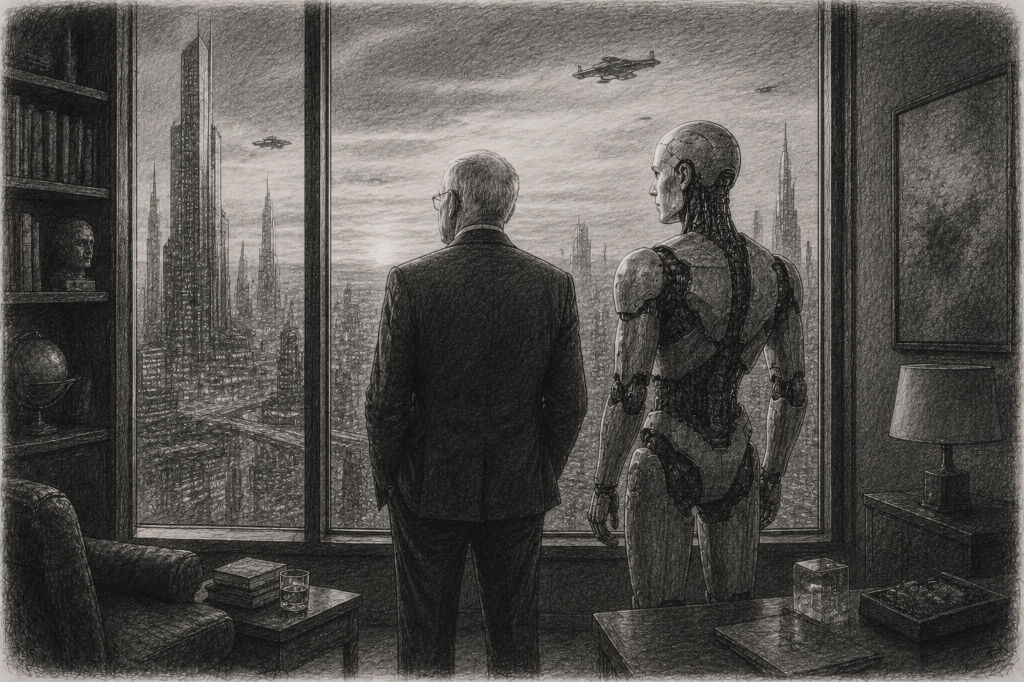
AI, transhumanism and the new search for meaning - the old question in new packaging
The more modern the world becomes, the more the way in which people think about meaning, life and the future changes. While previous generations often sought their answers in religion, family or traditional communities, new ideas about what people could actually be - or perhaps should become - are increasingly emerging today.
This is particularly evident in topics such as artificial intelligence, transhumanism and technological immortality. At first glance, these topics seem purely technical. But the longer you look into them, the clearer it becomes: They are actually about the same old human issues.
- How do we overcome suffering?
- How do we defeat death?
- What constitutes consciousness?
- And can humans ever become more than what they are today?
Interestingly, some modern visions of the future are almost reminiscent of religious ideas - only with technical terms instead of spiritual language.
The dream of an improved human being
 Transhumanism assumes that humans can or even should overcome their biological limitations in the long term through technology. Some proponents of this movement dream of stopping ageing processes, storing consciousness digitally, connecting people with machines or completely conquering diseases.
What used to be the stuff of science fiction is now being discussed seriously, at least in part. The technical question of whether such things will ever be fully possible is less interesting. The philosophical level behind it is often more exciting: Why are people so preoccupied with this idea in the first place? Possibly also because it reflects an age-old human longing: to overcome the fear of transience.
Basically, many transhumanist ideas are trying to do exactly what religions have also been promising for thousands of years - only without the classic reference to God. More details on this topic can also be found in the article Immortality through technology - how far research and AI have really come to find.
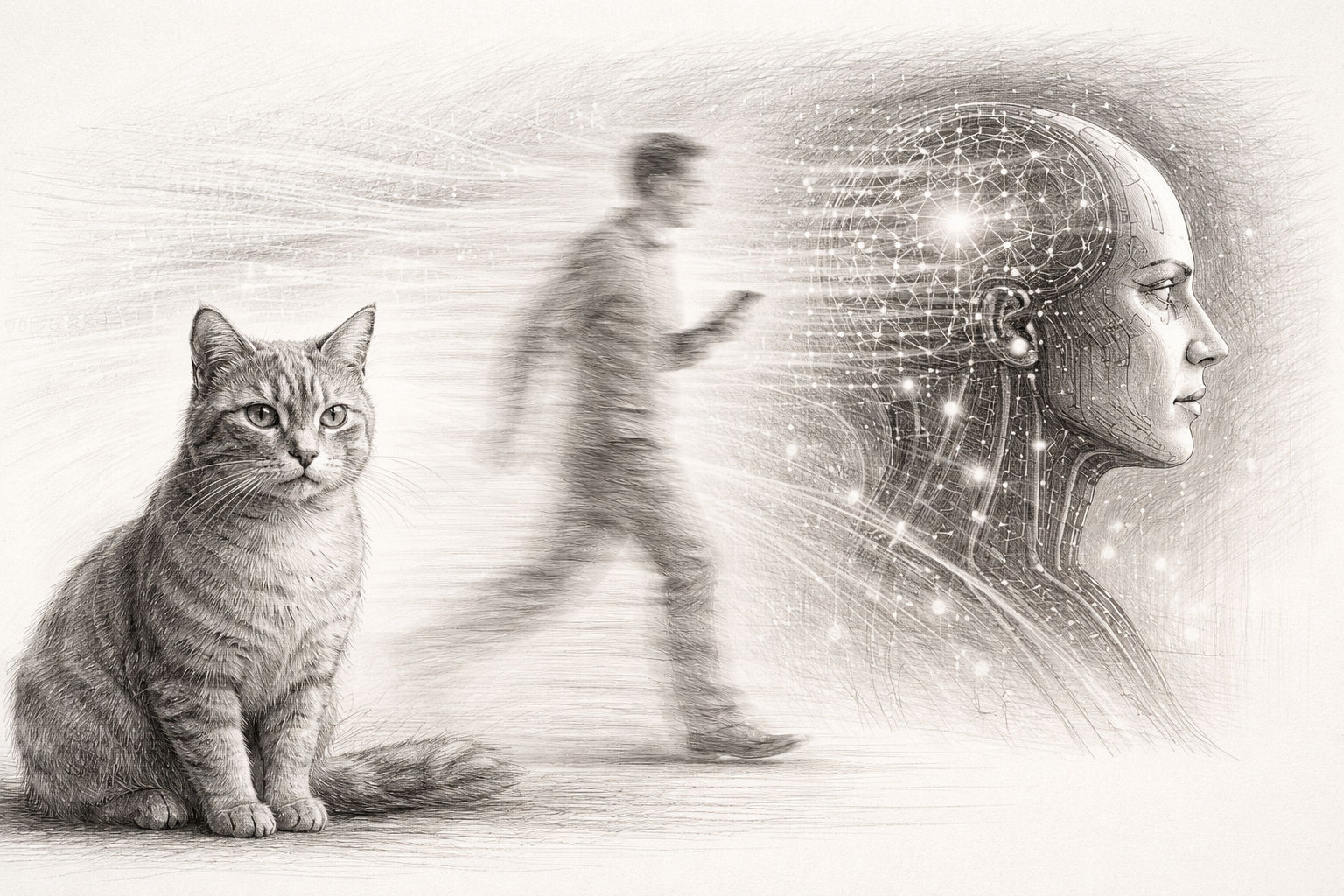
AI as a new projection surface
The role of artificial intelligence is similarly exciting. For some people, AI is simply a tool. Others now see it almost as a future higher authority: more intelligent, more objective, more efficient and possibly even more conscious than humans themselves at some point.
Interestingly, people have always projected hopes and fears onto new technologies. In the past, it was machines, electricity or the internet. Today it is AI. In some cases, this gives rise to almost religious ideas: the hope of a super-intelligence, the fear of losing control, the idea of an omniscient system or the idea that technology could one day completely overcome human weaknesses.
Today, some people even look to algorithms for guidance rather than philosophy, religion or personal relationships. This may seem modern at first, but perhaps it only shows how strongly people are fundamentally looking for orientation.
The desire for control over life
Another interesting point is the increasing control over more and more areas of life. Modern technology allows us to do things that used to be impossible:
- constant health monitoring,
- digital self-optimization,
- artificial reproduction,
- genetic interventions,
- virtual identities
- or AI-supported decisions.
This sometimes gives rise to the idea that almost every human problem can be solved technically at some point.
But this is precisely where the question of meaning arises again. Because even if people were to live significantly longer one day - would that automatically create meaning? Would a technically perfect life automatically be fulfilling? Or would the question of meaning simply return on a higher level?
Perhaps this is precisely the limit of technological solutions. Technology can make many things easier, but it does not automatically answer the question of why people want to live at all.
The fear of being replaced
At the same time, AI also creates uncertainty for many people. The more powerful machines become, the more frequently the question arises: What actually remains typically human?
When AI writes texts, generates images, makes diagnoses or takes on creative tasks, traditional notions of work and identity are shaken. Many people define themselves strongly in terms of their skills or profession. When machines take on more and more tasks, it is easy to feel like you are becoming interchangeable. Interestingly, this fear is partly similar to older philosophical questions:
What makes people unique? Consciousness? Empathy? Morality? Creativity? Love? Or just the ability to search for meaning? This is probably why the question of meaning is becoming even more important in the age of AI.
The danger of mechanized emptiness
Modern societies sometimes tend to view people primarily in technical or functional terms. Performance, data, efficiency and optimization play an increasingly important role. But this could also be a danger. After all, people are obviously not just made up of biological processes or rational decisions. People often need meaning, emotional connection, community, memories, hope and the feeling of being part of something bigger.
If technology only increases convenience and efficiency without taking these deeper levels into account, a new form of inner emptiness may emerge. Interestingly, philosophers such as Helmut Thielicke and Viktor Frankl had warned of just such a development - long before AI even existed. Humans will probably remain more human than they think
Despite all the technological developments, one interesting observation remains: People continue to deal with the same basic questions in the digital age as they did thousands of years ago. They are looking for love, security, orientation, community, hope and meaning.
Tools and technologies are changing faster than human nature itself. And perhaps the modern AI debate in particular shows something very fundamental:
Even in a world full of technology, people seem to be searching not only for efficiency, but also for meaning.
David Steindl-Rast and the question of gratitude, death and the meaning of life
Another fascinating look at the question of meaning comes from David Steindl-Rast. In an interview with SRF Kultur, the Benedictine monk, Zen master and doctor of psychology talks about topics that fit in surprisingly well with the central ideas of this article: Gratitude, transience, the path of life and dealing with death. His calm view of ageing and dying is particularly interesting. Steindl-Rast, who now looks back over almost a century of life, describes meaning not as an abstract theory, but as a conscious attitude towards life itself.

David Steindl-Rast: What is the meaning of life? | Sternstunde Religion | SRF Culture
His criticism of possessiveness and purely material wealth is also remarkable. Instead, he emphasizes attentiveness, gratitude and conscious experience. It is precisely because of this that the conversation seems less like a classic mediation on religion and more like a calm philosophical reflection on being human. The video therefore complements the previous chapters on the search for meaning, prosperity and transience very well.
Nina Hagen as an example of a lived search for meaning
 The question of the meaning of life is not just a philosophical or theological issue. It is often particularly evident in the biographies of people who have experienced extreme contrasts - publicity and loneliness, provocation and spirituality, chaos and the search for order. An interesting example of this is Nina Hagen, who was publicly provocative for many decades and at the same time always spoke openly about faith, questions of meaning and her Christian orientation. The detailed Portrait of Nina Hagen and Cosma Shiva Hagen shows how closely attitude, identity and spiritual search can be linked - especially in the case of personalities who never allowed themselves to be completely appropriated.
Is there even a definitive answer? The longing for certainty
The longer you think about the question of meaning, the clearer a somewhat sobering thought becomes at some point: there is certainly no single definitive answer that all people can agree on. Religions sometimes contradict each other. Philosophers come to different conclusions. Science can explain many things, but it cannot necessarily answer the question of why life should have any meaning at all.
And yet mankind seems to have been searching for thousands of years. Perhaps there is something very human in this. People want guidance. They want to understand why they exist, what is right or wrong and what really counts in the end. Especially in uncertain times, the desire for clear answers often grows.
But the bigger the questions become, the more difficult it is to be absolutely certain.
Between faith, doubt and openness
Many people move somewhere between faith and doubt. Even religious people often have questions or uncertainties. At the same time, many non-religious people also deal with topics such as transience, consciousness or death at some point.
The question of meaning is one of the few topics that cannot be fully measured or proven. You can discuss religion, philosophize or gather scientific findings. But in the end, there always remains an area that no one can definitively control.
This is precisely why the position of agnosticism seems so understandable to some people. Agnostics basically do not say that there is no meaning or no God. Rather, they say:
Ultimately, we don't know for sure.
Some people find this unsatisfactory at first. At the same time, there is also a certain honesty in it.
Why simple answers are often problematic
Perhaps we should even be cautious when someone claims to already have the final answer to all questions of meaning. History shows that absolute certainty can sometimes be dangerous.
People tend to oversimplify complex issues. This provides security. However, the biggest questions in life often cannot be completely reduced to simple formulas.
This probably also explains why many great thinkers maintained a certain humility despite their strong convictions. Even philosophers, theologians or scientists who pondered such topics for decades often reached their limits at some point.
Of course, this does not mean that every point of view is equally correct. But perhaps uncertainty is an inseparable part of being human.
The question behind the question
The question of meaning often changes with increasing age or life experience. Young people often search more for big goals, freedom or self-realization. Later on, the focus sometimes shifts.
Then the question becomes less theoretical. Suddenly it is no longer just about the „meaning of life“ as an abstract formula, but rather about concrete experiences:
- Was I important to other people?
- Did I love?
- Have I taken responsibility?
- Have I left something useful behind?
- And have I lived my life consciously?
Perhaps this is precisely where an important difference lies. Many people start out looking for a single big answer. Later, they sometimes realize that meaning comes from many small experiences.
Why the search itself could be significant
It is even possible that part of the answer lies in the search itself. People do not seem to be made to go through life completely indifferent. They think, doubt, hope, seek orientation and try to give their lives meaning. This probably distinguishes them from almost all other living beings.
Interestingly, it is precisely this search that connects people across cultures, religions and ages. People may find different answers, but the fundamental questions remain surprisingly similar.
The possibility that several things can be true at the same time
The longer one studies philosophy and religion, the clearer it also becomes that many world views are not just made up of opposites. Different traditions often contain certain observations that can seem true at the same time.
Perhaps people really do need community. Perhaps they need responsibility. Perhaps they need hope. Perhaps they need freedom. And maybe sometimes they even need doubt. Life often seems more complex than simple black and white answers.
In the end, that may be the most honest answer:
Part of the question of meaning will probably always remain unanswered. And in the end, that doesn't have to be a bad thing. After all, it is precisely this lack of knowledge that has driven people for thousands of years:
- to think,
- to believe,
- to write,
- to love,
- to research,
- to doubt
- and to search for meaning again and again.
This is probably why humans are not just beings who need answers. He is also a being that needs questions.
Why classical religious language has often not reached me
Although I was baptized a Protestant, religion has never actually played a particularly big role in my everyday life. However, that doesn't mean that I am fundamentally opposed to anything religious. I often even liked things like community, church festivals or social interaction. Churches used to have a unifying function in many places, which has been partially lost today. The language of many sermons and theological texts was always more difficult for me.
Formulations such as „the Lord speaks to us“ or „God reveals himself“ often seemed very abstract to me and far removed from normal everyday life. Perhaps I simply lacked access to it. And I probably never felt the need to delve deep into this old religious world of language. That's exactly why I find personalities like Helmut Thielicke interesting in retrospect. He was obviously able to express complicated religious ideas in such a way that even people outside of traditional church circles enjoyed listening to him. Perhaps this was precisely his particular strength.

What do people believe about what comes after death?
Few topics have occupied people for as long and as intensely as the question of what happens after death. This question probably arose very early on in human history. As soon as people began to think about themselves and consciously perceive death, they had to ask themselves at some point:
Is it all just over after that? Or does something go on?
Interestingly, completely different answers to this question have developed over the course of history. Some religions speak of heaven and eternal existence. Others speak of rebirth or spiritual levels. Still others assume that death is the final end of consciousness.
And yet there are certain similarities here too. After all, even people who are not religious often find themselves wondering at some point whether their own life will really just disappear completely. Especially with increasing age or after the loss of loved ones, this question often becomes more personal.
Perhaps this is a central point: the question of death is almost always also a question about the meaning of life.
Heaven and eternal life
In many monotheistic religions, the idea of life after death plays a central role. In Christianity and Islam in particular, earthly life is often not regarded as a final state, but rather as part of a larger context.
In Christianity, there are different ideas about what exactly life after death looks like. However, the hope of eternal life in the presence of God is usually central. Death is not understood as a final disappearance, but rather as a transition.
The afterlife also plays an important role in Islam. Life on earth is often seen as a test or preparation. According to the classical concept, death is followed by a divine judgment that decides the future path.
It is interesting to note that both religions not only want to offer comfort, but also emphasize responsibility. The present life carries weight because decisions have consequences. This probably also explains why such ideas have been so important to many people over the centuries. They not only give death horror, but also meaning.
Rebirth and the great cycle
At first glance, religions such as Hinduism or Buddhism appear quite different. There, the focus is often not on a single life, but on a cycle of rebirths.
According to Hindu beliefs, people are born again and again. Our own actions influence subsequent existences through karma. The long-term goal is liberation from this cycle.
Rebirth also plays a role in Buddhism, although the focus there is more on overcoming suffering and attachment. People should recognize that many of their desires and fears are transient. Only then is inner freedom possible.
It is interesting to note that this view sees death less as an absolute break. Life appears more like a long process of development.
For many Westerners, such ideas seem strange at first. At the same time, they contain an interesting thought: life is not just understood as a brief individual moment, but as part of a much larger context.
Spiritual continued existence
There are also numerous spiritual traditions that cannot be clearly categorized as a religion. These include various esoteric ideas, spiritual movements and indigenous belief systems.
The idea that the consciousness or the soul continues to exist in some form is often mentioned. Some speak of spiritual levels, others of ancestral worlds or a return to a greater universal unity.
It is interesting to note that such ideas often seem less dogmatic than traditional religions. Many people today combine different spiritual ideas with one another without committing themselves firmly to a particular faith.
Modern societies in particular are showing an interesting development here. Although traditional religions are losing some of their influence, the longing for transcendence is clearly not disappearing completely. It is merely seeking new forms.
The great unknown
However, not everyone feels convinced by firm answers. Many tend to take an agnostic stance and simply say: we don't know.
This view seems sober at first, but it also contains a certain honesty. After all, no one can definitively prove what happens after death.
Interestingly, some people find precisely this openness reassuring. They do not have to commit themselves to a rigid world view, but accept that certain questions may remain unanswerable. It is probably precisely this uncertainty that is part of being human.
The final end
Others, on the other hand, assume that death actually means the end of consciousness. Materialistic or atheistic world views in particular usually regard thoughts and feelings as the result of biological processes in the brain. According to this view, when the body dies, consciousness also ends.
That sounds harsh or bleak to some people. Interestingly, however, it does not automatically mean meaninglessness. Many non-religious people see the present life as particularly valuable precisely because there may only be one. This often results in a stronger focus on the here and now: Relationships, experiences, responsibility, humanity and conscious lifetime.
What an astonishing number of people agree on
Despite all the differences, something interesting stands out once again. Almost all worldviews assume that the present life has meaning. How people act, love, suffer or take responsibility plays a role practically everywhere.
It also shows that death is rarely viewed as a purely technical or biological event. Even non-religious philosophies often recognize that the finite nature of life creates depth and meaning in the first place. Perhaps this is precisely one of the strongest common denominators:
Death makes life precious.
The question behind the fear
There may be something else behind the question of death. Many people are not only afraid of dying itself, but also of disappearing without meaning.
This may be precisely why people search for traces, relationships, memories or something that reaches beyond them. And perhaps this also explains why humanity has been grappling with the same question again and again for thousands of years:
Not just what comes after death. But also what really matters beforehand.
Dealing with death through different world views
| World view | Dealing with death | Core idea |
|---|---|---|
| Christianity | Death is not regarded as the final end, but as a transition to judgment, resurrection and eternal life with God. | Hope for salvation and closeness to God |
| Islam | Life is seen as preparation for the afterlife. After death comes judgment and the decision about paradise or distance from God. | Responsibility before God |
| Judaism | The ideas are diverse. Greater emphasis is often placed on responsible living in this world and remembrance within the community. | Life, memory and responsibility |
| Buddhism | Death is part of a cycle of becoming, passing away and rebirth. The goal is liberation from this cycle. | Overcoming suffering and attachment |
| Hinduism | Death is not a final conclusion, but a transition to further existences, shaped by karma and dharma. | Rebirth and liberation |
| Taoism | Death is understood as part of natural change. People should learn to fit into the greater flow of life. | Harmony with natural change |
| Stoicism | Death is inevitable and is beyond your control. The decisive factor is how you live and what inner attitude you develop. | Serenity and character |
| Existentialism | Death makes one's own freedom and responsibility particularly clear. It is precisely finiteness that forces people to create meaning for themselves. | Meaning despite finiteness |
| Humanism | Death is usually viewed without religious certainty of the afterlife. Meaning is created through humanity, memory and contribution in this world. | Dignity and responsibility in life |
| Materialistic atheism | Death is considered the end of consciousness. This is precisely why the present life takes on special significance. | Uniqueness of life |
| Agnosticism | What happens after death remains open. What is decisive is the honest recognition of the limits of human knowledge. | Openness and ignorance |
| Transhumanism | Death is seen as a biological limit that humans could possibly overcome or at least delay using technology. | Control over transience |
Perhaps the meaning is closer than we think
After working your way through religions, philosophies, world views, modern technologies and the most diverse ideas about life and death, you may end up with a slightly contradictory feeling. On the one hand, there are countless answers to the question of meaning. On the other hand, none of them seems to be able to completely convince everyone.
But perhaps this is an important part of the truth. Because the meaning of life is not a mathematical formula that can be solved once and for all. Nor is it a secret code that is only understood by a few insiders. And perhaps this is precisely why people are always disappointed when they look for the one perfect answer that suddenly explains everything.
Life often seems too contradictory, too human and too imperfect for that.
Why small things often become bigger
Interestingly, many people's view of the meaning of life changes with increasing experience. At a young age, many people often look for big goals:
- Success,
- Freedom,
- Adventure,
- Career,
- Recognition
- or special experiences.
Later on, the view sometimes slowly shifts. Things that used to seem unimportant suddenly become important. A quiet conversation. Time with the family. Health. Reliability. Memories. People who have stayed. Small moments that used to be taken for granted.
This may be because people realize at some point how limited time really is. It is precisely because of this that the standard for what is really valuable often changes.
What really remains in the end
Interestingly, many older people report at some point that their view of life has changed. Things that used to seem huge suddenly seem less important. Conflicts become less important. Status symbols seem smaller. Even professional successes often fade surprisingly quickly.
What remains more often are relationships, memories and shared experiences. That's probably why you remember less about individual consumer goods or perfect CVs later on, but more about: certain conversations, evenings together, people who helped you or moments when you felt really alive.
This does not mean that success, work or performance are unimportant. But perhaps they are often more a means to life than its actual core.
People need meaning
The longer one studies religions, philosophy and psychology, the clearer an astonishingly simple observation becomes: people seem to need meaning.
Not just entertainment. Not just comfort. Not just distraction. But the feeling that your own life counts in some way.
Yet this meaning often seems to arise where people take on responsibility, maintain relationships, build something or help other people. Interestingly, it is precisely these themes that appear again and again in almost all worldviews - although the systems themselves are often very different. Perhaps this is no coincidence.
Why humanity keeps asking the same questions
Perhaps one of the most exciting findings of this article lies not in individual answers, but in the observation that people have been returning to the same questions again and again for thousands of years.
- Who am I?
- What really counts?
- How should I live?
- What happens after death?
- And why do I sometimes feel that life should be more than just functioning?
Perhaps this shows something very fundamental about human beings. Apparently it is not enough for them to simply exist. They want to understand, feel, categorize and give meaning to their lives. And perhaps this very search is already part of what makes us human.
Not a perfect answer - but perhaps a direction
At the end of this article, therefore, there is probably no definitive solution. No perfect formula. No „42“ that suddenly explains everything.
But perhaps a certain direction is nevertheless emerging. Many religions, philosophies and worldviews seem to emphasize similar things again and again, independently of each other: Compassion, responsibility, community, love, inner development, dignity and the need to leave something meaningful behind.
This does not mean that all people have found the same truth. But it may indicate that certain experiences are deeply rooted in the human condition itself.
Perhaps the meaning is actually closer than we think
Perhaps people sometimes seek the meaning of life too far away. In grand ideologies. In abstract theories. In constant success. In technical perfection or social recognition. And perhaps a large part of it is closer than we think all the time.
- In conversation.
- Responsible.
- Nearby.
- In memories.
- In people who are important to us.
- In things that we build.
And sometimes possibly even in small, quiet moments that seem completely unspectacular at first glance. In the end, the meaning of life is probably not something that you possess completely.
Rather, it is something that arises between people as they try to live their lives consciously.
Johann Sebastian Bach between faith, order and humanity
 Hardly any other composer combines music, spirituality and human depth as strongly as Johann Sebastian Bach. In my detailed Portrait article about Bach is therefore not only about his life or his most famous works, but also about the question of why his music still touches people emotionally today. Especially in connection with the question of meaning, Bach seems surprisingly modern. His compositions often deal with transience, consolation, hope, order and inner peace - in other words, themes that also occupy many religions and philosophical world views. What is particularly fascinating is that despite the mathematical precision of his music, Bach never comes across as cold or technical. There is always something deeply human behind the great order of his works. Perhaps this explains why his music even reaches people who have little contact with church or religion.
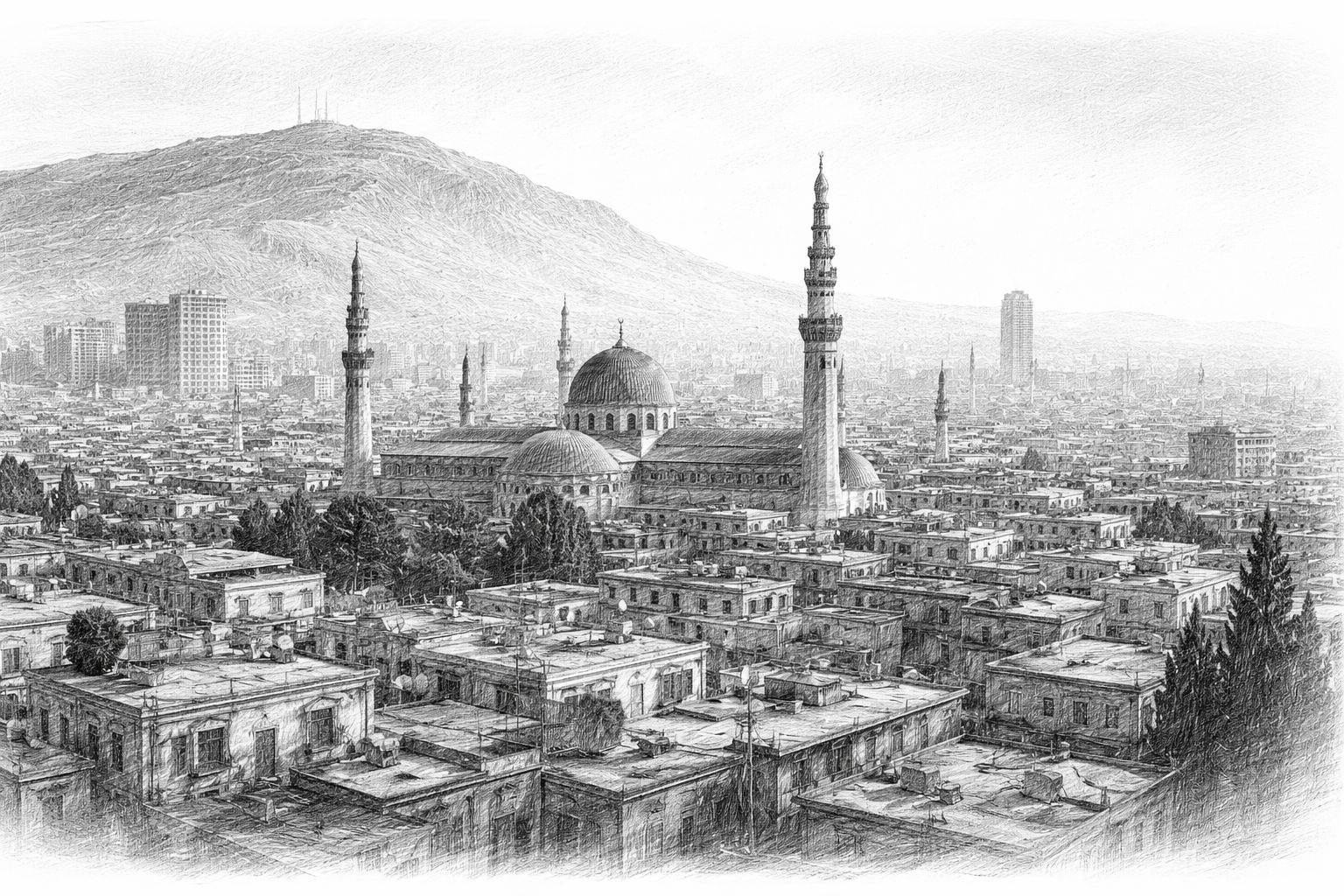
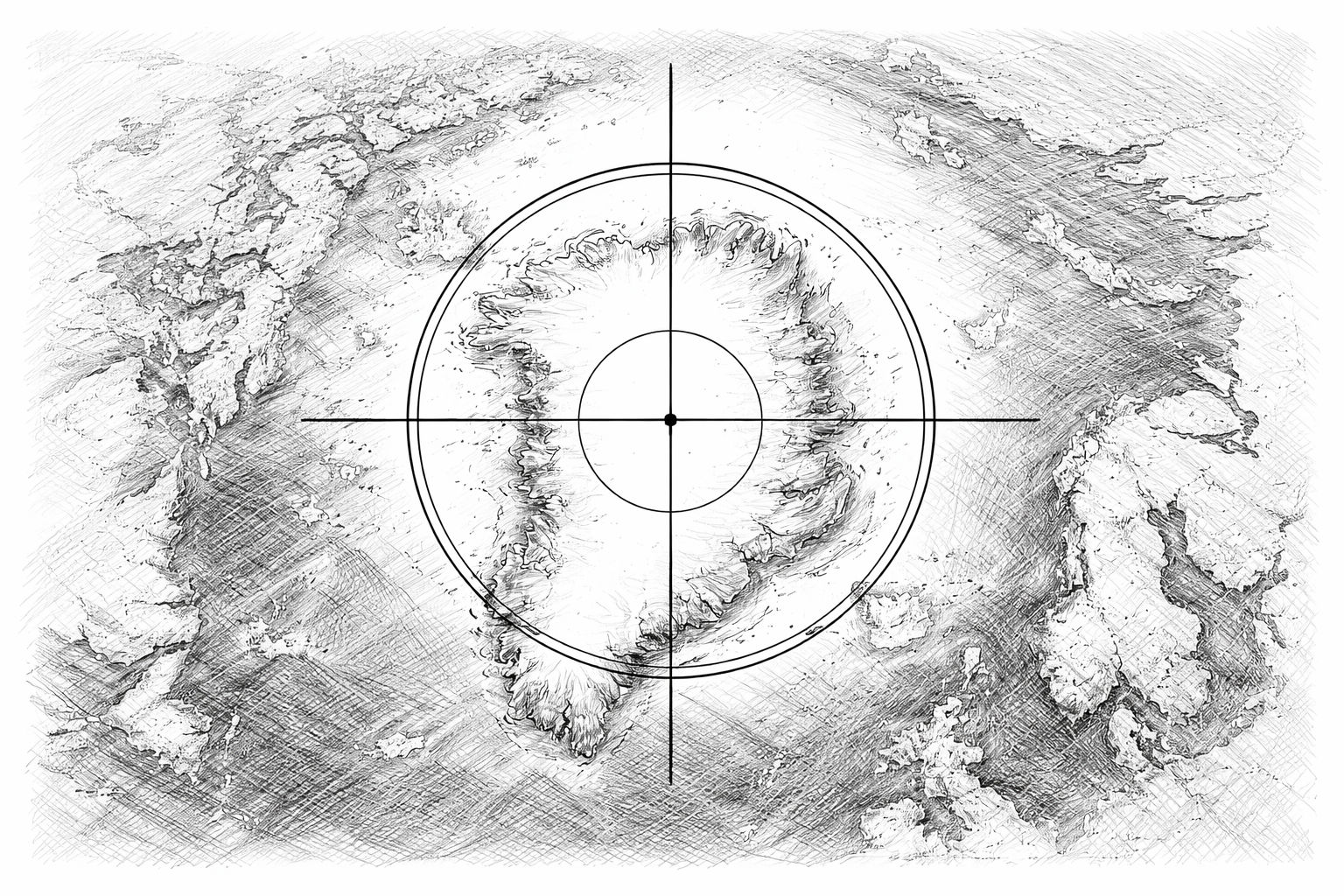

Frequently asked questions
- What does the famous „42“ in the meaning of life actually mean?
The number „42“ comes from The Hitchhiker's Guide to the Galaxy by Douglas Adams. There, a gigantic supercomputer calculates the „answer to the ultimate question of life, the universe and all the rest“ and comes up with the result 42. The real punchline, however, is that no one knows exactly what the original question was. As a result, the number has become a humorous symbol of the human search for meaning and definitive answers. - Why do people even bother with the question of meaning?
People have the ability to think about themselves, their past and their future. This almost automatically raises the question of why we are actually alive and what really matters. This question becomes particularly important for many people in times of crisis, in old age or after drastic experiences. The question of meaning therefore seems to be less a sign of weakness and more a fundamental part of human consciousness. - Do you have to be religious to think about the meaning of life?
No. Many people deal with the question of meaning without belonging to a particular religion. Philosophers, humanists, existentialists and psychologists have also tried to find answers. Religions often offer comprehensive models of meaning, but non-religious people are also looking for orientation, meaning, responsibility and inner stability. - Which religion is most concerned with the meaning of life?
There is hardly a clear answer to this question. Practically all major religions deal intensively with the question of meaning, suffering, responsibility and death. Christianity, Islam, Buddhism, Hinduism and Judaism have different emphases. Some place greater emphasis on the relationship with God, others on compassion, knowledge or inner growth. - Why are many religions and philosophies similar despite their differences?
Although the individual world views contradict each other in many respects, certain themes recur. Responsibility, compassion, community, love, self-limitation and dealing with impermanence play an important role almost everywhere. Perhaps this is because people have similar fundamental experiences regardless of culture or age. - What is the difference between happiness and meaning?
Happiness is often short-term and strongly dependent on external circumstances. Meaning, on the other hand, often has a deeper and more long-term effect. A person can be happy and still feel empty inside. At the same time, people can feel a sense of purpose even in difficult times if they take on responsibility, maintain relationships or pursue a goal that seems important to them. - Why does prosperity not make many people permanently happy?
Many philosophers and psychologists point out that people get used to external improvements very quickly. New successes or consumer goods often only generate short-term satisfaction. After that, the next goal is usually already on the horizon. This is why material wealth can solve practical problems, but does not automatically create inner orientation or long-term meaning. - What did Viktor Frankl mean by „Those who have a why to live can endure almost any how“?
As a survivor of Nazi concentration camps, Viktor Frankl observed that people could endure even extremely difficult situations if they saw meaning in their lives. With this sentence, he meant that people can often cope with astonishing burdens as long as they have an inner reason to carry on. - Why does death play such an important role in the question of meaning?
Because the finite nature of life gives many things meaning in the first place. Relationships, memories or shared moments often seem valuable precisely because time is limited. Many religions and philosophies deal intensively with death because the question of the meaning of life is closely linked to the question of transience. - What do religions believe about life after death?
The ideas differ greatly. Christianity and Islam often speak of a continuation of life with God or a judgment after death. Hinduism and Buddhism tend to assume rebirth. Other spiritual schools of thought speak of spiritual levels or the continued existence of consciousness. Still other people believe that consciousness ends with death. - Who was Helmut Thielicke and why is he interesting?
Helmut Thielicke was a Protestant theologian, philosopher and preacher of the post-war period. He became particularly well known for his true-to-life lectures and sermons in Hamburg. He dealt intensively with fear, loss of meaning, nihilism, responsibility and the question of what sustains people internally when external certainties fall away. This is precisely why many of his thoughts seem surprisingly modern today. - Why does the article go into such detail about Helmut Thielicke?
Because Thielicke was not just a theologian, but someone who dealt with existential questions in a very human way. There is also a personal connection: the author's stepparents lived in Hamburg around fifty years ago and heard Thielicke speak there themselves. This gives the subject an additional personal level. - What exactly does nihilism mean?
Nihilism describes the idea that there is no objective or universal meaning to life. Values and meanings are considered to be man-made. Nihilism is often confused with hopelessness, but in fact it can also be understood as an invitation to take responsibility for one's own meaning in life. - Why do modern people continue to search for meaning despite technology and prosperity?
Because although technical developments can improve comfort and safety, they obviously cannot completely replace basic human needs. People continue to search for closeness, orientation, meaning and community. Modern societies offer many opportunities, but at the same time often create new insecurities and disorientation. - Is AI or transhumanism a kind of new religion?
In some cases, some ideas are actually reminiscent of religious ideas. Transhumanist concepts are concerned with immortality, the expansion of consciousness or overcoming human limitations. In the case of AI, too, some people project hopes or fears onto a future „higher intelligence“. This is why some technological visions of the future almost seem like modern substitute religions. - Why are relationships so important for many people?
Because people are social beings. Love, friendship, family and community give many people the feeling of being needed and connected. Numerous religions and philosophies therefore regard relationships as a central source of meaning and emotional stability. - Why do people want to leave something lasting behind?
Many people want to leave a mark that extends beyond their own lives. This can be family, art, books, work or simply a good memory. Perhaps this desire is closely linked to human transience. People do not want to have the feeling of disappearing completely without meaning. - Is there even a definitive answer to the question of meaning?
Probably not in a single simple formula. Different religions, philosophies and world views come to different conclusions. At the same time, many of them show similar basic patterns such as responsibility, compassion, community or inner development. Perhaps that is why the importance of the question of meaning lies less in a perfect answer than in the human search itself. - What could be really important in the end?
There is no universal answer to this question. However, many people realize in the course of their lives that relationships, responsibility, memories, closeness and the feeling of having contributed something meaningful often become more important than mere possessions or status. The meaning of life is probably sometimes closer than we initially think.





It is a very informative article.
Putting something like this together is very commendable.
A philosopher by the name of Emanuel Geibel once summarized a question about the relationship between science and faith like this:
It is the end of all philosophy to know that we must believe!