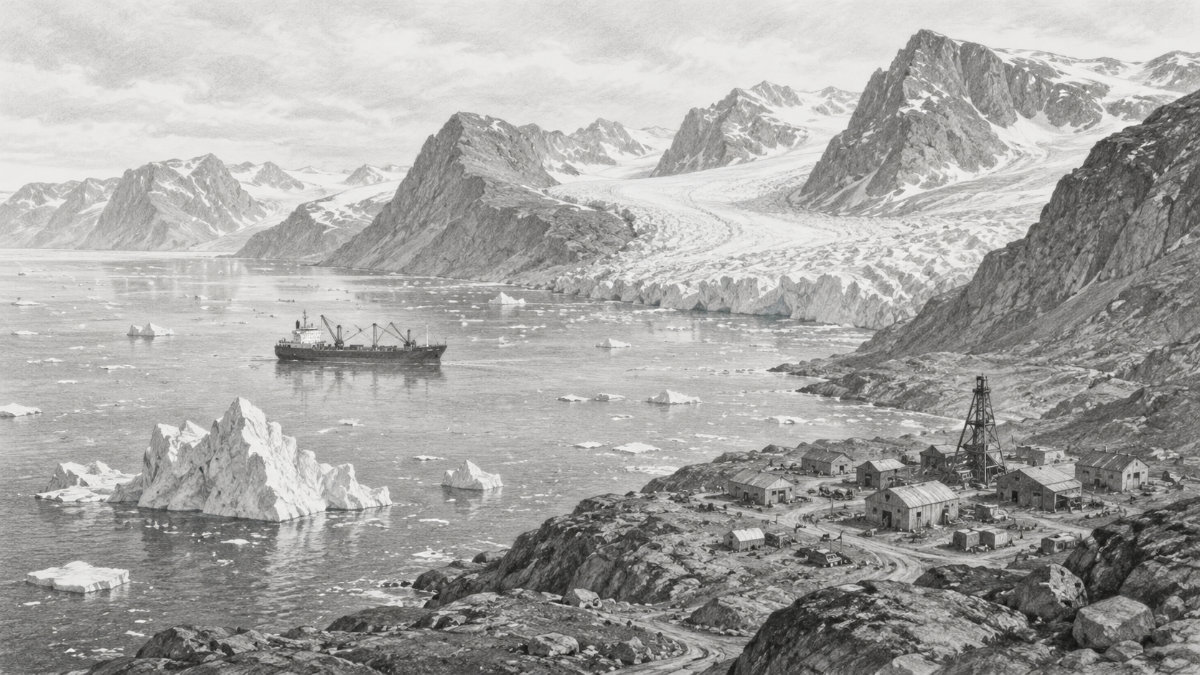
Beneath Greenland’s ice lies a promise that has captured the imagination of politicians, businesses, and investors for years: rare earth elements, critical minerals, oil, gas, and other natural resources that could become increasingly important in a world hungry for raw materials. The more climate change alters the Arctic regions, the more often Greenland is described as a future winner in this development.
But it’s not that simple. Between geological deposits and economically viable extraction lie political decisions, high costs, a lack of infrastructure, fluctuating commodity prices, and a population that is not necessarily willing to support every form of industrial development. Greenland is thus less of a surefire raw materials giant than an example of just how wide the gap between potential and reality can be.
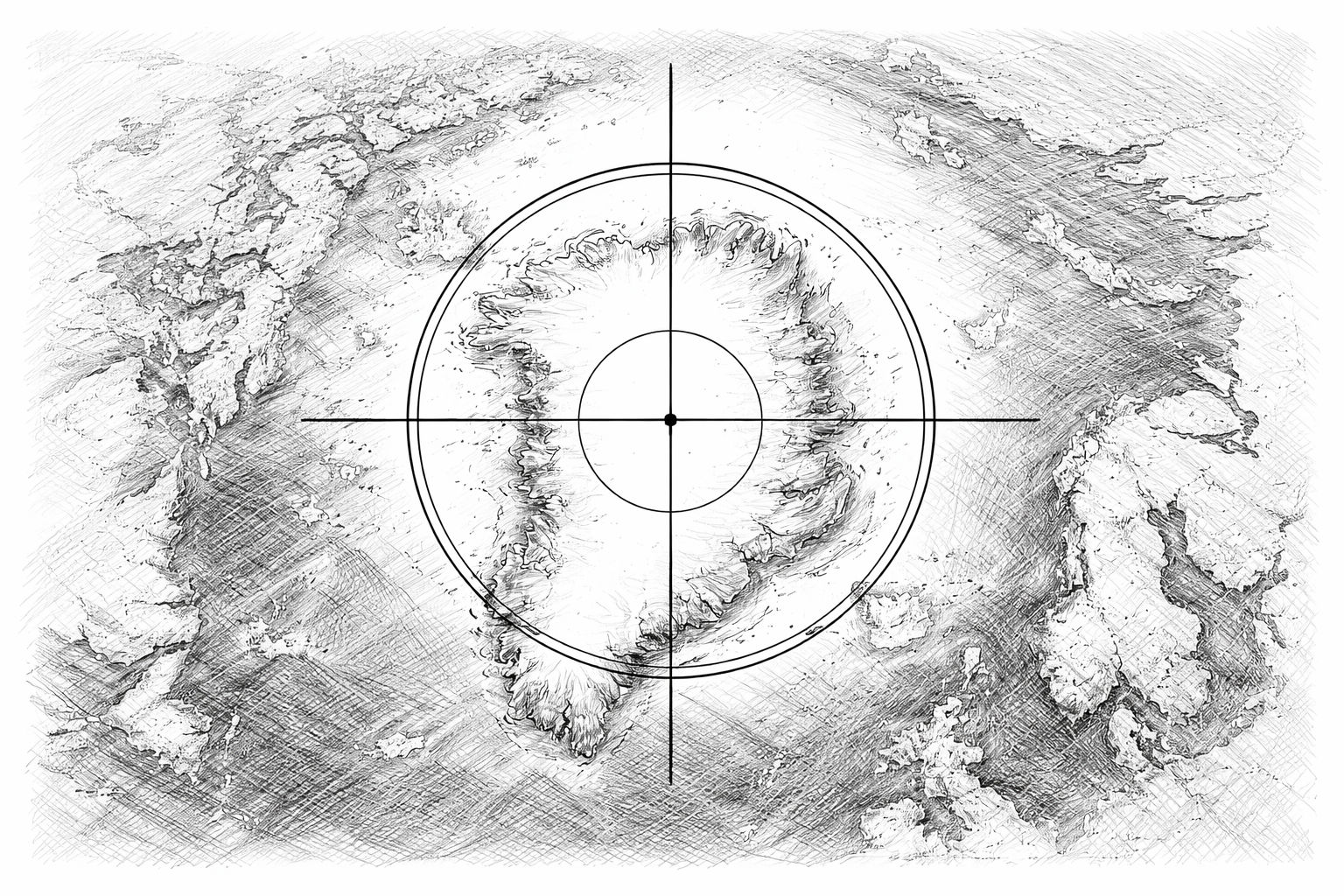


Heat waves, wildfires, and warmer winters show that climate change has long had tangible consequences. While countries near the equator are increasingly struggling with natural disasters, regions further north are gaining economic attention. This includes Greenland, which is politically part of the Kingdom of Denmark and is increasingly coming into focus due to its location in the Arctic.
In addition to growing tourist interest, the melting of the ice also holds significant economic potential. Greenland is currently still about 80 percent covered by ice. If this ice sheet continues to melt, natural resources could become more accessible. According to the European Commission, 25 of the 34 minerals classified as critical can be found in Greenland. Furthermore, it has been estimated that the West Greenland–Eastern Canada geological province could theoretically meet the entire United States’ oil consumption for one year and its natural gas needs for three years.
Rising prices for minerals and oil, improved extraction technologies, and climate change could make it easier to develop these resources in the future. However, the availability of raw materials alone is not the decisive factor. Rather, the key question for Greenland’s economic significance is whether these deposits can be developed in a reliable, affordable, and politically viable manner.
This is precisely where the uncertainty begins. Abundant natural resources on paper do not necessarily mean that mines can be built, ports expanded, workers recruited, and investors convinced to stay for the long term. Unresolved political issues, weak infrastructure, geographical challenges, and demographic changes are preventing Greenland from fully realizing its economic potential.
The crucial question, therefore, is not whether Greenland has valuable natural resources. The crucial question is whether these resources can actually be mined profitably under the current political, economic, and geographic conditions.
Political Difficulties
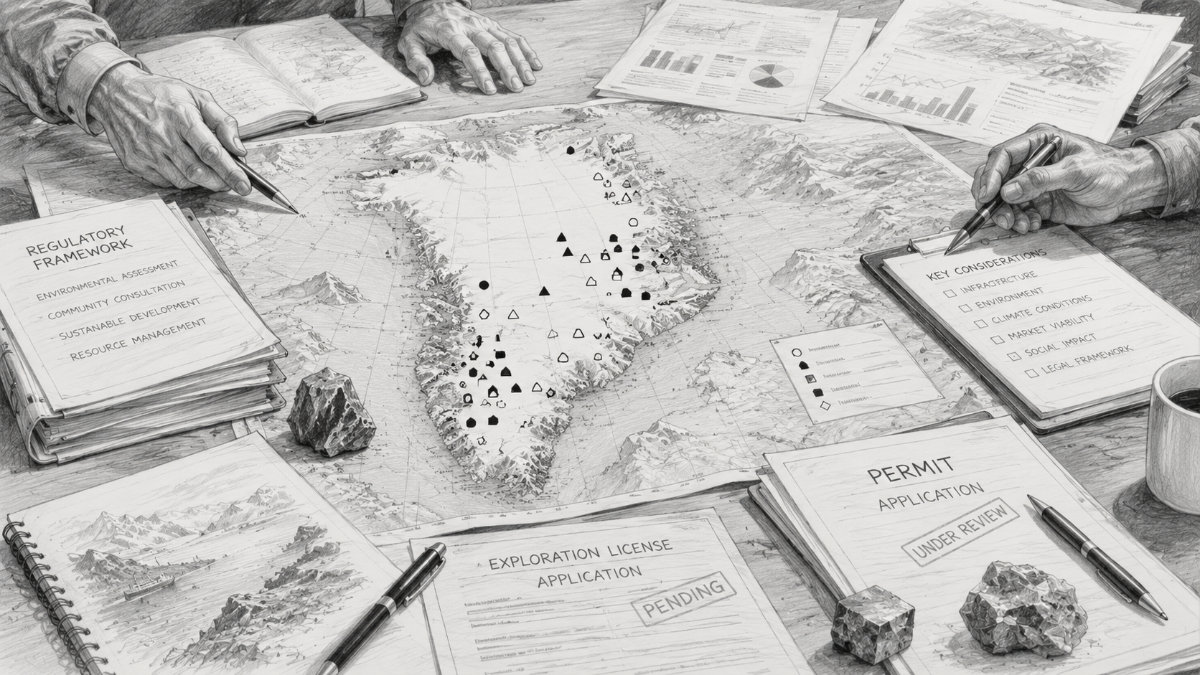
One source of uncertainty lies in the island’s political developments. Since Greenland gained self-government in 2009 and assumed legislative authority and full administrative control over its mineral resources, the political framework for natural resource projects has also changed.
Since then, many Danish politicians have lost interest in Greenland and its mineral and oil reserves. Government funding for research has declined, while investment in other projects has increased. This has limited the island’s ability to convert its natural resources into economic gains.
In addition, changing political administrations often signal a lack of continuity, coordination, and stability. It is precisely this uncertainty that poses a problem for potential investors. Even if the ice continues to melt and resources become more accessible, the question remains whether long-term investments will pay off under such conditions.
The introduction of various licensing systems and tax regulations has also made it more difficult for foreign companies to gain a foothold in Greenland in recent years. Similar to the situation in Germany, the increasing focus on environmental and socioeconomic concerns has led to additional regulations and more complex consultation procedures. As long as the administrative burden remains high or continues to rise, future resource extraction will be unlikely to reach its full potential.
Video Note: Natural Resources, Jobs, and Resistance in South Greenland
The video by Progress Deutschland adds a very concrete human dimension to the economic analysis of Greenland. It shows that raw materials are not just abstract numbers, geological deposits, or strategic interests, but are linked to jobs, income, and future prospects for many local people. The search for graphite—which is needed for batteries and solar power systems—is a prime example of the hope of establishing new career paths and industrial structures in Greenland. Especially in a country with a high cost of living and limited job opportunities, this aspect should not be underestimated.

Greenland's New Natural Resources: An Economic Boom Thanks to Uranium? | Progress Germany
At the same time, the video makes it clear why the resource boom remains so controversial, both politically and socially. In South Greenland, the desire for jobs and economic independence clashes with concerns about environmental pollution, dust, tailings, and potential risks associated with uranium. The controversy surrounding a planned open-pit mining project near Narsaq shows that Greenland’s resources cannot simply be developed without taking the local population, their livelihoods, and their sense of security seriously. In this way, the video aligns well with the article’s central question: Greenland’s wealth lies not only in the ground, but also in the decision regarding what price society is actually willing to pay for its extraction.
Dependence on Commodity Prices
Another source of uncertainty is commodity prices themselves. In recent years in particular, many commodity markets have been highly volatile. Technological changes, shifting demand, and the difficulty of expanding supply on short notice repeatedly lead to significant price fluctuations.
This is a serious problem for companies. New investments in mining projects require a lot of money, extensive planning, and a long-term commitment. However, if it remains unclear which raw materials will actually be in high demand in a few years and at what prices they can be sold, planning certainty decreases significantly.
In addition, technology is evolving rapidly. More affordable alternatives for certain minerals could emerge soon. Since it can take up to 16 years to build new mines, companies are reluctant to invest large sums in regions or industries whose long-term profitability is uncertain.
Nevertheless, Greenland’s potential should not be underestimated. Even though future innovations and market expectations could slow investment to some extent, the island possesses a wide variety of resources that are still indispensable at present. Economic benefits are therefore quite likely. However, they remain difficult to predict and depend heavily on which raw materials will actually be needed in the long term.
Demographic Changes
Resource policy is not determined solely by governments and companies. Public opinion also plays an important role—especially in cases where industrial projects have a direct impact on the landscape, way of life, and environment.
The demographic changes of recent years have altered the perspective on mineral exploration in Greenland. Many young people have moved to Nuuk, while older people seeking better social services have moved to Denmark. This has also shifted the political agenda.
Many young people tend to be critical of industrial activities that could harm the local environment. This attitude can hinder investment and make future exploration projects more difficult or even prevent them from happening. What may be understandable from an environmental standpoint can, from an economic perspective, slow down Greenland’s development as a resource hub.
Geographical Challenges
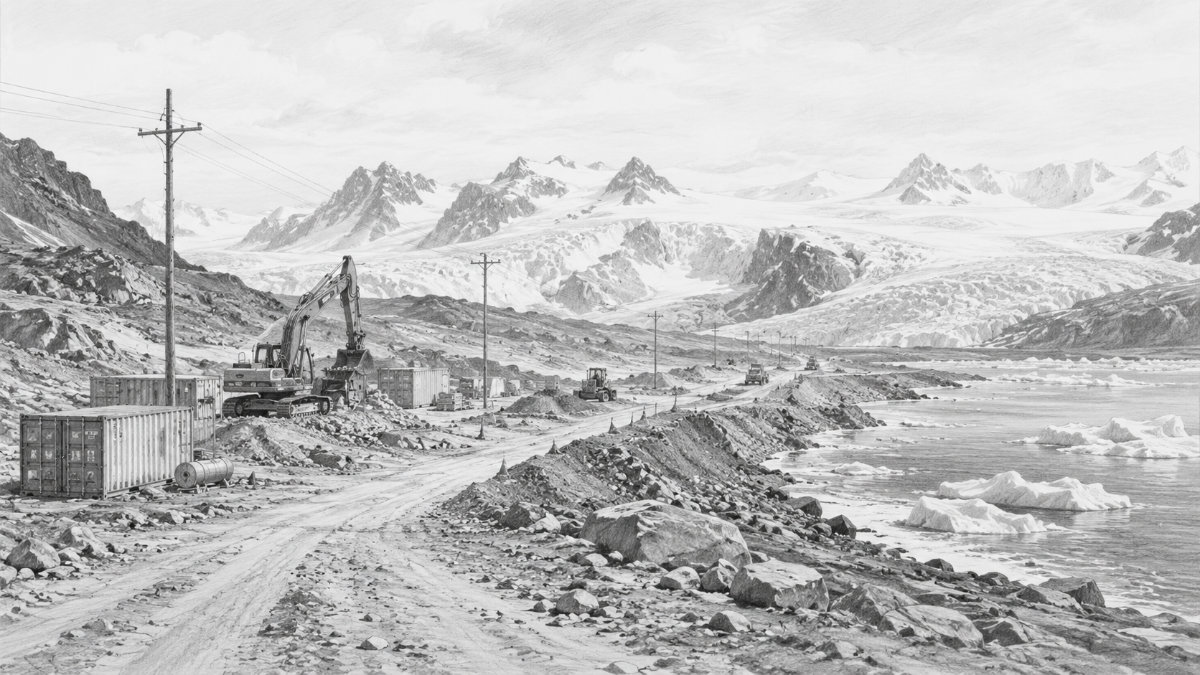
Despite the rapid rate of ice melt, much of Greenland remains covered in ice. The kilometer-thick polar ice sheet, long periods of darkness, and extreme climatic conditions make mining in the Arctic significantly more expensive than in many other regions of the world. According to estimates, costs can be five to ten times higher than in other parts of the world.
Permafrost, cold temperatures, remote locations, and harsh environmental conditions mean that many projects remain economically risky for companies. Even if a mineral deposit is geologically promising, that does not necessarily mean it can be profitably developed under Arctic conditions.
Added to this is the poor infrastructure. Large parts of Greenland consist of steep mountainous terrain, a harsh Arctic climate, few roads, and a lack of power and communication lines. A functioning natural resources industry would therefore require significant investment in ports, transportation routes, energy supply, and digital infrastructure.
If these investments do not materialize, Greenland's role as a major new raw materials exporter will remain, for the time being, primarily a vision for the future. Economic growth would be delayed accordingly.
Greenland, Trump, and the Question of Belonging
 Greenland is much more than just an island in the north rich in natural resources. The article „Greenland, Trump, and the Question of Belonging“ explains why the debate over a possible „purchase“ or „takeover“ of Greenland is historically, legally, and politically far more complex than many headlines suggest. He examines early settlement, Inuit cultures, the Viking Age, Danish colonial history, the path to self-government, and U.S. strategic interests. It becomes clear that Greenland is not an object of geopolitical negotiations, but a country with its own population, its own history, and a recognized right to self-determination. Anyone who wants to understand the current discourse on natural resources and the Arctic can hardly ignore this foundation—because Greenland’s future is determined not solely by its mineral resources, but by its sense of belonging, identity, and political self-determination.
Conclusion: Greenland's natural resource boom remains uncertain
In the future, Greenland will undoubtedly attract greater attention from the political and business worlds as well as the commodities markets. The island has mineral deposits that could be of great significance in a technologically advanced and resource-dependent world. However, this does not automatically mean there will be a commodities boom.
Political uncertainty, high production costs, a lack of infrastructure, fluctuating world market prices, and environmental concerns make it difficult to predict Greenland’s development. Climate change may facilitate access, but it does not resolve administrative problems or investment risks.
Greenland’s wealth, then, is not simply lying exposed in the ice. It comes with conditions. This is precisely the real lesson to be learned from this issue of natural resources: Natural deposits are only the beginning. Whether they lead to economic strength depends on politics, infrastructure, social acceptance, and long-term planning.
Sources and Further Reading
- „How Big Are Greenland’s Natural Resources?“, Sustainable Views, June 14, 2026.
- Flemming Christiansen: „Greenland Mineral Exploration History“, Springer, October 11, 2022.
- Tejvan Pettinger: „What Explains the Volatility of Oil and Food Prices?“, Economics Help, January 31, 2018.
- Justin Klawans: „Why Greenland’s Natural Resources Are Nearly Impossible to Mine“, The Week, January 14, 2026.


Frequently asked questions
- Why is Greenland even considered a potential beneficiary of climate change in terms of natural resources?
Greenland is drawing attention because large parts of the island are still covered by ice, and significant mineral deposits are believed to lie beneath this ice sheet. As the Arctic continues to change due to climate change, areas that were previously difficult to access could become more accessible. This is fueling economic hopes, particularly in the areas of critical minerals, rare earth elements, oil, and gas. It is crucial to note, however, that improved accessibility alone does not guarantee a natural resource boom. - What natural resources make Greenland so economically attractive?
Greenland is of particular interest because of its critical minerals, rare earth elements, potential oil and gas reserves, and other natural resources. These raw materials play an increasingly important role in modern technologies, energy supply, digitalization, defense, and industry. A particularly critical factor here is that many industrialized nations want to become less dependent on existing supply chains. At first glance, Greenland therefore appears to be a strategically valuable resource region, though its actual development faces significant hurdles. - Why doesn't an abundance of natural resources automatically lead to economic success?
Mineral deposits are, at first, merely geological potential. For them to lead to economic success, many other conditions must be met: companies must invest, infrastructure must be in place, permits must be granted, extraction costs must remain affordable, and there must be long-term demand for the minerals. In Greenland in particular, this path is especially difficult because the climate, distance, political uncertainties, and high costs can significantly complicate economic extraction. - What role does infrastructure play in Greenland's potential natural resource boom?
Infrastructure is one of the key bottlenecks. Large parts of Greenland have few roads, limited energy supplies, difficult transportation routes, and limited communication lines. Mining projects, however, require ports, electricity, machinery, labor, storage space, supply chains, and a reliable supply of resources. Without massive investments in these fundamentals, even a valuable mineral deposit remains difficult to exploit. Greenland’s future in the mineral sector therefore depends not only on ice, but also on concrete, cables, ports, and energy. - Why is mining in Greenland so expensive?
Mining in Greenland is expensive because the natural conditions are extreme. Cold temperatures, permafrost, long periods of darkness, remote locations, ice fields, and challenging terrain significantly increase costs. Machinery must operate under Arctic conditions, materials must be transported over long distances, and workers must be deployed to regions that are often difficult to reach. As a result, projects can become economically unattractive, even if the raw materials are geologically promising. - What political uncertainties are holding back investment in Greenland?
Investors need long-term planning certainty. When licensing systems, tax regulations, environmental requirements, or political priorities change frequently, the risk increases. In Greenland, there is the additional factor that the management of mineral resources is increasingly in Greenlandic hands as a result of self-government. While this is politically understandable and important, it can mean additional coordination processes for companies. The more uncertain the political framework appears, the more cautious investors become when it comes to long-term, capital-intensive mining projects. - Why are commodity prices so important to Greenland?
Commodity prices determine whether a project is profitable. When prices are high, even expensive mining areas can become attractive. If prices fall or fluctuate sharply, the risk for companies increases significantly. Since new mines require many years of planning, permitting, and construction, investors must plan far into the future. This is particularly difficult in volatile markets. A commodity that is in high demand today may become less important in ten years due to new technologies. - Can climate change really make it easier to extract natural resources in Greenland?
Climate change may make certain access routes easier because ice cover is receding and Arctic regions become more accessible at times. However, this does not mean that extraction will automatically become easy or cost-effective. Even as the ice melts, permafrost, extreme weather conditions, remote locations, and environmental risks remain. Climate change is thus altering the conditions, but it does not eliminate the fundamental challenges of extracting natural resources in Greenland. - What role does the Greenlandic population play in new natural resource projects?
The population plays a central role because natural resource projects are not merely economic ventures; they can have a profound impact on the landscape, the environment, and people’s way of life. Many people in Greenland certainly see potential investments as an opportunity—for example, for jobs and infrastructure. At the same time, there are concerns about environmental impacts, dependency, and the loss of cultural autonomy. A natural resource boom can therefore only be sustainable if it is not planned without the involvement of the local population. - Why are some young people critical of natural resource projects?
Younger people often place greater importance on the environment, quality of life, and political self-determination than on mere expectations of economic growth. Especially in Greenland, where nature and identity are closely intertwined, industrial development can be perceived as a risk. When mining projects alter landscapes or disrupt local ways of life, resistance arises. This skepticism does not necessarily mean a rejection of all economic development, but rather a desire not to be viewed solely as a supplier of raw materials. - How important are critical raw materials to Europe and the United States?
Critical raw materials are indispensable to modern economies—for example, in batteries, electronics, renewable energy, defense, digitalization, and industrial production. Europe and the United States are increasingly seeking ways to reduce their dependence on individual supplier countries. Greenland appears strategically interesting because many of these raw materials are suspected or confirmed to exist there. However, even strategic need cannot replace the practical requirements for economically viable extraction. - Could Greenland become more independent from Denmark through its natural resources?
Theoretically, yes, because successful mineral extraction could generate revenue, create jobs, and strengthen economic self-reliance. In practice, however, this is uncertain. Mining projects require high initial investments, lengthy permitting processes, and stable markets. There is also a risk that new dependencies could arise, such as on foreign investors or specific commodity prices. Natural resources could strengthen Greenland’s independence, but they are not an easy or risk-free path to achieving it. - Why is Greenland so sensitive from a geopolitical perspective?
Greenland is located between North America, Europe, and the Arctic. This location makes the island of interest from a military, economic, and strategic perspective. New trade routes, natural resource deposits, and security interests are prompting various powers to take a closer look. At the same time, Greenland is not an empty space, but an inhabited land with its own history and political voice. It is precisely this that gives rise to the tension between external interests and internal self-determination. - What distinguishes Greenland's mineral resources from those of traditional mining regions?
Traditional mining regions often already have roads, ports, electricity, a workforce, service providers, and political experience with large-scale mining projects. In Greenland, many of these prerequisites are lacking or available only to a limited extent. In addition, the climatic conditions are significantly harsher. As a result, the gap between the discovery of a mineral deposit and its economic extraction is wider than in many other parts of the world. Greenland is therefore not a typical mining location, but rather a particularly challenging special case. - What is the sober overall assessment of the potential natural resource boom in Greenland?
Greenland undoubtedly has considerable economic and strategic potential. However, this does not necessarily mean a resource boom is guaranteed. Too many factors remain uncertain: the political environment, infrastructure, production costs, environmental regulations, public acceptance, world market prices, and technological developments. Greenland will likely grow in importance, but it will not automatically become the next resource giant. The real point is this: wealth beneath the ice is only a possibility—not yet an economic reality.