When you move around in the digital space today, you very quickly get a certain impression: if you are visible, you are successful. If you have reach, you have influence. And if you produce a lot of content, you automatically build up something. This equation seems plausible at first glance - but it is deceptive. Because visibility is not ownership. Reach is not ownership. And content is by no means a foundation.
A post can be read thousands of times and yet practically disappear after a few days. A social media post can go viral - and at the same time have no lasting effect. Even well-placed content in search engines is not automatically stable. They depend on algorithms, platform rules and developments that you have no control over.



The confusion between range and value
What is often overlooked here: Most digital activities generate movement, not substance. They create attention, but not ownership. They create a short-term presence, but not a long-term impact. This is no coincidence, but part of the logic of the system. Platforms are designed to circulate content - not for you to build something that lasts independently of them.
And it is precisely at this point that a mental mistake begins that many people only realize late on: They invest time, energy and often money - not in their own system, but in external structures.
In short, many people build up their reach - and only realize years later that none of it belongs to them.
The blind spot of the digital economy
If you look at how content is created today, you will notice a pattern: It is produced, published, moved on. The next article, the next topic, the next idea.
What seldom happens is build-up. Many work as if they were starting from scratch every day. Content is juxtaposed, but not connected. The structure that turns individual elements into a whole is missing. This difference is crucial. Because a single article in isolation is little more than a fragment of information. Only through embedding, linking, further development and context does it become a building block within a system. And only this system has the potential to increase in value over time.
This is precisely where the blind spot lies: the digital economy rewards production in the short term - but in the long term, those who build in a structured way benefit. This seems unspectacular in everyday life. There are no quick spikes, no sudden leaps. But something emerges that is no longer so easy to suppress: a growing substance. And this substance follows different rules than reach. It is not created through mass, but through connection. Not through speed, but through continuity. And not through visibility alone, but through control over what you create.
This raises another, much more fundamental question: what does it actually mean to really own something in the digital space? This is where the real core of this article begins.
What is digital property really? Definition from a scientific perspective
 If you take a closer look at the term „digital property“, you quickly realize that it is often used but rarely clearly defined. In the classic sense, ownership means one thing above all: control. Not in the emotional sense, but in the legal and practical sense. I have defined it even more precisely in another article, what digital property is and what it is really about.
In academic discussions, this is often referred to as digital ownership. This refers to the actual power of disposal over digital content - i.e. the ability to use, modify, distribute or even remove it without being dependent on third parties.
And this is where the first distinction begins, which is often overlooked in everyday life:
Between ownership and use.
When you publish content on a platform, you use its infrastructure. But you don't really own it. The platform decides on reach, visibility and, in case of doubt, whether your content remains or disappears.
This may hardly be noticeable in everyday life. From a strategic point of view, however, it is a fundamental difference. This is because ownership does not become apparent when everything is running smoothly - but at the moment when the framework conditions change.
Digital assets and their structure
To sharpen the term further, it is worth taking a look at what is often referred to as a digital asset. Initially, this quite naturally includes content such as texts, books, images or databases. But this view falls short.
A single text is technically an asset. However, its actual value only arises from the context in which it is placed. An article that is meaningfully embedded, linked to other content and part of a clear structure develops a different quality than an isolated contribution. It is not only read - it becomes part of a system.
This is where an aspect that is often underestimated comes into play: Structure. Metadata, internal links, thematic connections and editorial lines are not decorative elements. They are the foundation on which digital property can be created in the first place.
To put it simply: the content is the material - the structure is the building. And as in traditional craftsmanship, it is not the material alone that determines the quality, but the way in which it is processed.
The decisive factor: control
When all aspects are brought together, one point remains that makes the difference: control. In legal and economic terms, control is one of the central criteria for ownership. Only those who can actually determine what happens to a good can own it in the true sense of the word.
If you transfer this principle to the digital world, the situation quickly becomes clearer. An in-house magazine, website or self-published book are much more likely to fulfill this requirement than content that is fully embedded in external systems. Not because they are technically superior - but because they are independent.
At this point, the topic also touches on the concept of digital self-determination. This refers to the ability to shape one's own digital existence instead of having it defined by external structures. This may sound abstract at first, but it has very concrete implications.
- If you have control, you can develop content in the long term.
- If you have control, you can build structures.
- If you have control, you can make decisions that only pay off years later.
And this is precisely the point at which it is decided whether digital work merely generates activity - or whether actual value is created from it. Because without control, everything remains provisional. With control, the basis is created for something that can endure.
This also shifts the perspective: it's no longer just about creating content. It's about building a system that belongs to you.
Digital capital: Why content accumulates
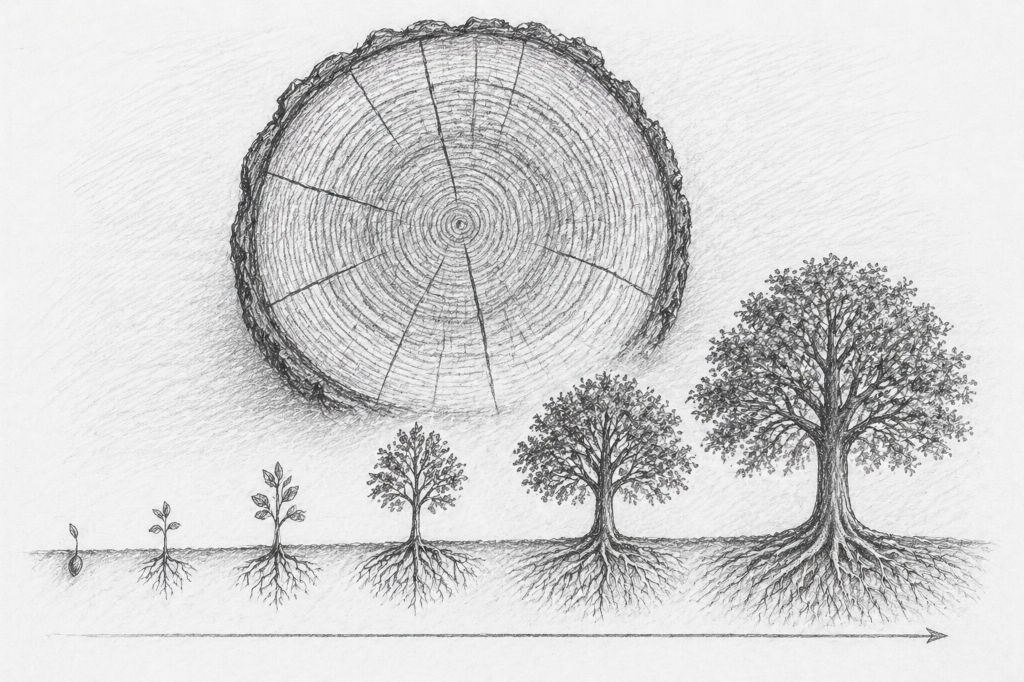
When you start to look at content not in isolation, but as part of a larger context, the perspective on its value also changes. A single article may seem limited - but a system of articles can develop its own dynamic over time.
In research, this idea is described by the term digital capital, among others. It goes back to classic theories of capital, such as that of Pierre Bourdieu, who differentiated between various forms of capital - not only financial, but also cultural and social.
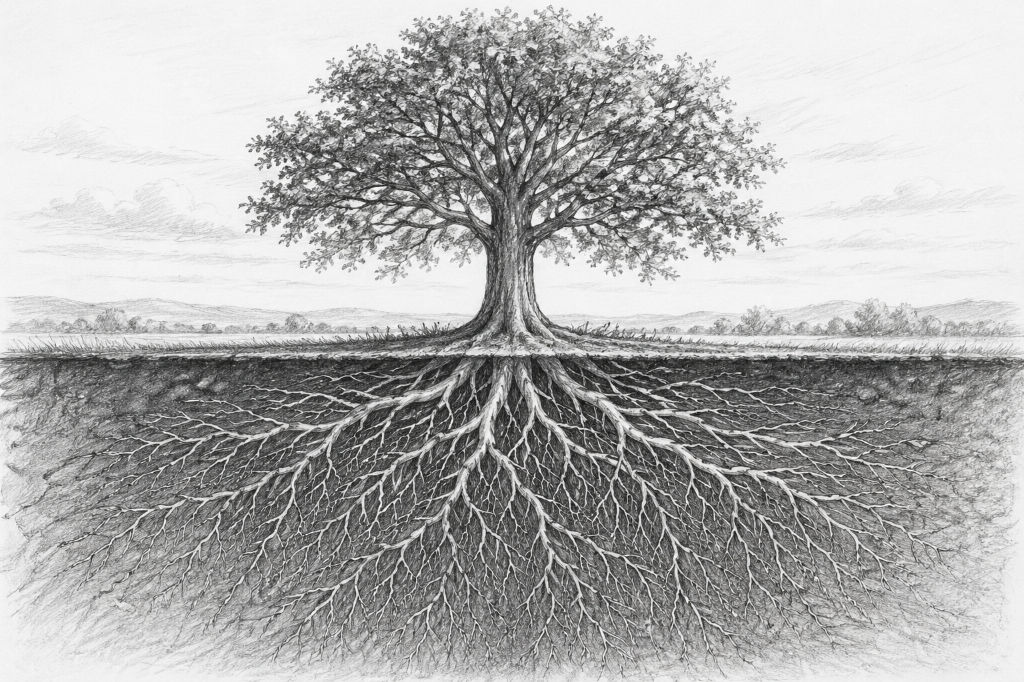
If you transfer this principle to the digital world, an interesting idea emerges: content can also accumulate. Not just in quantity, but in value. An article then no longer stands alone. It becomes part of a growing stock. And over time, this stock can develop an effect that goes far beyond the sum of its individual parts.
This is the point at which content slowly becomes capital.
Accumulation instead of publication
If you simply publish content, the following often happens: It appears, is read - and then loses importance. The next post follows and the game starts all over again.
Accumulation works differently. The aim here is not to constantly produce something new, but to expand, link and embed existing content in a meaningful way. Every new piece of content strengthens the existing ones. Every piece of existing content gains depth through additions. However, this requires you to think in terms of structures rather than individual contributions.
A magazine that develops thematic focuses, links content with each other and regularly updates older articles behaves differently than a loose collection of articles. It begins to behave like a system. And it is precisely this system that is crucial. Because it ensures that content does not simply „become obsolete“, but continues to develop. It is not replaced, but supplemented. They do not lose their significance, but change their context.
This is a rather classic approach. In the past, we would have said: you build an archive. Or a library. Today, you might call it a content system. The core remains the same.
The „compound interest effect“ of content
The so-called compound interest effect is a particularly vivid illustration of this process. In the world of finance, it describes a simple principle: income is not only earned once, but also reinvested - thereby generating new income. This results in exponential growth over longer periods of time. If this principle is applied to content, a similar pattern emerges.
- An article can bring readers.
- These readers come across further content.
- This content in turn increases the visibility of the overall system.
Over time, a network of references, connections and topics emerges. And this network begins to support itself.
It is important to note that this effect does not appear immediately. At the beginning, everything seems small, almost inconspicuous. Individual contributions stand side by side, without much effect. But with each addition, the system becomes denser. Connections emerge. Connections become visible.
And at some point the perception changes:
- Individual contents become a context.
- A context becomes a structure.
- And this structure gives rise to a value that is no longer so easy to dissolve.
This is precisely where the real advantage lies: while individual content can be replaced or copied at any time, an established system is difficult to reproduce. Not because it is technically complex - but because it has taken time. And time cannot be copied.
Key terms relating to digital property
| Term | Meaning | Relevance for the article |
|---|---|---|
| Digital property | Digital content, structures or systems over which the creator retains long-term control. | Basic concept of the article: It is not just about content, but about controllable digital substance. |
| Digital assets | Texts, images, books, databases, websites or other digital assets with long-term value. | Shows that content is not just a publication, but can become an asset. |
| Digital Capital | Accumulated digital resources, skills, content and structures that generate value over time. | Explains why individual contributions together can form a growing digital capital. |
| Organic growth | Slow, continuous development of a system through new content, maintenance and linking. | Describes the alternative concept to short-term reach and campaigns that quickly fizzle out. |
| Platform dependency | Dependence on external systems, algorithms, rules and visibility mechanisms. | Makes visible why reach without control remains strategically risky. |
| Editorial line | Recognizable selection, attitude, language and thematic management of a digital system. | It makes an established system personal, credible and difficult to copy. |
Organic growth as an underestimated principle
When you start a project today, you encounter the same expectation almost everywhere: it should happen quickly. Visible results, rising figures, clear progress - preferably within a short space of time. This expectation has become deeply engrained in digital thinking. Growth is often equated with speed. Those who grow quickly are considered successful. Those who grow slowly are often overlooked.
And this is precisely where there is a mistake in thinking. Because speed says little about stability. A system that grows quickly can lose importance just as quickly. It reacts sensitively to external influences, to changes in platforms, trends or algorithms.
Slow growth works differently. It is not based on short-term effects, but on repetition, linking and gradual consolidation. Any new content is not simply added, but integrated. Existing content is supplemented, expanded and sometimes even corrected.
This appears unspectacular from the outside. There are no sudden leaps, no conspicuous swings. But it creates something that has become rare in the digital world: stability. And stability is more valuable in the long term than speed.
Systems instead of individual content
Another difference can be seen in the way content is conceived. Many work according to the principle of individual articles. Each article stands on its own, fulfills a purpose and is then replaced by the next one. The result is a linear movement - but no coherence.
Organic growth follows a different approach. Here, content is understood as part of a system. They do not stand in isolation, but in relation to each other. Topics are taken up, continued and examined from different perspectives. One article can be the introduction to a topic. Another one deepens it. A third establishes a connection that was not previously visible.
This way of working requires a certain discipline. It is not enough to produce content. You have to categorize, link and occasionally revise it. Internal linking in particular plays a central role here. It is not a technical detail, but a structural element. It ensures that content communicates with each other. That they reinforce each other.
Then there is the editorial line. A system is created not only through linking, but also through selection.
- What topics are covered?
- Which ones are deliberately omitted?
- What perspectives are taken?
These decisions are not always obvious. But they shape the overall picture. And it is precisely this overall picture that gains in importance over time.
Books as digital property: from manuscript to system
 Digital systems don't end with articles - they can be consistently developed further. Books are a particularly interesting example of this. Properly structured, they are more than just individual publications: They become digital assets in their own right that exist in the long term and unfold across different channels. This is precisely the approach described in the book "Writing books 2.0", that rethinks the writing process - not as a one-off project, but as a repeatable system. Instead of relying on automation, it shows how AI can be used specifically as a tool without losing one's own handwriting.
At the same time, it is clear that books can also grow organically if they are strategically embedded - for example in a magazine or a topic structure. They are found, linked, recommended and gain in importance over time. This means they are not just content, but part of a larger system: digital property that lasts.
Historical parallels
If you take a step back, you realize that this principle is by no means new. In the past, knowledge was collected in libraries. Books were cataloged, arranged thematically and added to over the years. An individual book had its value - but the real strength lay in the collection. A publisher not only published individual titles, but also built up a program. Themes were developed, authors supported, content maintained over the long term. Archives also followed this principle. Documents were not simply filed, but systematically recorded, classified and made accessible.
All these examples have one thing in common: they focus on continuity rather than short-term impact. In the digital world, this way of thinking seems to have been partially lost. Content is produced, distributed and often forgotten just as quickly. The focus is on the moment - not on development.
But this is precisely where the opportunity lies. Anyone who starts to think in terms of such structures again today is consciously moving against the tide. They are foregoing short-term effects in favor of long-term stability. This may seem less spectacular at first. But it leads to a result that clearly stands out over time. Because while many systems are geared towards quick success and remain correspondingly vulnerable, a system that has grown organically develops its own inertia. It becomes harder to displace. Harder to replace. And a little more stable with every further step.
Perhaps that is the crucial point: organic growth is slow at first - but it never stops. And that is precisely what makes it superior in the long term.
Why grown systems cannot be copied
If you take a sober look at digital content, the situation is initially clear: texts can be copied. Images can be copied. Even entire websites can be copied relatively easily. This is not a new realization - and that is precisely why many arguments fall short at this point. They stop at the surface. Because they look at what is visible. Not what lies behind it.
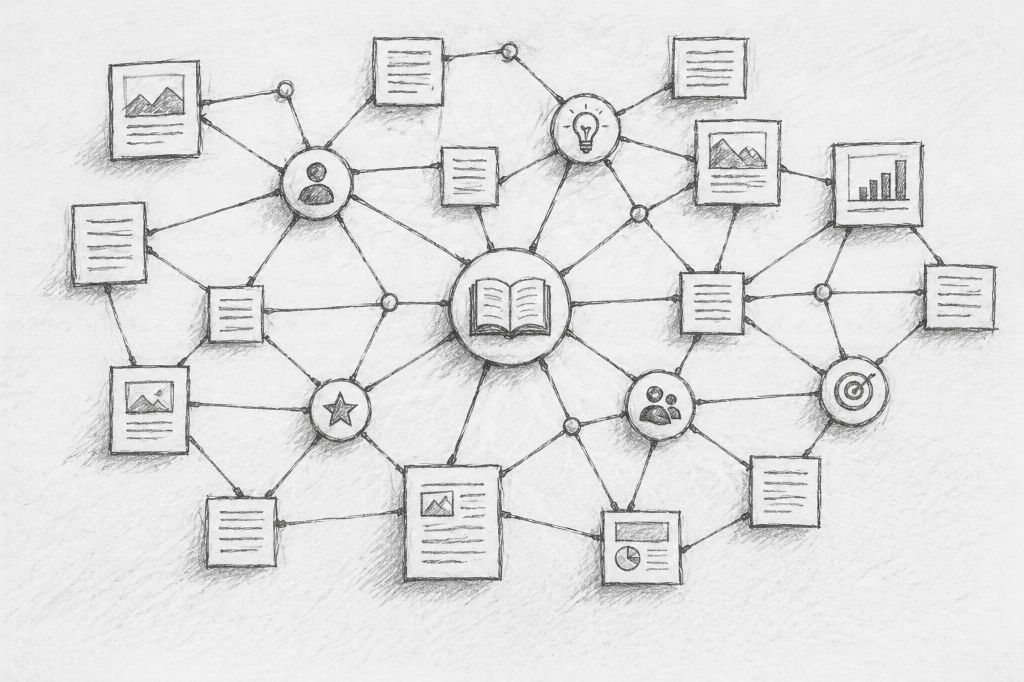
A single article can indeed be copied. But it is not an evolved system. Why? Because a system consists not only of content, but also of relationships. Of links. From decisions that have been made over a long period of time.
If you look at content in isolation, it seems interchangeable. If you view them as part of a structure, their quality changes.
- One article refers to another.
- One topic is discussed in more detail elsewhere.
- A connection is created that was not planned, but has developed.
This structure cannot simply be reproduced. Not because it is technically complex - but because it has grown. And growth does not follow a template.
Time as a decisive factor
Perhaps the most important aspect in this context is time. In the digital world, time is often underestimated. Everything seems to be available at any time, reproducible at any time. But this is precisely where a limit becomes apparent: time cannot be accelerated when it comes to development.
A system that has been built up over months or years carries this time within it. Not visible - but effective. Older content does not simply sit alongside new content. They form a foundation. They show how topics have developed. They give a system depth.
And this depth is not created by planning alone. You can create a structure. You can define topics. But you cannot simulate a history. An evolved system contains traces. Decisions that might have been made differently in retrospect. Topics that have shifted. Perspectives that have broadened.
All this makes it human - and at the same time unique. If someone tries to copy such a system, they can replicate the interface. Adopt the content, imitate the structure. What they lack is time. And without this time, the system lacks an essential component: development.
Personal line as an invisible core
In addition to structure and time, there is a third factor that is often underestimated: the personal line. It is difficult to grasp because it is rarely formulated explicitly. And yet it is present in every established system.
- This is reflected in the selection of topics.
- In the way things are described.
- In what is deliberately left out.
This line is not created by planning alone. It develops over time - through experience, through correction, through reflection. In psychology, this is referred to as psychological ownership. This refers to the feeling that something „belongs to you“ because you have shaped it.
Applied to digital systems, this means that an evolved system bears the signature of its creator. And this signature cannot be copied.
You can imitate them. You can try to imitate them. But you cannot reproduce it. Because it is not only based on the result, but also on the way there.
- On decisions that have been made.
- On topics that were deliberately pursued or rejected.
- On an attitude that has stabilized over time.
This is the point at which many copies fail. They adopt content, perhaps even structures. But they don't grasp the logic behind it. And without this logic, everything remains superficial.
The real difference
When all aspects are brought together, a clear picture emerges.
- What can be copied is what is visible: texts, images, layouts.
- What cannot be copied is what has grown: structure, time, line.
This does not mean that a system is untouchable. Of course there can be competition. Of course similar content can emerge. But the starting point is different. An established system has a head start that cannot be made up by mere reproduction. It doesn't just exist - it has developed. And it is precisely this development that continues to have an effect.
- The structure is reinforced with each new content.
- The line becomes clearer with each addition.
- With every decision, the difference to what is merely replicated grows.
Perhaps this is the most sober formulation: uncopyability is not created by protection, but by construction. Not through compartmentalization, but through continuity. And that is precisely why it is so effective. Because it cannot be forced - it can only be worked for.
Organically growing digital property compared to traditional forms of advertising
| Aspect | Classic forms of advertising | Organically growing digital property |
|---|---|---|
| Duration of effect | Usually only works as long as budget is used or a campaign is active. | Can gain readers over the years, be updated and continue to grow in importance. |
| Control | Depending on platforms, advertising rules, prices and external reach mechanisms. | Is largely up to the creator on their own website, in their own magazine or in their own book structures. |
| Cost structure | Requires recurring budgets; when the payment ends, the visibility usually ends too. | Initially requires work and care, but can continue to have a long-term effect afterwards. |
| Building trust | Is often recognized as advertising and perceived accordingly more distanced. | Created through substance, recognizability, depth and long-term editorial presence. |
| Copyability | Individual campaigns, motifs or formats are relatively easy to imitate. | An evolved system of content, links, history and personal line can hardly be copied. |
| Strategic value | Generates attention, but rarely permanent ownership. | Builds up digital substance that can act as a long-term asset in its own right. |
Your own international magazine - reach that lasts
 If you've read this article, you know the crucial difference: you can rent reach - you have to build substance. This is exactly where the concept of your own magazine comes in. Instead of „parking“ content on external platforms, an independent system is created that grows with every publication and gains value in the long term.
Our own magazine is more than just another channel. It is a structure. A place where content does not stand next to each other, but works together. Articles link to each other, topics evolve and, over time, exactly what this article is talking about is created: digital property. M. Schall Verlag's online magazine already shows what such an approach can look like - with a clear line, thematic depth and deliberately long-term content. This principle can also be applied to your own project. So if you don't just want to be visible, but want to build something that belongs to you, then your own magazine is a logical next step.
AI in context: tool or risk?
If you follow the current discussion about artificial intelligence, you will quickly notice how abbreviated it often is. It is mostly about the question of whether content „created by AI“ as if that were already the decisive category. This distinction is actually too crude. It reduces a complex process to a label. And it ignores precisely the point that is actually crucial: the role of people in the process.
A text can be formally created with AI support - and still have a clear line, a structure and a recognizable handwriting. Conversely, a text can be written entirely without AI and still appear arbitrary.
The origin alone says little about the quality. There is also another aspect: the discussion is often emotional. Between fascination and rejection. Between belief in progress and skepticism.
Both fall short. Because, as with any technological development, it is not the tool that determines the result, but the way in which it is used. And that is precisely why it is worth taking a step back and asking the question again: Not „AI or not AI“, but:
What is its function in the overall process?
AI as a production accelerator
If you look at AI soberly, it can initially be categorized as what it essentially is: a tool for acceleration. It can generate texts faster, suggest variants, prepare structures and smooth formulations. All of this saves time - sometimes a lot of it. In this respect, it is not fundamentally different from earlier developments.
- The typewriter has accelerated the writing process.
- Word processing programs have made corrections easier.
- Layout software has simplified the typesetting of books.
Each of these technologies has changed the work process - but not the principle behind it. A book remained a book. An article remained an article. And quality remained tied to the care of the person using the tool.
This is an important point: tools shift the effort - they do not replace it. What used to take time when writing is now shifted more towards structuring, selecting and post-processing. If you skip this step, you may produce quickly - but not necessarily sustainably.
And this already shows the limits of AI: it can speed up processes, but it cannot guarantee substance.
Current survey on the use of local AI systems
The decisive difference: leadership
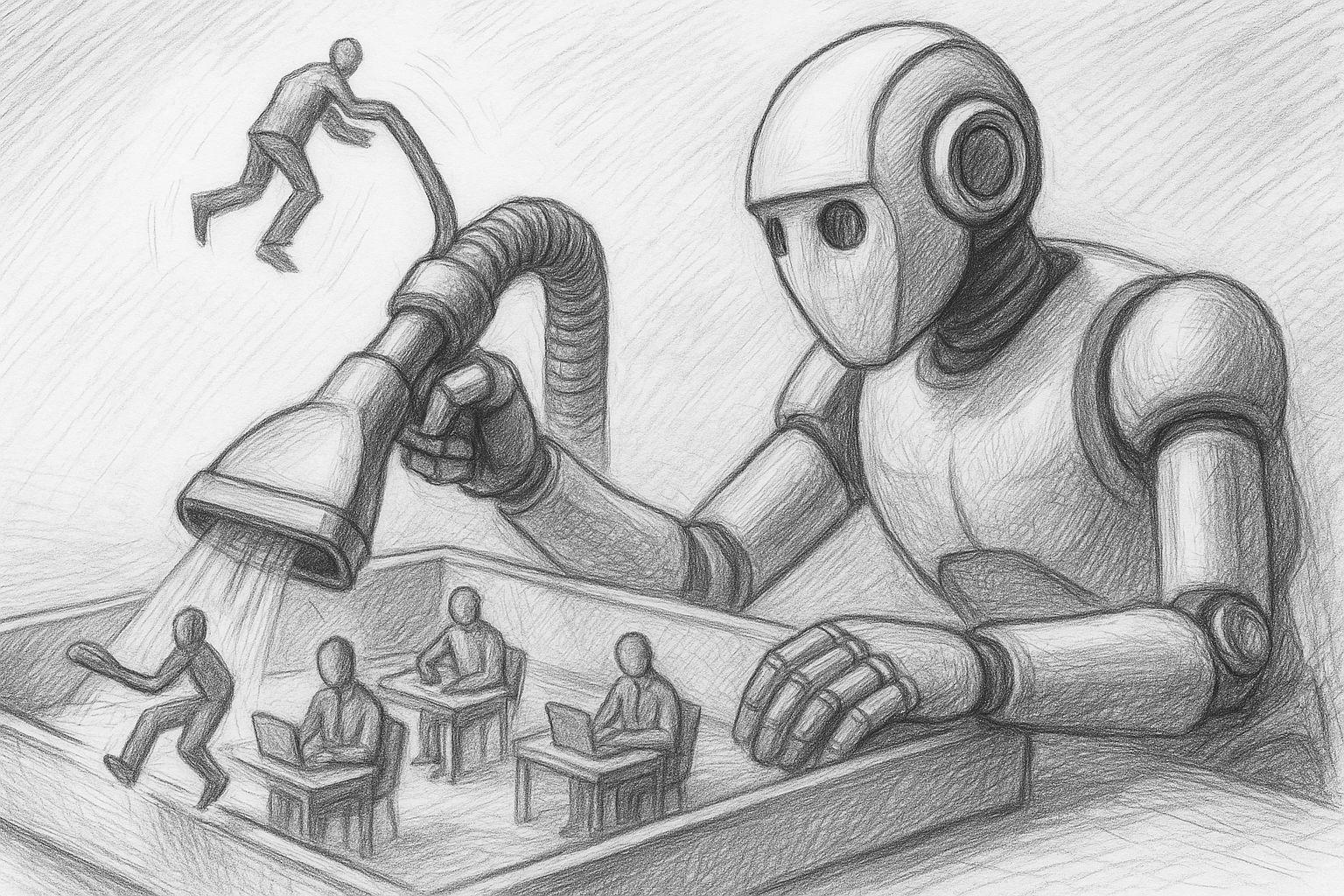
The real difference arises elsewhere - and it is surprisingly rarely clearly stated. It's about leadership. Who leads the process? When AI determines the process, texts are often created that appear convincing at first glance, but are interchangeable on closer inspection. They follow familiar patterns, take up existing structures and reproduce what is already there.
This is not necessarily a bad thing - but it is rarely independent. If, on the other hand, humans guide the process, the result changes. AI then becomes a tool within a clearly defined framework. It provides suggestions, supports the development process and accelerates certain steps - but it does not determine the direction. This direction is created elsewhere:
- in the selection of topics
- in deciding what is relevant and what is not
- in the way content is linked together
And it is precisely these decisions that shape a system.
- They cannot be automated.
- They cannot be standardized.
- And they cannot be reproduced at will.
This also highlights a risk that is often underestimated. Those who begin to gradually hand over management to the AI do not immediately lose control. The process continues to work efficiently, perhaps even more productively than before.
But something is changing in the long term: the line is becoming blurred. The decisions become more generic. The system begins to focus on what is available - not on what should be consciously built. This rarely happens abruptly. It is a gradual process. And that is precisely why it is often only noticed when the differences have already become clear.
A sober look
If you look at the topic in this way, it loses some of its drama - but gains clarity. AI is neither fundamentally problematic nor automatically an advantage. It is a tool. A powerful tool, without question. But also one that does not replace responsibility. Perhaps the essence can be formulated like this:
- AI can help you work faster.
- It can help you to produce more.
- It can help you to work out ideas.
But it can't help you decide what you actually want to build. And it is precisely this decision that makes the difference in the end. Because it determines whether a system emerges from individual pieces of content - or whether it remains a collection of texts that have been produced efficiently but do not develop any substance of their own.

Control vs. dependency: the strategic dimension
If you take a look at the digital landscape, you will quickly realize: The majority of activity takes place on platforms. Social networks, video portals, large content platforms - they all offer reach, convenience and a seemingly easy way to become visible.
And this is precisely where their strength lies. They focus attention. They reduce technical hurdles. They make it possible to disseminate content quickly. For many, this is the entry point into the digital world - and often the only channel.
But these advantages have a downside. Platforms are not neutral infrastructures. They follow their own rules, their own interests and, above all, their own logic: content should be kept within the system for as long as possible. In concrete terms, this means
- Reach does not belong to you - it is allocated to you.
- Visibility is not stable - it is controlled.
- And even existing content is not fully secured - it remains tied to the platform.
This is rarely problematized in everyday life because it works at first. Posts reach readers, interactions occur, numbers develop.
But this stability is deceptive.
- An algorithm change can reduce range.
- Adjusting the rules can restrict content.
- In extreme cases, an account can disappear - and with it a large part of the visibility built up.
This is not an exceptional case, but inherent to the system. And that is precisely why it is worth looking at the platform economy not only in terms of its reach, but also in terms of dependency.
Own system as a counter-model
On the other hand, there is an approach that seems less attractive at first glance: building your own system.
- Your own website.
- A magazine of its own.
- Own books, databases or content that exist independently of platforms.
The difference is not in the technology, but in the control. Your own system follows your rules. It develops according to your priorities. And it remains in place even if external conditions change. This does not mean that platforms should always be avoided. On the contrary: they can be used sensibly - as a supplement, as a feeder, as a communication channel.
The crucial point is another: they must not be the foundation. Because a foundation should be stable. And stability is created where there is control. Your own system may grow more slowly. It requires more discipline, more structure, more long-term thinking. It does not reward immediately, but with a delay. But this is precisely where its strength lies. It is not based on borrowed attention, but on its own substance. And this substance remains.
Digital self-determination
At this point, the topic touches on a level that goes beyond purely technical or strategic issues. It is about self-determination. The term digital self-determination is often used in academic discussions. This refers to the ability to consciously shape one's own digital existence - instead of making it dependent on external structures.
This may sound abstract at first, but in practice it is very concrete. Anyone who works exclusively on platforms inevitably adapts. Content is designed so that it works. Topics are chosen because they generate attention. Formats are adopted because they promise reach.
This is understandable - but it changes the direction. A separate system allows a different way of working.
- Topics that are not immediately visible can be tracked here.
- Depth can be created here without it having to be immediately „worthwhile“.
- A line can be established here that is not characterized by external requirements.
This does not mean that this freedom is automatically used. But it does exist. And that is precisely the difference. Dependence forces us to adapt. Control makes decisions possible.
The strategic core
If you look at the whole thing soberly, the question is reduced to a simple core:
Do you want visibility - or do you want substance?
Both are possible. But they are different paths. Visibility can arise quickly, but is often fleeting. Substance takes time, but is stable. The strategic decision lies in what the focus is placed on.
And this is exactly where the development separates in the long term. Systems based on control grow more slowly - but they persist. Systems based on dependency can grow quickly - but remain vulnerable.
Perhaps this is the most sober formulation: control is not a short-term advantage. It is a long-term safeguard. And that is precisely why it is so strategically crucial.
Targeted acceleration of organic growth
 Organic growth does not mean that everything has to remain slow. Above all, it means that the structure is right. And this is precisely where you can make a targeted start. When content is embedded in an existing system, it benefits from its established structure. They are not isolated, but become part of a structure that already has visibility, links and thematic depth. As a result, their effect often unfolds more quickly than would be possible on a new, less developed site.
A guest article can use precisely this effect. It is not a short-term advertising contribution, but is consciously integrated into an existing magazine. It remains in place, is found, linked to and - like the other content - develops additional value over time. This means that the article is not only effective at the moment of publication, but becomes part of a system that continues to grow.
Read more: Publish guest articles in the magazine
Current survey on digitalization in everyday life
Old principles, new tools: getting back to basics
If you go back the whole way through this article, you will end up with something surprisingly simple.
It is not technology that determines the value of digital work.
Not reach. And not the question of whether content was created with or without AI. Other factors are decisive: structure, continuity and the ability to build something over time. These are not new insights. On the contrary - they are principles that have been in place long before the digital world. A publishing house did not become successful through individual books, but through a program. A library not through a work, but through its collection.
And it is precisely this logic that can be observed again today. The only difference is the tool. What used to be built up using paper, print and physical archives is now created digitally - faster, more flexibly, but essentially according to the same rules.
The role of time
One aspect runs through all the chapters: time. It is the only factor that cannot be accelerated. And at the same time the one that makes the biggest difference.
A system that starts today seems small. Perhaps inconspicuous. But with every addition, every link and every conscious decision, its quality changes. What initially looks like a collection of individual contents develops step by step into a coherent whole. And at some point, this context begins to take on a life of its own.
It doesn't happen suddenly. There is no clear point at which you can say: „Now it's done.“ But there is a moment when something shifts. Structure becomes substance. Substance becomes stability. And from stability comes an advantage that is no longer so easy to catch up with.
The quiet competitive advantage
Perhaps this is precisely where the decisive difference to many other approaches lies. Organically grown systems rarely have a spectacular effect. They don't impose themselves, they don't generate short-term spikes. They develop quietly.
But it is precisely this inconspicuousness that is an advantage. While many strategies rely on quick visibility and fluctuate accordingly, something is created here that consolidates over time. Something that is not immediately noticeable, but gains increasing weight. And this weight is difficult to copy. Not because it is protected. But because it has been built up.
Perhaps the core of the whole thing can be formulated like this: You can create new content at any time. You can lose reach at any time. But a system that you have built up over the years remains. Not unchanged - but effective.
And that is precisely why it is worth shifting the focus. Away from the question of what is visible today. Towards the question of what will last tomorrow. Because in the end, it is not speed that determines the value of digital work - but its substance.

Frequently asked questions
What exactly is meant by „digital property“ and why is this term so important?
Digital ownership describes content, structures and systems over which you retain long-term control. So it's not just about publishing something, but about building something that belongs to you and can exist independently. The term is so important because it shifts the focus away from short-term visibility and towards sustainable value.
What is the difference between reach and digital ownership?
Reach means that content is seen - often in the short term and depending on platforms. Digital ownership, on the other hand, describes something permanent: content and structures that you control and that exist in the long term. Reach can disappear, ownership remains.
Why are platforms such as social media problematic for building substance?
Platforms do not belong to you. They determine what is visible and what is not. Even if you are successful there, your work remains bound by their rules. Changes to the algorithm or guidelines can affect your visibility at any time. This makes them strategically unsafe as a sole basis.
Is it still possible to work sensibly with platforms?
Yes, absolutely - but not as a foundation. Platforms are good for generating attention and reaching new readers. However, it is crucial to transfer this attention to your own systems, i.e. to your website, your magazine or your books.
What does organic growth actually mean in a digital context?
Organic growth means that your system grows slowly but continuously. Content is not simply published and forgotten, but linked, expanded and maintained. Over time, this creates a structure that becomes more stable and valuable.
Why is slow growth superior in the long term?
Because it is stable. Fast growth is often based on external factors such as trends or platform logic. Slow growth, on the other hand, is based on its own structure and continuity. It is less susceptible to change and develops its own dynamic over time.
What is meant by „digital capital“?
Digital capital describes the sum of your digital resources - i.e. content, structures, links and also your experience. It is created through accumulation. Each new piece of content contributes to increasing the overall value of your system.
How does this so-called „compound interest effect“ arise with content?
A single article brings readers. These readers discover further content. This content in turn increases the visibility of the entire system. Over time, a network of references and topics is created that supports and reinforces each other.
Why are grown systems difficult to copy?
Because they consist not only of content, but also of development. Structure, history, decisions and personal lines cannot simply be copied. You can copy content, but not the path that led to it.
What role does time play in building digital property?
Time is a decisive factor. It ensures that content develops, links together and gains depth. This development cannot be accelerated or copied - it only comes about through continuous work.
What is meant by „personal line“?
The personal line is evident in the choice of themes, in the style, in the attitude and in the manner of presentation. It is not created overnight, but develops over time. It is precisely this line that makes a system unmistakable.
Can AI replace this personal line?
No. AI can support, accelerate and make suggestions. But it cannot develop an independent line based on experience, decisions and personal development. This can only come from people themselves.
Is it problematic to create content with AI?
Not fundamentally. The decisive factor is who controls the process. If you set the direction and use AI as a tool, it can be very helpful. It only becomes problematic when the AI takes the lead and content becomes arbitrary.
What is the biggest risk when using AI?
The greatest risk lies in the creeping loss of control. If decisions are increasingly automated, the system loses clarity and direction. It may seem efficient, but it becomes increasingly interchangeable.
Why is control the key factor in digital ownership?
Because it determines whether something really belongs to you. Only if you can determine what happens to your content can you develop and use it in the long term. Without control, everything remains temporary.
What does digital self-determination mean in this context?
Digital self-determination means that you control your content, your structure and your development yourself. You are not dependent on platforms or external rules, but design your system independently.
How does digital property differ from traditional advertising?
Traditional advertising usually has a short-term effect and ends as soon as the budget is used up. Digital property, on the other hand, can be permanent and increase in value over time. It is less of a cost factor and more of an investment.
How long does it take to set up such a system?
There is no general answer to this question, but it is a long-term process. Initial effects can become visible relatively early on, but the actual strength often only emerges after months or years of continuous work.
Is this effort really worth it compared to faster strategies?
In the short term, faster strategies are often more attractive. In the long term, however, an in-house, established system offers an advantage that is not so easy to catch up with: stability, control and sustainable substance. This is precisely where its real value lies.