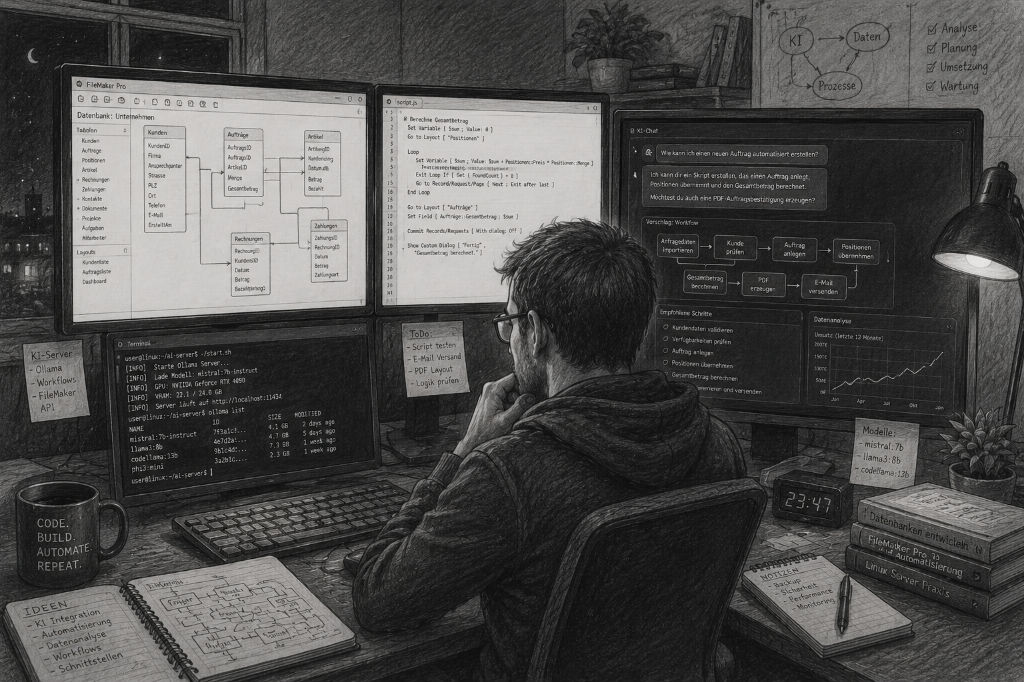
Anyone currently scrolling through news portals, social networks or business platforms will quickly get the impression that artificial intelligence is changing the entire working world practically overnight. New tools, new language models and new promises appear almost daily. Texts are written automatically, images are generated, videos are created and software is sometimes prepared by voice input.
For many companies, this creates a strange mixture of curiosity and pressure. Because, of course, nobody wants to miss the boat. At the same time, many entrepreneurs, freelancers and developers do not yet know exactly which of these technologies will really remain relevant in the long term. This is probably the real peculiarity of the current AI phase: almost everyone senses that something is changing - but hardly anyone can really reliably assess at the moment how quickly and in which direction.




Latest news on the topic
28.05.2026With „FM meets Mozart“ a new meeting for the German-speaking FileMaker community will be held in Salzburg at short notice. The event is being organized by Bernhard Schulz, who was previously involved in the organization of the well-known FileMaker conferences. The background to this is the previously canceled FileMaker conference, which was also originally scheduled to take place in Salzburg. Thanks to the rapid reorganization, many participants can continue to use their already booked travel and accommodation.
Once again, the focus will be on discussions, workshops and current developments relating to FileMaker, Claris and modern software development. The situation also illustrates the upheaval within the industry: AI systems, rising Claris license costs, economic pressure and increasing competition from modern web and cloud platforms are currently causing uncertainty among many developers. This makes it all the more important for many of those involved to maintain personal exchanges within the long-established community.
22.05.2026: The first German-language FileMaker Conference 2026 is currently causing a stir within the developer and ERP community. Discussions. For many years, such events were regarded as fixed constants within the FileMaker world - which makes the reason for the lack of participants all the more remarkable. At the same time, artificial intelligence is changing the way developers learn, create solutions and access knowledge. Many tasks that used to require forums, specialist magazines or conference sessions can now be completed directly with AI systems - often faster and more individually.

FMK 2026 canceled, planning for 2027 underway | Think7 FileMaker Knowledge
It is precisely this development that a detailed Technical article on gofilemaker.de on. The cancelled conference is not viewed as an isolated event, but as a visible sign of a fundamental technological and economic upheaval within specialized software markets. The article combines AI, changing working methods, economic pressure and the future of traditional developer structures into a larger overall analysis.
What is particularly interesting is that public perception often appears much smoother than the reality behind the scenes. On the outside, artificial intelligence often looks surprisingly simple. You enter a short text and a finished result appears a few seconds later. This quickly creates the impression that modern AI systems are already fully developed.
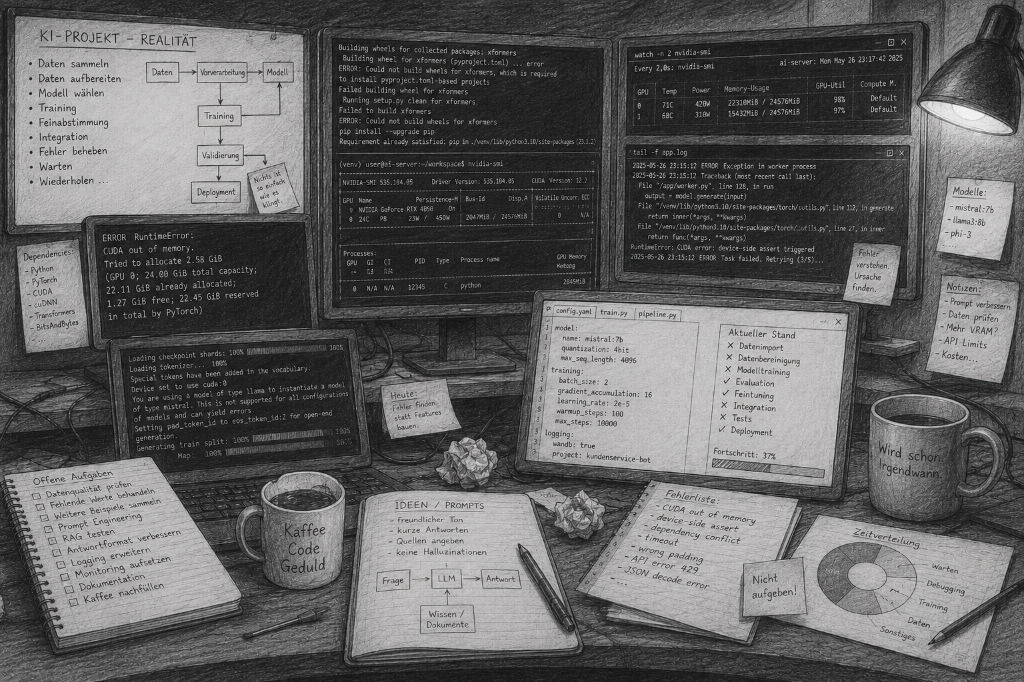
However, anyone who takes a closer look at the topic will quickly realize that the industry is currently still in a very experimental transition phase. Many systems already work impressively well - but often only under certain conditions. Behind the visible results is often a considerable technical effort:
- Interfaces must be adapted,
- systems communicate with each other,
- Prepare data cleanly
- and new tools sometimes change on a weekly basis.
Developers in particular are currently often experiencing a situation that is reminiscent of early internet or software phases. Many things seem fascinating, but at the same time unfinished, unstable or improvised. Some AI systems work smoothly for days - until a small update suddenly throws entire processes into disarray.
However, this does not mean that artificial intelligence is overrated. On the contrary. We are probably currently in a phase that will later be viewed in a similar way to the early years of the internet or smartphones. Back then, many things were still slow, complicated and sometimes chaotic. Nevertheless, it was precisely at this time that the foundations were laid for technologies that we take for granted today.
And this is probably precisely why it is worth taking a neither blindly euphoric nor prematurely negative view of current developments. After all, the real change is often not happening where it is advertised the loudest. It tends to happen slowly behind the scenes:
- in companies,
- for developers,
- in new workflows
- and increasingly also in classic business software.
This is precisely where artificial intelligence is likely to have a much greater impact in the long term than many may currently suspect.
AI, FileMaker and the reality behind the hype
 If you want to delve deeper into the technical reality of modern AI systems, you can find a detailed technical article on gofilemaker.de about the current AI evolution in the corporate environment. It is not just about theoretical possibilities, but above all about practical experiences from everyday life: local AI servers, maintenance problems, Linux environments, model management and the question of how artificial intelligence could be integrated directly into company software in the future. An interesting article by Marcel Moré on the „Evolution of AI“ is also discussed in detail and given a practical classification. The development of the announced AI agents from Claris FileMaker, which could work directly within FileMaker in the future, is particularly exciting. The article combines technical background with a calm look at the actual reality behind many current AI discussions.
Why developers are currently experiencing a new transition phase
If you talk to developers who are working intensively with artificial intelligence, you often hear surprisingly similar statements at the moment. Almost all of them see great potential in the technology. At the same time, however, many also describe the current situation as unusually chaotic, fast-moving and sometimes difficult to assess.
Interestingly, this reminds many experienced IT people of earlier technological upheavals. Because even the Internet in its early years initially seemed unfinished to many people. Websites were slow, standards were lacking and many things worked „somehow“ rather than being really stable. The situation was similar later on with smartphones, cloud systems and the first large ERP solutions. Initially, there were many individual tools and experiments. It took years for them to become robust platforms for everyday use.
A similar pattern now seems to be emerging in the field of AI. From the outside, modern AI systems often already appear astonishingly perfect. In reality, however, many tools are still in the middle of a very dynamic development phase. Models are constantly changing, new functions appear almost weekly and many systems are developing faster than companies can even adapt their own processes.
Developers in particular are currently experiencing an interesting dual role. On the one hand, they are testing new possibilities:
- Language models,
- Automations,
- Image generators,
- local AI server
- or intelligent assistance systems.
At the same time, they have to try to integrate these technologies into existing workflows in a stable and sensible way. And this is where the real difficulties often begin.
This is because real companies rarely consist of perfect standard situations. Data structures have grown over the years, processes have been individually adapted and many systems contain numerous special cases. Artificial intelligence therefore does not encounter a clean laboratory environment, but the often complex reality of everyday business life.
As a result, many developers are currently thinking very pragmatically. Most of them no longer believe that artificial intelligence will completely replace all work in the short term. Instead, they are increasingly recognizing that AI is particularly useful where it supports and accelerates existing processes. Many developers are therefore no longer talking about just „an AI“, but rather about entire AI system landscapes.
What is particularly interesting is that the role of traditional software development is slowly changing as a result. In the past, a large part of development work consisted of technically implementing functions by hand. Today, the focus is increasingly shifting:
- Understanding processes,
- Structure systems,
- Organize data,
- Control automations
- and control results.
The actual technical implementation, on the other hand, is being automated step by step. However, this does not mean that developers will become superfluous. In fact, the opposite is more likely to happen: experience, process understanding and organizational thinking will become even more important.
This is because modern AI can write texts or generate code. However, it does not automatically understand the complete reality of a company with all its special features, exceptions and established structures. This is precisely why many developers see the current phase less as a finished revolution - and more as the start of a longer transition period.
And perhaps this is the real significance of the current development: not that everything will suddenly be completely automated. It's that the way people work with software, develop processes and organize digital systems will change in the future.
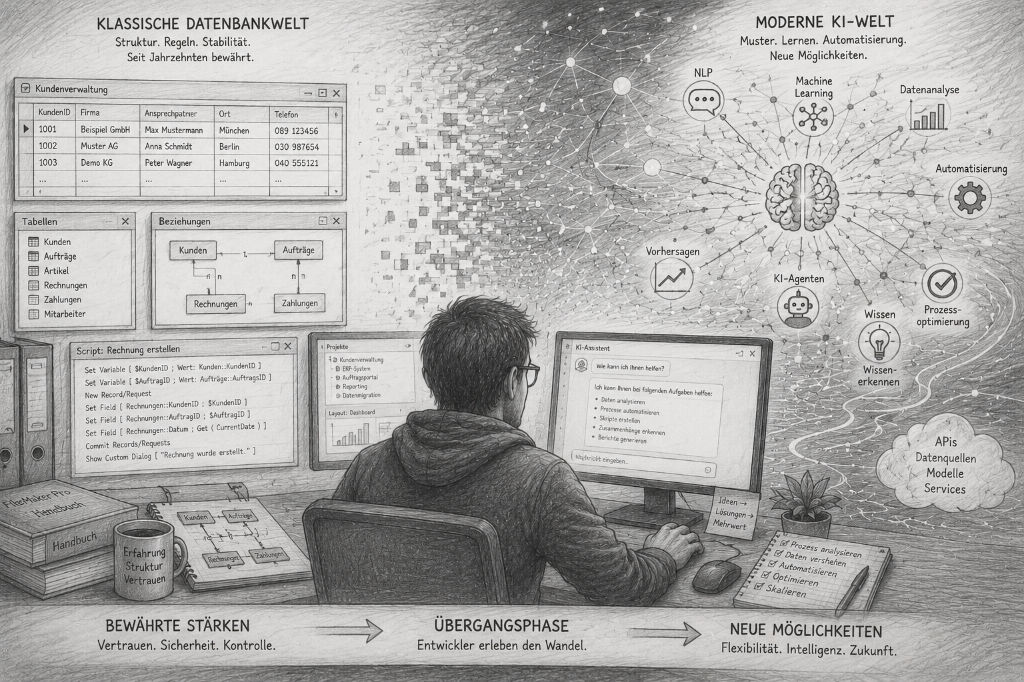
FileMaker, AI agents and the next stage of development
Current AI developments are likely to be particularly exciting for traditional business software in the coming years. This is because it is becoming increasingly clear that artificial intelligence is not just an additional tool, but could change entire ways of working in the long term.
Claris FileMaker is currently an interesting example of this. The platform has always been designed to map business processes with comparative flexibility. Many small and medium-sized companies have been using FileMaker for years for individual solutions:
- Order management,
- Warehouse management,
- CRM systems,
- Document processes
- or specialized industry solutions.
It is precisely this proximity to real work processes that makes FileMaker particularly interesting for the next phase of AI development. Claris has already announced its intention to increasingly integrate so-called AI agents in the future. This is no longer just about using AI for individual text suggestions or simple assistants. Instead, AI systems could work directly within the development environment in future.
And this could significantly change the daily work of many developers in the long term. Until now, AI-supported development has often been relatively indirect. Developers have scripts, formulas or structures of language models prepared and then transfer them to the respective software themselves. In the FileMaker area in particular, various intermediate solutions are now being developed for this purpose:
- special clipboards,
- Conversion tools,
- Script generators
- or semi-automatic transfer systems.
This is because FileMaker has its own internal script structures that cannot simply be adopted like normal text. Nevertheless, this approach is already working surprisingly well.
Current survey on the use of local AI systems
Many developers now use AI for script suggestions, database logic, SQL queries, documentation, formula creation or structure planning. However, the actual technical integration remains mostly manual work at the moment.
This is precisely where AI agents could bring about a decisive change in the future. Because if artificial intelligence can actively work directly within FileMaker, the entire development logic will shift. Developers would then possibly no longer have to implement every single technical step manually. Instead, processes could increasingly be described in natural language. The AI would then:
- Prepare tables,
- Create relationships,
- Generate scripts,
- Customize layouts
- or processes automatically.
Much of this still seems like dreams of the future. At the same time, current developments already clearly show where the journey could take us. What is particularly interesting is that the role of developers will probably not disappear, but rather change. After all, even the most intelligent AI does not automatically understand the complete reality of a company:
- individual processes,
- Special cases,
- organizational contexts,
- Responsibilities
- or historical processes.
Experienced developers in particular are therefore likely to continue to play a central role - albeit increasingly as:
- Process designer,
- System architects,
- Quality controllers
- and organizational translators between business and technology.
Interestingly, this fits in very well with the traditional strengths of many FileMaker developers. Because FileMaker was never just about programming. Rather, it was often about pragmatically understanding real work processes and flexibly transferring them into functioning systems. Artificial intelligence could now significantly expand this approach.
At the same time, however, the current phase also shows that many of these developments are still experimental in nature. Developers who are currently working with local AI servers, language models or automation systems often still face numerous technical hurdles:
- unstable environments,
- Version problems,
- Complicated interfaces
- or high maintenance costs.
Nevertheless, it is often at this stage that the most important practical experience is gained. This is because we are probably experiencing the transition from traditional software tools to much more intelligent systems that could take over many routine technical tasks in the future.
And it is possible that, in retrospect, this current transitional period will be viewed in a similar way to the early years of the Internet: still unfinished, sometimes chaotic - but full of long-term changes.
Modern ERP software between database and AI support
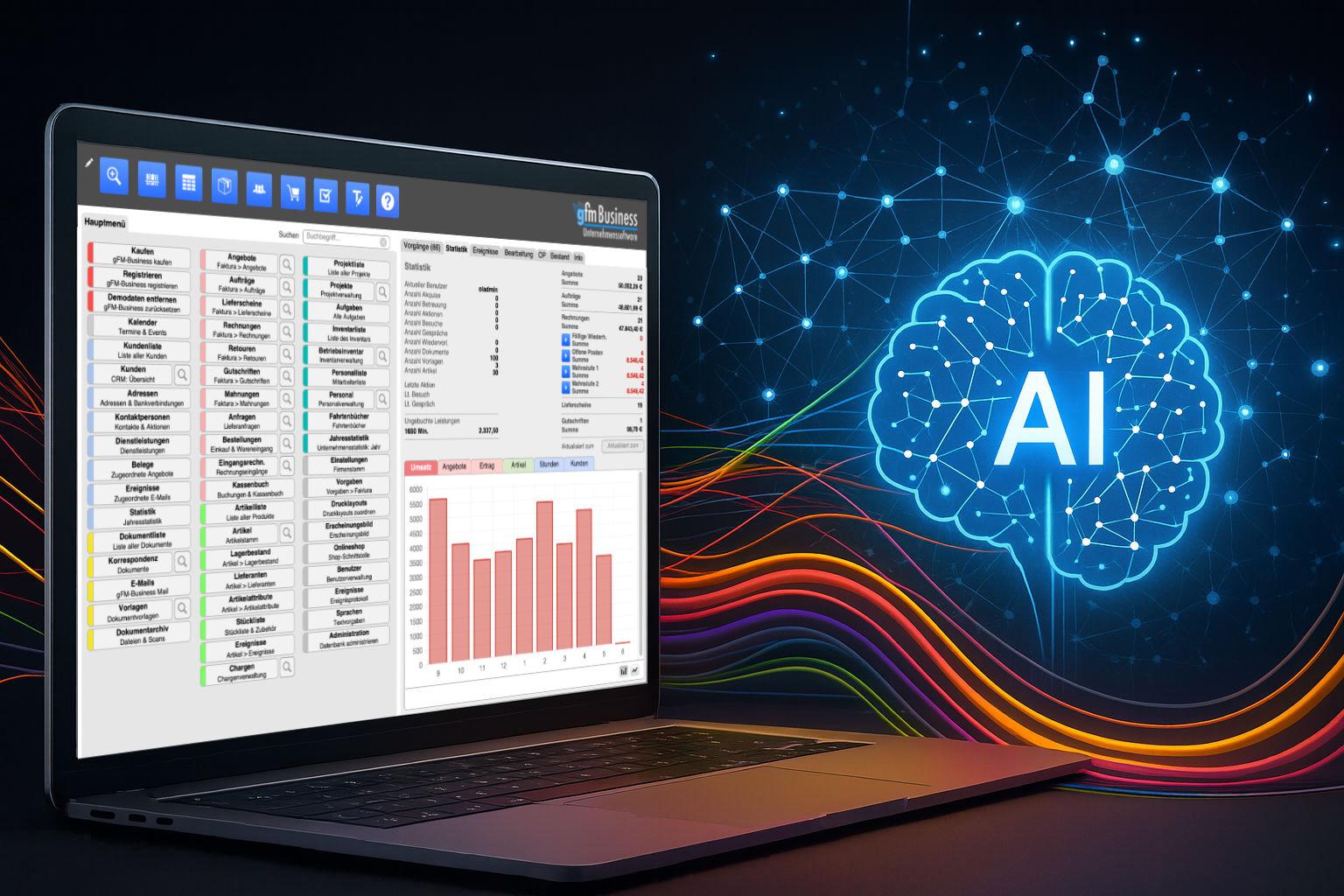
 Many companies are currently faced with the question of how existing processes can be modernized in a meaningful way without unnecessarily destroying functioning structures. This is precisely where modern ERP software based on FileMaker to. Instead of rigid standard systems, flexible solutions are emerging that can be individually adapted to real workflows - from order management and CRM to document management, warehouse management or industry-specific special processes. At the same time, modern AI systems are increasingly opening up new possibilities, for example in automation, knowledge organization or intelligent data analysis. However, a stable and maintainable technical basis remains crucial. This is precisely why goFileMaker has been focusing for many years on practical business solutions with clear structures and personal advice instead of short-term technology hype. Anyone who would like to check what possibilities modern database and ERP systems already offer today can take advantage of a free 30-minute initial consultation and discuss specific requirements without obligation.
The real revolution is happening behind the scenes
Those who currently only perceive artificial intelligence via social networks or large presentations quickly get the impression that the real revolution consists of spectacular images, perfect texts or impressive demonstrations.
However, the really big change is probably happening in a completely different place. Because while the public is mainly talking about individual AI tools, behind the scenes the way companies work, organize information and develop software is already slowly changing.
Developers in particular are currently experiencing that artificial intelligence is increasingly no longer being used as a single program. Instead, entire system landscapes are gradually emerging:
- Language models,
- Automations,
- Databases,
- Document systems
- and intelligent assistance functions begin to interact with each other.
As a result, the focus is slowly shifting away from pure technology and towards processes, structures and organizational thinking. Interestingly, this is very reminiscent of earlier technological transition phases. The internet not only changed websites, but also entire business models, communication channels and work processes in the long term. Similarly, in the coming years, artificial intelligence could not so much replace individual professions as gradually change existing ways of working.
This is precisely why the current phase is likely to be particularly important in the long term. Developers, companies and creatives are currently gaining practical experience with technologies that are still in the midst of change. Many things still seem experimental, sometimes unstable or organizationally unfinished. At the same time, the foundations for future standard systems are being laid right now.
The development of classic business software such as Claris FileMaker will be particularly exciting. The announced AI agents already show where modern development environments could be heading in the long term: away from purely manual technology and towards intelligent process support. The real strength of artificial intelligence could therefore ultimately lie less in completely replacing humans. Instead, it will probably help to make existing systems more intelligent, flexible and efficient.
And this is probably precisely why it is worth taking neither a blindly euphoric nor a prematurely skeptical view of current developments. After all, it is often the quiet transitional phases behind the scenes that later give rise to the biggest changes.
On gofilemaker.de is a extended version of this article to find.


Frequently asked questions
- Why are so many companies suddenly talking about artificial intelligence at the moment?
Because AI systems have developed significantly in a short space of time and are now also becoming practical for smaller companies. Many companies recognize that work processes could change and want to understand at an early stage which technologies will become relevant in the long term. - Why does artificial intelligence often appear simpler in the media than it actually is?
Usually only the finished results are shown to the outside world. The actual technical work behind it often remains invisible. In practice, systems have to be integrated, data prepared and processes kept stable. This is often where the greatest effort is required. - Are we already in the middle of an AI revolution?
Presumably yes - but less visibly than many expect. The real change is often happening behind the scenes: in companies, among developers and in everyday work processes. This is exactly where the most important technological changes usually occur in the long term. - Why do many developers compare the current AI phase with the early Internet years?
Because the internet was also chaotic, slow and experimental at first. Nevertheless, the foundations were laid back then for technologies that are taken for granted today. Many developers are currently seeing similar patterns in artificial intelligence. - Will artificial intelligence completely replace traditional developers?
Many experts currently consider this to be rather unlikely. AI can already support or accelerate technical tasks today. However, process understanding, organizational thinking and experience with real business processes remain crucial. - Why are FileMaker developers particularly interested in AI?
Because FileMaker is traditionally very strongly focused on real business processes. This is precisely where artificial intelligence can help to make processes more intelligent, flexible and efficient in the future. - What exactly are AI agents?
AI agents are systems that not only answer individual questions, but can also independently carry out several work steps in succession. They analyze information, make preliminary decisions and control processes within defined workflows. - Why could AI agents change software development?
Because developers may no longer have to program many technical routines completely themselves in future. Instead, processes could increasingly be described in natural language, while AI prepares large parts of the technical implementation. - What is Claris planning in connection with artificial intelligence?
Claris has announced its intention to increasingly integrate AI agents into FileMaker in the future. This will enable AI systems to work directly within the development environment and prepare scripts, tables or processes, for example. - Why does maintenance remain so important despite AI?
Intelligent systems also need to be stable. Modern AI environments in particular are currently changing very quickly. Updates, interfaces or model changes can suddenly impair functioning processes. This is why maintainability remains a key factor. - Why do many developers rely on local AI systems instead of just cloud services?
Local systems offer more control over data, models and processes. This can have advantages, especially for sensitive information or specialized applications. At the same time, however, this also significantly increases the technical effort involved. - Why are so many experimental AI projects currently being created?
Because technology is currently developing extremely quickly and many companies are trying to find out which approaches make sense in the long term. Previous technological upheavals in the IT sector have been similar. - What is currently the biggest challenge in AI projects?
Often not the AI itself, but its integration into existing systems. Real companies work with established data structures, individual processes and numerous special cases. This is precisely where practical implementation often becomes complicated. - Why is process understanding likely to become more important than pure technology in the future?
Because many technical tasks could be increasingly automated. The real added value then comes more from understanding real processes, data structures and organizational contexts. - Why do many developers consider the current AI phase to be exciting despite all the problems?
Because the foundations of a new development stage of modern software are probably being laid right now. Many systems may still appear unfinished or experimental, but it is precisely at this stage that the decisive long-term innovations often emerge.