Helge Schneider: Attitude, humor and the freedom of not having to explain yourself

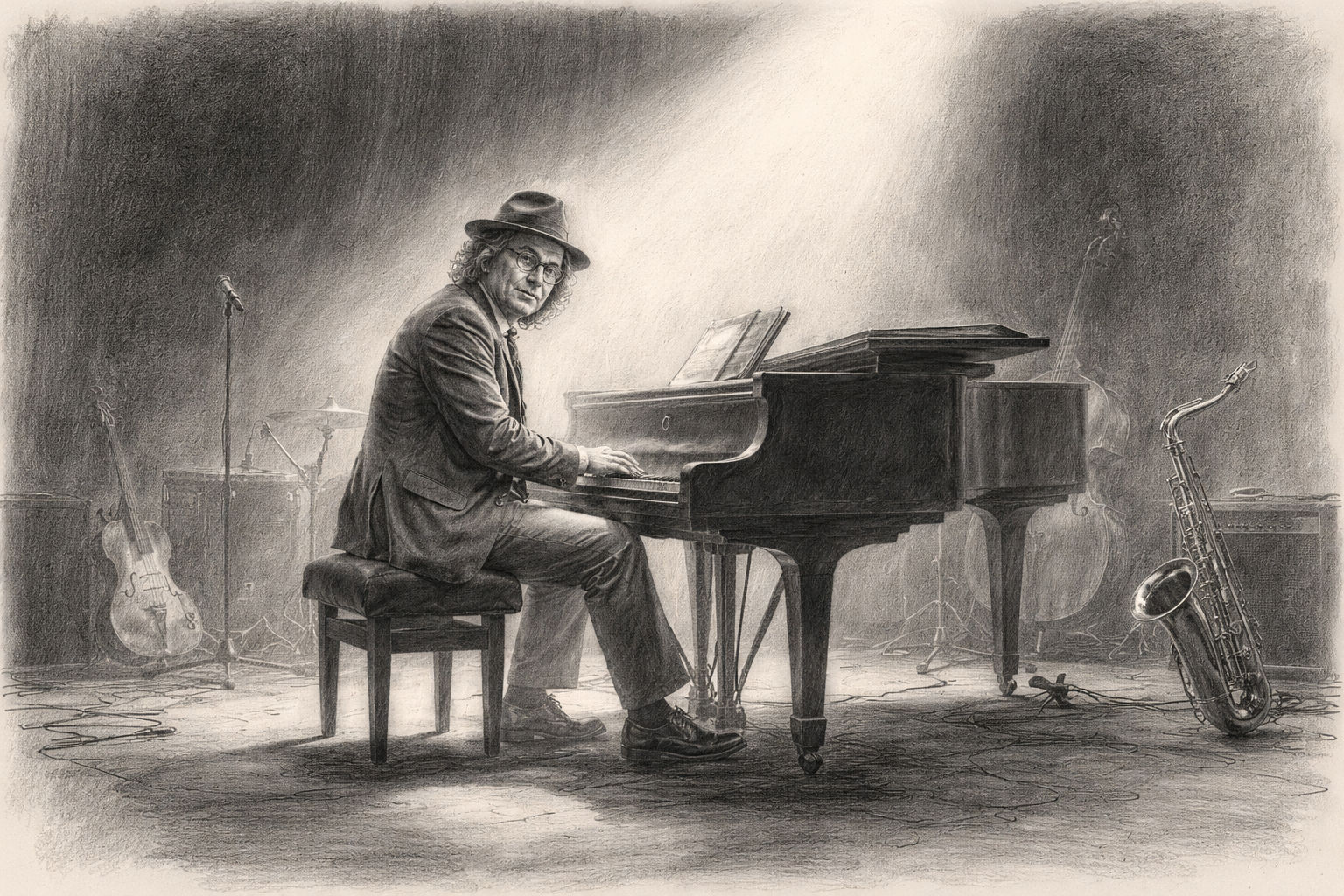
Helge Schneider Portrait

I noticed Helge Schneider very early on. Not because he was particularly loud or pushed himself to the fore - on the contrary. It was this peculiar mixture of intelligent absurdity, linguistic sideways thinking and musical matter-of-factness that stuck with me. Something about it seemed different right from the start. Unexcited. Unimpressed. And above all: not in need of explanation.

This portrait is therefore not a fan text. Nor is it an ironic wink or an attempt to pigeonhole Helge Schneider into a cultural category. Rather, it is an attempt to look at a personality who has consistently resisted any form of appropriation for decades - and who shows attitude precisely because of this.

Read more

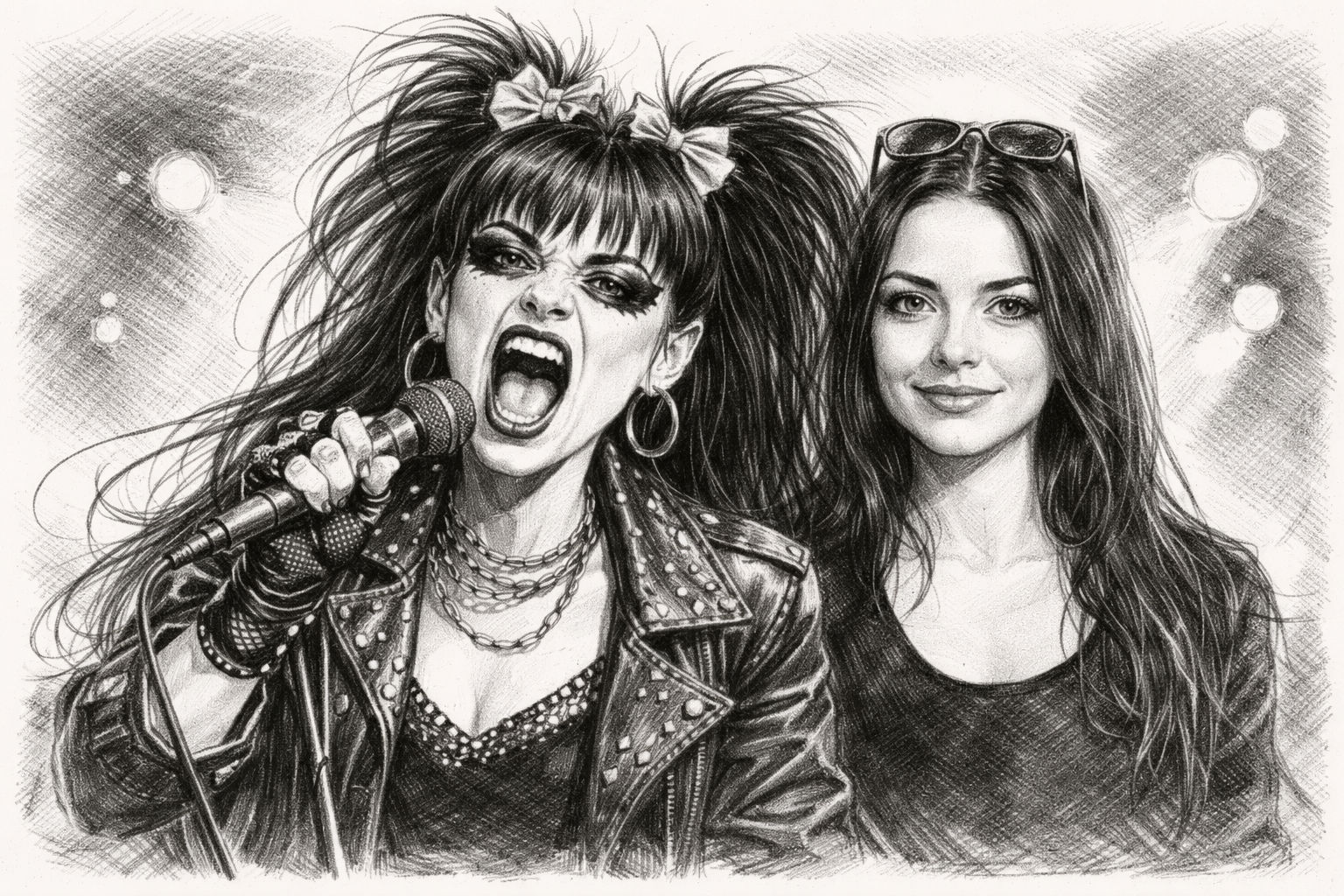
More than punk: Nina Hagen, Cosma Shiva and the art of not letting yourself be taken in

Portrait of Nina and Cosma Shiva Hagen

When you approach a portrait of Nina Hagen, it's tempting to talk about music first. About punk, provocation, shrill performances. About everything that is loud and visible. This portrait deliberately begins differently. Not with songs, not with styles, not with images. But with something quieter - and more important: attitude.

Attitude is not a label. It cannot be put on like a costume, pasted on afterwards or explained with marketing. Attitude is evident in early behavior, long before someone becomes famous. It can be seen in how someone reacts to limitations, to contradictions, to power. And this is where Nina Hagen becomes interesting - not as an icon, but as a personality.

Read more

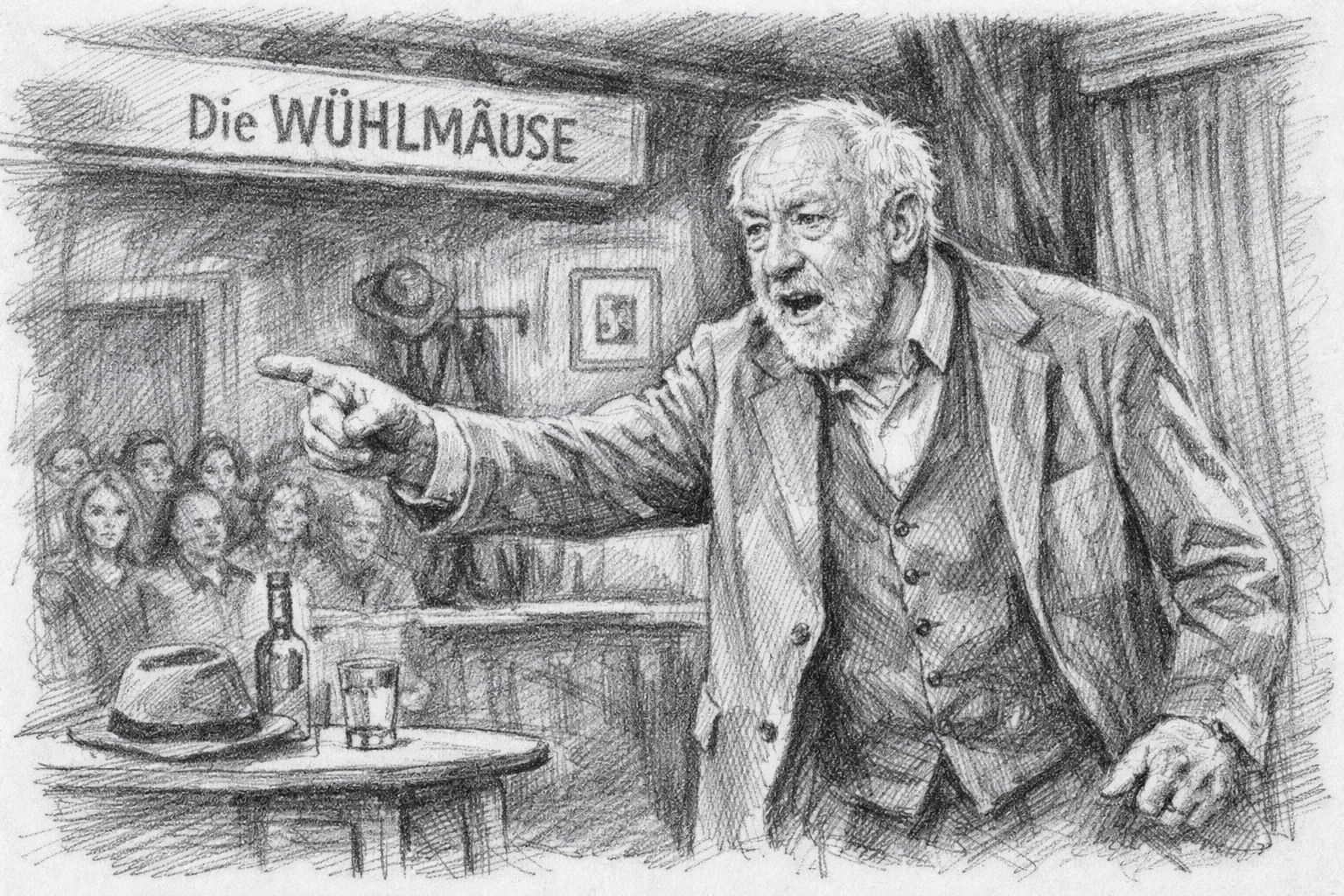
Dieter Hallervorden - More than Didi: Portrait of an uncomfortable free spirit

Dieter Hallervorden and the Wühlmäuse in Berlin

There are figures that stick to you for the rest of your life. Some like an ill-fitting suit, others like an old friend who keeps popping in without being asked. In Dieter Hallervorden's case, this friend is called „Didi“. And he doesn't ring, he bangs. On an imaginary gong. Palim, Palim! - and almost everyone knows who is meant.

But this is where the misunderstanding begins. Because anyone who reduces Dieter Hallervorden to this one moment, to the slapstick act, the stumbling face and the exaggerated naivety, misses the real person behind it. The joker was always just the surface. Underneath was a mind that was more alert than many gave him credit for - and a character who never liked to be told where to go. This portrait is therefore not a nostalgic look back at the television entertainment of past decades. It is an attempt to take seriously an artist who deliberately did not want to be taken seriously for decades - which is precisely why he was so effective.

Read more

Vicco von Bülow alias Loriot - order, form and the quiet resistance of humor

There are artists who put their opinions on paper like a stamp: visible, unmistakable, sometimes even a little cheap. And then there is Vicco von Bülow - Loriot - who embodies the opposite: Poise without bluster. He could be very clear when he wanted to be. But he didn't do it with a pointing finger, but with a precision that first leads to laughter and then - almost imperceptibly - delivers the seriousness. This is particularly evident in later interviews: he does not speak in slogans, but in nuances. There is often more plain language between the lines than can be found in many a loud speech.

And perhaps this is where the real portrait begins: not with the famous sketches, not with the quotes that everyone knows, but with the question of how a person becomes so that they can look at the world with both kindness and relentless precision.

Read more

Jeffrey Sachs warns Germany: Why Europe's security needs to be rethought

Jeffrey Sachs writes open letter to Chancellor Merz

In his open letter to German Chancellor Friedrich Merz, published in the Berliner Zeitung on December 17, 2025, the well-known economist and professor Jeffrey D. Sachs speaks out with a clarity that has become rare in the current European debate. Sachs speaks not as an activist, not as a partisan and not as a commentator from a distance, but as an economist and political advisor who has worked for decades at the central interfaces of international crises, security architectures and economic upheavals. The open letter contains an unusually sharp quote:

„Learn history, Mr. Chancellor.“

Read more

Ulrike Guérot: A European between idea, university and public discourse

Ulrike Guérot and Europe

There are people whose thoughts you like to follow not because you agree with them on everything, but because they make an effort to penetrate things. For me, Ulrike Guérot is one of these voices. I have been watching her lectures for several years now - not regularly, not ritualized, but when I come across a topic that I feel is worth listening to more closely. What strikes me is that her arguments are calm, structured and largely non-ideological.

This does not make her lectures spectacular in the media sense, but they are sustainable. You can listen to her for a long time without getting the feeling that she is trying to sell a ready-made world view. Especially at a time when political debates are often morally charged or emotionally truncated, this way of speaking seems almost old-fashioned. In the best sense of the word.

Read more

Jan-Josef Liefers: A portrait of attitude, origins and artistic freedom

Jan-Josef Liefers

When you see Jan-Josef Liefers today as the eccentric Professor Boerne in „Tatort“, it's easy to forget how long it took to get there. I myself have always enjoyed seeing him in this role: as a mixture of subtlety, narcissism, humor and astonishing clarity. But this mixture doesn't come out of nowhere. It is the result of a life that began in a completely different Germany - in the GDR, in a country with narrow borders and clear guidelines.

To understand why Liefers takes such a consistent stance today, you have to go back to his childhood, to his parents' theater world and to a time when criticism of the system was anything but without consequences.

Read more

Why Dieter Bohlen speaks when others remain silent: A portrait of diligence and clarity

There are personalities that you only really understand when you detach yourself from their public image. Dieter Bohlen belongs exactly in this category. Musically, I myself am not a big fan of his shallow, often very simple melodies - and yet, to be fair, it has to be said that what he created was extremely precise, target group-oriented and clearly structured for the 1980s. Bohlen was never the great artist in the romantic sense. But he was an outstanding businessman, a hard worker and someone who understood his craft in a way that few do today.

What makes him interesting for me is not so much his music - but the fact that he remained successful for decades, while whole generations of artists came and went around him. And that today - after many years of silence - he is suddenly taking a clear stand on social issues. This is the reason why it is worth looking at Dieter Bohlen as a person beyond the usual media image: not as a pop titan, not as a TV pundit, but as a craftsman, businessman and mirror of a time that understands itself less and less.

Read more