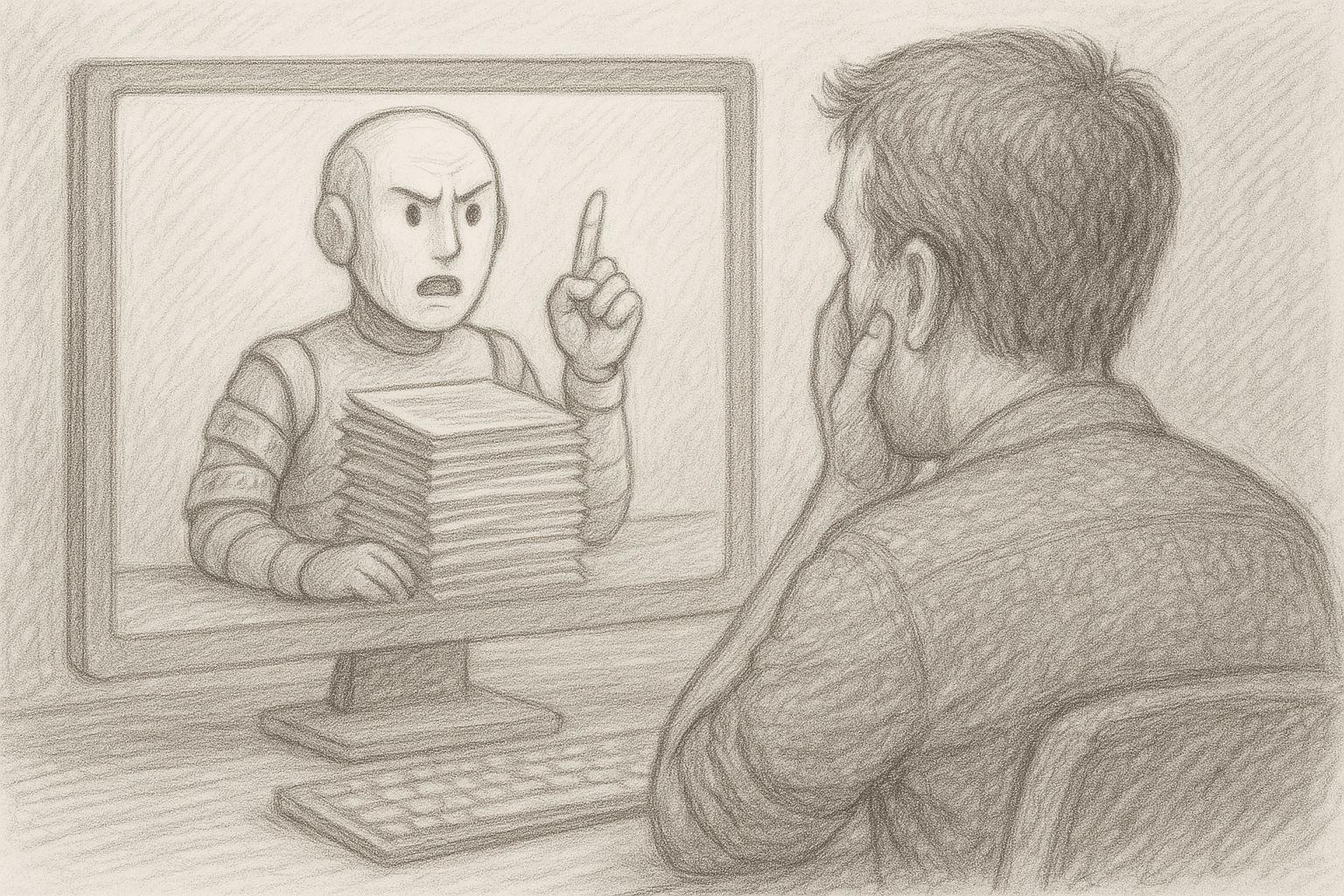
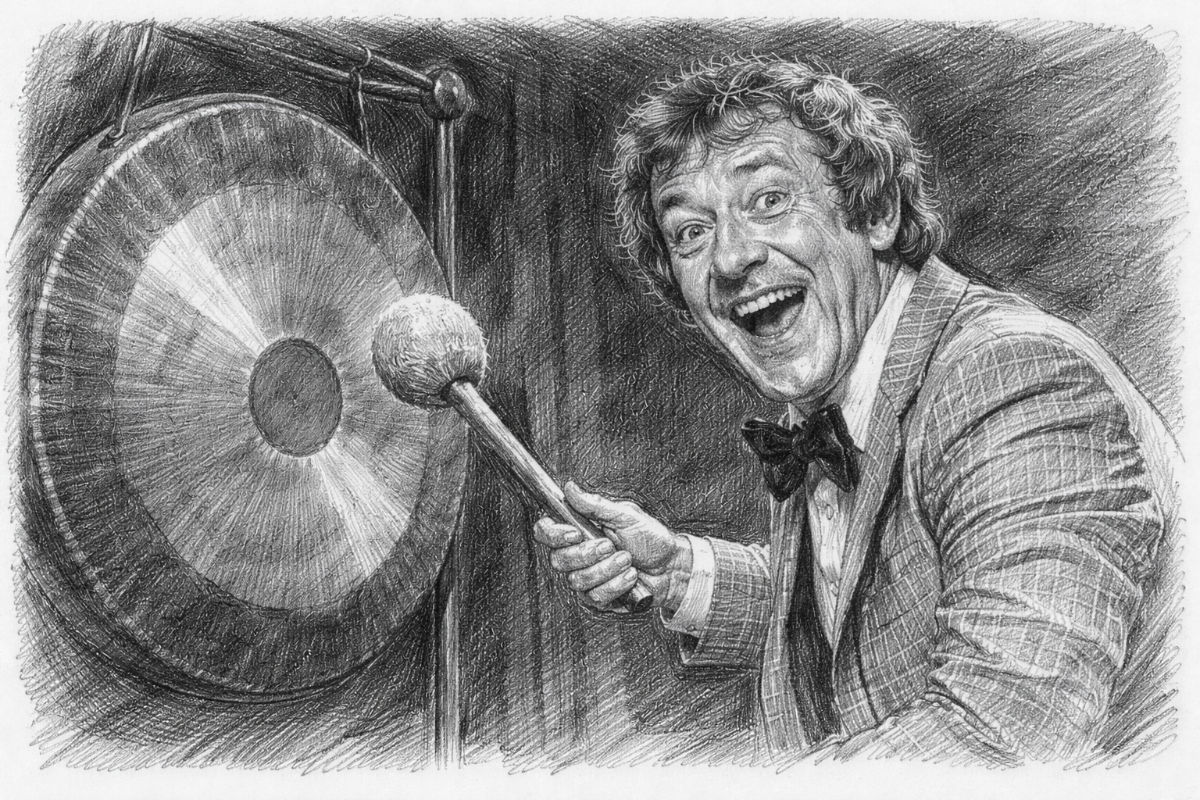
There are figures that stick to you for the rest of your life. Some like an ill-fitting suit, others like an old friend who keeps popping in without being asked. In Dieter Hallervorden's case, this friend is called „Didi“. And he doesn't ring, he bangs. On an imaginary gong. Palim, Palim! - and almost everyone knows who is meant.
But this is where the misunderstanding begins. Because anyone who reduces Dieter Hallervorden to this one moment, to the slapstick act, the stumbling face and the exaggerated naivety, misses the real person behind it. The joker was always just the surface. Underneath was a mind that was more alert than many gave him credit for - and a character who never liked to be told where to go. This portrait is therefore not a nostalgic look back at the television entertainment of past decades. It is an attempt to take seriously an artist who deliberately did not want to be taken seriously for decades - which is precisely why he was so effective.

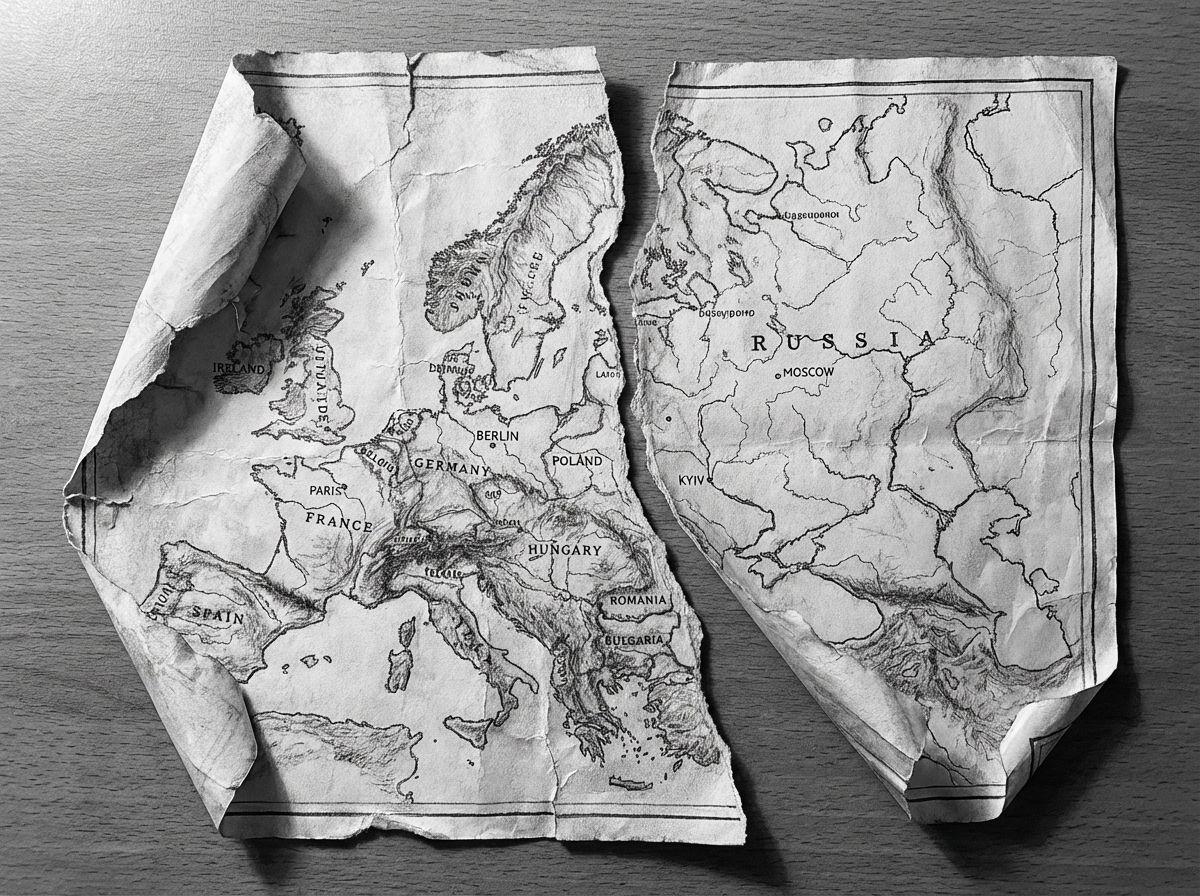
The joker who is more than his character
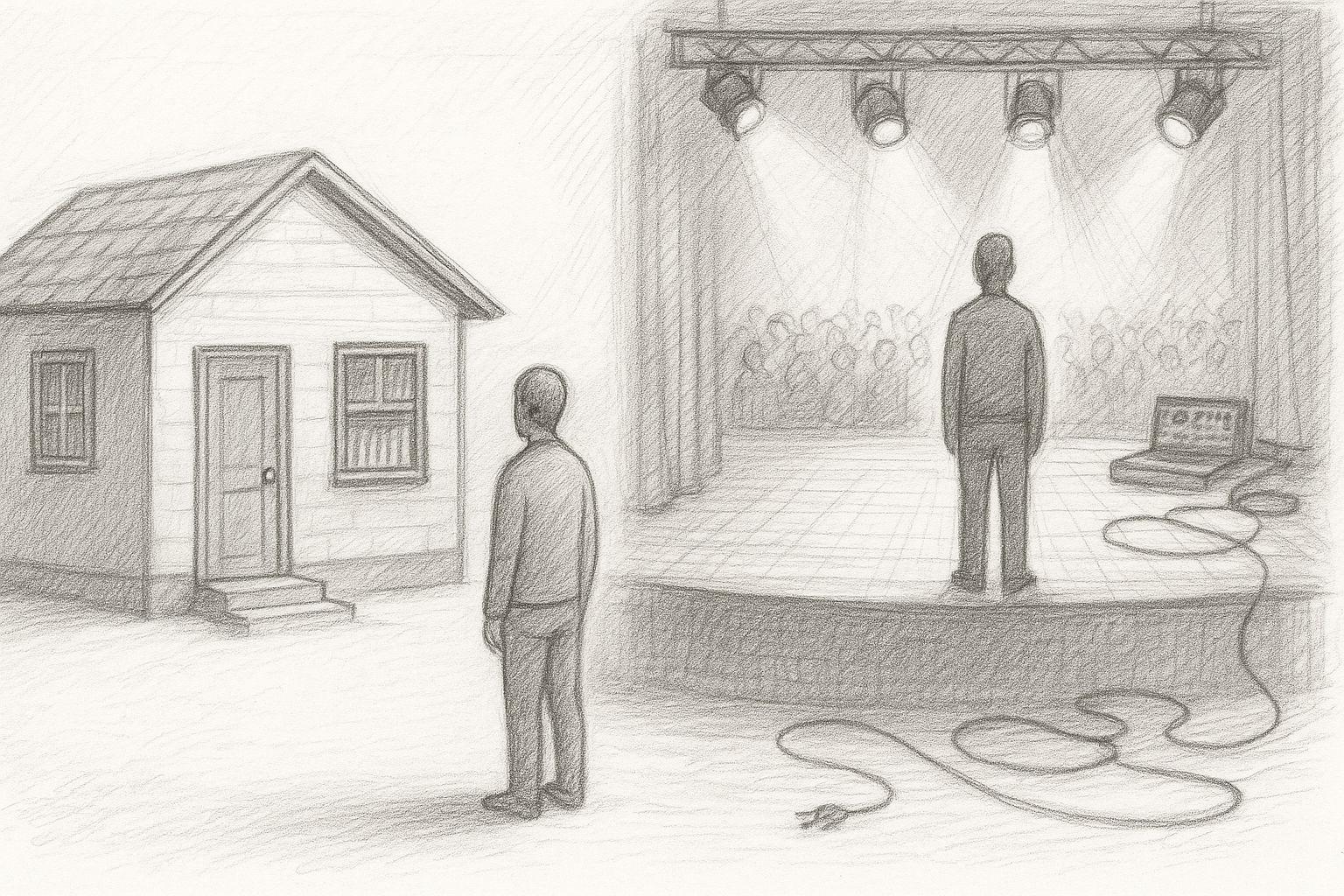
This is not a new role in the history of theater and comedy. The jester was allowed to say things for which others would have lost their heads. The clown stumbles - but he often stumbles very deliberately. Hallervorden also understood this tradition. His characters seemed simple-minded, sometimes almost childlike, but they demonstrated the absurdity of everyday life. Authorities, regulations, empty phrases, social rituals - none of this was analyzed by him, but exposed.
And perhaps this is precisely the core of his success: he didn't explain, he showed. He didn't give a lecture, he slipped on the banana peel - and suddenly it wasn't him who was on the floor, but the system.
The audience laughed. And often forgot that laughter is one of the oldest forms of knowledge.
Entertainment as a craft, not a coincidence
Anyone who wants to Dieter Hallervorden as just a string of comic ideas underestimates the craft behind them. Comedy that works for decades does not come from silliness, but from precision. Timing, rhythm, language, body - everything has to be right. One false step and comedy becomes slapstick. Hallervorden mastered this boundary amazingly well.
Yet he was never the type to rely on a zeitgeist. Fashions came and went, his characters remained. Not because they were modern, but because they functioned as human beings. The little man who muddles through. The one who wants to do everything right and therefore does everything wrong. A motif as old as the theater itself - and therefore timeless.
The fact that it later became a brand name was almost inevitable. At some point, „Didi“ was more than just a role. It became a label. And labels have the unpleasant characteristic that they are difficult to remove.
When the label becomes a shackle
Many artists fail at precisely this point. Success comes early, loudly and permanently - and blocks any further development. With Hallervorden, something else happened: he took his time. A lot of time. While others were frantically trying to shake off their image, he played it off. Almost with relish. As if he knew: "This is just a phase. My time is yet to come.
And indeed it was to come. Late, but all the more clearly. As a serious actor, as a theater director, as someone who no longer courted applause, but showed attitude. Anyone who was surprised was simply not looking closely.
Because the „serious“ Hallervorden was always there. He just wasn't in the foreground. He was waiting.
So why a portrait of Dieter Hallervorden now? Why not about a younger figure, a name that is fresher in the media, someone without decades of baggage?
Precisely for this reason.
Hallervorden's life is a mirror of German post-war history. Born into a destroyed world, he grew up between ruins and ideologies, confronted early on with state paternalism, later shaped by freedom - and its contradictions. Anyone who wants to understand why someone today reacts sensitively when terms are banned, art is restricted or opinions are morally sorted should know this background.
Hallervorden is not a theorist. He has not written any manifestos. But he has experienced what happens when systems determine what can and cannot be said. And you don't forget such experiences. You process them - sometimes with humor.
The fun stops - and that's when it gets interesting
This portrait will show that Dieter Hallervorden is not an easy character. Nor is he someone you can easily categorize. He is neither the eternal joker nor the bitter old man that some like to portray him as. He is an artist who has retained his contradictions. Someone who can dish it out, but who has also had to take it. Someone who provokes without shouting.
Perhaps this is precisely his greatest constant: he was never streamlined. Neither back then on television nor today in social debates. And if you don't allow yourself to be streamlined, you're bound to offend.
But impetus is not always a negative thing. Sometimes it is simply necessary to keep things moving.
Inviting warning to the reader
This portrait is not a reckoning or a veneration of saints. It is an approach. Those looking for simple answers will not find them here. If you are prepared to take a closer look - even behind the gong, behind the slapstick, behind the label - you will discover a man who had much more to say than many gave him credit for. And perhaps by the end of this chapter, you will realize that:
The man you are about to read about was never just the one with the gong.
He was the one who knew when to hit it - and why.
Childhood, youth and escape from the GDR
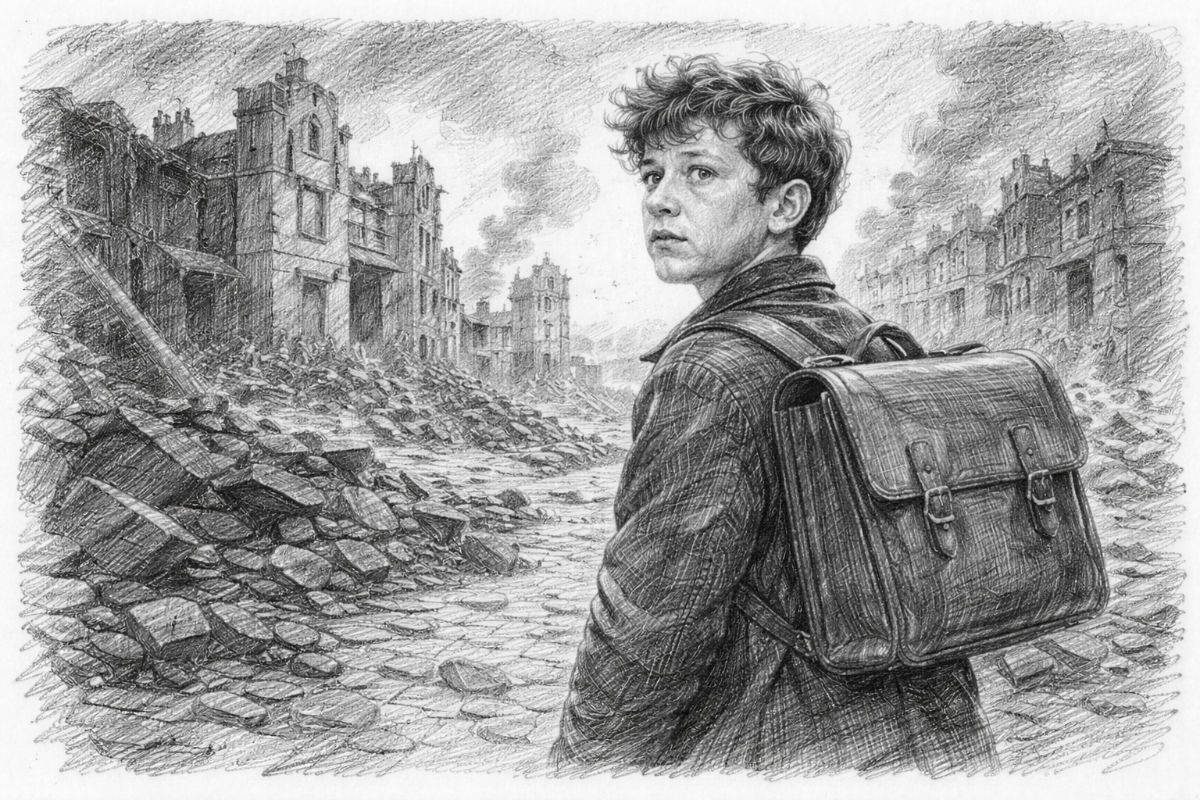
Dieter Hallervorden was born in Dessau in 1935 - a time that was later glorified, but in reality left little room for levity. He was ten years old when the war ended. An age at which impressions take hold without being able to categorize them. Destroyed cities, deprivation, fear, authority - none of this is analyzed, but stored. Those who grow up in such years develop either adaptation or resistance. Sometimes both at the same time.
The post-war years in the later GDR are characterized by a paradoxical promise: security through order, meaning through ideology. For many families, this is reassuring at first. For alert children, on the other hand, it quickly has a constricting effect. Hallervorden obviously belongs to the second category. Not as a loud rebel, but as a quiet observer. Someone who realizes that there is a gap between what is said and what is meant.
This early experience - that words do not always mean what they say they do - will become important later on.
Smart early, uncomfortable early
Hallervorden was considered gifted at an early age. He graduated from high school at the age of 17, an indication that he not only enjoyed language but also structure. Contrary to what his later image would suggest, he is not a chaotic mind, but someone who recognizes patterns. And that's precisely why he gets into trouble.
He began studying Romance languages and literature at Humboldt University in East Berlin. He is interested in languages not only because of the words, but also because of the ways of thinking behind them. French, Spanish, culture, literature - all this opens windows into other worlds. And that is precisely a problem in a system that propagates closed-mindedness.
At the same time, he works as a tourist guide. A seemingly harmless job, but one that turns out to be a political minefield. Anyone who talks to visitors from the West has to control themselves. Words are weighed, gestures observed. Hallervorden is targeted by the authorities - not because he openly opposes them, but because he cannot be reliably categorized.
In authoritarian systems, this is precisely the biggest flaw.
The border in your head - and the border on the map
It is important not to romanticize this point. The escape from the GDR was not a spontaneous rush for freedom, but a sober decision involving risk. Hallervorden flees to West Berlin in 1958. He is in his early twenties. Young enough to start anew. Old enough to know what he was leaving behind.
This decision is not a spectacular act with dramatic music. It is quiet. And that is precisely where its significance lies. Those who leave do not leave because everything is bad, but because something crucial is missing: air to breathe. The freedom to make mistakes. The freedom to talk nonsense. The freedom to make a fool of yourself - without political consequences.
You could say that without this escape, the later comedian would not have existed. Because comedy needs freedom. Not just on stage, but in the mind.
West Berlin: freedom with bumps
West Berlin is a special case at the end of the 1950s. An island, politically charged, culturally rough, but open. Anyone who arrives here is free - but not automatically arrived. Hallervorden struggles along, tries things out, learns, fails, learns more. It is not a career plan, but a search process.
He discovers cabaret. Not as an outlet, but as a tool. Here you can say what is only thought elsewhere. Here authority is caricatured, language twisted, power unmasked. This is no coincidence, but a logical continuation of his previous experiences. Anyone who has learned to read between the lines will at some point begin to speak between the lines.
The humor here doesn't come from silliness, but from friction. From the knowledge of how quickly language can become a weapon - and how effective it is when you turn it around.
Imprinting instead of trauma
It would be wrong to describe Hallervorden's GDR experience as a trauma. It is more of an imprint. An inner reference that still resonates today. Anyone who has experienced how opinions are managed, words are regulated and attitudes are demanded reacts sensitively when similar mechanisms reappear later - even in different packaging.
This sensitivity explains a lot: his skepticism towards moral absolutes, his aversion to bans on thought, his tenacity when it comes to artistic freedom. You don't have to share it. But you should understand it.
Because it is here, in these early years, that the foundations are laid. Not for the joke, but for the attitude behind it.
At the end of this chapter there is no hero, but a young man who has made a decision. Against conformity. For uncertainty. For freedom without guarantee. This is not a legend, but a sober fact. And perhaps that is precisely the reason why Hallervorden never fitted neatly into a pigeonhole later on.
He learned early on that systems change, but mechanisms remain. That power likes to be humorless. And that laughter is sometimes the most accurate form of criticism. The stage comes later. The gong too. But the inner direction is already set here.
Not an academic career - but a life's work with a chair format
Dieter Hallervorden has never earned a doctorate, never held a professorship and has never filled a lecture list. And yet it would not be an exaggeration to say that his career resembles an academic career - only without a title, but with an audience. While others studied theory, he learned practice. While some people buried their thoughts in footnotes, Hallervorden tested them live, evening after evening, in front of people who reacted mercilessly honestly.
The stage became his lecture hall. The laughter - or lack of it - was the test. And the audience? An auditor who is not forgiving.
What emerged was not a product of chance, but a body of work that has grown over decades. Someone who has been around for so long inevitably learns more about people, language and mechanisms than many who only write about them.
Die Wühlmäuse: Founded out of conviction, not calculation
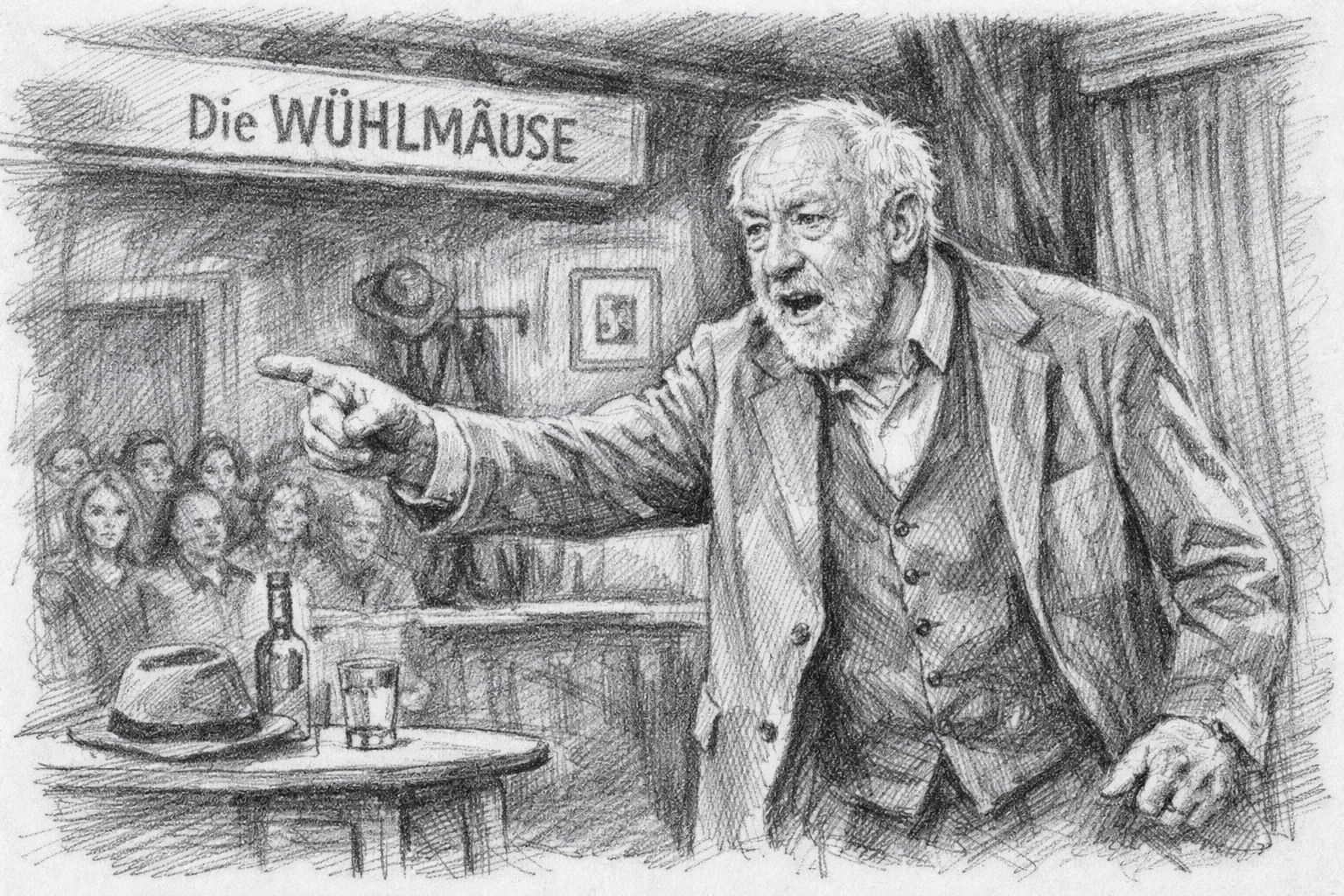
In 1960, Hallervorden founded the cabaret „Die Wühlmäuse“ in West Berlin. The name says it all: not loudly from above, but from below, digging, infiltrating, exposing. The cabaret was not created as a career springboard, but as a necessity. A space of its own where you can say what is only whispered elsewhere.
This is where Hallervorden develops his craft. Text, timing, body language, improvisation. Cabaret is not a solo performance, but precision work. Every sentence has to be right, every pause has to work. Mistakes are not forgiven - they are exposed immediately.
These years shaped him deeply. They made him independent. Anyone who runs their own theater quickly learns to take responsibility: for content, for people, for economic survival. It is a school that does not award degrees, but builds character.
Television: From niche format to popular figure
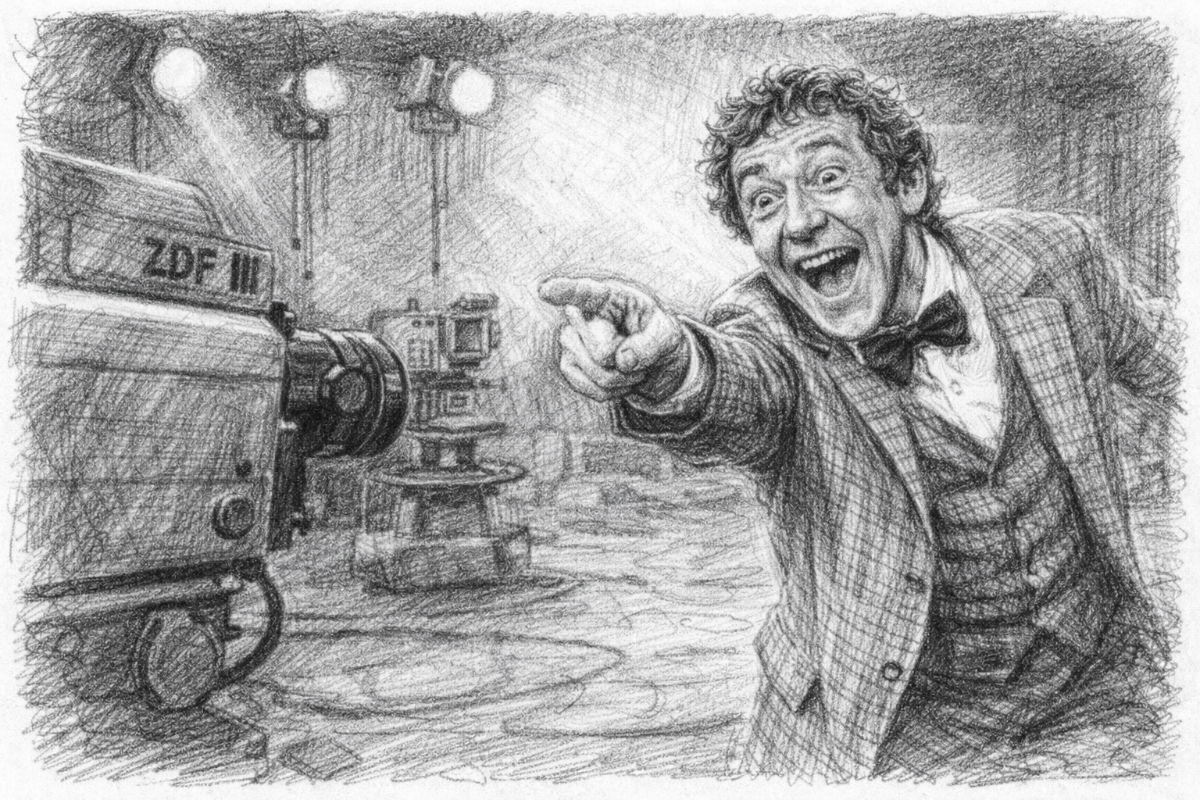
The big breakthrough came with television. In the 1970s, Hallervorden became a permanent fixture in German living rooms with „Nonstop Nonsense“. The character „Didi“ is created - seemingly simple, actually highly constructed. The naive outsider who fails in the world because he takes it too literally.
What many people overlook: This character only works because it is precisely observed. Didi is no fool. He is someone who takes the rules seriously - and in doing so reveals their absurdity. This is not silliness, but precise social criticism in clown costume.
Hallervorden becomes popular. Very popular. And popularity is a double-edged sword. It brings freedom - and the pressure of expectation. The audience wants repetition. So does the market. But Hallervorden never allows himself to be completely absorbed. He plays with the image, but does not merge with it.

Productivity as a life principle
Hallervorden's presence has been almost uninterrupted for decades: TV shows, films, stage programs, dubbing roles, guest appearances. Quantity alone would be irrelevant - but here it is combined with consistency. His work is broad, but not arbitrary.
It is remarkable how unfashionable it is. Hallervorden rarely jumps on trends. He relies on archetypal motifs: authority and subordination, language and misunderstanding, power and powerlessness. Themes that don't wear out because they are human.
You could say that he never formulated a theory, but always acted on it. His work is empirical. It observes, tests, rejects and adjusts. A process that comes surprisingly close to any serious scientific work.
The late role change: from fun maker to serious performer
A decisive turning point comes comparatively late. In films such as „His Last Race“, Hallervorden shows a side that many had not expected - although it was always there. Suddenly no slapstick, no stumbling, no gong. Instead, silence, vulnerability, dignity.
These roles are so powerful precisely because they arise from a long lead-up. Anyone who has spent a lifetime playing comedy knows the tragedy behind it. Hallervorden doesn't have to prove anything. He simply shows.
The awards follow. But something else is more important than prizes: recognition for depth. For versatility. For admitting that a person is more than their best-known face.
Theater director, designer, responsible person
With the Schlosspark Theater in Berlin, Hallervorden is once again taking on responsibility - not just artistically, but structurally. Running a theater means making decisions, enduring conflicts, bearing criticism. It is not a protected space, but an arena.
Here it becomes clear that Hallervorden is not just an actor, but a designer. He curates, provokes, enables. And he causes offense. Anyone who takes a stand inevitably does so.
This is also part of his work: not just performing, but creating spaces in which others can perform. Not just to speak, but to allow debate - even when it becomes uncomfortable.
At the end of this chapter, there is no title, no certificate, no official canon. And yet there is a life's work to be proud of. Hallervorden did not earn his authority, he earned it. Over decades. In front of changing audiences. In changing times. Perhaps that is even the most honest form of education:
Not the ones you are given - but the ones you have to earn anew every evening.
The change: The serious actor with the key to the theater
There are careers that end when the audience stops laughing. And there are careers that only then begin. With Dieter Hallervorden, there was no break, no dramatic cut. Rather a gradual fade-out. The gong became quieter. The gestures more economical. The pauses longer.
If you looked closely, you quickly realized: no one is saying goodbye to comedy here. Someone is consciously withdrawing from it to make room for something else. For depth. For vulnerability. For roles that don't need a punchline because they work by themselves.
This change did not come suddenly. It was prepared - through decades of observation, experience and a keen sense of human fractures.
The late freedom to be serious
Many actors fight all their lives to be taken seriously. Hallervorden had to learn to allow himself to be taken seriously. That sounds paradoxical, but it is logical. Those who are labeled as comedians early on are often reduced to this function. The audience laughs - and stops listening.
This dynamic shifts with increasing age. The body becomes calmer, the view clearer. Roles like the marathon runner in „His last race“ show a man who is no longer struggling for attention. He stands there. And that is enough.
This seriousness does not seem artificial. It is the result of maturity. Hallervorden doesn't play tragedy here - he carries it. Without pathos. Without grand gestures. That is precisely why these roles are touching. They are free of the will to explain. They leave space.
You could say that only now was he allowed to leave out everything that had made him famous.
Recognition without relief
The awards are coming. Prizes, praise, new perception. The comedian is suddenly celebrated as a character actor. But anyone who believes that this is a belated satisfaction is misjudging Hallervorden. He doesn't seem relieved, reconciled or at peace.
Because recognition does not change the inner standard. It merely shifts the external perspective. Hallervorden remains the same: sceptical of applause, suspicious of consensus, independent in his judgment.
The only difference is that people now listen to him differently.
The theater as a responsibility, not as a stage for the ego
With the takeover of the Schlosspark Theater in Berlin, Hallervorden finally takes on a different role. He no longer just stands on the stage - he carries it. Running a theater means making decisions that are rarely popular. Schedules, casts, budgets, conflicts. It is not a romantic place, but a complex structure.
Hallervorden takes this role seriously. Perhaps precisely because he knows how fragile art is when it is only managed. For him, the theater is not a museum or a comfort zone, but a living place. With friction. With contradiction. With risk.
It is almost inevitable that controversy will arise. Those who open up spaces become vulnerable. Those who take a stand are judged. And those who don't conform are polarized.
This period of his life shows Hallervorden as something he was for a long time without saying it: a creator. Someone who not only reacts, but initiates. Someone who doesn't wait to be occupied, but creates structures. It is striking how little vain this step seems. No retreat into the private sphere, no memorial during his lifetime. Instead, work. Confrontation. Presence.
He is not above the theater. He is in the middle of it. And that is precisely what sets him apart from many who, in old age, only allow themselves to be managed.
Age as an amplifier, not a brake
In a society that confuses youth with relevance, Hallervorden's late phase seems almost out of time. He is not quieter, but more precise. Not slower, but clearer. Age does not serve as an excuse here, but as an amplifier.
His roles, his statements, his decisions are less pleasing, but clearer. Anyone listening to him today quickly realizes that this is someone who no longer has to prove anything - and can therefore say anything.
That makes it uncomfortable. And that is precisely where its importance lies.
An artist in transition - without a destination
This chapter does not end with a conclusion. It ends with a movement. Hallervorden is not an artist who takes stock of himself. He remains in the process. For him, change is not a project, but a state.
The serious actor does not replace the comedian. The theater director does not replace the stage person. All these roles exist side by side. Like layers. Like sediments of a long life.
And perhaps that is precisely the greatest achievement of this change: not becoming someone else, but more yourself.
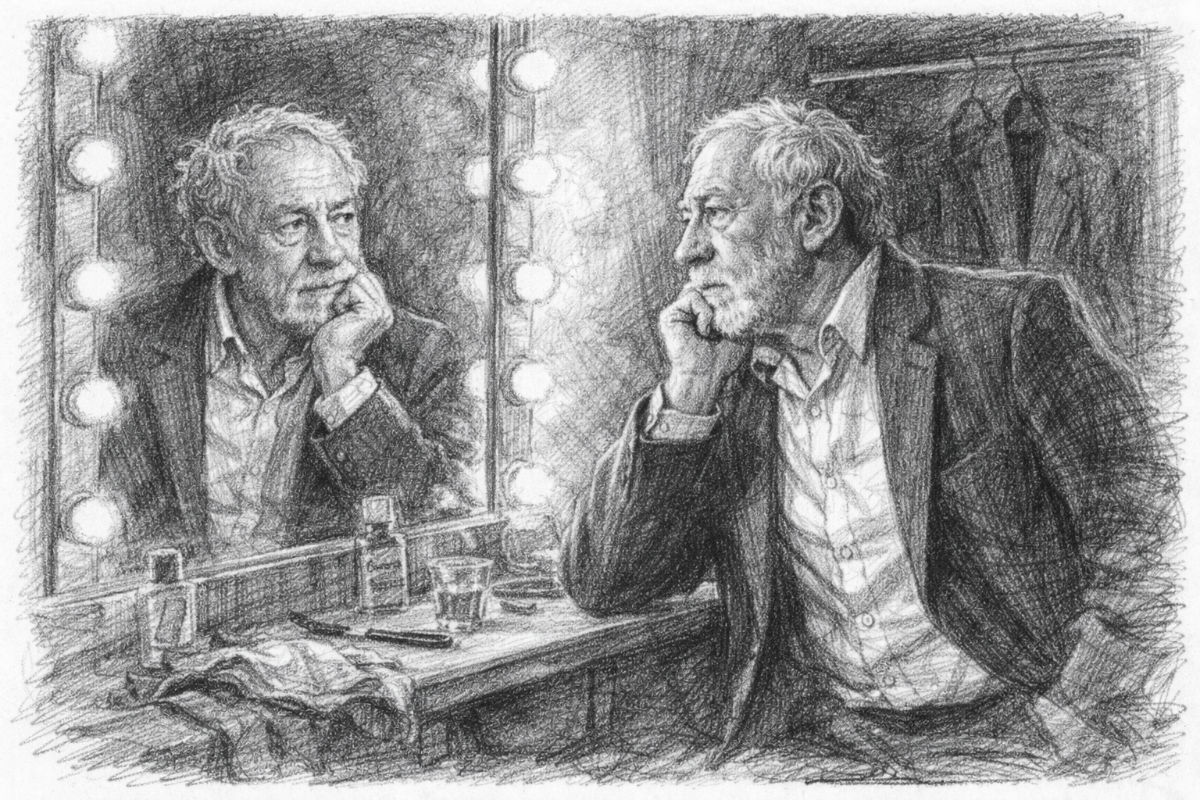
Controversies, criticism and misunderstandings
Those who are visible for decades not only garner applause, but also attributions. The longer a career lasts, the larger the projection surface becomes. In Dieter Hallervorden's case, it is particularly large because he combines several roles: comedian, actor, theater director, public intellectual against his will.
In such cases, controversies rarely arise from individual statements alone. They arise from friction between expectations. The audience expects the joker. Critics expect an attitude. The media expect exaggeration. And Hallervorden himself? He seems to expect one thing above all: freedom.
This is where many misunderstandings begin.
Artistic freedom versus zeitgeist
A central point of criticism that Hallervorden has repeatedly encountered in recent years concerns the use of language, images and role models, which are viewed differently today than they were decades ago. Sketches, terms or productions that used to be considered satirical or exaggerated are now sometimes perceived as problematic.
Hallervorden's position on this has remained relatively constant: He makes a clear distinction between representation and attitude. Satire, he believes, is allowed to exaggerate, provoke and even hurt - not out of contempt, but to make mechanisms visible. This view is increasingly in conflict with a social climate that pays more attention to effect than intention.
The conflict is less personal than structural. It is not primarily about Hallervorden, but about the question:
Can art still irritate - or should it above all confirm?
The blackface debate: symbolism meets biography
This conflict became particularly apparent in connection with a production at the Schlosspark Theater, in which Hallervorden played a role with dark make-up. The accusation: cultural insensitivity, lack of awareness of the problem, recourse to outdated forms of representation.
The criticism was clear, some of them sharply. Hallervorden's reaction to this remained objective but unbending. He referred to the historical context of the production, to the role itself and to the intention, not to a blanket devaluation. For him, this was not a political statement, but an artistic decision within a classical understanding of theater. Two worlds collide here:
- One that looks at art from the logic of its creation.
- And one that evaluates art primarily on the basis of its social impact.
Both perspectives are legitimate. The conflict arises where they deny each other the standard.
Current survey on trust in politics and the media
Language debates and intergenerational ruptures
There are similar discussions about terms and expressions that Hallervorden used in anniversary broadcasts or interviews. Words that were once taken for granted are now considered problematic. Hallervorden usually defends their use by pointing to historical authenticity or satirical context.
It is interesting to note that criticism came not only from outside, but also from within the company - for example from his son. This constellation makes it clear that it is not a simple contrast between „old“ and „new“, but a genuine intergenerational dialog that is often conducted emotionally.
Hallervorden acknowledges this criticism without abandoning his basic attitude. He does not see himself as a provocateur for the sake of provocation, but as someone who does not want to censor himself afterwards in order to meet current standards.
You can call that stubborn. Or consistent. It's probably both.
Political attributions: Between attitude and label
Political attributions are particularly tricky. Hallervorden is repeatedly Proximity to certain camps often sweeping, rarely substantiated. In fact, he expresses himself critically on topics such as war, peace, freedom of expression and state power, sometimes uncomfortably, often at odds with common narratives. What is striking:
His argument is not partisan, but principled. His skepticism is directed less against specific actors than against structures: moral simplification, narrowing of discourse, regulation of language.
The fact that such positions are quickly appropriated or distorted in heated times is not a new phenomenon. Anyone who doesn't clearly „belong“ is often pigeonholed somewhere. Hallervorden consistently avoids these pigeonholes - which paradoxically leads to people wanting to ascribe one to him all the more stubbornly.
The price of independence
What links all these controversies is less the content of individual accusations than the role that Hallervorden takes on: that of the independent. Independence is attractive as long as it entertains. It becomes problematic as soon as it contradicts.
Hallervorden is not a victim. He knows that public presence means responsibility and a target. But he accepts the price. Adaptation would be the greater loss for him.
Misunderstandings arise above all where intentions are ascribed to him instead of positions being analyzed. Where he is evaluated morally instead of being classified historically. And where people expect an artist to constantly re-legitimize himself.
A sober look at the debates
In the end, it remains to be said: Most of the controversies surrounding Dieter Hallervorden are not scandals, but symptoms of a social change in which standards are shifting without old ones disappearing completely.
Hallervorden does not stand outside this development, but in the middle of it. He embodies a generation that has learned that freedom cannot be taken for granted - and that it sometimes has to be defended even when it seems uncomfortable. You don't have to share his positions. But they should be expressed correctly.
This chapter does not draw a line under it. Controversies are not a closed chapter, but part of a living work. They accompany Hallervorden because he remains visible. And because he speaks when others remain silent. Perhaps this is precisely the core of many misunderstandings:
It's not that he says too much - it's that he doesn't allow himself to be told what he has to say.
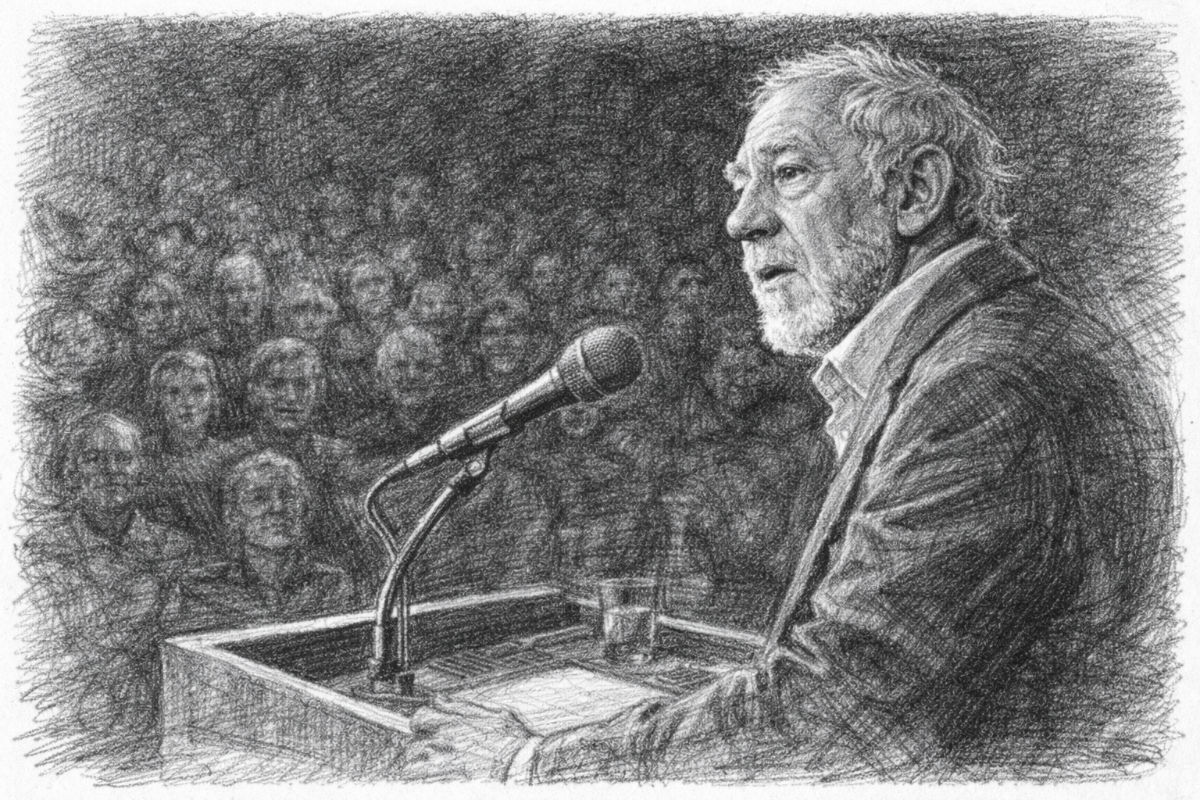
Making the work work: style, humor and social contribution
When you talk to people about Dieter Hallervorden today, you quickly realize that there are two images that exist in parallel. One is the „Didi“ - the man with the gong, the slapstick king, the master of absurdly simple situations, in which there is always something very human in the end. And the other image is the serious Hallervorden - the actor who suddenly becomes quiet, the theater director who takes responsibility, the artist who not only delivers punchlines but also leaves questions unanswered.
The exciting thing is that both images are correct. They do not contradict each other, they complement each other. And yet it has taken society a long time to really accept the second image. Not because it was weaker - but because the first was so dominant. Anyone who has been „the funny one“ for decades has to realize at some point: Humor is a gift, but it's also a drawer. And drawers like to close by themselves.
The Didi effect: when a figure outshines a person
„Didi“ was not just a role. It became a cultural abbreviation. A name was enough, a tone of voice, a gong, and the memory was there. This is the kind of success that many artists dream of - and that makes some of them choke inside. Because when a figure becomes so deeply engraved in the collective memory, it begins to overshadow the individual.
That's exactly what happened with Hallervorden. For many, he remained „the one from television“ for years. Even when he had long since moved on to other things: theater work, more serious roles, new forms. The public clung to the familiar image - not out of malice, but out of habit. That's how tradition works: Once you've learned something, you don't like to let it go.
And there is a quiet irony here: of all people, an artist who played with roles all his life had to experience how strongly a role can stick.
Humor as a craft: precision instead of silliness
Hallervorden's humor was never just slapstick. He was a craftsman. Timing, rhythm, body language, the art of omission - all this was rarely a coincidence with him. Slapstick only works easily when it is spot on. A stumble is only funny if it has an inner meaning. And Hallervorden had this sense: he showed people who fail because they take rules too seriously.
His comedy had a classical tradition. You can recognize elements of silent film comedy in it: Chaplin, Keaton, Laurel & Hardy - playing with the body, with the situation, with the overstrained character in an over-correct world. The joke doesn't come from the fact that someone is „stupid“, but from the fact that the world sometimes seems more stupid than the person.
That is an important difference. And it explains why many of his numbers still work today: They are not based on the zeitgeist, but on basic patterns.
The serious Hallervorden: Visible late, but not suddenly there
The second Hallervorden - the serious one - was never a reinvention. It was more of an uncovering. Like an old painting, where at some point you remove the varnish and suddenly see more depth, more shadows, more structure.
It is understandable that it took the audience a long time. Anyone who has known someone as a comedian for decades often unconsciously expects a punchline in serious roles. You wait for the break, the twist, the wink. If it doesn't happen, it seems strange at first.
But Hallervorden remained consistent in these roles. And it was precisely because of this that the new image slowly became established. Films like His Last Race were the first to make many people realize: this man can not only move fast, he can also be quiet. He can not only grimace, he can also look. And a look can sometimes be louder than a gong.
The interesting thing is that his late breakthrough as a serious actor was not a „comeback“. It was rather a late recognition of what was always there - just not in the foreground.
The stage as a moral resonance chamber
While television often aims for a quick effect, theater is slower. Theater forces you to concentrate. It is physical, immediate and cannot be zapped away. Those who run a theater not only create entertainment, but also a resonance space in which society can observe itself.
Hallervorden as a theater director is therefore more than just an artist in a new role. He is someone who creates structures: spaces, repertoires, ensembles, opportunities. And in doing so, he takes responsibility for what can be said and shown in public.
This aspect in particular is often underestimated. An actor can hide behind a role. A theater director cannot. He makes decisions. And decisions create friction. This friction is not automatically bad - it shows that culture is alive.
Social contribution: The uncomfortable in the cloak of the comedian
Hallervorden's contribution to society does not lie in the fact that he has „the right opinion“. His contribution lies in the fact that he makes visible how quickly opinions become labels. He stands for an old virtue that seems surprisingly valuable again today:
Independence. And that has its price.
It doesn't fit neatly into bearings. And those who don't fit neatly are often misunderstood. Then a statement quickly becomes a „signal“. An attitude becomes an „assignment“. Hallervorden has repeatedly experienced exactly this game - and he still seems to endure it. Not because he's looking for a fight, but because he doesn't like to be managed.
You can be critical of his positions. You can also consider him stubborn. But you should recognize that: He has never made himself completely comfortable. And that is rare in the cultural sector.
Why the two sides are a gift
In the end, it is precisely this dichotomy - the comedian and the serious one - that is a gain. Because it shows something that would do many people good: a person does not have to be reduced to one characteristic. You can be contradictory. You can grow. You can change without denying yourself.
Hallervorden is a good example of this. „Didi“ has brought joy to many. The serious Hallervorden brings something else to many: thoughtfulness, friction, sometimes even a kind of quiet consolation. The fact that the second picture arrived later does not make it any less valuable - perhaps even more valuable. Because it seems like a truth that has been added: there was always more.
And perhaps that is the most beautiful point of his life's work:
The man with the gong made people laugh for decades - and only later showed that he could be heard without the gong.
If you let his work sink in, one impression remains above all: Hallervorden has given German culture a figure that will not be forgotten - and at the same time proved that you don't have to be pinned down to this figure. He has demonstrated humor as a craft. He has shown that comedy is not the opposite of seriousness, but often its brother. And he has, consciously or unconsciously, delivered a social lesson: How long it takes for people to be willing to see someone in a new light.
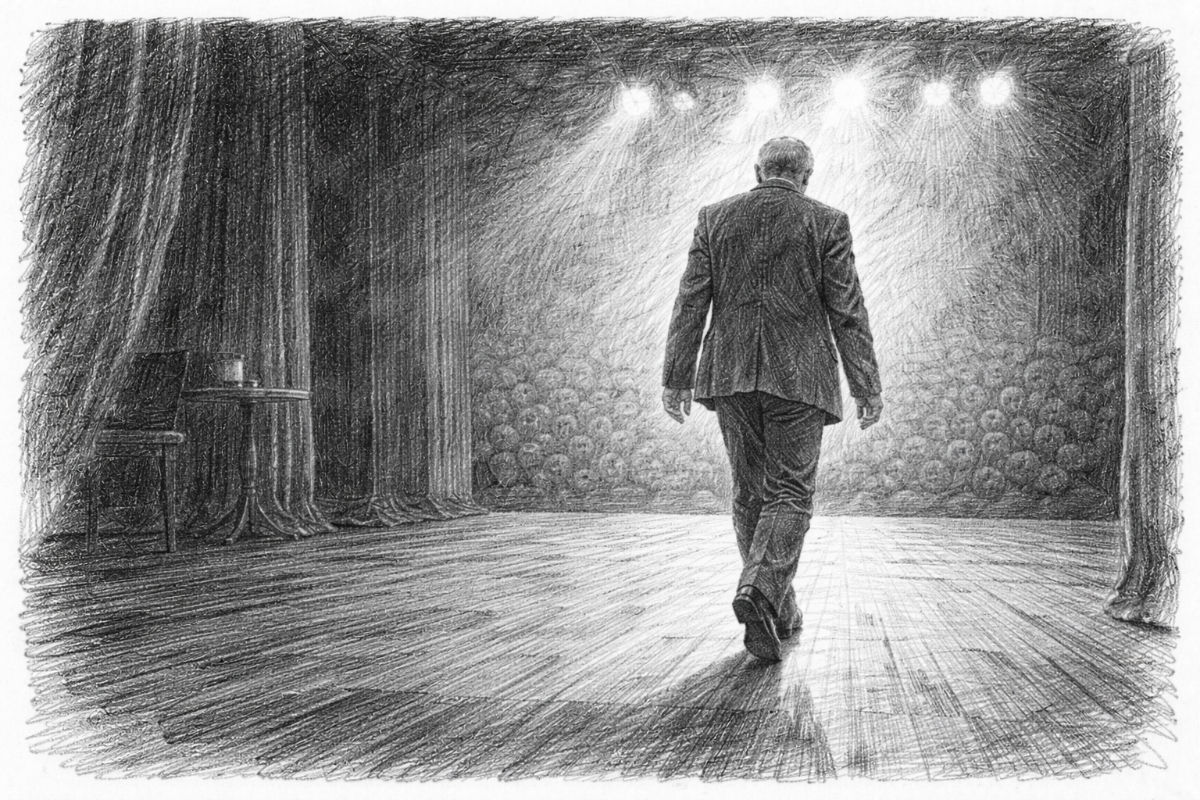
The gong echoes - and the silence remains
When I think of Dieter Hallervorden, I automatically think of my own childhood. You couldn't get past him in the early 80s. „Didi“ was there. On television, in conversations, in the collective memory. He belonged to that rare category of characters that everyone seemed to like. Children laughed, adults laughed with him - sometimes at the joke, sometimes at the memory of having laughed like that themselves.
For me, too, Hallervorden was exactly that for a long time: the comedian. The man with the gong. The one who shook up the world a little without explaining it. And maybe that was the magic. As a child, you don't ask for subtext. You just laugh. Period.
Like probably most people, I didn't realize at the time that there was more to this character. And that's not a flaw. Rather, it is proof of how well this role worked.
The second picture that took time
Looking back, it is interesting to see how long it took for Hallervorden's second image to really catch on. Not only socially, but also personally. For me, it was about ten years ago when I first became aware of it: There is someone who not only entertains, but thinks very consciously. Someone who takes a stand without pandering. Someone who allows silence.
But this serious side is nothing new. It has always been there. Hallervorden was already performing political cabaret in the 1960s, when he founded the Wühlmäuse. Anyone who sat in the small Berlin basement theaters back then probably knew very well that there was more going on here than mere entertainment. That people were observing, reflecting and criticizing here.
You could say that those who followed him early on knew it long ago. The rest - myself included - needed time. Perhaps because we like to cling to familiar images. Perhaps also because you don't like to re-read people when you think you've already understood them.
Misunderstandings as background music
This portrait has shown that many of the later controversies arose less from concrete border crossings than from this temporal shift. Society only discovered the serious Hallervorden long after he had arrived. And it discovered him at a time when debates were tougher, more moralistic and less patient.
It is almost inevitable that there will be misunderstandings. Anyone who has been considered a joker for decades and suddenly speaks seriously is irritating. Those who cannot be clearly categorized are provocative. And those who refuse to meet every new expectation immediately quickly become a source of contention.
But perhaps this is precisely the quiet quality of this life's work: Hallervorden never tried to please everyone. Not as a comedian. Not as an actor. Not as a theater director. And certainly not as a public figure in old age.
If you take all these facets together - Didi, the cabaret artist, the actor, the theater director, the independent - then you don't get a contradictory picture, but an astonishingly coherent one. It is the image of a person who could not be reduced to one function. Who played different roles without losing himself in them.
Hallervorden's work shows that humor and seriousness are not opposites, but two sides of the same attention. If you look closely, you will see that the man who made people laugh never did so out of superficiality. And the man who later struck a serious note never lost sight of the absurd.
The two belong together.
A personal thought at the end
Perhaps the best thing about this story is that it is not finished. Dieter Hallervorden is not a monument. He is present. He has an impact. He makes an impact. And he reminds us that artistic freedom is not about being pleasing, but about being honest.
I don't hold it against him that I didn't immediately notice his serious side - on the contrary. It shows how effective his comedy was. And it shows that you can still rediscover people decades later. That is a gift. Not only for the audience, but also for the culture in which we live.
There is no loud final chord at the end. Rather a quiet echo. The gong has struck. Often. Loudly. Unmistakable. But today it is perhaps the silence afterwards that says more than any noise.
Dieter Hallervorden has accompanied generations. He made them laugh, later made them think - and sometimes both at the same time. That is more than can be said of many artists. And that is why there is only one wish left, which is also a thank you:
May he be with us for a long time to come.

Frequently asked questions
- Why is Dieter Hallervorden still such a formative figure in German culture today?
Dieter Hallervorden has managed to remain present over several generations without completely submitting to the zeitgeist. His popularity as a comedian, combined with his later recognition as a serious actor and theater director, makes him a rare exception. He stands not only for entertainment, but for a long-term cultural dialog with his audience. - Why was Hallervorden perceived almost exclusively as a comedian for so long?
The character „Didi“ was so successful and so deeply anchored in the collective memory that it overshadowed the person behind it. Humor is more memorable than seriousness, and the public tends to preserve familiar images. As a result, its serious side remained hidden from many for a long time, even though it existed from the very beginning. - Was the serious Hallervorden around early in his career?
Yes, definitely. Hallervorden was already performing political cabaret when he founded the Wühlmäuse in the 1960s. Anyone who experienced him live back then knew that his humor always had a critical, reflective level. The later „discovery“ of his seriousness was more of a catch-up than a reinvention. - Why did it take so long for society to recognize his serious side?
Social perception is inert. Once an image has been established, it is rarely questioned voluntarily. Moreover, Hallervorden's comedy was so effective that it offered little reason to dig deeper. It was only with his later film roles that many people realized that this was an actor with great emotional depth at work. - Is the serious Hallervorden a break with his comedic past?
No, rather an extension. His serious roles are so credible precisely because they are the result of a long life of observation, timing and knowledge of human nature. For him, comedy and seriousness are not mutually exclusive, but rather mutually dependent. - What role does his biography play in his attitude today?
A very big one. The experience of wartime childhood, everyday life in the GDR and flight shaped a lasting awareness of freedom, language and power structures. This biographical depth explains why Hallervorden reacts sensitively to restrictions on freedom of expression and artistic freedom. - Why does Hallervorden always get into controversy?
Not because he deliberately wants to provoke, but because he does not adapt to changing moral fashions. He takes positions that are not always comfortable and expresses them independently of political camp logic. In a polarized public, this inevitably leads to friction. - Are the accusations against Hallervorden politically justified?
In most cases, not in a party-political sense. Criticism tends to focus on fundamental issues such as artistic freedom, language, symbolism and interpretation. Political attributions often arise retrospectively through simplification or appropriation. - How is his relationship to artistic freedom to be understood?
Hallervorden represents a classical understanding of artistic freedom that places a strong emphasis on intention, context and artistic autonomy. He does not see art primarily as an instrument of moral education, but as a space for irritation, exaggeration and debate. - Why is his attitude to language so polarizing?
Because language today is more normatively charged than in the past. Terms that were once taken for granted are now considered problematic. Hallervorden refuses to retroactively evaluate past works or modes of expression, which brings him into conflict with current standards of interpretation. - What is the significance of his work as a theater director?
As theater director, Hallervorden is not only an artist, but also the person in charge. He decides on content, schedules and personnel. This inevitably makes him a projection screen for social debates. This role reinforces his public perception beyond that of the actor. - Why is it often misunderstood?
Because many statements are taken out of context or read with certain expectations. Those who only know him as a comedian interpret seriousness as provocation. Those who expect clear political signals are irritated by his independence. - Is Hallervorden a political artist?
He is political in the original sense of the word: socially interested, critical, opinionated. However, his work is not programmatic or party-bound, but based on personal conviction. - What role does age play in its effect today?
With Hallervorden, age doesn't slow him down, it clarifies him. He no longer has to prove anything and can therefore formulate things more precisely. His statements often come across more clearly today because they no longer seek acceptance. - Why is the division into „Didi“ and the serious Hallervorden problematic?
Because it suggests that they are two different people. In fact, both sides are expressions of the same personality. The separation is a simplification of perception, not of reality. - What does Hallervorden achieve socially beyond entertainment?
He reminds us that cultural freedom is not a matter of course. His work shows how important independence, dissent and humor are as critical instruments - especially in times of moral constriction. - Why is his life's work particularly relevant today?
Because it shows that you can develop over decades without denying yourself. In a fast-moving media world, Hallervorden stands for continuity, attitude and depth. - What remains of Dieter Hallervorden when you put it all together?
An artist who has accompanied generations without allowing himself to be appropriated. Someone who made people laugh and later made them think - and sometimes both at the same time. And perhaps precisely for this reason, someone to whom we can say with honest warmth at the end: may he be with us for a long time to come.