The Two Plus Four Treaty, NATO and the Bundeswehr: What still applies today?

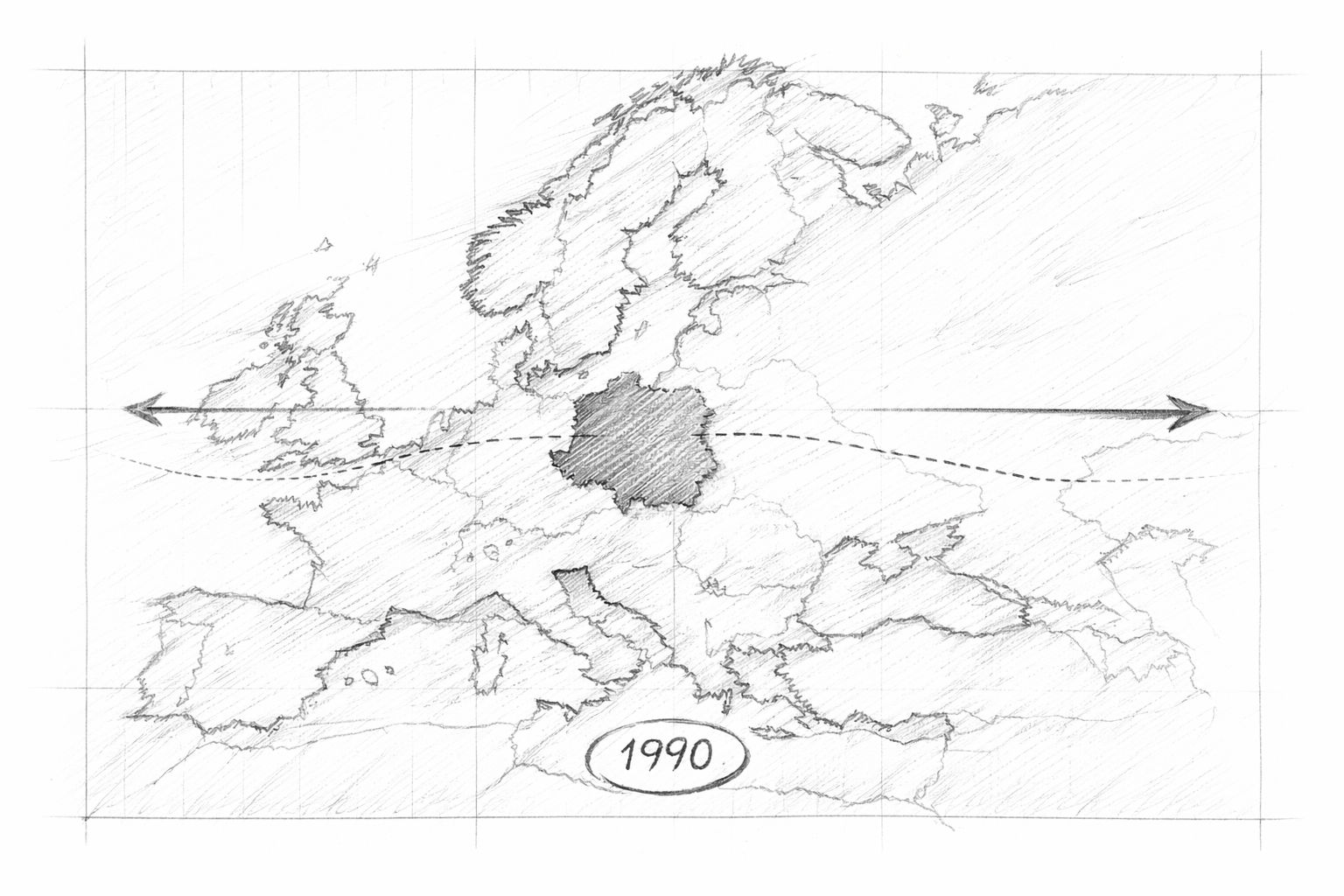
When security policy, the Bundeswehr and international obligations are discussed today, it is usually in the mode of the present: numbers, threat situations, alliance capabilities. Rarely, however, is it asked on what legal foundation all this actually stands. Yet there is a treaty that forms precisely this foundation - and yet is barely anchored in the public consciousness: the Two Plus Four Treaty.

Many people know it by name. Few know what exactly was regulated in it. Even fewer are concerned with the question of what significance these agreements still have today - more than three decades after German reunification, in a world that has changed fundamentally in political, military and social terms.

Read more

Understanding Iran: Everyday life, protests and interests beyond the headlines

Understanding Iran

Hardly any other country conjures up such fixed images as Iran. Even before a single detail is mentioned, the associations are already there: mullahs, oppression, protests, religious fanaticism, a state in permanent conflict with its own population. These images are so familiar that they are hardly questioned. They seem self-evident, almost like common knowledge.

And therein lies the problem. Because this „knowledge“ rarely comes from personal experience. It comes from headlines, from commentaries, from stories that have been repeated for years. Iran is one of those countries about which many people have very clear opinions - even though they have never been there, don't speak the language, don't know everyday life. The picture is complete, cohesive, seemingly free of contradictions. And that is precisely why it is so convincing. But what happens when a picture becomes too smooth?

Read more

Nord Stream demolition: sabotage, power politics and the uncomfortable unanswered questions

Nord Stream blasting

When people talk about energy, many think first of electricity - of light, of sockets, of power stations. In reality, however, Europe's everyday life depends on a quieter foundation: heat and process energy. Over the decades, natural gas has become a kind of invisible backbone. Not because it is particularly „beautiful“, but because it is practical: it is easy to transport, relatively flexible to use and can be reliably supplied in large quantities. For private households, this means heating and hot water. For industry, it means one thing above all: predictable production.

Particularly in industries such as chemicals, glass, steel, paper, ceramics or fertilizers, energy is not simply a cost factor that is „optimized“. Energy is an integral part of the process. If it fails or becomes unreliable, it is not just one machine that comes to a standstill - often an entire plant, sometimes an entire supply chain. This is the point at which „energy policy“ ceases to be an abstract controversial issue and begins to have a very concrete impact on jobs, prices, availability and stability. Anyone who has understood this also understands why Nord Stream was far more than just an infrastructure project on the seabed for Europe.

Read more

Understanding Taiwan: History, status issues and the risks of an interconnected world

Taiwan as a tipping point

Taiwan has been in the headlines for years - sometimes because of military maneuvers in the Taiwan Strait, sometimes because of diplomatic tensions, sometimes because of the question of how reliable international rules are in an emergency. In recent days, this impression has become even more acute for many observers: the US operation in Venezuela, in which Venezuela's President Nicolás Maduro was detained, is the subject of controversial international debate, not only politically but also in terms of international law.

Why this could be relevant for Taiwan is less a question of “Who's right?”, When major players interpret rules selectively or enforce them harshly, other powers ask themselves - soberly and guided by their own interests - where their own leeway begins and ends. And it is precisely at this point that Taiwan becomes more than a distant island issue.

Read more

Propaganda: history, methods, modern forms and how to recognize them

What is propaganda?

For many - and I felt the same way myself for a long time - propaganda was something you learned about in history lessons. A topic that seemed to be firmly established: in the Third Reich, perhaps even in the GDR, i.e. in clearly defined, authoritarian systems. We were taught that propaganda existed there because these systems needed it - and that it didn't really play a role in an open, democratic society like the Federal Republic of Germany.

This view was comfortable. And it was plausible for a long time. Because propaganda was almost always shown as something obvious: as a slogan, as a poster, as martial imagery. Something that you recognize as soon as you see it - and from which you can distance yourself internally. Today, this certainty seems fragile. Not because people have suddenly changed, but because the form of influence has changed. And that is precisely why it is worth clarifying calmly and without agitation what propaganda actually is - and what it is not.

Read more

Understanding digital money: Bitcoin, stablecoins and CBDCs explained simply

CBDCs, cryptocurrencies and stablecoins

There were times when money was simply „there“ in everyday life. You earned it, withdrew it, paid with it, transferred bills - done. And that was one of the quiet qualities of the old system: it was so reliable that you hardly noticed it.

Many technical things work best when they remain invisible. Cash is a good example of this: it is tangible, easy to understand and allows for an exchange without a system immediately running in the background that logs or evaluates everything. This was normal for decades. You didn't have to be an expert to participate in business life. That will change in the future.

Read more

Ulrike Guérot: A European between idea, university and public discourse

Ulrike Guérot and Europe

There are people whose thoughts you like to follow not because you agree with them on everything, but because they make an effort to penetrate things. For me, Ulrike Guérot is one of these voices. I have been watching her lectures for several years now - not regularly, not ritualized, but when I come across a topic that I feel is worth listening to more closely. What strikes me is that her arguments are calm, structured and largely non-ideological.

This does not make her lectures spectacular in the media sense, but they are sustainable. You can listen to her for a long time without getting the feeling that she is trying to sell a ready-made world view. Especially at a time when political debates are often morally charged or emotionally truncated, this way of speaking seems almost old-fashioned. In the best sense of the word.

Read more

Game theory explains 25 years of geopolitics: How Europe lost its strategic role

Game theory explains 25 years of geopolitics

For many, game theory sounds like dry mathematics, like formulas, like something that only plays a role in lectures or business games. In reality, however, it is an ancient thinking tool that existed long before its academic formalization. Diplomats used it, commanders used it, captains of industry used it - long before it was even called that. In the end, it is nothing more than a sober question:

„When several players have to make decisions in an uncertain situation - what options do they have and what are the consequences?“

This kind of thinking has become surprisingly rare today. Instead of analyzing alternatives, much is narrowed down to moral narratives or spontaneous interpretations. Yet in geopolitical issues in particular, a clear analysis of the possibilities would be the foundation of any mature policy. It is precisely this old craft that I would like to take up again in this article.

Read more