From FileMaker to the Cloud: How SchallOS Connects Business Software with AI, Runtime, and Updates

SchallOS - Intelligent Application Platform

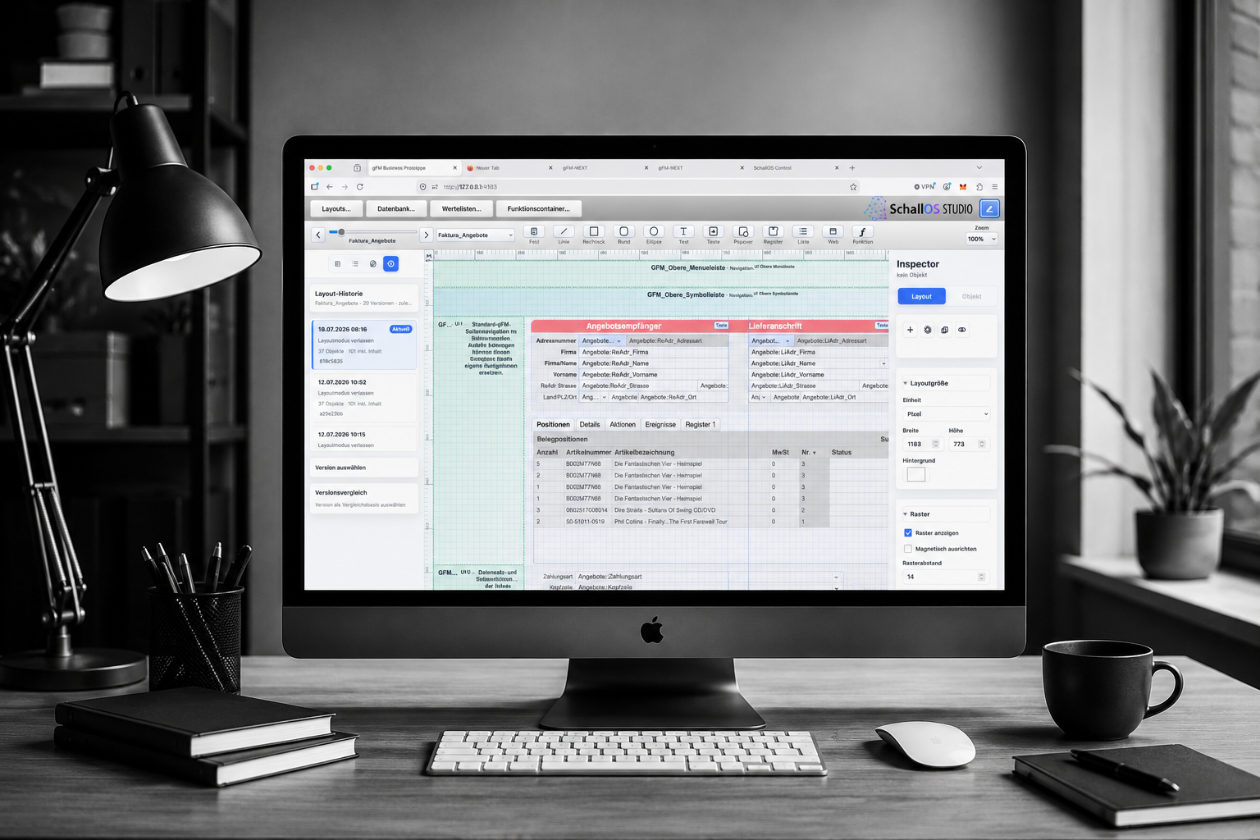
When developing a business application, the focus is initially on the visible tasks. Tables are created, relationships are defined, input forms are designed, and business processes are automated. As soon as the first users are able to work with the solution, a large part of the project appears to be complete. In practice, however, this is when the more challenging long-term phase begins. A business application must be maintained, expanded, and adapted to new requirements. Changes must be documented, new versions deployed, and existing data securely migrated. Added to this are different user permissions, data backups, error analysis, and the question of whether a solution should be operated locally, on a dedicated server, or in the cloud.

Many development platforms focus primarily on building the actual application. Additional tools and custom processes are added later for updates, documentation, deployment, and operations. Over time, this results in a technical environment consisting of many separate components that can only be kept together with considerable effort. SchallOS therefore takes a more comprehensive approach. The platform is designed to support a business application not only during its creation but throughout its entire lifecycle: from development through documentation and deployment to updates and ongoing operation.
Read more

Software Development with Codex, ChatGPT, and AI: A Practical Guide for Developers

Software Development with AI

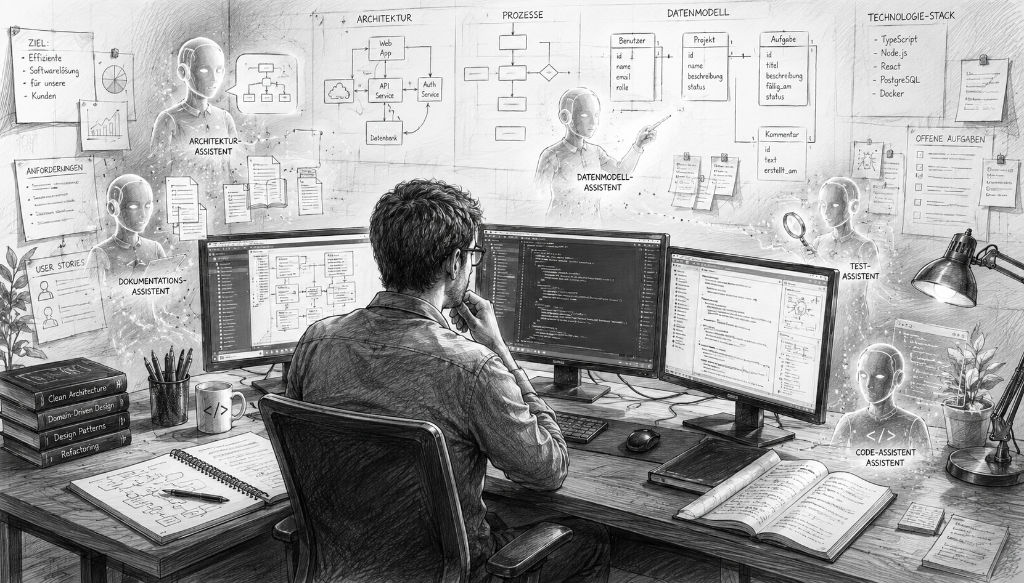
If you had asked me a few years ago what software development would look like in ten years, I would probably have talked about new programming languages, better frameworks, or more powerful development environments. Today, my answer would be completely different. The biggest change isn’t happening with the tools, but in the way we as developers think and work.

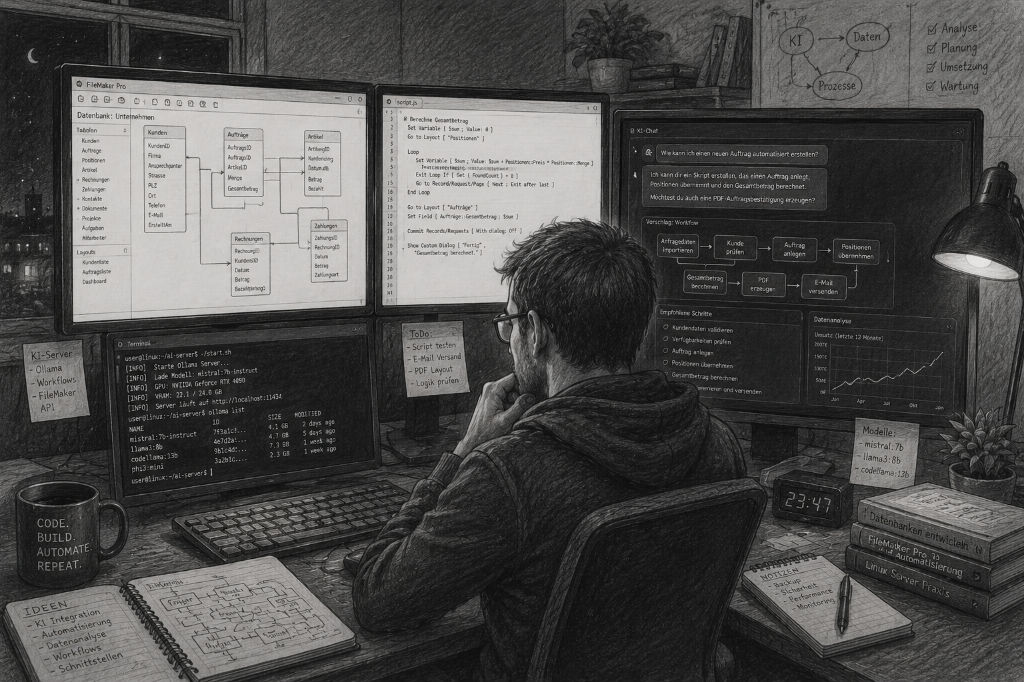
As I write these lines, I am working on a new software system myself. For the past few weeks, I have been making extensive use of modern AI tools such as Codex and other language models. At first, I was curious; now, I’m mostly impressed. Not because the AI suddenly does everything on its own, but because it handles certain tasks surprisingly well, thereby enabling new ways of working.

Read more

How artificial intelligence is changing software development and FileMaker

AI evolution in the development of FileMaker databases

Anyone currently scrolling through news portals, social networks or business platforms will quickly get the impression that artificial intelligence is changing the entire working world practically overnight. New tools, new language models and new promises appear almost daily. Texts are written automatically, images are generated, videos are created and software is sometimes prepared by voice input.

For many companies, this creates a strange mixture of curiosity and pressure. Because, of course, nobody wants to miss the boat. At the same time, many entrepreneurs, freelancers and developers do not yet know exactly which of these technologies will really remain relevant in the long term. This is probably the real peculiarity of the current AI phase: almost everyone senses that something is changing - but hardly anyone can really reliably assess at the moment how quickly and in which direction.

Read more

Apple in transition: Early devices, personal experiences and an exhibition at the OCM

Apple Macintosh Classic and Color Classic

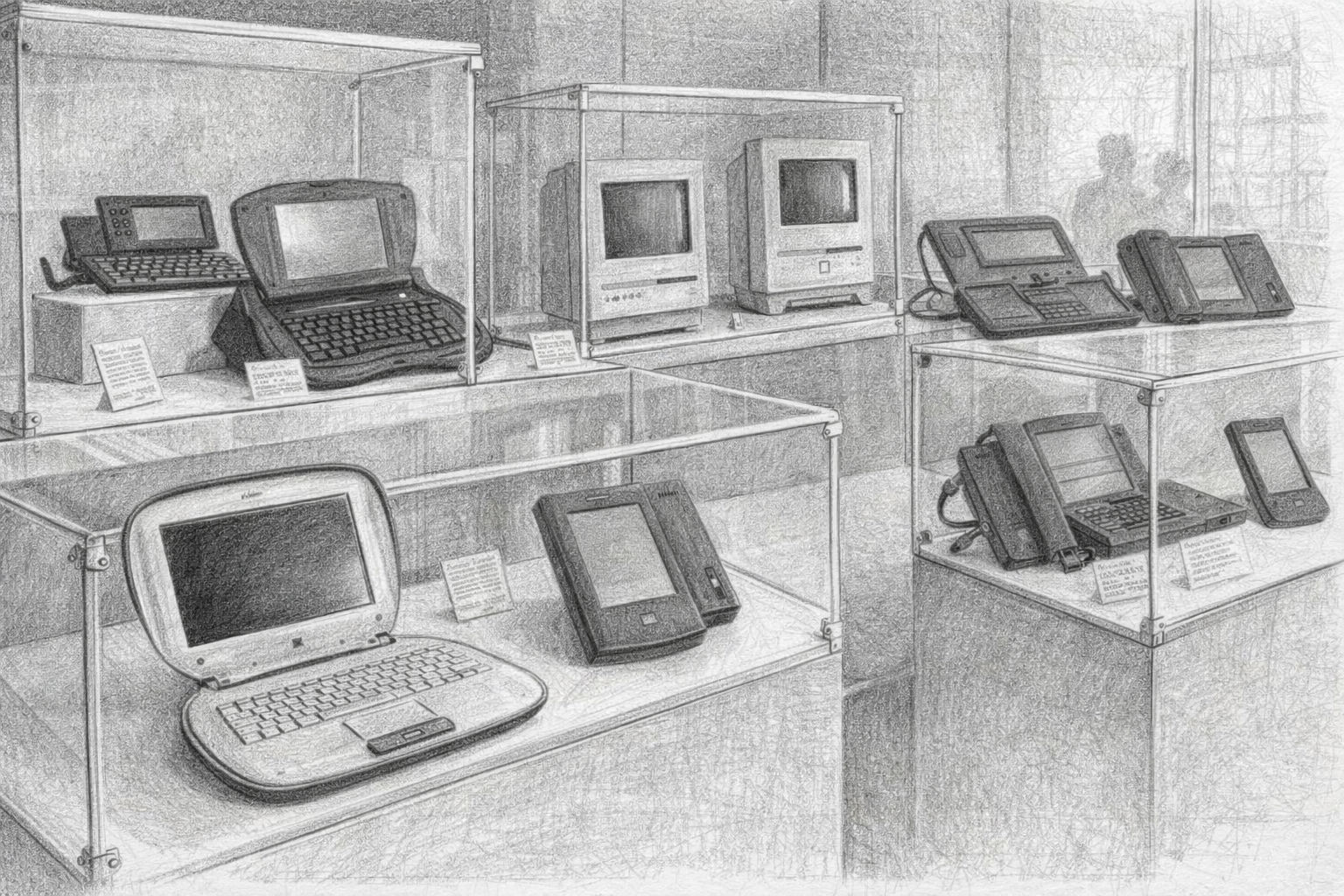
If you are interested in computer history, a visit to the Oldenburg Computer Museum is particularly worthwhile. The museum is one of those places that doesn't have to be loud to make an impression and will be hosting a special exhibition from April under the motto „50 years of the Apple computer“. For many years, technology has not only been exhibited there, but kept alive. Devices are not behind glass, but often ready for use on tables - just as they were actually used in the past.

That's what makes the difference. You don't just see old computers, you get a feeling for what it was like to work, play and think with these machines. From early home computers to classic office computers and special one-offs, everything is represented - carefully collected, maintained and, above all, clearly arranged.

Read more

When the Mac listens: What Apple's integrated AI with Gemini and Siri will mean for users in the future

Apple, Siri and Gemini

When you open a Mac today, you expect reliability. Programs start, files are in their place, processes are well practiced. Many have built up a way of working over years - some over decades - that works. You know where to click. You know your tools. And this is precisely where the quiet comfort lies. But for some time now, a change has been brewing in the background that is bigger than new colors, new icons or additional menu items. For the first time, a form of artificial intelligence is moving in not just as a single application, but closer to the heart of the operating system itself. Where daily routines are created.

That sounds abstract at first. Perhaps even a little futuristic. But basically it's about something very down-to-earth: the computer should better understand what is meant. Not just what is clicked on. Many people have so far experienced AI outside of their actual work. In chat windows, on websites, as an experiment or a gimmick. You try something out, perhaps be amazed, close the window again - and return to your normal everyday life.

Read more

AI for beginners: How to get started with artificial intelligence without prior knowledge

AI for beginners

Artificial intelligence seems like a sudden phenomenon to many people. Just a few years ago, it hardly played a role in everyday life, but today it is constantly present - in the news, in discussions, in conversations at work. However, this impression is deceptive. AI did not emerge overnight. It has been researched, developed and used in specialist areas for decades. What is new is not the idea, but the approach.

Artificial intelligence has been around as a research idea for decades. For a long time, it was a topic for universities, large corporations and special applications. The big difference today is that many AI systems have matured to the point where they can be used by normal people in everyday life - via a simple input window, on a computer or smartphone.

Read more

The silent danger of wearables: when convenience becomes surveillance

Wearables, smartwatch, in-ear headphones

Wearables are now part of everyday life. Many people now wear a smartwatch as a matter of course, count their steps, monitor the quality of their sleep or set reminders to take breaks during the day. And I'm happy to admit it: I also have a Apple Watch myself, and I find this technology absolutely fascinating in its own way. It can do things that would have been pure dreams of the future just a few years ago. Nevertheless, I rarely use my Apple Watch.

And just now, after the latest reports and statements from experts, I realize once again that this reticence is not so wrong. After all, many modern headphones and wearables now contain sensors that can measure far more than you might think at first glance. Not all headphones do - but the trend is clear: more and more technology is moving inconspicuously into small devices that we wear close to our bodies.

Read more

The digital euro is coming - what it means, what it must not do and what it could do

The digital euro is coming

Public money is more than just a medium of exchange - it is a symbol of state sovereignty, a guarantor of economic order and a means for all citizens to participate freely in economic life. For centuries, cash was an expression of this freedom: anonymous, unconditionally usable, valid everywhere. With the gradual replacement of cash by digital payment methods, a central question is now being posed anew: who will control the money of the future - and under what conditions?

Read more