When I was on the phone with a robot - how AI is conquering the phone and how to recognize it

Phone call with an AI robot

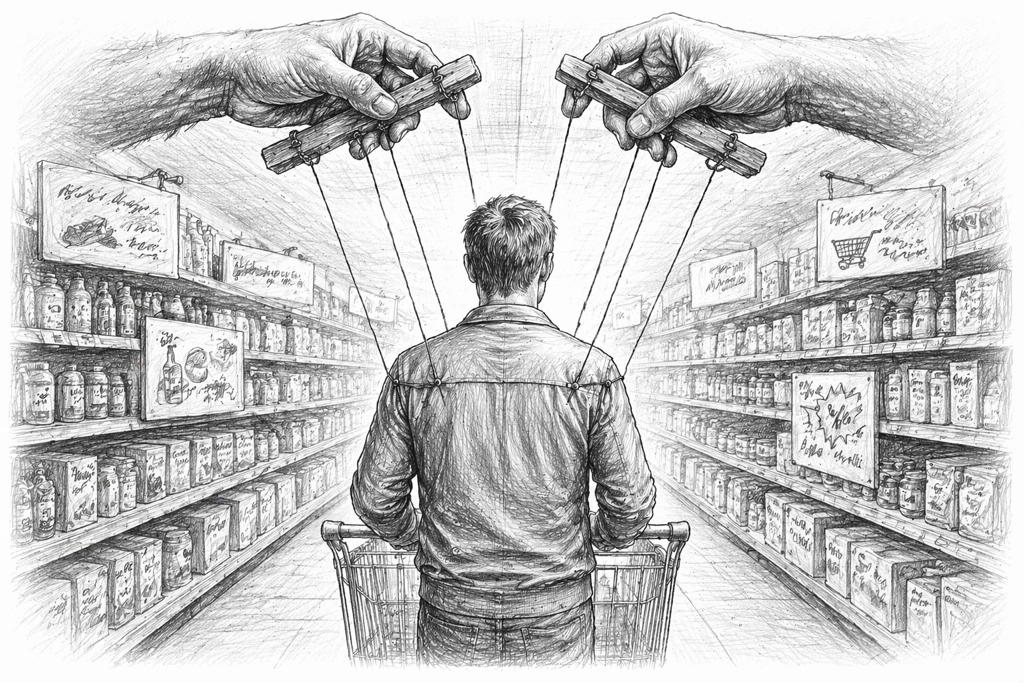
There are moments in everyday life that seem completely banal at first. You're sitting at your desk, working on an article, thinking about a new topic - and suddenly the phone rings. A number you don't recognize. In my case, it was an area code from the Ruhr region: 0233 something. As a self-employed person, you occasionally get calls like that. It's usually about advertising, services or advice that you don't actually need.

So I initially answered the call as normal. A friendly female voice answered on the other end. She introduced herself as an employee who works with Facebook and Instagram. Unsurprisingly, it was about advertising. About ads. About reach. Visibility for companies.

Read more

TMD and new dental crowns: How a minimal misalignment affects the body

CMD and new dental crown

It started unspectacularly. No accident, no loud bang, no dramatic moment. An old crown on a lower molar simply crumbled. These things happen at some point. Materials age, stresses add up over the years. I didn't give it much thought at first. It wasn't an emergency, more of a technical problem - something you repair and then tick off.

The appointment with the dentist was appropriately routine. Examination, quick look, factual explanation. The old crown had to come off, underneath it was cleaned, prepared and built up. Nothing out of the ordinary. No long discussions, no complicated decisions. Unfortunately, it soon became apparent that the problem would become bigger and last longer than initially expected.

Read more

How animals perceive time - and what this means for the future of AI

Animals, AI and time perception

A cat is lying on the carpet. It does not move. It may blink briefly, turn an ear, sigh inwardly at the impositions of existence - and nothing else happens. The human looks at it and thinks: „Typical. Lazy cattle“. But what if the exact opposite is true? What if the cat is not too slow - but we are? This article was written after I watched a video by Gerd Ganteför on this topic and found it so interesting that I would like to present it here.

Humans have been observing animals for centuries and always come to the same wrong conclusions. We interpret their behavior with our speed, our perception, our inner clock. And this clock is, soberly considered, more of a cozy wall calendar than a high-speed processor. Perhaps the cat only seems so disinterested because its environment feels about as dynamic to it as a queue of officials on a Friday afternoon.

Read more

Helge Schneider: Attitude, humor and the freedom of not having to explain yourself

Helge Schneider Portrait

I noticed Helge Schneider very early on. Not because he was particularly loud or pushed himself to the fore - on the contrary. It was this peculiar mixture of intelligent absurdity, linguistic sideways thinking and musical matter-of-factness that stuck with me. Something about it seemed different right from the start. Unexcited. Unimpressed. And above all: not in need of explanation.

This portrait is therefore not a fan text. Nor is it an ironic wink or an attempt to pigeonhole Helge Schneider into a cultural category. Rather, it is an attempt to look at a personality who has consistently resisted any form of appropriation for decades - and who shows attitude precisely because of this.

Read more

Climate protection with tunnel vision - electromobility, lobbying and the suppressed costs

Electromobility without ideology

This article is not an indictment of electromobility. Nor is it an attempt to denigrate a technological development that works perfectly well for many people in their everyday lives. I am writing this text because it has become increasingly clear to me in recent years that there is a gap between the political narrative, public perception and physical reality that is hardly ever talked about. And I'm not writing it from the perspective of an outsider. I have been driving a plug-in hybrid myself for years. I know electric driving from my own experience, not from brochures or talk shows. I know how pleasant it is to glide silently through the city, how direct the power delivery is and how relaxed it feels. Anyone who has ever driven an electric car regularly quickly understands why this type of drive is emotionally compelling. There's nothing to belittle about it.

This is precisely why I believe it is necessary to take a step back and ask soberly: What do these vehicles actually achieve - and at what cost, systemically speaking?

Read more

What our grandfathers told us about the war - and why these voices are missing today

War memories of the grandfathers

There is a lot of talk about war. In the news, talk shows, commentaries, social media. Hardly any other topic is so present - and at the same time so strangely abstract. Figures, maps, frontlines, expert assessments. We know where something is happening, who is involved and what is at stake. What is almost completely missing are the voices of those who have experienced war rather than declared it.

Perhaps it is because these voices are slowly falling silent. But perhaps it is also because we have forgotten how to listen to them.

Read more

Is killing undignified? A sober question about murder, terror and war

Is killing undignified?

We live in troubled times. War, terror, violence - all of this is very present again. In the news, in political debates, in conversations on the sidelines. Decisions about war and peace are being made, often quickly, often with great determination. Arguments are being put forward, weighed up, justified. And yet I am left with a feeling of unease.

Not because I believe that everything is easy or because I dream of a conflict-free world. But because I notice how rarely a very specific question is asked. A question that is neither legal nor military. A question that doesn't ask about guilt or justice, but about something more fundamental. This question is: What does it do to a person when they kill another person?

This article is an attempt to pose this question calmly and soberly - without accusation, without moral pathos and without instrumentalizing current events.

Read more

More than punk: Nina Hagen, Cosma Shiva and the art of not letting yourself be taken in

Portrait of Nina and Cosma Shiva Hagen

When you approach a portrait of Nina Hagen, it's tempting to talk about music first. About punk, provocation, shrill performances. About everything that is loud and visible. This portrait deliberately begins differently. Not with songs, not with styles, not with images. But with something quieter - and more important: attitude.

Attitude is not a label. It cannot be put on like a costume, pasted on afterwards or explained with marketing. Attitude is evident in early behavior, long before someone becomes famous. It can be seen in how someone reacts to limitations, to contradictions, to power. And this is where Nina Hagen becomes interesting - not as an icon, but as a personality.

Read more