For many - and I felt the same way myself for a long time - propaganda was something you learned about in history lessons. A topic that seemed to be firmly established: in the Third Reich, perhaps even in the GDR, i.e. in clearly defined, authoritarian systems. We were taught that propaganda existed there because these systems needed it - and that it didn't really play a role in an open, democratic society like the Federal Republic of Germany.
This view was comfortable. And it was plausible for a long time. Because propaganda was almost always shown as something obvious: as a slogan, as a poster, as martial imagery. Something that you recognize as soon as you see it - and from which you can distance yourself internally. Today, this certainty seems fragile. Not because people have suddenly changed, but because the form of influence has changed. And that is precisely why it is worth clarifying calmly and without agitation what propaganda actually is - and what it is not.



Latest news on the topic
16.08.2026: Journalist and author Patrik Baab uses a question posed by FAZ correspondent Michael Martens to Ukrainian President Volodymyr Zelenskyy as a starting point for a fundamental critique of German war journalism. Martens had asked how Europeans could specifically help, „More Russians, more Russian soldiers“ to kill.
For Baab, this phrasing crosses the line between journalistic observation and political activism. He accuses Martens of siding with one of the warring parties and thereby abandoning the objectivity that should characterize independent journalism. The FAZ’s subsequent explanation that the wording had been misleading does not convince Baab.

The FAZ Scandal: Why This Question Is Destroying Journalism – Patrik Baab
His criticism, however, goes much further: Baab views the incident as a symptom of an increasingly militarized media landscape. He draws historical parallels, speaks of Russophobia and „cognitive warfare,“ and criticizes the widespread silence of other leading media outlets. Such statements, he warns, also influence the Russian public and could contribute to further escalation. His conclusion is a plea for journalistic objectivity, a more critical approach to media consumption, and a return to reporting that does not itself become a participant in the war.
22.05.2026: An argument in yesterday's Broadcast by Markus Lanz between retired Brigadier General Erich Vad and CDU politician Roderich Kiesewetter revolved around the question of whether Germany's support for Ukraine is increasingly making it a potential target for military escalation. How BILD in an article Vad warned Markus Lanz urgently against a further escalation of the conflict and spoke openly about possible Russian retaliatory strikes on Europe and Germany. Kiesewetter sharply disagreed and accused Vad of creating fear among the population with such statements. The discussion ultimately escalated into a vociferous exchange of blows about deterrence, war risks, arms deliveries and Germany's political responsibility. What is particularly interesting here is not so much who is „right“, but how emotionally and media-charged such debates have become. The scene is an example of how strongly security policy communication fluctuates today between warning, mobilization, fear, moral pressure and the formation of public opinion.
26.04.2026A recent lecture by propaganda researcher Dr. Jonas Tögel sheds impressive light on how modern propaganda works in the 21st century. In his lecture „We are being manipulated every day!“ At the Network of Critical Judges and Prosecutors (KriSta), Tögel explains the concept of „soft power“ - the ability to influence people in a targeted manner without coercion or violence. This is less about overt propaganda and more about the subtle control of opinions, emotions and behavior via media, language and psychological mechanisms.

We are manipulated every day! - exclusive lecture by Dr. Jonas Tögel at KriSta | Dr. Jonas Tögel
Tögel shows that modern communication is increasingly characterized by concepts, framing and targeted narratives that make orientation difficult and steer debates. This form of „cognitive warfare“ is aimed directly at the human psyche and, according to Tögel, is becoming an increasingly important tool in political and social disputes. His conclusion: those who do not engage with these mechanisms run the risk of being unconsciously influenced. This makes it all the more important to critically scrutinize the media and use different sources.
03.04.2026Several federal states are currently planning Restrictions on the right to information and freedom of information, which observers see as a worrying trend. The starting point is an amendment to the law in Berlin, which has introduced new exemptions under the pretext of protecting critical infrastructure. These affect not only security-relevant areas, but also sectors such as transport, energy and finance.

heiseshow: Moon mission, freedom of information, 50 years of Apple | heise & c't
Other states are following suit: In Schleswig-Holstein, entire institutions such as savings banks or chambers are to be exempted from transparency obligations in future. In addition, anonymous requests could be restricted, which would particularly deter journalists and whistleblowers. In Thuringia, there are plans to reduce existing publication obligations, while Mecklenburg-Western Pomerania even wants to link the right to information to the place of residence. Critics warn that this would undermine a fundamental principle of freedom of information and weaken the basis for an informed public debate.
Origin and original meaning of the term
The word „Propaganda“ is older than many people think. It comes from the Latin propagare - „to spread“, „to multiply“, „to propagate“. Originally, the term was value-neutral. It was simply about systematically spreading ideas, beliefs or convictions.
In the 17th century, the Catholic Church spoke quite naturally of the Congregatio de Propaganda Fide - of the „Congregation for the Propagation of the Faith“. No one understood this to mean deception or manipulation. It was about organization, reach and impact.
It was only much later - especially in the 20th century - that the term acquired its current, negative coloring. Not because the tool changed, but because its consequences became visible.
Propaganda is not the same as a lie
A widespread mistake is to automatically equate propaganda with untruth. This is too short-sighted - and therefore dangerous. Propaganda:
- does not have to lie
- can work with true facts
- can sound factual
The crucial point is not whether something is true, but what it is used for.
- Information wants to impart knowledge.
- Conviction wants to argue.
- Propaganda wants to steer.
She selects, she emphasizes, she repeats - and she leaves out. Her strength often lies not in what is said, but in what is not said.
Differentiation: information, opinion, propaganda
In order to recognize propaganda, a clear conceptual distinction is needed.
- Information
- Goal: Enable understanding
- Characteristics: Context, classification, openness to contradiction - Opinion
– Objective: to represent a position
– Characteristics: subjective, argumentative, recognizable point of view - Propaganda
Goal: Control behavior and attitude
Characteristics: selective, emotional, repetitive.
Alternatives are ignored or morally discredited These transitions are fluid. This is precisely what makes propaganda effective - and difficult to grasp.
Why propaganda had such a clear historical impact
When we think of propaganda, many people immediately think of images from National Socialism: oversized marches, seas of flags, simple slogans. This is obvious, because propaganda was used there openly and demonstratively.
In Germany in the 1930s - under the National Socialist regime - propaganda was a visible instrument of power. The same was true later in the German Democratic Republic, albeit in a different form. These systems had two things in common:
- They were authoritarian.
- They had no need to be subtle.
Propaganda was loud, clear and unmistakable there. This is precisely why it was easy to recognize it as such in retrospect - and to distance oneself from it internally.
The deceptive conclusion: „We don't have that“
This historical experience gave rise to a momentous train of thought:
- Propaganda is a hallmark of undemocratic systems.
- Democracy, on the other hand, is synonymous with free information.
The problem with this conclusion is not its intention, but its simplification. Democratic societies do not renounce influence. They merely change their methods. Where overt means of coercion are lacking, psychological and communicative techniques gain in importance. Propaganda does not disappear - it adapts.
Why the term is such a strong deterrent today
Today, the word „propaganda“ triggers almost reflexive resistance. Hardly anyone wants to be associated with it. The term is seen as a fighting word, an insinuation, a moral cudgel.
That is understandable. And problematic at the same time. Because it is precisely this defensive attitude that creates a dangerous illusion:
Propaganda always affects others.
Anyone who thinks this way considers themselves immune - and overlooks the fact that modern propaganda no longer appears with a raised index finger, but with a calm voice, moral tone and apparent matter-of-factness.
Propaganda is not a historical relic. It is a tool. And tools do not disappear - they are refined. Understanding them requires neither outrage nor mistrust of everything. All it takes is a sober look, a little distance - and the willingness to question things that are supposedly taken for granted.
This is exactly where this text comes in.
Propaganda is older than the modern age
Anyone who thinks of propaganda as a modern phenomenon usually thinks of mass media, radio, posters and later television. This is understandable - and yet it falls short. The core of propaganda is older than any newspaper: power has to explain itself, justify itself and make itself visible. And it must persuade people to take certain things for granted.
This is not just about „brainwashing“ in the bold sense. It is much more often about something quieter: legitimacy. Those who rule need reasons. If you want to lead, you need approval. And even those who just want peace in the country need a narrative that creates order.
This is precisely where propaganda in the historical sense begins: as the systematic dissemination of interpretations, images and stories that steer people's thinking in a desired direction - sometimes crudely, often subtly, almost always repeatedly.
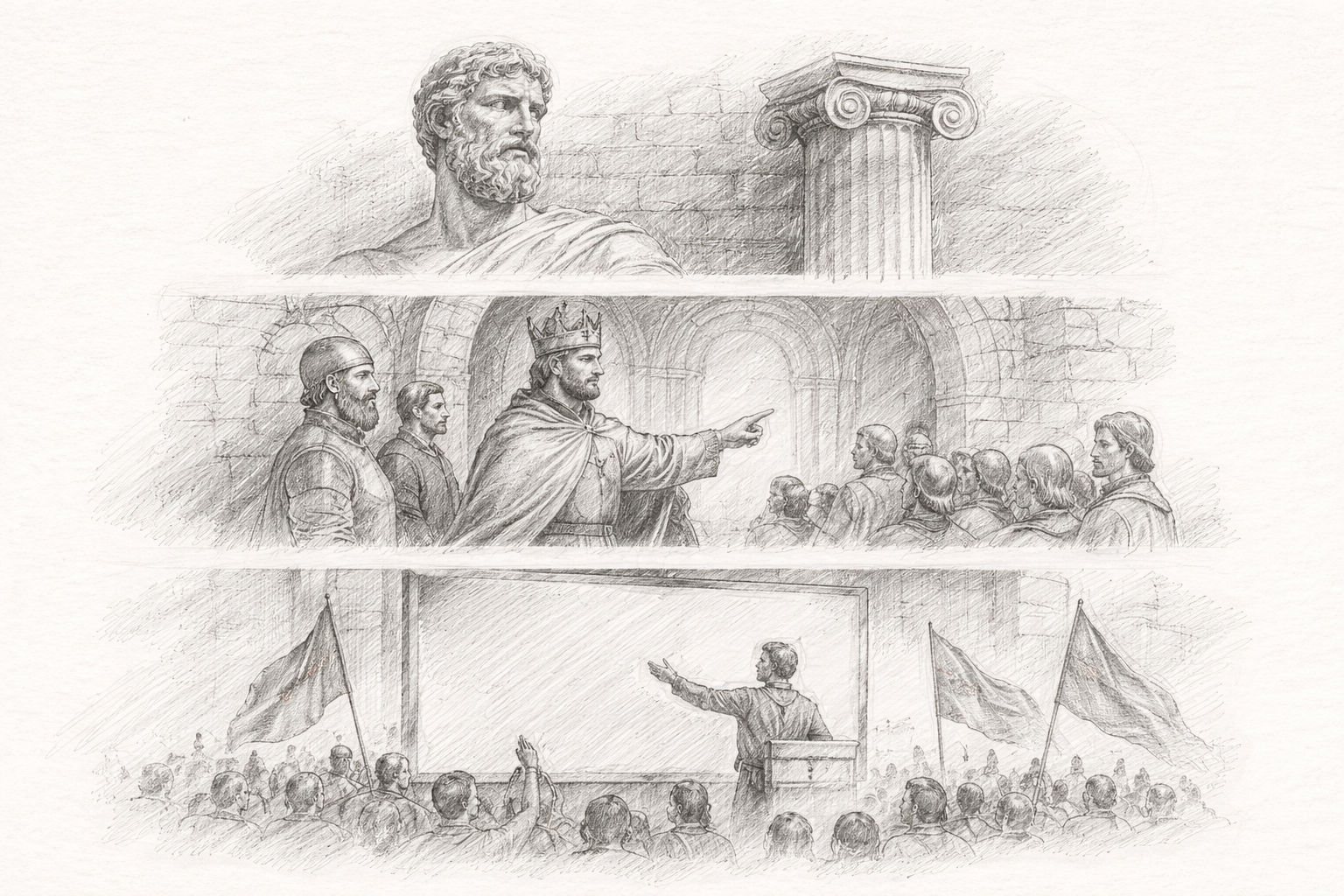
Antiquity: coins, monuments and the art of self-dramatization
In ancient times, propaganda was not only possible - it was almost unavoidable. In large empires, the majority of the population did not know the ruler personally. Power therefore had to be visible in order to be perceived as real and legitimate.
A classic example is the Roman Empire. The emperor was not simply a head of government, but a symbolic figure. He had to appear victorious, in charge, „favored by fate“. The most effective media of the time were used for this purpose:
- CoinsThey were mass-produced, passed through all hands and bore portraits, titles and messages of victory.
- Triumphal processions and monumentsWhoever won a war staged it publicly. Not just as a celebration, but as a message: „This order protects you.“
- Buildings and statuesPresence in the cityscape was political communication - permanent, not debatable.
What is striking is that most of it was not „wrong“. It was interpretation. Military power became moral significance. Success became entitlement. Order became superiority. This is exactly how propaganda still works today: it takes real events and shapes them into a direction.
Religion and the Middle Ages: Images for people without writing
The media situation changed in the Middle Ages. Many people could not read, but they could see, hear and recognize. This made visual language particularly effective - and religious institutions understood this very early on.
This does not mean that „the church“ only carried out propaganda. That would be too simple and would not do justice to historical realities. But it is true: In a time of limited education and few information channels, it was obvious to stabilize beliefs and social order through images, rituals and narratives.
- Church paintings, frescoes, stained glass windowsTheology was made visible.
- Sermon and liturgyRegular repetition formed world views.
- Veneration of saints, stories, symbolsMorality and order were emotionally anchored.
The crucial point is that here, too, it was not primarily about „lies“, but about guidance. A world view was offered that provided orientation - and at the same time set boundaries. Those who wanted to belong adopted this world view; those who rejected it quickly found themselves on the outside.
In this context, propaganda is closely linked to the need for stability. And this need has not disappeared. It has just taken on other forms.
Early modern times: pamphlets, the Reformation and the beginning of mass appeal
The printing press changed everything. For the first time, messages could be disseminated relatively quickly and comparatively cheaply in large numbers. This gave rise to something that later became a matter of course: public opinion.
Religious and political conflicts showed how effective this could be. Leaflets and pamphlets were often exaggerated, emotional and simplified. They were not intended to differentiate, but to move. The tone was often sharp, vivid, sometimes polemical.
An important pattern becomes visible here: as soon as a means of communication gains reach, it is not only used for education, but also for mobilization. And mobilization needs simple messages.
The early modern period thus brought about a kind of transition: from more locally bound, symbolic propaganda to standardized messages that could be disseminated. People in the village could now hold a printed interpretation in their hands - and thus get the feeling of being part of a larger movement.
Absolutism and the nation state: propaganda as statecraft
The more centralized states became, the more important the question became: How do you hold together a large area in which people live, think and believe very differently?
In absolutism, the staging of the ruler played a central role. The king was not simply a person, but a principle. Palaces, ceremonies, titles, uniforms - all of this was political communication.
Later, with the emergence of the nation state, a further step was taken: not only the ruler had to appear legitimate, but also the „we“. Nations are not laws of nature. They are shared narratives, supported by symbols, language, history and tradition. Again, this does not have to be malicious. It can even have a unifying effect. But it is an instrument that can be used in both directions. Those who define what „we“ are can also define who does not belong.
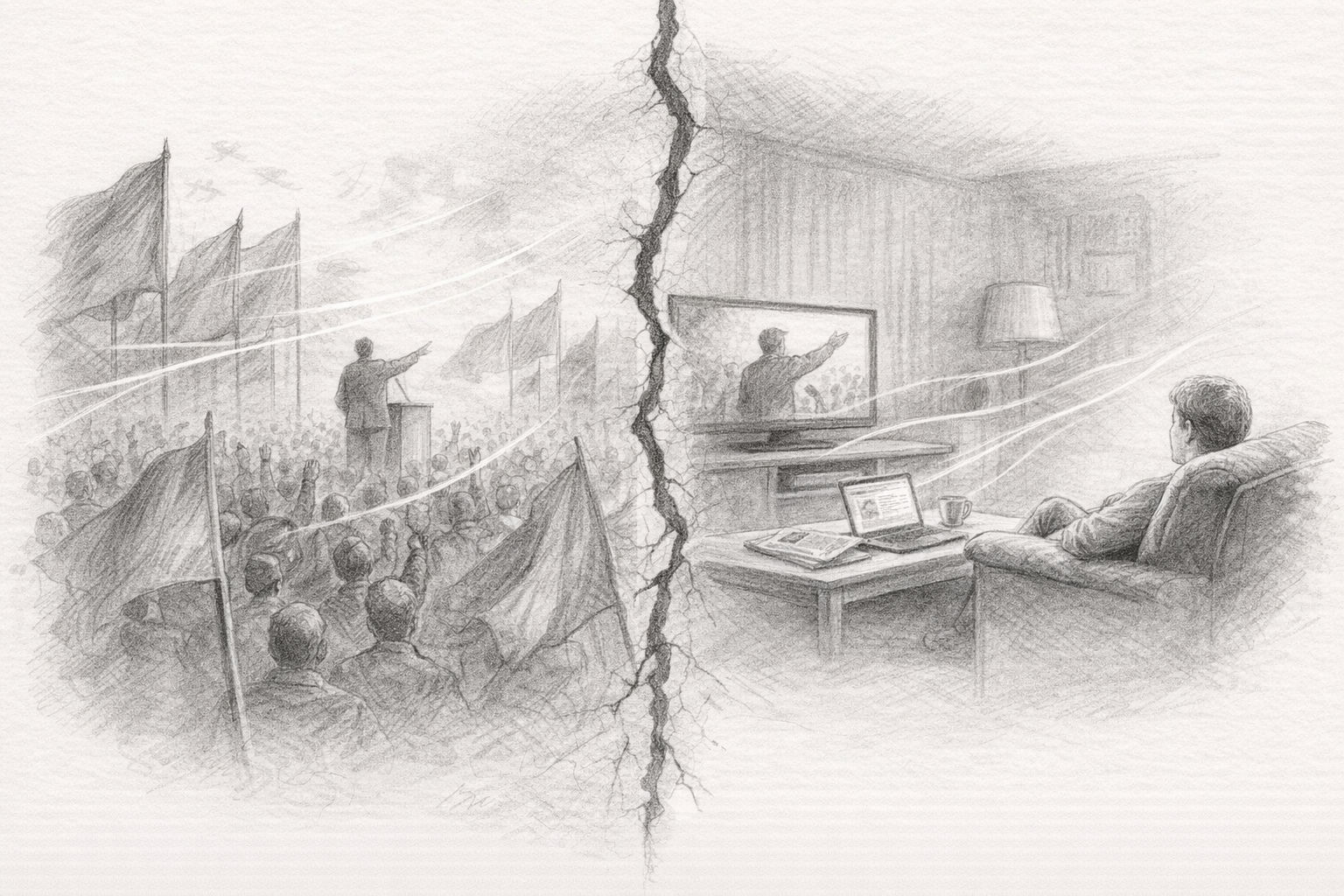
The 20th century: Professionalization and industrialization of influence
Something decisive then happened in the 20th century: Propaganda became systematic and scientific. No longer just a gut feeling, no longer just staging - but planned, measured, scaled. Two developments came together:
- Mass media (newspapers, radio, film, later television)
- Mass psychology (advertising impact, group dynamics, emotional triggers)
In times of war, it became particularly clear how states use communication to secure approval, create a willingness to make sacrifices and stabilize enemy images. This is the part that many people know from school - and rightly so. After all, the systems of the 20th century have shown how deadly effective propaganda can be when it is combined with instruments of power.
But there is also a trap here: if you only associate propaganda with totalitarian systems, you overlook the second strand: the development of advertising, PR and political communication in open societies. These methods were not invented to suppress. They were developed to persuade, to sell, to win. But they can - and are - also used to control in crises.
This means that propaganda is not „everywhere“ and not „always“. But it is possible, and in a way that is much less noticeable than a poster with a slogan.
When you take a step back and view history, propaganda becomes less mysterious. It then appears not as a slip of modernity, but as a recurring element of human systems of order.
- Rich people and countries need stability.
- Stability needs interpretations.
- Interpretations are spread.
- Distribution is organized.
From a historical perspective, propaganda is not the exception - it is a method that simply disguises itself differently depending on the time. And this is exactly where it gets exciting: because if propaganda has always been part of power, then the crucial question is not whether it exists, but what it looks like today - and why it is so much harder to grasp today.
This brings us to the next chapter: the change from a loud slogan to a quiet, morally charged matter of course.
Highways, work and myths - the history of propaganda
This video takes up an astonishingly persistent claim to this day: Adolf Hitler created jobs by building the autobahn and thus overcame mass unemployment. It is precisely the longevity of such statements that shows how effective propaganda can be. The documentary puts this myth into historical perspective and makes it clear that central freeway projects were already planned before 1933 and that the later expansion was often based on forced labor. At the same time, it shows why the autobahn project was nevertheless an excellent way of presenting itself: as a symbol of energy, progress and industrial modernity.
The focus extends beyond the 20th century - from early productions, such as that of the Assyrian King Ashurbanipal, to modern forms of subtle opinion management. The central question remains: do we recognize propaganda better today - or only its old forms?
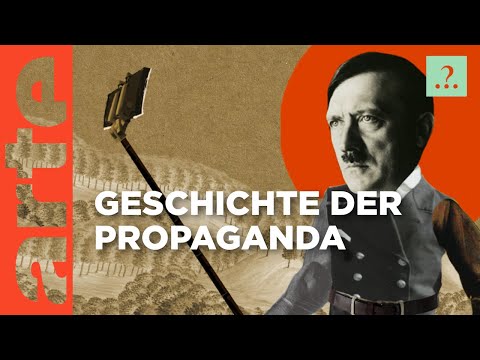
Did Hitler invent the autobahn? | Is it true that ...? | ARTE
The transformation of propaganda: from slogans to framing
If you know propaganda from history books, then you usually know it in its „classic“ form: large, visible, sometimes crude. Posters with clear messages. Slogans that are meant to be memorable. Images that leave no questions unanswered. Enemy images that are as simple as possible. And heroic figures that appear as larger than life as possible.
This form had one advantage - at least for the later observer: it was quickly recognizable. Even if you lived in the midst of it at the time, it was often so obvious that it can hardly be denied in retrospect. This is also the reason why many people still associate propaganda with a certain „look“ today: with slogans, flags, marching music, striking dramaturgy.
But it is precisely this idea that is a stumbling block today. Because when propaganda becomes modern, what is so easily recognizable about it disappears first.
Today: quiet, moral, „self-evident“
Modern propaganda rarely appears as a command. It does not say: „You have to.“ Rather, she says:
„That goes without saying.“ Or:
„There is a consensus on this.“ Or:
„Anyone who is decent sees it that way.“
This is a subtle but decisive difference. It is no longer about overt indoctrination, but about setting norms. You are not directly forced, but placed in a mental environment in which certain conclusions seem obvious - and others suddenly seem „strange“ or „unspeakable“.
It is often not even clear who exactly is „propagandizing“. This is because modern propaganda is not only created by a central propaganda minister. It is also the result of an interplay between media logic, political communication, activism, PR strategies, peer pressure and the simple fact that attention is a scarce resource today.
The result is a kind of steady stream of evaluations, categorizations and emotional markers that feel like reality over time - not because they are always wrong, but because they combine constant repetition with moral charge.
The term disappears - the technology remains
Another characteristic of modern propaganda is that it avoids its own name. Nobody likes to say: „I make propaganda.“ The term has a bad reputation, and understandably so. Instead, things are often called something else today:
- „Communication“
- „Strategy“
- „Narrative“
- „Posture“
- „Sensitization“
- „Fact check“
- „Damage limitation“
- „Confidence building“
These terms can be completely legitimate. But they can also serve as camouflage. The decisive factor is not the word, but the function: Are facts presented in such a way that a desired conclusion emerges at the end - regardless of whether alternatives are shown fairly?
If a topic is presented in such a way that readers end up feeling a lot but are hardly able to differentiate, then the method is at least propagandistic - even if the individual statements may be correct in themselves.
From „convincing“ to „framing“: Framing as a basic principle
A central term for change is „framing“. What is meant by this? You don't just discuss content, you set a framework in which this content is evaluated. A frame is like a pair of glasses. It decides what is important, what is irrelevant, what seems morally right and what is dangerous. Whoever sets the framework often wins before there is even a discussion. Typical characteristics of such frames:
- moral labels: good / bad, reasonable / unreasonable
- Implicit lack of alternatives: „There is no choice“
- Normality pressure: „That's how it's done today“
You notice that this is no longer the propaganda we are familiar with from the classroom. It seems less like an announcement and more like an unwritten rule.
Choice instead of invention: the elegant form of steering
Perhaps the most important change is this: modern propaganda rarely has to invent anything. Instead, it can choose.
This is more effective than many people think. Because:
- If you lie, you can be exposed.
- If you choose, you can always say: „We have reported.“
But the effect does not come from the individual facts, but from the image that remains at the end. If you only show certain examples, emphasize certain figures, constantly show certain voices and hardly any others, then a reality is created that consists of real parts, but is directed in its overall message.
It's like a photo: you can't accuse someone of „lying“ because the photo is real. But you can certainly ask: Why was this particular detail chosen - and not another?
The new speed: propaganda as continuous operation
In the past, propaganda often ran in clear campaigns. Today, it is more of a constant noise. Not necessarily planned, but structurally favored.
One reason is today's media economy: attention is rewarded. Emotions bring reach. Exaggeration brings clicks. Differentiation often brings less. This creates a system in which strong emotions win structurally:
- Outrage is easy to share.
- Fear binds attention.
- Moral superiority creates a group feeling.
If this becomes the norm, no one will have to consciously „make propaganda“. The system will partly do it itself - because it favors those who exaggerate the most.
A quick note: silent guidance through algorithms
This modern form includes another factor that is historically new and should not be underestimated: algorithmic selection. What people see, read and perceive today is no longer created solely by editors or conscious decisions, but increasingly by recommendation systems: What is prominently displayed, what disappears, what is repeated, what is barely played out?
This is a form of silent control that does not necessarily have to be „propaganda“ in the classic sense - but it can produce similar effects because it structures perception. Whoever controls the selection also indirectly controls which reality is created in the mind.
That is a big topic in its own right. In this article, it remains a side note - but an important one. Because if propaganda used to primarily shape messages, today it often shapes access to messages.
Interim conclusion: Propaganda hasn't gone away - it's gotten better
Once you have understood this change, a sober picture emerges:
- Propaganda is no longer necessarily loud.
- She doesn't have to lie.
- It can disguise itself morally.
- She works with selection, repetition and framing.
- It is facilitated by modern media logic and algorithms.
This explains why many people today have the feeling that „something is no longer right“ without being able to name it immediately. Because people look for posters, slogans and open orders - and overlook the new forms: the tone of voice, the frame, the moral packaging and the systematic repetition.
The next chapter is therefore no longer just about change, but about the mechanics: What recurring patterns ensure that propaganda works so reliably - regardless of the topic and regardless of who is using it at the time?
Current survey on trust in politics
How propaganda works (the same mechanisms over and over again)
One of the oldest and at the same time most effective mechanisms of propaganda is repetition. It seems banal - and that is precisely where its strength lies. What is often heard seems familiar. And what seems familiar is more easily accepted, even if it has never really been tested.
The human mind works economically. It often values familiarity as security. Statements that appear again and again - in slightly different forms, from different directions, via different channels - gain weight as a result. Not because they are better substantiated, but because they are present. Propaganda makes targeted use of this effect:
- A thesis is not even strongly proven, but gently repeated many times.
- Different speakers say analogously the same.
- Doubts sometimes seem like Malfunctions of an established „background noise“.
This creates the impression of a consensus, even if this may not actually exist. Repetition replaces discussion.
Selection is more powerful than invention
A common misconception is that propaganda is most effective when it spreads false information. In practice, this is often not necessary - and frequently even counterproductive.
The more effective method is selection. Whoever decides which information becomes visible also indirectly decides which conclusions are suggested. If certain aspects are constantly emphasized and others barely appear, a picture is created that feels conclusive - even though it is incomplete. The decisive factor here:
- Every single piece of information can be correct.
- Nevertheless, the overall picture can be distorted.
Propaganda works here like a curator, not a forger. It exhibits, arranges, frames - and leaves it up to the viewer to draw the desired conclusion for themselves. This is particularly convincing because you believe you have come to it yourself.
Emotion before reason
Another key element is the targeted appeal to emotions. People rarely make decisions purely rationally - and propaganda makes consistent use of this. It is particularly effective:
- FearIt narrows the view and increases the willingness to follow authority.
- OutrageIt creates peer pressure and moral unambiguity.
- GuiltIt guides behavior without overtly commanding.
- Moral superiorityIt stabilizes belonging and identity.
Emotions have a dual function. They bind attention - and they reduce the willingness to endure complex contexts. Those who are strongly emotionally involved are less likely to ask about details, alternatives or long-term consequences.
Propaganda is therefore not primarily aimed at persuasion, but at creating a mood. Once the mood is set, many arguments are almost automatically subordinated.
Polarization and simplification
Complex reality is difficult to communicate. It is exhausting, contradictory and rarely unambiguous. Propaganda solves this problem by reducing complexity. This is usually done through polarization:
- Here the good, there the bad.
- Reason here, irresponsibility there.
- Progress here, backwardness there.
Such contrasts are rarely completely wrong - but they are almost always too crude. They hide shades of gray and make differentiated positions suspect. Anyone who is not clearly on one side is quickly seen as indecisive, naïve or disloyal.
This is ideal for propaganda. Because where there are only two camps, any criticism is automatically attributed to the „other“. This saves arguments and stabilizes your own narrative.
Moral pressure instead of overt coercion
A hallmark of modern propaganda is the renunciation of overt coercion. Instead, moral pressure is used.
The message is rarely: „You have to do this.“
It is rather: „A decent person would do that.“
This is a subtle but effective difference. Because moral pressure works from within. People want to fit in, not stand out, not be seen as lacking solidarity. Propaganda exploits this social need by morally charging attitudes. Typical characteristics:
- Dissenting opinions are not criticized objectively, but judged morally.
- Doubts are linked to questions of character.
- Discussion is replaced by attitude.
This creates conformity without anyone having to be openly forced.
Authorities and the appearance of unity
Another stable mechanism is the reference to authorities and experts. This makes sense in principle - nobody can check everything for themselves. But propaganda makes targeted use of this leap of faith. It becomes problematic when:
- authorities are selectively chosen.
- Deviating experts are barely visible.
- Unity is claimed where in reality there is debate.
The sentence „The experts are in agreement“ has a strong effect - especially when no dissenting voices are shown. This gives the reader or viewer the feeling that further reflection is superfluous. Propaganda here does not live from technical depth, but from symbolic authority.
Time pressure and lack of alternatives
Propaganda likes to work with urgency. When decisions are presented as time-critical, the willingness to reflect decreases. Those who believe they have to act immediately ask fewer questions.
Then there is the concept of a lack of alternatives. It suggests that although discussion is theoretically possible, it is practically pointless. This relieves - and disempowers at the same time.
Time pressure and a lack of alternatives are powerful tools because they seem to take away responsibility: If there is no choice, you no longer have to make a decision.
Interplay of mechanisms
It is important to note that these mechanisms rarely work in isolation. Their power arises from their interaction.
- Repetition increases selection.
- Emotion reinforces polarization.
- Moral pressure reinforces conformity.
- Authority reinforces a lack of alternatives.
The more of these elements come together, the more stable the propaganda effect becomes - even if individual statements could be challenged. The system is self-sustaining.
Propaganda does not work because people are stupid or gullible. It works because it uses human characteristics: the need for orientation, belonging, security and meaning. This is precisely why it is so effective - and precisely why it is not very helpful to locate it solely with „the others“. If you want to understand propaganda, you have to understand it as a technique, not as a moral failure.
Game theory, morality and red lines - an analytical view by Christian Rieck
In this video, Christian Rieck approaches the question of whether one is on the „right side“ with an unusually clear distinction: between formal consistency and substantive boundaries. Formally, the question is whether moral positions can be generalized or applied arbitrarily - an idea that is directly related to Kant's categorical imperative and can be tested in terms of game theory.
At the same time, Rieck makes it clear that beyond such consistency checks, there are red lines that are non-negotiable. Anyone who justifies terror, murder or dehumanization leaves the realm of rational debate. The video thus impressively shows how propaganda, framing and cognitive dissonance can distort moral judgments - and why formal logic alone cannot replace humanity.

Murder, war, terror: are you on the right side? | Prof. Dr. Christian Rieck
How to recognize propaganda (without becoming paranoid)
Anyone who starts to deal with propaganda often has a typical experience: suddenly you see patterns everywhere. That is human. As soon as the brain has learned a new pattern, it recognizes it in many situations.
But this is precisely where the danger lies. If you interpret everything as propaganda, you quickly end up in a state of permanent mistrust. This is not only exhausting, but also unwise - because it blinds us to real differences. That's why it's worth sticking to a calm basic rule:
Propaganda is a method, not the normal form of communication. There is manipulation, yes. There is PR, yes. There are moral campaigns, yes. But there is also serious journalism, factual information and honest debate. Those who no longer see these differences do not become more „alert“, but only more nervous.
The purpose of this chapter is therefore not to find enemies everywhere. Rather: to stabilize our own power of judgement without dividing the world into black and white.
The most important warning signal is rarely the content - but the sound
In modern societies, propaganda is often conspicuous not for its blatant falsehoods, but for its tone. It often sounds like a matter of course rather than an argument. Pay particular attention to formulations that nip discussion in the bud:
„That's obvious.“
„There's no debate about that.“
„Anyone who doesn't understand that has ...“
„That says it all.“
„You now have to ...“
Such sentences act like shortcuts. They save the route via justification and replace it with social or moral markers. It is then less about explaining something and more about setting the framework: Here is the „reasonable“ position - and there is the area where you are not taken seriously in the first place.
Not every strong tone is propaganda. But as soon as sound replaces argument, it is worth paying attention.
Absolutisms and moral labels: When language becomes too narrow
A classic tool is the narrowing of language. Propaganda loves absolutisms because they reduce the space for thought. Typical forms are, for example:
- always / never
- everyone / nobody
- no alternative
- clear
- Proven (without clear evidence)
- „just so“ / „just who“
In addition, there are moral labels that classify rather than explain:
- good / evil
- responsible / irresponsible
- decent / indecent
- modern / backward
The problem is not that moral categories do not exist. The problem is when they are used to turn questions of fact into questions of character. Because then contradiction becomes risky. Anyone who disagrees no longer comes across as someone with a different point of view, but as someone with a „defective“ moral compass.
This is a typical characteristic of propagandistic communication: it makes deviation not only false, but suspicious.
The test of omission: What is missing here?
It is often not what is said that is the problem, but what is not said. A useful test step is therefore: What obvious information should actually also be mentioned so that I can assess the topic fairly? Typical examples of omissions:
- Counter-evidence is not mentioned.
- Side effects or costs are ignored.
- There are no historical parallels.
- Alternatives are not presented.
- Conflicting objectives are ignored.
If a presentation appears too smooth, too clean, too unambiguous, this is not automatically wrong - but it is an indication: perhaps it has been sorted in such a way that one direction appears particularly plausible. This is where a very down-to-earth way of thinking, which we used to take for granted, helps:
Whoever sells something rarely shows the weaknesses of the product. This is true in retail, and it is true in communication. Propaganda is often nothing more than „selling“ an interpretation - only with higher stakes.
The frame test: What conclusion should I draw at the end?
One of the calmest and at the same time most effective questions is: What conclusion should I automatically draw after this presentation? If you recognize this conclusion, you have already made the framework visible. Then you can check:
- Is this conclusion really compelling?
- What alternatives would also be plausible?
- What information do I need to know to be sure?
Propaganda often tries not to overtly command conclusions, but to prepare them in such a way that they emerge „as if by themselves“. This is precisely why the frame test is so helpful: it brings the hidden logic to the surface.
The consensus trick: „Everyone agrees“
A very common mechanism - especially in modern societies - is the assertion of a consensus. This can be true. But it can also serve as a rhetorical tool. Watch out for formulations such as:
„Science says...“
„The experts are unanimous ...“
„That has long since been clarified ...“
„This is no longer being discussed ...“
Such sentences can be justified if they are properly substantiated. They become problematic when they serve only as a cudgel without proof. Because then the debate is not won, but closed. A classic, skeptical test point is here:
Who exactly is meant? Where is the data? And are there any serious dissenting voices that we should at least be aware of? You don't have to take every minority opinion seriously. But if counter-arguments no longer appear at all, that is a warning signal - because it destroys the ability to weigh things up.
The identity hook: when consent becomes affiliation
Propaganda becomes particularly powerful when it relates not just to content, but to identity. Then it is no longer about „What's right?“, but to:
„Who are you?“
„Who do you belong to?“
„Which side are you on?“
This can be seen in the fact that positions are no longer described objectively, but as a sign of belonging. If you agree, you belong. Those who doubt are on the outside. This is understandable from a human point of view, because groups provide security. But it is also dangerous for thinking because it creates an internal brake: people don't want to risk falling out of their own group. A sober counterpoint is:
I am allowed to criticize something without losing my values. This is a sentence that was taken for granted in calm times. In heated times, you sometimes have to consciously reclaim it.
The everyday test: What would a fair opponent say?
A very practical tool is a small thought exercise: If the other side were fair and intelligent: What would be their strongest argument? If you can't think of anything, that's a red flag. Not because you are certainly wrong, but because your information space has probably become one-sided.
Propaganda likes to caricature opponents because it is convenient. A caricature of an opponent is easy to refute. A serious opponent forces a confrontation.
If you want to learn to recognize propaganda, you should get into the habit of thinking of opponents not in their stupidest, but in their strongest version. That seems old-fashioned - but that is precisely the point: it is a traditional, robust form of intellectual honesty.
The algorithm factor: why repetition often happens „by itself“ today
One modern amplifier that you should at least keep in mind is algorithmic selection. Without going into detail here: When content on platforms is sorted by engagement, more emotional, more polarizing, more pointed posts tend to get more visibility.
This does not automatically mean „propaganda“. But it does create an environment in which certain forms of communication are systematically favored. And if you are out and about in such an environment, you quickly get the feeling that a certain view is everywhere - because you see it everywhere. The calm conclusion from this is not: „Everything is manipulated“, but:
My perception is now more filtered than I realize. This awareness alone makes me more resilient.
A small checklist: Five questions that almost always help
If you want to check a presentation without losing yourself, five questions are often enough:
- What conclusion should I draw?
- What is missing - what obvious information is not mentioned?
- How much moralizing instead of arguing?
- Is consensus claimed without showing it clearly?
- Would I believe it if I had only read it once - instead of ten times?
These questions do not make you suspicious. They wake us up. Recognizing propaganda does not mean constantly sounding the alarm. It's more like a craft that you practise quietly: observe, compare, ask questions, keep your distance.
In the past, this attitude was a matter of course in many families: you read the newspaper, you listened to the news, and then you talked at the kitchen table: „Well - let's see what's really true.“ Not aggressive, not cynical, but down-to-earth. That's a good basic attitude: skeptical, but not bitter.
When concepts slowly become part of everyday life: the tension in public discourse
One example of insidious propaganda is perhaps the case of tension. The term „case of tension“ has a clear legal definition, but has long been a marginal topic. This is precisely what makes it interesting. When such a term increasingly appears in political and media discourse, it gradually changes the perception of what is considered „normal“, „conceivable“ or „worth preparing for“.
This is not automatically propaganda, but it is a classic example of the introduction of terms through repetition. The accompanying article categorizes the state tension explains its legal significance and shows why it makes sense to take a close look when security policy categories slowly seep into everyday life - often without much debate, but with a long-term effect on thinking.
Current survey on a possible case of tension
Why propaganda always works
Propaganda is not so successful because people are „stupid“, but because people need guidance. That was the case a hundred years ago, and it is the same today. People who have enough to do in their everyday lives cannot examine every topic in depth. And those who live in uncertain times look all the more for simple explanations, clear responsibilities and unambiguous solutions.
That's not a flaw, it's human. The point is that this is exactly where propaganda comes in. It offers order - often in the form of a narrative that feels good because it reduces complexity. And if the narrative also sounds morally clean, it becomes particularly attractive: you not only have an explanation, but also the feeling that you are on the „right side“.
Once you understand this, propaganda loses some of its mystical horror. Then it is no longer „evil“ working somewhere in secret, but a technique that meets very normal human needs.
Group affiliation beats logic
A second reason is of a social nature. Humans are group beings. We orient ourselves towards others because this has been a survival advantage for thousands of years. Those who stood alone against the group had a hard time. This is deeper in us than we like to admit. This is why propaganda is particularly effective when it not only provides information, but also creates a sense of belonging:
- Anyone who agrees is one of them.
- Anyone who doubts is on the outside.
- Anyone who asks questions is quickly marked as a „troublemaker“.
This does not always have to be consciously controlled. It often arises all by itself: through tone of voice, through social dynamics, through comment columns, through the way people talk about „the others“. And the more emotional a topic is, the stronger this mechanism becomes.
The classic mistake would be to conclude: „Then you can't believe anyone anymore.“ That would be a capitulation. The wiser conclusion is: I am aware of how strong peer pressure is - and I keep a small inner distance.
Why „being sold opinions“ is no longer the core today
In the past it was often said: „Make sure you're not being sold an opinion.“ That was a good point, and it remains fundamentally correct. But in a world in which there are opinions practically everywhere - and every opinion can gain reach within minutes - this sentence is no longer sufficient. Today, the problem is not so much that there are opinions. The problem is rather:
- What opinion are you constantly being fed?
- Which topics are made big, which disappear?
- What perspectives do you never get to see?
- Which contradictions are not illuminated?
In other words, it's less about the individual opinion and more about the information space in which you operate. If you keep the information space narrow, you no longer have to actively „sell an opinion“ to anyone. People then take on many things automatically - because they simply don't have the opportunity to compare.
Alternative media: opportunity, but not automatically truth
This is where alternative media come into play. The fact that there are platforms and offerings today that do not originate from the traditional media industry is first and foremost a benefit: diversity can help to make blind spots visible.
This is precisely why many people use sources that are outside the mainstream - for example NachDenkSeiten or Apollo News, to name just two well-known names. Such offerings can fulfill important functions:
- They set other priorities.
- They ask other questions.
- They cover topics that are otherwise rarely discussed.
- They sometimes provide counter-arguments that you should be aware of.
At the same time, it is important not to slip into the next simplification here. Alternative media are not automatically „better“. Like everyone else, they can have interests, exaggerate, serve emotions or get stuck in their own narratives.
The mature way to deal with this is therefore not: „Mainstream is propaganda, alternative is truth“, but rather: I broaden my view - and still scrutinize. That is precisely the difference between healthy skepticism and merely forming camps.
Practical strategy: consciously building your own information mix
If you go about it the right way, you don't need twenty sources. A stable mix of information is often created with just a few well-chosen building blocks:
- A source that reports in a more classical/established way (for overview, facts, terminology)
- A source that reports more alternatively/critically (for blind spots, counter-arguments, change of perspective)
- If possible: primary sources (original documents, statistics, speeches, legal texts, official reports)
- And very important: a small time gap - not having to evaluate everything immediately
It seems unspectacular, but it's robust. In the past, people would have said: „Read two newspapers, then you'll know more.“ Today, the same principle applies - only with different channels. The crucial point is: Not every source has to be „right“. It has to help you see better.
The calm compass: questions instead of bearings
If you want to arm yourself against propaganda, you don't need cynicism. You need a compass. And this compass surprisingly often consists of simple questions:
- What would be a plausible counter-perspective?
- What information would weaken this view - and why is it missing?
- Who benefits from this representation - politically, economically, socially?
- Is there more morality than reason here?
- Is complexity explained - or ironed out?
These questions are not a declaration of war. They are a protective mechanism. And they have something traditional about them: they correspond to the old, down-to-earth phrase: „I only believe something when I've seen it from several directions.“
Today, maturity is once again an active act
It's easy to get gloomy about this topic. Because you quickly get the feeling that people are „pulling“ and „steering“ everywhere. But a sober look also shows something else: it has never been so easy to get additional information, make comparisons and read original sources. Yes, it takes discipline. Yes, it sometimes takes courage to stand up to peer pressure. But it is possible - and it is becoming more important.
If propaganda in modern times appears less as a slogan and more as an atmosphere, then the best response is not outrage, but clarity. Not constant agitation, but a calm mix of information. And above all: the willingness not to be forced into camps.
In the end, this is actually good news: propaganda is most effective where people become passive. It loses its impact when people start to consciously examine, compare and form their own opinions again.
And that is nothing elitist. It is quite simply: intellectual self-respect.
Outrage, framing and the logic of modern exclusion
 The extensive Editorial on Cancel Culture ties in directly with the analysis of modern propaganda mechanisms. While the propaganda article shows how narratives, repetitions and framing can control perception, the cancel culture article examines the social consequences of such dynamics. How do coordination equilibria arise? Why do neutral observers tip over into public distancing? And what role do media logics and digital acceleration play? Instead of moral attributions, the text provides a structural classification of exclusion processes in sport, science, the military and politics. Both articles together paint a picture of modern discourse mechanics - between legitimate sanction and discursive constriction.
An early warning call from television - and why it is relevant again today
 In a television interview from 1979, Vicco von Bülow - known as Loriot - formulated thoughts that seem surprisingly relevant today. He spoke about how the media not only inform, but increasingly dictate interpretations through tone, selection and attitude. Not loud, not agitating, but calm and almost casual. This is precisely the strength of this moment.
The linked essay „When duty becomes duty again“ takes up this conversation and puts it into context. It shows that many of the mechanisms that we perceive as modern today were recognized long before digital media - by an observer who stood for clarity, distance and a sense of responsibility.
When law becomes a narrative
 Propaganda is particularly effective where terms are no longer clearly defined. This is precisely where the article „Rules-based world order and international law: between claim, reality and breach of law“ to.
It classifies what international law actually is, how international rules were originally conceived and why they are increasingly being used rhetorically today instead of being binding. The text shows how legal gray areas arise and why moral justifications are increasingly replacing clear procedures. For readers of the propaganda article, this article provides the legal depth of field: it makes visible where narratives begin to replace law - and why precisely this undermines any order in the long term.
Draw consequences: Military service, conscription and the right to refuse
 Anyone who takes a closer look at security policy developments will inevitably come across the topic of military service and compulsory military service. While the public debate is often moral or emotional, for many the question is a very pragmatic one:
What does that mean for me in concrete terms?
The Article on compulsory military service starts right there. He soberly explains what legal options there are, how a refusal works and what steps are necessary if you want to go down this path. Not as an appeal, but as information. Because true maturity begins where you know your rights - and make decisions not out of fear or peer pressure, but out of clarity.
Independence as protection against subtle influence
 Anyone who takes a closer look at propaganda quickly realizes how strongly content can be influenced by selection, weighting and presentation - often quietly and barely visibly. This is precisely why it makes a decisive difference whether you remain merely a consumer of other platforms or become a publisher yourself. Our own magazine creates a clear separation here: content is no longer created under external guidelines, but follows its own line, which is consciously chosen and built up over the long term. This does not mean shirking responsibility - on the contrary. It means that you consciously take it on. In your own system, topics can be presented in a calmer, more differentiated way and without algorithmic pressure. Perspectives can stand side by side without immediately being forced into predetermined patterns. Step by step, a stable basis is created on which content can not only be published, but also classified - free from short-term trends and subtle influence.
Invitation to exchange ideas: Which media help you to categorize?
People who deal with propaganda, opinion management and media mechanisms often develop their own reading habits. If you use a medium that helps you to look at topics in a more differentiated way or to get to know other perspectives, you are welcome to add it to the Comments name.
A brief classification would be helpful here: In order to what kind of medium it is, in which language it appears - and above all, why are you reading it? Not as a recommendation for everyone, but as personal inspiration for other readers. Which sources someone uses and how they classify them is of course up to them.


Frequently asked questions about propaganda
- What exactly is propaganda?
Propaganda is not a single false statement, but a method. It describes the targeted selection, weighting and repetition of information with the aim of directing perception, attitude or behavior. Propaganda can work with true facts, it can sound factual and even be well-intentioned. The decisive factor is not the truthfulness of individual statements, but the direction in which thoughts and feelings are to be guided. - Is propaganda always a negative thing?
Historically, the term was neutral for a long time. Propaganda initially simply meant „dissemination“. It was not until the 20th century that it took on a strongly negative connotation, as it became clear how destructive this technique can be when it is combined with the means of power. Today, propaganda is problematic when it narrows debates, makes alternatives invisible and uses moral pressure instead of arguments. - Does propaganda only exist in authoritarian states?
No. Authoritarian systems use propaganda openly, democratic systems use more subtle forms. The difference lies less in „whether“ than in „how“. In open societies, propaganda is rarely commanded, but rather framed, weighted and emotionally charged. Precisely because there is no open censorship, these forms often appear particularly inconspicuous. - Why is modern propaganda so difficult to recognize?
Because she rarely speaks out loud. It works with tone of voice, selection, repetition and moral self-evidence. Instead of slogans, there are attitudes; instead of orders, there is social pressure. It is often only in retrospect that one realizes that certain questions were never asked or certain perspectives never shown. - Is every strong opinion automatically propaganda?
No. Opinions are part of an open society. Propaganda begins where opinions are presented in such a way that they appear to have no alternative, where counter-arguments are morally discredited or where repetition replaces argumentation. A clear opinion can be honest - it only becomes propagandistic through its method. - Why does propaganda work even with smart people?
Because it is not aimed at intelligence, but at basic human needs: Orientation, security, belonging. Nobody has unlimited time and energy for deep examination. Propaganda uses precisely this limitation and offers simple interpretations in complex situations. - What role do emotions play in propaganda?
A very big one. Emotions bind attention and reduce critical distance. Fear, indignation or moral superiority facilitate consent and make it difficult to weigh things up. The more emotionally a topic is presented, the more likely it is that rational scrutiny will take a back seat. - Is repetition really that powerful?
Yes, repetition creates familiarity, and familiarity is often confused with truth. Statements that you hear frequently seem more plausible - even if you have never consciously checked them. Propaganda uses this effect by repeating messages across many channels in slightly different forms. - Why is omission often more dangerous than lying?
Because omission is harder to detect. A lie can be refuted. A one-sided selection of genuine information, on the other hand, appears serious and unassailable. The overall picture that emerges can nevertheless be distorted without being able to clearly attack a single point. - What role do algorithms play in modern influencing?
Algorithms decide what is visible and what is not. They often prefer content that triggers emotions and generates engagement. This is not automatically propaganda, but it can have similar effects because certain points of view are constantly present and others barely appear. Perception is thus silently preformed. - Are alternative media a solution to propaganda?
They can be an important building block because they offer different perspectives and reveal blind spots. But even alternative media are not automatically neutral or correct. They also have narratives, interests and exaggerations. Their value lies in broadening the view - not in providing a new absolute truth. - How can you get sensible alternative information without getting lost?
By deliberately mixing things up. An established source for an overview, a critical source for counter-perspectives, occasionally primary sources and some distance in time. The point is not to read everything, but to know different perspectives before forming a judgment. - What is the difference between skepticism and cynicism?
Skepticism tests and remains open. Cynicism fundamentally no longer believes anyone. Skepticism strengthens judgment, cynicism destroys it. Anyone who thinks everything is manipulation is not free, but disoriented. The goal is a calm, scrutinizing attitude - not permanent contempt. - Why is there so much talk of „consensus“ today?
The reference to consensus has a relieving effect. If „everyone agrees“, there seems to be no need for personal reflection. It becomes problematic when consensus is claimed where there are real debates. Then consensus rhetoric replaces arguments with authority. - Is propaganda more dangerous today than in the past?
Not necessarily more dangerous, but more subtle. It used to be easier to recognize, but today it is more embedded in everyday communication. Its effect is created less by individual messages than by permanent framing and repetition. - Can we ever completely protect ourselves from propaganda?
No, and that is not a realistic goal. The goal is not immunity, but resilience. Those who recognize patterns, draw comparisons and keep their distance reduce their impact considerably - without isolating themselves from the world. - What is the most important step towards more mental independence?
Take your time. Don't immediately evaluate every piece of news, don't go along with every outrage, don't accept every moral exaggeration. A brief inner step back often has a stronger effect than any counter-opinion. - What remains as a positive outlook?
It has never been so easy to reach different perspectives. Propaganda loses power when people consciously compare and scrutinize and do not make hasty decisions. Today, maturity is not a state, but an attitude - and it begins with the calm decision not to let oneself drift.
Older News Articles on Propaganda and Media Criticism
17.03.2026In a recent lecture, the former Inspector General of the German Armed Forces and former NATO top military officer Harald Kujat criticizes what he sees as one-sided reporting in connection with the war in Ukraine. He describes how diplomatic solutions - such as earlier negotiations - hardly feature in the public narrative and that military narratives dominate instead. Kujat speaks of a narrowing of the discourse and emphasizes that central backgrounds and alternative perspectives are often ignored. At the same time, he calls for a stronger return to diplomacy and an open, pluralistic exchange of opinions.

Harald Kujat: „That's how we do it!“ - about one-sided reporting | IPPNWgermany
The video is an example of how differently security policy developments can be interpreted - and how strongly the perception of conflicts is also shaped by media framing. The Complete presentation by Harald Kujat (1:19h) can be found in another article in the news section.