For many, game theory sounds like dry mathematics, like formulas, like something that only plays a role in lectures or business games. In reality, however, it is an ancient thinking tool that existed long before its academic formalization. Diplomats used it, commanders used it, captains of industry used it - long before it was even called that. In the end, it is nothing more than a sober question:
„When several players have to make decisions in an uncertain situation - what options do they have and what are the consequences?“
This kind of thinking has become surprisingly rare today. Instead of analyzing alternatives, much is narrowed down to moral narratives or spontaneous interpretations. Yet in geopolitical issues in particular, a clear analysis of the possibilities would be the foundation of any mature policy. It is precisely this old craft that I would like to take up again in this article.


Latest news on the topic
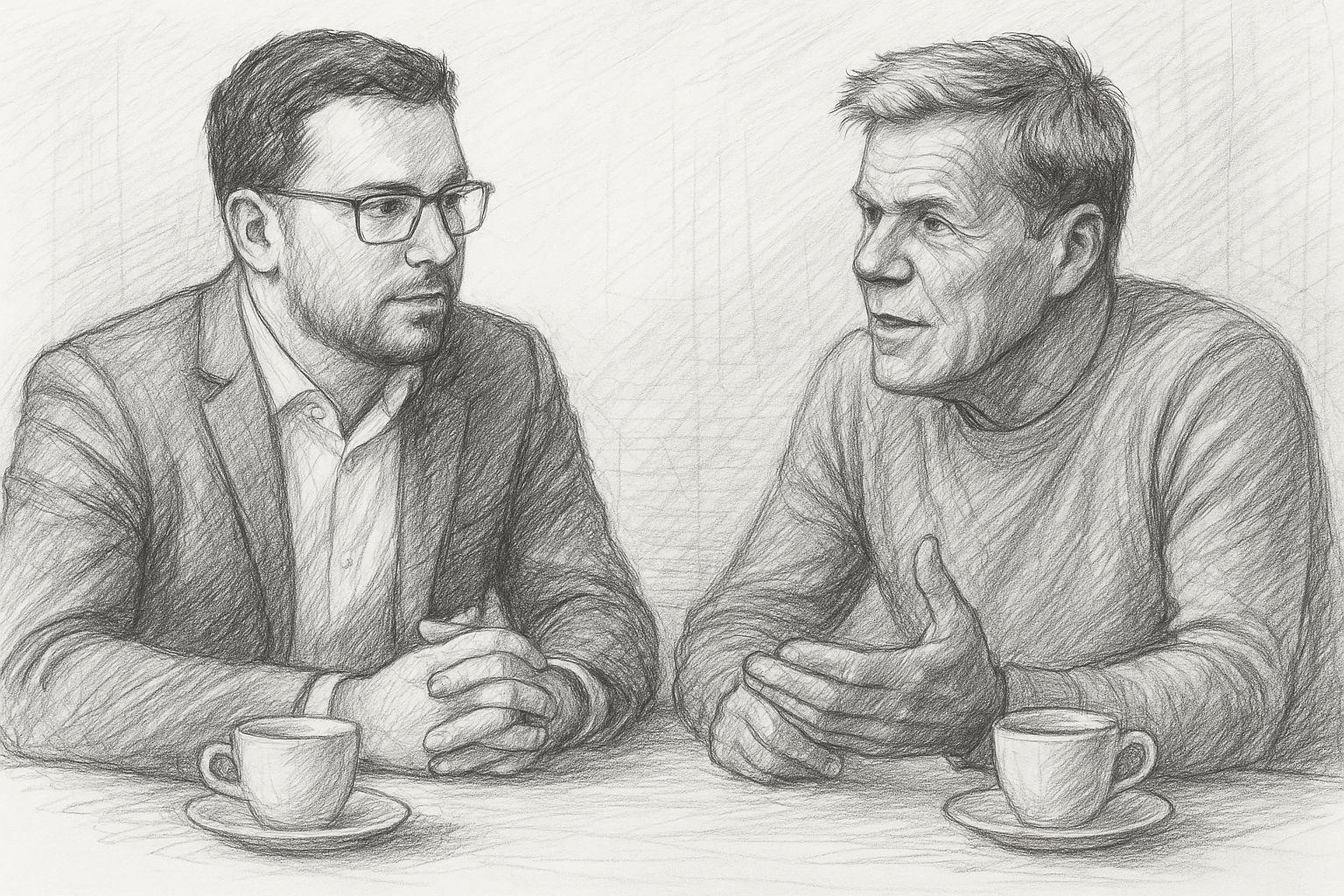
17.05.2026Germany is no longer on a stable economic cruise, but is already in a dangerous descent - with this drastic picture, economist Daniel Stelter and game theorist Prof. Dr. Christian Rieck discuss the current state of the German economy. The main focus will be on energy prices, productivity, debt policy and the question of why a formerly strong industrialized country is increasingly losing competitiveness. At the same time, he will also discuss possible solutions, such as more efficient state structures, new economic policy approaches and ideas such as a negative income tax.

Why we are no longer a rich country | Prof. Dr. Christian Rieck
The discussion combines economic analysis with strategic considerations and describes the current situation less as a short-term crisis and more as a structural problem with long-term consequences. What is particularly interesting is how clearly both interviewees emphasize the connection between energy supply, prosperity and social stability.
30.04.2026Shortly before May 1st, MEP Martin Sonneborn speaks from Strasbourg in a satirical seven-minute speech. The focus is on an idea that crops up time and again in geopolitical debates: It is not the quick victory, but the permanence of conflicts that may be of greater interest to certain actors. Referring to a frequently quoted statement by Julian Assange, Sonneborn paints a picture of so-called „endless wars“, in which considerable amounts of money flow into military structures over many years and economic and political interests remain intertwined.

Endless war | Martin Sonneborn
As usual, exaggerated and exaggerated, the article combines figures, observations and criticism to create a dense, deliberately provocative overall picture. Particularly in the context of long-term geopolitical developments, this perspective acts less as a conclusive assessment and more as an impetus to look at familiar patterns and contexts from a different angle.
Why I got involved with game theory
Over the years, I have repeatedly watched videos by Prof. Christian Rieck - the quiet, calm economist with the long hair who patiently explains on YouTube why people and states act exactly the way they do. His way of breaking down complex situations into structural incentives has often impressed me.
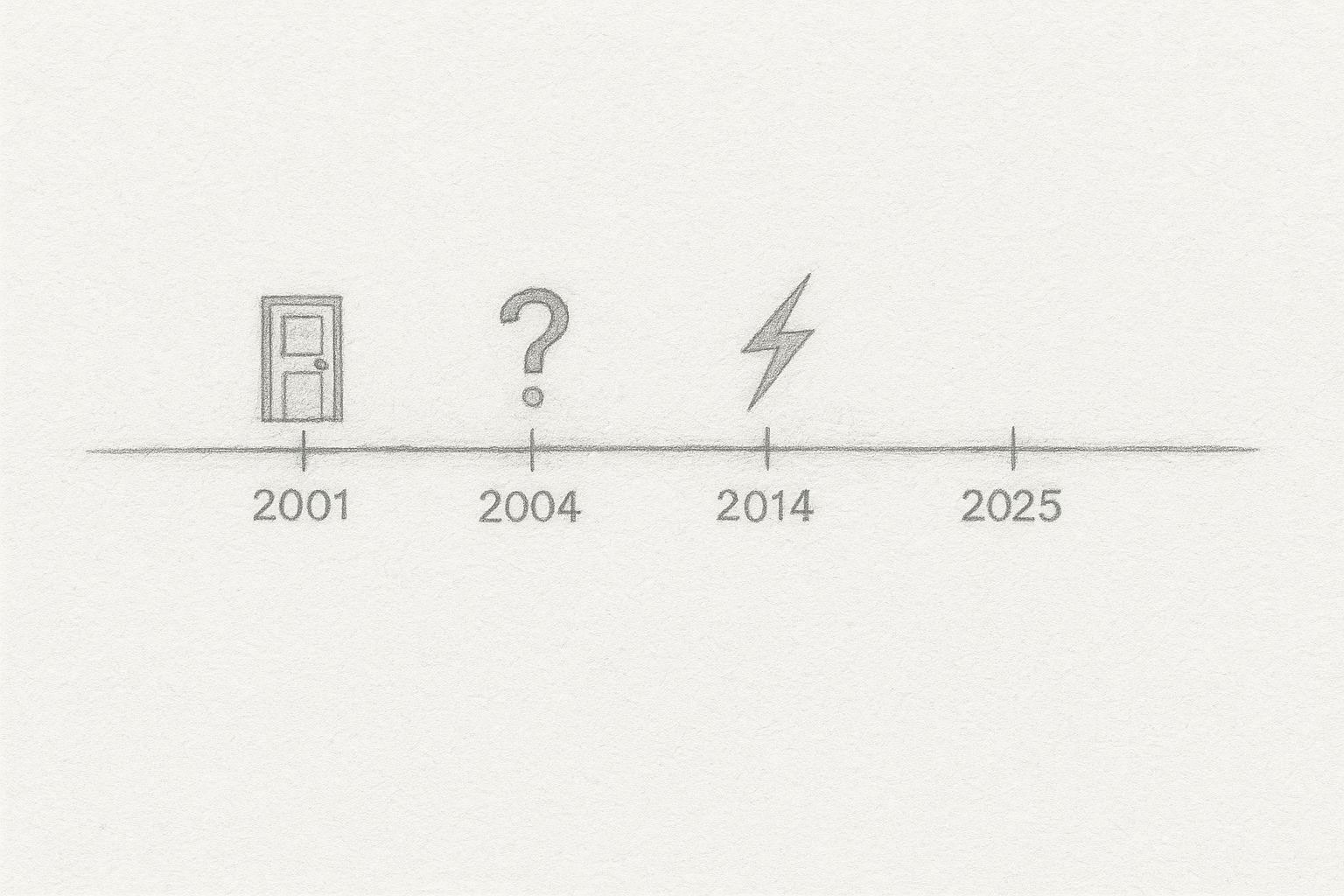
It is this sobriety that inspired me to try a thought experiment myself: how could the European-Russian development since 2001 be viewed in terms of game theory? Not as a moral dispute. Not as political partisanship. But as a pure consideration of the alternatives. So - like an old-school strategist - I'll simply give it a try:
- What were the options?
- What decision paths were there?
- And what follows logically from this?
That's all it takes to cast a complex quarter of a century into a clear model.
Decisions without math - the real essence of game theory
Game theory is not a numerical subject. Nor is it an ivory tower tool. At its core, it is surprisingly simple:
- Actor A has several possible actions.
- Actor B as well.
- Both know that the other will react.
- And it is precisely these reactions that determine what appears rational.
This makes game theory a bridge between psychology and strategy: it helps to understand why people and states can come into conflict even when nobody actually wants a conflict. Often all it takes is a misunderstanding, a wrong signal, a step too early or too late.
This is what makes game theory so valuable: it does not break down major events into good and bad, but into incentives, expectations and reaction patterns.
The prisoner's dilemma - the basic model of every international relationship
The most famous model is the prisoner's dilemma. It shows that two actors often lose when they distrust each other - even though both could win if they cooperated. The dilemma is so apt because it contains three fundamental insights:
- Cooperation would be objectively better.
- Mistrust makes both instinctively go into defensive mode.
- This defensive mode leads to a poorer overall solution.
You see it everywhere: in economic wars, in diplomacy, in military rearmament cycles, even in everyday conflicts between groups. The model has become a classic because it depicts the basic dynamics of human action so precisely. International politics in particular is a permanent prisoner's dilemma:
Each side believes it is acting defensively. But it is precisely this defensive behavior that acts as an attack on the other side. This creates conflicts that are not born out of aggression, but out of structural mistrust. This is one of the most important ideas of this entire article - and the foundation of the subsequent analysis.
Why game theory is ideal for looking back on 25 years of European-Russian history
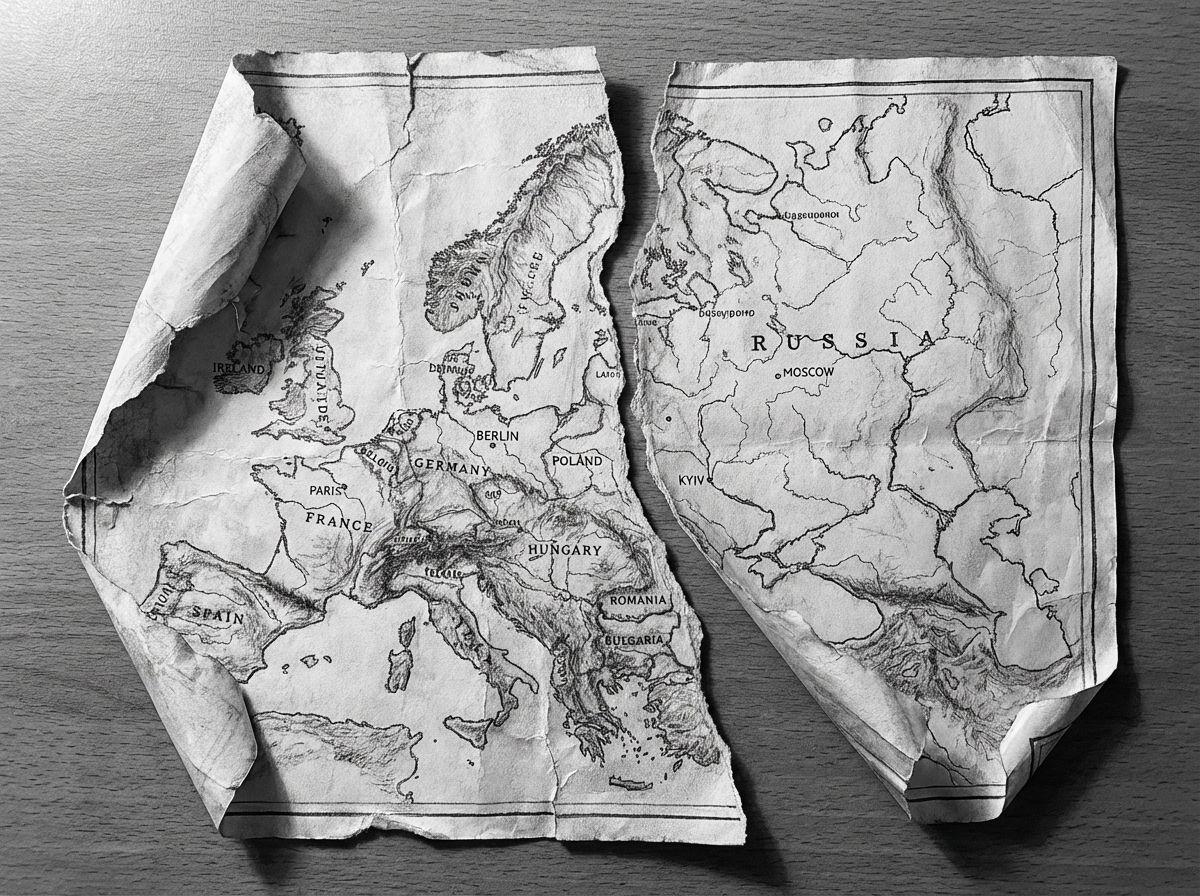
If you look at the relationship between Europe and Russia since 2001, you see an astonishingly clear starting position: an outstretched hand, economic opportunities, strategic rapprochement - and at the same time historical fears, old lines of mistrust and political camps, some of which had completely different readings of reality. Game theory is made precisely for such situations. It allows two alternative paths to be analyzed objectively:
- Path ACooperation
- Path B: Distrust
And then soberly calculate the consequences - not with figures, but with consequences.
- What follows from Cooperation?
- What follows from Distrust?
And which decisions of the early 2000s strengthened which path? This is exactly what I try to do in the rest of the article: I am not unrolling history morally, but strategically. I go back to the conditions as they were back then, place the alternatives side by side and let logic speak for itself - without the heat that accompanies the topic today.
The initial situation in 2001: A key European position
When you look at 2001 from today's perspective, you sense something that is easily overlooked: It was a historically unusual moment of openness. The Soviet Union had been gone for a decade. Russia was reorganizing itself. Europe was economically stable, politically self-confident and in a phase of relative harmony. Such windows sometimes appear - and often disappear faster than you realize.
2001 was just such a window. It was a year in which the major strategies had not yet been determined and in which a different Europe would actually have been possible. A symbolic event took place during this window that can still be considered an untapped opportunity today.
Putin's Bundestag speech: an outstretched arm
In September 2001, Vladimir Putin spoke in the German Bundestag - a speech that seems almost surreal today. It was not hostile, not threatening, not delimiting. It was an offer. An offer of cooperation, both economically and in terms of security policy.
(Speech in German from 2:32 min.)

President Putin's speech of September 25, 2001 before the German Bundestag
He spoke of common security, common stability, common interests. And Europe - especially Germany - was faced with a strategic choice at the time:
- Did they want Russia as a partner?
- Or did they want Russia as a potential risk?
Both decisions were possible at the time. Nothing was fixed. Today, it is difficult to overestimate how wide open this window of cooperation was. This is not a romantic retrospective, but a sober reference to the geopolitical reality of the time: Russia was looking to join Europe. And Europe could have accepted this connection.
The political mood in Europe - open but cautious
In 2001, Europe was in a phase of self-assurance. The EU was expanding, the economy was booming, globalization was still seen as a promise, not a threat. Despite this positive dynamic situation, however, there was an underlying hesitation:
- old East-West mentalities
- historical traumas
- Political mistrust in some capitals
- the forthcoming eastward expansion of NATO
In this area of tension, there were two interpretations at the same time: one that saw Russia as a future partner and one that classified Russia as a latent threat. This is precisely where game theory comes in:
If several interpretations are possible, the choice of interpretation determines the subsequent reality.
The power of the information space - a quiet upheaval
It is interesting to note that it was precisely around this time that a subtle change in Western news consumption began. More and more people felt that the media image was increasingly characterized by crises, permanent warnings and constant alarm. I personally also stopped watching the news regularly around 2001. Not out of political protest, but simply out of an inner feeling of exhaustion in the face of this permanent crisis atmosphere. It was a time when many people instinctively felt the need to stop:
„Somehow this world of information is becoming more and more restless - and at the same time more and more uniform.“
The idea is only a passing thought here, but it already points to a larger topic that I will deal with in more detail in a separate article: How Permanent alarm narrows the view of alternatives and deforms political thinking in the long term. For 2001 this means
The information space was also a factor. Not the most important one - but an atmospheric background that has narrowed the scope for thought. Where the media focus primarily on risks, cooperation easily appears naive. And mistrust appears cautious and reasonable.
Current survey on trust in politics
Europe faces a decision: cooperation or mistrust
From a game theory perspective, Europe was in a classic „knotted position“ of a strategic tree in 2001. Two branches were open:
- Path A: Cooperation
- Russia as an energy partner
- Common economic space
- common security policy
- Relaxation and confidence building - Path B: Distrust
- geopolitical distance
- NATO expansions as a signal of caution
- Structural uncertainty
- Potential lines of escalation
Both decisions could be rationally justified at the time. But they led to completely different futures. Game theory forces us to come to an uncomfortable realization: it is not the „intention“ that determines the course of history, but the choice of path.
- If you opt for cooperation, the result is Cooperation spirals.
- If you opt for mistrust, the result is Spirals of mistrust.
In 2001, the first small signals were sent, which later became dominant patterns.
Why this year is the right starting point for our analysis
2001 is the perfect starting point because the conditions were exceptionally clear:
- Russia was stable, but open to integration.
- Europe was economically strong and politically sovereign.
- The energy policy symbiosis was obvious.
- The security situation was calmer than at any other time since then.
In other words, the starting position was ideal for cooperation - but open enough that distrust was just as possible. In game theory, such moments are called „highly sensitive path points“: small decisions create big differences later on. And this is precisely why we will be looking at the two decidable paths from the next chapter onwards:
- the cooperative path that was never taken,
- and the suspicious path that became reality.
Decision tree A: What cooperation would have meant
When working with game theory, you always start by considering alternatives as fully-fledged decision paths - not as wishful thinking, but as legitimate possibilities within the same initial state.
The idea that Europe and Russia had embarked on a stable path of cooperation in 2001 is not a romantic fantasy, but one of the realistic options that were seriously discussed at the time. Many strategists, economists and diplomats saw a close partnership as a rational complement to two complementary areas: Europe's industry and Russia's resources.
What follows from this? Not fantasy, but sober logic. I am therefore describing this path as a strategist would analyze it: as a chain of consequences that follows from known causes.
Energy as the foundation of a common prosperity area
In the cooperation path, Nord Stream 1 and 2 would not have become political fault lines, but rather infrastructural pillars of an energy partnership that would last for decades. Europe would have:
- stable, predictable energy prices,
- a reliable long-term basis for the industry,
- and a geopolitical advantage of independence from global spot markets.
Energy is never just a raw material. Energy sets the pace for industrial cycles. If Europe had chosen this path, the next 20 years would have been much quieter economically. Traditional European industry would have kept its pace.
With low, predictable energy prices, the energy-intensive industries - chemicals, steel, mechanical engineering, aluminum, glass, ceramics - would have remained in Europe. They would not have moved to the USA or Asia under cost pressure. The result would have been a stability that European economists sorely miss today: a continuity of industrial value creation.
Europe as an economic counterweight to the USA and China
In this scenario, Europe would not automatically be part of the US strategy, but would have taken on an independent role: as an economic pole between the US and China, supported by close cooperation with Russia.
- Europe would have continued to benefit from US technology,
- At the same time, however, cheap energy from Russia is used,
- and move more freely in global competition.
This strategic triangle would have given Europe a robustness that is almost unimaginable today.
Geopolitical autonomy through economic strength
Economic strength generates freedom of action in foreign policy. A Europe that is not under permanent energy and production pressure must make decisions not out of fear, but from a position of sovereignty.
Cooperation with Russia would therefore not have meant becoming dependent on Russia - on the contrary, it would have meant remaining economically strong enough to prevent dependency from arising in the first place.
Ukraine as a neutral buffer state
In a cooperative Europe-Russia relationship, Ukraine would most likely have remained on a neutral course - similar to Finland during the Cold War:
- no NATO membership,
- no Russian policy of influence by military means,
- stable economic relations with both the West and the East.
In game theory, neutrality is often the most stable form of state existence between two power blocs.
No escalation spiral
Without the confrontation in the background, neither Russia would have seen a security threat, nor would the West have seen Ukraine as a geopolitical „frontline state“.M oreover, the potential for conflict would have remained structurally small.
No war, no sanctions, no shocks: a Europe in continuity.
The most important point: the path of escalation would not have arisen in the first place. In a stable cooperation path, war would not have to be „prevented“ - it would simply not arise rationally because the incentive structures for escalation would be absent.
This is what game theory thinking looks like: It is not morality that prevents conflicts, but the right incentives.
Consequences for Europe
Without war and sanctions, the last few years in Europe would have been characterized by calm:
- no energy price explosion,
- no deindustrialization,
- No forced structural change,
- less outflow of wealth to other regions of the world,
- less military armament,
- no wave of national debt.
It is immediately apparent how strongly a single strategic path influences the economic and political reality of an entire continent.
The human factor
In this alternative scenario, Europe would have today:
- no hundreds of thousands of war victims on its borders,
- no massive influx of refugees,
- No broken families along a front line.
These are not evaluations, but logical consequences of an escalation path that would not have been taken in the cooperation scenario.
Europe in 2025 under the cooperation path
In 2025, Europe would be an economically consistent continent that could preserve its industrial core and keep its social security systems stable. The political landscape would be less polarized and the social mood less tense.
In short, it would be a Europe that remained true to itself.
With an energy and industrial base behind it, Europe would have had the freedom to plan major future issues - digitalization, education, infrastructure, research - without a crisis fire department. That is perhaps the most important point of this entire chapter:
Cooperation creates strategic calm. And strategic calm is the most valuable asset of a continent that thrives on industrial stability.
Why this scenario is not idealized - but logical
It is easy to misunderstand this chapter as a nostalgic flashback. In fact, it is the opposite: it is pure logic. If you choose a path of cooperation in 2001, it follows:
- stable prices,
- stable structures,
- stable policy,
- stable societies.
This is not wishful thinking, but exactly what game theory teaches:
- Cooperation rewards itself.
- Distrust punishes itself.
This chapter therefore does not show what would have been „nicer“, but what would have been realistically possible on the same decision-making basis. Another example of similar dynamics is the conflict between China, Taiwan and the USA, which Prof. Dr. Rieck shows in the following video from the perspective of game theory:
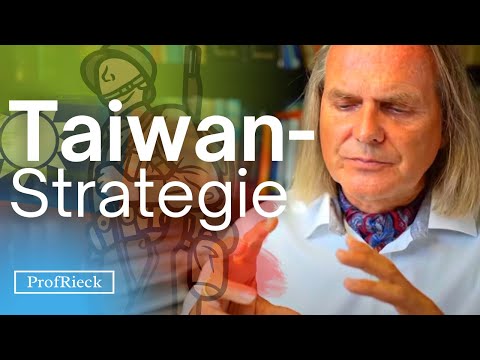
On the road to war? The strategies of the Taiwan conflict | Prof. Dr. Christian Rieck
Decision tree B: The real path of mistrust
The real course of events since 2001 has not been characterized by aggressive ambitions or a deliberate desire for escalation, but by something much less spectacular: institutional caution. After the end of the 1990s, many political decision-makers in Europe and the USA interpreted Russia not as a reliable partner, but as a potential source of insecurity.
This attitude was not a cry for confrontation, but rather a quiet, indecisive „We don't know exactly where this is going.“
From a game theory perspective, this is the classic start of a spiral of mistrust:
The first step is not aggressive - it is defensive. And therein lies the problem.
NATO's eastern enlargements: Different readings of the same signal
From a Western perspective: stabilization and security guarantee
For many European countries, NATO expansion to the east seemed like a logical step: it secured young democracies. It was intended to calm historical lines of conflict. And it was seen as a purely defensive measure. The West read the enlargement as a promise of security, not as a threat.
From a Russian perspective: a narrowing space
Russia, on the other hand, read the exact same event differently - a pattern that is part of everyday life in game theory. While the West spoke of stabilization, Russia saw:
- the loss of strategic buffer zones,
- a movement of military infrastructure towards its own borders,
- and the weakening of its own security policy depth.
Both were rational - but not compatible. This is exactly where the security dilemma begins.
The years 2004-2014: Increasing tensions and the intensification of mistrust
The first open cracks appeared during these years:
- the Orange Revolution in Ukraine,
- Mutual accusations about energy dependencies,
- political polarization within Eastern European countries,
- the growing US presence in the region.
These events were often not malicious, but they fed interpretations. Each side increasingly interpreted the other side's actions as strategic messages - no longer as internal developments.
Crimea 2014: the turning point
The conflict over Crimea was not the beginning of the tensions, but the first clear symptom of an already growing mistrust.
Europe reacted with sanctions, Russia with a defensive security policy stance. The spiral of cooperation that would have been possible in 2001 was finally replaced by a spiral of mistrust.
After 2014: a self-reinforcing spiral
Sanctions are a classic instrument in international relations. However, in terms of game theory, they are double-edged: they are intended to weaken the opponent, but at the same time strengthen their distrust. The years after 2014 were characterized by:
- growing economic divergence,
- Russia's political decoupling from Europe,
- a strategic rapprochement between Russia and China,
- and the loss of formerly common economic lines.
Europe thus lost the very levers that would have made a cooperative future possible.
Militarization of language and symbolism
At the same time, military rhetoric grew on both sides. Not necessarily by design, but as a result of structural mistrust.
As soon as one side arms itself defensively, the other interprets this as preparation for offense - a classic pattern.
Escalation from 2022: the moment when mistrust set the pace
Russia's invasion of Ukraine in 2022 was not an isolated event, but the end point of a long, disastrous structural development. This is not a justification - it is a game-theoretical observation:
Conflicts often arise without anyone really „aiming“ for them. They are the logical consequence of an unchecked escalation path.
The Western response: sanctions, weapons, isolation
Europe and the USA responded:
- massive economic sanctions,
- Arms deliveries,
- political decoupling,
- diplomatic retreat.
This made the path of mistrust irreversible.
The consequences for Europe: energy, industry, structural breaks
When the Russian energy supply was cut off, Europe lost the foundation that had sustained its industrial strength for decades.
The consequences were inevitable:
- sharply rising energy prices,
- Pressure on energy-intensive industries,
- Relocation of production to countries with lower costs,
- accelerated deindustrialization in individual sectors.
Not as a result of a wrong political decision - but as a systemic consequence of a path of mistrust that is now impossible to overlook.
Loss of prosperity as a structural effect
Since then, Europe has been under constant pressure to adapt:
- declining competitiveness,
- rising national debt,
- low investment activity in the manufacturing sector,
- Migration of companies.
These effects are not short-term spikes - they are the long-term results of a lost cooperation path.
Social consequences: Polarization and permanent crises
Mistrust not only has an international impact, but also eats its way inwards. Europe has been experiencing this for years:
- an increase in social polarization,
- political fragmentation,
- a general fatigue in the face of constant crises,
- a media overheating that constantly produces new alarm topics.
The loss of the cooperative path is therefore also a loss of political and social calm.
The game-theoretical core: Why this path became so stable
The real path was not taken because it was the „best“, but because it became a self-sustaining structure after the first suspicious signals. In game theory, this is called a lock-in through expectation stabilization:
As soon as both sides classify the behavior of the other side as permanently distrustful, the entire logic of the actions changes. Cooperation becomes risky, mistrust becomes rational. And it is precisely this mechanism that has shaped European-Russian relations for over two decades.
Comparison of both decision trees
| Feature | A - Cooperation | B - Distrust (real path) |
|---|---|---|
| Energy supply | Stable, long-term cooperation with Russia; Nord Stream 1 and 2 as reliable infrastructure; low and predictable energy prices. | Termination of energy cooperation; massive uncertainty on the energy markets; sharply rising and volatile energy prices. |
| Europe's industrial base | Preservation of the energy-intensive industry in Europe; stable production chains; high competitiveness in the manufacturing sector. | Pressure on energy-intensive industries; relocation of production to other regions of the world; incipient deindustrialization in individual sectors. |
| Macroeconomic development | Continuous growth, predictable investment cycles, solid national budgets; fewer crisis interventions necessary. | Periods of recession, increased national debt, permanent crisis programs; reluctance to invest in key sectors. |
| Europe's geopolitical role | Independent economic pole between the USA and China; greater strategic autonomy through strong industry and secure energy. | Increasing dependence on external energy and security guarantors; limited room for maneuver in foreign policy. |
| Ukraine | Neutral buffer state based on the „Finland model“; economic links to East and West; low potential for escalation. | Frontline state of a bloc conflict; military center of gravity; massive war and destruction damage in its own country. |
| Security policy | Cooperative security architecture with Russia; reduction of threat perceptions; limited militarization. | Expansion of NATO presence in the East; growing armament on both sides; mutual perception as a potential threat. |
| Relationship between Russia and Europe | Long-term partnership based on energy, trade and security; building trust over decades. | Increasing alienation; economic, political and military decoupling; consolidation of enemy images. |
| Sanctions and countermeasures | No structural sanctions necessary; conflicts are primarily resolved diplomatically; interdependence as a stability factor. | Extensive sanctions packages against Russia; counter-sanctions and redirection of trade flows; long-term loss of trust. |
| Social mood in Europe | More calm and predictability; less constant crisis communication; less polarization in domestic politics. | Increasing fatigue due to crisis mode; growing political division; greater polarization between „camp thinking“. |
| Media framework | Foreign policy reported more as a long-term strategy; room for differentiated analysis and scenarios. | Conflict-oriented reporting; strong emotionalization; simplification of complex contexts into friend/foe narratives. |
| Military dimension | Limited rearmament; focus on diplomacy, trade relations and common security policy. | Rearmament and militarization of many debates; increasing defence spending; shift of political resources to the security sector. |
| Strategic long-term perspective | Cooperation spiral: trust generates further cooperation; long-term stability as a normal state. | Spiral of mistrust: each side expects the worst from the other; conflict readiness and hedging become the norm. |
| People and the realities of life | No acts of war in Europe between Russia and Ukraine; no mass displacement; less traumatization. | Hundreds of thousands of dead and injured, streams of displaced persons, destroyed cities; long-lasting traumas for both societies. |
The core of game theory: how mistrust destroys systems
Distrust is not a feeling - it is a structural principle. In everyday language, mistrust seems like an emotional phenomenon. In game theory, however, mistrust is a rational state that arises when two players can no longer trust that cooperation will be reciprocated. It is not a question of morality, but a question of expectation. The dynamic is simple and devastating at the same time:
- Those who expect trust act cooperatively.
- Those who expect mistrust act defensively.
- Those who act defensively are also perceived as suspicious by their counterparts.
This creates a cycle that feeds on itself. Not because one side is acting „wrongly“, but because the structure forces those involved to take precisely these steps.
The security dilemma: when defense looks like offense
The best-known model that explains this dynamic is the security dilemma. It describes how states that actually only want to protect themselves inevitably slip into threat perceptions. The logic is sobering:
- A state strengthens its defense.
- The neighbor interprets this as a possible attack signal.
- He is also arming himself - not to threaten, but to avoid being threatened.
- This reaction, in turn, seems to the first state to confirm its own mistrust.
Conflicts arise almost automatically - not through aggression, but through mutual misinterpretation of defensive measures. It was precisely this dynamic that characterized the Russian-European relationship after 2001. Cooperation would have been possible, but the first small signs of caution set a structure in motion that could hardly be corrected later.
Spirals of mistrust: Why they are stronger than spirals of cooperation
Cooperation is sensitive. It needs:
- stable framework conditions,
- long-term planning,
- reciprocal signals of goodwill.
Distrust, on the other hand, needs nothing more than a single negative signal that can be interpreted correctly or incorrectly. This is why mistrust is structurally stronger:
- One mistake is enough to destroy trust.
- Many correct steps are necessary to rebuild it.
- Each side judges the other's mistakes more harshly than its own.
And the longer a spiral of mistrust continues, the more difficult it becomes to return. This is exactly what happened in the relationship between Europe and Russia. It was not a planned break. It was a self-reinforcement that began years before 2014 and peaked in 2022.
The price of mistrust: when systems destroy their own foundation
In international politics, mistrust is not just unpleasant. It destroys real structures:
- Economic interdependence
- Political discussion channels
- Technological cooperation
- Security policy stability
If a system is persistently characterized by mistrust, it begins to disintegrate at its edges. This is exactly what we have been seeing in Europe for several years now: Structures that have been viable for decades are losing stability - not due to external attacks, but due to the internal logic of an escalating path of mistrust.
Current survey on a possible case of tension
Europe has squandered its historic opportunity to become an independent pole of power
This is perhaps the most important point of this entire article. It is free of emotionality, but analytically significant: Europe had a unique opportunity to become a third global pole of power. The conditions were ideal:
- economic strength,
- political weight,
- geographical location,
- Access to stable energy sources,
- potential cooperation with Russia as an eastern foundation.
However, a Europe with permanently high energy prices - and thus a structurally weakened industry - can no longer fulfill this role. This is not a political assessment, but a game-theoretical consequence:
If a player loses its most important resource (in this case: cheap and stable energy), it loses its ability to act strategically independently. For decades, Europe wanted to be a counterweight to the USA and China.
- But without industrial strength, there is no counterweight.
- And without energy security, there is no industrial strength.
This means that the real path B is not just a political course - it is a structural self-reduction of Europe in the international system. In the language of game theory, this means
The continent has shifted from the role of an independent player to the role of a reacting player. Not out of ill will. Not because of the mistakes of individuals. But through the logical consequence of a path of mistrust that destroys its own foundations.
Why systems crumble under mistrust - and hardly ever return
Mistrust not only leads to conflicts, but also to structural erosion:
- Breaking supply chains,
- Decouple trading areas,
- Investments are migrating,
- political stability is declining,
- and social polarization is increasing.
The decisive factor: The longer this environment lasts, the more institutions and players adapt to the new situation. Distrust becomes the norm. From a game theory perspective, this means that
The system has reached a stable but poor state of equilibrium - a so-called „Nash equilibrium of decoupling“. Such equilibria cannot simply be renegotiated. They persist because each side believes that the other cannot or will not return to the old state.
The lesson of 25 years: Trust is the cheapest raw material - and the most valuable
If you compare the two decision trees, one thing becomes clear:
- Cooperation generates prosperity, stability and strategic autonomy.
- Distrust creates uncertainty, costs and structural dependency.
Europe did not fail because of an opponent. It has failed because of a misguided expectation structure that has undermined its own foundations. In the end, this is the most important game theory insight:
Distrust does not destroy systems spectacularly - it destroys them insidiously. It eats away at the basis until an actor is barely able to act freely. And this is exactly where Europe stands today.

Macron's ground troops: a strategy of verbal provocation | Prof. Dr. Christian Rieck
The learning effect: thinking like a strategist in a noisy world
The real lesson from these 25 years has less to do with geopolitics than with habits of thought. It used to be a matter of course to consider alternatives:
- What if we decided differently?
- What effects do our steps have on others?
- How would a neutral observer see the situation?
This thinking is not new. It is old - almost classic. Generals, diplomats and statesmen of earlier generations thought this way because they knew that if you only know your own perspective, you won't understand the game. Today, this cultural technique has become rarer. Not because people have become dumber, but because the information environment has become more hectic. Many are swept along by buzzwords and daily waves of indignation without ever looking at the structural level on which political decisions actually take place. Game theory brings us back to exactly that:
- The view for Alternatives.
- The view for Consequences.
- The view for Cause and effect.
Why premature camp thinking paralyzes thinking
A second learning effect is just as important: nothing blocks strategic thinking more than the need to immediately take a „side“. Thinking in terms of camps forces simple answers:
- „Some people are to blame.“
- „The others are right.“
- „We just have to position ourselves correctly.“
But those who think in terms of camps no longer think in terms of alternatives. They think in terms of identity. And identity eats up analysis. You only become a strategist when you accept that several truths can exist at the same time - because several perspectives can be rational at the same time. This is exactly what game theory shows time and again.
Vigilance does not mean mistrust - but clarity
Vigilance does not mean seeing enemies everywhere. Nor does it mean taking refuge in cynical world views. Vigilance means something much more down-to-earth:
- information.
- to recognize structures.
- Questioning narratives.
- Don't be too quick to adapt your own point of view to the mood.
Those who are vigilant do not allow themselves to be emotionally driven - at least not permanently. They take in information, examine it and then ask themselves the crucial question:
„What follows from this?“
That is the difference between opinion and analysis.
The practical attitude: sober, open, patient
Game theory teaches us something that seems almost old-fashioned today: patience. Cooperation does not come about through haste, but through constant signals. Trust is not built through headlines, but through calm, consistent decisions.
And good policy is not the result of short-term emotions, but of long-term consideration. This attitude is not spectacular - but it is effective. You don't become a better citizen because you believe everything. But because you examine everything.
The personal compass: the question of alternatives
If you were to reduce this article to a single sentence, it would be this:
„What would have happened if we had made a different decision?“
This question is a silent but powerful form of self-defense against any form of mental appropriation. It forces us to see the scope for action instead of being caught up in the mood of the day.
- It makes you independent.
- She makes it clear.
- And it makes you resilient.
Because those who can think through alternatives cannot be manipulated.
Strategic thinking as a personal safe space
Even if the actual course of events since 2001 has caused many opportunities to pass by, there is no need to draw a pessimistic conclusion from this. On the contrary: the ability to recognize these structures is a gain for every individual. Anyone who understands how mistrust works will not be so easily driven into alarmism. Those who recognize how cooperation works see possibilities where others only see front lines. And those who have learned to think of alternatives retain something that has become rare today:
inner sovereignty.
This not only makes you politically clearer, but also calmer on a personal level. Because you know that it is not the headlines that determine your own thinking - but your own ability to see connections. And perhaps that is the most important learning effect of this entire article:
The world is complex, but it is not incomprehensible. You can penetrate it if you take the time to think in a structured way. The first step is always the same:
Ask questions. Examine alternatives. And never stop thinking for yourself.
Sources on game theory and geopolitical development
- Game Theory: An Introduction (Christian Rieck)
- The 36 Stratagems of Crisis – How to Succeed When Others Fail
- How to outsmart yourself: Turn your life into a game in which you always win.
- Official NATO-NATO archive page: Extensions since 1999
- NATO-Russia Founding Act (1997)
- OSCE Special Monitoring Mission Reports (2014-2022)
- RAND Corporation - „Overextending Russia“ (2019)
- International Crisis Group - Reports on Eastern Europe
- „European Economic Outlook” - EU Commission
- Prof. Dr. Christian Rieck at the University of Frankfurt

Frequently asked questions
- Why does the article look at the years since 2001 from a game theory perspective?
Because game theory is a tool that explains international relations structurally - without morality and without party interests. It shows why even well-intentioned actions can have unintended consequences and how mistrust can push even stable systems into escalation paths. The period from 2001 onwards is ideal because this was a historic opportunity that was then gradually lost. - Is this article about apportioning blame?
No. The point of the article is precisely not to apportion blame. Game theory examines incentives and structures, not good and evil. The article shows how different actors were able to act rationally - and how their rational decisions nevertheless led to negative results. - Why is Putin's 2001 Bundestag speech presented as an important signal?
Because it was objectively one of the rare occasions when Russia explicitly offered closer cooperation with Europe. In game-theoretical terms, this was a signal of cooperation that would have made an alternative development possible. The fact that this signal was not translated into a long-term strategy is not a question of guilt, but of setting the course. - Is the „cooperation with Russia“ scenario realistic or just wishful thinking?
It is realistic. It was a structured alternative based on existing political, economic and security policy offers at the time. Many diplomats and economists considered this path plausible. The fact that it was not chosen does not make it unrealistic - just unused. - Why didn't Europe take advantage of the cooperation window?
Because caution and previous historical experience were stronger than trust. Several EU states viewed Russia with fundamental skepticism. At the same time, Russia also interpreted Western steps defensively. These mutual misinterpretations created the pattern of a classic security dilemma. - Why does NATO's eastward enlargement play such an important role in this context?
Because it was interpreted completely differently by both sides. In the West: as a security guarantee. In Russia: as a strategic encirclement. This dissonance is a prime example of how conflicts arise even though both sides believe they are acting defensively. - Is the war of 2022 „unavoidable“ in this model?
No - it is not unavoidable, but it can be explained structurally. Game theory shows: If a path of mistrust continues long enough and new signals keep confirming the mistrust, the probability of conflict increases dramatically. War is therefore not a „sudden event“, but the end point of a faulty structure that has grown over decades. - Why would cooperation have changed so much economically?
Because energy is the central input factor for industrial value creation. Stable, low energy prices would have secured industrial jobs,
Supply chains have been stabilized, and European companies have been strengthened in the face of global competition. High Energy Prices On the other hand, they automatically weaken any region that depends on industry. - Has Europe really lost its chance to become a third pole of power?
Yes—structurally. From 2001 to 2010, Europe enjoyed a unique combination of strong industry, stable societies, a secure energy supply, and geopolitical calm. With the end of cheap energy and the loss of industrial nuclear power, Europe today is more of a reactors than a shapers. This is not a political opinion, but an observation based on game theory. - Does this mean that cooperation with Russia would necessarily have been better?
Not necessarily „better“, but strategically more stable. Cooperation would have had less potential for escalation and would have generated structure-strengthening effects. This does not mean that everything would have gone smoothly - but the decision tree clearly shows that the risks would have been lower and the opportunities greater. - Why doesn't the article compare moral aspects?
Because although morality is politically relevant, it is of little use for structural understanding. Game theory is based on the question: „How do actors react to the decisions of others?“ Morality is secondary. Incentives, expectations and interpretations are primary. - What does „spiral of mistrust“ mean in this context?
A spiral of mistrust arises when two sides act defensively and this defensiveness is perceived as aggression by the other party. This leads to countermeasures, which in turn act as a threat. The spiral reinforces itself, even without hostile intent. - Can a system emerge from a spiral of mistrust?
Yes, in theory - but in practice it is extremely difficult. As soon as both sides believe that the other will not cooperate, a stable but poor balance is created. Breaking out of this usually requires extraordinary signals or political upheaval. - Why does energy policy play such a central role in this model?
Because energy is not just an economic factor, but a power factor. It determines whether a continent can act independently or is dependent on external supplies. Those who multiply their energy prices automatically weaken themselves at all levels. - Does the article have anything against the USA, Russia or China?
No - not at all. The article does not evaluate states, but describes the structure of a game. Europe would have had a stronger, more independent position vis-à-vis both major powers if it had cooperated with Russia. This is an analytical statement, not a criticism of other countries. - What does „Nash equilibrium of decoupling“ mean?
A Nash equilibrium is a state in which none of the players is better off by unilaterally changing their behavior. In the current Relations Between Europe and Russia This means: Neither side expects cooperation anymore. Both sides act accordingly. No single actor can improve its situation by changing its mindset on its own. As a result, the system remains stable—but at a low level. - Why does media behavior play a secondary role in the analysis?
Because media are not a cause, but an amplifier. They shape perceptions and set priorities. A climate of constant outrage reduces the scope for long-term analysis. The article touches on this as a background factor - without making it the main topic. - What can the individual learn from this analysis?
Above all, this means not taking a hasty position, thinking through alternative scenarios, recognizing structural connections and asking not just moral but strategic questions. Those who think like this understand politics on a deeper level. - Does strategic thinking automatically mean closeness to government or militarism?
No. Strategy is not militarism, but a long-term approach. She asks: „What consequences will a decision have in ten years“ time?" This question is particularly crucial in civil societies - and has almost been lost today. - Why does the article end with a positive message?
Because clarity should never paralyze you. Those who recognize alternatives and understand connections gain inner sovereignty. You don't have to sugarcoat the world, but you can think it through. And this is precisely where the opportunity lies to act more calmly and with more foresight, both personally and socially.