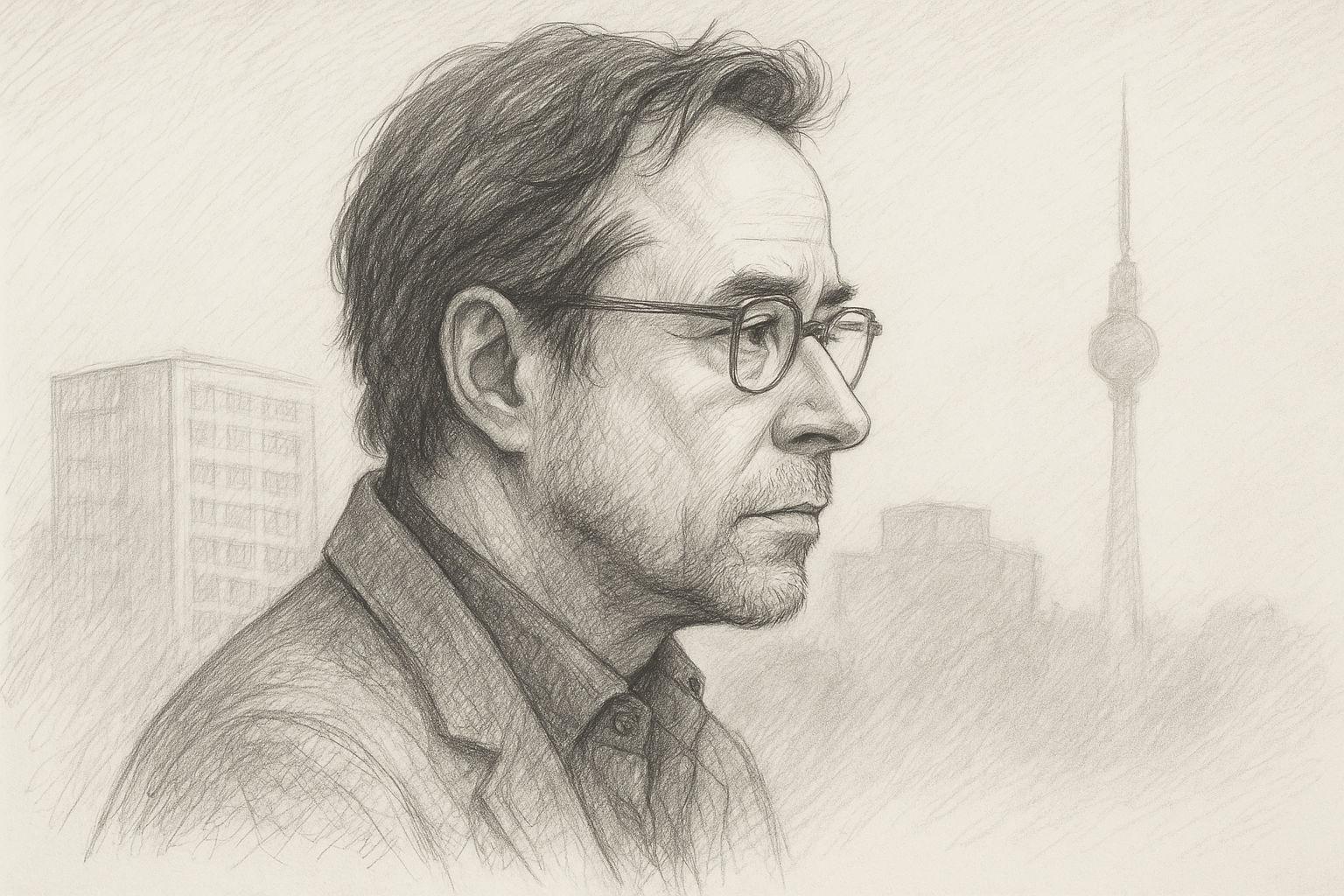
When you see Jan-Josef Liefers today as the eccentric Professor Boerne in „Tatort“, it's easy to forget how long it took to get there. I myself have always enjoyed seeing him in this role: as a mixture of subtlety, narcissism, humor and astonishing clarity. But this mixture doesn't come out of nowhere. It is the result of a life that began in a completely different Germany - in the GDR, in a country with narrow borders and clear guidelines.
To understand why Liefers takes such a consistent stance today, you have to go back to his childhood, to his parents' theater world and to a time when criticism of the system was anything but without consequences.
Latest news about Jan-Josef Liefers
05.05.2026Jan-Josef Liefers reports in an interview on the personal and professional consequences of his participation in the campaign „#allesdichtmachen“. According to a Article in the Berliner Zeitung he describes the noticeable public pressure that arose following the publication of the videos. In addition to critical reactions from the media and politics, there were also effects on his professional environment. Liefers describes how the debate quickly became emotional and there was hardly any room for differentiated positions. At the same time, he emphasizes that he was not interested in provocation, but in a critical examination of the measures taken at the time. Looking back, he sees how strongly public opinion-forming and personal pressure can be linked.

Jan Josef Liefers questions himself | Hotel Matze
The embedded video shows the complete conversation at Hotel Matze (official website), places his experiences in a wider context and reveals the extent to which public figures are caught between personal attitudes and social expectations. Harald Kujat had already expressed similar experiences in a lecture given at the Articles on propaganda and how to recognize them.
Another very interesting question that comes up again and again in the video: What does freedom mean to Jan-Josef Liefers and what dependencies arise from freedom? This aspect runs like a red thread through the very profound conversation with Matze Hielscher.
Theater family in Dresden - Art in the system
Jan-Josef Liefers grew up in Dresden in 1964, in a family where stage and scenery were part of everyday life. His father was a director, his mother an actress - art is not a „hobby“ for him, but normality, so to speak. In many West German biographies, art was a kind of escape from bourgeois structures. In the GDR, things were different: culture was organized, controlled and promoted by the state - and at the same time an outlet. For a child, such an environment means two things:
- On the one hand, we experience the world as something that can be depicted, narrated and interpreted.
- On the other hand, you learn early on that there is a difference between what you think and what you say out loud.
In such an environment, you often develop a very keen eye. You observe more closely, hear nuances, sense tensions. Anyone who can later credibly play such a sharp-tongued, ironic character as Boerne has usually had this gift for observation since childhood.
Childhood between Dresden and Erfurt - narrow country, wide inner world
Part of his childhood also takes him to Erfurt, to his grandmother. For many East Germans, this mixture of big city, province, family and system normality is typical: you grow up in a narrow political framework, but the personal cosmos - relatives, school, neighborhood - is surprisingly colorful. What we know from many GDR biographies probably also played a role for Liefers:
- A state that dictates how you should think.
- A society in which you learn to listen between the lines.
- An everyday life in which loyalty and conformity are rewarded.
Anyone who is artistically shaped in such an environment often learns early on to distinguish between two levels: the official and the personal. The fact that Jan-Josef Liefers later becomes not just an entertainer, but someone who consciously intervenes in debates, fits in perfectly with this. Once you have become accustomed to inner truthfulness, you can't stand smooth, faceless compromises in the long run.
No NVA, no Abitur - the price of your own attitude
A decisive point in Liefers„ biography is his refusal to join the National People's Army (NVA). In the GDR, this was no small step. It was not a non-binding expression of opinion, but a conscious rejection of a central element of the system. The consequence was clear: no NVA service, no regular Abitur. In a state where educational paths and career opportunities were strictly planned, this was a real turning point. Many would have given in at this point, would have signed up to have “their peace". Liefers did not.
This already reveals a pattern that runs through his life: He accepts personal disadvantages if they are the result of a conscious attitude. He does not conform to the predetermined form at all costs. He makes decisions, even if they are uncomfortable.
Later, he will be #allesdichtmachen that he offends, that he is „unnecessarily provocative“. But you can see here that this didn't suddenly fall out of the sky, but is based on a long line of consistency.
Carpentry apprenticeship at the Staatstheater - a detour with proximity to the stage
Instead of graduating from high school and going straight to university, Liefers first did an apprenticeship as a carpenter - at the state theater in Dresden, of all places. At first glance, this seems like a detour. At second glance, it is almost logical: if the direct educational path is blocked, the only way out is via the trades. And if you come from a theater family, you don't end up in just any workshop, but where sets are built.
This is a typical GDR biography: you make do within the bounds of the possibilities - without completely abandoning your inner course. A carpentry apprenticeship is a compromise, but one that brings him close to the stage:
- He sees, how theater is created in practice: Wood, color, construction.
- He experiences, how many people work in the background so that someone can stand in the spotlight in front.
- He learnsArt is not only inspiration, but also craftsmanship, discipline and teamwork.
This grounding - the combination of artistic background and craftsmanship - can also be felt later in his roles. There is no one who „only“ recites the text. There is someone who knows that a production is a big whole: from the stage set to the last prop.
Drama studies at the „Ernst Busch“ - discipline instead of glamor
At the age of 19, Liefers began studying acting at the Academy of Dramatic Arts „Ernst Busch“ in Berlin - one of the most prestigious addresses in the German-speaking world. In the GDR, this school was not a place for vanity, but for rigorous training. This is not a place for philosophizing in casting shows, it is a place for work: Breathing technique, posture, text work, character development. That means:
- He learns the trade from scratch.
- It is placed in a tradition that sees theater as a serious, social task.
- He internalizes discipline, preparation and respect for the role.
When you see the lightness with which he plays Boerne today, this sharp-tongued, often overdrawn professor, it's exactly the kind of lightness that only seems credible when there's a solid foundation underneath.
What this origin means for his appearance today
Why is this look into his origins so important when writing about Jan-Josef Liefers today? Because otherwise you run the risk of seeing him only as a „Tatort star“ or a „controversial #allesdichtmachen actor“. Both would be too short-sighted.
- There is the Boy from the GDR, who deliberately chooses not to take the easy route - adaptation, military service, smooth biography.
- There is the young craftsmen at the theater, who learns the practical side of the stage with wood and screws.
- There is the Drama students, who learns a high form of professionalism in a strict school.
And then there is the man who - like many others - at some point I simply perceived as an integral part of Sunday evenings: Karl-Friedrich Boerne, who made the „Tatort“ from Münster into something special. An actor whose characters often seem over-the-top, but who always conveys something genuine and honest at the core.
This is precisely why it is worth taking a closer look. Because if you want to understand why Jan-Josef Liefers did not buckle later in a heated coronavirus atmosphere, you will find many answers in these early years: in a biography that was characterized from the very beginning by attitude, compromises at one's own expense and a deep understanding of freedom - precisely because he grew up in a system in which freedom was not a matter of course.
Speech at Alexanderplatz - launching the joint call for freedom
On November 4, 1989 - just a few days before the fall of the Berlin Wall - Jan Josef Liefers was among the speakers at the Major rally on Alexanderplatz in East Berlin: the largest non-state-organized demonstration in the history of the GDR, in which hundreds of thousands took part.
In his speech, Liefers warned urgently against misusing protests and hopes in this time of upheaval as a stage for party or state functionaries. He called for the leading role in the state to be questioned and for power structures to be broken up - and pleaded for a democratic socialism in which power is not centralized but distributed transparently and equally.
From today's perspective, this speech takes on particular significance: it shows that Liefers was not just an artist back then, but someone who took responsibility. He used his voice - at a time when many voices had fallen silent or it seemed too risky to raise them.
A courageous step - and its lasting significance
Liefers himself later reported that he could hardly sleep the night before the speech - the pressure was great, the uncertainty palpable. But he went on stage, not as a celebrated star, but as a young actor who believed that the time had now come when one could
„must open his mouth for the right cause“.
His words were directed at the people, not the parties. He did not make demands for a superficial change of power, but for honest participation and democratic responsibility. In doing so, he set an example that continues to have an impact today - not only as part of contemporary German history, but also as an example of how art and personal courage can be combined.
In retrospect, this appearance appears to be an important building block in Liefers' life: an early demonstration of his inner attitude, which later became visible again and again in decisions and controversies. I think this episode in particular deserves to be highlighted in our portrait.
The path to the stage - and into German film
When you look at Jan-Josef Liefers’ career, you don't see the typical quick rise via media casting formats or early television roles. His path is classic, traditional, almost artisanal - shaped by theater air, stage rehearsals and long months in which you constantly reshape yourself and your role. It's a path that used to be common in the past and now seems almost a little out of date. And that is precisely why you can sense something in Liefers that many modern actors can no longer achieve: Depth. Experience. Seriousness.
His later film and television success was rooted in these years, long before „Tatort Münster“ became a crowd-puller.
Deutsches Theater Berlin - the start of a real professional life
After graduating from the „Ernst Busch“, Liefers ends up at the German Theater in Berlin - a house that has stood for high standards for decades. Those who play here are not trained for the limelight, but for precision. For poise. For the text. For interaction with others. And it is precisely places like this that make a lasting impression on an actor. This is where you learn:
- that you don't „master“ a role, you have to drill into it;
- that theater is not a show, but a responsibility;
- that errors are not concealed, but corrected.
These years formed a basic attitude that you later recognize - even in front of the camera: care, depth, respect for the character.
Film debut as Alexander von Humboldt - first traces in the cinema
Liefers made his film debut in the role of the young naturalist Alexander von Humboldt in The ascent of the Chimborazo. It is a role that does not rely on quick effects, but requires a character who is simultaneously inquisitive, determined and vulnerable. This is remarkable for an actor at the beginning of his film career: not a shallow supporting role, not a part to please - but a historical figure full of ambivalence.
You can already see how the industry perceives him: as someone who can portray depth, not just casualness.
Breakthrough with „Rossini“ - the door to the big movie opens
The real breakthrough came in 1996 with Helmut Dietl's classic Rossini - or the murderous question of who slept with whom. A film that simultaneously parodies and celebrates the German entertainment industry - and needs brilliant actors to master this ironic game. And it is precisely here that Liefers shows something that still distinguishes him today:
He can show humor and seriousness, vanity and fragility, ego and vulnerability at the same time, without it seeming contrived. This film opens the door for everything that follows. Because with Rossini, he not only becomes known to a wide audience, but also to an environment of directors and producers who recognize: This man has character. This man has depth. This man can carry.
Münster crime scene - the character of Karl-Friedrich Boerne is created
In 2002, Liefers takes on the role for which almost everyone knows him: Karl-Friedrich Boerne, the narcissistic, witty, sometimes mercilessly arrogant forensic scientist in the „Crime scene“ from Münster. A figure that could easily become ridiculous on paper - too eccentric, too aloof, too exaggerated.
But that's exactly what doesn't happen. And that is to Liefers’ credit. He plays Boerne in such a way that you simultaneously smile at him, admire him and sometimes even understand him. The humor is there, but there is always a glimmer of truth behind it. The man is not just a caricature, but a character with a history. What makes Boerne so popular is the interplay of:
- sharp tongue,
- inflated self-perception,
- brilliant intelligence,
- and a surprising, often hidden humanity.
I myself have always enjoyed watching him in this role because it embodies something that has become rare on German television: a character with edges. And edges always have a biography - a real, lived biography.
Versatility in front of and behind the camera - a designer, not a „consumer star“
In addition to acting, Liefers is also a musician, occasional director and producer. This shows that he sees his work not as a „job“, but as a holistic creation. One writes, the other acts, the next produces - but in truth, everything is connected.
Those who make music feel rhythm in their play.
- Those who direct understand dramaturgy better.
- Those who produce recognize their responsibility for the work as a whole.
This understanding of the big picture is rare because many careers today are created quickly and superficially and disappear just as quickly. It's different with Liefers. His career grows organically, in layers, each experience building on the previous one.
He is not an interchangeable media player. He is someone who creates - consciously, reflectively and with respect for the tradition of his craft.
What this path reveals about his character
This second phase of his life - theater, film, television - shows something that is often forgotten in this age of quick attention: Success doesn't happen overnight. It develops over decades. You can see that with Liefers:
- a man who takes his profession seriously,
- who had to prove himself on stage,
- that has grown through roles, not through publicity,
- and who takes responsibility for his art.
That's why he seems so stable today. That is why he is not nervous about controversy. And that's why you can sense an old, almost traditional acting honor in him - something you can't learn if you're put in the spotlight too early. His artistic path is about consistency. Of diligence. And of an ability that has become rare today: perseverance.
When you watch Jan-Josef Liefers in his roles, you quickly realize that there is more to him than pure acting technique. He has something that you can't play: an inner compass. This mixture of subtle humor, intellectual acuity and occasional stubbornness is no coincidence - it is the result of a biography shaped by his experiences in the GDR, artistic discipline and a certain resistance to the pressure to conform.
Anyone who has accompanied him for years in „Tatort“ will sense that behind Boerne's irony and arrogance lies an actor who observes himself and the world very closely. And someone who addresses things when they seem important to him - even when it gets uncomfortable.
The silent perfectionist - art as responsibility
Liefers often appears casual on the outside, almost amused by the things that surround him. But if you take a closer look, you will recognize the perfectionist.
An actor who:
- penetrates texts instead of reeling them off by heart,
- understands characters psychologically instead of imitating them,
- and always maintains a certain elegance, even in exaggerated roles.
This inner attitude is not loud. It is quiet, concentrated, serious. And it also explains why he doesn't immediately buckle later in political debates. Those who have become accustomed to truth and accuracy find it difficult to accept being pressured into complaisance.
Humor as protection and as a tool
Humor plays a central role for Liefers. But not as a flat punchline, but as a subtle tool. He uses humor to:
- to make social distortions visible,
- to defuse complexity,
- Keep your distance when necessary.
Especially in his interviews, you can sense that his irony is not frivolous. It is well thought out. It is often even a protective mechanism - a means of remaining mentally free in difficult times.
Authenticity instead of opportunism
The word „attitude“ is often used in an inflationary way. For Liefers, it's not a buzzword, but a lived reality. He's not the type to change his mind overnight just because the wind changes. Nor is he someone who softens when a debate becomes unpleasant. You don't have to approve of him in everything - but you can feel it:
- He means what he says.
- He says what he thinks.
- And he bears the consequences.
That's one of the reasons why many people respect him, even if they don't agree with him.
Private support - family as an anchor of stability
In his private life, Liefers lives in an environment that gives him stability. His partnership, his children, his household outside the constant media spotlight - all of this keeps him grounded. Such biographical anchors ensure that someone like him does not falter when public criticism is voiced.
Those who are stable on the inside can withstand more on the outside.
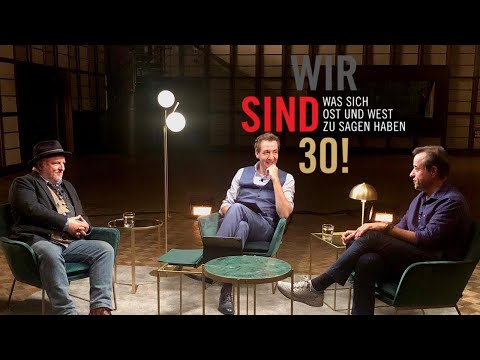
WE ARE 30 | Entertainment: Jan Josef Liefers and Axel Prahl | radioeins
The #allesdichtmachen campaign - a satirical experiment with explosive power
Liefers will take part in the campaign in spring 2021 #allesdichtmachen - a satirical video series in which several actors play the Corona measures comment.
- The form was provocative.
- The message was multi-layered.
- The reaction was violent.
While many of those involved quickly distanced themselves publicly under pressure, Liefers did something else: he explained his motivation, stood by it - and did not row back. He said, in essence, that he was concerned with media criticism, the question of how balanced a crisis is presented and whether contradiction is still acceptable.
He has hit a nerve with this.
Criticism, reproaches and the art of standing firm
Of course the criticism came. Fiercely. Quickly. Unfair in parts. He was accused of being cynical, insensitive, too close to the wrong groups. And yet his biography was evident here: he clearly distanced himself from extreme movements. But he did not apologize for what he wanted to say. He stuck to his basic stance - without theatrical victim posturing.
It is precisely this point that makes him interesting. Because at a time when many celebrities are changing their opinions every minute, someone who sticks to their values even under pressure seems almost old-fashioned - in the best sense of the word.
Why this episode still shapes him today
#allesdichtmachen has shown something that you could always guess about Liefers: He is not one to seek out conflict. But when they come, he doesn't avoid them.
It is the attitude of someone who grew up in a country where criticism was not expected. And who therefore knows very well how important it is to be allowed to express it anyway - especially in difficult times.
Behind the actor is a serious, reflective person. His humor is a tool, not a mask. His experiences in the GDR have given him a keen sense of freedom and responsibility. He stands by his convictions, even when the wind blows against him. He is prepared to clear up misunderstandings - but not to pander opportunistically.
And that is precisely why he comes across today as someone who doesn't just play characters, but follows a clear, recognizable line in his own life.
Dieter Bohlen as an example of personal responsibility
Anyone who follows my articles knows that Jan-Josef Liefers is not alone in this form of consistent lifestyle. I recently published a detailed Portrait of Dieter Bohlen The two men wrote a completely different character, with a completely different energy, different forms of expression and a different temperament. And yet the two have something crucial in common:
Both take responsibility for their lives, without excuses, without an attitude of entitlement, without the expectation that someone else will fix it. Bohlen stands for discipline, entrepreneurial clarity and an almost brittle honesty; Liefers for artistic depth, a reflective attitude and the courage to keep a straight face even in difficult times. Two different paths, two different personalities - but the same core: personal responsibility. And that's exactly why they both work as role models, each in their own way.
Current survey on trust in politics
Impact today: An artist who doesn't bend
When you look at Jan-Josef Liefers today, you see a man who has long outgrown the boundaries of the acting profession. Not because he wanted to become a political activist or because he was looking for a role outside the stage - on the contrary. It is precisely by concentrating on his craft and remaining true to himself that he has become a personality that makes an impact. Not loud. Not lecturing. But consistent.
His path shows how much stability is created when you have a clear line in life. And this line runs through everything he does:
through his roles, his interviews, his public reactions - and through his willingness to take responsibility without falling into an attitude of entitlement.
Liefers as a symbolic figure for inner attitude
Without consciously striving for it, Liefers has become a kind of symbol for many people. Not for rebellion or resistance, but for something much older: backbone.
He reminds us that in a time of permanent outrage and moral overheating, it is valuable when someone does not immediately go down on their knees. When someone explains their opinion instead of recanting it. When someone is prepared to clarify misunderstandings without denying themselves. That doesn't make them a hero - but it does make them someone whose attitude is taken seriously.
Public perception beyond the noise
After the fierce debates of recent years, an interesting phenomenon has emerged: Liefers has not emerged from the controversy damaged, but matured. Many people have long since left the excitement of 2021 behind them. What remains is a sober realization: it is possible to be a man of tradition without being undisputed. You can think in a differentiated way without pleasing everyone. And you can criticize without being destructive.
His reputation as an actor has remained stable. Tatort„ continues to run, viewers like his character and the industry has not excluded him from the circle of the respected - which also says a lot about the quality of his profession.
Influence on culture and society
So what remains? Someone like Liefers shows that art is not just entertainment. It is an expression of freedom, friction and perspective. And an actor is not just someone who recites texts. He is a cultural mirror - sometimes polished, sometimes distorted, sometimes more uncomfortable than expected.
Liefers proves that as an artist you can show attitude without being ideologically bound. That you can be critical, because criticism is the driving force behind any further development. And that you can ask questions, especially when some people try to avoid them.
Why his GDR socialization plays a role
Anyone who understands where Liefers comes from will also understand why the topic of freedom and diversity of opinion is important to him. He is someone who has experienced how narrow a system can become. And someone who knows that freedom cannot be taken for granted, but must be cultivated - in everyday life, in conversations, and also in art and the media.
This past does not make him infallible, but it does make his motivation appear comprehensible. You can tell that he is not speaking out of spite, but from experience.
Looking ahead - an artist with a future, not a past
Jan-Josef Liefers is not at an end point, but in the middle of life. His roles continue to develop, new projects emerge and his view of the world remains curious and alert. He is not someone who rests on his laurels, but someone who is always thinking ahead - without forgetting his roots. This makes him a personality that endures. And an artist who not only accompanies the times to come, but also helps to shape them.
If you take a closer look at Jan-Josef Liefers' life and work, one thing becomes clear: this is a man who did not see his career as a smooth ride, but as a form of responsibility - towards himself and towards society.
It is not perfect. He is not streamlined. But he is real. And that is precisely why he touches people, far beyond his roles. His origins in the GDR have shaped him. His path through theater, film and television has shaped him. His decisions in difficult times have sharpened his character. And his attitude, consistent and without arrogance, makes him a personality that can be taken seriously.
Perhaps that is the most important message of this portrait: that an artist does not become great by pleasing everyone, but by remaining true to himself. Jan-Josef Liefers shows how much strength and dignity there is in a person keeping their own compass - regardless of how loud the world around them gets.
A quiet, old-fashioned principle perhaps. But one that is gaining importance again in our time.



Frequently asked questions about Jan-Josef Liefers
- Why is it even worth writing a portrait of Jan-Josef Liefers?
Because Liefers is more than just the „Tatort Professor“. His biography impressively shows how attitude, background and artistic discipline work together. He is representative of a generation that has learned to remain consistent despite resistance - and that is precisely what is valuable today. - What role does his GDR background play in his later attitude?
It is central. Growing up in a system in which freedom of expression was limited has a lasting impact on our view of freedom. Anyone who has experienced how narrow a state can become develops a keen sense of when social spaces become narrower - and why you should then speak up. - Why wasn't Liefers allowed to do his A-levels as a teenager?
Because he refused to do military service with the NVA. In the GDR, this was not a harmless step, but a clear political rejection. The consequences extended to the education system - an early example of him accepting disadvantages for his convictions. - Did his carpentry apprenticeship at the Staatstheater influence his work today?
Yes, very much. It connects him to the stage as a craftsman, conveys respect for the overall process of a production and grounds him as an artist. This mixture is rare and noticeable in his acting. - Why is Liefers considered particularly versatile?
Because he is not only an actor, but also a musician, producer and occasional director. He sees art as a complete work, not as an isolated activity - a traditional approach that creates depth. - What makes the character „Karl-Friedrich Boerne“ so successful in Tatort?
Boerne is overdrawn, but credible. Arrogant, but charming. Eccentric, but human. Liefers gives the character depth that comes from experience and precise observation - not from superficial comedy. - Why was the #allesdichtmachen campaign so controversial?
Because it took place in the middle of a heated social phase. Satire encountered real fears, insecurities and political fronts. The form was provocative, the message complex - and both triggered extreme reactions. - Did Liefers later distance himself from #allesdichtmachen?
No. He has explained misunderstandings and clearly distanced himself from extremist groups, but he has not retracted his basic criticism. It is precisely this consistent behavior that is often underestimated. - Why didn't he row back, unlike others involved?
Because opportunism is alien to him. Anyone who knows his biography will recognize a pattern: he makes conscious decisions - and then sticks to them. Even when it becomes uncomfortable. That has become rare. - Does attitude automatically mean that you are right about everything?
No. Attitude is not infallibility, but straightforwardness. It means taking responsibility for your own statements and decisions. And that's what Liefers does - regardless of the opinions of others. - How did the public ultimately react to the controversy?
After the first wave of outrage, calm has returned. Today, there is a more nuanced view that criticism must be possible in a democratic society - especially if it comes from serious motives. - Did his career suffer as a result?
No. Tatort continues to run successfully, his projects continue and his reputation as an actor is stable. This shows that substance can survive outrage. - In what way is his attitude similar to that of Dieter Bohlen?
Both are completely different - artistically and personally. But both embody personal responsibility and consistency. They represent different traditions, but the same inner aspiration: a life without excuses. - Why does Liefers seem more mature today than he did before the controversy?
Because he has faced up to the debate without hiding. Anyone who goes through a difficult phase and remains true to themselves gains depth - as a personality and as an artist. - What can readers take away from his example?
That you don't have to please everyone. That you can live with headwinds. And that a clear inner compass is a long-term advantage - privately, professionally and socially. - Where will Jan-Josef Liefers be heading in the coming years?
He remains a creative force in the German cultural landscape. Whether as an actor, musician or producer - his projects show that he continues to think ahead. And his voice will continue to be heard, precisely because it does not follow the quick zeitgeist, but rather a deep conviction that has grown over time.