From ChatGPT data export to your own knowledge AI: step-by-step with Ollama and Qdrant

The path to your own AI memory

In the first part of this article series, we saw that the ChatGPT data export is much more than just a technical function. Your exported data contains a collection of thoughts, ideas, analyses and conversations that have accumulated over a long period of time. But as long as this data is only stored as an archive on your hard disk, it remains just that: an archive. The crucial step is to make this information usable again. This is exactly where the development of a personal knowledge AI begins.

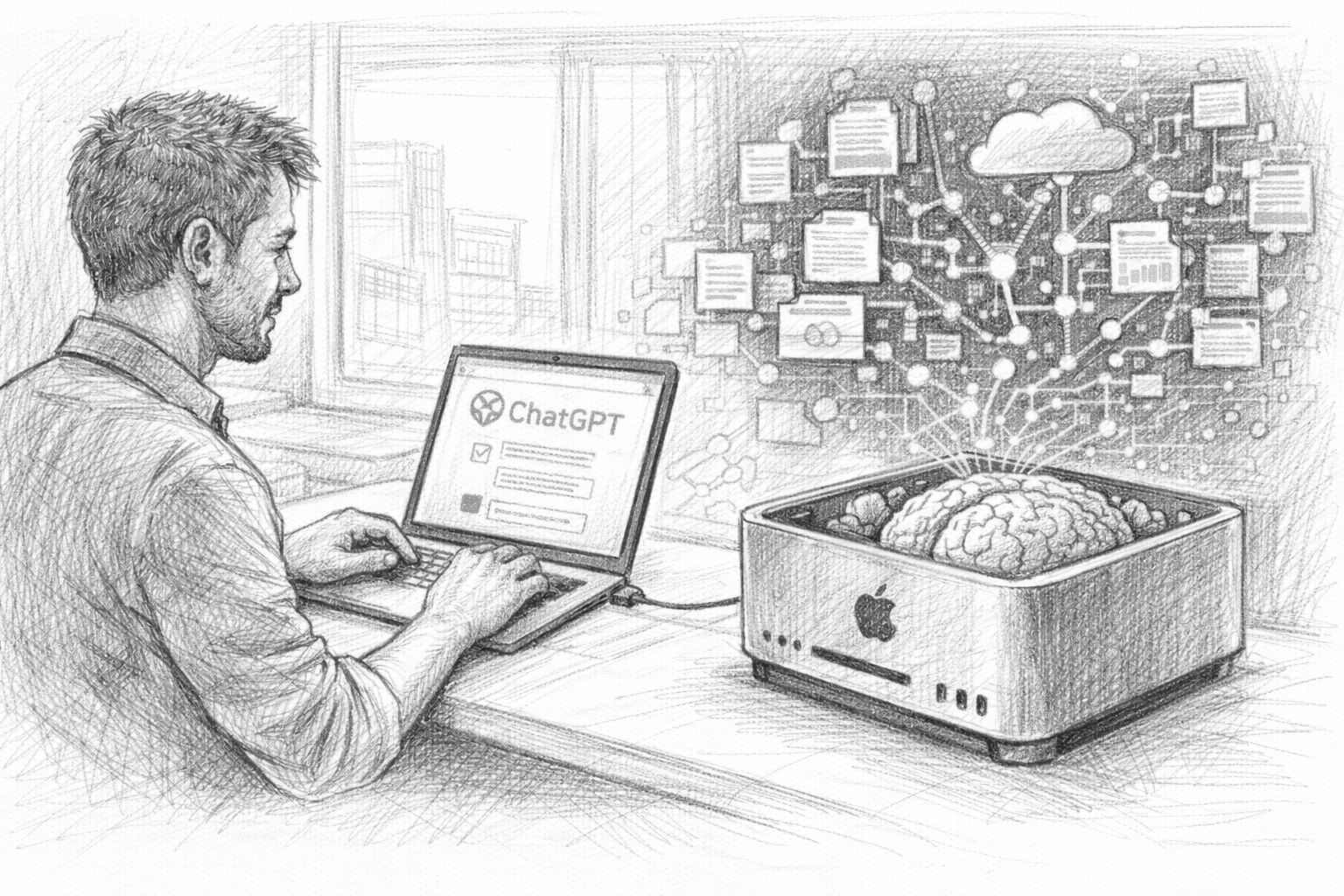
The idea is actually surprisingly simple: an AI should not only work with general knowledge, but also be able to access your own data. It should search through previous conversations, find suitable content and incorporate this into new answers. This turns an ordinary AI into a kind of digital memory. This is the second part of the article series, which now looks at the practical aspects.

Read more

ChatGPT data export explained: How your AI chats become a personal knowledge system

ChatGPT data export

If you regularly work with an AI, then you probably know this: one thought leads to the next. You ask a question, get an answer, reformulate, develop an idea further. A short question suddenly turns into a longer dialog. Sometimes it even leads to entire projects.

But most of these conversations disappear again. They lie somewhere in the chat list, slide down and are forgotten over time. This is precisely one of the great features of modern AI systems: While previous conversations with colleagues, friends or advisors only existed in our memories, AI dialogs are completely preserved.

This means something crucial: With every conversation, a digital archive of your thinking is created. This is the first part of a small series of articles that will allow you to export your chat history from ChatGPT and use it effectively as a personal treasure trove of knowledge with your local AI system.

Read more

Digital ownership explained - How sustainable online assets are created

What is digital property

For centuries, property was something very tangible. You could touch it, walk on it or hold it in your hand. A house, a piece of land, a workshop, books on a shelf or tools in a drawer - these were all things that could be clearly assigned. They belonged to someone, were visibly present and generally remained so even when political, economic or social circumstances changed.

This article explains what digital property is, what forms it takes and how digital property can be created, especially in today's AI age.

Read more

CLOUD Act, data sovereignty and Switzerland: a turning point for European IT strategies?

What the Swiss cloud resolution means for Europe

Something happened in Switzerland in mid-November that hardly anyone expected in this form: The country's data protection commissioners passed a clear, almost historic resolution. The message behind it is simple - and at the same time highly controversial: public authorities should no longer outsource their most sensitive data to international cloud services such as Microsoft 365 without hesitation. Why is that?

Read more

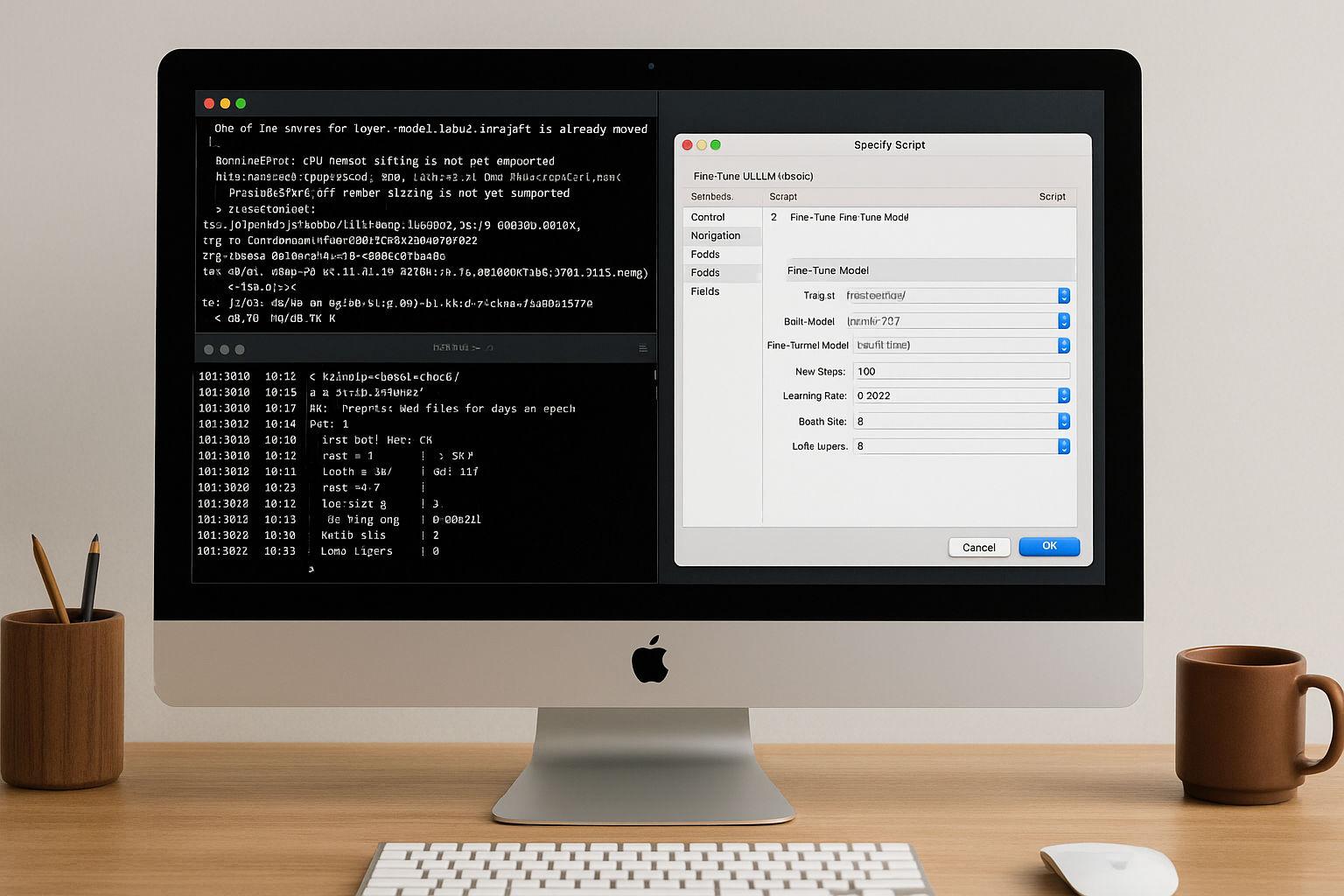
LoRA training: How FileMaker 2025 simplifies the fine-tuning of large language models

LoRA Fine tuning - FileMaker 2025

The world of artificial intelligence is on the move. New models, new methods and, above all, new possibilities are emerging on an almost weekly basis - and yet one thing remains constant: not every technical innovation automatically leads to a better everyday life. Many things remain experimental, complex or simply too costly for productive use. This is particularly evident in the so-called fine-tuning of large language models - a method of specializing generative AI to its own content, terms and tonalities.

I have accompanied this process intensively over the last few months - first in the classic form, with Python, terminal, error messages and nerve-wracking setup loops. And then: with FileMaker 2025. A step that surprised me - because it wasn't loud, but clear. And because it showed that there is another way.

Read more

Electronic invoices for SMEs: XRechnung, ZUGFeRD and ERP at a glance

Overview of the obligation to issue electronic invoices

Germany did not invent the e-invoice overnight - it is the result of years of standardization work (EN 16931), federal and state regulations (B2G) and now, via the Growth Opportunities Act, the gradual expansion into everyday B2B life. Since January 1, 2025, a new legal situation has applied: an "electronic invoice" is only an e-invoice if it is structured and machine-readable - pure PDF attachments by email are no longer an e-invoice according to the definition. This sounds technical, but has operational consequences from invoice receipt to accounting and archiving.

Read more

How AI specialists can be trained today - opportunities for companies and trainees

Train an AI specialist

Just a few years ago, artificial intelligence was a topic for research institutes and large corporations. People talked about neural networks, deep learning and speech recognition - but it hardly played a role in everyday life. Today, AI is no longer a topic for the future, but a reality: it writes texts, creates images, analyzes data and controls production processes. Whether in administration, trade or industry - it can now be found everywhere.

Read more

FileMaker Conference 2025: AI, community and an unexpected incident

FileMaker Conference 2025: Fire alarm with fire department

The FileMaker Conference 2025 in Hamburg is over - and it was a special milestone in many respects. Not only because this year's conference focused on many topics related to artificial intelligence, performance and modern workflows - but also because the personal exchange and the "family atmosphere" of the FileMaker community once again came into its own. For me personally, it was an intensive, inspiring and all-round enriching time - right from the very first evening.

Read more