Ulrike Guérot: A European between idea, university and public discourse

Ulrike Guérot and Europe

There are people whose thoughts you like to follow not because you agree with them on everything, but because they make an effort to penetrate things. For me, Ulrike Guérot is one of these voices. I have been watching her lectures for several years now - not regularly, not ritualized, but when I come across a topic that I feel is worth listening to more closely. What strikes me is that her arguments are calm, structured and largely non-ideological.

This does not make her lectures spectacular in the media sense, but they are sustainable. You can listen to her for a long time without getting the feeling that she is trying to sell a ready-made world view. Especially at a time when political debates are often morally charged or emotionally truncated, this way of speaking seems almost old-fashioned. In the best sense of the word.


Read more

Reach is not ownership - Why visibility is no longer enough today

Reach vs. ownership

A good ten years ago, I happened to watch a lecture on the transition from the information society to the knowledge society. At the time, much of it still sounded theoretical, almost academic. It was about concepts such as data sovereignty, ownership of information and the question of who will actually determine what is accessible in the future - and what is not. Today, with a little distance, this lecture seems surprisingly precise. After all, much of what was described as a development back then has now become reality. More and more data has migrated to the cloud. More and more information is no longer stored on in-house systems, but in external infrastructures. And increasingly, it is no longer the user but a provider, a platform or a set of rules that decides what is possible.

To understand this development, it is worth taking a step back. The information society in which many of us grew up was not a normal state. It was a historical exception.

Read more

Game theory explains 25 years of geopolitics: How Europe lost its strategic role

Game theory explains 25 years of geopolitics

For many, game theory sounds like dry mathematics, like formulas, like something that only plays a role in lectures or business games. In reality, however, it is an ancient thinking tool that existed long before its academic formalization. Diplomats used it, commanders used it, captains of industry used it - long before it was even called that. In the end, it is nothing more than a sober question:

„When several players have to make decisions in an uncertain situation - what options do they have and what are the consequences?“

This kind of thinking has become surprisingly rare today. Instead of analyzing alternatives, much is narrowed down to moral narratives or spontaneous interpretations. Yet in geopolitical issues in particular, a clear analysis of the possibilities would be the foundation of any mature policy. It is precisely this old craft that I would like to take up again in this article.

Read more

Immortality through technology: how far research and AI have really come

Digital immortality

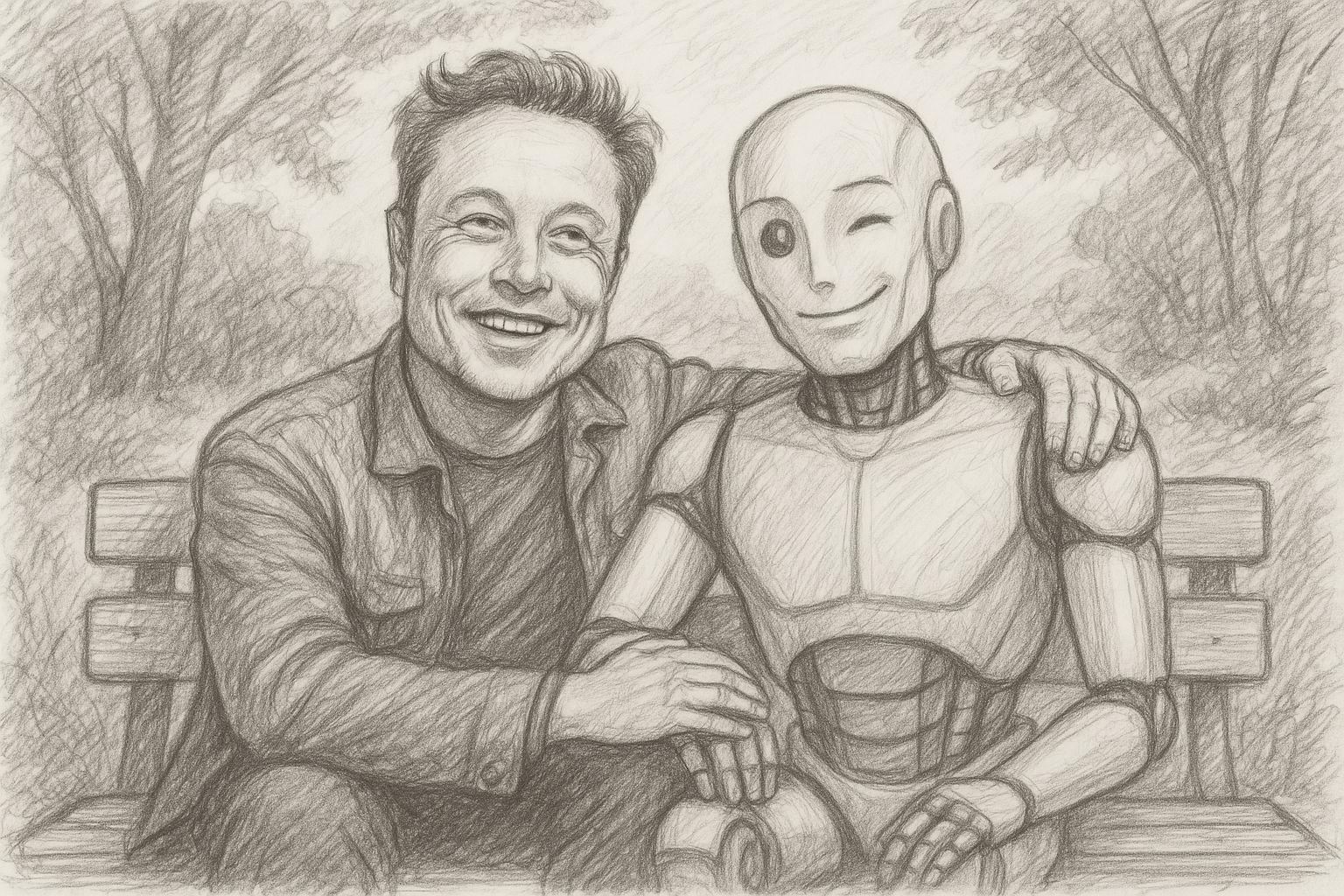
Ever since humans have existed, there has been a desire to prolong life - or preferably extend it indefinitely. In the past, it was myths, religions, alchemists or mysterious rituals that gave people hope. Today, it is no longer magicians sitting over ancient parchments, but some of the richest people in the world sitting over state-of-the-art biology and AI technology. At first glance, it sounds like science fiction: is it possible to stop ageing? Can you „preserve“ yourself digitally? Can you transfer your thinking to a machine?

But the topic has long since left the ivory tower. Big tech billionaires are now investing billions in projects that are seriously investigating precisely these questions. Not because they want to become immortal gods - but because they can afford to research the limits of what is possible. This article explains quite simply what is behind this idea, what technical developments already exist today, where the limits lie - and why this topic will become increasingly important over the next 20 years.

Read more

How AI specialists can be trained today - opportunities for companies and trainees

Train an AI specialist

Just a few years ago, artificial intelligence was a topic for research institutes and large corporations. People talked about neural networks, deep learning and speech recognition - but it hardly played a role in everyday life. Today, AI is no longer a topic for the future, but a reality: it writes texts, creates images, analyzes data and controls production processes. Whether in administration, trade or industry - it can now be found everywhere.

Read more

Why ERP software alone is not enough - and how to really understand processes

ERP software: Understanding operating processes before digitalization

In many companies, it always follows the same pattern: at some point, management realizes that "something is no longer running smoothly". Perhaps processes have become too slow, errors are accumulating, or the company is increasingly losing track of figures, customers or internal processes. The call for a new software solution becomes loud - preferably a modern, powerful ERP software that "can do everything". But this is often where a fatal fallacy begins.

Read more

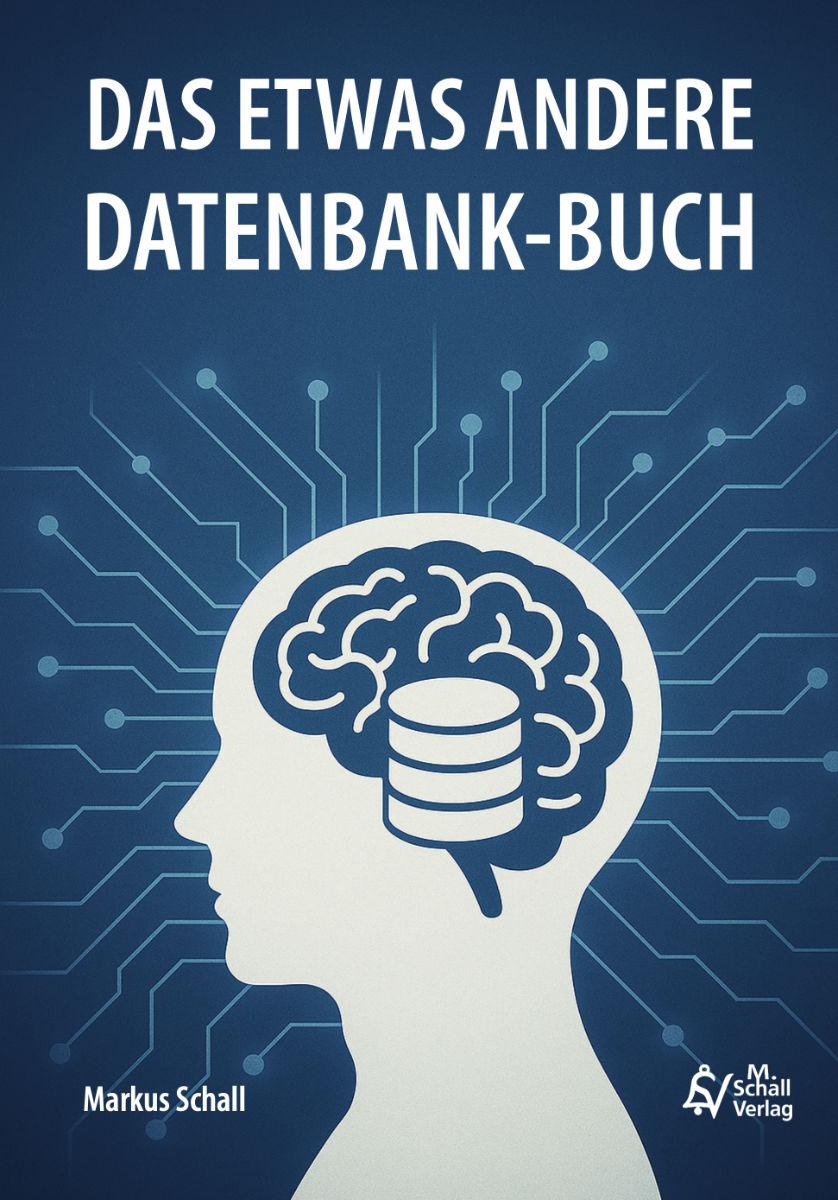
"The Unconventional Database Book" introduces the process way of thinking.

The Unconventional Database Book

What do cell phone contacts, to-do lists, calendars and even your own closet have in common? That's right: they can be displayed as tables - and that's no coincidence. Data has long since become a basic building block of our everyday lives. If you understand it, you understand the world a little better. This is exactly where "The Unconventional Database book" comes in.

Because anyone who can understand processes and backgrounds in everyday life is automatically able to design software processes quickly and intuitively and implement them in practice.

Read more