Ever since humans have existed, there has been a desire to prolong life - or preferably extend it indefinitely. In the past, it was myths, religions, alchemists or mysterious rituals that gave people hope. Today, it is no longer magicians sitting over ancient parchments, but some of the richest people in the world sitting over state-of-the-art biology and AI technology. At first glance, it sounds like science fiction: is it possible to stop ageing? Can you „preserve“ yourself digitally? Can you transfer your thinking to a machine?
But the topic has long since left the ivory tower. Big tech billionaires are now investing billions in projects that are seriously investigating precisely these questions. Not because they want to become immortal gods - but because they can afford to research the limits of what is possible. This article explains quite simply what is behind this idea, what technical developments already exist today, where the limits lie - and why this topic will become increasingly important over the next 20 years.

Current news on life extension and anti-aging
19.09.2026: How far can human life be extended in the future? Prof. Dr. Bernd Kleine-Gunk discusses this on Swiss health television QS24. While he estimates the current biological upper limit for humans to be around 120 years, new technologies could open up significantly broader perspectives in the long term. Mentioned approaches include stem cell therapies, tissue engineering, epigenetic reprogramming, and methods for targeted gene modification. At the same time, Kleine-Gunk emphasizes that truly „radical“ life extension remains science fiction for now. Currently available approaches primarily concern lifestyle, supplementation, and, to some extent, hormone replacement. However, major investments from the technology and biotech sectors could accelerate development.
Radical Life Extension: Groundbreaking Developments in Anti-Aging Research | QS24
The conversation ultimately extends to transhumanist visions: Could human consciousness one day be technically replicated or digitally stored? At the same time, the program addresses the limits of such concepts and the question of how complexly the body, brain, microbiome, and consciousness actually interact.
The age-old dream - why the tech elite are reviving it
The desire for immortality has accompanied almost every culture. Whether in ancient sagas, religions or legends - the idea that people could cheat death has cropped up time and again. Some looked for magical sources, others for special herbs or divine grace. Each era had its own variation, but the aim was always the same: to prolong life.
Behind this was not so much megalomania as a deeply human feeling: fear of loss, fear of the end, and at the same time the longing to have more time.
Why tech billionaires of all people have reignited this issue
What used to be a philosopher's dream is now a field of research for the rich and technologically savvy. Interestingly, it is mainly people from the Silicon Valley who are intensively involved with immortality - in other words, people who have spent their lives learning to solve problems through technology.
The tech elite think differently to traditional scientists. Their attitude is something like this:
„If you can break something down into its individual parts, you can repair it.“
For them, ageing is not a fate, but a technical problem - comparable to a complex software error or a hardware defect. The big difference is that today, for the first time, the necessary tools are available. In the past, there was nothing but myths. Today there are:
- Genetics
- Stem cell research
- Artificial organs
- AI-supported data analysis
- Robotics
- Simulations at supercomputer level
All of this together is a completely new starting point. Millionaires in the 19th century could build castles. Millionaires in the 21st century can afford research teams, laboratories and biotech start-ups. That makes a huge difference.
The mentality of the tech scene plays a major role
Tech entrepreneurs grew up in a world where:
- Problems are solvable
- Innovations happen quickly
- Blurring boundaries
- you try things out instead of talking about them
And it is precisely this generation that is now asking:
„Why do we actually accept that the body ages - just because it always has?“
For them, this is not a philosophical question, but a technical project. The Silicon Valley idea: „Death is optional“ (at least in theory)
Many of these thought leaders have an almost sober view of the subject:
- Ageing is a Process.
- Processes can be Understand.
- What you understand, you can influence.
- What you can influence, you can perhaps also stop.
Whether this really works is another matter. But this idea alone is enough to set off an enormous wave of research.
Why this approach polarizes
For some, this all sounds like hubris - excessive megalomania. For others, it is real progress, comparable to the discovery of penicillin or the invention of the pacemaker. One thing is certain:
Never before has there been a combination of money, technology and scientific knowledge that makes a serious examination of the topic of immortality possible at all. The tech elite are not immortal - but they have the resources to try.
Biological immortality - what is actually being researched today
If you take a sober look at the subject of immortality, you first have to realize that it is not a fate that simply „happens“: Ageing is not a fate that simply "happens", but an interplay of many biological processes. Cells divide, defects accumulate, repair mechanisms diminish. The body slowly becomes less resilient. And this is exactly where today's researchers come in - not with magic, but with biology. They simply ask:
„Can these processes be slowed down, repaired or reset?“
And surprisingly, there are now areas in which the first small successes are visible.
Gene therapies - repair directly in the DNA
One of the most promising approaches comes from genetics. Modern tools such as CRISPR make it possible to specifically intervene in DNA. Much is still at the experimental stage, but the direction is clear:
- Some researchers are trying to slow down ageing processes directly.
- Others want to strengthen repair genes.
- Others are investigating why some animals age much more slowly or can even regrow lost organs.
Research into telomeres - the „protective caps“ of chromosomes - is particularly well known. The shorter they become, the older the cell appears. Initial studies on animals have shown that this process can be slowed down to some extent. It is not a miracle pill - but it is a very active field of research.
Artificial organs and replacement tissue - the way to repair the body
A major leap forward in recent years has been the ability to artificially produce human tissue:
- Heart valves
- Skin
- Cartilage
- Mini livers
- Parts of the pancreas
Researchers are getting better and better at recreating tissue, sometimes even using the body's own cells, which reduces the risk of rejection. And so-called bioprinting - the 3D printing of organ structures - is also making progress. We are still a long way from being able to print a complete, functioning heart at the touch of a button. But the foundations have been laid. The idea behind it is simple:
If an organ fails, you replace it - instead of giving up the whole person. In another article, I summarized how far research has progressed in the Production of artificial teeth is.
Stem cells - nature's fountain of youth
Stem cells are fascinating because they can transform into almost any cell type. Researchers use them to:
- regenerate damaged tissue
- Accelerate healing processes
- Repairing organs
- Slow down the signs of ageing
Impressive results have already been achieved in animal experiments, for example in the rejuvenation of muscles or the improvement of nerve functions. People are more cautious, but initial clinical studies are underway.
Nanotechnology - tiny helpers in the body
Research has also been going on here for years. The idea is to use tiny particles or mechanical microstructures in the body:
- Repairing cells
- Remove harmful deposits
- Dispensing medication in a targeted manner
- Support tissue „from the inside“
This is not yet a scenario from Star Trek - but the basics already exist. Mini robotics in the blood itself is more of a dream for the future, but the chemical and biological variants are not unrealistic.
What you should not forget: a lot of progress is made in small steps
None of these approaches makes people immortal. But together they could:
- Delay diseases
- Slowing down ageing processes
- keep the body functioning for longer
- increase the quality of life
You shouldn't think of it as a sudden leap. It is more of a decades-long process in which the boundary between „young“ and „old“ is slowly shifted.
Freezing (cryonics) - lots of hope, little reality
There are actually people who have their bodies or brains frozen after death. The idea is:
„Maybe the future can revive or repair us.“
The problem: from today's scientific point of view, this is extremely unlikely. Cells are severely damaged when they freeze. Thawing destroys other structures. We have no method of preserving complex brain structures intact. Nobody knows how to create „consciousness“ in a revived body.
Many experts therefore consider cryonics to be a mixture of hope and marketing - not a serious option. They speculate that future technology could solve problems that we do not even begin to understand today. In short: exciting to watch, but not a realistic form of immortality from today's perspective.
Why biological immortality remains the most difficult option
Nature has developed ageing over billions of years. It is not a simple mechanism, but a conglomeration of:
- Genetics
- Cell processes
- Environmental influences
- Metabolism
- Inflammations
- Lifestyle
That's why this approach is also the slowest. But that is precisely why it is so attractive for researchers: with every experiment, you learn a little more about what ageing actually is - and where the adjusting screws are.
Do we want to live forever? | Agree to Disagree! | ARTE
The digital copy - how much „I“ can be technically preserved?
When we talk about „immortality“, we first think of biological methods: repairing organs, rejuvenating cells, defeating diseases. However, a completely different approach is developing in parallel - one that does not want to prolong the body, but the mental traces of a person. Voice, language, memories, decisions, thinking style: we leave all of this behind in digital form anyway. The question now is:
How much of it can be stored in such a way that it later functions like a digital „me“?
The result is not a copy in the philosophical sense. But it is a form of continuation - and that is precisely what makes this approach so fascinating.
The idea of functional immortality
This term describes something very down-to-earth:
- It is not consciousness that is transferred.
- Not the soul.
- Not the subjective experience.
But rather the way a person thinks, decides, speaks and argues. In other words:
It is not the sense of self that is preserved, but the behavior. And this is actually possible with today's technology - at least to some extent.
What appeals to tech billionaires
Many of the big names - Larry Page, Sergey Brin, Jeff Bezos, Peter Thiel, Ray Kurzweil - have long been thinking not only about biological extension, but also about digital continuation. Kurzweil is probably the best-known representative of this school of thought. He has been collecting for decades:
- Videos
- Diary entries
- Conversations
- Professional decisions
- personal notes
His goal: to one day have an AI that behaves like him - possibly even continuing to „live“ in front of his own children or grandchildren. Other tech entrepreneurs are investing in start-ups that are developing personal AI avatars - digital doubles that can organize appointments, prepare decisions and even act in certain roles. These systems are still primitive today. But they are developing rapidly.
What is already possible today - surprisingly much
The topic is by no means futuristic. There are already technologies that replicate individual facets of a „digital self“ amazingly well:
- Language and style
- modern language models can imitate the personal writing style
- Voices can be cloned - authentic down to the breathing sounds
- Sentence rhythm, jokes, thought logic are reproducible
- Knowledge & experience
- personal knowledge databases
- Chat histories over the years
- Decisions made privately and within companies
- Project data, e-mails, notes
This creates a very clear profile of how a person „ticks“:
- Behavior patterns
- Priorities
- Values
- Typical reactions
- Patterns in conflict situations
- Decision cascades (if A, then B)
- Digital avatars
- Realistic 3D figures
- Video avatars that speak synchronously
- AI-controlled conversation partners who use personal data
When you put these elements together, something new is created: not a copy - but a functional representation of a person.
What is missing - and will probably be missing for a long time to come
As impressive as these technologies are, they have clear limits:
- No consciousness
- An AI can simulate decisions, but it cannot feel an „I“.
- She has no self-awareness, no inner perspective.
- No memories of your own
- It can store, but not „experience“.
- Memories are data - not feelings.
- No subjective inner life
A digital model can:
- React logically
- Answer appropriately
- even behave humorously
But it feels nothing. It experiences nothing. It has no need to exist. Technically, such an avatar may function perfectly. But whether it is „you“ - that is a question that no one can answer yet.
Why this approach is nevertheless enormously valuable
Even if a digital copy has no real consciousness, it offers possibilities that were previously unthinkable:
- Companies can continue to operate.
- A person's knowledge and experience are not lost.
- Children and grandchildren can learn how „Grandpa thinks“.
- Decisions can be made in the interests of the original person.
- Personal histories remain alive.
And for many people, this is precisely the form of „immortality“ that is realistically achievable: not as eternal life, but as a digital continuation of their own way of thinking. It is a kind of spiritual legacy - only much more powerful, detailed and vivid than any diary.
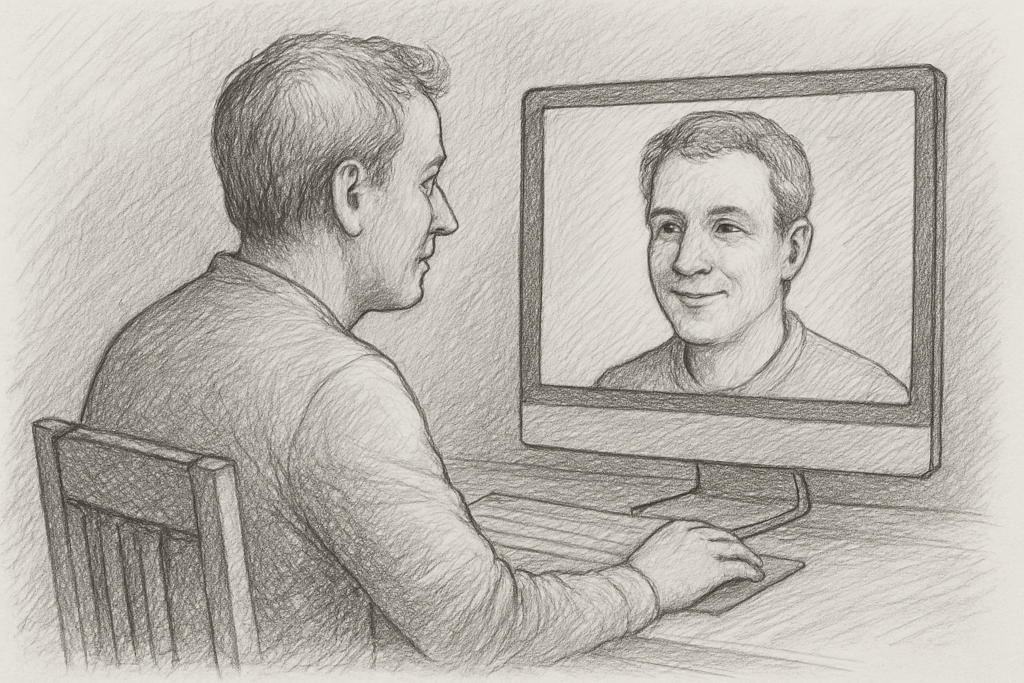
Transferring awareness - where the boundaries are still insurmountable
When we talk about digital immortality, sooner or later a term from science fiction comes into play:
Mind Uploading - in other words, the idea of transferring a person's consciousness to a computer so that it lives on there. Hollywood loves this theme. Series like Black Mirror or characters like the Borg in Star Trek like to work with this motif.
In reality, however, we are still at the very beginning - so far at the beginning that, strictly speaking, we don't even know whether the goal is achievable at all. The difference between science and fiction is particularly great here.
The dream of the digital soul
The basic idea sounds seductively simple:
- The brain is scanned in high resolution.
- All neuronal connections are transferred to a computer system.
- You start a simulation.
- The simulated person „wakes up“ digitally.
But this is just an idea - in reality, we don't even know what we would have to scan in the brain to create an „I“. We can measure electrical signals today - but this does not capture the essence of consciousness.
Why mind uploading does not work as things stand today
In order to transfer consciousness, two huge hurdles would have to be overcome:
1. we do not understand consciousness deeply enough:
Science can describe that we have a consciousness, but we do not:
- how it is created
- where exactly in the brain it is located
- whether it needs a certain structure
- how to measure subjective experience
- how to define „I-consciousness
As long as we don't know that, any transmission is pure theory.
2. there is no technical basis
Even if you could scan a brain completely (which is not possible):
- we could not interpret the data
- we could not simulate the connections correctly
- we could not realistically simulate electrical and chemical processes
- we could not define a „starting point“ from which people „live on“ digitally“
And even if it were possible, the question remains: „Is the result really the person - or just a copy?“
Simulation is not consciousness
Many people confuse these two things:
- A system can react like a human being.
- A system can make decisions like a human being.
- A system can speak like a person.
But that is just behavior. Consciousness is something else. There is an inner experience, an „I am me“ feeling that no machine has ever had before - and that cannot even be technically defined. You can recreate a human being. You can simulate them. You can preserve their behavior. But you can't transfer the perspective inwards.
The philosophical questions that cannot simply be wiped away
Even if one day a complete brain could be digitally reproduced:
So who is the person? The original? The copy? Both? Neither? Does the copy have the same rights? A digital copy of you could speak, decide and argue - but would it be you? Or would it be a very good copy?
- Can a copy die?
- When a system is shut down - is that a „death“?
- Who is allowed to control such a system?
- If a person's consciousness exists digitally - can someone else change it?
- Or delete it?
These questions are completely unanswered today. The technology is so far behind that we haven't even had to come up with a clear answer yet.
Why true transference of consciousness is still a long way off
The chapter can be summarized as follows:
- There is no method of copying consciousness.
- There is no method of creating consciousness.
- There is no method of measuring consciousness.
- There is no method of simulating subjective experience.
- There is no method to completely „digitize“ a brain.
And even if these methods were to emerge at some point - they would probably take longer than any current life extension. Many experts consider true transference of consciousness to be one of the hardest problems humanity can tackle - if not the hardest of all.
Current survey on local AI systems
Robot body & the digital continuation of a person
When we think of humanoid robots today, we still have the wobbly movements of the first prototypes in mind. But those days are over. Progress has been enormous:
- Robots can walk, run and jump.
- They can balance, open doors and transport objects.
- They can imitate human gestures and facial expressions.
- The first models are already being tested in factories.
Of course, these systems are still a long way from being „digital humans“, but the pace of development is high - and it is reminiscent of the early smartphones: impressive at first, but clumsy; ten years later, it is hard to imagine life without them. So the next 20 years are realistic:
- Human-sized robots
- Robots with flexible hands
- Robots with natural facial expressions
- Robot with real voice output
- Robots that provide support in the home or in companies
This is no longer science fiction, but a clearly foreseeable trend.
Personalized AI - an ego duplicate that really works
The actual leap does not come from the robot itself, but from the AI that drives it. A personal AI model - in other words, a system that:
- knows the behavior of a person
- can understand his decisions
- Analyzed chat histories, emails and projects over the years
- imitates the person's voice perfectly
- uses the same humor, the same formulations, the same priorities
- will be far more realistic than any form of digital consciousness. In the best sense, this model would be a functional continuation of a human being. It is not the soul. It is not the real me. But it is the thinking self. And that's what makes it so valuable. And this AI can in turn be put into a humanoid body.
The robot as a „spiritual successor“
Putting the two together - the robot and the personal AI model - creates a completely new concept: a kind of digital successor that is not you, but acts on your behalf. This digital successor could be:
- Welcome employees
- Prepare decisions in your company
- Prioritize new projects
- Look after customers
- Give presentations
- speak with your voice
- Use your sense of humor
- Telling stories from „your time“
- and even work independently when you are no longer there
Not because it has consciousness - but because it replicates your thought processes. This is a form of „living archive“ that goes far beyond anything humans have had in the past.
The future in the private sector
This development is also exciting in a family context - and somewhat more sensitive. Such a robot could:
- Telling memories
- Explain photo archives
- Passing on stories
- Helping family members
- Show children or grandchildren how „grandpa thought“
- communicate your own philosophy of life
Of course, this does not replace a real person. But it enables a form of continued life that is not only technically logical, but also creates a certain emotional closeness. It wouldn't be a replacement - but a bridge.
The realistic timeline
A sober look at the coming decades:
- By 2030: first humanoid robots in everyday life, perfect voice clones, personal AI assistants, own knowledge graphs
- By 2040Robot bodies with realistic face masks, AI that can imitate long-term thinking, personal avatars for business and private life
- By 2050Functional digital continuation, robots as long-term companions, AI models that process half a lifetime of data, transition from „tool“ to „intellectual heritage“
None of this is exaggerated. It is simply the logical development of today's technology.
What this future means
This form of immortality is not metaphysical. It is pragmatic. It does not prolong the body. It does not transfer consciousness. It does not create a second „you“. But it does create something very human:
A continuation of your thinking, a continuation of your work, a continuation of your values. On a technical basis. And that is more realistic today than ever before.
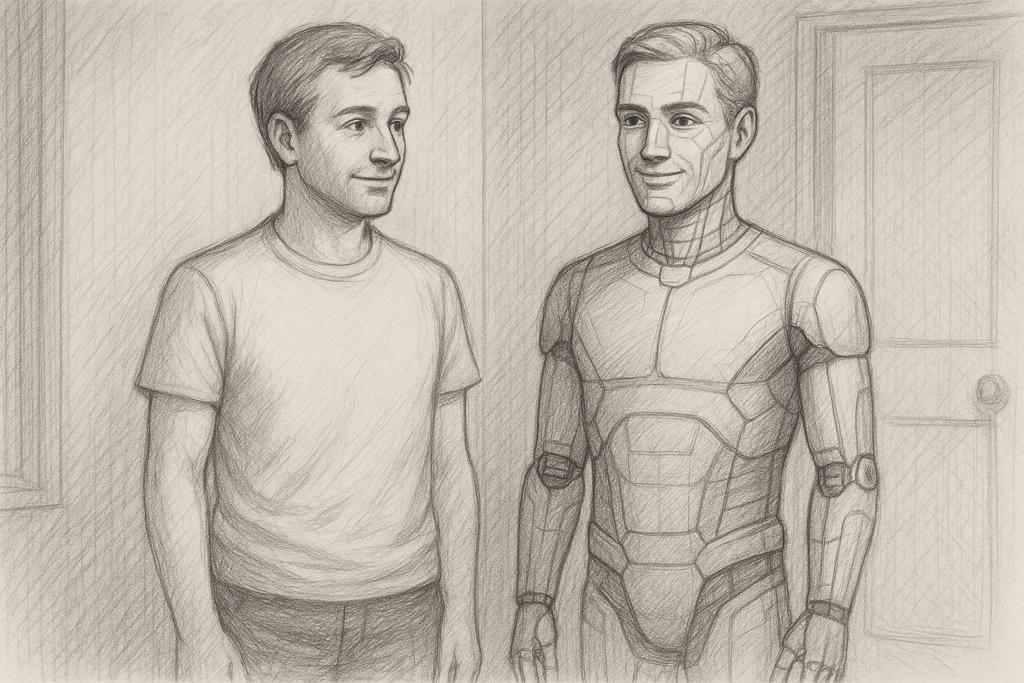
What is likely to happen, what is possible, and what remains a fairy tale
Even if the topic of immortality often sounds like science fiction, three scenarios are emerging that are based on sober technology - not fantasy.
Scenario 1: until 2035 - the era of personal AI
In the next ten years, everyday life will be increasingly characterized by individual AI models. These include:
- personal knowledge databases,
- digital memories,
- perfectly clonable voices,
- first humanoid robots in everyday life,
- AI assistants that mimic your own thinking style.
It's not about replacing people, but about better organizing and technically expanding their thinking.
Scenario 2: until 2050 - the digital continuation
By the middle of the century, it is likely that many people will have a kind of „digital successor“ - an AI model that can act on the basis of collected data on behalf of the original human. Such systems could:
- Analyze decisions,
- continue the personal style,
- document your own projects,
- work in companies,
- and pass on part of the logic of life.
It would not be true immortality, but a functional continuation of a person.
Scenario 3: 2100 and later - the open terrain
Whether true transference of consciousness will ever be possible is completely unclear. Perhaps it will happen at some point, perhaps never. The level of scientific knowledge is currently far too low for that. It is important not to lose ground under our feet. With all the current research, five things remain pure imagination:
- a genuine, transferable consciousness,
- subjective experience in a machine,
- „I-feeling“ in the digital space,
- Reanimation of frozen brains,
- complete digital soul copies.
These concepts are far removed from anything that actually exists.
Why the coming decades will nevertheless be revolutionary
Even without metaphysical leaps, humanity is facing enormous changes:
- Robots are becoming more human.
- Personal AI becomes a matter of course.
- Digital thought profiles are becoming part of everyday life.
- Work processes are changing fundamentally.
- People are leaving much more detailed mental traces than ever before.
A new form of legacy is emerging: not biological, but digital - structured, comprehensible, functional.
What probably really remains
True immortality will not exist as things stand at present. However, a person's individual way of thinking can always be better preserved and continued:
- as a digital archive,
- as a personal knowledge model,
- as an AI-supported continuation,
- or even as a humanoid robot with a personal voice and facial expressions.
The result is not a copy, not a soul, not a rebirth - but an astonishingly realistic form of spiritual continuation.
A look at the practical consequences
Even if the world is still years away from perfect „digital continuation“, everyone can already lay the foundations today that could be valuable in the future - regardless of whether they believe in immortality or not. These include
- digital notes,
- Photos, videos, memories,
- Diaries and projects,
- collected thoughts and decisions,
- personal documentation,
- structured data about your own knowledge,
- regular exports from chat histories, cloud services and applications,
- and increasingly also local AI systems that store knowledge for the long term.
The future of immortality is therefore less a biological issue than a data and structure issue. Those who record their thoughts, decisions and experiences in a structured way create the basis for the forms of digital continuation that are likely in the coming decades.
This is not philosophical immortality - but a very technical, very down-to-earth and very tangible version of it.
Interesting sources on the topic
- The billionaire-led quest for immortality – The Week (2023)Overview of which billionaires (Bezos, Page, Brin, Thiel, Ellison, Bryan Johnson) are investing how much money in life extension.
- Silicon Valley's Quest to Live Forever – The New Yorker (2017)Long background article on Ellison, Kurzweil & Co., including personal motives and large sums of money flowing into aging research.
- Radical Life-Extension Is Not around the Corner – Scientific American (2016)Very sober classification: what Calico (Google) can really do, why radical life extension is probably not „just around the corner“.
- Unlocking longevity: the role of telomeres and its targeting interventions – Frontiers in Aging (2024)Current technical overview of telomeres, telomere shortening and therapeutic approaches (telomerase activators, tankyrase inhibitors, etc.). Ideal for your chapter on telomeres.
- Applications of CRISPR-Cas9 in mitigating cellular senescence and aging – Cancer Immunology, Immunotherapy (2025)Paper on CRISPR/Cas9 to influence aging mechanisms and age-associated diseases.
- Anti-ageing jabs - they can rejuvenate mice, but will they work on humans? – The Guardian (2025)Popular scientific classification of senolytics (dasatinib, quercetin etc.) and „ageing vaccines“.
- Mind uploading – Wikipedia (overview article)Clean definition of „whole brain emulation“, including the assumption that a fully simulated mind could theoretically be conscious.
- The flawed logic of “Mind Uploading” – Louis Rosenberg (Medium): An easy-to-read critique by a robotics and VR researcher on why he believes mind uploading is logically and technically highly questionable.
- The Digital Afterlife: AI Cloud Consciousness as the New Immortality – ResearchGate Paper (2025)Current paper on „AI cloud consciousness“, which describes various models of digital immortality (including ethical problems).


Frequently asked questions
What exactly is „immortality“ today?
The term is often dramatized, but in modern research it means very different things. On the one hand, there is biological life extension - i.e. the attempt to slow down ageing processes or treat diseases more effectively. On the other hand, there is digital immortality, which is not about the body, but about ways of thinking and decisions that are technically preserved or simulated. And finally, there are theoretical concepts such as „mind uploading“, which remains pure speculation as things stand today. Immortality is therefore not a concept, but a collective term for very different approaches.
Is true biological immortality even conceivable?
According to current knowledge, it is extremely unlikely. Ageing is an extremely complex process that is not controlled by a single mechanism, but by many at the same time: genetics, metabolism, cell damage, inflammation and environmental factors. Researchers can slow down certain aspects or alleviate symptoms, but stopping ageing completely is still a long way off. The more realistic prospect is an extended health span, not eternal life.
Which research in the field of genetics is particularly promising?
The most exciting developments are in the repair of DNA and the improvement of cells' natural protective mechanisms. Methods such as CRISPR make it possible to specifically modify individual genes. Intensive research is also being carried out on telomeres, the protective caps of chromosomes, whose shortening signals biological ageing. Initial animal studies show that ageing processes can be partially slowed down - but in humans this is still a long way off.
Will it ever be possible to grow organs from scratch?
This is one of the more realistic scenarios. Researchers are already able to grow small tissue samples, cartilage, skin or simple organ structures in the laboratory. Bioprinting - the printing of organs with 3D printers - is developing rapidly. Fully functioning organs are still a long way off, but the foundations have been laid. Replacing defective organs could be an important building block in the future to significantly prolong life.
Is cryonics (freezing after death) a serious option?
Not from a scientific point of view. Cells can be frozen, but a complete body or brain is massively damaged. The structures that make up personality, memories and consciousness would be irreparably destroyed by freezing. Advocates hope for future repair techniques - but that would be a bold trust in technologies that do not exist today and may never exist.
Can an AI really become an image of a person?
Yes and no. AI can imitate the language style, thought logic and typical decisions of a human being amazingly well - especially when a lot of data is available. This is a functional replica that can be very useful for professional or organizational purposes. But an AI has no consciousness of its own, no inner experience and no subjective perspective. It behaves like a human being, but is not a human being.
What is the difference between a digital copy and the transmission of consciousness?
A digital copy reproduces patterns: language, behavior, priorities. It can take over tasks and even make complex decisions. Consciousness transfer, on the other hand, would mean that a person would continue to live an actual „I-feeling“ in a machine. This is not technically possible at the moment. The copy is therefore a kind of avatar - functional, but not identical to the original.
How much can you digitally preserve about a person?
Surprisingly much. Chat histories, documents, voices, images, decisions, e-mails, professional processes - all of this results in a very detailed psychological profile. Modern models can use this to create a system that sounds, thinks and argues almost like the original person. It is not alive, but it is functional and comprehensible.
Can humanoid robots really act like humans?
This is very likely in the next two decades. Robotics is developing rapidly: machines can walk, run, jump, grasp and even make facial expressions. In combination with personalized AI models, such robots could act as assistants, helpers or even „digital successors“ in the future. They would not be human - but they could technically reproduce human behavior.
Do you need a lot of technical knowledge to properly secure digital traces?
No. Even simple measures can help: Save documents, back up photos, store notes in a structured way, record important conversations or thoughts. Those who consciously maintain their data create a basis that can later be analyzed by AI systems. The technical processing will be automated anyway - the quantity and quality of the material is crucial.
What is the point of archiving chat histories or digital notes?
They represent a part of the personal way of thinking. Future AI systems will be able to create a very precise digital assistant from this data. This can be extremely valuable for relatives, companies or personal projects. You don't just leave behind memories, but a kind of functional mental archive that is really useful.
Can an AI avatar continue to run a company?
Not completely - but he can contribute an amazing amount. It can prepare decisions, maintain communication style, close knowledge gaps and organize long-term projects. In combination with human employees, a mixture of human experience and digital continuity is created. Leadership remains with humans, but AI takes over more and more routine and analytical work.
Is digital immortality ethically unobjectionable?
Not necessarily. Questions of ownership, control, identity and responsibility are still completely open. Who owns a digital twin? Can it be deleted? How transparent must it be? And how can misuse be prevented? The technology is further along than the debate - and that is precisely why such questions are highly relevant.
What is the biggest advantage of digital immortality?
It preserves knowledge. Every day, people lose countless experiences, insights and skills that are often not documented. Digital systems could make some of this intellectual wealth accessible in the long term. It's not about replacing people, but about technically extending their life's work.
Can children or grandchildren interact with a digital avatar in a meaningful way?
Yes, but in a functional way. An avatar can tell stories, reconstruct experiences, give advice or explain ways of thinking. It can simulate emotional closeness, but it is no substitute for a real relationship. Nevertheless, it can become a valuable addition - like a living archive that won't get lost.
What data should you collect if you want to enable a digital avatar later on?
The following are helpful: personal texts, audio recordings, videos, professional processes, decisions, notes, biographical data and long-term projects. Regular exports from cloud systems or chat histories are also useful. The more structured the material, the more precise an avatar can be later on.
How far has research into the transference of consciousness really progressed?
Very far from the goal. There is no method of measuring consciousness, let alone transmitting it. Today's research focuses on neuronal activity, memory mechanisms and brain stimulation - but that is something completely different from a digital ego. Mind uploading remains a theoretical concept without a real technical foundation.
Which form of „immortality“ is most likely?
Not the biological, not the metaphysical, but the functional continuation: digital models that continue a person's thinking, decision-making and communication. It is not a rebirth - but a kind of spiritual legacy that can be used technically if the foundations are laid today.