There are complaints that don't behave like normal symptoms. They appear, disappear, shift - and don't fit into any specialist category. This is exactly where the story behind TMD, craniomandibular dysfunction, begins: not an exotic disease, but a functional disorder in the interaction of the temporomandibular joint, chewing muscles, teeth, neck and throat. What sounds so technical acts like a silent director in the background in everyday life: it pulls here, presses there, makes you tired, makes you nervous - and rarely does the finger point directly at the jaw.
If you read these lines and have the feeling, "Yes, I know that"then you have probably already gone down the path that many people take: from doctor to doctor, from suspicion to suspicion - and in the end you are more confused than before. TMD is invisible because it leaves its mark not on the jaw, but along the muscle loops and fascial chains throughout the body. And it is perfidious because it produces symptoms that seem to have nothing to do with each other.
I can say this so clearly because I have experienced it on my own body over the years. There was the groin, for example: Scars that felt like they never wanted to heal properly. There were haemorrhoids that were operated on without looking at the actual cause in the pelvis and statics. Then there was a lump in my throat - a feeling of pressure that causes anxiety because you immediately think of something serious. Sciatica? Also there. Sleeping problems? Regularly. And the crazy thing: for years, I thought they were all independent, isolated events - just "that's just the way it is".



It wasn't until much later, when I understood what TMD actually does to the body, that the chain suddenly made sense. I got into the habit of applying heat specifically to the long muscle lines when showering - from the back of the head to the neck and shoulders downwards, and also to the front neck muscles. If you let very warm water run along these lines for a while, something amazing often happens: the muscles let go, the pressure decreases and the next day many things are "softer". It is precisely this rapid change that indicates that muscles are working here - not a mysterious defect.
With the Splint treatment things began to fall into place systematically. Suddenly I realized how strongly the bite position, the jaw muscles and my body statics were talking to each other. What used to seem like a bag full of individual symptoms turned out to be a system: the jaw provides tension, the neck takes over, the back compensates, the pelvis moves out of the way - and somewhere the body "reports" with pain or dysfunction. In my case, for example, this meant that a pelvic misalignment was fueling the haemorrhoid issue - the surgery eliminated the symptoms, but not the clock generator.
The confusion that arises when symptoms cannot be assigned is not a personal failing. It is almost inevitable if you want to explain a functional disorder with a disease model. And it causes anxiety. If you wake up at night with a lump in your throat, you rarely think of tense suprahyoid muscles - you think of "something serious". If you keep feeling back pain or sciatica, you end up at the orthopaedist. If you have tinnitus, you go to the ENT. Understandably, everyone sees their own organ - and TMD disappears behind specialist boundaries.
The aha moment for me came when I took two observations seriously:
Firstly, how quickly some symptoms can be influenced by warmth and relaxation of the throat and neck. Secondly, how sustainably the overall situation improves when the bite position is relieved by a splint. All in all, this was the realization that the cause is often not where the pain is located. And another sentence that is important to me: knowledge is reassuring. Anyone who understands why the body reacts in this way loses a large part of their fear - and regains room for maneuver.
This article is intended to build precisely this bridge: from the diffuse world of symptoms to a clear functional idea. Not to trivialize anything, but to think purposefully. In the first chapter, we look at how the jaw muscles act as a clock - via fascia, nerves and posture - and why complaints can end up in completely different places. Then we look at the misdirected paths of diagnosis and finally the path to relaxation: recognize, understand, act. Step by step, without alarmism - but with the necessary tenacity.
Current survey on CMD symptoms
When the jaw throws the body out of sync
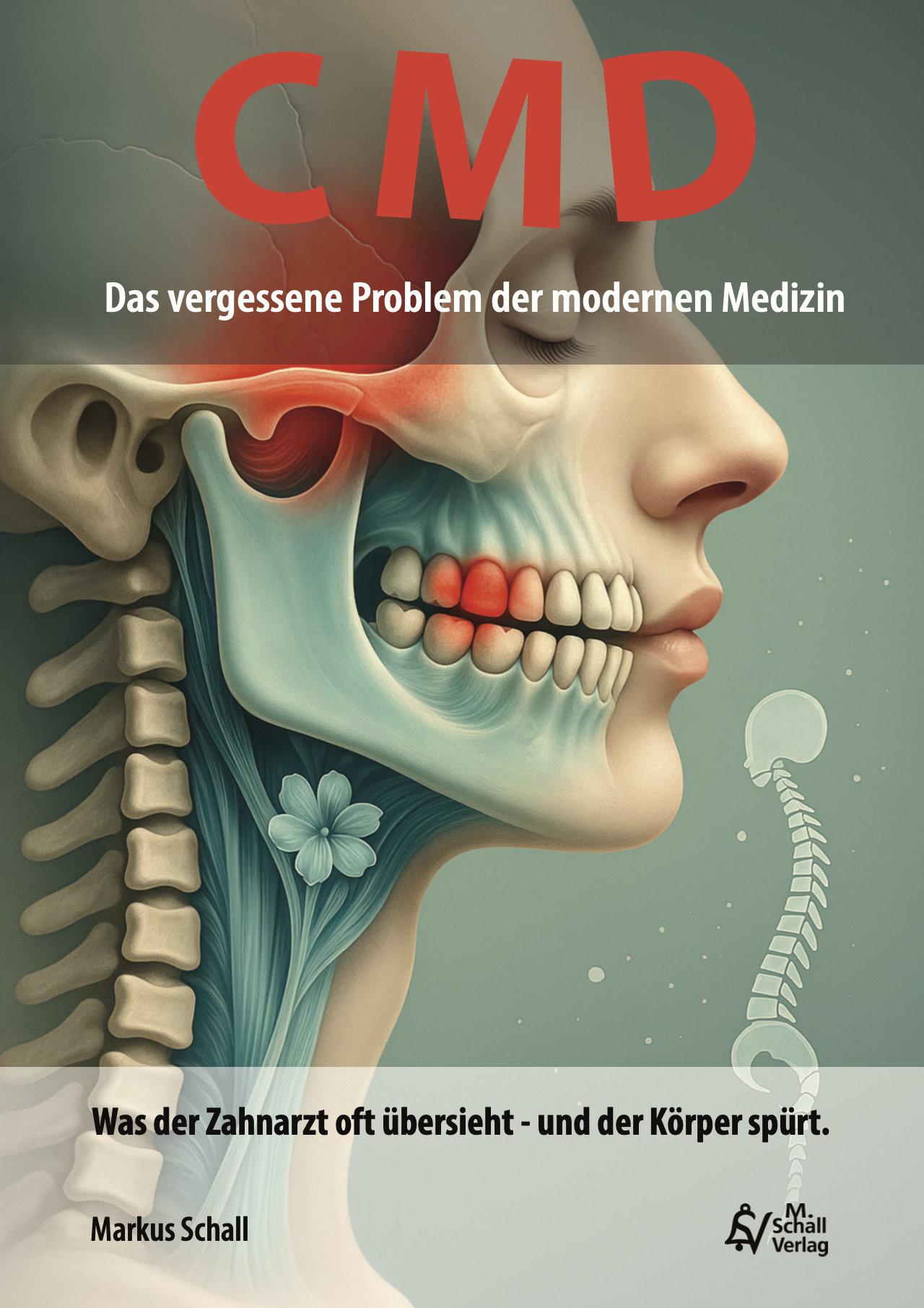
TMD stands for craniomandibular dysfunction, i.e. a functional disorder in the interaction of the skull ("cranium") and lower jaw ("mandible"). What initially sounds like a purely dental issue turns out to be a body-wide regulatory disorder on closer inspection. TMD is not a disease in the classic sense, but rather a permanently disturbed interaction between muscles, joints, fascia, posture and the nervous system.
The jaw - in particular the temporomandibular joint - is one of the most central control points in the body. It is directly connected to the balance system, the spine, the chewing and neck muscles, but also to the vegetative centers of the body. Even the slightest shift in the bite position can trigger a chain reaction that runs through the entire body.
Many people have mild TMD without realizing it - but when the tension increases, the system can no longer regulate itself. Then a silent vicious circle of tension, poor posture, compensation and - ultimately - symptoms begins.
Fascia, muscles and nerves: a network that connects
To understand how TMD can have such effects, you need to know: The body is not made up of "individual parts", but is interconnected via fascia and muscle chains. What starts in the jaw can move downwards along these chains, for example into the neck, back or pelvis.
A tense jaw joint can, for example, lead to overloading of the upper cervical joints, which in turn puts the neck muscles under constant tension. This tension affects the shoulder and back muscles, changes posture and leads to permanent asymmetry. Chronic complaints can develop from this - without the jaw itself ever hurting.
At the same time, the autonomic nervous system reacts to the constant alertness: inner balance is disturbed, sleep suffers and digestion is thrown out of sync. TMD therefore not only has a mechanical effect, but also a nervous and hormonal one - which explains why many symptoms seem to have nothing to do with each other.
Typical symptoms - but no one thinks about the jaw
The following is a selection of typical complaints that can be associated with TMD - without claiming to be exhaustive:
- Tinnitus, ear pressure, dizziness
- Facial pain, paresthesia, numbness
- Neck and shoulder pain, tension, restricted movement
- Back pain, sciatica, pelvic misalignment
- Feeling of pressure on the chest, shortness of breath
- Lump in the throat, difficulty swallowing, "froggy feeling"
- Digestive problems, especially with pelvic asymmetries
- Teeth grinding, jaw clicking, morning jaw pain
- Sleep disorders, inner restlessness, waking up at night
Many of these symptoms initially lead patients to specialists who only focus on "their organ" - e.g. ENT specialists, neurologists, orthopaedists or gastroenterologists. The problem with this is that there is almost always no view of the body-wide system. TMD is rarely recognized as a common cause - although the causalities can often be reconstructed very clearly afterwards.

CMD: Symptoms and treatment for craniomandibular dysfunction | ARD Healthy
Everyday observation: the shower as a diagnostic tool
A simple example from everyday life shows how strongly CMD affects the body - and how quickly initial relief can be achieved. I have gotten into the habit of using hot water to treat the entire posterior muscle chain in the shower: from the back of the head to the neck and down to the back. But even more importantly: also at the front - from the base of the neck to the collarbone - in other words, where the often forgotten front neck muscles are located. This is exactly where many tensions are hidden in CMD, which can feel like a lump in the throat or a tight feeling in the chest.
If you run very warm water over these zones for several minutes, there is often a noticeable improvement the very next day: the pressure eases, breathing becomes freer and the nervous system seems calmer. This is no coincidence - but proof that it is not an organic illness, but a muscular imbalance.
The body is not sick - it is dysregulated
What many people interpret as a "disease" is in fact often just a system under stress. TMD leads to permanent dysregulation because the original cause - the jaw pressure, the malocclusion, the chronic tension - is not recognized. The body tries to compensate, but at some point it reaches its limits.
The good news is that such systems can be untangled. If you know where the tension comes from - and how it continues in the body - you can provide targeted relief. This does not always have to be a splint or physiotherapy. Warmth, relaxation and conscious body awareness are often enough to feel the first signs of progress.
What counts is seeing the whole picture: the jaw is not just a joint - it is a control center. And once you have understood this, you will see many diffuse complaints in a new light.
The aberrations of diagnosis - when the symptom rules
I know exactly what it feels like when you have symptoms but can't get an explanation. In my case, it took almost two years, during which I saw a wide variety of doctors and alternative practitioners - and no one could really help me. Everyone saw something different: Here it was the back, there the digestion, then again the psyche. Sometimes I was told to relax, sometimes to train my pelvic floor, sometimes to avoid certain foods. All well-intentioned, but it didn't help.
It was only when I ended up at a holistic dentist - rather by chance - that I realized that the cause of all these seemingly detached complaints was a massive craniomandibular dysfunction (TMD). Looking back, I realized that most of my complaints were the result of this unnoticed dysregulation - and not diseases in their own right.
If only the symptom is treated, misdiagnoses occur
The biggest problem in today's healthcare system is that most doctors specialize in their field - and naturally focus on what they know. An ENT doctor sees the ear, an orthopaedist the spine, a gastroenterologist the intestines. If a symptom fits into "his" grid, treatment begins - and unfortunately this often happens without examining the underlying cause.
A good example of this is my own hemorrhoid operation. I struggled with it for years. It was cut, sclerosed, examined - but no one had the idea that the actual cause lay in my pelvic statics. And this in turn was displaced by my TMD: The lower jaw was providing the tension, the back was compensating, the pelvis was out of alignment - and the result was chronic pressure in the rectum area. No doctor had ever considered this chain. The operation eliminated the symptom, but not the cause.
And that's how many people feel. There are countless back operations where it later becomes clear: The pain was not caused by a slipped disc, but by muscle-related poor posture that has been passed on from top to bottom over the years - often starting in the jaw area.
TMD often goes unrecognized - because it affects all specialties
The reason why TMD is so often overlooked lies in its complexity. It affects:
- the Movement system (through muscles, joints, fascia),
- the Nervous system (e.g. vagus nerve, vegetative regulation),
- the Digestive tract (via tension in the abdomen, pelvic position),
- the Endocrine system (permanent stress due to chronic tension),
- and even the Psyche (inner discomfort, sleep disorders, emotional overstimulation).
There is no medical specialty that treats TMD holistically as the main issue. Dentists usually only look at the bite, orthopaedists at the back, neurologists at the tinnitus. The common thread is lost - and the patient falls by the wayside.
Many TMD sufferers end up seeing a psychologist at some point because nobody knows what to do - and they are then told that the symptoms are "probably psychosomatic". This is doubly bitter: first you are not taken seriously, then you are blamed for the symptoms.
The typical path of suffering - through a fragmented healthcare system
The paths that many of those affected have taken are often similar down to the last detail:
- The first diffuse symptoms occur first: Neck pain, ringing in the ears, dizziness.
- Then you go to the ENT, the orthopedist, sometimes the internist.
- Nothing is found - or only side issues (mild scoliosis, irritable bowel syndrome, stress).
- Alternative practitioners and alternative therapists are tried - often with temporary improvement.
In the end, you are left with the question: "Am I crazy?" And this is the moment when many people give up. They start to distrust themselves. But the path is actually clear - if you know what to look for.
Fear through ignorance - why knowledge is the first step to healing
The worst thing about TMD is not the pain. It's the uncertainty that arises when you feel that something is wrong with your body - but no one can say what it is. Your thoughts are spinning:
Is it something serious? Will I become chronically ill? Do I need an operation?
This form of undefined anxiety robs us of strength. It leads to monitoring one's own body, to self-observation, to constant preoccupation with symptoms. This puts the body under even more tension - a vicious circle begins.
The first step to breaking this cycle is understanding. Understanding how the body is connected, how the jaw affects balance, how tension works - that alone can be reassuring. Because suddenly it becomes clear: there is no tumor. There is no incurable damage. There is tension. And tension can be released.
In the next chapter, I will show you exactly what this path looks like: from recognition to change. How you can start to reduce tension with simple means, relieve your body and regain confidence in your own perception. Because TMD is not a fate - it is a signal. And you can learn to interpret it.

The path to relaxation - recognizing, understanding, acting
Many people first think of dental splints when they think of TMD - and of course they can help. But in reality, the decisive path begins much earlier: by understanding the connections.
What helped me personally the most was not a single aid, but the realization of how my body works - and why it reacts in certain ways. Understanding that my symptoms are not an illness in the classic sense, but a pattern of tension caused by misalignments, old movement patterns and permanent muscular overload.
Once you understand this, your view of your own body changes. You stop seeing symptoms as a threat - and start interpreting them as clues. And that alone noticeably changes the tension in your body. Fear tightens the body, knowledge opens it up.
What those affected can do themselves - small remedies, big impact
As soon as you realize that TMD is not the end, but a starting point, a whole world of possibilities opens up. And many of them are not complicated or expensive, but simple - and extremely effective.
- Targeted use of heatHeat is one of the most effective ways to loosen up tense muscles. I regularly use an electric heating device, a kind of heating vest that fits snugly around my shoulders and neck. A cherry stone cushion is also worth its weight in gold - especially if you place it specifically on tense areas, such as the base of the neck or the sacrum. Targeted hot showers, which I have perfected over the years, are also particularly helpful: I stand under the shower for several minutes so that the hot water hits my head from the very top - and then flows in a line down the back of my body, from the back of my head to my neck, shoulders, back, tailbone and down into my legs. I then do the same at the front, i.e. from the neck across the chest to the lower abdomen. This vertical axis - like an inner plumb line - seems to enable deep muscular relaxation, especially in the jaw and neck muscles. Afterwards, the body feels much freer - as if an inner burden has been shed.
- Conscious movement, not fitnessIt's not strength training that helps with TMD - it's rediscovering your inner flexibility. Even simple movements such as consciously rolling your neck, gently stretching the muscles at the sides of your torso or calmly circling your shoulders can work wonders. It's not about performance, but about regulation - in other words, giving the body the opportunity to reorganize itself.
- Breathing, sleep, body awarenessTMD not only throws the body out of balance, but also the nervous system. That's why relaxation on a mental level is just as important. A few conscious breaths into the abdomen, especially in the evening before going to sleep, help to activate the parasympathetic nervous system - the part of the nervous system responsible for rest and regeneration. Mindful self-awareness - e.g. feeling the position of your body in bed - can also help to recognize and release unconscious tension. If you find it difficult to fall asleep at night, you should consciously pay attention to the position of your head and jaw. Many people clench their jaw at night without realizing it. Even gently opening your lips as you fall asleep can help to relieve pressure from your system.
Posture, pelvis, feet - the whole chain counts
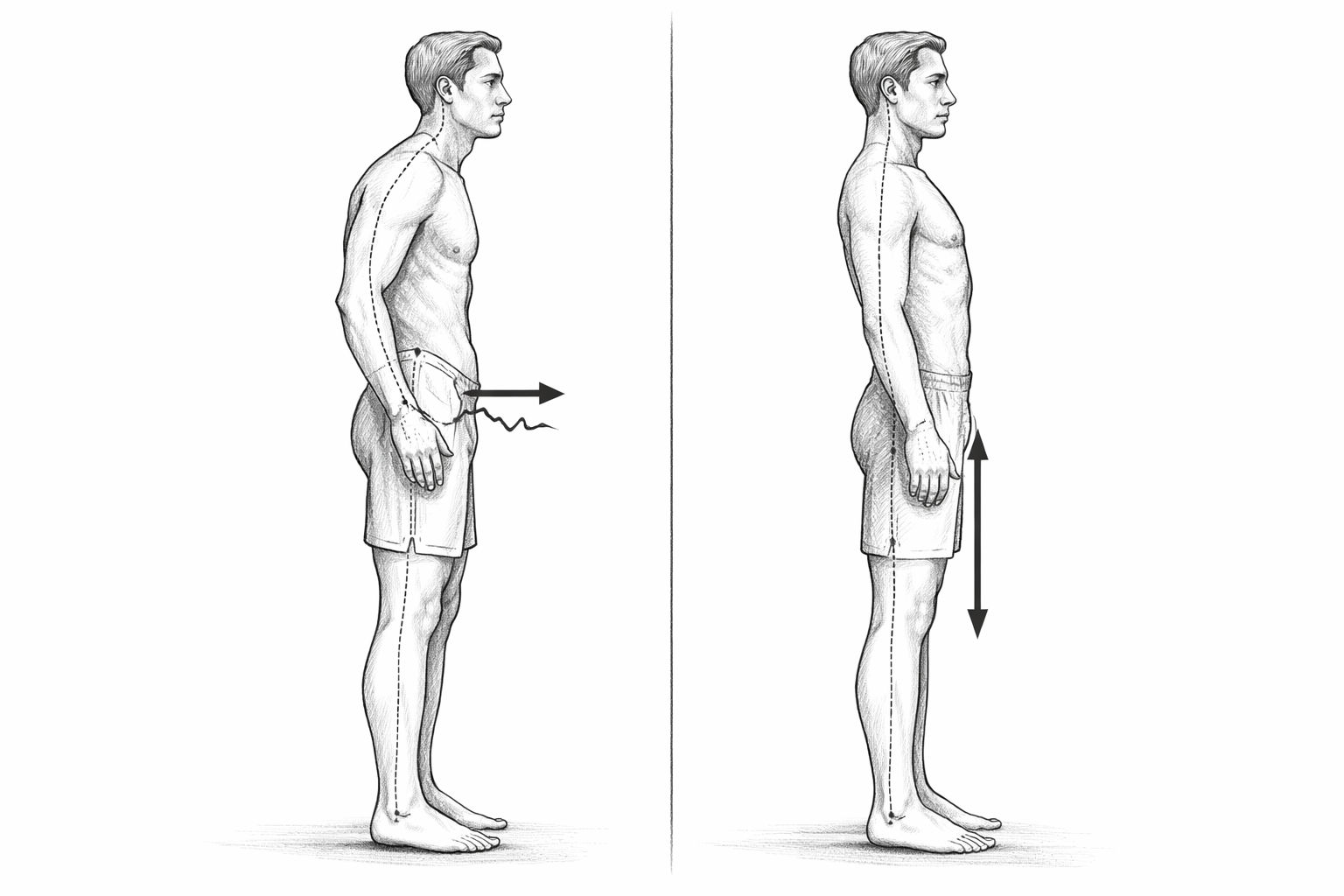
TMD is not a localized disorder - it is always part of a body-wide static. That's why it's also worth looking below the jaw.
Is my pelvis straight? Are my feet stable? Do I have one-sided movement patterns or old injuries that I am compensating for?
All of these factors play a role. It can be helpful to observe yourself when walking or sitting - or to talk to someone who is familiar with body statics or spiral dynamics. Sometimes a conscious stance on both feet is enough to change the way your body feels. The splint may work in your mouth - but the change begins in your perception.
Table: TMD symptoms and differences to other diseases
| Symptom | TMD-related variant | Typical "real" disease | How to recognize the difference |
|---|---|---|---|
| Lump in the throat ("frog feeling") | Tension in the anterior neck muscles (e.g. due to jaw misalignment) | Inflammation, thyroid gland, tumor | No pain on swallowing, mostly dependent on the form of the day, gets better with warmth or conscious relaxation |
| Scars that heal badly | Tissue permanently undersupplied due to incorrect posture or tension | Wound healing disorder, infection | No redness, no pus, no heat - but wound remains "still" and only heals slowly |
| Tinnitus / ringing in the ears | Muscle tension in the jaw and neck area | Inner ear damage, sudden hearing loss, high blood pressure | Sounds vary depending on posture, jaw pressure or stress level; often one-sided |
| Print on the chest | Tense chest or neck muscles (e.g. due to incorrect posture) | Heart problems, angina pectoris, lungs | No pain on exertion, often occurs at rest, improves with warmth or conscious breathing |
| Dizziness / lightheadedness | Malfunctioning neck and jaw muscles (center of balance) | Inner ear disease, circulatory problems | No real spinning dizziness, rather "swaying" or "entranced", often occurs in stressful moments |
| Facial pain / pressure sores | Overload due to jaw clenching, often on the cheekbone or under the eyes | Inflammation of the paranasal sinuses, tooth root problems | Pain is wandering, reacts to heat or relaxation, no suppuration or fever |
| Digestive problems | Consequence of pelvic misalignment, nervous tension, incorrect statics | Chronic inflammatory diseases, intolerances | No acute diarrhea, but variable digestion, especially during stress or inner tension |
| Jaw pain / feeling of tension in the morning | nightly pressing or grinding | Arthritis, inflammation, trauma | Worst in the morning, subsides during the course of the day, no fever or severe redness |
| Sciatica / back pain | Chain reaction due to pelvic misalignment, jaw tension | Herniated disc, nerve contusion | Pain changes sides, reacts to changes in posture, no loss or numbness in the leg |
| Visual disturbances / pressure behind the eyes | Tension in the upper neck and facial muscles | Eye diseases, intracranial pressure | No real loss of vision, rather tension, feeling of pressure, flickering - improves with relaxation and sleep |
Personal reflection - why understanding has changed so much
In the course of my own TMD history, I have clearly recognized one thing: It wasn't the brace that cured me, but understanding. Since I've known how my body works - how the jaw interacts with the pelvis, the neck with the gut, the teeth with the muscles - I'm no longer afraid of symptoms. I can interpret them. I can act.
And even the "strange" phenomena, such as scars that didn't want to heal for ages, suddenly make sense. If the body is permanently under tension, it cannot regenerate properly. But if you lead it into relaxation, things heal that have stagnated for years. It's no wonder - it's biology.
My condition has improved sustainably since this realization. Not everything has disappeared, but a lot has become controllable - and that changes your attitude to life more than you might think at first glance.
Book: TMD: The forgotten problem of modern medicine
 If you want to delve deeper, you can find more information in my book "TMD - The forgotten problem of modern medicine" provides a detailed description of all relevant correlations. In it, I describe in an understandable way how CMD manifests itself, which symptoms are particularly insidious - and how to classify them correctly to avoid falling into the trap of unnecessary treatment.
One focus of the book is on recognizing patterns: How does certain pain arise? What are typical chains of consequences? And how can you use targeted observation and modern AI support (e.g. ChatGPT) to find out what your own body is actually trying to tell you?
TMD is not fate - it is a physical misunderstanding
TMD is not a disease, but a misunderstanding in the body. An out-of-tune system - like a piano that gets out of tune over time. The good news is that it can be retuned.
You don't have to be a specialist to understand your own body. What you need is attentiveness, patience and the willingness to listen. Anyone who learns to interpret the language of the body recognizes that there is no drama behind many complaints, but rather a clear logic. And this logic gives rise to a new sense of security:
You are not ill. Your body is talking to you. And when you understand it, it becomes quieter.

Sympathetic nervous system, parasympathetic nervous system and cortisol - how stress controls our body
Dental health and TMD - more than just a little bit. What does the future hold?
Understanding hernias: Why posture and statics are often more crucial than expected
Frequently asked questions about TMD
- What exactly is CMD and why does it cause so many different complaints?
CMD stands for "craniomandibular dysfunction" - a malfunction in the interaction between the temporomandibular joints, chewing muscles and skull. Because the jaw is connected to the entire body via muscles, fascia and nerves, disorders in this area can cause symptoms that occur far away: e.g. in the back, in the digestive system or even in sleep patterns. This is why CMD often goes unrecognized for a long time - because the connection is not immediately apparent. - I have tinnitus and neck pain - can this be related to my jaw?
Yes, absolutely. The jaw is directly connected to the balance system, the auditory system and the neck via muscle loops and the nervous system. If there is tension there - due to teeth clenching or malocclusion, for example - this can lead to a kind of "permanent alarm" in the nervous system. This often results in diffuse complaints such as ringing in the ears, pressure in the head or tension in the shoulder and neck area. - Why wasn't my CMD recognized earlier? I have been to many doctors.
Unfortunately, this is very common. CMD affects many body systems at the same time - but our medical care is strongly divided into specialties. The ENT doctor looks at the ear, the orthopaedist at the back, the internist at the stomach. Only a few think beyond these boundaries. It often takes a holistic dentist or therapist to recognize the common thread. - Can CMD really cause such serious effects as sciatica or pelvic obliquity?
Yes, this is possible - at least indirectly. If the jaw changes posture due to misalignment or constant tension, this often results in one-sided strain on the pelvis. This leads to compensatory poor posture, which can spread to the lower back and legs. Sciatica, pelvic misalignment and even haemorrhoids can be the result. - I always have a lump in my throat - can this also be caused by CMD?
Yes, very likely. Many CMD sufferers describe a permanent feeling of tightness or a "frog in the throat" without anything being diagnosed by an ENT specialist. The cause is usually overstrained anterior neck muscles, which are activated by jaw tension. Warmth, targeted relief and an improved bite position can often bring surprisingly quick relief. - What can I do myself to alleviate my CMD symptoms?
Much begins with awareness and conscious body perception. Warmth is often very helpful - e.g. cherry stone cushions, electric heating vests or hot showers along the muscle chains. Gentle movement, breathing exercises and mindful awareness of jaw and neck posture in everyday life can also make a big difference. The important thing is: regular, not perfect. - Do I absolutely need a splint?
Not necessarily - a splint can help, but it doesn't have to. It should always be part of an overall concept. It is much more important to understand the functional relationships in the body. A change in perception, warmth, posture work and muscle relaxation are often enough to notice initial successes. Splints alone without accompanying measures often only help in the short term. - Can CMD be analyzed with AI or ChatGPT?
Yes - at least in a supportive way. Modern AI models such as ChatGPT can help to classify symptoms, recognize patterns and provide explanations. They do not replace a medical diagnosis, but offer a new opportunity for self-reflection. If you ask specific questions, you can often use AI to develop a basic understanding more quickly, which can then be further explored with a specialist therapist. - How can I tell if my symptoms are really caused by CMD - or if it's something else?
There is no clear criterion for differentiation. But if complaints occur repeatedly, seem to "wander", cannot be explained by doctors and improve with warmth, relaxation or targeted bodywork, a functional problem is likely. CMD usually manifests itself through changeability: symptoms come and go depending on how the body is currently organizing itself. - Can CMD also cause psychological symptoms?
Yes - via the autonomic nervous system. Chronic muscular tension in the jaw and neck area can permanently activate the autonomic nervous system (stress mode), which can lead to inner restlessness, sleep disorders, irritability and even depressive moods. The good news is that when the body regains its balance, the mind often calms down too. - What about scars that do not heal properly - can this also be related to CMD?
This sounds unusual at first, but it is quite possible. If the body is permanently under tension, blood circulation, lymph flow and cell regeneration function less well. Wound healing can be significantly slower, especially in the case of chronic poor posture or internal pressure. Only when the system is relieved can processes such as scar healing return to "normal". - I have had various therapies for years - all without success. Why should CMD be the solution?
CMD is not a panacea, but it is often a missing piece of the puzzle. If many symptoms persist even though "everything" has been tried, it is worth taking a look at the bite position, the statics and the basic muscular tone. CMD is often the common denominator, especially when several symptoms appear to be unrelated. - Are there typical triggers or causes for CMD?
Yes, CMD can have many causes: Misaligned teeth, one-sided chewing, old injuries, stress (teeth clenching), prolonged sitting, whiplash, tooth extractions, incorrectly fitted dentures - or even emotional tension. CMD often develops unnoticed for years until the system "overflows" at some point and the first symptoms appear. In another article, I explain Relationships between dentures and CMD and future prospects. - Can CMD be completely cured?
Many complaints can be significantly alleviated or completely eliminated - but this depends on the individual case. The key is to relieve the system and establish new patterns. CMD is not irreversible damage, but a functional disorder - which is precisely why it is so easy to influence if you find the right path. Healing is therefore entirely possible - often step by step. - Is CMD hereditary?
CMD itself is not directly hereditary - but dispositions such as tooth position, jaw shape or stress management can be genetically determined. Familial behavioral patterns - such as clenching teeth when under stress - can also be inherited. The decisive factor is not what you have "inherited", but what you make of it. - What should I look out for when choosing a CMD therapist?
Ideally, you should look for someone with a holistic understanding - e.g. dentists with a focus on CMD, osteopaths, specialized physiotherapists or functional myodiagnosticians. It is important that the therapist thinks beyond the temporomandibular joint and recognizes how the body's statics, muscle function and nervous system interact. It should never just be about teeth - but always about the person as a whole.