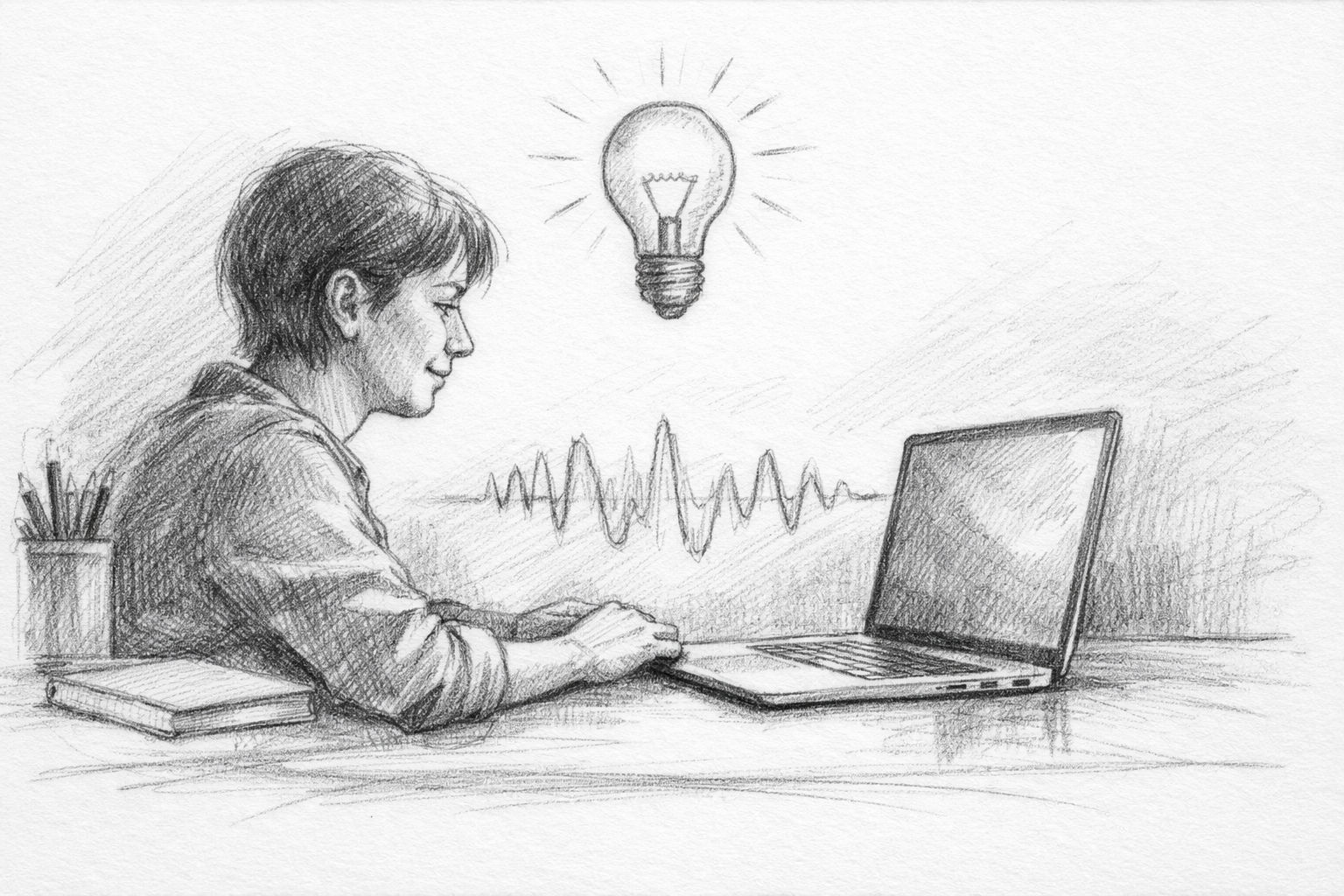
When you open a Mac today, you expect reliability. Programs start, files are in their place, processes are well practiced. Many have built up a way of working over years - some over decades - that works. You know where to click. You know your tools. And this is precisely where the quiet comfort lies. But for some time now, a change has been brewing in the background that is bigger than new colors, new icons or additional menu items. For the first time, a form of artificial intelligence is moving in not just as a single application, but closer to the heart of the operating system itself. Where daily routines are created.
That sounds abstract at first. Perhaps even a little futuristic. But basically it's about something very down-to-earth: the computer should better understand what is meant. Not just what is clicked on. Many people have so far experienced AI outside of their actual work. In chat windows, on websites, as an experiment or a gimmick. You try something out, perhaps be amazed, close the window again - and return to your normal everyday life.




Latest news on Apple, Siri and Gemini
03.09.2026: Apple's long-awaited new Siri can now be tried out on Macs in Germany as well—though for the time being, this is only possible via the macOS 27 beta and requires the system and Siri languages to be set to U.S. English. In the Review by t3n The new AI assistant proves to be significantly more capable than its predecessor: Siri answers more complex questions, engages in context-aware conversations, makes comparisons, and can link travel plans to costs, reminders, and calendar entries. Particularly interesting is its deeper integration into the operating system. Siri recognizes screen content, can summarize open articles, complete texts, and save results directly to Notes.
However, more advanced agent capabilities—such as the ability to organize files independently—are still missing. In addition, an internet connection was required during testing. For cloud queries, Apple relies on Private Cloud Compute and a system orchestrator that coordinates local and external functions. Although Siri AI currently operates primarily in English, it has already reliably provided German-language text responses when prompted.
09.06.2026: At its WWDC 2026 developer conference, Apple unveiled the new AI-powered version of Siri. The revamped voice assistant is designed to be significantly more personalized, understand the context of previous conversations, incorporate information from apps and personal data, and handle complex tasks across multiple apps. For users in the European Union, however, there is a catch: Siri AI will not be available on iPhones and iPads for the time being. Apple cites the requirements of the European Digital Markets Act (DMA), which the company believes could jeopardize user privacy and security. The European Commission rejects this interpretation and emphasizes that the legal regulations would in no way prevent new products. As a result, the delay is increasingly turning into a political and regulatory dispute between Apple and Brussels. For many European users, this means that one of the most significant AI innovations of recent years will not be available on their devices for the time being, while other regions will be able to benefit from the new features sooner.

WWDC 2026: Wow and Fail! First Impressions After the Keynote | Apple Talk
27.05.2026Apple is increasingly positioning „Apple Intelligence“ as a personal AI layer directly in the operating system and is taking a significantly different approach to Google with Gemini Spark. While Google organizes its AI agents strongly via the cloud and close integration with Gmail, Calendar, Drive and Workspace services, Apple focuses more on local processing, data protection and deep system integration on iPhone, iPad and Mac. According to IT Boltwise future AI agents should not only react to commands, but also actively accompany tasks, prepare content, recognize contexts and support work processes more intelligently.
It is particularly interesting that Apple attempts to run many processes directly on the device in order to keep user data within its own ecosystem as far as possible. Google, on the other hand, is pursuing a more centralized cloud orchestration with permanently operating AI services. The competition between Apple Intelligence and Gemini Spark thus increasingly shows two different future models: local, system-oriented AI at Apple and cloud-based productivity AI at Google.
01.05.2026: A current report shows a possible security problem with the desktop app from Claude (Anthropic). According to research by a data protection expert, the application creates so-called „native messaging“ files in several browser directories when installed on macOS - including Chrome, Edge, Brave and Opera. What is particularly controversial is that these entries are apparently made without the user's express consent and are even created for browsers that are not-tagged. Technically, this is a prepared interface via which browser extensions can communicate with the local application. Critics therefore speak of a kind of „backdoor“ or at least a pre-established connection that can be actively used later.

Claude Desktop installs a backdoor on your Mac | Salvatore Princi
The video by Salvatore Princi addresses precisely this point and clearly explains what happens in the background, which browsers are affected and how users can check whether their system contains such entries. Overall, the case shows how sensitive local AI tools have become in terms of data protection and system access.
19.04.2026Apple is apparently working on developing Google's AI (Gemini) to reduce so much, that it can run directly on the iPhone. Instead of large cloud models, Apple relies on „distillation“: the knowledge of a large model is transferred to smaller, specialized variants that can work locally on the device. The aim is to make Siri significantly more powerful without being completely dependent on external servers. At the same time, Apple retains more control over data protection and performance.

Siri becomes Gemini? What the Apple Google AI deal really means | TURN ON
The collaboration with Google is seen as a strategic step, as Apple has so far lagged behind its competitors in AI and its own Siri development is still in progress. istalled is. However, the launch is still delayed: the integration of Gemini into Siri has been postponed several times, partly due to reliability problems in internal tests. The bottom line is that a hybrid approach is emerging: powerful cloud AI in the background, combined with smaller local models directly on the iPhone - an approach that should combine speed, data protection and suitability for everyday use in the long term.
18.03.2026: Apple is apparently under more pressure than previously apparent in its next AI offensive. How Current reports show, the fundamental redevelopment of Siri has been delayed again - and is now even putting the brakes on new hardware projects. Planned smart home devices, including a display similar to the Echo Show, depend directly on the new, significantly more intelligent version of Siri and have already been postponed several times. Behind the scenes, Apple is apparently struggling with its own AI development and is therefore increasingly relying on external solutions - in particular Google's Gemini models.
For users, this means that although the vision of a truly context-aware, system-wide integrated Apple AI is getting closer, it is coming slower than planned. At the same time, there is a shift in strategy - away from purely internal development and towards hybrid AI systems. The forthcoming Siri could therefore become significantly more powerful, but also have some third-party technology at its core.
What is happening now is different. The support moves to where e-mails are written, where documents are created, where appointments are planned, pictures are sorted and information is searched for. In other words, exactly where time is gained or lost. It is therefore worth taking a calm and unhurried look at this topic.
Not as a technical sensation or as competition between providers, but as a question: How does your own use of the Mac change when help suddenly runs everywhere? Those without specialist knowledge are by no means at a disadvantage. On the contrary. If this new generation of functions is to fulfill its purpose, then it must be understandable for those who have never wanted to deal with computers in depth. So it's not about technical terms. It's about everyday life.
With this in mind, we can now go one step further and take a closer look at why the upcoming changes are more than just the usual tweaking of a few screws - and why some observers already see this as the start of a new chapter in computer use.
Why this step is bigger than a software update
It's worth slowing down for a moment. Anyone who has worked with a Mac for years knows the familiar feeling: you open a program, click on a command, type something in - and the computer delivers a result. This principle has proven itself over decades. The human decides, the machine executes. Reliable, predictable, sometimes a little stubborn, but basically clearly structured.
This is precisely why what is now just around the corner looks like one of many updates at first glance. A new version number. A few additional functions. Perhaps a prettier icon here, a new menu item there.
But if you take a closer look, it's about something else.
From tool to co-thinker
Until now, the computer was first and foremost an instrument. Just as a hammer does not decide by itself where the nail should be placed, the Mac also waited patiently for instructions. If you wanted something, you had to know how to get it. Which program is responsible. Where the file is located. Which steps are necessary.
With the integration of modern AI, this relationship is beginning to shift. Suddenly, a new level emerges: The computer not only helps with the execution, but also with the formulation of the task. It can make suggestions, summarize content, recognize correlations and provide drafts. It becomes a kind of assistant that thinks along with you - sometimes even one step ahead.
This is no small thing. It changes the way we deal with technology.
Why many initially underestimate this
There have always been new functions. Spell check, automatic brightness, intelligent search - all of these were new at some point and are taken for granted today. That's why people tend to categorize current developments in the same way.
But this is not just about improving an existing tool. The tool is being given a new role. You can imagine it like in an office: for decades there was a very fast, very reliable photocopier. And then one day someone suddenly sits next to it and asks: „What exactly do you want to achieve? Perhaps I can prepare a draft for you.“
For many people, technology was long associated with a silent hurdle. You had to learn how something worked. Understanding menus. Memorizing key combinations. Adapting to processes that developers had devised.
The new direction is slowly turning the principle around. The human no longer adapts to the machine - the machine begins to approach the human. You describe a goal in normal words, and the system tries to pave the way there. Perhaps not yet perfectly. Perhaps sometimes with detours. But noticeably.
This is an enormous relief, especially for users who are not specialists.
More than just convenience
You could say: „Fine, then everything will go a little faster.“ But that falls short. When a computer helps with structuring, formulating and retrieving information, it frees up time. Time that was previously spent searching, sorting and correcting suddenly becomes available for content, ideas and decisions.
That is the real core of this development. Not effects. Not gimmicks. But relief in thinking.
The quiet revolution
Perhaps the most remarkable thing is how unspectacular this change is. No loud bang, no dramatic break. The Mac remains the Mac on the outside. Desktop, windows, programs - everything looks familiar.
And yet something new is working in the background. An additional layer of support that tries to understand what is meant, not just what was clicked. Precisely because this step happens so quietly, it is easy to overlook. But looking back, one day we could say that this was the moment when computers stopped being mere recipients of commands.
What this means for the reader
Nobody has to become a computer scientist for this. Nobody has to train models or learn complicated terms. Most of the changes will become apparent in everyday life: in suggestions, in abbreviations, in automatically prepared answers, in information that is easier to find.
You will notice it without constantly thinking about it. And perhaps that's the greatest art of it all. The Mac remains a tool, yes. But one that starts to listen.
This prepares the ground. In the next few sections, we will take a closer look at how Apple traditionally deals with such upheavals - and why this experience in particular could be decisive in determining whether technical possibilities ultimately become real help.
How Apple traditionally introduces innovations - and why this is important
If you want to understand where the journey with artificial intelligence in the operating system could lead, you should take a look back. Not out of nostalgia, but because a pattern can be recognized. A pattern that has remained surprisingly constant.
Apple was rarely the first to invent a new technology. But he was often the one who built it into a product in such a way that millions of people were suddenly able to use it as a matter of course.
That sounds unspectacular. In reality, it is a special discipline.
Not first - but often formative in the end
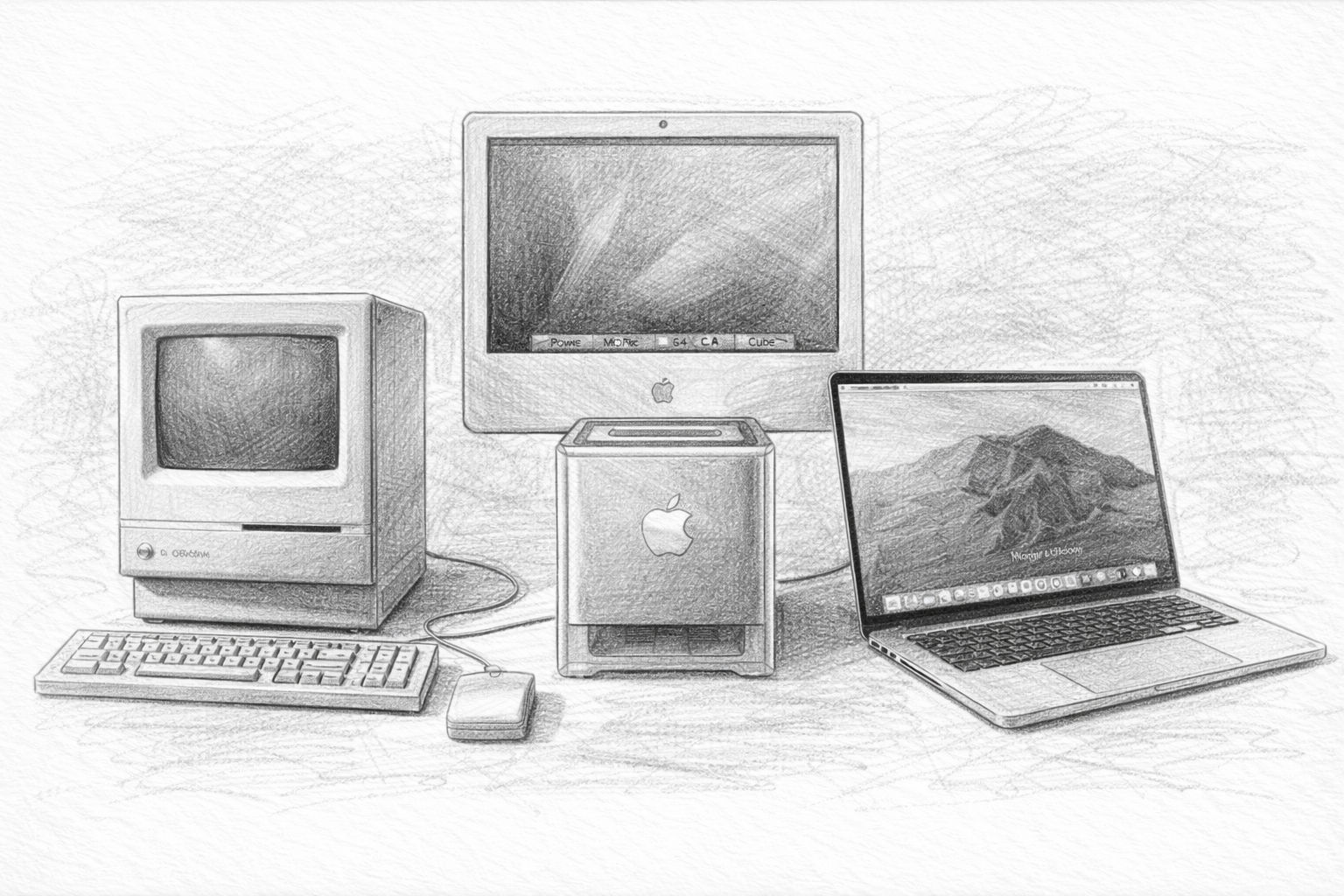
The computer mouse existed before it became widely known. So did graphical user interfaces. Portable music players, smartphones, tablet computers - all of these already existed in one form or another. However, these devices were often complicated, unfinished or only of interest to specialists.
Apple traditionally took a different approach. They waited. Observed. Simplified. And then delivered a product that didn't feel like technology, but like a tool that could be operated intuitively. Suddenly, nobody had to study manuals anymore. Things just happened.
The result was not necessarily revolutionary in a technical sense, but in a practical one.
The art of integration
The decisive point lies less in individual functions than in the interaction. New possibilities are not simply added, but woven into existing processes. They appear where they are expected. Or even where you would have needed them without being able to name them in advance.
This creates trust. You don't have the feeling that you are using something foreign, but rather a further development of the familiar. The old remains, but it is supplemented, refined and sometimes even quietly replaced.
Anyone who has worked with Apple products for a long time will be familiar with this experience. Changes often happen quietly. And if they are done well, after a while you wonder how you managed without them in the past.
This approach requires restraint. While other providers present new functions as quickly as possible, Apple often accepts that they will appear later. Instead, they try to avoid teething troubles and smooth out processes to such an extent that they are suitable for mass use.
Of course, this does not always work perfectly. There are also mistakes, detours and decisions that have to be corrected later. But the basic attitude remains: Only when something fits into everyday life is it rolled out in a big way.
This point is particularly crucial when it comes to artificial intelligence. Because it's not just about whether something looks impressive. It's about whether people can use it every day without having to think about it all the time.
The difference between demo and continuous operation
Many AI demonstrations look spectacular. A system answers questions, writes texts, analyzes images. But a demonstration is not yet everyday work. In everyday use, other things count: reliability, comprehensibility, predictability.
- What happens if a proposal does not fit?
- How easy is it to correct?
- Does the user remain in control of the situation at all times?
Apple has shown time and again in the past that these issues are more important than pure performance.
Why this is crucial for the upcoming AI integration
If artificial intelligence is now moving closer to the operating system, this will not just affect a single program. It affects email, calendar, file management, writing, searching - in other words, core areas that are used on a daily basis. An immature step here would be immediately noticeable.
There is therefore much to suggest that Apple is once again trying to embed the technology in such a way that it feels natural. Not as a foreign body, but as a natural part of the familiar environment.
Perhaps this is the real challenge. Not to provide the smartest answer, but the right one.
Looking ahead - with experience in the bag
Anyone who is familiar with this tradition automatically views new announcements with a certain degree of serenity. You know that there will be changes. Some will be immediately convincing, others will take time. But the goal usually remains the same - to shape technology in such a way that it takes work off people's hands without creating new hurdles.
With this perspective, the next step can also be better understood. Because if artificial intelligence actually becomes an integral part of the system, then it is not the number of functions that will determine its success. Rather, the question will be whether it fits into the way users work.
And this is precisely where Apple has decades of experience.
Siri about to be relaunched - hope from Gemini?
The Apfeltalk podcast focuses on a piece of news that surprised many observers: Apple is apparently planning to base the technical foundation of Siri on Google's Gemini in future. After years of criticism regarding the reliability of the voice assistant and the much-discussed, later relativized promises of new functions, expectations are once again growing that something will noticeably improve.

Is Siri finally getting smart? | Apfeltalk LIVE 392
Details on concrete implementation are still scarce, but progress should become visible step by step with future system versions. Together with AI expert Caspar von Allwörden, the panel discusses opportunities, open questions, possible cost models and, of course, the sensitive aspects of data protection.
What does „AI in the operating system“ actually mean?
When artificial intelligence is mentioned in connection with computers, many people first think of chat windows. You ask a question, receive an answer, try it out a little - and then you return to your actual programs. AI then acts like an additional tool that you pull out when you need it.
But it is precisely this picture that is beginning to change. As soon as intelligence moves closer to the operating system, it leaves the role of external help. It becomes part of the environment. It is no longer a place you visit, but something that is constantly present.
This may sound inconspicuous, but it has far-reaching consequences.
Not a new app - but a new level
An operating system is the framework in which everything else takes place. This is where files are managed, programs are started, notifications are displayed and inputs are processed. In a way, it is the stage of everyday digital life.
When AI moves in there, no further application with its own icon is created in the dock. Instead, an additional layer is created under the surface. A kind of background support that can work everywhere.
- When writing a text.
- When browsing folders.
- When planning an appointment.
- When replying to a message.
The help is no longer physically separated - it accompanies the work.
The difference between command and intention
Until now, a computer had to be given precise instructions. A click here, a menu there, perhaps a search query with the right terms. If you didn't know how to reach a destination, you often got stuck.
With integrated AI, the focus shifts. The system tries harder to understand what is meant, not just which button has been pressed.
An example: Instead of thinking long and hard about which folder a particular file might be in, simply describe what it was about. Perhaps you remember the recipient of an email, a date or a keyword. The AI can help to connect these clues.
This not only saves time. It reduces uncertainty.
An assistant without a permanent workplace
Support used to have its fixed place. Help programs were opened, reference books searched, instructions read. Now the assistant is mobile. It appears wherever it is needed.
- As you type, formulation suggestions appear.
- Suitable times are offered while you are planning.
- While you search, connections are made.
- None of this forces you to use it. But it is available.
This unobtrusiveness is crucial. It prevents help from turning into paternalism.
Learning from habits
Another point is often overlooked: A deeply integrated AI can recognize patterns. Not in the sense of monitoring, but as an observation of recurring processes.
- Which documents are frequently shared?
- Who do you communicate with regularly?
- At what times do certain tasks take place?
Suggestions can be derived from such repetitions. The computer begins to be prepared. You have to explain less because the system becomes more familiar over time.
Automation without programming
Many people have wanted simplification for years, but shy away from complicated automation tools. Scripts, rules, conditions - it all quickly sounds technical and daunting.
An AI in the operating system can mediate here. Instead of formally defining processes, you describe in normal words what you want to achieve. The system tries to derive steps from this. Perhaps not perfectly on the first attempt, but often enough to provide a direction.
This brings automation within reach for users who have never seen themselves as technology experts.
The balance between initiative and control
Despite all the support, one question remains central: Who decides in the end? A good system will make suggestions, but will not take final action without approval.
People remain responsible.
This division of roles ensures that trust can grow. Help is accepted because it is offered - not because it is forced.
Why this change is profound
At first glance, it's all about convenience. A few clicks less, slightly faster results. But in reality, this development affects the relationship between man and machine.
The computer goes from being a pure executor to a co-thinker.
It not only works faster, but also with greater understanding. At least that is the aim. And even if this goal is never fully achieved, just getting closer to it can make a noticeable difference to everyday life. You feel less alone with the task.
Maybe in a few years nobody will talk about it anymore. Just as today hardly anyone thinks about the fact that spelling mistakes are automatically marked or photos are sorted by people. What still seems new now will become a matter of course.
This is precisely why it is worth consciously perceiving the moment. Because here we can see how future generations will work with computers: less about commands, more about meaning. And that is, to be honest, a remarkable step.
Companies Caught Between Cloud AI and Data Sovereignty
Apple, Google, Microsoft, and other major providers are integrating artificial intelligence ever more deeply into operating systems and applications. While this is convenient for users, it raises a fundamental question for businesses: What information should external AI services be allowed to process—and what data is better kept within a company’s own infrastructure? This warrants closer examination, particularly when it comes to customer data, internal documentation, calculations, development documents, or trade secrets.
My AI Consulting for Businesses It therefore focuses in particular on on-premises AI systems, corporate LLMs, and proprietary knowledge architectures. Today, modern language models can be run entirely on-premises or within a controlled corporate infrastructure and, for example, connected to a company’s own knowledge bases via RAG. Cloud AI and on-premises AI do not necessarily have to be mutually exclusive. What matters most is a well-thought-out architecture that leverages convenience where it makes sense and preserves data sovereignty where it is critical to the company.
The role of Google and Gemini - engine in the background, not driver
As soon as it becomes known that a large external technology provider is involved in a central position, unrest arises almost automatically. Who is actually supplying what? Who is in control? And who are you really talking to in the end?
These questions are understandable. They have accompanied the history of technology for decades.
This is precisely why it helps to take a calm look at the distribution of roles.
Two levels, two tasks
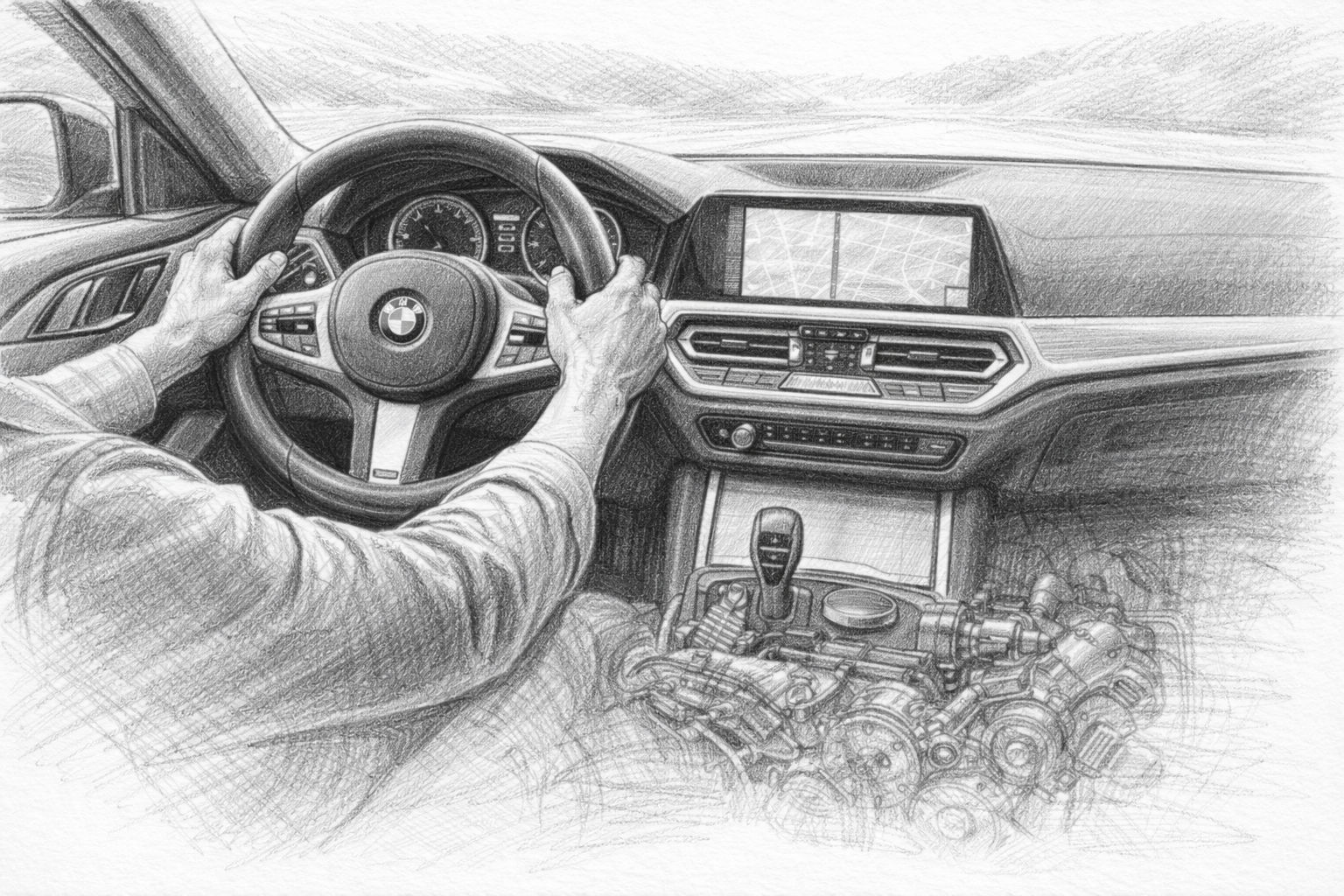
You can think of a modern operating system like a vehicle. There is the steering wheel, the displays, the seats, the familiar surroundings. And there is the engine, which generates the actual power.
The driver interacts with the steering wheel, not the pistons. Transferred to the new AI world, this means that even if Google models are working in the background, the visible and tangible interface remains that of Apple. The user does not open a Google application. They do not leave their familiar environment. They continue to talk to their device. That is a crucial difference.
When AI works in the background: Why modern ERP systems need to be rethought
 The increasing integration of AI directly into the operating system is not only changing the way we work with individual applications, but also how central systems in the company function. A modern ERP system is no longer an isolated tool, but part of this „invisible infrastructure“. Information is no longer actively searched for, but made available at the right moment. Offers are created from existing data, workflows are structured along real processes and recurring tasks are prepared automatically.
The decisive factor here is less the individual AI function and more the clean integration into existing structures. This is precisely where the difference between isolated solutions and sophisticated systems becomes apparent: An ERP that sensibly combines data, processes and AI does not become an additional tool - but a silent companion in the background. Those who take this step early on not only create efficiency, but also a resilient foundation for the coming years of digital development.
Why Apple needs partners
Developing artificial intelligence on a large scale is complex. It involves huge amounts of data, specialized hardware and years of research. No company makes such decisions lightly.
So when Apple falls back on Gemini, this is not a sign of weakness, but of pragmatism. Existing strength is used where it is available and the focus is on integration, operability and protection mechanisms.
This corresponds to the traditional way of working: Not inventing everything yourself, but selecting, refining and integrating into a coherent whole.
What the user notices - and what they don't
Ideally, you notice surprisingly little of this.
- The request goes to Siri or a system function.
- The answer appears in the familiar design.
- Operation follows familiar rules.
Whether your own model calculates in the background or one from a partner hardly matters in everyday life - as long as the result is right.
This is precisely where the challenge lies: technology should help without constantly pushing itself to the fore.
The question of trust
Of course, this remains a sensitive point. When external technology is involved, many people want to know how information is handled. Which data remains local? Which is transferred? Who stores what? This discussion is not new, and it will not go away.
For Apple, this means that the rules must be clearly defined. Transparency is a prerequisite, not an optional extra. The user must be able to understand when a partner comes into play and when not.
Without this trust, even the best technology is viewed skeptically.
Interchangeability instead of dependency
Another idea is important. If a manufacturer can integrate several models or providers, this creates flexibility. You are not tied to a single solution. Systems can evolve, partners can change, new options can be added.
For the user, this means above all stability. They invest in their way of working, not in a specific type of engine. The environment remains familiar, even if the technology underneath changes.
Why „engine in the background“ is more than just a metaphor
The strength of this image lies in the fact that it clearly separates responsibility. The engine provides power. But it does not decide the destination.
The design of the user interface, the security mechanisms, the type of integration into programs - all of this remains in the hands of the operating system manufacturer. They determine how much initiative is allowed, which suggestions appear and where the limits lie.
This keeps the experience consistent.
In heated debates, it is easy to get the impression that a partnership means relinquishing control. But historically, software has always been a network of internal and external components. The only new aspect is that these components are now becoming more intelligent.
The principle of cooperation remains familiar.
Perhaps it is precisely this mixture of in-house and external expertise that ensures that innovation does not ultimately feel like an experiment, but rather like natural progress.
Whether Gemini works in the background or another system - the decisive factor will be whether the support is reliable, comprehensible and helpful. If this is successful, the question of the supplier will fade into the background.
Then it's the result that counts. And that's exactly what it will come down to: The user doesn't want to know which engine is installed. They want to arrive safely.
Current survey on the use of local AI systems
And what about ChatGPT?
When we talk about new partnerships and additional technologies, the next question quickly arises: Will this replace the existing system? Will what we already know disappear? Or will a competition begin in the background, where in the end no one knows exactly who is actually responsible? This uncertainty often arises when it comes to artificial intelligence in particular.
This is because many users have had their first experiences with ChatGPT in recent years. Perhaps for writing, researching or structuring thoughts. For some, it was their first contact with an AI that not only executes commands but also responds to speech.
It would therefore be understandable to want to know whether this helper will continue to play a role.
Several tools for different tasks
The simple answer is: why should there only be one? After all, in the real world, you don't use the same instrument for every activity. Some tasks require precision, others creativity, others speed or special knowledge. Different systems can have different strengths here.
A modern operating system can therefore select or offer in the background which partner is the best fit. Perhaps an external service is called in for a complex explanation, while simpler things are done directly on the device.
This does not have to be visible to the user.
The experience remains from a single source
It is important that no patchwork is created despite several parties being involved. Nobody wants to have to decide which model should be responsible for each request. The interface must remain consistent. Language, design, operation - everything continues to follow the logic of the system.
If an additional service is needed, it should be as seamless as possible.
Perhaps a notice appears. Perhaps permission is asked. But the flow of work should not be interrupted. This is where you can see whether integration has been successful.
No either-or
Some discussions sound as if a manufacturer has to make a commitment: either this provider or that one. However, technical reality has long since allowed for more flexible solutions. Systems can cooperate with each other, complement each other or change depending on the task.
This opens up possibilities. New developments can be integrated without having to build everything from scratch. A partner's progress can be made available quickly, while the company's own functions continue to grow.
For the user, this means above all future-proofing.
Why diversity can be reassuring
Dependence makes you nervous. When everything comes from a single source, every change feels risky. Multiple partners create leeway. They allow for adaptation, further development and sometimes correction.
This is not a sign of indecision, but of strategic foresight.
Despite all the technology in the background, one thing remains constant for the user: they work with their device. Responsibility for the experience lies with the manufacturer of the operating system. They decide what the answers are, when help is offered and where the limits are.
ChatGPT can therefore continue to be an important building block - but as part of a larger whole. Not as competition in the foreground, but as expertise in the background.
And perhaps this is precisely the most mature form of collaboration: several powerful tools that are connected in such a way that people can concentrate on their actual work.

How everyday working life could change in concrete terms
Big terms such as artificial intelligence, models or system integration sound impressive. But in the end, the value of every innovation is decided by a very simple yardstick: does it make the day easier?
Not theoretically. Not on the stage of a presentation. But between the first cup of coffee and the end of the day.
This is exactly where it becomes clear whether technology serves or merely shines. That's why it's worth looking at typical situations that occur every day. Small moments that seem inconspicuous on their own, but in total cost an astonishing amount of time and energy.
Search less, find more
Almost everyone knows this. A file is needed, but the exact location is blurred. Was it in the project folder? In the download area? Was it perhaps sent by e-mail?
The detective work then begins. Opening folders, trying out search terms, losing time.
With intelligent support, the process could look different. You might remember the content, a person, a rough time period. The system combines these clues and suggests something. Not perfect. But often close enough to reach the goal quickly.
The difference is noticeable: less frustration, more exercise.
Writing without empty moments
Texts are part of everyday life for many people. E-mails, offers, notes, documentation. Sometimes the words flow, sometimes they falter. A sentence just won't flow, a formulation seems too harsh or too cumbersome.
This is where AI can help. It can provide alternative suggestions, structure paragraphs or create summaries. Not as a replacement for your own style, but as an impetus. Like a colleague who briefly looks over your shoulder and throws in an idea.
One adopts, changes or rejects - the decision remains with the person.
But the inhibition threshold is falling.
Prepare answers instead of starting over
Anyone who communicates a lot often encounters similar questions. Some are even repeated regularly. Nevertheless, every answer is reformulated, adapted and sent out again.
An integrated AI can do the groundwork here. It recognizes patterns, suggests drafts, reminds you of previous conversations. Perhaps it just needs to be fine-tuned.
That saves minutes. And minutes become hours.
Dates with an overview instead of guesswork
Planning also benefits. Several people involved, different wishes, limited times - sometimes even a simple appointment looks like a puzzle.
A system that recognizes connections can make suitable suggestions. It knows which obligations already exist, which places are realistically accessible and which priorities are frequently set.
You confirm or change. But you no longer start from scratch.
Notes that can be organized
Many ideas arise spontaneously. A thought on the go, a quick memory, a conversation that needs to be recorded. Over time, countless fragments accumulate. Later, the laborious sorting begins.
AI can help to suggest structures. Bringing topics together, forming headings, making connections visible. A picture emerges from individual points. This not only facilitates organization, but often also thinking itself.
Perhaps one of the biggest changes is that the computer no longer just reacts. It can start to be prepared. If certain documents are regularly part of a meeting, they can be suggested in good time. If similar information is always needed before traveling, it will be available more quickly.
The computer learns routines - and becomes more predictive as a result. This seems almost unspectacular, but is enormously helpful in everyday life.
Small help, big impact
This future should not be imagined as a dramatic upheaval. The screen will not suddenly do everything itself. Rather, a network of many small supports will emerge.
- Here is a hint.
- A suggestion there.
- An abbreviation elsewhere.
Each individual help may seem small. But taken together, they change the pace of work. Tasks flow more easily. Transitions become shorter.
The focus remains on people
What is important in all of this is that the initiative still comes from the user. AI accompanies, offers and suggests. It does not replace judgment, responsibility or creativity.
It is precisely this restraint that determines whether support is perceived as pleasant.
Nobody wants to be patronized.
A realistic view
Of course, not everything will work perfectly straight away. There will be misunderstandings, wrong suggestions, situations in which the old way seems faster. That's part of it. Every new technology needs time to mature.
But even if only some of the daily friction losses disappear, much has been gained.
In the end, it's not about artificial intelligence as a buzzword. It's about relief. It's about the feeling of having to struggle less with processes that are actually secondary.
When the computer helps to keep order, bundle information and simplify routines, there is more room for the essentials: Decisions, creativity, conversations.
Perhaps that is precisely the silent hope behind all these developments. Not more speed at any price. But more clarity in action.
All new options at a glance
| Possibility | What the system can do | Benefits in everyday life | What remains with people |
|---|---|---|---|
| Intelligent search | Connects references such as content, people or time periods and suggests suitable files or messages | Less time wasted sifting through folders | Evaluate whether the correct result is actually selected |
| Text support | Creates drafts, reformulates or summarizes longer content | Faster from a blank sheet to a usable basis | Determine tone, accuracy and final statement |
| E-mail help | Prepares answers based on previous communication | Handle routine requests more quickly | Check, adapt and release |
| Scheduling | Suggests times and takes known commitments into account | Less coordination effort | Set and confirm priorities |
| Structuring notes | Organizes key points, recognizes topics and suggests outlines | Quick overview of thoughts and projects | Weighting content and deciding what is important |
| Recognize routine | Learns recurring processes and offers prepared steps | Fewer manual repetitions | Check whether the routine still fits |
| Voice assistance | Understands naturally formulated requests and carries out appropriate actions | Hands free, direct access to functions | Clarify unclear points |
| Summarize information | Condenses long texts or conversations | Understand what it's all about more quickly | Check details and add nuances |
Is Siri finally growing up?
Hardly any other digital tool has raised as many hopes over the years - and at the same time caused as many frowns - as Siri. When the voice assistant was introduced, it felt like a glimpse into the future. You spoke to your device and it responded. An almost human form of interaction.
But in everyday life, it quickly became clear that the reality was more complicated.
Many users tried it out, asked a few questions, perhaps smiled at one answer or another - and then returned to the keyboard and mouse. Too often Siri did not understand what was meant. Too often it stuck to simple tasks.

The promise was greater than the practice.
Language is something natural. We have been using it effortlessly since childhood. So when a computer claims to be able to respond to language, we automatically expect a similar level. We expect understanding, context and connectivity.
A single misunderstanding is more noticeable than clicking on a menu incorrectly. This is precisely why Siri had a hard time right from the start. The idea was brilliant - but the technology had to catch up first.
What could change now
With more powerful AI systems in the background, there is growing hope that conversations will become more fluid. That every request is not viewed in isolation, but in the context of what has been said or done before.
- If you ask for a file, it should be clear which one is meant.
- If an appointment is postponed, the parties involved should be known.
- If you ask for help with wording, the tone should be appropriate.
In short: less individual reaction, more understanding. That would actually be a step towards maturity.
From recipient of orders to interlocutor
Until now, many voice assistants worked according to a simple principle. You gave a clear instruction and the system carried it out - or not. Queries were difficult, longer dialogs were rare.
A more modern AI can work differently here. It can ask questions, make suggestions, take previous information into account. A conversation is created, not an isolated moment.
This feels much more natural for the user.
Still not a human being
Despite all the enthusiasm, however, we should remain cautious. Even an advanced system will not replace a person. There will still be limits, misunderstandings and situations in which people will have to be more precise.
Perhaps it is precisely this realistic expectation that is important. Those who demand perfection will inevitably be disappointed. Those who seek support can be pleasantly surprised.
Trust grows slowly
Over the years, Siri has acquired an image that has not always been flattering. Many people have gotten into the habit of preferring to click for themselves rather than explain things at length. Such habits don't change overnight.
Even when technology makes great progress, it takes time for users to regain confidence. Only when help works regularly will it be used as a matter of course.
That is a process.
The chance for a fresh start
At the same time, the current development offers an opportunity. With stronger AI in the background, Siri can, in a sense, start afresh. Old impressions lose weight when new experiences are convincing.
Perhaps you start asking questions out loud more often again. Perhaps you discover that more complex tasks are suddenly possible. And slowly the attitude shifts.
So what does „grown-up“ mean in this context? Not spectacular, not funny, not omniscient. But reliable. Predictable. Helpful in everyday use.
If Siri reaches this point, a lot would be gained. Then the voice assistant would no longer be perceived as an experiment, but as an integral part of work - as natural as search or the calendar.
It remains to be seen whether this will succeed. But the conditions have rarely been as favorable as they are now.
Data protection - the sensitive point
As helpful as new technology may be, there is one area that immediately catches the attention of many people. As soon as the keyword artificial intelligence is mentioned, the next question follows almost automatically: What happens to my data?
This reaction is understandable. Computers are no longer isolated machines. They manage emails, photos, appointments, documents and sometimes even very personal information. Anyone offering support here is operating in a sensitive area.
Trust is not a minor matter. It is the foundation.

Why AI is being looked at particularly closely
A text program saves content. A calendar remembers appointments. We've gotten used to that. But an AI that is supposed to help must not only store content - it must evaluate, classify and link it.
Suddenly you get the feeling that someone is reading along.
Even if a lot of things are technically automated, this perception remains. And perception influences acceptance. Even the best function is avoided if uncertainty is present.
Locally or in the cloud?
A central point of any discussion is the question of where calculations take place. Does everything remain on your own device? Is anything transferred to servers? If so, when and under what conditions? For many users, this makes a significant difference.
Local processing conveys proximity and control. External data centers, on the other hand, often offer greater performance. A balance must be found between the two poles.
A system that communicates clearly here already removes a large part of the worry.
Transparency creates calm
Nobody expects to be able to understand every technical step in detail. But you do want to know what rules apply. When is an external service called in? What information is involved? Can you agree or disagree?
Such mechanisms may seem bureaucratic, but they are crucial. They give the feeling of being involved instead of being at the mercy of others.
And this feeling determines to a large extent whether new functions are used.
The difference between opportunity and abuse
Debates often mix two levels. What would be theoretically feasible - and what is actually planned? Modern systems could analyze enormous amounts of data. But it does not automatically follow that they will.
Manufacturers must therefore make it clear what limits they set themselves. Technical capabilities alone are not enough. Rules, voluntary commitments and comprehensible procedures are needed.
This is the only way to create credibility.
Growing expectations of Apple
Users of Apple devices in particular have associated a certain standard with the brand for years. Data protection is perceived as part of the product philosophy. This image has been built up and contributes to the purchase decision. The loss of trust would be all the greater if doubts were to arise here.
New AI functions must therefore not only be powerful - they must also fit in with this self-image. Otherwise, they will immediately be criticized.
Sometimes convenience and data economy are in tension. The more a system knows, the better it can help. At the same time, this increases the responsibility in handling this information.
A smart solution will therefore offer choices. The user can decide how much support they want and which data may be used for this. This freedom is important.
Trust arises in everyday life
In the end, it's not promises that convince, but experience. When a system demonstrates over a long period of time that it handles information respectfully, security grows. People become accustomed to accepting help.
But this path is sensitive. A single incident can destroy a lot.
Artificial intelligence can only unfold its benefits if it is used. And it will only be used if people feel safe. Data protection is therefore not a marginal issue, but the touchstone of the entire development.
This is where it is decided whether technical possibility becomes real everyday practice. Perhaps this is even the most important insight:
Progress doesn't just mean more functions. Progress also means taking responsibility. And this is exactly what the new generation of systems will have to be measured against.

Why this development is logical
Anyone who has the impression that artificial intelligence has suddenly descended on the computer world like a thunderstorm is overlooking a longer history. In fact, technology has been moving in precisely this direction for many years. Step by step, sometimes barely perceptible, but consistent.
Programs became more and more complex. The range of functions grew. Possibilities multiplied. At the same time, people remained the same. Attention, patience and time have natural limits.
At some point, this creates an imbalance.
Too many options, too little overview
Modern software can do an enormous amount today. It can design, calculate, manage and analyze. But the more it can do, the more difficult it becomes to know all the ways. Even experienced users regularly come across functions that they didn't even know existed.
This leads to a paradoxical situation: technology is becoming more powerful - but not necessarily easier.
This is where the idea of integrated AI comes in. It should not add new functions, but help to make the existing ones accessible.
The desire for simplification
Developers have been trying to reduce interfaces for a long time. Fewer buttons, clearer menus, more comprehensible processes. But at some point, design alone is no longer enough. When tasks become more diverse, support is needed when making decisions.
- Which option makes sense now?
- What's the next step?
- What suits the situation?
A system that recognizes correlations can intervene here.
From specialized knowledge to description in words
In the past, specialist knowledge was necessary. If you knew how programs worked, you had an advantage. You knew shortcuts, tricks, hidden possibilities. The new development partially shifts this advantage. Instead of knowing exact commands, you describe your goal in normal language. The system tries to derive a solution from this.
This is not magic. It is a response to increasing complexity.
For a long time, people had to learn how computers „think“. Commands had to be formulated precisely. Errors quickly led to dead ends.
Now this direction is slowly reversing. The computer is trying to interpret human intentions. It is becoming more tolerant of inaccuracies and more flexible in dealing with variants.
It looks more natural. And to be honest, that was always the aim of good technology.
Also economically logical
The easier a system is to use, the more people can use it. This expands target groups, reduces training costs and increases productivity. This is a strong argument for companies.
AI is not only being incorporated because it is fascinating, but also because it can remove practical hurdles.
Perhaps this thought is particularly helpful: we are not experiencing a radical new beginning, but the continuation of a development. From the command line to the mouse. From complicated settings to automatic suggestions. From manual work to assistance.
The direction remains the same. The computer should serve, not dominate. And so it seems almost natural that at some point it will begin to better understand what is meant. Anything else would be almost inconceivable in view of the increased possibilities.
Winners and losers in this new world
With every technical change, the question arises at some point: who benefits from it - and who perhaps less? There will also be shifts in the integration of AI in the operating system. Some will benefit immediately, others will have to reorient themselves.
This is neither unusual nor dramatic. It is part of progress.
People who have ideas but little time are likely to be among the first winners. When routine tasks are completed more quickly, there is more room for content. Creative people can speed up their designs, the self-employed can simplify their communication and small companies can appear more professional.
Beginners win too. Anyone who was previously reluctant to use complex programs will now receive support in getting started. The threshold is lowered.
This opens up opportunities.
Experience does not lose its value
Some fear that many years of knowledge could suddenly become superfluous. But the opposite is often the case. Anyone who understands how processes work can better assess, adapt and improve AI suggestions.
Competence shifts - it does not disappear. Activities that mainly consist of repetition are coming under greater pressure. If systems can formulate, sort or plan automatically, fewer manual intermediate steps are required.
This does not mean that work is disappearing. But it is changing. The focus is shifting from execution to control and design.
New requirements arise
With more support comes more responsibility. Results must be checked and decisions evaluated. If you rely blindly, you risk making mistakes. People remain in demand.
Technology has always changed tasks. And each time, new possibilities have emerged. The important thing is to keep an open mind and use the tools wisely. Then the advantages usually outweigh the disadvantages.
Perhaps the situation can be summarized as follows: The winners are those who accept support and turn it into something of their own. It will be more difficult for those who expect everything to stay the same. But standing still has never been a reliable strategy.
What you can realistically expect - and what not
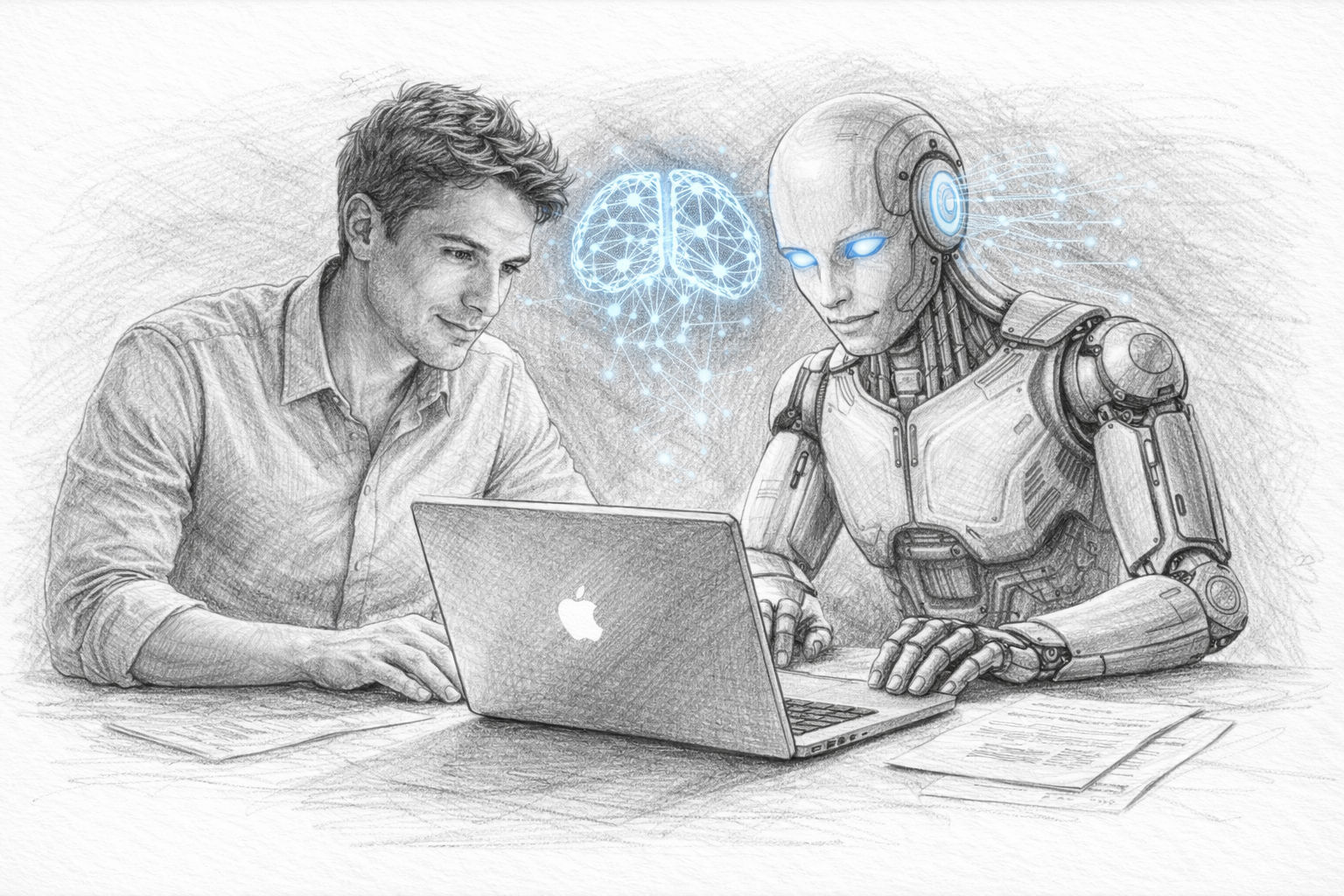
New technology almost always triggers two opposing reactions. Some expect miracles. Others expect disappointment. Both attitudes are understandable, but rarely helpful. If you want to stay sober, it's better to ask a simple question: what can a system reasonably achieve - and what are its limits?
This distinction is particularly important when it comes to artificial intelligence. After all, much of what seems possible today is created in carefully prepared examples. Everyday life, on the other hand, is messy. Information is incomplete, formulations are ambiguous, priorities change. An assistant must be able to deal with this.
What can actually be expected
You can expect routine tasks to become easier. Texts can be drafted more quickly, information can be found more easily and appointments can be planned more clearly. Suggestions appear where they make sense. Repetitions are reduced.
This is no small matter. Many small simplifications can significantly relax the daily routine. If you have to search and sort less, you can concentrate more on the content. This is precisely where the realistic gain lies.
Help will also be noticeable when starting new tasks. Instead of searching for the right function for a long time, you describe your goal - and are offered a direction.
Not perfect, but helpful.
What you should not expect
Despite all the progress, AI remains a tool. It has no judgment of its own, no sense of responsibility, no real experience. It works with probabilities, with patterns, with what it has learned. This can be impressive - but it is not infallible.
There will be situations in which suggestions seem inappropriate. Summaries may lose nuance. Wording may seem correct but not strike the desired tone. Sometimes the system simply misunderstands.
These moments are part of it.
Why disappointments arise
Problems often arise where expectations are inflated. Those who believe they will never have to think for themselves again will inevitably be disappointed. Those who seek support, on the other hand, will discover many helpful approaches.
Perhaps a comparison will help: a navigation system knows the way, but it does not drive the car. It can give directions, but the responsibility remains with the driver. It will be similar here.
A realistic approach to AI means checking results. Questioning proposals. Making adjustments. No system can take on this role.
But this is also one of its strengths. People keep an overview. They decide what fits and what doesn't. Technology expands the possibilities, but does not replace judgment.
Progress in small steps
The biggest changes will probably not be spectacular. They will quietly become part of everyday life. At some point, you will notice that things are moving faster, that there is less friction, that certain hurdles have disappeared.
And only in retrospect do you realize how much processes have improved.
This is perhaps the most honest expectation: not a miracle, but continuous relief.
The Mac remains a tool. But one that listens.
If you look at the development of the last few chapters, you could easily get the impression that the computer is turning into something completely new. Into a conversation partner, an advisor, perhaps even a kind of digital companion.
And yet one core remains unchanged. The Mac is and remains a tool.
Programs are still opened. Documents are saved. Decisions are made by people. The familiar environment does not disappear, it is expanded.
This continuity is particularly important. It ensures that the transition is not overwhelming. Nobody has to reinvent their way of working from one day to the next.
Instead, help grows where it is needed.
Integration with Apple iOS and CarPlay
If you think about the development further, it's not just about finding a smarter answer to individual questions. The decisive factor will be how well this new intelligence fits into the interaction between the devices. This is traditionally one of the great strengths of Apple. Mac, iPhone and iPad have been working closely together for years, with information moving almost naturally from one screen to the next.
If Siri actually becomes more powerful in the background, this networking could reach a new level. A query might start at your desk, continue on the move and end later at your computer - without you losing the thread.
This is particularly interesting in the car via CarPlay. Where hands and eyes are tied, every simplification counts double. You could have important emails summarized or read out in full, ask questions and dictate an answer directly, which is already prepared in a structured way. Appointments can be clarified and information retrieved without having to navigate through menus.
If this works reliably, there will be a smooth transition between driving and organizing. It is precisely at moments like these that it becomes clear whether technical upgrades actually have practical benefits - or whether good ideas still need some time to mature.
Listening changes the relationship
The difference lies in attention. A system that tries to understand what is meant feels different from one that only responds to precise commands. It gives the impression of cooperation.
Perhaps that is the biggest innovation. No longer sitting alone in front of a task, but being accompanied by suggestions, reminders and structuring aids.
The better this support works, the less it becomes apparent. You work and many things simply run more smoothly. This is precisely the art of being present without imposing yourself.
If this succeeds, artificial intelligence will no longer be a foreign concept, but a natural part of everyday life.
People remain the benchmark
In the end, it is not the performance of a model that is decisive, but whether people can work well with it. Whether they develop trust. Whether they have the feeling that they are being supported and not replaced. This balance will determine success or failure.
Perhaps now is not the time for big promises, but for careful observation. The coming years will show how well aspiration and reality meet.
But one thing seems likely: computers are getting better and better at accommodating us. And when a tool starts to listen, that is no small step. It is a sign that technology and humans are moving a little closer together.

Frequently asked questions
- I'm not a technology expert. Can I use these new AI functions at all?
Yes, that's exactly why they are being developed. The basic idea is that nobody needs to know complicated menus, commands or special terms any more. Instead, you describe in normal words what you want to achieve. The system tries to derive steps from this or make suitable suggestions. If you can write emails, plan appointments or search for documents, you already have everything you need. The technology is designed to break down barriers, not create new ones. - Do I have to completely change the way I work?
No. The familiar programs and processes are retained. AI is added as additional support. You can use it if you find it helpful and ignore it if you prefer to do the work yourself. Many users will probably discover step by step where time can be saved. Changes occur gradually rather than abruptly. - Will the computer make decisions for me at some point?
After all that is foreseeable, the responsibility remains with people. Systems can make suggestions, prepare drafts or present options. However, the final choice remains with the user. It is precisely this boundary that is important for trust to develop. - What happens if the AI gets something wrong?
Misunderstandings will happen. Language is complex, situations vary and no system can capture every nuance perfectly. Correction options are therefore crucial. Good solutions allow suggestions to be adapted or discarded quickly. So you continue to work actively. - Will I lose my own skills through automation?
On the contrary. Experience helps to better assess results. If you know what a good text sounds like or what a clean process should look like, you can make targeted improvements to the AI's suggestions. The role is shifting from pure execution to control and refinement. - Will this really save me time or does it just sound good?
The greatest effect is achieved through many small simplifications. Less searching, faster formulation, quicker preparation of answers. Each individual saving seems small, but over days and weeks it adds up significantly. This is precisely where the practical benefit lies. - Can I still do everything myself if I want to?
Yes, the systems are intended as an offer, not as a compulsion. Those who prefer to work in the traditional way can do so. No one is forced to accept suggestions or activate automatic help. - How does the AI know what is relevant for me?
It is based on patterns. Which files are used frequently, with which people there is regular contact, which appointments are typical. This gives rise to probabilities. It is not a personal understanding as with a person, but a statistical approximation. - Do I have to constantly check that everything is correct?
A scrutinizing look remains useful. Even very good systems can make mistakes or incorrectly assess correlations. Responsibility cannot be outsourced. If you briefly skim the results, you are always on the safe side. - How will this develop over time?
The longer a system is used, the better it can recognize recurring processes. As a result, suggestions often become more suitable. At the same time, manufacturers will continue to improve functions and adapt them to feedback. It is therefore an ongoing process. - Is there a risk that I will become dependent on this help?
Getting used to it is possible, as with any comfort function. That's why it's good not to forget your own basics. If you know how tasks work without assistance, you can remain independent at all times. - Does this make operation more complicated?
The goal is the opposite. Complexity should be reduced. If additional functions appear, they should ideally be embedded in such a way that they do not interfere but provide orientation. - How does this development differ from earlier improvements such as the automatic spell checker?
The difference lies in the scope. Whereas previous assistance was limited to individual tasks, AI attempts to recognize connections across several areas. This allows support to become broader and more flexible. - How quickly will this change my everyday life?
Probably step by step. Some functions are immediately noticeable, others only become apparent in retrospect. It is often only after months that you realize how natural certain conveniences have become. - Can AI also help creatively or does it stick to standards?
It can provide inspiration, offer variations and initiate thought processes. However, the actual creativity still comes from people. AI expands possibilities, but does not replace your own ideas. - What if I don't trust the suggestions?
Skepticism is healthy. You can try out functions, gain experience and then decide in which situations they are useful. Trust grows from repeated reliability. - Why are companies investing so heavily in this technology?
Because simplified operation opens up new user groups and increases productivity. When tasks are completed faster and more securely, both users and providers benefit. - Will people even want to work without AI in a few years' time?
That depends on people's experiences. If support noticeably eases the burden, it will become a matter of course - just like many earlier innovations that nobody thinks about anymore. If, on the other hand, it generates more effort than benefit, it will be ignored. In the end, it's always everyday life that decides.