"You have too much stress."
That's what my dentist said to me when I was being treated for my CMD problems. And my spontaneous answer was one that many people would probably give:
"Yes, what am I supposed to do - I have the stress."
But his next sentence stuck in my head. He just said calmly:
"Maybe you'll find a solution over time. Let time work for you."
At the time, I couldn't make much sense of this sentence. Today I know that it was one of the smartest things anyone has ever said to me. Because the solution didn't come overnight - but it did. And it didn't come because I changed something spectacular, but because I started to structure my life differently on a small scale. More clearly, more consciously, more simply. And with every small step, the stress became less - not because life was suddenly easy, but because I had more breathing space. Especially with a CMD disease stress plays a major role because the nervous system is already constantly in alarm mode due to chronic muscle tension.
This article is not a guide to "mindful breathing" or a new miracle technique to combat stress. It's about something much more down-to-earth:
How to find small adjustments in your everyday life, in your family, at work and in your own thinking that can make a big difference.


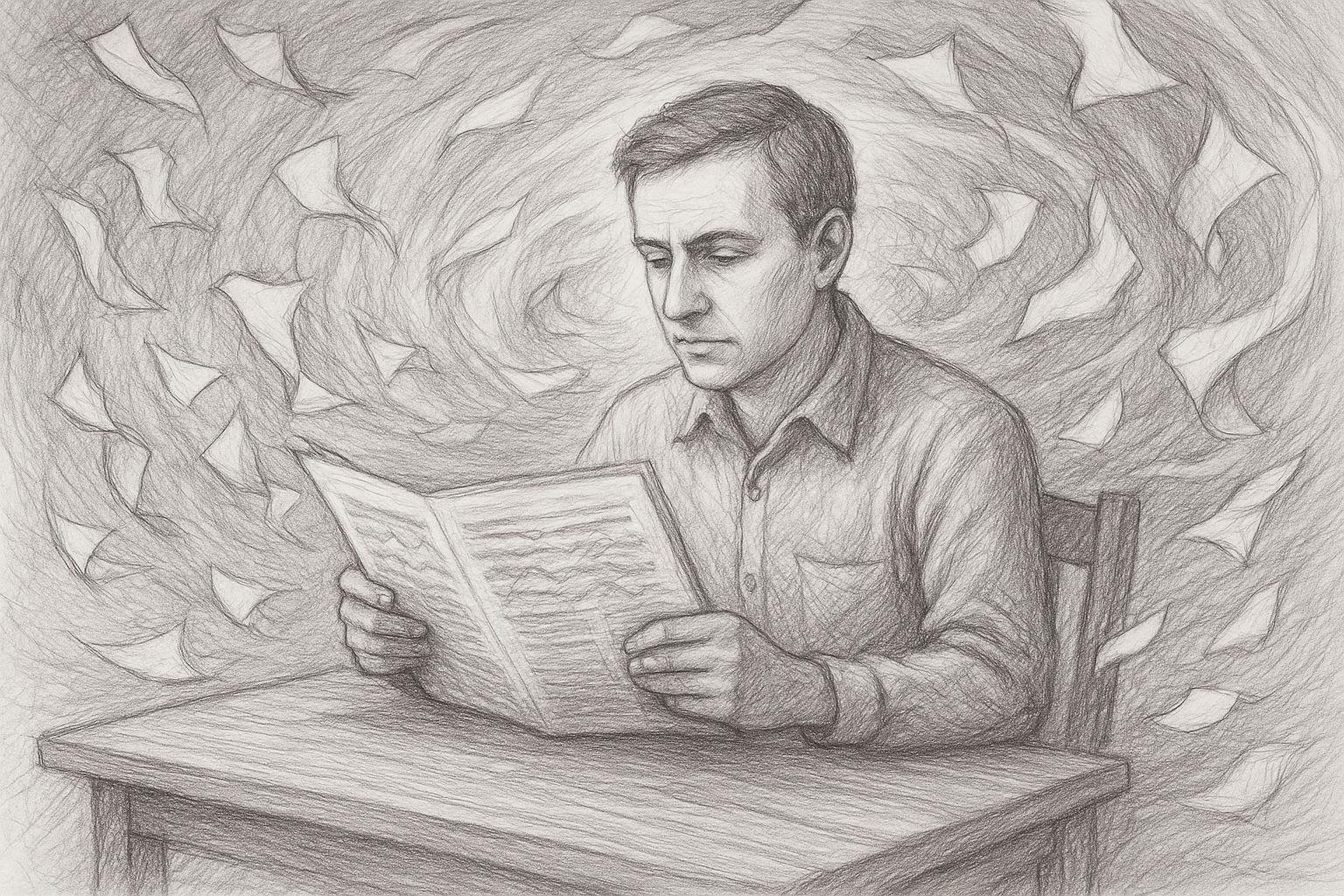

Overloaded everyday life - small levers, big impact
We are used to thinking in broad categories when it comes to change. We think we have to get a new job, move to a new place or take a sabbatical. However, most of the stress doesn't come from the big things, but from the many small, daily frictional losses that quietly add up - until they take our breath away.
This is precisely why it is worth focusing on what we often overlook.
Recognizing frictional losses - the invisible stress
Many stressful moments in everyday life seem trivial at first glance. Getting up too late, frantically searching for the keys, the coffee that's empty again, the emails that you start reading five times - but never answer. And yet each of these little stumbling blocks is an energy thief.
Stress is not only caused by major conflicts, but also by the constant interruption of our inner flow. Every little thing that doesn't work draws attention. And attention is a limited resource. So if you are distracted throughout the day by lots of little frictions, you will be exhausted in the evening - even if "nothing bad" has actually happened.
The question is therefore not: How can I avoid stress?
ButWhat small things regularly cost me energy - and are unnecessarily complicated?
Micro-optimizations that add up
The key lies in small, feasible changes. And it often starts with a simple thought: what could I improve once so that I never have to do it wrong again? Here are a few examples:
- The most important everyday items (keys, wallet, headphones) have a fixed place - not five different storage locations.
- The weekly shopping is not rethought each time, but is done using a reusable list.
- The morning routine is so clearly thought out that you know what's coming next even when you're half asleep.
These small optimizations don't save hours - but they do save mental processing power. And that is precisely the point: if you have to make fewer decisions, you are less stressed. Just asking the question often helps:
"What has stressed me out the most unnecessarily in the last seven days - and how could I avoid it in future?"
The answer to this is usually banal. But that is precisely where its power lies.
The next chapter deals with an area that is even more sensitive: the family. This is because routines and role patterns often emerge here that have never been consciously agreed - and yet still dominate everyday life. You can also start there without questioning everything. All you need to do is allow yourself to consciously shape things.
Family and relationships - stress in a camouflage suit
Some stress factors are immediately recognizable: too much work, too little sleep, constant deadline pressure. Others are harder to grasp - precisely because they seem so commonplace. In many families, life runs along well-trodden paths, often lovingly, often well-rehearsed - but also often unspokenly regulated. And this is precisely one of the biggest underestimated sources of stress.
The big "That's just how it's done"
In every family, there are tasks that are "just done". The mother does the paperwork, the father fixes things, the children leave their things everywhere. Shopping, cooking, tidying up, coordinating appointments - it all happens because "that's just the way it's always been". But what began as a habit quickly becomes an unspoken expectation. And that is dangerous - especially when life circumstances change or stress levels increase.
You often don't even feel the stress at first. You simply function. But something starts to build up in the background: Dissatisfaction, exhaustion, the feeling of being responsible for everything. And when someone asks you if you are stressed, you often just shrug your shoulders: "No, everything's fine. I'm just tired."
The sentence "That's how we've always done it" is not an argument - but often a warning signal.

New rules for everyday life
The good news is that you don't have to reinvent the wheel. It is often enough to have a conversation that has never happened before. No accusations, no arguments - just a simple question:
"Does what we do every day still make sense - or is it just a habit?"
Perhaps this is the result:
- a new distribution of tasks in the household,
- a relief for the person who always "automatically" takes over everything,
- or even just a joint reflection on what has changed.
And the same applies to relationships: closeness is not created through habit, but through awareness. It is not "always doing it this way" that creates closeness, but the occasional pause for thought: "How are we actually living with each other right now - and does that still suit us?"
Such conversations take courage. But they create clarity. And clarity takes out the stress that otherwise simmers in the background.
Occupational stress - the invisible pressure
For many, the workplace is the main source of stress - often more than they admit to themselves. It's not always about too much work or a bad boss. Sometimes the real stress lies in the fact that you've never asked yourself whether what you do every day suits you at all.
Questioning the system
Occupational stress often seems to have no alternative.
"I can't look for another job."
"I'm dependent on the money."
"It's just the way it is."
But these are often shortcuts, not truths. After all, who says that change always has to mean changing jobs? Change can also start on a small scale:
- Simplify processes
- Optimize routines
- Hold conversations
- Rethinking responsibilities
- Set priorities more clearly
If you start to look at your day-to-day work like a system, you will suddenly find adjustments that were previously invisible. Maybe not immediately - but over time. Just like my dentist said back then.
Rethinking your own work image
Many people are professionally stuck in a self-image that is no longer up to date. They fulfill expectations that nobody expresses anymore - or that are long outdated. The crucial question is:
Who do I actually want to be at work - and what is just habit?
Am I someone who simply carries out tasks? Or do I see myself as someone who understands processes, improves them and takes responsibility - in my own way? Even as an employee, you can lead. Not necessarily other people - but yourself. Those who do this not only become freer inside. But often also more visible, more respected, more effective.
And sometimes this professional clarity begins in the mind - not in the office. The next chapter is therefore about the inner stress that accompanies us, even when everything else is "running". Thoughts that don't stop, tasks that never seem to be finished, demands that we impose on ourselves. Here too, relief begins with structure.

Inner stress - how thoughts block us
Not all stress is caused by external pressures. Sometimes it's your own head that can't rest. Even on days that are actually calm, there is often a constant background noise: open to-dos, unresolved thoughts, mental loops in which you get yourself tangled up.
The insidious thing about it is that you often don't realize it. You "work", get things done, are constantly active - and yet you feel like you never get anywhere. This is not due to laziness, but usually to an unresolved backlog of thoughts. Things that overlap because they have never been clearly structured or consciously filed away.
Thoughts as constant noise
A full desk is visible. A full head is not. And yet a cluttered mind can be as paralyzing as a chaotic office. Typical signs of this are
- You think the same things several times - without acting.
- You constantly feel "under power", even if objectively there is nothing urgent to do.
- You become more irritable, more agitated, less concentrated.
These are all signs of inner stress that should be taken seriously. Not dramatic - but clear. Because thoughts also need structure in order to sort themselves out.
Clarity through simple tools
The good news is that the mind can also be relieved - not by brooding, but by filing things in an organized way. Simply put: what is on paper or in the system does not have to be buzzing around in your head. This can be helpful:
- Simple to-do lists with priorities
- a notebook for loose thoughts
- A short daily journal ("What kept me busy today?")
- structured tools such as FileMaker or calendar logics - depending on your personality
It's not about documenting everything perfectly. It's about not turning your head into a storage room when there are better places for it.

Do We Need More Stress? | 42 – The Answer to Almost Everything | ARTE
Freedom through responsibility - how to really reduce stress
In the end, every way out of stress leads to a very simple realization:
I have more influence than I think.
Not on everything. But more than it seems. Responsibility is not an additional weight - it is often the only way to transform pressure. If you start to consciously make small decisions, you take away the omnipotence of stress.
Responsibility as a tool, not a burden
Many people fear responsibility because they believe it will only make things more difficult. In reality, it is often the other way around: responsibility clarifies things. It makes you aware of what you can control - and what you can't. If you start to see your life as a creative space, you suddenly realize:
- Where to Say no can.
- Where to delegate can.
- Where to start again may.
- Where to Change routines can - not because you have to, but because you want to.
The underestimated art of stopping life short
Anyone who remembers the movie Momo by Michael Ende - or rather: the feeling that this movie triggered - will understand what is meant here. Momo, the girl with the big eyes and the keen sense of time, was the only one who could counter the gray men. And how? By not letting herself be rushed. Sometimes she simply stopped time. And precisely then, in this complete silence, everything that was previously too fast, too hectic, too strange suddenly became visible.
This metaphor gets to the heart of a skill that hardly anyone consciously uses these days: stopping your own life. Not forever. But for a moment. Not to escape - but to see.
Pausing is not a luxury, but a necessity
In this day and age, everything is on the move. We get up and can be reached immediately. Appointments, notifications, obligations. Even our thoughts no longer seem to belong to us - they jump from one topic to the next, influenced by external stimuli, expectations, images and algorithms. It is precisely in this state that the feeling often arises: I can no longer think clearly. I no longer know what I want. I'm just reacting. And then comes the crucial thought: I have to get out of here - but I don't know how.
The point is: you don't have to get out. You don't have to quit your job, emigrate or leave your family. Nor do you have to change everything immediately. Sometimes it's enough to make a clear cut. A break. A freezeout.
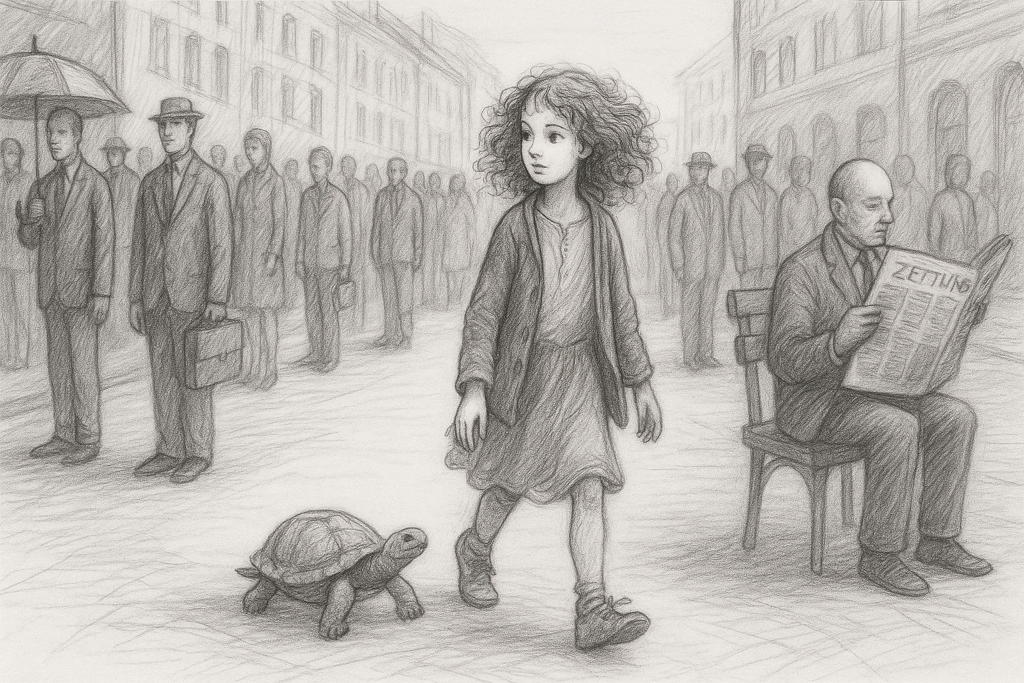
The self-freezeout: consciously getting out of the flow
A self-freezeout is nothing esoteric. It is not a time-out in Bali, a yoga retreat or a spiritual escape. It is something much more down-to-earth - and at the same time much more powerful: a conscious pause in the middle of your own life.
The idea is as simple as it is radical: For a weekend—or even just for a day—you take some time away. Alone. No cell phone, no Netflix, no emails, no conversations. Just you, maybe a notebook, a walk, silence. And if you do happen to have a cell phone with you, you can use it as a tool for reflection with an AI app—but leave scrolling through social media aside for the time being.
It's unfamiliar at first. Things come up that are easily suppressed in everyday life: unanswered questions, old topics, new longings. It first gets louder in your head before it gets quieter. But it is precisely in this phase that the inner system begins to reorganize itself.
Suddenly you realize what is really weighing you down - and what you are just telling yourself. You realize which obligations arise from real value - and which are just old habits. You can see more clearly where you have lost yourself. And that is often the point at which you regain real power to act.
No retreat - but reconnection
Many people confuse a break with a retreat. But the opposite is true. You are not withdrawing to be away. You withdraw in order to be fully present again. Because if you never take yourself out, you will eventually lose your connection to yourself. And those who no longer have a connection to themselves only live the life that others have designed for them - be it through external expectations, social roles or professional routines.
So a freezeout is not an escape. It's a reconnection.
You step out of the current for a short time in order to consciously step back into it - and this time with your own direction. The result is clarity - and new energy After a weekend like this, not everything is different. But many things are more organized. You suddenly know again what is important to you. What can go. What can stay. And what should change - slowly, step by step.
This clarity is priceless. It cannot be bought, it cannot be thought up, it cannot be delegated. It only arises in silence. In a conscious, almost courageous decision:
I stop everything now - to get back to myself.
Not everyone is ready for it. Some fear the emptiness. Others have simply never learned to be alone. But those who dare will be rewarded - with a state that hardly anyone knows anymore: true spiritual independence.
Time as a tool, not an enemy
Many people experience time as an antagonist. They rush through the day, feel driven, chased - as if the clock is working against them. But time is not really an enemy. It is neutral - a tool that we can use or turn against us. Those who begin to see time as a partner often experience a surprising change: the clock no longer becomes the clock of stress, but the clock of life. It is not about defeating time, but about shaping it.
Goals give time direction - and peace
My personal experience shows that the clearer your goals are—whether short-term, medium-term, or long-term—the less overwhelming time feels. After all, when you have goals, you fill your time with purpose rather than just letting it slip away. Even during stressful periods, this creates a certain sense of calm—an inner knowing that every hour brings you a step closer. It puts the lack of time into perspective.
Because even if you "have" less time, you can feel that you are on your way - and that alone has a calming effect. Time then no longer becomes a threat, but a silent ally that accompanies you instead of driving you forward.
A quick book tip in between
 I also take up many of the ideas from this article in my book "Crises as turning points - learn, grow, create" on. Among other things, it deals with how to regain your strength after stressful phases in life - through structured thinking, smart questions and lots of specific tools, including on the subject of stress management and self-management.
Anyone who wants to delve deeper into these topics will find further inspiration there. The book also contains many practical tips on how to use AI systems as a tool for self-reflection to better deal with personal crises.
Lithium - the forgotten trace element for inner stability
In today’s debate on mental health, the term “lithium” is often mentioned only in the context of severe psychiatric disorders—as a medication for bipolar disorder, for example. But that’s far too narrow a view. In fact, lithium is a naturally occurring trace element found in many soils and water sources—albeit in widely varying concentrations. In recent years, a growing number of studies and anecdotal reports have indicated that microdoses of lithium, such as those in the form of lithium orotate (1–5 mg per day), can have a calming effect on the central nervous system—without any of the side effects associated with higher-dose medications.
A slightly elevated lithium level in the physiological range can have a stabilizing effect, especially in cases of chronic stress, inner restlessness or constant overstimulation - conditions that many people experience in our accelerated world. Not as an anaesthetic, but as a kind of fine buffer that can dampen emotional overreactions and support clarity of thought. It is remarkable how much this trace element has been pushed out of the public debate for decades - although in balanced quantities it is obviously exactly what many people need today: an unspectacular but effective reconnection to inner balance.
If you are interested in this topic, you can find further information in my separate Articles about lithium and its underestimated role in mental stability.
Less must, more may
In the end, it's not about leading a "perfect life" - but a conscious one. If you regularly question small things, you will gain more freedom step by step. Not through radical change, but through calm, consistent design.
If you act less automatically, you can live more consciously. And that is perhaps the most valuable anti-stress measure of all.
Sometimes the best step is not a step - but a pause
If we're honest, many of us feel like we're constantly running. And that's exactly why it's so liberating to simply stop moving. Not to be lazy. But to be able to see again. Just like Momo did back then, when she refused to give in to time, looked the gray men in the eye - and saved her life. Maybe we don't save the world right away. But perhaps we will save our own inner balance. And that's more than you might think.
Stress is not the opposite of success - but of structure
When stress becomes a permanent condition, it is rarely due to laziness or weakness. It is usually due to too many things going on at the same time - disorganized, unsaid, unchecked. The first step towards relief is never huge. It is small. And that's precisely why it can be done.
A single thought is often enough to get things moving:
"Does it really have to be like this - or can it be easier?"
Every little space you create for yourself increases your room for maneuver. And if you act instead of just reacting, you will experience something quite astonishing over time:
Life doesn't get easier. But it does become clearer. And clarity is the best antidote to stress that I know of.
From everyday life to the cause - why stress needs to be understood more deeply
 This article shows very clearly that stress often arises from many small, everyday frictional losses - from habits, routines and unconscious patterns. The new article now goes one step further and sheds light on the physical level behind this: the nervous system itself. Because what seems like „too much to do“ in everyday life is often a permanently activated alarm state from a biological point of view. Stress can therefore be explained not only in organizational terms, but also physiologically. Both perspectives intertwine: those who recognize and understand the small causes in everyday life, how the sympathetic, parasympathetic and cortisol nervous systems work, can intervene in a more targeted way - not frantically, but consciously and step by step.
When stress arises in the company: structures instead of permanent stress
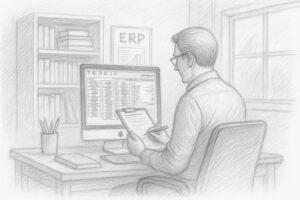 Many people look for the cause of stress exclusively in their private lives or in their personal behavior - and overlook a crucial area: the daily processes in their own company. It is precisely here that countless small points of friction often arise, which build up unnoticed into a permanent burden. Unclear responsibilities, duplicate data entries or a lack of transparency not only cost time, but also energy and nerves. If you start here, you are taking a classic, tried-and-tested approach: creating order, simplifying processes and structuring responsibilities clearly. This is precisely where the practical Benefits of a sophisticated ERP solution like gFM Business ERP. It bundles information, reduces unnecessary intermediate steps and ensures that work processes become comprehensible again. The result is not a short-term effect, but a noticeable relief in everyday life - because less chaos automatically leads to more clarity and therefore less stress.




Frequently asked questions
- What exactly do you mean by "stress is not a force of nature"?
Many people believe that stress is something that just "happens" to them - like the weather. But that's not true. Stress is usually caused by many small decisions, structures and habits that have crept in over time. And because it is man-made, it can also be gradually reduced. - But I can't just change everything because it stresses me out, can I?
That's true - not everything can be changed immediately. But it's also not about turning your whole life upside down. It is often enough to optimize small things. If you have a clear morning routine, for example, you will save yourself a small loss of energy every day. And over time, such changes add up. - What about stress in the family - that's not so easy to solve, is it?
That's right - family stress is often particularly stubborn, precisely because it hides behind habits. Many family routines have never really been discussed, but simply adopted. The main thing that helps here is to talk openly: Who does what? Is it still coherent? Are there any blind spots? In most cases, it's not about who does "more", but whether it is consciously and fairly distributed. - Isn't it selfish if I suddenly question things that others are used to?
Not necessarily. If you communicate honestly and respectfully, you don't take anything away from anyone - but ensure that things work better for everyone in the long term. Responsibility does not mean bearing everything alone, but consciously shaping things together. - What do I do if my partner or my family doesn't want to go along with me?
Then it is all the more important to start with yourself. You can't force others to follow suit - but you can change your behavior, your routines and your expectations. And this often acts as an impulse. Change rarely starts with everyone at the same time - but it can start with one person. - How do I even find out what's stressing me out when I've lost track?
A good method is to look back: What made me unnecessarily upset, rushed or tired last week - even though it was objectively small? Where did I repeatedly search for, postpone or put off the same thing? Such repetitions are often silent sources of stress. - I work in the office and feel like I'm just reacting - how do I get out of it?
Start with small things: Set clear priorities, consciously complete tasks instead of keeping everything open at the same time. Free up 10 minutes a day to create rather than react - e.g. improve a filing system or rethink a work process. Such mini-reforms are more effective than hectic large-scale projects. - Are there any tools or techniques that particularly help to take the pressure off your head?
Yes, but it's less about the "right tool" and more about the principle behind it: Outsourcing what doesn't need to stay in your head. This can be a simple to-do list, a notebook, a digital tool such as FileMaker or a list of thoughts on paper. The decisive factor is: the less that remains open in your head, the clearer your thinking becomes. - How do I actually distinguish between real stress and "just" inner restlessness?
It is often a smooth transition. But as a rule of thumb, if you regularly have the feeling that you can't calm down inside - even though objectively there is no acute problem - then it is internal stress. The difference to restlessness is that this state paralyzes you instead of making you creative or alert. - What if I don't dare to talk about things at work or with my family?
Then start on a small scale. You don't have to have a conversation straight away. You can also observe, document and recognize patterns first. And perhaps at some point this will lead to an opportunity to address something in a friendly and objective manner. Often it doesn't need a "big conversation", just a well-placed question. - Why do you write that responsibility can bring freedom - isn't that a contradiction?
It seems contradictory at first, because many people equate responsibility with a burden. But true responsibility is self-chosen. It means: I recognize what I can influence - and do it consciously. This provides security, orientation and also: freedom. - What about people who are chronically overwhelmed - does structure help at all?
Structure is no substitute for therapy or professional help - but it can be a stabilizing foundation. Even in very stressful phases of life, small structuring steps (e.g. fixed times of day, simple task plans) can help to regain some stability. - Is there also a book by you in which all this is dealt with in more detail?
Yes—in my Book: „Crises as Turning Points” “– Learn, Grow, Create” addresses precisely these questions: How to emerge from difficult periods, how to build well-thought-out structures, and what it takes to regain the ability to act—mentally, organizationally, and emotionally. - How long does it take for such changes to really become noticeable?
This varies. Some people feel that their everyday life runs more smoothly after just one week. For others, it takes longer. But the decisive factor is that every small step makes a noticeable difference. And the sum of many small steps changes your attitude to life in the long term. - Isn't it all just self-optimization?
No. Self-optimization often has the goal of "achieving more". This is about the opposite: achieving less unnecessarily. It's not about functioning more efficiently - it's about living more consciously. That is a fundamental difference. - What if I constantly have the feeling that it's never enough - no matter how much I do?
It is then worth questioning where this expectation comes from. It is often an old pattern or a learned self-image: "I have to perform first in order to be valuable." You can't simply turn off such inner convictions - but you can start to recognize them and gradually weaken them through conscious action. - What helps when I keep falling back into old patterns?
Acceptance. Change is not a straight line. It's normal to slip back. The important thing is not that you always function perfectly - but that you realize when you are stuck in the old rut again and then take friendly but clear countermeasures. Every relapse is also an opportunity to consolidate your new way of thinking. - How do I get started - today?
Ask yourself exactly one question tonight or tomorrow morning: "What has bothered me several times in the last few days - and what can I specifically change to make things better?" Write down the answer. And then resolve to implement just this one point. That's all you need at the beginning.