
I've been using artificial intelligence for almost exactly two years now. In the beginning, it was sober and technical: entering text, typing prompts, reading answers, correcting, retyping. The way many people did it - carefully, in a controlled manner, with a certain distance. It worked, no question. But there was still something mechanical about it. You asked questions, got answers, ticked them off.
I realized relatively early on that I was missing something: flow. Thinking is not a form. Good thoughts don't come from a corset of neatly formulated input, but from talking, trying things out, thinking aloud. So I started to use the AI app on my cell phone more often - and at some point I simply started speaking instead of typing. That was the real turning point.
Since then, AI is no longer a text tool for me, but a constant conversation partner. Not in the sense of small talk, but as a counterpart in thinking. Today, I use AI for many purposes - strategically, conceptually, analytically. And above all, I get my work done much faster than before, without becoming more superficial. Quite the opposite, in fact.

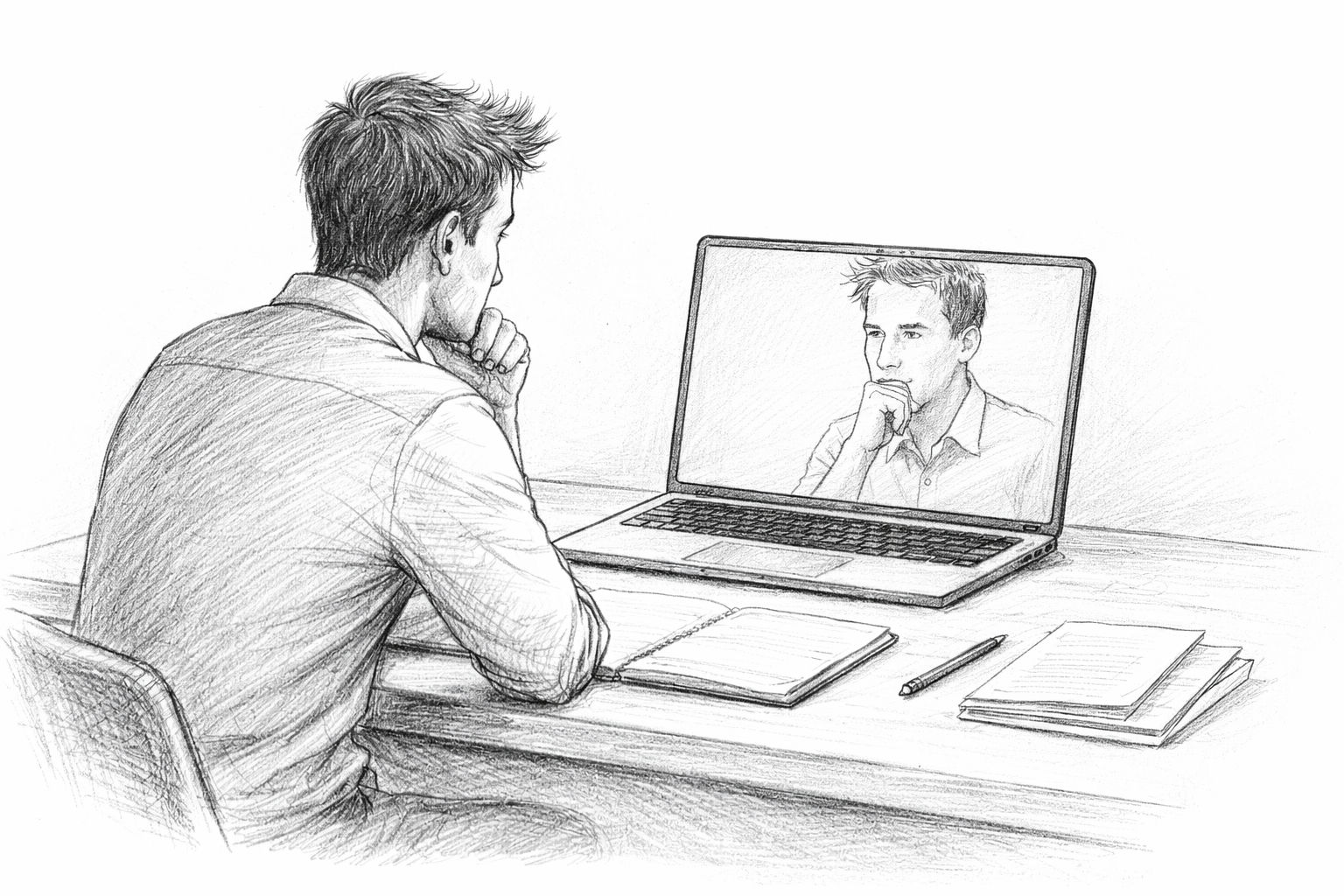

You are no longer alone with your thoughts
Many people work alone inside. They carry their ideas, doubts, plans and questions around with them, sometimes for days on end. In the past, you needed colleagues, mentors, discussion partners - people who had time, could listen and were willing to think along with you. That was rare. And often subject to conditions.
It's different today. You can express your thoughts at any time. You can have them organized, questioned, sharpened or taken apart - without social friction, without a schedule, without justification. It feels unusual at first. Almost as if you were listening to yourself think.
The crucial point here is not the answer provided by AI. What is crucial is that thinking becomes dialogical again. Thoughts don't get stuck in your head, they start moving. Anyone who has experienced this quickly understands that this is not a gimmick, but a fundamental change in the way we work.
The ten most important employees you need in life
When you use AI as a sparring partner, at some point it feels like you have a small team in your pocket. Not an anonymous large collective, but exactly the roles that you need in everyday life - but rarely have available at the same time. For example:
- the factual Consultant, who stays sober
- the critical Counter-speaker, the contradiction formulated
- the patient Explainer, that simplifies complex things
- the Structurer, who brings order to thoughts
- the Idea generator, that opens up new perspectives
- the Analyst, who checks connections
- the Translator between technical language and everyday life
- the Summarizer, that filters out the essentials
- the Planner, that organizes steps logically
- and the silent Sparring partner for early morning hours
Not all at the same time, not always - but exactly when you need them. This is the point at which many people first understand why some people talk about „a whole team“. It's not about mass, but about role availability.
„An Albert Einstein in your pocket“ - as an image, not a promise
The comparison with an Albert Einstein in your pocket is often ridiculed - and of course it is exaggerated. Nobody should believe that an AI is brilliant or omniscient. That would be naive. But the comparison is still helpful as an image.
Not because AI is smarter than humans. But because it combines characteristics that are extremely rare in everyday life: unlimited patience, enormous breadth of knowledge, no vanity, no power play, no time pressure. It listens, thinks, asks questions and remains calm - even on the tenth attempt.
This combination creates something that is rarely found in real life. And that is precisely why many people feel as if they suddenly have access to a thought partner who would otherwise be unreachable. Not as an authority, but as a sounding board for your own thoughts.
Why this has nothing to do with enthusiasm for technology
One thing is important to me: none of this has anything to do with being in love with technology. Skepticism towards new tools is healthy - and appropriate. AI does not replace thinking. It does not take responsibility away from anyone. It does not make decisions.
But it reinforces what is already there. Clear thoughts become clearer. Unclear thoughts remain unclear, but become visible. If you are prepared to think clearly, you get a tool that helps you do just that. If you don't want that, you won't gain any insight even with AI.
Training creativity - AI as a sparring partner in the creative process
In a barely noticed YouTube conversation, Jenny Habermehl, author of the book „AI for creatives“, about creativity in the age of AI - and makes a point that fits perfectly with this article. The central thesis: creativity is not a talent that you either have or you don't, but a muscle that needs to be trained. AI can support this training process, but not replace it. This is precisely where its most useful application unfolds: as a sparring partner, not as an idea generator at the push of a button.

Rethinking creativity: AI as a sparring partner. | Kevin alone in marketing
During the discussion, it becomes clear that AI can both promote and jeopardize creative processes. It helps to overcome blockages, change perspectives and test ideas - but at the same time harbors the risk of mediocrity if its thinking is adopted without being tested. The focus on quality assurance, critical thinking and deliberate provocation techniques is particularly exciting: AI is allowed to contradict, irritate and even provide absurd answers as long as humans remain in the lead. The conversation shows impressively that real creativity arises where humans and AI work in dialog - with curiosity, distance and a clear responsibility on the human side.
The mindset - why AI is not a tool, but a sparring partner
Many people are getting into AI as if it were a new tool in the toolbox. That's understandable, because that's how we were brought up: There's a tool for every task. Spreadsheets for figures, graphics programs for images, text programs for writing. That works - but it quickly leads to a dead end with AI.
Because tool thinking is almost always island thinking. You open a tool, complete a single task, save the result and close it again. The tool is interchangeable because, at its core, it only fulfills one function: „Mach X“. The more automated it becomes, the less thinking remains. And therefore less of the actual value.
Dialog thinking is the opposite. In dialog, connections are made automatically. You don't just think in terms of results, but in contexts. You don't just process, you understand. And this is precisely where the real strength of AI lies: it is less a tool for results - and much more a counterpart that sets thinking in motion.
Why „island tools“ are often convenient - but rarely really powerful
Specialized AI tools can be practical. No question about it. But they come at a price: they are often so highly optimized that they also optimize away the thought process. You click your way to a result that looks good - and only realize later that you have barely understood why it is good or what might be wrong with it.
It's like ready-made templates: they save time, but they also make you comfortable. And convenience is dangerous with complex topics because it replaces critical examination.
A sparring partner works differently: they don't do the thinking for you, but almost automatically force you to think more clearly. Not through morals, not through pressure - but through questions, through structure, through alternative points of view. A good conversation is rarely the quickest shortcut. But it is often the shortest way to clarity.
Current survey on the use of local AI
Why thinking in conversation is more valuable than „getting answers“
If you treat AI like a tool, you usually ask questions that require a ready-made answer. This seems efficient, but is often an illusion. The quality of the answer depends entirely on how clear the question was - and whether you made the right assumptions.
Something better happens in dialog: you formulate your thoughts, hear feedback, clarify, correct, sharpen. This creates a cycle that automatically networks:
- You recognize what you are still missing
- You notice which terms are blurred
- You see where you assume something yourself
- You get counter-arguments before other people start to beat you over the head with them
- You find the structure before you get lost in the details
This is classic mental work, just like you used to do with good colleagues, mentors or experienced practitioners. The only difference is that today this discussion partner is available at all times.
And that's exactly why dialog almost inevitably produces more quality than tool mode. Not because AI is „right“, but because you are forced to organize your thoughts during the conversation.
Sparring means contradiction: Why counter-arguments are more important than agreement
A real sparring partner is not there to validate you. They are there to make you better. That sounds harsh, but it's actually a form of respect: they take your idea seriously enough to test it. With AI, you can get exactly that - if you ask for it:
„What weaknesses do you see in my plan?“
„What would a critic attack about it?“
„Which assumptions are questionable?“
„What alternatives are there?“
„What am I missing?“
This is the point at which AI becomes particularly valuable. Not as a supplier of text, but as a supplier of friction. And friction creates sharpness. Many people don't have enough opposition in everyday life - either because nobody has time or because nobody wants to offend. AI does not have this social problem. It is not offended, not insulted, not tired. You can get a factual form of dissent that is rarely possible in real life.
A sparring partner can remember - but you need to understand what that means
Another difference to classic tools: A dialog system can maintain context over a longer period of time. And depending on the platform and settings, a system may even remember certain things across chats - for example, style preferences, recurring topics or working methods. This is not automatically always active and not always desirable, but it explains why dialog systems often seem more „connected“ than individual functions in a tool.
The right attitude is important here: you shouldn't see memories as magic, but as a kind of working note. Helpful if it is correct. Dangerous if it is wrong. A sparring partner is not an archive of truth, but a partner in thinking. That's why the same applies here: check, classify, correct.
If you internalize this, you use AI in a way that is not interchangeable. Then it's not „this one tool“ that you replace with the next one at some point. Then it is a working method.
Responsibility remains with the individual - and that is precisely why the model works
Those who use AI as a tool are often looking for relief: „Do this for me.“ Those who use AI as a sparring partner are looking for something else: clarity. And clarity is always your job. You bear the responsibility. You make the decisions. You stand up for them later. AI can support you in this - but it can't do it for you.
This is precisely the reason why this approach is sustainable in the long term. It does not make you dependent on a tool. It makes you better at thinking, structuring and making decisions. And that is something that remains - even if the technical systems have changed again in two years' time.
In the next chapter, it gets practical: how to organize this way of thinking in everyday life so that it doesn't become chaotic - but rather like a well-conducted conversation that actually leads to results in the end.
Examples of possible roles of AI as a sparring partner
| Role / „Employee“ | Notes for a meaningful prompt | Typical applications |
|---|---|---|
| Objective consultant | „Please be sober, without emotion, without exaggeration. Focus on facts and logic.“ | Classification of decisions, weighing up options, objective evaluation of ideas or plans. |
| Critical counter-speaker | „Search specifically for weak points, counterarguments and possible points of criticism.“ | Testing arguments, preparing for objections, stress testing concepts and strategies. |
| Structurer | „Organize my thoughts logically, structure them neatly and clearly.“ | Outlines for texts, projects or presentations, bringing order to unfiltered thoughts. |
| Patient explainer | „Explain it so that even beginners understand it. Step by step.“ | Simplify complex topics, prepare explanations for customers, readers or employees. |
| Idea generator | „Think creatively, but realistically. No buzzwords, but ideas that can be implemented.“ | New perspectives, alternative solutions, inspiration for deadlocked situations. |
| Analyst | „Analyze connections, causes and possible consequences.“ | Cause analysis, evaluation of developments, logical penetration of complex issues. |
| Translator | „Translate technical language into understandable everyday language.“ | Communicating with non-experts, making texts understandable for customers, readers or the public. |
| Summarizer | „Summarize the essentials concisely and precisely.“ | Reduce long texts or conversations to core statements, create a basis for decision-making. |
| Project manager | „Think in steps, dependencies and realistic timelines.“ | Project planning, prioritization, identification of bottlenecks and risks. |
| Silent sparring partner | „Listen, ask clarifying questions without pushing.“ | Thinking aloud, sorting out personal thoughts, reflecting without external pressure. |
The technical level - how to work with AI in practice
Many fail not because of the AI itself, but at the threshold. They open the chat window, type two sentences, delete them again, rephrase them, type them again - and lose the thought before it has even taken shape. That's quite normal. Thinking is faster than typing. And if you are under time pressure or already have a lot on your mind, typing will quickly feel like unnecessary friction. That's why the easiest and most effective way to get started is to start typing:
Just talk to the AI.
Not complicated, not perfect, not slick. Just as you would explain something to a colleague. This helps enormously, especially at the beginning, because your thoughts stay in flow. You don't have to „prompt“ first, you can just think - out loud, messily, with half sentences. The AI can then turn this raw material into structure.
Incidentally, this is not a trick or a „pro function“, but a very traditional way of working: In the past, things were clarified over the phone, in a conversation at your desk or on a walk. Today, you can get this dialog back - only it's available at any time.
One topic = one chat: order is mental hygiene
If you really work productively with AI, a new problem quickly arises: too much material. Too many ideas, too many threads, too many fragments of conversations. And this is precisely why order is not optional, but a prerequisite. A simple principle is enough to get you started:
- One topic = one chat.
- Everything that belongs together stays together.
- Everything that no longer has anything to do with it gets a new chat.
That sounds banal, but it's crucial. Because a chat isn't just a chat - it's basically a digital notebook with a history. If you throw everything into a single chat, you mix context, tone, goal and details. The result isn't „creative“, it's chaotic. And chaos is the natural enemy of clarity.
Those who used to work cleanly also had separate folders: invoices here, contracts there, project documents in one folder. This old idea of organization is worthwhile again today - only in AI dialog.
New projects need a new framework - otherwise the thinking becomes diluted
Another step is the transition from topic to project. A project is not just „another chat“, but a long-term working context: you work on something for weeks or months, collect material, make decisions, develop a line. This can be:
- a book
- a new website
- a restructuring in the company
- a new product
- or even the foundation of a company
In such cases, it is worth giving the whole thing its own framework - and doing so deliberately from the outset. After all, projects have their own logic: they generate secondary questions, cross-connections, decisions and considerations. If you put all of this into a colorful collective chat, you will lose track at some point. If, on the other hand, you manage it as a project, a clean, continuous line of thought is created.
This is an old principle from every good workshop: If you are building a large project, build the work surface first. Not the workpiece.
Prompt drilldowns: Why a good framework is more effective than a thousand individual prompts
Many people believe that using AI consists of writing the cleverest possible individual prompts. This is typical tool thinking. In practice, it makes much more sense to set a good framework once, which then applies to everything else. This is exactly where so-called „drilldowns“ come into play - i.e. levels of specifications that are refined downwards. You can imagine this as it used to be in a company:
- At the top there is the corporate culture: tone, values, working style.
- Then there are project rules: Goal, target group, format, limits.
- And only below that come the individual tasks: Texts, plans, drafts.
Applied to AI, this means that it is wise not to explain every single question anew, but to give the dialog a basic direction. This creates consistency - and consistency saves energy. You don't have to rewrite every message:
- „Please be objective“
- „Please without the hype“
- „Please use my tone of voice“
- „Please for beginners“
Instead, once it is in the framework, everything else builds on it. That's not just convenient. Above all, it's professional. Because it corresponds exactly to what we know from good project work: clarify the rules once, then get to work.
The project system prompt: a silent lever for quality and recognition value
If you are working on a larger topic, it is worth formulating a project system prompt. This is basically a brief work instruction to the AI - comparable to a briefing to an employee: What is the goal? Who is it for? What pitch? What limits? A good project system prompt is not long. It is clear. For example:
- Target group: Beginners who are not technophiles
- Style: calm, respectful, understandable
- FocusCollaboration with AI, not tool lists
- Priority: Clarity before speed
- Postureskeptical, but constructive
The advantage is enormous: you get more consistent quality, fewer outliers, less „AI waffle“. And you can work faster because you don't have to constantly make corrections.
You can remain skeptical: A prompt is not a magic wand. But it is a framework. And frameworks are crucial in any form of communication. Good editors work in exactly the same way: define the guideline, then write.
The main prompt: The basic attitude for everything (and why you shouldn't overdo it)
In addition to projects, it is often also possible to define a general basic attitude - something like an overarching style that applies to all conversations. This can also be helpful if you know what you are doing.
But the rule here is: don't overdo it. The more rules you cram into such a basic prompt, the more likely it is to become a brake. It's better to have a concise guideline that really suits you and takes the pressure off you in everyday life rather than restricting you. For example, a sensible main prompt could be
- Tone of voice
- Comprehensibility
- Priorities (substance instead of show)
- Dealing with uncertainty („if you don't know something, say so“)
That's often all it takes. And again, this is actually nothing new: in the past, employees weren't told how to do everything, but were given a work philosophy. That is precisely the purpose of such basic guidelines.
Current survey on digitalization in everyday life
Why better prompts automatically develop during a conversation
An often underestimated effect of dialog thinking is that prompts no longer have to be consciously „built“. They arise by themselves. And for a very simple reason: a conversation always carries its context with it.
Every statement, every query, every clarification expands the framework. The „prompt“ is then no longer a single sentence, but the entire history of the conversation. With each further step, it becomes clearer what is really at stake, what has already been ruled out, which assumptions apply and which direction should be taken. This is not technology - this is simply human communication.
Those who work in tool mode, on the other hand, often try to squeeze everything into a single perfect prompt. This is tedious and contradicts the way thinking normally works. In dialog, you are allowed to make mistakes, correct and reformulate. This is precisely what makes the context broader and more stable. The AI does not magically „understand“ more - it simply works with a richer thinking space.
In practice, this means that good results are not achieved through clever formulations, but through continuous consolidation. The conversation itself is the prompt. Everything else is just an auxiliary construct for people who still believe they have to operate AI like a machine.
Seamless continuation of work: From cell phone to computer - without a break in thinking
Another very practical advantage of this way of working is that it is independent of location and device. Thoughts rarely arise when you are sitting neatly at your desk. They often arise on the move, while walking, in the car, early in the morning or on the sofa in the evening. This is exactly where mobile use comes into its own.
I do it like this, for example: I use my cell phone to record thoughts, discuss ideas and clarify rough directions. At the same time, I almost always have a browser window with ChatGPT open on my computer. If I want to work on something later - formulate a text, build a structure, deepen a decision - I simply go to the computer, press „Refresh“ once and immediately have the exact status of the conversation in front of me.
No exporting, no copying, no detours. The thought process continues exactly where it left off. That's something you only really appreciate once you've experienced it. In the past, you had to send notes, listen to voice messages and reconstruct thoughts. Today, the conversation itself is the state of work.
The result is not only more efficiency, but also less frictional loss in thinking. Ideas remain fresh, connections are retained and you don't lose that typical moment: „What was I actually about to think about?“ This is where it becomes clear once again that AI as a sparring partner is far more than just a tool - it becomes a continuous thinking surface, regardless of where you are working.
The most important thing at the end: technology is just the stage - thinking is the content
After all the technical aspects, one central sentence remains: The technology is only the stage. The content is your mindset. If you use AI as a sparring partner, it's not about filling as many chats as possible or producing texts as quickly as possible. It's about organizing your own head better. And that's exactly why these simple rules are so valuable:
- speak instead of type when it helps the flow
- One chat per topic, for order and clarity
- a separate project for large projects, with a clean framework
- a good system prompt as a guard rail, not as a corset
Anyone who takes this to heart is not working „with AI“, but with a system.

Practice - how AI really helps as a sparring partner
The greatest practical benefit often comes before the actual work. Many projects fail not because they are implemented, but because they are not started properly. Goals are unclear, assumptions untested, risks suppressed. This is precisely where AI is particularly strong as a sparring partner.
Instead of getting started straight away, you can think through a project in advance: What is the actual goal? Which intermediate steps are realistic? Where are the biggest uncertainties? Which decisions are irreversible - and which are not? This approach costs a few extra minutes at the beginning, but saves hours or days later on.
The crucial point: AI does not replace planning here, but structures the thought process before investing time and energy. This is classic commercial prudence - only more quickly available.
Writing, structuring, deciding - without losing your own style
In day-to-day work, the benefits are particularly evident in activities that used to take a lot of time, even though they are actually mental work:
- Structure texts before you write them
- Sort out arguments before formulating them
- Play through reader perspectives
- Anticipate objections
- Prepare decisions instead of making them „from the gut“
AI does not help by delivering finished results, but by doing the groundwork. It does the sorting, structuring and playing through for you - not the deciding. You retain your own style because you don't delegate it. AI is used where it saves time, not where it would replace identity. This is particularly important for people who have had their own work processes for a long time. You don't have to reinvent anything. You just add to it.
Calm instead of speed: why slow sparring is often faster
An apparent contradiction: those who use AI as a sparring partner often work more calmly - and are still significantly faster. This is because fewer corrections need to be made. Decisions are prepared more thoroughly. Texts need less reworking. Projects run more smoothly.
Speed does not come from a hectic pace, but from clarity. A good conversation saves detours. A clear train of thought saves later repairs. AI is ideal for precisely this type of work: calm, objective, without pressure. This is not a contradiction to productivity - it is its prerequisite. Those who constantly speed up make more mistakes. If you clarify before you act, you will get further in the end.
Everyday examples: Where sparring is particularly worthwhile
In concrete terms, the benefits of AI as a sparring partner can be seen in many everyday situations:
- in the preparation of important discussions
- when deciding between several options
- when thinking through risks
- simplifying complex issues
- when organizing thoughts after a long day
These are all things that people either didn't have anyone to do in the past - or didn't want to burden anyone with. Today, you can outsource them without giving up responsibility. That is a silent but enormous gain.
Conclusion: More productivity without bending yourself
Looking back, I can say that since I've been using AI consistently as a sparring partner, I'm five to ten times more productive than before - depending on the task. Not because I type faster or automate more. It's because I save time where it was previously wasted: sorting, thinking, preparing and discarding.
The real key for me was not to change my own processes. I didn't introduce any new methods or throw any working methods overboard. I simply added to what I was already doing. AI fills the gaps, speeds up the transitions and relieves me of the repetitive thought loops.
The result is not a radically different working day, but a calmer and more efficient one. I don't work harder, but more clearly. And that's where the true value of this technology lies for me.
AI as a sparring partner is not a trend or a tool. It is a way of working.
And once you have established it properly, you will never want to do without it again.
Further books on the productive use of AI
Writing books 2.0 - practical guide for authors in the age of AI
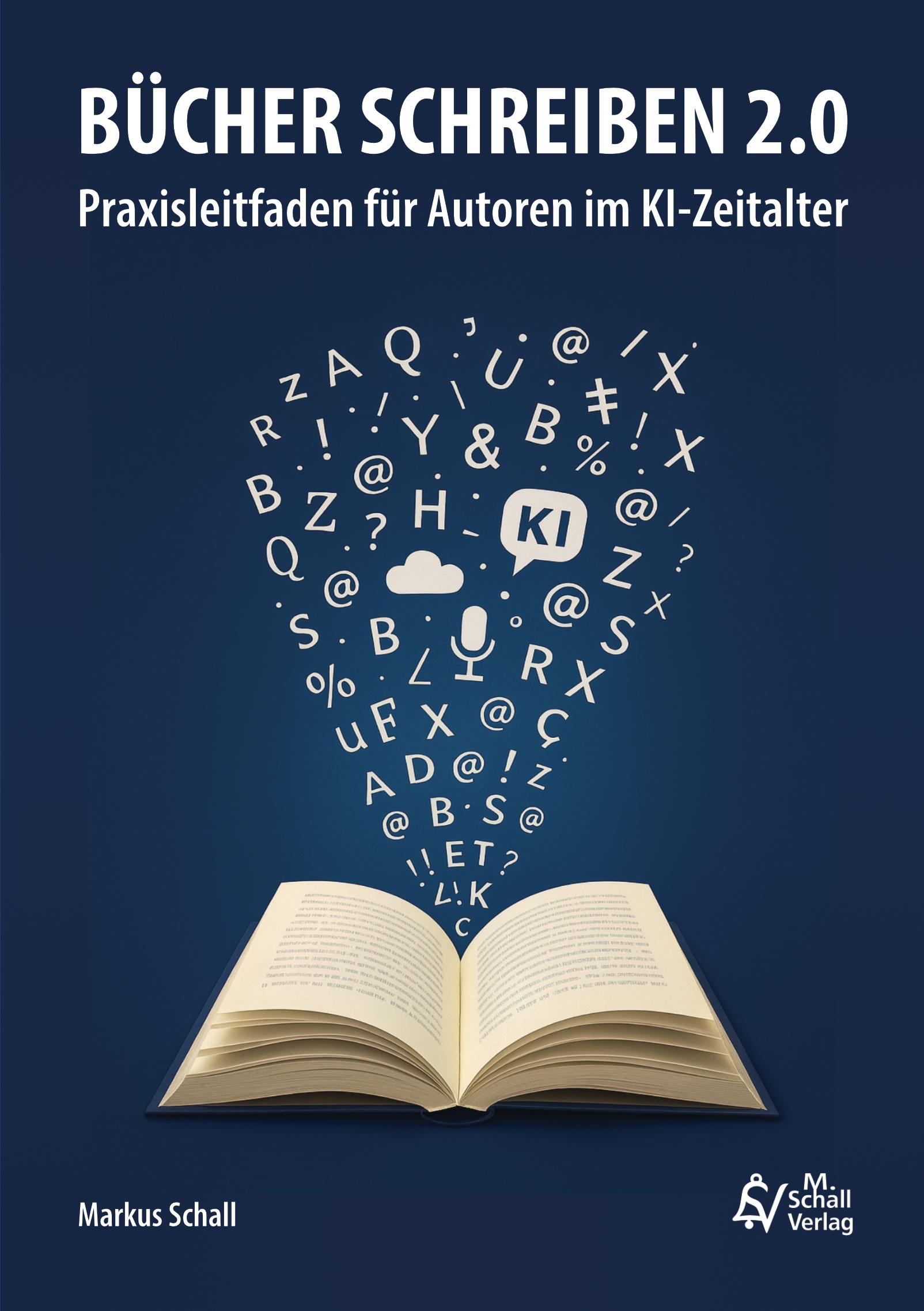 With Writing books 2.0 - practical guide for authors in the age of AI the focus is deliberately shifted away from technology hype and towards practice. The book does not show what AI can do, but how to integrate it into your own writing and thinking process in a meaningful way. The focus is precisely on the principle that this article also describes: AI as a sparring partner, not a substitute. As a counterpart for thinking, structuring, discarding and rethinking.
This practical guide is aimed at authors who can already write but want to work faster, more clearly and more confidently. It deals with working methods, dialog thinking, project structures and how to develop books with AI without losing your own style. Not a prompt cookbook, not a list of tools, but a calm, comprehensible way in which authors can become more productive in the age of AI without bending themselves.
The database book with a difference - combining AI, thinking and structure
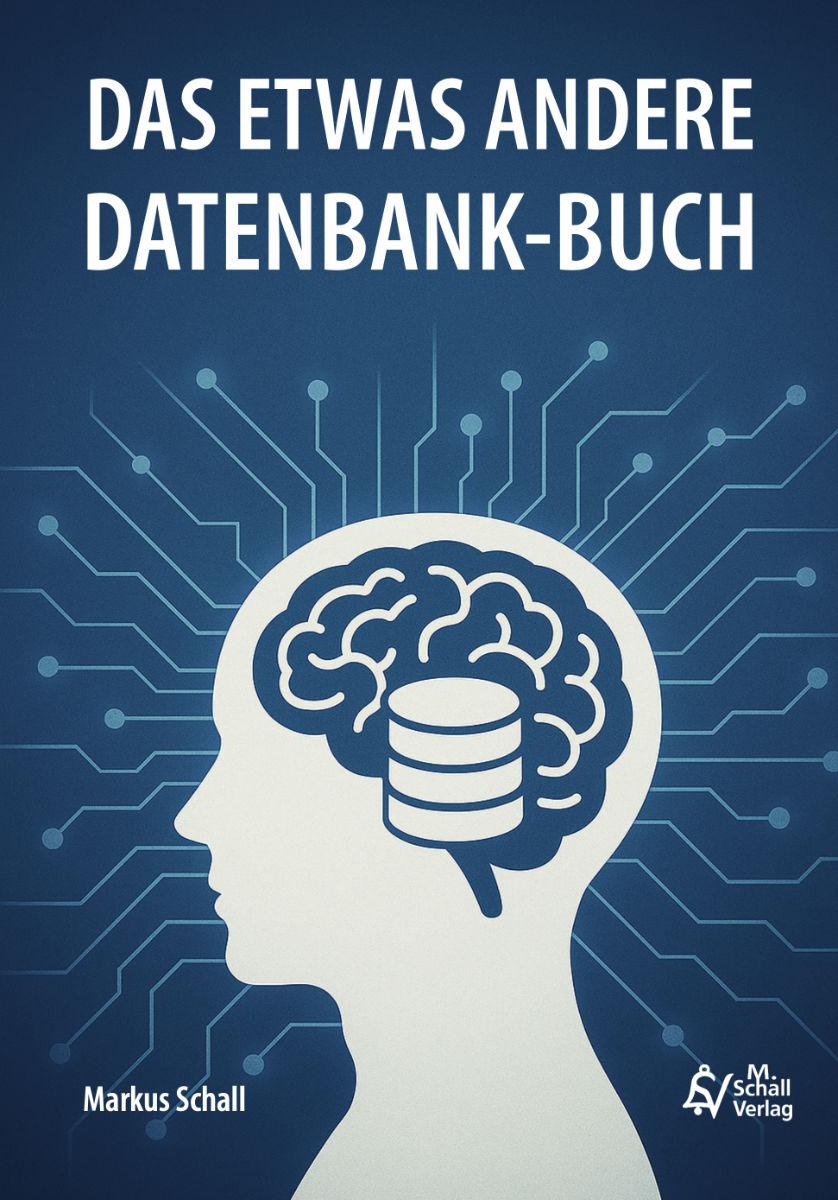 If you would like to go one step further and delve deeper into structure, systematics and long-term knowledge work, you will find more information in the The database book with a difference a seamless connection. This book combines the topic of AI with databases, thought structures and processes - not from a purely technical perspective, but as a working model for people who want to master complex content in the long term.
The focus is on the question of how AI can be used not only for writing or thinking, but also as a component of structured systems: Databases, knowledge collections, project logics. The book shows how AI can be meaningfully integrated into database-supported working methods - for example, when developing your own information systems, editorial workflows or long-term projects. Anyone who wants to understand how thinking, AI and structure can be combined to form a resilient overall system will find a consistent in-depth study here.




Frequently asked questions
- What does it mean in concrete terms to use AI as a sparring partner?
Using AI as a sparring partner means not viewing it purely as a tool for individual results, but as a discussion partner for thought processes. It's about developing thoughts out loud, allowing them to be questioned and structuring them instead of just calling up ready-made answers. The added value comes from dialog, not from output. - What is the difference between tool thinking and dialog thinking?
Tool thinking is focused on individual tasks: One function, one result, done. Dialog thinking, on the other hand, is networked. It builds context, develops ideas step by step and links topics together. This leads to deeper insights and more stable decisions. - Do you have to be tech-savvy to use AI in this way?
No. This approach is specifically aimed at people without a focus on technology. Those who can speak, explain and ask questions already have everything they need. The technical level remains in the background and only serves to facilitate the flow of thought. - Why is speaking often better than typing?
Speaking is closer to thinking. Thoughts are expressed more fluently, spontaneously and unfiltered. This reduces friction, lowers the barrier to entry and makes it possible to grasp ideas before they disappear again. - What does it mean that prompts develop automatically during a conversation?
In an ongoing dialog, the context becomes richer with each statement. The actual prompt is no longer a single sentence, but the entire course of the conversation. This makes results more precise without having to consciously tweak the wording. - Why is order so important when working with AI?
Because otherwise thinking becomes frayed. One topic per chat and a clear framework for larger projects ensure that connections are maintained. Order is not bureaucracy, but mental hygiene. - When should you create your own project?
Whenever a topic is long-term and requires many interrelated decisions, such as for books, larger projects or strategic issues. A dedicated project framework creates consistency and saves time in the long term. - What is a project system prompt and what is it used for?
A project system prompt is a short work instruction that defines the goal, tone and boundaries. It does not replace thinking, but ensures that all conversations within a project run in the same direction. - Isn't there a danger of relying too much on AI?
This danger only exists if you relinquish responsibility. Those who use AI as a sparring partner consciously keep decisions to themselves. AI provides food for thought, not judgments. - How does AI help with decisions without making them?
It helps to structure options, reveal assumptions and play through the consequences. The decision itself remains human, but is made on a clearer basis. - Why are counterarguments so valuable in dialog with AI?
Because they make errors in thinking visible. Confirming agreement, sharpening objections. AI can systematically formulate objections without bringing personal sensitivities into play. - Can AI also be used for personal issues?
Yes, this is where the benefits are often great. Sorting out thoughts, preparing decisions or categorizing things for which you otherwise have no discussion partner works particularly well in sparring. - How does seamless working between cell phone and computer work?
Conversations are synchronized across devices. You can record your thoughts on the go and continue working on exactly the same point later on your computer. This avoids breaks in thinking. - Why does this way of working increase productivity so much?
Because time is saved where it used to be lost: in sorting, discarding and resetting. Clarity at the beginning reduces corrections at the end. - Do you have to change your existing work processes?
No. The big advantage is that existing processes can be supplemented. AI fills gaps, accelerates transitions and strengthens what is already working. - Is this approach only suitable for creative professionals or also for entrepreneurs?
It is suitable for anyone who has to think, plan or make decisions. Entrepreneurs in particular benefit from it because strategic clarity is often more valuable than operational speed. - What distinguishes this use from classic AI tutorials?
The focus is not on functions or tools, but on a mindset. It's about collaboration, not automation. - Why is this approach sustainable in the long term?
Because it works independently of specific systems. Technology changes, mindsets remain the same. Those who establish AI as a sparring partner are using a principle that will continue to work with future systems.