If you look around Germany today, you will notice one thing: The energy situation is different than it was twenty years ago. And fundamentally so. Two decades ago, Germany was considered the epitome of industrial stability. Reliable electricity supply, predictable gas prices, robust grid infrastructure. Energy was not an ongoing political issue, but a matter of course. It was there. It worked. It was affordable. It was - and this is crucial - plannable.
Today, however, energy has become a strategic uncertainty factor in Europe, especially in Germany. Prices fluctuate, industry is shifting investments, political debates revolve around subsidies, emergency reserves and dependencies. Energy is no longer just infrastructure - it is a power factor, a bargaining chip and a geopolitical lever.
In this article, we want to calmly trace this development. Not in an alarmist or conspiratorial way, but step by step. What has changed? What decisions have been made? Who benefits? And above all: how did a continent that was sovereign in terms of energy policy end up in a situation in which it barely has any independent control over its most basic foundation - its energy supply?

From world export champion to cost crisis
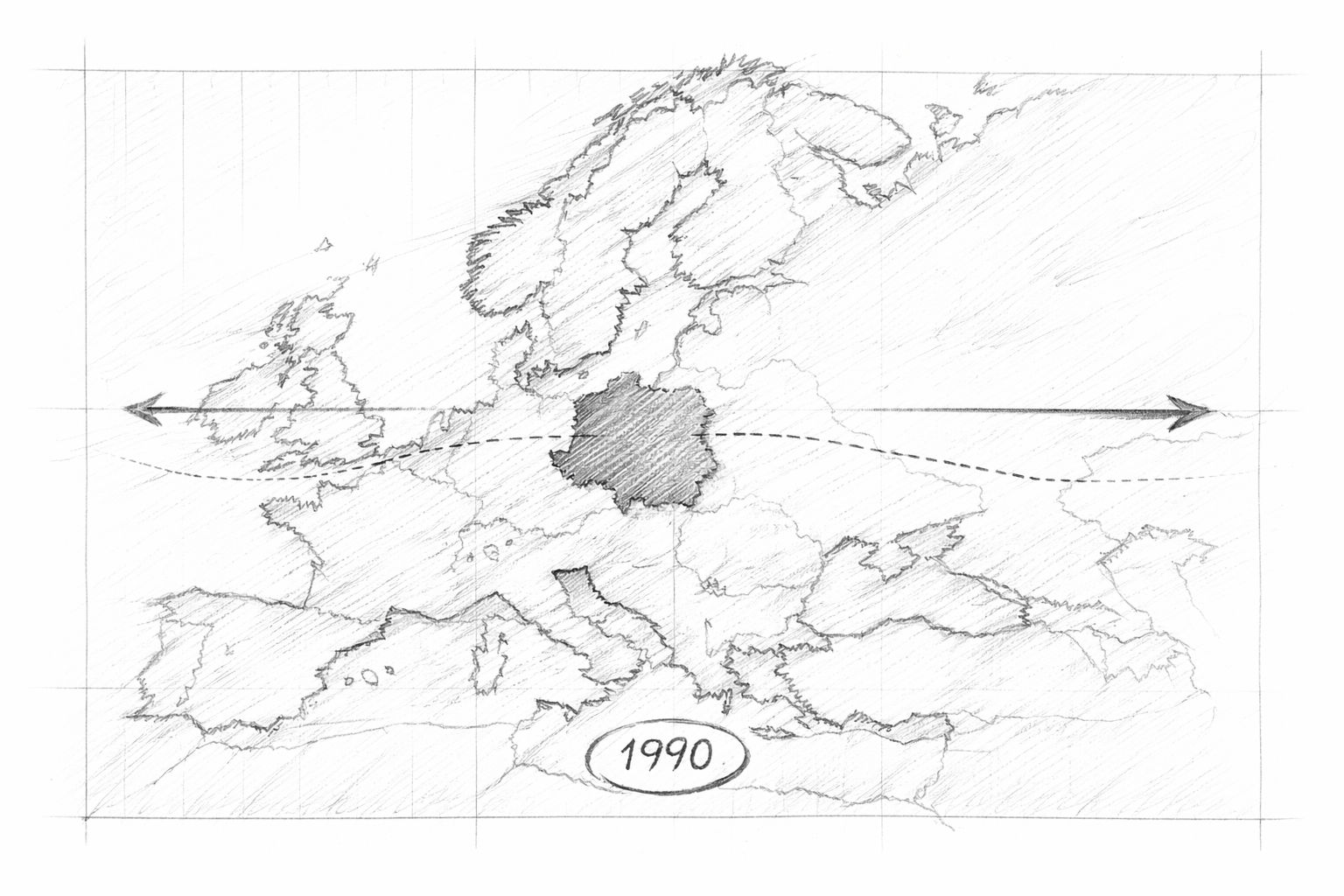
For a long time, Germany was more than just an industrial nation. It was a world export champion. Mechanical engineering, chemicals, the automotive industry - these industries were based on a simple foundation: reliable energy that was cheap by international standards. At the beginning of the 2000s, Germany still had a diversified energy system:
- Nuclear power plants provided a stable base load.
- Coal and lignite secured additional capacity.
- Natural gas - primarily from Russia - supplemented this flexibly.
- Electricity prices were at a competitive level.
This system was not perfect. It was not ideologically pure. But it worked. And it had grown over decades.
Today the situation is different. Energy prices in Europe are among the highest in the world. Industry associations warn of permanent locational disadvantages. Investment decisions are increasingly being made in favor of regions where energy is cheaper and politically more predictable - often in the USA.
The question that arises from this is not whether anything has changed. The change is obvious. The question is rather: Was this development inevitable - or politically induced?
Energy as a silent power factor
For a long time, energy was a technical subject. Power plants, power lines, pipelines - these were things for engineers and operators. But in reality, energy has always been a core geopolitical area. Whoever controls energy ultimately controls:
- Production costs
- Location decisions
- Inflation
- Budget stability
- Foreign policy capacity to act
That was true for oil in the 20th century. In the 21st century, it applies to gas, electricity and strategic infrastructure. For decades, Europe has become accustomed to viewing energy as a commodity - not as a strategic instrument. People bought where it was cheap. We relied on contracts. Economics was separated from geopolitics.
But it is precisely this separation that has become fragile. Since the 2010s at the latest, it has become clear that energy is once again part of power politics. Sanctions, pipeline debates, LNG terminals, strategic reserves - none of these are purely economic issues. They are political instruments. And anyone who can influence a country's energy supply today automatically influences its economic leeway.
A continent undergoing reconstruction - or deconstruction?
Officially, we talk about transformation. Of energy transition. Of modernization. Of decarbonization. These terms are justified. Technological innovation and climate policy are real issues. But beyond the rhetoric, a sober assessment remains:
In a relatively short space of time, Europe has abandoned central pillars of its traditional energy architecture without having fully established equivalent, stable alternatives:
- The phase-out of nuclear energy in Germany.
- The increasing political uncertainty surrounding gas imports.
- The massive increase in prices due to geopolitical tensions.
The simultaneous expansion of renewable energies, the integration of which into a stable base load system is complex and cost-intensive. The result is not a complete collapse - but a noticeable fragility.
Today, industrial companies are calculating with energy prices that are twice or three times as high as in competitor regions. State budgets have to provide billions in compensation payments. Citizens feel the burden of rising living costs.
Energy has moved from the background noise to the center of political debate.
The new question of sovereignty
This brings us to the core of this article: sovereignty. Sovereignty does not mean self-sufficiency. No modern state is completely independent. But sovereignty means that central strategic decisions are within its own sphere of influence. If, however:
- significant energy imports come from politically sensitive regions,
- central infrastructure is influenced by international players,
- investment flows are redirected through external subsidy programs,
- and national governments hardly have any leeway to stabilize prices or supply on their own,
then the question inevitably arises: How independent is Europe in its energy policy? This question is not a provocation. It is an analytical necessity.
Why this review is necessary
This article is not about simply apportioning blame. The development of the last twenty years is complex. It has been shaped by climate policy, geopolitical shifts, economic interests, ideological convictions and strategic mistakes. But it follows a recognizable line.
What we are experiencing today is not the result of a single event. It is the result of many small decisions that have reinforced each other. Some of them were well-intentioned. Some were politically opportune. Some were strategically short-sighted.
Only in retrospect does it become clear how a structural pattern has emerged from this. And it is precisely this pattern that we want to uncover step by step in the coming chapters:
- How stable was Europe's energy architecture originally?
- What political turning points have changed them?
- What external interests played a role?
- And what consequences will this have for the future?
The energy situation in Europe is different today than it was twenty years ago. That is obvious. The crucial question is: was this inevitable - or avoidable? Our analysis begins with this question.
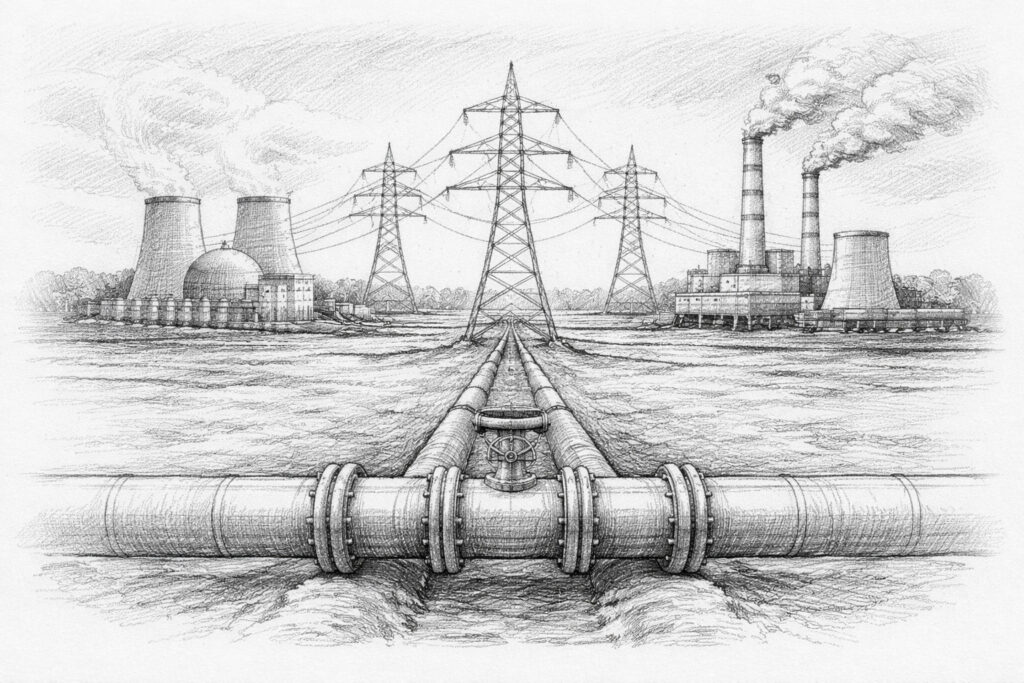
The historical starting point: Europe's energy architecture before 2000
If you want to understand the European energy architecture before the year 2000, you have to go back a little further in your mind - to the 1970s. The oil crises of 1973 and 1979 were a shock for Europe. Suddenly it became clear how vulnerable modern industrial societies are when energy is used as a means of exerting political pressure.
The reaction to this was not ideological, but pragmatic. We diversified. Strategic reserves were built up. Investments were made in nuclear power plants. Coal-fired power plants were modernized. And long-term supply contracts were negotiated. Europe learned a simple but crucial lesson from this crisis:
Energy must not depend solely on the world market price - it is a security factor. This thinking shaped the following decades.
Germany as an anchor of stability in energy policy
Germany in particular developed an energy model that was based on several pillars:
- Nuclear energy as a reliable base load
- Domestic lignite as a strategic reserve
- Hard coal as a supplement
- Natural gas as a flexible link
- a highly developed electricity grid with cross-border integration
This system was not spectacular. It was technical, sober, engineer-driven. But it was robust. In the 1980s and 1990s, Germany had one of the most stable power supplies in the world. Blackouts were rare, frequency stability was high and security of supply was internationally recognized.
At the same time, energy prices were competitive by international standards - a decisive locational advantage for energy-intensive industries such as chemicals, metal processing and automotive manufacturing. Energy was not a politically controversial issue. It was part of the basic industrial infrastructure.
Nuclear power as a strategic decision, not an ideology
Before 2000, nuclear energy was a central component of energy policy in many European countries. France relied heavily on nuclear power to cover the majority of its electricity requirements. Germany operated numerous reactors. Belgium, Sweden, Finland - they all saw nuclear energy as a way of becoming less dependent on fossil fuel imports.
It is important to put this into historical perspective: the decision in favor of nuclear power was not primarily an ecological or ideological one. It was motivated by security policy. After the oil crises, Europe wanted:
- be less susceptible to blackmail,
- less dependent on unstable regions,
- create long-term predictability.
Nuclear energy promised exactly that: high initial investment but stable, calculable electricity production over decades. Accidents such as Chernobyl in 1986 led to social debate - particularly in Germany. But even after that, the technical infrastructure remained in place. The complete phase-out was not yet a done deal before 2000.
Natural gas as a bridge - and as a calculable partnership
At the same time, natural gas developed into an important component of the European energy supply. Russia played a central role here. Gas supplies from the Soviet Union to Western Europe began as early as the 1970s.
The decisive factor was that these supply relationships were considered reliable for decades. Even in times of political tension during the Cold War, supplies continued to flow. Natural gas was attractive for Germany because it:
- could be used flexibly,
- less CO₂-intensive than coal,
- technically easy to integrate into existing power plant structures,
- Competitively priced.
Before 2000, this partnership was predominantly viewed in economic terms. Energy was trade, not a moral signal.
European integration of the electricity market
Another building block was the increasing integration of the European electricity markets. Cross-border lines were expanded, grids synchronized and common standards established. The goal was clear: mutual stabilization.
If shortages occurred in one country at short notice, another country could help out. This system increased the resilience of the entire continent.
The result was an energy network that was technically highly developed and politically based on cooperation.
Until the year 2000, Europe was therefore not an energy self-sufficient continent - but a strategically diversified one.
The cost structure before the turn of the millennium
The system was also comparatively stable economically. Energy prices fluctuated, but they were not a permanent locational disadvantage. Industry was able to make long-term calculations. Investment decisions were based on reliable framework conditions. The interplay of:
- Nuclear power,
- fossil fuels,
- gas imports,
- Grid stability,
- and political predictability
created a basis for the industrial growth of the 1990s. Germany was not only the world export champion because its products were good - but also because production costs remained calculable thanks to reliable energy conditions.
A system without ideological exaggeration
Looking back, it is noticeable that energy policy before 2000 was less morally charged. It was about security of supply, cost stability and technical feasibility. Although climate policy already played a role - the Kyoto Protocol was adopted in 1997 - it did not dominate the basic strategic decisions.
The energy system was an infrastructure project, not a social identity project. And this was precisely its strength: it was pragmatic.
Silent stability as an underestimated value
Perhaps this is the most important point: stability is unspectacular. You only notice it when it is missing. Before 2000, Europe's energy architecture was not perfect, but it was predictable. It was based on diversification, technical expertise and long-term contracts.
This starting point is crucial to understanding the following developments. Because only those who know the old foundations can recognize how profound the changes of the last twenty years have actually been.
The Europe of the 1990s was not dependent on energy policy in today's sense. It was networked, yes - but it had several stable pillars.
How these pillars were gradually weakened or abandoned is the subject of the following chapters.
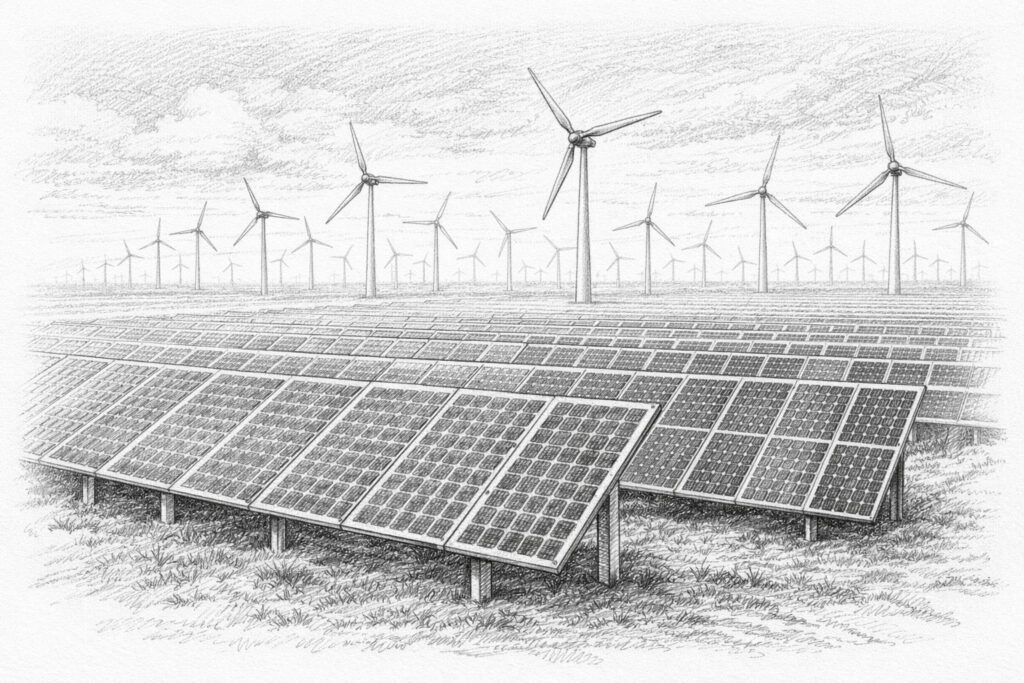
The first turning point: The transatlantic climate narrative and its influence
If you want to understand Europe's energy policy development after 2000, you have to understand a fundamental change in perspective: Energy was no longer seen primarily as an infrastructure issue - it became a moral project.
Climate change was not a new topic. There had been scientific discussions about it since the 1980s. An international framework was created for the first time with the Kyoto Protocol in 1997. However, it was not until the 2000s that the political dynamics changed fundamentally. An environmental problem became an identity-forming narrative. Climate policy became a moral obligation, a civilizational task, a question of global responsibility. And with this moral charge, energy policy also shifted.
Europe - and Germany in particular - positioned itself as a pioneer early on. The claim was clear: they wanted to show that a highly industrialized country could fundamentally restructure its energy consumption.
However, this pioneering role also ushered in a new form of dependency: on narratives, on international obligations and on transatlantic discourse structures.
The transatlantic dimension of climate policy
Climate policy was never just European. It was transatlantic from the very beginning. International organizations, scientific networks, foundations and think tanks - many of them with a strong influence from the USA - shaped the global discourse.
This is not about secret control. It is about spheres of influence. Who sets topics, who funds studies, who networks political elites, shapes the framework of the debate. In the 2000s, close links developed between:
- European government advisors,
- international climate research institutes,
- globally active foundations,
- economic interests in the field of renewable energies.
The climate discourse was increasingly synchronized globally. Political goals such as reducing emissions, CO₂ pricing or decarbonization were presented as having no alternative.
Europe did not adopt these guidelines under duress - but out of conviction. However, the dynamic was not purely national. It was embedded in a transatlantic network of opinions and decisions.
The energy transition as a strategic project
Germany went particularly far. With the Renewable Energy Sources Act (EEG), a comprehensive restructuring of the electricity system began in the early 2000s. Wind power, solar energy, feed-in tariffs - the goal was ambitious. The basic idea was understandable:
- less CO₂,
- less dependence on fossil fuels,
- more technological innovation.
However, what was often overlooked in the public debate was the systemic dimension. An energy system is not a construction kit in which individual elements can be replaced at will. It is a finely balanced structure:
- Base load
- Control energy
- Network infrastructure
- Storage technology
- Reserve capacities
The massive expansion of fluctuating renewable energies presented this system with new challenges. At the same time, the gradual reduction of conventional capacities began.
Europe pursued this path with political ambition. Other regions of the world, on the other hand, took a more cautious approach or combined climate targets with strategic industrial policy. This is where the first divergence emerged: Europe moralizes, others calculate.
Why Germany's electricity prices are under pressure
Why is electricity so expensive in Germany despite the growth in renewable energies? In a recent article, SPIEGEL editor Benedikt Müller-Arnold sheds light on the structural causes. The expansion of wind and solar energy is progressing, but the simultaneous phase-out of nuclear power and fossil fuels is fundamentally changing the system. A lack of base load capacities, dependence on imports at peak times and high grid costs are driving up prices.

Why electricity is so expensive in Germany - Shortcut | THE MIRROR
The article explains why Germany has to import electricity at times - and why the energy transition is economically more complex than many debates suggest.
CO₂ as a new control instrument
Another turning point was the introduction and expansion of emissions trading. CO₂ was given a price. Energy was no longer only valued according to supply and demand, but also according to the emissions balance. This instrument was economically innovative. But it had side effects.
Energy-intensive companies in Europe had to bear additional costs, while international competitors in regions with less regulation were able to produce more cheaply. The result was a creeping competitive disadvantage.
At the same time, the political language shifted: those who clung to traditional forms of energy came under pressure to justify themselves. Debates became less technical and more moral.
The energy issue was no longer just a question of security of supply. It became a question of attitude.
The underestimated strategic gap
While Europe pushed ahead with its transformation, the USA pursued a different strategy. With the fracking boom from the 2010s onwards, it developed from an energy importer to an energy exporter. Gas prices fell drastically. American industry benefited from cheap energy.
This is a crucial point: Europe tightened its regulatory requirements, while the USA expanded its energy production.
This is not a moral judgment, but a strategic observation. The result was a growing difference in energy prices between the two regions.
Europe focused on transformation. The USA focused on expansion. Both are legitimate. But the combination led to a structural imbalance.
From role model to risk
Initially, European climate policy was seen as a role model. But over time, risks also became apparent:
- Rising electricity prices
- Growing need for grid expansion
- Dependence on imported technologies (e.g. solar modules from Asia)
- Declining reserve capacities
The conversion was ambitious - perhaps more ambitious than the technical infrastructure allowed. And this is where the real turning point begins:
Energy policy was increasingly driven by political targets - not by system stability.
This does not mean that climate targets were wrong. It just means that the transformation took place without sufficient strategic buffers.
A narrative with geopolitical consequences
Narratives have power. Whoever defines the framework in which policy is thought about influences the direction of decisions. The climate framework narrative was:
- Fossil energy is outdated.
- Nuclear energy is risky.
- There is no alternative to renewables.
- Speed is crucial.
This narrative was particularly strong in Europe. And it led to traditional energy sources being abandoned faster than new systems were fully stable.
That was not an external compulsion. It was a political decision. But it was made in a global environment in which other players - in particular the USA - were expanding their energy production and thus gaining strategic leeway.
The beginning of a structural shift
By 2010, the European energy architecture was already being restructured. Conventional capacities were declining, renewable energies were growing and CO₂ costs were rising.
The changes seemed moderate at first. But they created a structural starting position that would later become decisive. Europe had begun to redefine its energy system - faster and more comprehensively than many other industrialized regions.
This was the first turning point. The supply was still stable. The system was still functioning. But the balance had shifted.
And it was precisely on this new foundation that Europe encountered further political and geopolitical shocks a few years later. In the next chapter, we will see how a single event drastically accelerated this development.
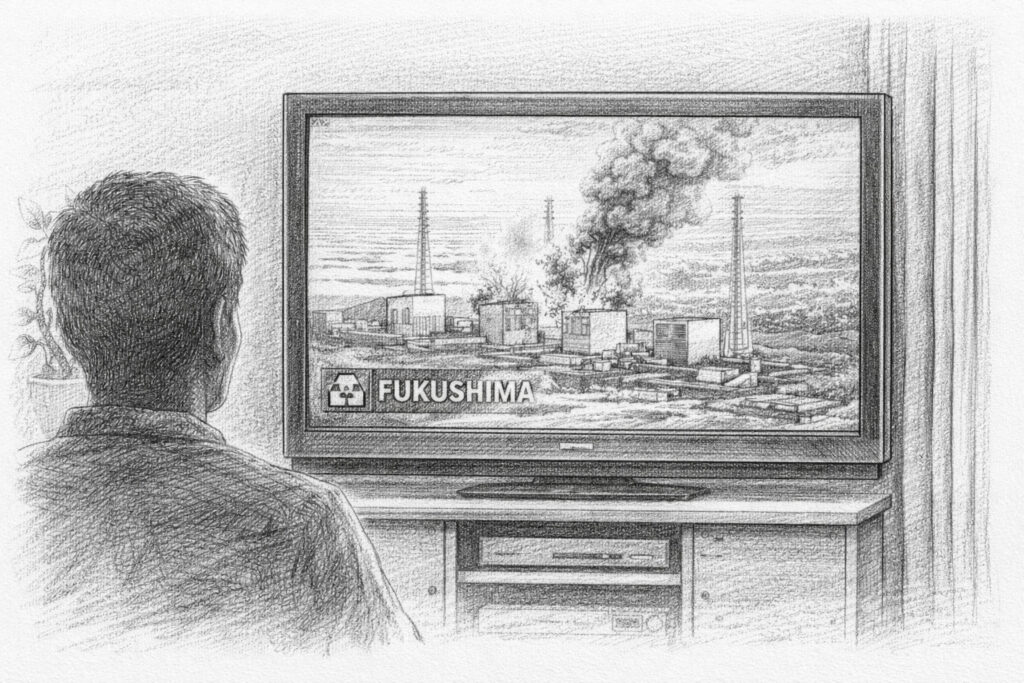
Fukushima 2011 - The political shock and the German culture of fear
On March 11, 2011, a severe seaquake off the coast of Japan shook the Fukushima Daiichi nuclear power plant. The subsequent tsunami wave caused the cooling systems to fail, resulting in core meltdowns and radioactive releases. Images of explosions, evacuations and protective suits went around the world.
For Japan, it was a national tragedy. For the global nuclear energy industry, it was a severe blow. For Germany, however, Fukushima was a political turning point - far beyond the immediate technical consequences. Unlike many other industrialized countries, Germany did not react with a technical safety review alone, but with a fundamental change in political direction.
Within a few days, a moratorium was imposed on several nuclear power plants. Shortly afterwards, the German government decided to accelerate the nuclear phase-out. A fundamental energy policy decision was redefined under the impact of an external event.
The German culture of reaction: caution, risk, morality
To understand this decision, you have to look at the German political culture. Germany is a country with a pronounced risk awareness. Historical experience, technological debates and a strong environmental movement have shaped a particular sensitivity to potential dangers.
Nuclear energy has been highly controversial in Germany since the 1980s. Chernobyl had shaken confidence. Citizens' initiatives, demonstrations and political movements had brought the issue deep into society. Fukushima therefore did not seem like an isolated event, but rather a confirmation of long-held fears.
The political reaction was based less on a sober technical risk analysis than on a social mood. Safety was thought of in absolute terms. The residual risk no longer seemed acceptable - regardless of how small it was statistically. This attitude is understandable. But it had far-reaching structural consequences.
An abrupt end to a strategic pillar
Before Fukushima, Germany operated 17 nuclear power plants. They covered a significant proportion of electricity generation and provided a reliable base load.
With the accelerated nuclear phase-out, this pillar was dismantled as planned within a few years.
The decisive factor here is not whether nuclear energy is sensible or problematic in the long term. What matters is the speed and context of the decision. Other countries reacted differently:
- France held on to its nuclear energy.
- Finland built new reactors.
- The UK continued to rely on nuclear power as part of its strategy.
Germany, on the other hand, made a politically motivated change of course with clear moral justification. This was not forced from outside. It was a sovereign decision. But it significantly reduced the diversification of the energy system.
The shift in equilibrium
The elimination of nuclear power created a structural gap. This gap had to be filled by other energy sources. In the short term, this meant
- greater use of coal-fired power plants,
- higher gas imports,
- Accelerated expansion of renewable energies.
In the long term, however, it meant one thing above all: increasing dependence on flexible, imported energy sources - especially natural gas. The energy system lost a stable, predictable component and became more dependent on market and import dynamics.
The energy transition received an enormous political boost as a result of Fukushima. At the same time, the technical complexity of the system increased.
Emotion, politics and speed
Another aspect is the speed of political decisions under shock conditions. In crisis situations, governments tend to act quickly and visibly. This signals their ability to act and reduces social pressure.
But energy infrastructure is not a short-term project. Power plants are planned for decades. Grids are designed for generations.
The acceleration of the nuclear phase-out meant that long-term plans had to be adjusted at short notice.
This was politically effective - but systemically risky. Germany sent a strong moral signal. At the same time, it increased the vulnerability of its energy system to external developments.
Culture of fear or precautionary principle?
The term „culture of fear“ is provocative, but analytically helpful. Germany traditionally has a strong precautionary principle. Risks are minimized at an early stage, often at the expense of economic efficiency.
This principle has advantages. It prevents recklessness. It protects the population and the environment. But it can also lead to risks being overestimated and alternatives underestimated.
After Fukushima, the question was no longer how nuclear power could be made safer - but whether it was still viable at all. The debate shifted from „how“ to „whether“. And it is precisely this shift that marks the political shock.
A step with geopolitical impact
Looking back, we can see that The German nuclear phase-out was a domestic political decision with foreign policy consequences. The loss of a stable source of energy increased:
- the importance of gas imports,
- sensitivity towards supply chains,
- dependence on international markets.
This shift was initially moderate. However, it permanently changed Germany's strategic position. An energy system with several stable pillars became a system in transition - with increasing complexity and decreasing redundancy.
The beginning of a new vulnerability
Until 2011, Germany was diversified in terms of energy policy. After 2011, a phase began in which central building blocks of the old system fell away, while new ones were not yet fully integrated.
This did not immediately mean a crisis. The supply remained stable. However, structural vulnerability increased. This vulnerability was hardly noticed in the following years. Energy continued to flow reliably. Prices initially remained within reasonable limits.
But the foundations had shifted. Fukushima was not an isolated event. It was an accelerator of a transformation that had already begun - with far-reaching consequences for Germany's energy policy sovereignty.
In the next chapter, we turn to an infrastructure that covered up this vulnerability for a long time - and ultimately became a geopolitical hotspot itself.
Electricity in Europe and Germany - From export nation to net importer?
A look at the electricity data for the past twenty years shows a clear shift. While Germany achieved high production figures in the mid-2000s and was at times a net exporter, generation has now fallen noticeably. At the same time, import and export flows have changed - not only in terms of volume, but also structurally. The decline in conventional capacities, the expansion of renewable energies and changed market conditions are shaping the picture today. The table illustrates this development in condensed form.
| Electricity (production / import / export) | Production | Import | Export |
|---|---|---|---|
| EU-27 (2005, gross electricity generation) | 3,310,401 GWh | n/a. | n/a. |
| Germany (2005, gross electricity generation & trade) | 620,300 GWh | 56,861 GWh | 61,427 GWh |
| EU (2023, net electricity generation) | 2,637,000 GWh | n/a. | n/a. |
| Germany (2024, gross electricity generation & trade) | 488,500 GWh | 67,000 GWh | 35,100 GWh |
Nord Stream - Europe's energy pulse and the geopolitical hotspot
When plans for a direct gas connection through the Baltic Sea became concrete in the early 2000s, the project initially seemed like a logical continuation of existing energy partnerships. Natural gas had already been flowing from Russia to Europe for decades. Contracts were considered reliable. Technical cooperation was well established.
Nord Stream 1, which went into operation in 2011, gave Germany a direct connection to Russian gas fields for the first time - without transit countries. The pipeline was technically impressive, economically efficient and politically controversial.
For German industry, it meant one thing above all: planning security. Gas could be used flexibly, had relatively low emissions compared to coal and was increasingly indispensable after the nuclear phase-out. Nord Stream thus became a central building block of the new energy architecture - especially after Fukushima.
What hardly anyone said openly: Nord Stream shifted the center of European energy supply more towards Central Europe. Germany became not just a buyer, but a distributor.
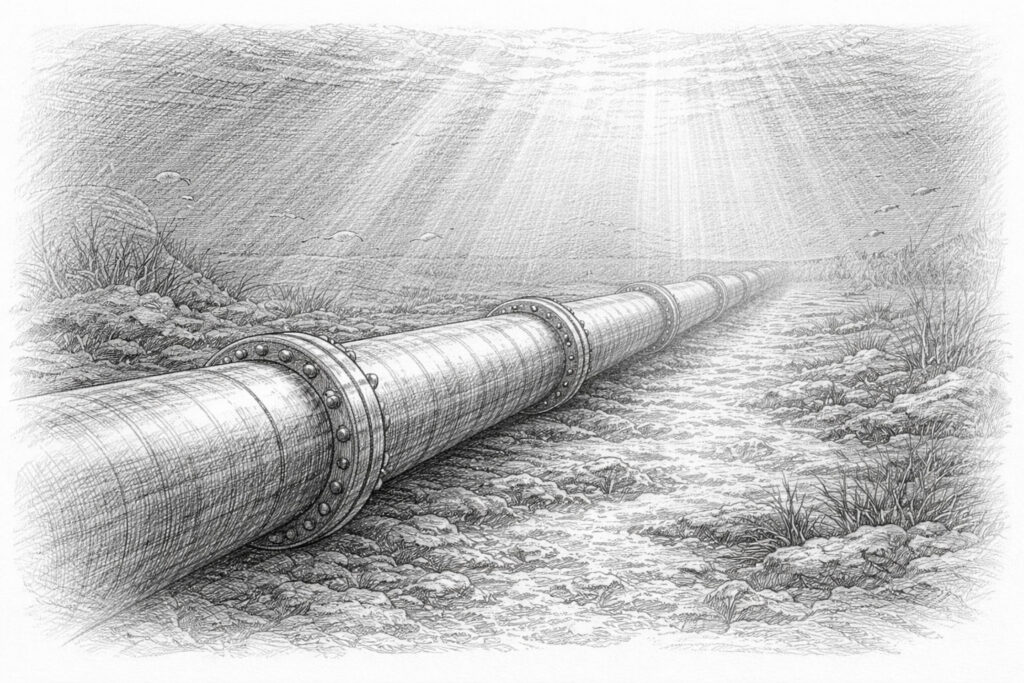
Economic rationality - geopolitical explosiveness
From a German perspective, the project was initially economically motivated:
- Stable long-term contracts
- competitive prices
- Lower transit costs
- Greater security of supply
However, things looked different on a geopolitical level. Critics - particularly in Eastern Europe and the USA - argued that Nord Stream would increase Europe's dependence on Russia. They also argued that the pipeline would undermine the role of transit states such as Ukraine and Poland.
This is where the political charge of the project began. For Germany, Nord Stream was an instrument of energy efficiency. For others, it was a strategic risk. And it was precisely at this point that a pipeline became a geopolitical flashpoint.
The transatlantic perspective
From the American perspective, Nord Stream was more than just an infrastructure project. It affected central strategic interests. For decades, the USA has been pursuing the goal of stabilizing Europe's security ties to the West - specifically to NATO. Energy dependence on Russia was seen as a potential weak point in Washington.
There was also an economic dimension: with the fracking boom, the USA itself became a major gas exporter from the 2010s onwards. Liquefied natural gas (LNG) became a geopolitical instrument. Nord Stream was therefore caught between two conflicting logics:
- European economic rationality
- American security and market interests
Criticism from the USA was open, politically clear and sometimes accompanied by threats of sanctions. The project was not only discussed - it was actively opposed.
Nord Stream 2 - Escalation of the debate
The situation worsened with Nord Stream 2. The second pipeline was largely completed when political tensions increased. For supporters, it was an expansion of existing capacities. For opponents, it was a strategic mistake.
The discussion increasingly shifted from economic arguments to moral and security policy assessments.
- Was it responsible to deepen long-term energy partnerships with Russia?
- Was economic cooperation a stabilizing factor - or a risk?
Germany found itself in an intermediate position. On the one hand, it wanted to present the pipeline as a private-sector project. On the other hand, it was clear that its significance went far beyond purely economic issues.
Nord Stream 2 became a symbol of an independent German energy policy - and thus a point of conflict in the transatlantic relationship.
Germany's strategic role
One aspect that is often underestimated is Germany's role as an energy hub. With Nord Stream, Germany has become the central hub for gas in Europe. This had two consequences:
- Economic strengthGermany could not only use gas itself, but also distribute it further.
- Political responsibilityThe energy dependency of other European countries was indirectly linked to German infrastructure.
This position offered considerable influence - but also a risk. Because whoever becomes a hub is the focus of geopolitical interests.
Nord Stream was therefore not just a pipeline, but a strategic lever.
The silent vulnerability
The system worked until 2022. Gas flowed. Prices were reasonable - despite fluctuations. Industry was able to calculate. But the structure had changed:
- Nuclear energy was largely removed from the system.
- Coal should be gradually reduced.
- Renewables were expanded, but not base-load capable.
- Gas had become the central balancing factor.
Nord Stream was therefore not just one project among many - it had become the energy pulse. And it was precisely this concentration that increased vulnerability. A diversified system distributes risks. A concentrated system bundles them.
The 2022 attack - a turning point with a signal effect
When explosions damaged the Nord Stream pipelines in September 2022, it was not just a technical incident. It was a turning point. Regardless of who was responsible, the consequences were clear:
- The most important direct gas connection between Russia and Germany failed.
- The European energy architecture was abruptly restructured.
- LNG imports gained massively in importance.
- Prices exploded at times.
Nord Stream had gone from a controversial piece of infrastructure to a geopolitical symbol in a matter of hours. The old model of long-term energy partnership was effectively over.
From independence to dependence
With the loss of Nord Stream, Germany not only lost a pipeline - it lost strategic leeway. The new reality meant
- Increased dependence on global LNG markets
- Greater price volatility
- Less planning security
At the same time, the USA came more into focus as a major gas supplier. What had previously been one option among several now became a dominant source. The geopolitical balance shifted.
An infrastructure with a long-term impact
Nord Stream was never just a pipe in the sea. It was an expression of an energy policy strategy based on economic common sense and long-term cooperation.
Its disappearance not only changed the supply situation - it also changed the power structure. Energy was transformed from a commodity back into a political instrument.
And Europe, especially Germany, found that a system that had been built on stability was suddenly being renegotiated. In the next chapter, we will look at which players benefited from this shift - and how Europe's role in the global energy system has changed since then.
Natural gas - from own production to almost complete dependence on imports
The comparison also reveals a profound structural change in the gas sector. Twenty years ago, both Germany and the EU still had significantly higher domestic production volumes. Today, European gas production has fallen sharply, while dependence on imports has increased considerably. Germany in particular has drastically reduced its domestic production. The following figures show how the relationship between domestic production and imports has shifted - and why natural gas has become a key geopolitical factor.
| Natural gas (production / import / export) | Production | Import | Export |
|---|---|---|---|
| EU-27 (2005, primary production) | 8,746,749 TJ | n/a. | n/a. |
| Germany (2005) | 661,721 TJ | 3,420,663 TJ | 362,714 TJ |
| EU (2024) | 1,167,988 TJ | 17,089,396 TJ | n/a. |
| Germany (2024) | 136,227 TJ | 3,114,000 TJ | 320,400 TJ |
The 2022 attack - Europe's energy axis is being destroyed
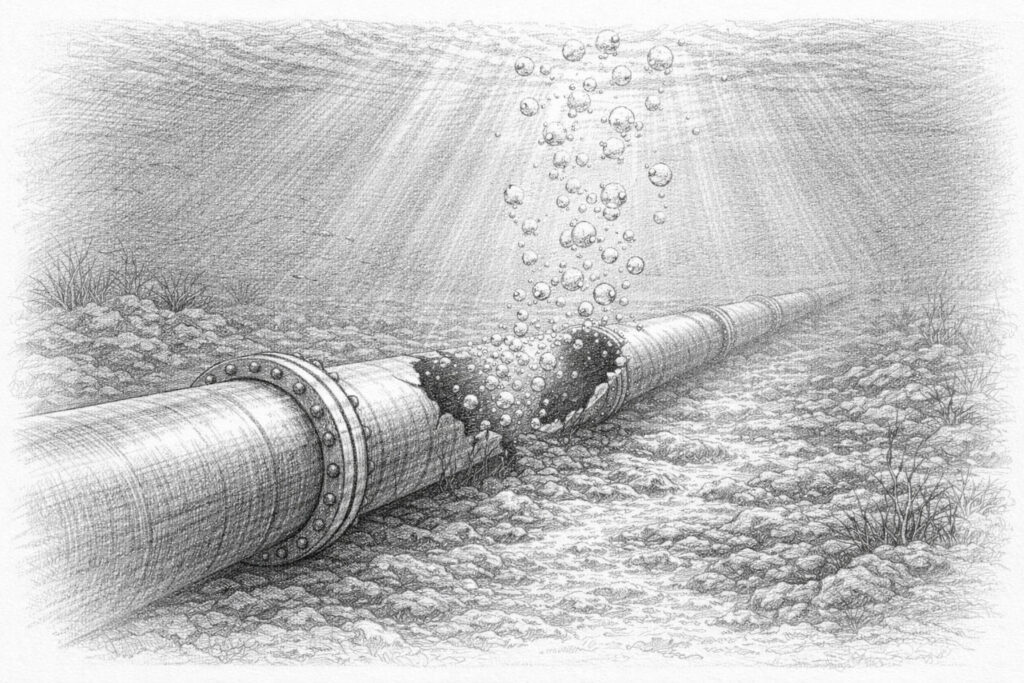
On September 26, 2022, seismological stations in the Baltic Sea registered several explosions. Shortly afterwards, it became known that three of the four strings of Nord Stream 1 and Nord Stream 2 had been damaged. Gas escaped and images of rising bubbles went around the world.
From a technical point of view, it was sabotage of critical infrastructure. Politically, it was a turning point. Because these explosions not only destroyed steel, they effectively ended an entire energy policy model.
The direct gas link between Russia and Germany - once intended as an economic lifeline - was suddenly unusable. The energy axis that had supported Central Europe's industrial stability for over a decade was rendered useless in a matter of hours.
What is secured - and what is not
To this day, the perpetrators have not been officially identified. Various countries are investigating, different hypotheses are circulating and political tensions are overshadowing the debate. For this article, however, the question of the perpetrators is not decisive. What is decisive is what can be determined objectively:
- A central European energy infrastructure was deliberately destroyed.
- The repair is technically possible, but politically not realistically foreseeable.
- Europe thus permanently lost a direct gas supply option.
Whether the attack was the work of a state, a group or an intelligence operation remains the subject of international investigations.
The structural consequences, on the other hand, are clearly visible.
In the separate Article on the Nord Stream attack this dimension is analyzed in detail - the geopolitical embedding, the political tensions in the run-up and the economic impact. Suffice it to say at this point that the attack marked the moment when a political controversy became an irreversible reality.
From conflict to de facto decoupling
Before the attack, Nord Stream 2 was politically frozen but technically completed. Nord Stream 1 was already no longer supplying gas in full, but the infrastructure existed. With the destruction of the pipelines, the situation shifted from political blockade to physical decoupling. This distinction is crucial:
- A political decision can be revised.
- A destroyed infrastructure creates facts.
As a result, Europe not only lost a current supply option, but also a strategic reserve for future negotiations. The possibility of falling back on direct gas imports in the event of a change in political conditions has been made considerably more difficult.
The direct economic consequences
Energy prices reacted sharply. Gas prices soared to historic highs at times. Electricity prices followed suit, as gas plays a central role in power generation in many countries.
Industrial companies were confronted with drastically rising costs. Some reduced production, others relocated investments. Government relief packages worth billions were put together. Europe had to organize new procurement channels in a very short space of time:
- Expansion of LNG terminals
- Short-term supply contracts
- Increased imports from Norway, the USA and other suppliers
The system stabilized - but at significantly higher costs. The old energy axis had not simply been replaced. It had been replaced by a more complex, more volatile system.
A strategic weakening with a global impact
The loss of Nord Stream had not only economic but also strategic consequences.
- Germany lost part of its role as Europe's central gas hub.
- Russia lost a direct sales channel.
- The USA gained considerably in importance as an LNG supplier.
- The geopolitical balance of power shifted visibly.
Energy once again clearly became an instrument of international power politics. Those who could supply gained influence. Those who had to replace lost leeway.
In this sense, the attack was not just a destruction of infrastructure, but a redistribution of influence.
The new reality: energy without a safety net
Before 2022, Europe had several options to fall back on. Even in times of political tension, there were physical lines, long-term contracts and well-established structures.
After the attack, it was clear that these safety nets no longer exist in the same form. Since then, Europe has become more dependent on global spot markets, transport capacities and political stability in other regions. This increases its vulnerability:
- Price volatility
- geopolitical conflicts
- infrastructural bottlenecks
This vulnerability has grown structurally.
Symbolism and signal effect
For years, Nord Stream was a symbol of economic cooperation despite political differences. The attack sent the opposite signal: infrastructure can become the target of geopolitical disputes. This has a deterrent effect on long-term energy partnerships. Trust - a decisive factor in infrastructure projects worth billions - is difficult to restore.
Europe is thus facing a new reality: energy policy is not just market and environmental policy, but security policy in the strictest sense.
In retrospect, it is clear that the 2022 attack was not an isolated incident, but the moment when several developments came together.
The accelerated nuclear phase-out had already changed the system.
The energy transition had created new dependencies.
Geopolitical tensions had politically charged Nord Stream. With the destruction of the pipeline, this conflict became a clear rupture.
Europe lost its most important direct energy axis - and entered a phase in which security of supply, price stability and geopolitical independence had to be redefined.
In the next chapter, we will examine who took on this new role as Europe's energy supplier - and the long-term consequences of this.
The USA as Europe's new energy supplier - LNG, industrial policy and the new lever
Just a few years ago, the United States was one of the most vocal critics of European - and in particular German - energy policy. Nord Stream was described as a strategic mistake, a geopolitical risk and a one-sided dependency.
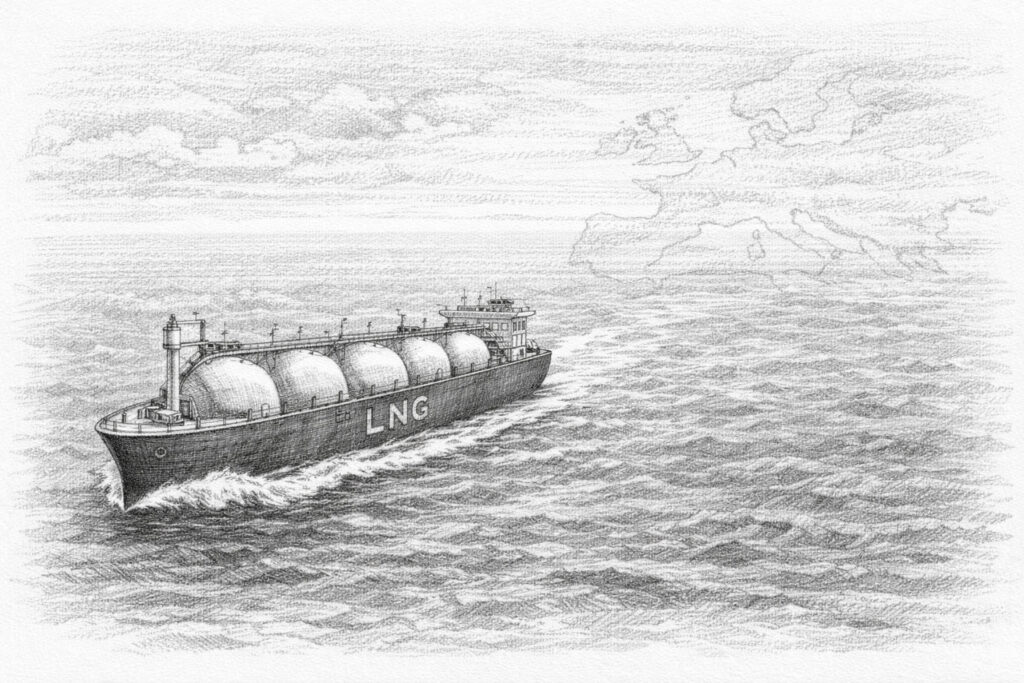
The picture has changed fundamentally since 2022. Within a very short space of time, the USA has become one of Europe's most important gas suppliers. Liquefied natural gas (LNG), which is liquefied in American terminals, transported by ship and regasified again in European ports, has replaced Russian pipeline gas volumes to a considerable extent.
This development is not a triviality. It is a structural shift. A new supply relationship has emerged from a transatlantic field of tension.
LNG - flexibility with a price
Liquefied natural gas offers advantages:
- Flexible delivery routes
- Fast redirection of transports
- Independence from fixed pipeline routes
However, LNG is generally more expensive than pipeline gas. It requires additional infrastructure: terminals, special ships, long-term supply contracts. Europe invested in new LNG terminals at record speed after 2022. Germany, which previously did not have its own LNG terminal, built several facilities within a very short space of time.
That was an impressive organizational achievement. At the same time, it was a clear signal: Europe is realigning its energy architecture. The USA benefited from this in two ways:
- as a supplier
- as a price setter in a globalized market
Gas was transformed from a regional commodity into a global instrument of power.
Price differences and industrial shifts
One decisive factor is the price. Due to domestic production, natural gas is significantly cheaper in the USA than in Europe. This leads to a structural advantage for energy-intensive industries.
While European companies struggle with high energy costs, American locations benefit from comparatively low prices.
In addition, there is an active industrial policy: the Inflation Reduction Act (IRA) and other support programs have provided massive subsidies for investments in the USA. The result is visible:
- Chemical companies are looking into relocating production.
- Battery and semiconductor projects are primarily realized in North America.
- Investment flows are shifting.
Energy is not only a cost factor here, but also a location argument.
From market to strategic position
This development can be interpreted as a normal market process: Supply and demand adjust, new supply relationships emerge. But there is a strategic dimension. When a country - in this case the USA - both:
- Europe's military guarantor of protection,
- as well as a central energy supplier,
- and main technological partner
a special constellation is created. Influence condenses. It is not necessary for this influence to be actively exercised. Its mere existence changes negotiating positions.
Today, Europe finds itself in a situation in which key areas - security, energy, digital infrastructure - are strongly linked to the USA.
This is not an occupation. It is a structural dependency.
Germany's gas storage facilities - security or a deceptive reserve?
 How secure is Germany's energy supply really? In this detailed Article on the gas storage facilities I analyze the structure, filling levels and strategic importance of these underground reserves. The article explains how much gas is actually stored, how long the storage facilities will last in an emergency and what role they play in conjunction with imports and market mechanisms. This is not about alarmism, but about a sober assessment: gas storage facilities are an important buffer - but they are not completely independent.
The debate on energy infrastructure and control
Against this backdrop, new discussions are becoming increasingly explosive. When American companies show interest in European energy infrastructure - be it in the LNG sector, storage facilities or even the possible reactivation of decommissioned power plants - a fundamental question arises:
Who will control the energy flows in future?
Foreign capital is nothing unusual in a market economy. Investments are normal. But when it comes to critical infrastructure, the assessment shifts.
Energy is not an arbitrary commodity. It is the basis of industrial performance and political stability. When central infrastructure is no longer primarily controlled at national or European level, but by external players, a new power structure is created.
This discussion has so far been conducted only hesitantly.
Sovereignty in the 21st century
Sovereignty today does not mean isolation. But it does mean the ability to set one's own priorities. The question is therefore not whether the USA is pursuing legitimate economic interests - of course it is. The question is rather:
Can Europe make independent decisions in this constellation if central levers are outside its direct control? An energy supplier has influence - even if it does not use it openly.
Throughout history, energy has always been a power factor. From the oil crises of the 1970s to today's gas debates, the following applies: whoever can supply, decides.
Europe has reoriented itself after 2022. But this reorientation also means stronger transatlantic ties.
A partnership with an asymmetrical structure
It would be too simplistic to describe this development as one-sided dominance. Europe and the USA are close partners. Economically, culturally and in terms of security policy. But partnerships can be asymmetrical. When one side:
- produces cheap energy,
- military security guaranteed,
- dominated by digital platforms,
- Provides capital
and the other side is increasingly dependent on these factors, an imbalance arises. This imbalance does not have to be used aggressively to be effective. It is already effective through its structure.
The new energy lever
Following the discontinuation of Nord Stream and the reduction in Russian supplies, LNG - particularly from the USA - has become a central component of European supply.
This is shifting the energy lever. Where pipeline contracts used to guarantee long-term stability, global markets and short-term contract structures now dominate. Europe is not without alternatives. There are supplies from Norway, Qatar and North Africa.
However, the USA has become a key player. The energy axis has shifted transatlantically.
A development without a conspiracy
What is important here is that this development does not require a secret master plan. It is the result of a chain of events:
- Accelerated nuclear phase-out
- geopolitical tensions
- Pipeline failure
- Globalized markets
- American energy expansion
Each step can be explained individually. Taken together, however, they create a new power architecture. Europe did not subordinate itself voluntarily. It made decisions that led to this constellation.
But the result is clear: the USA is now not only Europe's key partner in terms of security policy, but also in terms of energy policy. In the next chapter, we will look at how another global crisis - COVID-19 - further accelerated this already fragile situation and what long-term effects it has had.
Current survey on trust in politics
COVID-19 as an accelerator of an already ongoing energy and power shift
When large parts of Europe went into lockdown in spring 2020, the focus was initially on the health dimension. Hospitals, infection figures, vaccine development - these were the dominant topics.
However, a second, less visible dynamic unfolded in parallel: a massive economic shift that reinforced existing structural weaknesses. The pandemic was not an energy policy event in the strict sense. But it did hit an energy system that was already undergoing restructuring - with reduced nuclear power, growing gas dependency and rising regulatory costs. What followed was an acceleration of existing trends. The lockdowns led to:
- Slump in industrial production
- Disruptions to global supply chains
- drastic state rescue packages
- sharply rising national debt
Energy prices initially fell due to the drop in demand. But this phase was only short-lived. With the economic recovery from 2021, demand rose sharply - while supply chains were still disrupted. Energy prices began to rise. At the same time, many countries had already severely strained their financial leeway.
Europe thus entered a phase of geopolitical energy turmoil with weakened households and strained industries. The pandemic did not trigger the energy crisis - but it did reduce the resilience of the system.
Shift in political priorities
Political priorities shifted during the pandemic. Health protection dominated the agenda. Energy policy took a back seat at times. At the same time, structural trends intensified:
- Accelerated digitization
- stronger state intervention
- Greater dependence on global supply chains
- Increasing polarization of social debates
In times of crisis, governments focus on immediate danger prevention. Long-term strategic issues can easily fall by the wayside.
This also applied to energy policy.
The structural vulnerability - caused by the nuclear phase-out and restructuring - remained. But the focus was elsewhere.
Global power shifts under pandemic conditions
COVID-19 had different effects around the world. The USA launched massive fiscal programs. China stabilized its production faster than many Western countries. Europe, on the other hand, had to coordinate between heterogeneous member states - a process that was naturally more complex. At the same time, the pandemic accelerated existing power shifts:
- Supply chains were reassessed.
- strategic industries moved into focus.
- Energy and raw material security received greater attention.
When the geopolitical escalation in Eastern Europe was added in 2022, it came up against a Europe that was already under severe economic and political strain. The energy issue suddenly became an existential question - at a time when the starting position was weakened.
The debate about origin and trust
Another aspect is the trust dimension. In a separate COVID-19 article, the different theories on the origin of the virus were systematically compared - from zoonotic explanations to the laboratory hypothesis. Regardless of the final assessment, the debate clearly showed one thing: trust in institutions, international cooperation and scientific communication was severely undermined.
This lack of trust also affects other policy areas. Energy policy requires long-term planning and social acceptance. However, if trust in government decision-making processes dwindles, there is less willingness to support complex transformation processes.
The pandemic was therefore not only a medical but also a political stress event.
Acceleration instead of cause
It is important to make an analytical distinction: COVID-19 was not the cause of the shift in energy policy. The structural changes had already begun:
- Energy transition
- Nuclear phase-out
- Growing gas dependency
- geopolitical tensions
The pandemic acted as a catalyst. It exacerbated budget problems, weakened industrial stability and reduced strategic buffers. When the Nord Stream energy axis was removed in 2022, the system was less resilient than it had been a decade earlier.
A weakened Europe in geopolitical upheaval
Europe joined the energy crisis:
- high national debt
- polluted industry
- polarized societies
- disrupted supply chains
This initial situation increased the dependence on external partners - especially energy exporters. In this sense, COVID-19 was not an isolated chapter, but part of a chain of events that gradually changed Europe's strategic position.
The pandemic accelerated a shift that was already underway. In the next chapter, we will examine the overall picture of this shift - and whether Europe has actually fallen into a new form of structural dependency.
Nuclear phase-out in international comparison - course correction or special path?
In a lecture by the Union Foundation, Dr. Christoph Canné, economist and energy expert, analyzes the energy policy background to the German nuclear phase-out. He asks why Germany is importing electricity from French nuclear power plants when nuclear energy is considered uneconomical in Germany. He also sheds light on the effects of the switch to wind and solar energy on security of supply, the climate balance and electricity prices.

Germany without energy. How can we really achieve the energy transition? | Union Foundation
An international comparison with countries such as the USA and China shows alternative strategies - and raises the question of whether Germany's special energy policy path is sustainable in the long term.
Europe 2026 - A continent in vassal status?
At first glance, the term „vassal“ seems exaggerated. It comes from the Middle Ages and describes formal relationships of dependence between feudal lord and vassal. However, there is a related concept in modern political science: the hegemonic system.
There is no formal coercion in such a system. There is no open submission. Instead, a web of security policy, economic and technological dependencies is created that structurally restricts a region's scope for action.
- So the question is not: Is Europe occupied?
- The question is: How autonomous are Europe's core strategic decisions?
And it is worth taking a sober stock here.
Security policy: protection through dependency
In terms of security policy, Europe is closely integrated into NATO. This alliance is de facto dominated by the USA - militarily, technologically and logistically.
Since 2022, the security policy link has become even closer.
Defense spending is increasing, military cooperation is being intensified and the American presence in Europe remains central. This is not problematic per se. But it does mean
European security is currently inconceivable without the USA. This creates an initial structural moment of dependency.
Energy policy: From hub to consumer
Before 2022, Germany - via Nord Stream - was an energy distributor for Europe. Gas continued to flow through German pipelines to other countries.
Today, Europe is more dependent on global markets. LNG imports dominate. Prices are set internationally. The USA is one of the most important suppliers. This does not mean that Europe has no alternatives. But it does mean that its own energy architecture is no longer primarily controlled internally.
- Those who import energy negotiate.
- Whoever produces energy decides.
In this logic, Europe's position has shifted.
Industry and capital: the new pull to the west
Energy prices, subsidy programs such as the American Inflation Reduction Act and stable gas prices in the USA are leading to a noticeable shift in investment. Energy-intensive industries are reassessing locations. Battery factories, semiconductor plants and chemical plants are increasingly being built on the other side of the Atlantic.
Europe will not lose its industrial base overnight. But the dynamics are visible. When capital and production move to regions with cheap energy and a clear industrial policy, economic power shifts.
This is not a political act of subordination - but the result of economic incentives. But the result remains: relative weakening.
Digital infrastructure and financial architecture
In addition to energy and security, the digital sphere also plays a role. Large platforms, cloud infrastructures, payment networks - many central systems are controlled by US companies. This has also grown historically. Europe has not established an equivalent structure here.
In combination with energy and security dependency, a broad band of transatlantic interdependencies is emerging. These interdependencies are a partnership - but they are asymmetrical.
It would be analytically dishonest to attribute this situation solely to external actors. Europe has made its own decisions:
- Accelerated nuclear phase-out
- Ambitious climate targets without equivalent backup structures
- Slow response to global energy shifts
- inconsistent industrial policy
These decisions were politically legitimate. But they had strategic side effects. Dependency is not only the result of external pressure. It also arises through internal prioritization.
So is Europe a vassal or a partner?
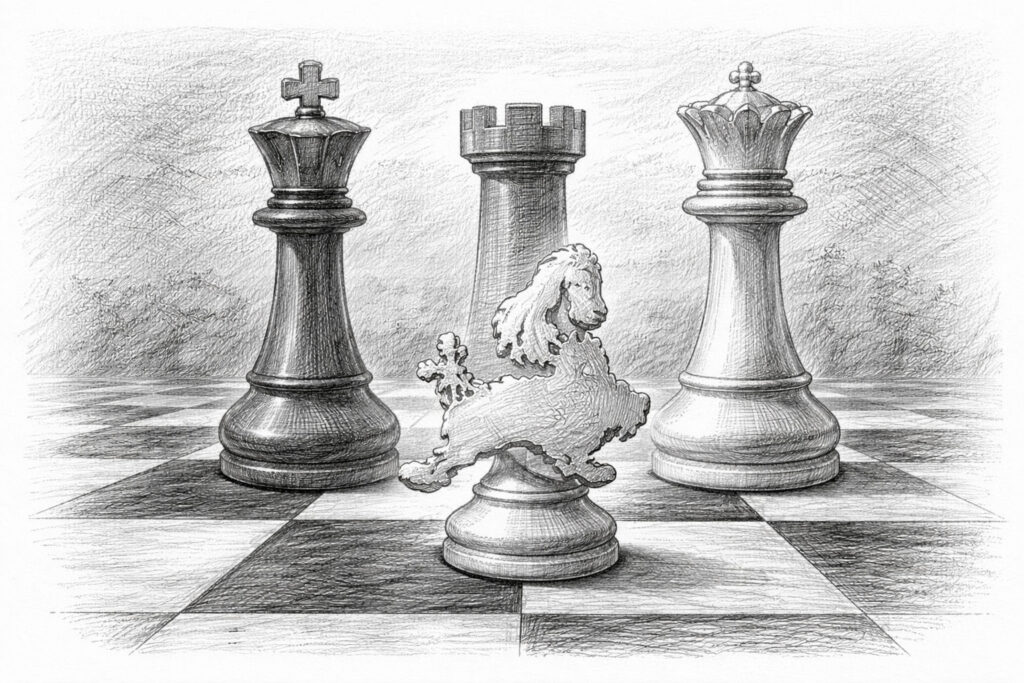
The term is provocative - but helpful as an analytical tool. A modern vassal is not a subjugated state. It is an actor whose core strategic interests can no longer be shaped completely autonomously because central levers are beyond its control. If:
- Security is not guaranteed without the USA,
- energy is heavily dependent on US supplies,
- industrial policy comes under pressure from American subsidies,
- digital infrastructure is predominantly controlled transatlantically,
then a structural imbalance arises. This does not mean that Europe no longer has any room for maneuver. But it does mean that this room for maneuver has become narrower.
Silent acceptance
It is striking how little this structural shift is discussed publicly. Instead, a rhetoric of partnership dominates.
Partnership is a positive word. But partnership can also be unequal.
Europe is in a phase in which strategic autonomy is often emphasized rhetorically, but hardly ever implemented in practice. There are many reasons for this:
- Political fragmentation within the EU
- Different national interests
- Limited fiscal leeway
- Social polarization
All of this makes a joint energy and industrial policy reorientation difficult.
A historic fork in the road
In 2026, Europe will be at a point where the course must be set. Either it succeeds in strengthening its own energy and industrial expertise and rebuilding strategic diversification or the structural dependency becomes entrenched.
The development of the last twenty years was not a secret plan. It was the result of many decisions, crises and global shifts.
But the result is visible: Europe is less autonomous today than it was at the turn of the millennium.
Whether you call this a vassal status or an asymmetrical partnership is ultimately a question of terminology.
The crucial question is: Is Europe prepared to strengthen its strategic levers itself again - or will it permanently accept a role in which central decisions are prepared outside its direct sphere of influence?
In the concluding chapter, we will look at which paths are theoretically open to Europe - and which of these appear politically realistic.
Why electricity and gas are so expensive in Germany
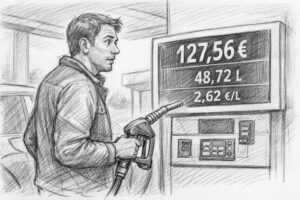 Why have energy prices in Germany been among the highest in Europe for years? In this detailed Articles on energy prices in Germany, I analyze the most important drivers - from grid fees, taxes and levies to emissions trading and the structural characteristics of the energy transition. The article clearly shows how political decisions, market mechanisms and international developments affect electricity and gas bills. Anyone who wants to know why energy is more expensive in this country than elsewhere will find a well-founded and comprehensible classification.
Ways out of dependency - How Europe can regain strategic sovereignty
When the past chapters are brought together, the picture that emerges is not one of an occupied continent, but of a continent that has given up key levers - partly out of conviction, partly out of political pressure, partly out of strategic short-sightedness.
The good news is that structural dependency is not a law of nature. The bad news is that it cannot be remedied by symbolic politics.
If Europe - and Germany in particular - wants to regain more energy policy independence, it needs to return to what energy policy originally was:
Infrastructure policy, security architecture, location strategy. Not a moral project, not an area of party political profiling, but a core task of state policy.
1. diversification instead of monostructure
The first step would be banal - but crucial: genuine diversification. A robust energy system is not based on a single pillar. It needs:
- renewable energies
- Controllable power plant capacities
- Strategic storage
- Reliable network infrastructure
- Several import options
In recent years, Europe has focused too much on political objectives and too little on system resilience. Diversification does not mean regression. It means redundancy. And redundancy is not a luxury - it is a prerequisite for sovereignty.
2. reassess the nuclear energy issue
Nuclear energy is a particularly sensitive topic. Regardless of how you personally feel about it, one thing is indisputable: nuclear power plants supply base load-capable electricity without CO₂ emissions during operation.
France, Finland, Sweden and other countries continue to rely on this technology. Even in the USA, nuclear energy is being reassessed. This raises an objective question for Germany:
Was the complete exit strategically wise - or politically driven?
Should Europe, at least in part, consider modern reactor technologies or reactivations? And even more fundamentally:
Does it make sense to sell existing or potentially reactivatable infrastructure to external players - or should critical energy infrastructure remain in European hands?
If power plants have been financed from national funds for decades, then it is legitimate to ask whether their operation should not also be under European control in future. This is not an ideological demand, but a question of sovereignty.
3. strategic industrial policy instead of subsidy reaction
Another area is industrial policy. Europe currently often reacts to external programs - such as American subsidy packages - with its own support measures. But reaction is not strategy. A sovereign energy and industrial policy is needed:
- Secure energy-intensive industries in the long term
- Creating investment security
- Stabilize energy prices competitively
- Promoting research into storage and reactor technologies
Structural location policy is needed instead of short-term compensation payments. The alternative would be a creeping deindustrialization - with all the social and fiscal consequences.
4. energy infrastructure as a core area of security policy
Energy is not just a commodity. It is critical infrastructure. This is why the question arises every time external players become involved in grids, storage facilities or power plants:
Where does economic cooperation end - and where does strategic dependence begin?
This applies regardless of whether the investors are American, Russian or other. Europe must define which infrastructure is considered strategically inalienable. Not out of mistrust, but out of national political responsibility.
5 A realistic foreign policy
A sovereign Europe also needs a realistic foreign policy. This does not mean turning away from partnerships. It means balanced relations. Europe should:
- Broadening energy partnerships
- Formulate your own interests clearly
- be able to separate economic cooperation from geopolitical loyalty
Partnership is valuable - but it must not be confused with dependency. Strategic autonomy does not mean isolation. It means freedom of choice.
6. political culture and strategic thinking
Perhaps the most difficult point is the political culture. Energy policy is long-term. It works for decades. Party political cycles, on the other hand, last four years. As long as energy issues are primarily discussed in moral or ideological terms, there is a lack of strategic depth. Europe needs a return to sober consideration:
- Which technologies secure supply?
- What risks are realistic?
- What costs are acceptable?
- What dependencies arise?
These questions are complex. But they can be solved - if you are prepared to discuss them without using buzzwords.
No automatism - but a decision point
Europe is not facing an inevitable relegation. But it is facing a decision. The past twenty years have shown how quickly structural shifts can add up:
- morally motivated energy policy
- Accelerated nuclear phase-out
- geopolitical escalations
- Pipeline failure
- Global market distortions
- Transatlantic power shifts
The result is a noticeable reduction in strategic independence. But history is not a one-way street.
- Europe can readjust its energy architecture.
- It can strengthen diversification again.
- It can protect strategic infrastructure.
- It can shape industrial policy for the long term.
Whether it does so does not depend on Washington, Moscow or Beijing - but on political decisions in Berlin, Paris, Brussels and other European capitals.
Energy is not a sideshow. It is the foundation. If you have energy, you have room to maneuver. If you give it away, you narrow your options.
Europe has lost much of its old balance in recent years. But it still has the resources, technology and political institutions to take countermeasures.
The crucial question is therefore not whether Europe is dependent today. The crucial question is:
Is Europe ready to think strategically again?
This concludes this overview - not with alarmism, but with an invitation to a sober debate.
Because sovereignty does not begin with slogans. It begins with clear analysis.
Further sources on energy security
- Federal Agency for Civic Education - Energy policyComprehensive analysis of Germany's energy policy, including foreign, economic and security policy dimensions in the context of European dependence on gas supplies. Discusses historical developments and political background.
- SWP Berlin - Nord Stream 2: Germany's DilemmaA research report by the German Institute for International and Security Affairs on the geopolitical classification of the Nord Stream 2 project, its political tensions and the balancing of priorities between energy supply and foreign policy.
- World Energy Council - Energy for GermanyAn overview of the development of Germany's energy imports, with a focus on Nord Stream 1 and the role of Russian natural gas supplies in the energy mix. Useful for illustrating historical dependencies.
- DGAP - Gas and Energy Security in GermanyAnalysis of gas flows and energy security in Germany and Central and Eastern Europe, including the impact of geopolitical shifts after 2022.
- European Parliament - Security of energy supplyResearch report on the strategic importance of energy supply for EU foreign policy, detailing import dependencies and policy measures to mitigate risks.
- ScienceDirect - LNG and EU Energy SecurityAcademic article on the role of the growing LNG market in Europe and its geopolitical implications, including topics such as market volatility and energy dependency.
- Wikipedia - REPowerEUOverview of the EU strategic plan to reduce dependence on Russian fossil fuels after 2022 and accelerate the transition to renewable energy.
- Wikipedia - European Parliament resolution on phasing out Russian natural gasText on the EU resolution of December 17, 2025 with the aim of ending Russian gas imports by the end of 2027, relevant for geopolitical energy policy.
- University of Cologne - Germany's energy dependenceAcademic analysis of German dependence on Russian gas and the availability of alternative sources of supply in the context of the Ukraine crisis since 2014.
- Wikipedia - Electricity mixOverview of the electricity mix in Germany, including relative shares of energy sources and the role of nuclear energy, relevant for historical comparative data.
- Wikipedia - Energy mixDescribes the energy mix in Germany and in a European comparison, including changes in nuclear energy, fossil fuels and renewables over the last few years.
- Reuters - EU warns of dependence on US LNGNews report on statements by EU Commissioner Teresa Ribera on the EU's growing dependence on US LNG and the need for further diversification.
- Reuters - German gas supply secureReuters article on the current German gas supply situation and how LNG terminals and diversification have reduced dependence on Russian gas.
- AP News - 2nd LNG Terminal in GermanyNews about the construction of LNG terminals in Germany, part of the diversification strategy following the loss of Russian supplies.


Frequently asked questions
- Why does the article claim that Europe is in a „vassal status“, even though they are formally sovereign states?
The term is not used in a legal sense in the article, but in a political science sense. It does not refer to formal subordination, but to structural dependence in key areas such as energy, security and industrial policy. If strategic core areas are strongly influenced by external actors, the actual freedom of action can be restricted - even if formal sovereignty remains in place. - Isn't it normal for countries to import energy and be dependent on each other?
Yes, international energy dependencies are common. However, the difference lies in the degree of diversification. If a country or region has several stable sources of supply and its own production capacities, it has more room for maneuver. It becomes problematic when dependencies are concentrated on a few central partners and a country's own capacities have been reduced at the same time. - Was the German nuclear phase-out not democratically legitimized?
Yes, it was politically decided and socially supported. The article does not question this legitimacy, but analyzes the strategic consequences. Democracy does not mean that every decision is optimal in the long term - it means that decisions are made legitimately. The question is what structural effects can be seen in retrospect. - Isn't it risky to bring nuclear energy back into the picture?
Nuclear energy is a controversial topic. The article does not argue for an unrestricted return, but for an objective reassessment. Other industrialized nations continue to rely on nuclear power as part of their baseload strategy. The key question is whether complete abandonment is strategically prudent in a period of geopolitical uncertainty. - Is the USA really the main beneficiary of the European energy crisis?
The USA has become one of Europe's most important LNG suppliers since 2022. At the same time, they benefit from comparatively low energy prices in their own country, which creates industrial location advantages. This does not automatically mean that they caused the crisis, but it does mean that they have benefited structurally from it. - Why is Nord Stream so strongly emphasized in the article?
Nord Stream was a central energy axis for Germany and Europe for over a decade. The destruction of the pipeline not only meant the loss of a supply option, but also of strategic leeway. The importance of this arises from its role as an energy pulse - not just from political symbolism. - Is there evidence that energy is being deliberately used as a geopolitical lever?
Historically, energy has repeatedly been used as a political instrument - for example in the oil crises of the 1970s or during sanctions. The article does not argue with secret plans, but with structural power effects: Those who can deliver have influence. This logic has been known in international politics for decades. - Isn't the term „transatlantic climate narrative“ an exaggeration?
The term describes the fact that climate policy was developed within an international discourse framework that was strongly influenced by transatlantic networks. It is not about conspiracy, but about discourse power: whoever sets topics and defines priorities influences political decision-making processes. - Does COVID-19 really have anything to do with the energy shift?
Not as a cause, but as an accelerator. The pandemic put a strain on households, industry and political stability. When the energy crisis escalated in 2022, Europe was already economically weakened. COVID therefore exacerbated existing vulnerabilities. - Isn't it dangerous to want to keep energy infrastructure in national hands?
Not necessarily. Many countries consider energy infrastructure to be relevant to security. The USA also protects certain sectors from foreign takeover. The debate is about strategic consideration, not isolationism. - Why is Europe described as „too moral“?
The article does not criticize morality per se, but rather a possible overemphasis on moral narratives over strategic resilience. Energy policy must take into account ecological goals as well as security of supply and competitiveness. - Aren't high energy prices part of the necessary transformation?
Transformation causes costs, that is undisputed. However, the question is whether these costs are sustainable in international competition. If competitors have significantly cheaper energy, this can lead to structural locational disadvantages. - Is Europe really less sovereign than it was 20 years ago?
In some areas - particularly energy and industry - independence has been reduced. Before 2000, Germany had more of its own base load capacities and a more diversified energy system. Today, it is more dependent on imports and global markets. - Is an anti-American position being advocated here?
No. The article analyzes structural shifts in power. The USA is acting in its own interests - like every state. The key question is not whether America is acting, but whether Europe is developing sufficient strategies of its own. - What does „strategic autonomy“ mean in concrete terms?
Strategic autonomy means the ability to make central decisions independently without being susceptible to blackmail from external suppliers or security guarantors. It does not mean isolation, but diversification and the ability to act independently. - Is a return to more independence realistic?
It is technically possible, but politically challenging. It requires long-term planning, investment and a move away from short-term thinking. Whether it is realized depends on political will. - How great is the danger of deindustrialization really?
Individual sectors - especially energy-intensive ones - are under pressure. Investment relocations are already visible. Whether this results in comprehensive deindustrialization depends on the development of energy prices and industrial policy measures. - What is the core message of the article?
The central message is that energy is the foundation of the state's ability to act. Anyone who thinks about energy policy primarily in moral or short-term terms risks long-term dependency. Europe is at a point where strategic decisions need to be made about its future independence.