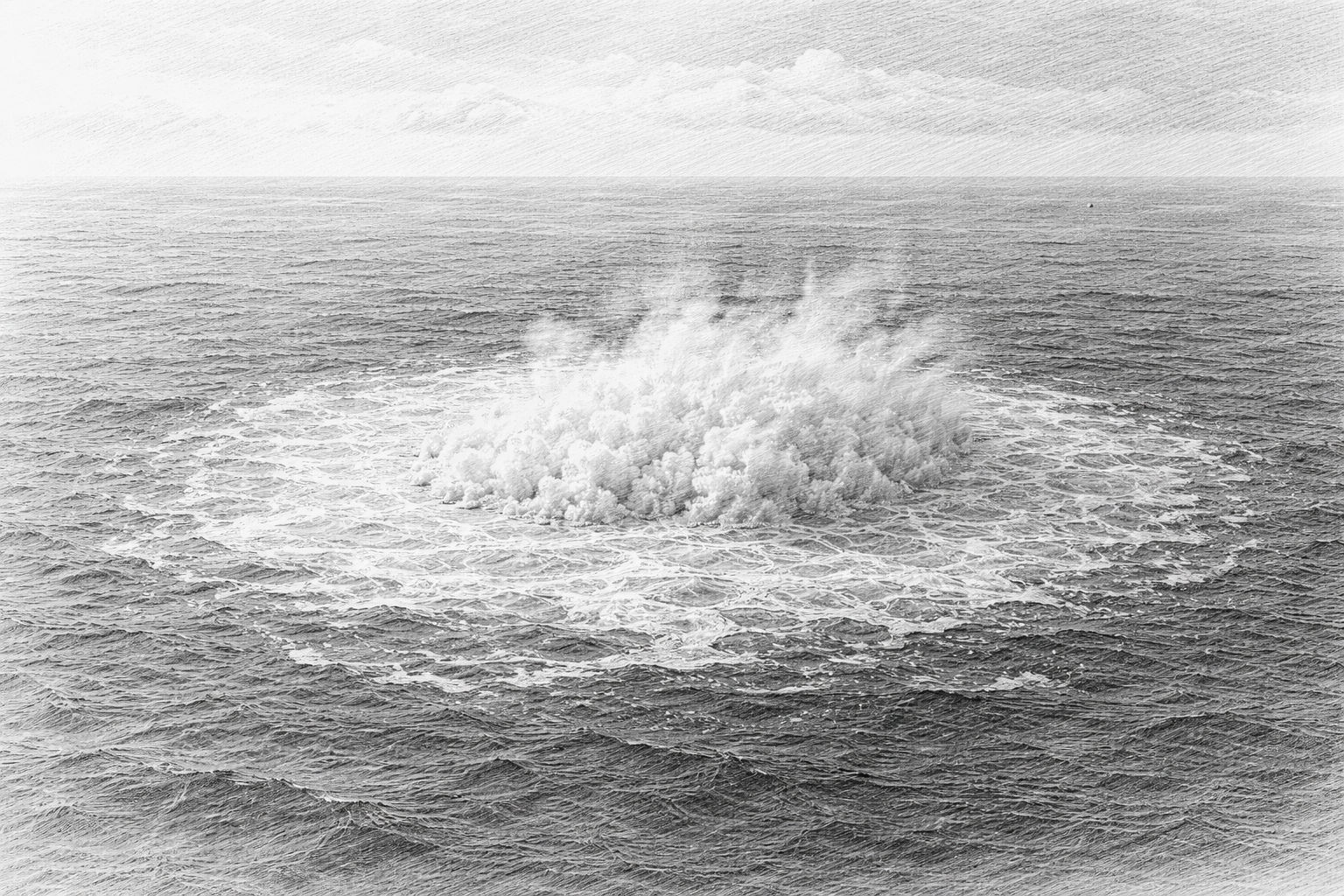
When people talk about energy, many think first of electricity - of light, of sockets, of power stations. In reality, however, Europe's everyday life depends on a quieter foundation: heat and process energy. Over the decades, natural gas has become a kind of invisible backbone. Not because it is particularly „beautiful“, but because it is practical: it is easy to transport, relatively flexible to use and can be reliably supplied in large quantities. For private households, this means heating and hot water. For industry, it means one thing above all: predictable production.
Particularly in industries such as chemicals, glass, steel, paper, ceramics or fertilizers, energy is not simply a cost factor that is „optimized“. Energy is an integral part of the process. If it fails or becomes unreliable, it is not just one machine that comes to a standstill - often an entire plant, sometimes an entire supply chain. This is the point at which „energy policy“ ceases to be an abstract controversial issue and begins to have a very concrete impact on jobs, prices, availability and stability. Anyone who understands this also understands why Nord Stream was far more than just an infrastructure project on the seabed for Europe.




Latest news on the Nord Stream Pipeline
15.06.2026: The operator of Nord Stream 2 is take legal action against the European Union's energy policy. The backdrop to this is the EU’s decision to phase out Russian gas by 2027 at the latest. According to Nord Stream 2 AG, this effectively strips the already completed pipeline of any economic basis. The company argues that billions in investments would be devalued and that the new regulations amount to indirect expropriation. There have already been several legal disputes between Nord Stream 2 and European institutions in the past; now the dispute centers on the new measures for a complete phase-out of Russian gas imports. The EU justifies its course with energy independence, security of supply, and the reduction of financial flows to Russia. Critics, on the other hand, point to potential economic consequences for Europe as well as the loss of existing infrastructure. The case is likely to occupy courts and arbitration tribunals for years to come and could set an important precedent regarding investment protection, energy security, and the political regulation of energy markets.
05.06.2026Russian President Vladimir Putin has once again raised the possibility of Nord Stream 2 being put back into operation. At a meeting with international journalists, he explained that one of the two strings of the pipeline was still technically operational. If Germany makes a political decision and removes existing obstacles, gas supplies could be resumed in the short term. Putin referred in particular to existing US sanctions, which currently prevent the pipeline from being used. According to him, Russia could supply up to 28 billion cubic meters of natural gas per year via the remaining pipeline. Otherwise, the available quantities would be sold to other markets. The statements come at a time when the debate about energy prices, security of supply and the economic consequences of energy policy is once again gaining momentum. Nord Stream 2 was completed before the war in Ukraine, but never went into regular operation. Putin's statements are likely to further fuel the discussion about Germany's future energy supply and the geopolitical role of the pipeline.

Important! Who blew up Nordstream? | Contrafunk
Almost four years after the explosions in the Baltic Sea, numerous questions surrounding the Nord Stream blasts remain unanswered. The interview with journalist Dirk Pohlmann sheds light on various hypotheses, possible interests and the development of the public debate since 2022. Regardless of which explanation is ultimately followed, the case is a perfect example of how closely energy policy, geopolitics, economic interests and international security issues are intertwined. This is precisely why Nord Stream remains one of the most discussed topics in recent European history and continues to preoccupy journalists, investigators and political observers alike.
25.05.2026: On May 21, 2026, the German Bundestag once again discussed the attack on the Nord Stream pipelines. The occasion was the debate on the establishment of a committee of inquiry (UA) to shed more light on the background, possible responsibilities and political consequences of the explosion. The motion to set up such a committee was tabled by the AfD parliamentary group after the issue had received increasing public attention in recent months.

Bundestag debate on the establishment of a UA: Attack on the Nordstream pipelines | phoenix
The debate shows that many questions surrounding the attack remain unanswered. There is still no generally accepted and conclusive answer as to who was behind the destruction of the pipelines and what geopolitical interests may have played a role. At the same time, further expert events and analyses are now taking place at which technical, political and economic aspects of the case are being discussed. The following video documents the Bundestag debate on the possible establishment of a committee of inquiry and shows how controversial the topic continues to be.
23.04.2026: A Article in Overton Magazine by the co-founder and former editor-in-chief of the magazine Telepolis poses a provocative question: why does Germany continue to support Ukraine so clearly, even though the attacks on the Nord Stream pipelines have not yet been fully clarified and there are even some indications of state involvement? The article argues that political decisions were apparently made independently of the full clarification of these events and criticizes what it sees as a one-sided public debate. In fact, the authorship of the sabotage remains unclear, while different narratives coexist. Against this backdrop, the article questions the strategic orientation of German policy and asks whether geopolitical interests and alliance logic are given greater weight than economic self-interest. Irrespective of the assessment, the article shows one thing above all: how great the tensions are between the official narrative and the critical counter-perspective - and how few conclusive answers have been given to many central questions to date.
21.03.2026Despite the planned import ban on Russian gas from 2027, it is clear how contradictory Europe's energy policy currently is: In February 100 percent of LNG supplies from the Russian plant Yamal to the EU - a total of around 1.54 million tons. This meant that Europe remained a key sales market for Russian gas, while alternative customers such as China were not supplied at all during this period. By 2025, more than three quarters of Yamal exports came from deliveries to the EU, generating billions in revenue for Russia. In the context of the destroyed Nord Stream pipelines, this development seems particularly contradictory: pipeline gas was politically terminated, while Russian LNG continues to be imported on a large scale via detours - often more expensive, but structurally hardly less dependent.
24.02.2026: Is Nord Stream one of the biggest lies of the Biden era? An opinion piece at The Hill picks up on a recent development in Germany and combines it with controversial questions about the role of the US government at the time. The background to this is a German arrest warrant for a Ukrainian allegedly involved in the Nord Stream sabotage. The author argues that previously published intelligence documents suggested that US services - and thus indirectly the Biden administration - had early indications of Ukrainian sabotage plans. If it is confirmed that such information existed and was passed on without informing the public, this would not only reassess the question of the perpetrators, but would also cast the political communication of the US government at the time in a different light. Official statements from Washington on these allegations are not yet available.
Security of supply: the difference between theory and everyday life
In political discussions, energy is often treated as if it is interchangeable: Gas today, something else tomorrow - as long as you want it enough. That's not how it works in the real system. An economy cannot be changed like an app. Grids, power plants, industrial plants, heating systems, storage facilities, contracts and logistics - all of this is designed to last for years and decades. That is why one principle has long been central to Europe: security of supply. Not in the sense of „cheap at any price“, but in the sense of „predictable and stable“.
This is where a point comes into play that outsiders easily underestimate: For a modern industrial society, energy is not just a product, but a beat. A stable supply is like a steady heartbeat. You don't notice it as long as it's there. But when it becomes unsteady, you suddenly realize how much depends on it - and how little you can fix in the short term. This is precisely why the question of how Europe - and Germany in particular - can obtain large quantities of gas was not a minor matter for many years, but a key strategic issue.
Germany's special role: industry, heat and the logic of long-term planning
Germany is a special case in Europe for one simple reason: it is highly industrialized and densely populated at the same time. This means high energy requirements in a confined space - not only in factories, but also in cities, in residential areas and in municipal supply structures. Natural gas has long played a dual role: as heating energy and as industrial energy. This dual role makes dependencies stable - but also sensitive.
In addition, the German economic logic was traditionally based on reliable framework conditions. This is also evident in the energy market. While the short-term spot market often seems like a modern ideal in the public debate („flexible“, „close to the market“), industrial planning is based more on long-term supply contracts, fixed quantities and clearly calculable prices. This is not romantic, but down-to-earth: A chemical plant that has to constantly reckon with unpredictable energy prices cannot invest as it should. And if you don't invest, you lose competitiveness in the medium term - regardless of the political goals you are pursuing.
Against this backdrop, Nord Stream was not simply a „project“ for Germany. It was a building block in a long-term supply architecture: large volumes, direct delivery, little transit risk, predictable conditions. You can like it or not - but you should first understand it before you judge.
Nord Stream as an idea: direct connection instead of political detours
Nord Stream was essentially a direct connection between producer and customer via the Baltic Sea. Such direct connections have an obvious appeal from a supply perspective: they reduce the number of intermediate stations and therefore the number of potential disruptive factors. In the classic logic of infrastructure planning, this sounds sensible at first. The fewer bottlenecks, the fewer political conflict zones, the fewer „third parties“, the lower the risk that a dispute somewhere along the way will turn into a supply problem.
But this is precisely where the political explosive force lies. This is because transit countries not only lose fee income through such a bypass, but also influence. Those who control transit control leverage. And those who lose leverage fight back - openly or covertly. Nord Stream was therefore a project that affected not only economic interests but also power relations from the outset. The pipeline was therefore not just political from the day of the explosions. It has been political since the first plan was on the table.
Why the topic is so charged: energy is always geopolitics too
In retrospect, it seems almost naïve to believe that Nord Stream could ever be considered „neutral“. Energy has always been a geopolitical instrument - not necessarily with malicious intent, but as a reality. Those who supply energy have influence. Those who need energy are vulnerable. In between are contracts, interests, dependencies and security issues. You can assess this morally. But you can't argue it away.
For Europe, there was another factor: European unification is also an agreement on stability. And stability means: no sudden breaks. No permanent supply uncertainties. No abrupt deindustrialization due to energy shortages. In this sense, Nord Stream was - regardless of the political controversy - a symbol for many years that supply can be kept predictable. This is precisely why the shock was so great when the pipelines were damaged. It wasn't just about gas. It was about the signal: even central infrastructure can suddenly be gone.
The real core: Why sabotage is more than just a criminal case
When a pipeline of this size is destroyed, it is not just material damage. It is a turning point. Even if it were repaired later (which would already be a separate story technically, politically and economically), a message remains: such a connection can be cut - and the public may never get a full explanation. This changes decisions. Companies become more cautious. States become more suspicious. Citizens lose trust. Markets react more nervously. And political camps use the interpretation to strengthen their own narratives.
Entering the interpretation space: What readers can expect now
Anyone who gets involved here should take one thing with them: Nord Stream was important for Europe because it was about plannable energy - and therefore the ability to plan the entire economy and everyday life. Anyone who understands this will also understand why the pipeline was not just a piece of news, but a turning point. From here on, things inevitably become controversial because different interests favor different explanations.
In the next step, we will therefore take a sober look at what can be regarded as certain - and then at the competing theories. Not all of them deserve the same place. But all of them must first be presented clearly. And then you will see why Seymour Hersh's account - whether you agree with it in the end or not - seems more coherent than much of what is otherwise circulating in the debate.
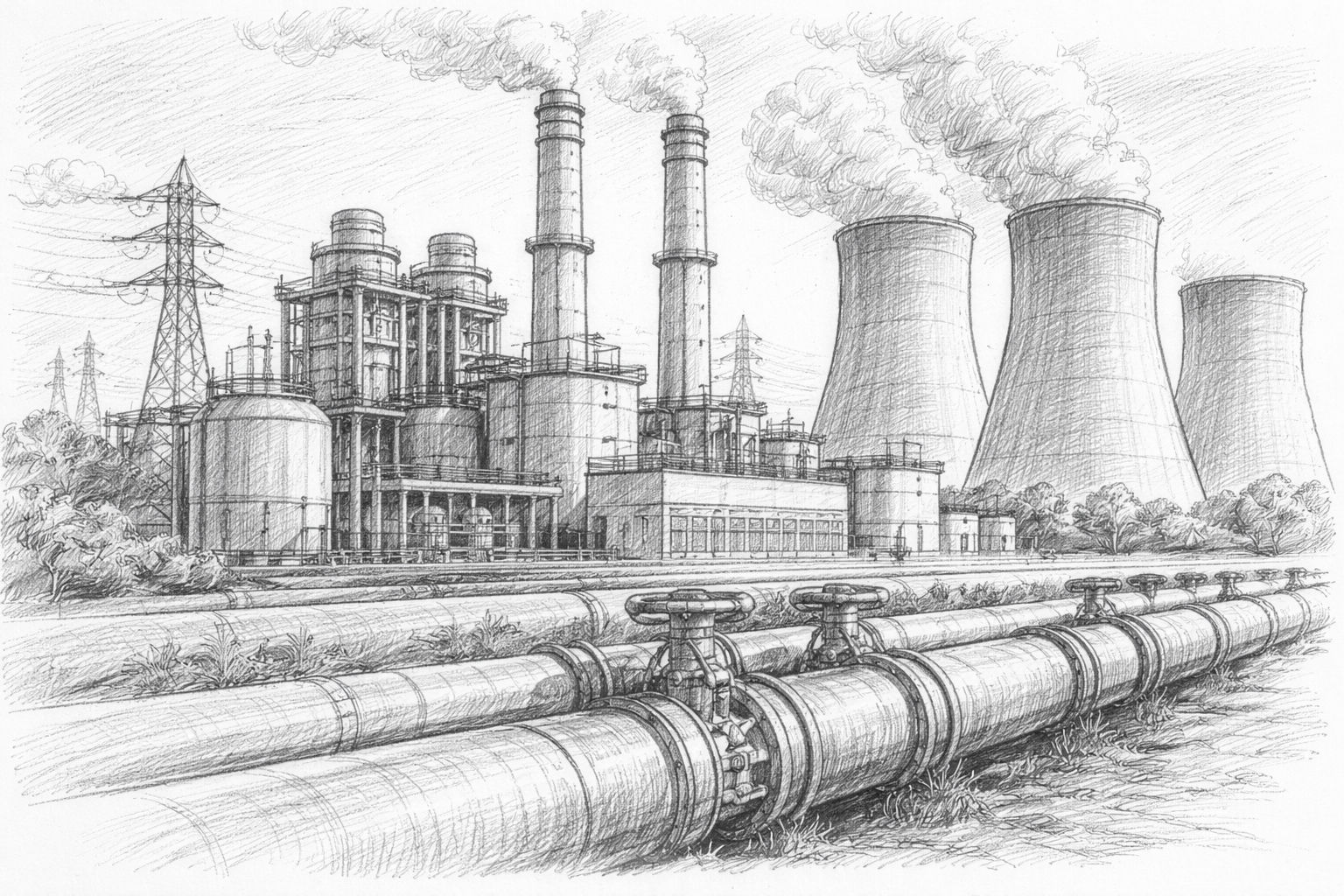
How Nord Stream works technically
If from Pipelines When people talk about gas pipelines, they quickly get the wrong idea: a long hose, laid somewhere, through which gas flows. In reality, a high-pressure gas pipeline like Nord Stream is a highly complex technical system that has little to do with everyday concepts. The dimensions alone make it clear why simple explanations are not enough. The pipes have a diameter of over one meter, are made of thick-walled steel and are also encased in a heavy concrete coating. This coating is not only for protection, but also for stability - it ensures that the pipeline lies securely on the seabed and does not slip due to currents or external influences.
The transported gas is under high pressure. This pressure is necessary to efficiently move large quantities over long distances. At the same time, however, it also means that any damage is not a gradual leak, but a massive intervention in the system. This is precisely why such a pipeline differs fundamentally from the pipelines we are familiar with in urban environments. Anyone who has understood the basic technical principle also understands why damage to Nord Stream cannot be a trivial event.
The course under the Baltic Sea: Why the location matters
At first glance, the Baltic Sea appears to be a calm, controllable inland sea. In reality, however, it is a sensitive and strategically important area. Nord Stream runs for hundreds of kilometers along the seabed, through different depth ranges and zones with very different conditions. In some places the water is comparatively shallow, in others it reaches depths where human diving is practically irrelevant. Technical work down there is only possible with special equipment - remote-controlled underwater vehicles, pressure chambers or military equipment.
This depth is not a secondary aspect. It determines who is able to operate in a targeted manner. The deeper and more remote the location, the greater the technical and logistical effort. And the smaller the circle of players that can realistically be considered. This is one of the reasons why the question of technical feasibility is so important - and why simple explanations often conceal more than they explain.
Protection mechanisms: Why pipelines are not defenceless
High-quality underwater pipelines are not simply „laid and forgotten“. The construction itself is a precisely monitored process. Further protective mechanisms are added later: regular inspections, monitoring by sensors, maritime observation and, in some cases, military attention. Nord Stream also ran through an area that was by no means a blind spot. The Baltic Sea is heavily frequented, intensively monitored and has been militarily relevant for decades.
This does not mean that sabotage is impossible. But it does mean that it does not happen unnoticed or casually. If you want to deliberately damage such a pipeline, you not only have to know where it is, but also when and how you can act inconspicuously enough. This requires planning, coordination, access to special technology - and above all time. This is where the picture begins to take shape: A random actor who acts spontaneously fits poorly into this equation.
Accident or sabotage? Why this question was quickly answered
In the first few hours after the explosions, public statements were still cautious. But from a technical point of view, it quickly became clear that an accident of this kind is extremely unlikely. Pipelines such as Nord Stream are designed to withstand internal pressure fluctuations, material fatigue and external influences. Minor damage usually develops slowly, with measurable signs. A sudden, massive failure at several points at the same time does not fit into this pattern.
Added to this is the spatial distribution of the damage. Multiple explosions at different points do not indicate a systemic defect, but rather targeted interventions. In technology, a simple principle often applies: the more complex a system, the more predictable genuine faults are - and the more conspicuous artificially induced faults are. This is precisely why there was talk of sabotage relatively early on, even if people were reluctant to apportion blame.
Why „just diving“ is not a realistic idea
In many discussions, there is a subliminal notion that someone could have damaged such a pipeline with manageable effort - perhaps with divers, perhaps from a civilian ship. Technically speaking, this is naive. Working at greater depths requires either saturation diving with considerable logistical effort or the use of specialized underwater vehicles. Both are expensive, conspicuous and cannot be organized spontaneously.
What's more, it's not enough to attach something somewhere on the pipe. To effectively destroy a pipeline of this type, you need precisely placed explosive charges, sufficient energy and an understanding of how the material, pressure and environment interact. Anyone who takes an amateurish approach risks ineffective damage or premature discovery. This also speaks against simple explanations and in favor of players with experience and resources.
Technology as a filter: who is even eligible
If you take all these factors together - depth, construction, monitoring, necessary technology - the technical side suddenly acts like a filter. It does not exclude everyone, but it severely restricts the circle. What remains are actors who have access to specialized maritime technology, have experience with underwater operations and are able to plan such activities over a longer period of time without attracting attention.
This is an uncomfortable thought because it automatically points in the direction of state or state-related structures. Not because states are „evil“ per se, but because only they usually have precisely this combination of capabilities, resources and cover options. This realization alone does not answer the question of guilt. But it helps to bring the debate back from the speculative to the realistic.
Why technology is not a sideshow here
In political debates, technology is often treated as a detail, as something for experts. In the case of Nord Stream, it is the opposite: it is the key to understanding. Ignoring the technical framework opens the door to narratives that may be politically convenient but have little physical validity. Conversely, a sober look at the technology forces us to critically question some theories - even if they fit well into the desired narrative.
This chapter therefore fulfills an important function: it creates a common ground. Regardless of which theory is later deemed plausible, it must be measured against the technical realities.
And this is precisely what will be decisive later on when we turn to the various explanations for the sabotage. Because not every story that can be told well is also technically viable.

September 26, 2022: What we know for sure
September 26, 2022 is one of those dates that initially seems inconspicuous and only turns out to be a turning point in retrospect. It was not a political summit, not an announced event, not a day with special symbolism in the calendar. And that is precisely what makes it so remarkable. In the middle of an already tense situation - energy crisis, war in Ukraine, nervous markets - something happened that could not be turned back: Nord Stream 1 and later Nord Stream 2 were damaged.
Not theoretically, not politically, but physically. The system was suddenly no longer available.
What distinguishes this day from many other moments of crisis is the clarity of the cut. Discussions about supply volumes, sanctions or political decisions can always be revised or renegotiated. A destroyed pipeline, on the other hand, is a fact. It marks a boundary between „before“ and „after“. And that is precisely why it is worth taking a very close look at what was actually known on that day - and what was not.
The first signals: measurement data, pressure drops, explosions
On September 26, various measuring stations recorded unusual events in the Baltic Sea. Seismological services recorded tremors that did not correspond to natural events. At the same time, pipeline operators reported sudden drops in pressure. This sounds abstract to laypeople at first, but for experts it is an alarm signal. A drop in pressure of this magnitude is not caused by small leaks or material fatigue, but by massive damage.
Shortly afterwards, gas bubbles became visible on the surface of the water. Images of this spread quickly - hesitantly at first, then worldwide. By this point at the latest, it was clear that this was not a theoretical risk, but a real, physical destruction. Several leaks at different points quickly made it clear that a single, random event was not sufficient as an explanation. The probability of several independent incidents occurring at the same time is negligible in a system like Nord Stream.
Initial political reactions: Caution, but no doubts
What was striking about the first statements by political actors was not so much what was said, but how it was said. The choice of words was restrained, almost matter-of-fact. Terms such as „sabotage“ appeared early on, but without direct accusations. This is no coincidence. In international politics, it is considered prudent to state facts without prematurely ascribing responsibility - especially when the consequences could be far-reaching.
At the same time, it was remarkable that the accident theory was hardly pursued seriously. In contrast to many other technical faults, there was no prolonged hesitation here, no public weighing up of various causes. The assumption of targeted interventions quickly prevailed. That alone says a lot about the assessment of the experts in the background. Officially they remained cautious, unofficially the framework was obviously clear.
Sabotage as a statement - not as speculation
It is important to separate this point clearly. „Sabotage“ was not used as a political accusation, but as a technical description. Someone had deliberately intervened. Nothing more - but nothing less either. This statement was the lowest common denominator that everyone involved was able to agree on relatively quickly. And that is precisely what makes it so significant. In a situation where political interests are far apart, such agreement is rare.
The fact that hardly any details followed created a tension early on. On the one hand, it was clear that something extraordinary had happened. On the other hand, it remained unclear who was responsible and why. This tension has not been resolved to this day. It forms the background for all the theories, narratives and interpretations that emerged in the months that followed.
The immediate consequences: A system fails
Regardless of who was to blame, September 26 had immediate consequences. Nord Stream was effectively out of operation. Even if individual sections of the pipeline could theoretically have been repaired, it was clear that nothing more could be done in the short term. The damage was not only technical, but also psychological. Confidence in the availability of central infrastructure was shaken. For markets, companies and political decision-makers, this meant that the previous assumption of stability was no longer valid.
It is interesting to note that these consequences were accepted almost without comment. There were no major announcements, no clear political reactions that seemed appropriate to the event. Instead, a kind of quiet rethinking set in. Alternatives were sought more quickly, emergency plans were adapted, new dependencies were accepted. The break was complete, even without big speeches.
Looking back, we can say that September 26 was less a day of information than a day of realization. The realization that even highly developed, internationally significant infrastructure is vulnerable. And that this vulnerability does not necessarily lead to transparency. On the contrary: the greater the impact, the more cautious and sometimes more silent the public reactions became.
The event sent a signal - not just to Europe, but globally. It showed that economic interdependence does not offer automatic protection. That contracts, investments and decades of cooperation are no guarantee in an emergency. It is this signal effect that makes the incident relevant beyond the specific damage. It also explains why there is so much interest in the investigation - as well as frustration at the lack of clear answers.
Invisible damage: Methane instead of a cloud of smoke
While explosions on land immediately conjure up images of fire, smoke and destruction, the ecological dimension of the Nord Stream sabotage remained abstract for a long time. This was not because the damage was minor - but because it remained largely invisible. Natural gas consists to a very large extent of methane, a colorless and odorless gas. When the pipelines were damaged, enormous quantities of it flowed unhindered for days from the seabed into the Baltic Sea and from there into the atmosphere.
What was seen on satellite images - circular fields of bubbles on the surface of the water - was only the final stage of a process that took place mainly underwater and finally in the air. Unlike oil spills, which leave behind visible pollution, a methane leak appears quiet, almost harmless. This is precisely what makes it so deceptive.
Methane is particularly problematic from a climate perspective. Although it remains in the atmosphere for a shorter period of time than carbon dioxide, it has a much stronger effect during this period. Depending on the period under consideration, methane is said to have a greenhouse effect 25 to over 80 times greater than CO₂. This means that large quantities released in a short period of time have a significant effect on the climate - even if they later decompose.
Estimates of the Nord Stream withdrawal vary, but are of a magnitude that can no longer be dismissed as a „marginal event“. Converted into CO₂ equivalents, the emissions were roughly equivalent to the annual emissions of a medium-sized city or the emissions caused by millions of cars in a year. For a single event, this is extraordinary - especially as it was not caused by industrial production, but by the destruction of existing infrastructure.
Effects on the marine ecosystem
The incident was not without consequences for the immediate underwater environment either. Large gas bubbles locally change the oxygen content, the pressure conditions and the physical structure of the water column. In the Baltic Sea, which is already considered a sensitive and comparatively poorly mixed body of water, such disturbances can cause short-term stress for organisms - especially for near-bottom fauna, mussel beds and microorganisms.
Although it was publicly emphasized that the Baltic Sea would „recover“ relatively quickly, these statements remained vague. Systematic, widely communicated studies on long-term ecological consequences are hardly known. Here, too, a pattern emerges: while political and safety aspects were intensively discussed, the ecological dimension quickly faded into the background - even though it was measurable and relevant.
It is particularly striking how little space this massive methane emission has taken up in the public climate discourse. At a time when emissions are accounted for to the second decimal place, one of the largest single methane events in recent European history remained surprisingly marginalized. There were no months of debate, no special reports, no sustained media presence.
This silence raises questions. Not necessarily about intent, but about priorities. Apparently, climate damage is not the same as climate damage - depending on whether it is politically convenient or not. The Nord Stream withdrawal did not fit neatly into simple narratives of individual responsibility or industrial negligence. It was the result of a geopolitical event. And that's where it gets uncomfortable.
Environmental impact as part of the overall picture
The ecological effects of the sabotage are therefore more than just a side issue. They broaden our view of the event. Nord Stream was not only an economic and political watershed, but also an ecological one. The fact that this aspect faded so quickly says a lot about how selectively attention is distributed - even for topics that are otherwise considered central.
Looking back, this point reinforces the impression that September 26, 2022 was no ordinary crisis day. It combined infrastructural destruction, geopolitical displacement and significant environmental damage in a single event - and yet much of it remained surprisingly inconsequential in public discourse. This is also part of what one should „know“ when trying to truly understand this day and its significance.
September 26 marks the end of what can be regarded as largely certain. From this point onwards, the realm of interpretation begins. Who had a motive? Who had the means? Who benefited from the attack? These questions are legitimate, but they inevitably lead into political territory. This is precisely where the debate branches out - into competing theories, media narratives and strategic limbo.
Environmental aspects at the Wilhelmshaven LNG terminal: chlorine and biocides in the Jade
With the loss of Nord Stream, Germany is now increasingly relying on LNG. One technical aspect of the competing LNG import infrastructure that has so far been less in the national debate are accompanying ecological issues at the German LNG terminal in Wilhelmshaven. The FSRU ship „Höegh Esperanza“ stationed at the Jade is partly operated in a „closed loop“, in which seawater is fed through pipes to heat the liquefied natural gas.
In order to prevent the formation of fouling by mussels or barnacles, chlorinated rinsing water is discharged into the Jade - a process that has been criticized by environmental associations such as Deutsche Umwelthilfe. Critics fear possible effects on flora and fauna in the Lower Saxony Wadden Sea National Park, while operators and authorities emphasize that the discharges take place within the framework of the water law permit and under monitoring of the limit values.
Operating technology and alternatives: Ultrasound instead of chlorine
The discussion about biocides is also technically relevant: Although chlorine is effective against fouling, many environmentalists believe it is no longer state of the art. Alternatives such as an ultrasonic antifouling process have been under investigation for some time and are considered a more environmentally friendly option, but are not yet used across the board. The operators point out that changes must be implemented safely and practicably without jeopardizing the ongoing operation of regasification. The debate shows: When establishing the LNG import infrastructure, it is not only energy-related issues that play a role, but also ecological and technology-related issues that go beyond the mere availability of gas.

Investigations without publicity
After the explosions, the official investigation began, as it should in such cases. Initially, the countries in whose sovereign or economic zones the damage was found were responsible - primarily Germany, Denmark and Sweden. That sounds clear, but in practice it is not. After all, Nord Stream is an international project, the Baltic Sea is a shared space, and the affected infrastructures affect security policy interests far beyond national borders.
Instead of a joint, transparent investigation, a web of parallel investigations emerged. Each state worked for itself, with its own authorities, its own priorities and its own confidentiality rules. What sounds like sovereignty on paper actually led to fragmentation. Information was not pooled, but segmented. Results were not presented jointly, but communicated selectively - if at all. This gave the public an early impression of activity, but not of knowledge.
Secrecy as the norm
It quickly became clear that large parts of the investigation would be classified. This was justified with reference to national security, ongoing investigations and sensitive findings. Formally, this is understandable. In practice, however, it means that central questions were removed from public scrutiny. What exactly was investigated, what traces were found, which hypotheses were rejected or pursued further - all of this remained largely in the dark.
This form of secrecy is not unusual when it comes to military or intelligence aspects. What is unusual, however, is its scope and duration. Months passed without any substantial interim results being made public. Even basic information - such as the type of explosives used or the exact sequence of damage - was only confirmed in fragments. This is remarkable for an event of this magnitude.
Promises of transparency without substance
In the initial statements, it was repeatedly emphasized that the intention was to „clarify transparently“. However, this promise remained vague. Transparency was not understood as active information, but as an abstract goal. As long as investigations were ongoing, nothing could be said. And as long as nothing was said, transparency remained a future promise - one that became more distant with each passing week.
Transparency is not an all-or-nothing principle. Even without revealing operational details, it is possible to explain framework conditions, disclose methodological steps or at least clearly state which questions are considered clarified and which are not. The fact that even this level was largely omitted reinforced the impression that this was less about communication and more about controlling the space of interpretation.
Different interests, different silences
Another point that is rarely addressed openly is the different interests of the countries involved. For some, Nord Stream was a key economic project, for others a political nuisance, for still others a security risk. These differences do not disappear with the start of an investigation. They continue to operate in the background - even if neutrality is officially emphasized.
This explains why there was never a common, clear line. Each state had good reasons to emphasize or relativize certain aspects. And each had equally good reasons to hold back from making public statements. The result was a kind of institutional silence that was due less to agreement than to mutual caution. Nobody wanted to commit themselves - and nobody wanted to risk revealing something that could later become politically problematic.
Current survey on trust in politics
The role of parliaments: Informed, but not involved
In parliamentary democracies, such events inevitably raise the question of scrutiny by elected representatives. Here, too, the picture remained ambivalent. Individual committees were informed, but mostly in closed meetings. The content of such briefings hardly ever reached the outside world. Members of parliament could ask questions, but the answers were also subject to secrecy.
For the public, this means that even where democratic control takes place formally, it remains de facto invisible. This may be legally correct, but it leaves a feeling of tension. The greater the scope of an event, the greater the need for comprehensible clarification. If this is not forthcoming, a vacuum is created - and this vacuum is inevitably filled with speculation.
As time went on, the impression grew that the investigations themselves had become a state of affairs. They were ongoing, but they did not lead to any publicly tangible results. This „in-between“ is not politically neutral. It stabilizes existing narratives, prevents new debates and allows uncomfortable questions to be postponed. As long as nothing has been conclusively clarified, everything remains open - and at the same time blocked.
This is not an accusation against individual investigators or authorities. Rather, it is a structural observation. In complex geopolitical cases, non-investigation can be functional. It prevents escalation, protects relationships and preserves room for maneuver. However, the price for this is high: trust. Trust in institutions, in promises of transparency and in the idea that key events will eventually be explained in a comprehensible manner.
Why missing results are themselves a result
The longer the investigations remained without visible results, the clearer a paradoxical effect became: the absence of information itself began to develop significance. Not in the sense of proof, but in the sense of a pattern. Apparently there were findings that were not to be communicated - for whatever reason. And apparently these reasons outweighed the interest in public clarity.
This is a delicate finding for an open society. It does not necessarily mean that something is being „covered up“. But it does mean that political stability and strategic consideration were given higher priority than comprehensive transparency. You can accept that. But it should be named. Because only then can we understand why the Nord Stream case still raises so many unanswered questions today - and why these questions will not simply disappear.
This chapter marks the end of the area of formal enlightenment. This is where the realm of explanations, hypotheses and narratives begins. If state investigations do not provide clear answers - or at least do not share them - a competition for interpretation arises. The media, experts, analysts and investigative journalists take the place of official reports.
This is not a sign of chaos, but a logical consequence. Where there is a lack of transparency, there is interpretation. And this is precisely where the next chapter comes in: with the various theories about who could be behind the sabotage - and why some of them were accepted more quickly than others.
Investigation under lock and key: Journalism between enlightenment and political pressure
The following video from NDR sheds light on the Nord Stream sabotage from the perspective of those who are actually supposed to provide clarification: investigative journalists. It shows how difficult research can be when investigations are carried out in strict secrecy, political sensitivities hamper every inquiry and even experienced reporters report unusual resistance.

The Nord Stream case: Is the clarification being blocked? | ZAPP - NDR
The film makes it clear that the Nord Stream case is not just a question of perpetration, but also a lesson about the limits of journalistic work in highly charged geopolitical situations. Particularly revealing is the look at competing leads, the handling of inconvenient evidence - and the question of whether and how publicity can still be created at all under such conditions.
The competing theories on sabotage
The longer official investigations remain without a publicly tangible result, the more the debate shifts to another space. It is less formal, less controlled, but not necessarily frivolous: the space of hypotheses. This is exactly what we saw after the Nord Stream sabotage. Within just a few days, different explanations emerged and quickly solidified - not necessarily because they were well documented, but because they appeared to be politically, medially or psychologically viable.
It is important to make a clear distinction here: a theory is initially nothing more than an attempt at explanation. It gains weight not through repetition, but through plausibility, internal logic and agreement with known facts. It is precisely by these standards that all competing narratives must be measured - regardless of how often they are quoted or how resolutely they are defended.
Theory 1: Russia as the perpetrator - the obvious enemy image
The earliest and most rapidly disseminated explanation in the media was the assumption that Russia had sabotaged its own pipeline. At first glance, this theory seems simple: Russia as an aggressive actor, Russia as an energy supplier, Russia as a geopolitical opponent - the picture seems to fit seamlessly into the overall situation at the time. This is precisely why this explanation was rarely questioned in depth.
On closer inspection, however, considerable problems emerge. Nord Stream was not a short-term bargaining chip for Russia, but a long-term investment - both economically and politically. Destroying the pipeline would have meant irretrievably surrendering a strategic instrument of its own. Even if one argues that Russia no longer used Nord Stream anyway, the question remains:
Why destroy an asset that could have been used as a bargaining chip at any time?
There is also a practical aspect: Russia would have had no need to carry out a spectacular sabotage to stop deliveries. Valves and contracts would have sufficed. An explosion under water attracts attention, increases the risk of escalation and limits future options. From a strategic point of view, this approach seems contradictory.
Theory 2: A „pro-Ukrainian group“ - the convenient explanation
Months after the event, another explanation emerged, which quickly gained currency in many media outlets: a small, pro-Ukrainian group had carried out the sabotage, possibly with limited resources, possibly without direct state control. This theory had a decisive advantage: it relieved states of direct responsibility and at the same time fitted into the moral framework of the time.
But it is precisely this convenience that makes it problematic. From a technical point of view, the idea raises considerable questions. The effort, the necessary equipment, the planning, the local knowledge and the execution speak against a small, loosely organized group. The logistics - such as transportation, camouflage and coordination - are also difficult to fit into a scenario that is supposed to work without state support.
It is also striking that this explanation was often claimed, but rarely elaborated on precisely. Concrete names, reliable evidence or comprehensible processes were largely absent. Instead, the impression was of a narrative that served more to close a space of interpretation than to actually open it.
Theory 3: Unknown third-party actors - the fog argument
Another category of explanations speaks of „unknown actors“, private mercenaries, economic interests or diffuse secret service operations without clear state attribution. This theory has the advantage of maximum vagueness. It leaves everything open - and ultimately explains nothing.
Of course, it is theoretically conceivable that non-state actors were involved. But here too, the technical and logistical complexity of sabotage requires skills that are generally only available to state or state-affiliated structures. The more diffuse the description of the perpetrators, the less verifiable the thesis becomes. It then serves more as a placeholder than a serious explanation.
Such nebulous arguments often fulfill a communicative function: they prevent clear attributions without having to provide an alternative explanation. However, they are not very helpful for a factual analysis because they evade any concrete verification.
Cui bono? - Who benefits from the damage?
A classic approach in the analysis of political events is the question of benefit. It was also frequently asked in the Nord Stream case - and just as frequently answered prematurely. In fact, the benefits are multi-layered. In the short term, actors with an interest in permanently decoupling Europe from Russian gas benefited. In the long term, however, new dependencies, higher prices and a structural weakening of European industry emerged.
This makes the benefit analysis complicated. There is no clear winner, only actors who moved closer to certain goals while others accepted disadvantages. This is precisely why caution is required when a theory is based solely on „benefits“. Benefits can be an indication - but never proof.
Equivalence as a fallacy
A common mistake in the public debate is to present all theories as equally valid. This seems fair, but is analytically problematic. Not every explanation deserves the same space. Plausibility comes from agreement with known facts, technical feasibility, strategic logic and consistency. If you apply these standards, some narratives quickly fall behind.
This does not mean that alternative theories are „forbidden“ or ridiculous. It simply means that they have different degrees of validity. It is precisely this distinction that has been lost in many media portrayals. Instead, a balance of assertions - not arguments - has emerged.
At this point in the debate, it becomes clear that none of the theories presented so far convincingly explain all aspects of sabotage. Either technical questions remain unanswered, strategic motives unclear or the account seems too vague to be seriously scrutinized. This is the reason why another account received increasing attention in the following months - not because it was convenient, but because it addressed many of these open points.
This account comes from a journalist who has been known for decades for precisely such cases: for uncomfortable research that does not fit into simple narratives. The next chapter therefore deals with the role of the media and the question of why some explanations have been reinforced and others marginalized - before we then take a closer look at Seymour Hersh's research, which still provides the most coherent alternative explanation.
Overview of previous theories about the attack on Nord Stream
| Theory / Actor | What could speak for this | What speaks against it |
|---|---|---|
| Russia as perpetrator | Russia basically has maritime capabilities and knowledge of the pipeline. The thesis fits into the common enemy image of many Western narratives and was therefore taken up early on. | Russia would have destroyed its own strategic and economic asset with Nord Stream. Supply stoppages would have been possible without sabotage. The action would have permanently weakened Russia's own negotiating position. |
| Pro-Ukrainian group (non-governmental) | Politically convenient explanation, as it avoids state responsibility. Fits into a moral interpretation of the conflict. | Enormous technical, logistical and operational requirements speak against a small, loosely organized group. Lack of reliable evidence, unclear financing and unrealistic implementation. |
| Ukraine (state-owned) | Short-term strategic interest in the permanent interruption of Russian gas supplies to Europe. | Lack of maritime capabilities in the required depth. High political risk vis-à-vis Western supporters. No known evidence of operational execution. |
| USA (state-owned) | Clear political objective: permanent energy decoupling of Europe from Russia. Availability of military and technical means. Earlier political statements against Nord Stream. | Enormous diplomatic risk if revealed. Official denials. Politically highly explosive consequences within Western alliances. |
| USA & allies (e.g. Norway) | Combination of regional presence, technical expertise and strategic interest. Use of military exercises as a plausible operational environment. Described in detail in investigative research. | Dependence on anonymous sources. No official confirmation. Politically difficult to admit openly. |
| Private actors / mercenaries | Theoretically conceivable in order to conceal state responsibility. | Lack of motivation, enormous costs, no realistic access to technology and logistics. No comprehensible business or power interest. |
| Unknown third parties | Maximum openness of explanation, avoids clear attributions. | Analytically weak, as not verifiable. Explains neither motive nor technical implementation. Serves more to obfuscate than to clarify. |
| Accident / technical defect | Occasionally mentioned as a theoretical possibility. | Several explosions at different points practically rule out an accident. Technically extremely unlikely. |
| Seymour Hersh reconstruction (state operation) | Coherent presentation of motif, planning, technology and execution. High technical plausibility. Explains silence and lack of transparency in the aftermath. | Anonymous sources. No official confirmation. Politically extremely explosive. |
Media, narratives and what is not said
The media coverage of the Nord Stream sabotage followed a conspicuous pattern right from the start: it was present, but cautious. It was reported, but rarely in-depth. Voices were quoted, but hardly any arguments were developed. What was noticeable was less a clear line than a certain restraint that ran through many reports like a background noise. Phrases such as „according to current knowledge“, „according to investigators“ or „there are indications, but no evidence“ dominated the narrative - even months after the event.
At first glance, this caution is understandable. The media do not want to speculate, they do not want to make themselves vulnerable, they do not want to spread false accusations. But this is precisely where a tension arises: when caution becomes a permanent attitude, it eventually replaces analysis. Reporting then becomes the management of uncertainty, not the clarification of it.
Framing: How spaces of interpretation are created
A central element of modern media work is framing - i.e. embedding information in a certain interpretative framework. This framework often determines which questions are asked and which are not. In the case of Nord Stream, a narrow framework became apparent early on: Sabotage yes, but perpetrators unclear; investigations ongoing; speculation was dubious.
This framework had a calming effect. It signaled control, objectivity, professionalism. At the same time, it implicitly excluded certain trains of thought. Questions about the state responsibility of Western actors were rarely formulated openly. If they were, then usually only in order to quickly classify them as unlikely or „controversial“. This is not an open exclusion, but a subtle one: Anyone who asks such questions quickly moves outside the accepted space of discourse.
Repetition as a substitute for depth
Another feature of the reporting was the strong repetition of a few key messages. The same aspects were emphasized again and again: ongoing investigations, lack of evidence, complex situation. This repetition creates familiarity - but no new insights. It stabilizes the impression of being informed without actually knowing more.
This creates a paradoxical feeling, especially in the case of long-lasting events: you read a lot, but understand little more than you did at the beginning. The discourse goes round in circles, while central questions remain untouched. This is no coincidence, but a typical consequence of topics where information is either missing or deliberately withheld.
The unsaid: Which questions are conspicuously missing
What is often particularly revealing is not what is said, but what is permanently not discussed. In the case of Nord Stream, this mainly concerns structural issues:
- Who would have had the technical and logistical means to carry out such a sabotage?
- What military or intelligence activities took place in the area before?
- What interests have been specifically strengthened by the permanent failure of the pipeline?
These questions arose occasionally, but were rarely pursued. Instead, attention shifted to secondary aspects or to explanations that offered little potential for conflict. The result is a discourse with clear boundaries - not through censorship, but through implicit self-limitation.
Self-censorship or editorial caution?
Whether you call this phenomenon self-censorship or editorial caution is ultimately a question of perspective. It is probably a mixture of both. Journalists work in an environment in which certain topics are sensitive, in which sources must be protected and in which missteps can have real consequences. At the same time, there is economic pressure, time pressure and the desire not to fall outside the consensus.
This does not necessarily lead to the deliberate suppression of information, but it does lead to a certain caution in thinking. Certain hypotheses are not even seriously examined because they are considered „too delicate“. Others are preferred because they generate less friction. The result is a media mainstream that is not necessarily wrong, but incomplete.



The difference between skepticism and mistrust
In this environment, skepticism is quickly confused with mistrust. Anyone who asks questions is quickly seen as someone who „sows doubt“. Yet skepticism is a basic principle of journalistic and scientific work. It is not directed against institutions, but against unsubstantiated claims - regardless of who they come from.
Skepticism would have been particularly appropriate in the Nord Stream case. Not because one should automatically assume dark machinations, but because the combination of enormous scope and low transparency would have required careful, critical monitoring. Instead, the impression often arose that doubts are allowed - as long as they do not take any concrete directions.
Accusations from Moscow - Is the British secret service involved in the blasts?
How the Berliner Zeitung reports, Russian intelligence chief Sergei Naryshkin has accused the British intelligence services of direct involvement in the Nord Stream pipeline explosions. With the sabotage in September 2022, the UK had tested „new limits of what is permissible“ and was preparing further maritime sabotage operations, Naryshkin said at a meeting of the security chiefs of the CIS states. He sees the Nord Stream blast as part of a long-term Western strategy to weaken Russia economically and in terms of security policy.
There have been no official reactions from London or other Western capitals so far. At the same time, the European investigations continue to stall. As a result, the Nord Stream case remains unresolved more than three years after the sabotage.
Narratives as an instrument of stability
Narratives fulfill an important function in times of crisis: they create order. They give meaning to events, even if this meaning is provisional. In the case of Nord Stream, this narrative consisted for a long time of a mixture of ambiguity and reassurance. People supposedly did not know enough to draw conclusions - and this became the central message.
This form of stabilization is politically understandable. It prevents escalation, it dampens emotions, it keeps options open. But it comes at a price. The longer a narrative is maintained that promises no progress, the stronger the feeling grows that essential information is missing. And this is precisely where the space for alternative explanations begins - not out of sensationalism, but out of a need for coherence.
If you would like to find out more about narratives and their impact, you can find more in-depth information here:
„Propaganda: history, methods, modern forms and how to recognize them“
At the end of this chapter, one key finding remains: the media coverage of the Nord Stream sabotage was characterized by caution, repetition and implicit boundaries. It informed, but rarely enlightened. This is not a moral judgment, but a description of a pattern that can be observed time and again with geopolitically sensitive topics.
This background explains why a different form of debate gained attention - one that did not rely on daily updates but on long-term research. The next chapter will therefore focus on this research and its author: Seymour Hersh and his account of the events, which is relevant not because it is uncomfortable, but because it clearly identifies many of the unanswered questions in the first place.
Game theory instead of headlines: An analytical view by Christian Rieck
In the following video, Christian Rieck approaches the Nord Stream complex from an unusual but revealing perspective: game theory. Instead of moral attributions or political reflexes, he soberly asks which actors had which options for action, what costs and risks were associated with them - and which moves make sense at all under rational assumptions. This view from the outside is no substitute for an investigation, but it does help us to ignore emotional narratives and view the events as a strategic decision-making problem. This is precisely why the video is a useful addition to the previous analysis.
At the time of writing, Christian Rieck has published a total of three videos on the Nord Stream Pipelines. The most recent video on this topic is shown below:

Nordstream Pipeline finally cleared up! Or has it? | Prof. Dr. Christian Rieck
Seymour Hersh's research: an uncomfortable but coherent explanation
Before dealing with the content of his research, one step is necessary that is surprisingly often skipped today: categorizing the source. Seymour Hersh is not a blogger, an activist or a commentator on the fringes of discourse. He is a journalist who has built his career on exactly the kind of research that begins where official accounts end. For decades, his work has been characterized by a simple principle: power produces secrets, and secrets deserve to be revealed.
Complete research by Seymour Hersh:
How America Took Out The Nord Stream Pipeline
Hersh became known for revelations that were initially also considered „implausible“, „controversial“ or „unverifiable“ - until they were.
My Lai, Abu Ghraib, covert operations, intelligence programs: In many cases, initial doubt was later followed by confirmation. This does not automatically make his statements true, but it does make them worth examining. Anyone who dismisses Hersh as „discredited“ without examining his arguments is leaving the realm of analysis and entering that of defense.
The approach of his research: slowness instead of topicality
Hersh's Nord Stream text was very different from the usual reporting right from the start. No breaking news, no headline, no anonymous „source from government circles“ with vague allusions. Instead, there was a coherent presentation that spanned a chronological arc, named the players, described processes and classified technical details. It was precisely this coherence that made the text so striking - and so vulnerable.
The core of his approach was classically investigative: interviews with people who had direct or indirect insight into planning and processes, combined with a reconstruction of military and political decisions. The fact that anonymous sources played a role in this is not a flaw, but standard in precisely those areas in which open statements would have professional or legal consequences. The decisive factor is not anonymity, but the inner logic of the account.
The key message: A state-planned operation
At the heart of Hersh's research is the claim that the sabotage of Nord Stream was the result of a state-planned and executed operation by the USA. According to his account, the decision to do so was made months before the explosion - not as a spontaneous reaction, but as a strategic decision. The aim was to bring about a permanent energy decoupling of Germany and Europe from Russia.
Hersh describes a multi-stage process: political decision-making, military planning, operational preparation and finally implementation as part of a regular military maneuver. This embedding is central. It explains why activities in the Baltic Sea were not conspicuous, why technology and personnel were available and why the timing of the explosions was chosen later. The sabotage itself thus appears not as an isolated act, but as the last step in a longer chain.
The role of military exercises
A particularly important point in Hersh's account is the use of existing military exercises as a cover. Military maneuvers provide a legitimate framework for presence, movement and technical activities. Equipment, ships, divers, underwater vehicles - all of this is not only permitted, but expected. Anyone operating in this context is not operating in the shadows, but in the open.
Hersh argues that it was precisely this structure that was used to attach explosive charges to the pipelines without attracting attention. The actual detonation was then delayed, triggered by a signal that activated the previously attached technology. This temporal separation between preparation and execution is a crucial aspect because it explains many unanswered questions - such as why there were no immediate indications of suspicious activity shortly before the explosions.
Technical plausibility instead of spectacle
A frequently raised objection to Hersh's account is that it is „too complicated“. But precisely the opposite is the case. From a technical point of view, his version is surprisingly sober. It dispenses with spectacular individual actions and instead relies on tried and tested military procedures: Planning, camouflage through routine, use of existing infrastructure.
In light of the technical framework conditions described in the previous chapters, this approach seems plausible. For decades, countries with special maritime forces have had precisely the capabilities required for underwater operations. The Baltic Sea is not unfamiliar territory. The idea that such an operation is fundamentally impossible or unrealistic hardly stands up to sober consideration.
The reactions to Hersh: Criticism without a counter-proposal
What is remarkable is not so much that Hersh's research was criticized, but how it was criticized. The most frequent accusation was that he relied on anonymous sources. This accusation falls short of the mark. In security and intelligence-related topics, anonymity is the rule, not the exception. It would have been crucial to factually refute the processes described - for example by proving technical impossibility or by providing contradictory, documented facts.
Instead, the criticism often shifted to the person of Hersh himself. His age, previous controversies, his alleged closeness to certain political positions - all of this was addressed, while the core of his argument remained largely untouched. Official denials also remained conspicuously general. They contradicted, but did not explain. They said „not true“ without explaining what was supposed to be true instead.
Why this presentation stands out
The real reason why Hersh's research received so much attention is not its provocation, but its coherence. She combines political motives, military capabilities and technical processes to create an overall picture that is free of internal ruptures. She explains why Nord Stream was destroyed, why it was possible, why it could happen inconspicuously - and why the investigation subsequently faltered.
This does not mean that every detail must necessarily be correct. But it does mean that this presentation has an analytical quality that many other explanations lack. It is verifiable, at least in part. It makes concrete assertions. And that is precisely what makes it open to attack - in a positive sense. A thesis that can be tested is more valuable than one that hides behind vagueness.
Anyone who seriously wants to understand what could have happened on September 26, 2022, cannot avoid this research. It forces you to ask uncomfortable questions - about power, interests and the limits of public information.
Especially at a time when complex events are often reduced to simple buzzwords, this is a strength. Hersh does not provide a definitive truth. But he does provide a framework in which the known facts can be meaningfully arranged. And that is precisely more than many official statements have achieved to date.
After this chapter, there is no certainty - but a clearer picture of the possibilities. The sabotage of Nord Stream appears less as a mysterious individual event and more as part of a larger geopolitical context. The final chapter is therefore not about new theories, but about the unanswered questions that remain - and the consequences for politics, the public and trust.
The Hersh research in the original context: Classification by NachDenkSeiten
In the following video, NachDenkSeiten places Seymour Hersh's research in its original political and media context. The focus is less on exaggeration than on reconstruction: What evidence was known early on, why did the public debate nevertheless remain conspicuously quiet - and why does Hersh's publication represent a break with this silence?
The video helps to put the scope of the report into perspective and shows that many of the aspects addressed by Hersh had already been discussed long before its publication, but hardly found any resonance in the mainstream. As a supplement to the article, it provides additional perspectives on motives, means and the conspicuous communicative environment following the sabotage.

Seymour Hersh blames USA & Norway for Nord Stream blast | NDS
New perspectives on the Nord Stream sabotage - Deeper waters, deeper questions
In a further contribution of the NachDenkSeiten is about current research findings that shed light on the mysterious circumstances surrounding the sabotage of the Nord Stream pipelines from a slightly different angle. The starting point is the question of why the explosions took place in the deep areas of the Bornholm Basin - in zones that differ considerably from the surrounding sea area. The water there is sometimes three to four times as deep as in the shallower areas nearby, and it is precisely these depths that are particularly suitable for underwater operation scenarios such as those involving submarines and specialized minelaying systems.
The article points out that these deep spots were also designated as training areas for NATO maneuvers and ties this observation into the existing debate about possible perpetrators and procedures. It becomes clear that despite many theories and unanswered questions - not least because of the continuing secrecy of official investigations - a large part of the actual „under the iceberg“ facts remain in the dark.
Open questions, responsibility and a sober view of the future
Despite months of investigations, numerous reports and countless statements, the core of the Nord Stream case remains surprisingly blurred. Not because there is no information, but because crucial information has not been made public. To this day, no one has been officially named who planned, prepared and carried out the sabotage. There are also no reliable accounts of which traces were found, which hypotheses were rejected and which were pursued.
This ambiguity is not a minor detail. It concerns an event of enormous significance - economically, politically and ecologically. In such a situation, one would expect that at least the state of knowledge would be made transparent, even if not everything can be said. The failure to do so is one of the central findings of this entire complex.
Responsibility without designation
Responsibility is a tricky term. It implies guilt, but also responsibility. In the Nord Stream case, responsibility appears to be spread across several levels - and is therefore difficult to grasp. Investigating authorities point to secrecy. Governments point to ongoing proceedings. The media point to a lack of evidence. Each individual reference is understandable on its own. Taken together, however, they create a situation in which responsibility effectively evaporates.
This does not necessarily mean that responsibility is deliberately concealed. But it does mean that no one seems to have a genuine interest in clarifying it publicly. This form of irresponsibility is structural - not individual. It arises where political stability, alliance considerations and strategic restraint outweigh the need for full disclosure.
Why silence itself is a statement
In political analysis, an old principle applies: silence also communicates. Especially when the stakes are high, not saying anything is often just as important as making a clear statement. In the case of Nord Stream, the silence is strikingly consistent. There are no contradictory leaks, no competing official versions, no serious public debates at government level. Instead, there is a remarkable calm.
This calm can be interpreted as a sign of responsibility - as an attempt to avoid escalation. However, it can also be seen as an indication that certain findings are not politically viable. In both cases, a bitter aftertaste remains: the public is apparently supposed to live with the knowledge that something has happened without knowing exactly what.
Nord Stream as a turning point for infrastructure and trust
Irrespective of the question of the perpetrators, the sabotage of Nord Stream marks a turning point. It has shown how vulnerable even central infrastructure worth billions is. And it has shown that this vulnerability does not automatically lead to transparency. This is a sobering realization for future projects - whether in the energy sector, digital infrastructure or global supply chains.
Trust is the decisive factor here. Trust in security of supply, in political reliability, in the idea that large systems are predictable. This trust has been damaged. Not just by the explosions themselves, but by the way they were handled. When key questions remain unanswered, caution becomes the new normal - for states and companies alike.
The role of the public: between acceptance and skepticism
This leaves the public with an uncomfortable task. It consists of enduring uncertainty without falling into cynicism or simple recriminations. In this context, skepticism is not a sign of mistrust, but of maturity. It is not directed against individual actors, but against overly slick narratives that seek to reduce complex processes to simple answers.
This is precisely why it is important to be familiar with different explanations, to understand their strengths and weaknesses and to weigh them up against each other. Not every uncomfortable question is a conspiracy theory. And not every official reticence is automatically honest. An enlightened public moves between these poles.
A sober look ahead
In the end, the realization remains that Nord Stream is less a closed chapter than a lesson. A lesson in how modern power politics works. How infrastructure becomes a geopolitical factor. How enlightenment comes up against limits that are not technical but political in nature.
This article cannot provide definitive answers - nor does it claim to do so. Its aim is a different one: to bring order to complex events, to set standards for plausibility and to open up space for our own thinking. At a time when certainties are often louder than arguments, this is perhaps the most important contribution that can be made.
Nord Stream shows how fragile the supposedly self-evident nature of our order has become. Anyone who makes this out to be just an isolated incident fails to recognize the implications. However, anyone who is prepared to take a closer look will recognize this as a signal - not for panic, but for sobriety. And perhaps this is precisely the first step towards making more responsible decisions in an increasingly confusing world.
Nord Stream and energy prices: A piece of the puzzle with a big impact
 The sabotage of Nord Stream was not the sole cause of the high energy prices in Germany - but it was a decisive amplifier. With the permanent loss of a central, predictable gas infrastructure, the entire price structure shifted: Procurement became more uncertain, markets more nervous, alternatives more expensive. If you want to understand why gas, electricity and ultimately also petrol are so expensive today, you need to consider this context. In the separate article „Understanding high energy prices in Germany: Gas, electricity and gasoline explained simply“ therefore shows in detail how political decisions, market mechanisms and infrastructure disruptions - such as Nord Stream - overlap and affect prices in the long term. The article supplements the Nord Stream analysis with an economic perspective and helps to classify the consequences of this disruption in everyday life.
Gas storage as the missing link in the Nord Stream debate
 The discussion about Nord Stream is often reduced to geopolitical issues, dependencies and political decisions. The current background article on Germany's gas storage facilities adds a central technical level to this perspective: storage facilities are the operational link between the source of supply and actual security of supply. It shows why the elimination of pipeline gas has not only changed supply flows, but also significantly intensified the role, burden and limits of storage facilities. Anyone who wants to understand the practical consequences of energy policy decisions will find the necessary technical and systemic classification in the gas storage article - beyond buzzwords and percentages.
Energy policy in the shadow of geopolitical conflicts
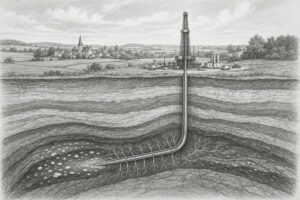 The demolition of Nord Stream has shown how vulnerable central infrastructures can be and how strongly energy policy is influenced by geopolitical interests. In a situation in which existing supply routes are suddenly called into question, the question of alternatives inevitably comes into focus. The article on Fracking in Germany takes up precisely this point and examines what role domestic gas reserves could play in such a scenario. This is not about simple answers, but about classifying possible options under changed framework conditions. Particularly against the backdrop of geopolitical tensions, it becomes clear that energy supply not only has an economic dimension, but also a security policy dimension - and that decisions in this area have long-term effects.


Frequently asked questions about Nord Stream
- Why was Nord Stream so important for Europe in the first place?
Nord Stream was a key element of long-term energy planning for Europe - especially for Germany. The pipeline enabled large, continuous gas supplies at stable conditions and thus formed a basis for industry, heat supply and economic planning. Its importance lay less in the daily gas flow than in the strategic security of being able to access it at any time. - Why are people so quick to speak of sabotage and not of an accident?
The nature of the damage, its simultaneous occurrence at several points and the technical characteristics of the pipeline virtually rule out a normal accident. High-pressure gas pipelines are designed for material fatigue and internal defects. Several massive explosions do not fit into this fault pattern, which is why targeted interventions were assumed early on. - How difficult is it technically to sabotage a pipeline like Nord Stream?
The technical effort involved is considerable. It requires specialized maritime equipment, precise local knowledge, experience with underwater operations and careful planning. Spontaneous or improvised actions are extremely unlikely under these conditions, which severely limits the circle of possible players. - Why were the investigations not conducted openly and transparently?
Officially, this is justified on the grounds of national security and ongoing investigations. In practice, however, it means that political considerations, alliance issues and strategic stability were apparently given higher priority than comprehensive public clarification. Transparency was promised, but only delivered to a very limited extent. - Why is there still no official perpetrator?
Because a clear designation would have far-reaching political consequences. Such a determination could strain diplomatic relations, call alliances into question or trigger escalations. In such cases, non-designation is often the most politically convenient option - even if it is unsatisfactory for the public. - Is the theory that Russia destroyed its own pipeline plausible?
On closer inspection, this thesis seems contradictory. Nord Stream was a strategic instrument and an economic asset for Russia. It would have made little sense to destroy it permanently, especially as supply stops would have been possible even without sabotage. The strategic benefit is difficult to see. - What is the theory of a „pro-Ukrainian group“ all about?
This explanation relieves the burden on state actors, but raises considerable technical and logistical questions. The skills, resources and organizational effort are only partially suited to a small, non-governmental group. Concrete evidence for this thesis has hardly been presented publicly to date. - Why does technical feasibility play such an important role?
Because political motives alone do not provide an explanation. Every theory must be measured against the question of whether it is technically feasible. If you ignore the technical framework conditions, you risk explanations that sound good but are not physically or logistically viable. - What environmental damage was caused by the sabotage?
The release of large quantities of methane caused considerable damage to the climate. Methane has a much stronger short-term effect than CO₂. Local marine ecosystems were also impacted, for example by changes in pressure and oxygen levels. These aspects were discussed comparatively little in public. - Why have methane emissions hardly played a role in the climate discourse?
Because it was difficult to categorize politically. The emissions did not fit into the usual narratives of individual responsibility or industrial emissions. In addition, an intensive discussion would have drawn attention to a geopolitically sensitive event, the causes of which should remain officially unexplained. - What role do the media play in interpreting the event?
Media have mostly reported cautiously, but rarely analyzed in depth. Many questions were hinted at but not pursued. This led to a narrow interpretative framework in which certain explanations were favoured and others marginalized - mostly without overt censorship, but through implicit boundaries. - What does „narrative“ mean in connection with Nord Stream?
A narrative is an interpretative framework that brings order to complex events. In the Nord Stream case, this narrative consisted for a long time of ambiguity, reticence and references to ongoing investigations. It stabilized the situation, but at the same time prevented real clarification. - Why was Seymour Hersh's research so controversial?
Because it names specific actors, processes and motives and thus goes beyond the existing framework of interpretation. Hersh's account is not convenient, but it is self-contained. It was not so much factually refuted as relativized by references to anonymous sources or personal attacks. - Is Hersh's account proven?
No. It is an investigative reconstruction, not a forensic finding. Its value lies in its internal logic, technical plausibility and the fact that it answers many open questions that other explanations exclude. - Why does Hersh's research nevertheless deserve so much space?
Because they are verifiable. They make concrete claims that can be tested, criticized or refuted. This distinguishes them from vague statements that defy scrutiny and are nevertheless disseminated by the media. - What does the continued silence of governments say?
Silence is often a deliberate decision in politics. It can mean that knowledge is available, the publication of which is considered politically risky. In this sense, silence itself is part of communication - even if it does not provide any answers. - Why is Nord Stream more than a single case of sabotage?
Because the incident shows how vulnerable central infrastructure is and how limited the willingness to provide information can be. It is a lesson in power politics, dependencies and the limits of public transparency in geopolitical conflicts. - What consequences does the incident have for Europe's energy policy?
It has not ended the dependencies, but shifted them. Europe is now more dependent on other suppliers, often at higher prices and with new political risks. At the same time, confidence in long-term energy infrastructure has been permanently damaged. - What does the case mean for public confidence?
If an event of this magnitude is not clarified in a comprehensible manner, trust in institutions suffers. Not necessarily because of mistrust, but because of the feeling that important information is being deliberately withheld. - What is the conclusion for the reader?
That Nord Stream is not a case for simple answers. Anyone who wants to understand it must be prepared to endure uncertainty, examine various explanations and distinguish between plausibility and convenience. This is a central component of making an informed judgment today.
Older news on the Nord Stream Pipeline
20.02.2026: A new Report in the Berliner Zeitung According to reports, informal talks are taking place behind the scenes between Washington and Moscow, hinting at a surprising comeback for the destroyed Nord Stream pipelines - albeit under new management. Officially, the Baltic Sea infrastructure is considered politically dead in the water, but several sources report secret negotiating channels and a possible role for the US in making Russian gas to Europe usable again. According to the article, these talks extend into informal diplomatic networks between US President Donald Trump and Vladimir Putin, in which energy policy and sanctions are also negotiated. Europe has so far remained a bystander, while political tensions, sanctions and economic interests have created a complex situation around Nord Stream.
19.02.2026: According to a recent Report of the Frankfurter Rundschau US intelligence documents are said to show that the Central Intelligence Agency (CIA) was aware of an alleged plan by Ukrainian actors to destroy the gas pipelines as early as June 2022, around three months before the Nord Stream pipelines were sabotaged. According to the documents, European services had informed the CIA that a team of six special divers, led by members of the Ukrainian elite units, was planning an underwater operation against the pipelines - with oxygen and helium tanks for deep dives. The documents are said to contain detailed information that corresponds in several respects to the actual course of the explosions in September 2022. The CIA also passed this information on to Germany and other allies, according to the report. However, there has been no official confirmation from the US authorities to date.
25.01.2026A recent report in the Berliner Zeitung shows how Germany's energy policy continues to suffer from a strategic deficit following the sabotage of Nord Stream. Even before the Ukraine war began, Germany never had operational control over key energy infrastructure - neither Nord Stream nor gas storage facilities. The now completed sale of the German tank storage and pipeline operator TanQuid to the US group Sunoco manifests this structural weakness once again, according to the report. Critical infrastructure that is relevant for fuel and fuel supply as well as military logistics is changing hands without a clearly recognizable national strategy. The article criticizes the fact that Germany has not developed a sustainable energy strategy from the lessons learned after Nord Stream - and that the recurring dependence on external players is further weakening national resilience.
19.01.2026How Telepolis reports, the Federal Court of Justice (BGH) has reclassified the sabotage of the Nord Stream pipelines in a fundamental legal decision. In the opinion of Germany's highest criminal court, the destruction of the pipelines is not just a criminal act, but an attack on the state interests and sovereignty of the Federal Republic of Germany. The Senate emphasized that the pipelines had been built with Germany's political support and that, as a result, they had significantly interfered with the energy supply on German territory - which meant a direct threat to the basic supply. The judges in Karlsruhe also rejected arguments that the alleged perpetrator enjoyed immunity due to his military function and made it clear that this protection did not apply to acts of violence directed by secret services. This legal reassessment is in contrast to earlier assessments, according to which the act should have rather minor consequences under international law.