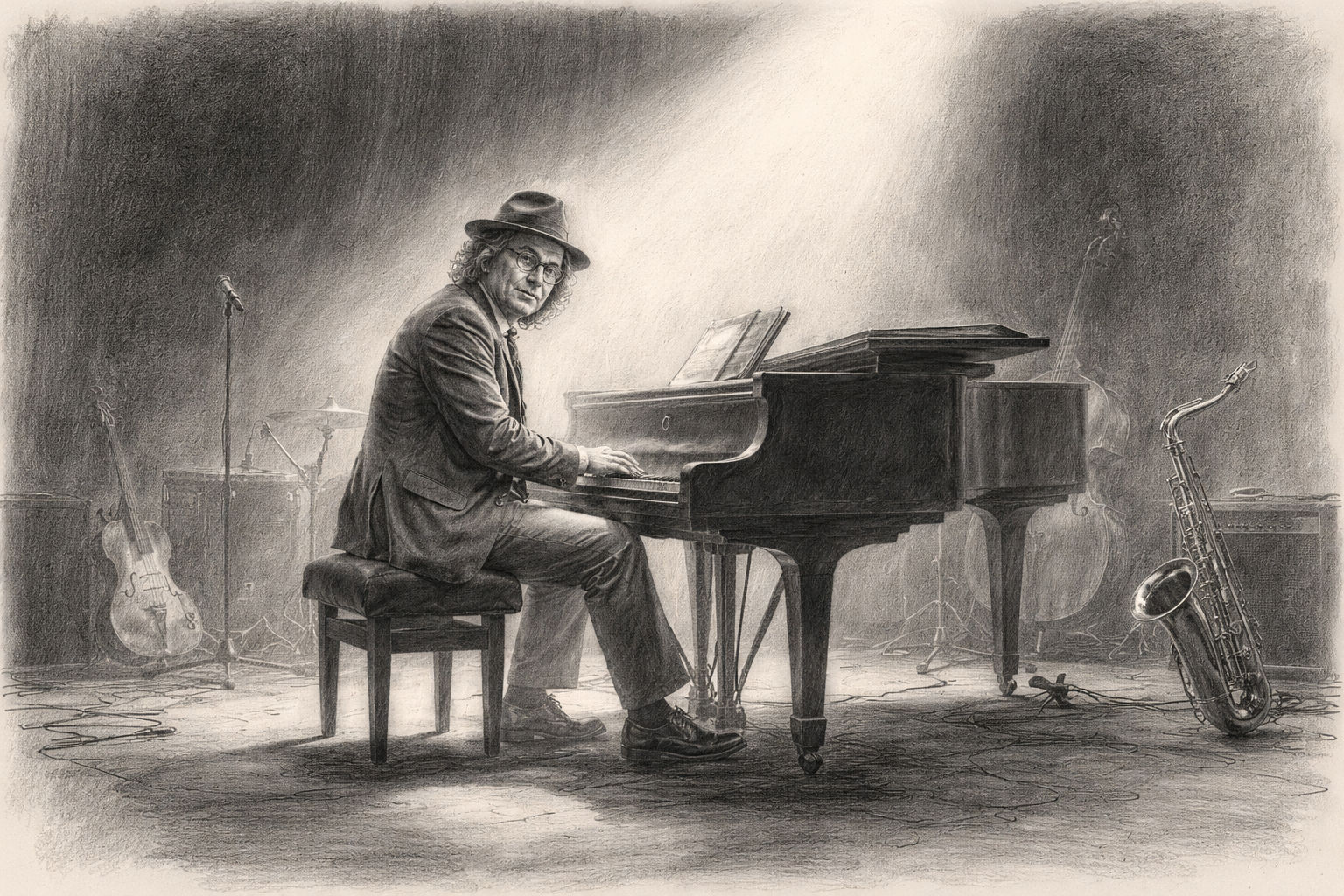
I noticed Helge Schneider very early on. Not because he was particularly loud or pushed himself to the fore - on the contrary. It was this peculiar mixture of intelligent absurdity, linguistic sideways thinking and musical matter-of-factness that stuck with me. Something about it seemed different right from the start. Unexcited. Unimpressed. And above all: not in need of explanation.
This portrait is therefore not a fan text. Nor is it an ironic wink or an attempt to pigeonhole Helge Schneider into a cultural category. Rather, it is an attempt to look at a personality who has consistently resisted any form of appropriation for decades - and who shows attitude precisely because of this.




Stand out without attracting attention
Many artists become visible because they position themselves. Helge Schneider became visible because he did not. While others learned early on how to meet or break expectations, he never seemed particularly interested in whether there were any expectations at all. His performances often seemed to come from a parallel space: formally correct, technically precise, but so free in terms of content that the audience had to decide whether to go along or not.
That's what made him interesting. This humor that doesn't pander. This language that doesn't aim for a punchline, but for movement. And this music that doesn't illustrate, but carries. If you take a closer look, you quickly realize that this is no coincidence. It is a method - albeit one that is not explained.
Intelligently absurd - and astonishingly precise
The label „absurd“ falls short with Helge Schneider if it is misunderstood. It is not about nonsense in the sense of arbitrariness. Rather, it is a form of precise displacement. Words are slightly off the beaten track, musical interludes come a tad too late or too early, pauses are left longer than would be dramaturgically „correct“.
This is precisely where the appeal lies. The linguistic wit is rarely loud, often dry, sometimes almost casual. And yet there is a very precise sense of rhythm behind it - both linguistically and musically. This is not slapstick, but controlled openness. Anyone who overlooks this thinks Helge Schneider is silly. Anyone who recognizes it will notice: here is someone working with great concentration on apparent disorder.
The fact that I have long liked Helge Schneider is precisely because of this point. Not because of individual gags or well-known numbers, but because of the attitude behind them. His refusal to have to explain himself. The calmness with which he goes his own way - even when circumstances become unpleasant.
Especially in times in which artists are constantly expected to be categorized, positioned and morally unambiguous, this restraint seems almost old-fashioned. And perhaps that is precisely why it is so valuable. Helge Schneider does not comment on the world, he reflects it. And sometimes that is quite enough.
Attitude is shown in action, not in a statement
This became particularly clear in situations where many others spoke out. During the Corona period, for example, when the pressure on creative artists was immense and any deviation was immediately politically charged, Helge Schneider did not choose the path of big words. He acted - and let others speak.
He simply did not perform under certain conditions. Not out of protest, not as a provocation, but because for him his art is bound to certain conditions: Proximity, freedom, immediacy. This was not activism, but consistency. And this is precisely an attitude that has become rare - because it cannot be exploited.
Art as an independent space
Helge Schneider always seems to have understood art as something of his own. Not as a commentary on the situation of the day, not as a service, not as a pedagogical offer. But rather as a space in which other rules are allowed to apply. Improvisation plays a central role in this - not just musically, but existentially.
Improvisation here does not mean arbitrariness, but trust: in one's own ability, in the moment, in the audience. It presupposes that you can do something before you let it go. And this is precisely what distinguishes Helge Schneider from many who also want to be „free“ but have no foundation on which this freedom can stand.
So this portrait is not being created because Helge Schneider needs to be explained. But because he is a good example of how you can evade the frenzy of explanation without immediately going into opposition. How to remain visible without exposing yourself. And how to maintain an attitude without carrying it around in front of you.
The following chapters are therefore not about celebrating, but about taking a closer look: at his origins, musical craft, humor, breaks and consequences. To an artist who has never said out loud what he stands for - and who shows it very clearly precisely by doing so.
And perhaps that is what is particularly interesting today.

Ruhr area, jazz, down to earth
Helge Schneider is not a product of a scene or a child of cultural promotion programs. His background is unspectacular - and this is precisely the key to understanding his attitude. Mülheim an der Ruhr, post-war decades, an environment in which work, reliability and a certain dry humor were part of everyday life. No glamor, no posturing, no grand narratives about himself. Those who grow up here learn early on that things don't need to be explained in order to work.
The Ruhr region of the 60s and 70s was no place for grandstanding. People did what they had to do. There was little talk about sensitivities. There was humor, but it didn't come with a punchline and drum roll, but as an aside, a wry look, a sentence that stuck. This basic attitude - unagitated, sometimes brittle, often laconic - is later found surprisingly clearly in Helge Schneider's appearance.
It's not humor that asks for approval. Rather one that says: That's the way it is now. Come with me - or not. It is precisely this freedom that seems to come from an environment in which we have learned not to have to constantly explain ourselves.
Music as a matter of course, not as a career plan
Music played a role early on, but not in the sense of strategic promotion. It wasn't about „developing talent“, but about the fact that music was simply there. Helge Schneider listened, played, tried things out. Jazz was not a deliberate demarcation, but a discovery. A form of music that worked differently to what was usually played on the radio. More open, more flexible, less unambiguous.
Jazz is not a music of clear messages. It thrives on breaks, pauses and detours. And it does not forgive carelessness. If you want to improvise, you have to be able to listen - to others, to the moment, to yourself. This school is formative. It not only shapes musicians, but also an attitude towards the world.
Learning through play
Instead of a straightforward educational path, Helge Schneider developed learning through practice. Playing, observing, playing again. Instruments were added, not as trophies, but out of curiosity. Piano, saxophone, drums - later many more. Not all at virtuoso level, but all with a serious approach. Anyone who dismisses him today as a „silly musician“ overlooks how much work and concentration is behind this apparent lightness.
Jazz is merciless. It reveals insecurity immediately. Perhaps that is one reason why Helge Schneider never felt the need to prove himself later on. Anyone who has gone through this school knows what he can do - and also what he can't.
Down to earth instead of self-presentation
It is remarkable that this musical depth was never used for self-dramatization. No grand narratives about genius, no reference to degrees or masters. Instead, an almost casual matter-of-factness: music is there. It is made. Period.
This fits in with an attitude that is often found in the Ruhr region: Skills are not exhibited, but used. If you can do something, you don't have to talk about it. This kind of down-to-earth attitude runs through Helge Schneider's entire oeuvre. Even where it seems chaotic or silly, the foundation remains stable.
Jazz as a way of life
Jazz is more than music. It is a way of dealing with uncertainty. With open ends. With situations that cannot be planned. Anyone who takes jazz seriously learns to let go of control without relinquishing responsibility. It is precisely this balance - between skill and openness - that Helge Schneider seems to have internalized early on.
Perhaps that explains why he later dealt with ruptures so calmly. With rejection, with a lack of understanding, with misinterpretations. If you can improvise, you panic less when a plan doesn't work out. You keep playing. Differently, but further.
Origin as a silent foundation
Helge Schneider's origins in the Ruhr region are not a figurehead. He doesn't make an issue of it. And yet it is palpable - in the way he speaks, the way he pauses, the way he subverts expectations. It's a sobriety that doesn't seem cold, but stable. A kind of inner ground on which many things are possible without having to comment on everything.
Especially in an age in which origin is often either romanticized or problematized, this naturalness seems almost alien. It is neither pride nor demarcation. It is simply there.
This foundation - the Ruhr region, jazz, craftsmanship in music - explains much of what comes later. It explains why Helge Schneider never sought attention. Why he doesn't follow trends. And why he remains calm even when there is a lot of noise around him.
The next chapter therefore deals with precisely this often overlooked aspect: the musician Helge Schneider. About skills, discipline and an ability that forms the basis for everything that was later perceived as „absurd“. Because without this foundation, none of it would be possible.

The musician that many underestimate
When people talk about Helge Schneider, the word „musician“ often comes second - sometimes not at all. The image of the comic, the offbeat, the seemingly silly is too dominant. And yet it is worth pausing right here. Because anyone who wants to understand Helge Schneider cannot ignore his musical substance. It is not an accessory, but the supporting framework.
Helge Schneider is not a comedian who makes music. He is a musician who allows himself to be funny. This distinction is key. It explains why his performances work differently to classic comedy, why punchlines are sometimes allowed to fall flat and why musical passages are not for entertainment, but are self-sufficient.
For him, music is not a means to an end. It is an end. And with a seriousness that is demonstrated precisely by the fact that it is not constantly emphasized. If you listen carefully, you quickly realize that someone is working with a very precise inner grid - harmonically, rhythmically, structurally.
An instrument rarely comes alone
Helge Schneider plays an astonishing variety of instruments. Piano is at the center, logically - it is his foundation, his coordinate system. But there are also saxophone, drums, guitar, bass, trumpet, violin, various percussion instruments and other sound tools that appear and disappear depending on the context.
What is important here is less the sheer number of instruments than the way they are used. He does not use instruments to demonstrate virtuosity, but to open up possibilities. Every instrument is an access to a different perspective. Someone who plays the piano thinks differently than someone who plays the drums. Someone who plays the saxophone breathes differently. For Helge Schneider, these changes are not a gag, but part of his musical way of thinking.
Improvisation needs discipline
Improvisation is often misunderstood. It is seen as the antithesis of discipline, as an expression of freedom without rules. In truth, it is the opposite. Improvisation requires rules - and mastery of them. Only those who know what they are doing can deviate from them without slipping into arbitrariness.
Helge Schneider doesn't improvise to be unpredictable. He improvises because he listens. To his own playing, to his fellow musicians, to the room, to the mood. That requires concentration and presence. It is exhausting. And that's exactly why it often seems effortless to outsiders.
Jazz as a touchstone
Jazz is a merciless teacher. It forgives no uncertainty, no half-hearted attitude. Anyone who succeeds in jazz has learned to deal with open situations without losing control. The fact that Helge Schneider has his foundation here, of all places, explains a lot.
His music refuses clear resolutions, plays with expectations, leaves things open. This is no coincidence, but typical of jazz. And it is precisely this openness that later characterizes his humour. Pauses become longer, entries shift, repetitions suddenly seem askew - not because something is „wrong“, but because someone is deliberately playing with the framework.
Why this is often overlooked
The underestimation of his musical abilities has a lot to do with perception. Humor masks. If you laugh, you listen less closely. Moreover, Helge Schneider contradicts the common image of the serious musician. No gravitas, no explanatory presentations, no pedagogical gestures.
He doesn't explain what he does. He just does it. And that is precisely what makes it difficult for many people to categorize him. In a culture that likes to visibly certify performance, this reticence is irritating. Where are the labels? Where is the categorization? Where is the reference to one's own competence?
They are missing. On purpose.
Helge Schneider never seems to have felt the need to prove his skills. Perhaps because he knows it. Anyone who has worked long enough in musical contexts where you can't bluff develops a certain composure. You know when something works - and when it doesn't.
This composure is also evident in the fact that musical mistakes are allowed. A crooked note, a fluffed entry - all this is not concealed, but integrated. Mistakes become part of the performance. This is not a lack of ambition, but an expression of sovereignty.
Music as a structuring element of humor
Many of Helge Schneider's comic moments are musically conceived. Speech rhythms follow bars, repetitions function like refrains, apparent digressions resemble solos. Even where there is no music, it is present - as a structure, as a sense of time.
This also explains why his humor does not rely on quick reactions. He needs time. Like a piece of jazz that develops instead of igniting immediately. If you don't invest this time, you miss the core. Those who invest it will discover layers that go far beyond the first impression.
Between stage and rehearsal room
Helge Schneider often appears on stage as if everything is spontaneous. But spontaneity rarely arises out of nothing. It comes from repetition, from practice, from a deep familiarity with the material. Here, too, a classic artist's attitude is evident: first work, then let go.
This attitude sets him apart from many contemporary formats that rely on effects and speed. Helge Schneider takes his time - for music, for pauses, for detours. And he trusts the audience to follow this path.
In the end, the realization remains: anyone who sees Helge Schneider only as a comic figure is missing the point. His music is not decoration, but origin. It explains the freedom, the composure, the consistency with which he works. And it explains why he never has to justify himself.
The next chapter deals with precisely this point: consciously breaking with the expected. About decisions against the easy path. And the question of why someone with so much ability consciously decides not to fit into traditional career logic.

Helge Schneider at Schmidteinander | Helgeshow
The deliberate break with the expected
With Helge Schneider, there is never a moment when you can clearly say: Here he has decided to do everything differently. It wasn't a bang, no public reckoning, no demonstrative departure from existing structures. The break with the expected happened quietly, almost inconspicuously - and for that very reason consistently.
Many artists define themselves through their resistance. They fight against institutions, markets and expectations. Helge Schneider did something different: he simply wasn't interested enough to enter this battle. Record companies, formats, television logics - all of this was tried out, touched on, sometimes even used. But never as a goal in itself.
If something did not fit, it was not fought against, but abandoned. This attitude seems unspectacular, but it is remarkable. Because it presupposes that you are prepared to endure uncertainty. If you don't adapt, you often don't know what's coming next. This is precisely what didn't seem to worry Helge Schneider.
Career without a promotion narrative
In classic artist biographies, there is a clear dramaturgy: training, breakthrough, establishment, coronation. In Helge Schneider's case, this model only applies to a limited extent. There were successes, there was attention, there was recognition. But there was never the impression that he wanted to „get to the top“.
His path seems rather lateral. Sometimes closer to the mainstream, then again far from it. Films that defy all market logic. Albums that don't explain themselves. Performances that defy all expectations. This path is no accident. It is the result of a conscious decision against predictability.
The courage to be unusable
A central element of this rupture is the refusal to be fully utilized. Helge Schneider does not deliver a clear product. He delivers situations. Moments. Evenings that can work - or not. This is difficult for classic exploitation logics to bear.
And yet this is precisely where its strength lies. Those who remain unusable retain their freedom. If you don't allow yourself to be tied down to a format, you don't have to use it. Helge Schneider defended this freedom early on without declaring it. He did not oppose something - he withdrew from something.
Nonsense as a deliberate strategy
On the surface, a lot of it seems like deliberate nonsense. Texts that come to nothing. Scenes that dissolve. Music that suddenly breaks off. But this „nonsense“ is structured. It is the result of a decision against clear fulfillment of expectations.
Here, nonsense becomes a method of creating free space. If you don't deliver anything clear, it's hard to pin you down. Those who evade the punch line also evade appropriation. In this perspective, humor is not an end in itself, but a protective space.
What is important here is that this break is not defiant. It is not emotionally charged. There is no resentment, no settling of scores. Helge Schneider does not appear hurt by rejection. Rather indifferent. And this indifference is not a weakness, but a sign of inner stability. He doesn't have to belong. He doesn't need to be recognized. He knows what he is doing - and that is enough. This attitude is rare, especially in creative environments that thrive on feedback and confirmation.
The freedom of not having to explain yourself
The deliberate break is accompanied by another consequence: the refusal to constantly explain oneself. Interviews often remain evasive, ironic, brief. No big programs, no manifesto texts. If you want to understand something, you have to look - not read.
This attitude seems almost anachronistic in an age of permanent self-description. Today, artists are expected to reveal their motives, formulate their stance, mark their position. Helge Schneider does not actively refuse to do this - he simply considers it unnecessary.
Risk as a normal state
A life beyond the expected is risky. There are no guarantees, no clear certainties. But it is precisely this risk that seems to be the norm for Helge Schneider. Perhaps because he has never relied on security. Perhaps because his musical socialization has taught him how to deal with uncertainty.
Jazz thrives on risk. Every improvisation can fail. And yet you go for it. This idea runs through his entire work. Even where it seems to be all about humor, there is always the risk that something will not work. This is accepted - and integrated.
The conscious break with the expected is not a one-off act for Helge Schneider, but an ongoing decision. It is renewed again and again - with every performance, with every project. Not out of principle, but out of consistency. He doesn't do what is expected. He does what is right for him. And this is precisely a form of attitude that remains quiet, but is sustainable.
The next chapter deals with this attitude in perhaps its most interesting manifestation: humor as freedom. Not as commentary, not as criticism, but as a space in which things can be said - or not said - without being fixed.
Humor as freedom - not as commentary
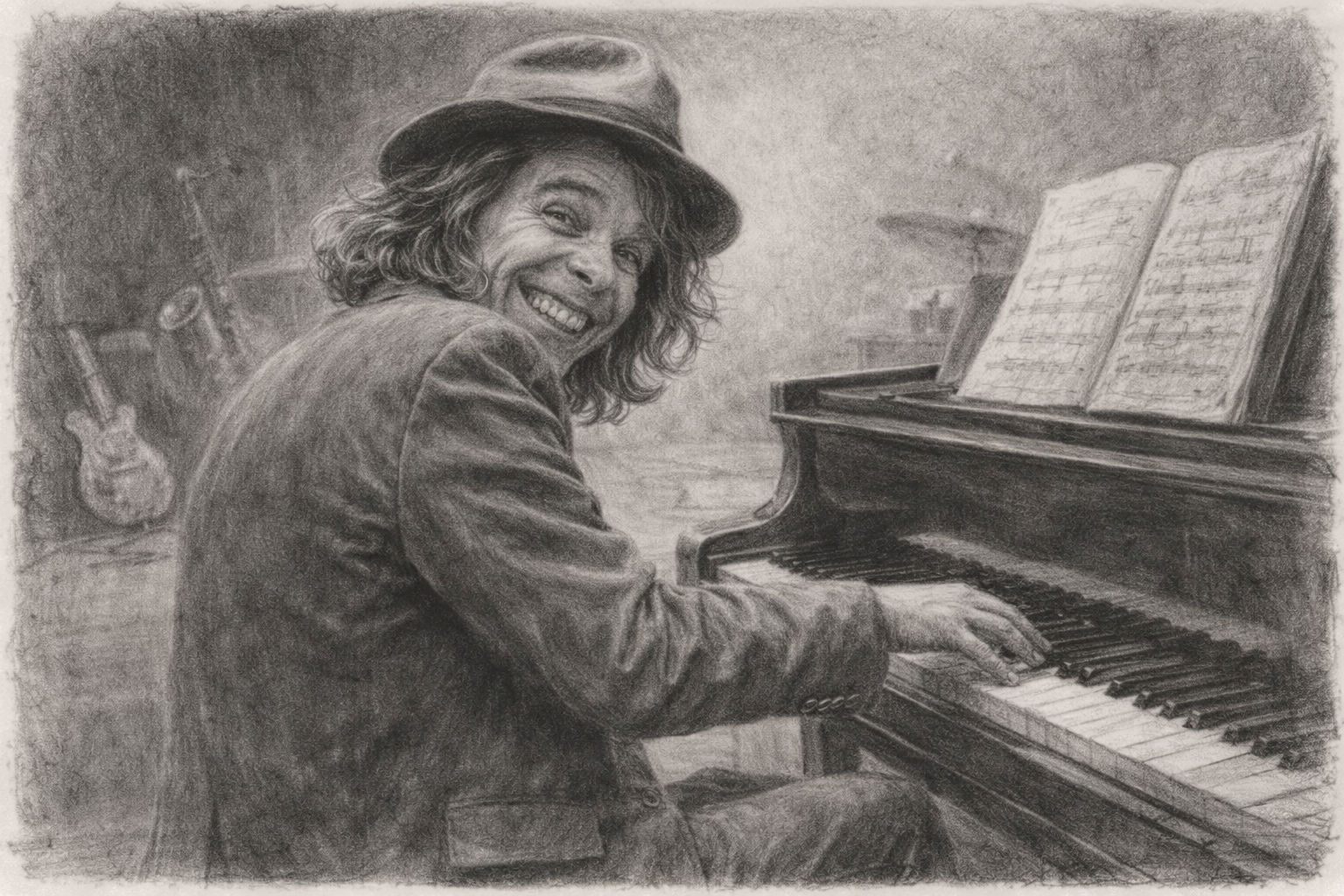
With Helge Schneider, humor is not a tool to explain something. Nor is it a means of marking positions or conveying messages. For him, humor is a state. A space. A form of freedom that asserts itself precisely because it cannot be pinned down.
This distinguishes it fundamentally from many other contemporary forms of comedy. There, humor is often a commentary: on politics, on society, on the zeitgeist. It categorizes, makes points, moralizes - often well-intentioned, sometimes effective, but almost always unambiguous. Helge Schneider takes a different approach. His humor is not unambiguous. And that is precisely where his power lies.
No joke with an order
Anyone who attends a Helge Schneider performance quickly realizes that there is no mandate to laugh. No one is asked to recognize or take away anything in particular. The humor is not pedagogical. It does not explain what is right or wrong. It leaves things as they are.
That can be irritating. Especially in a culture that is used to humor conveying attitude, this openness seems almost provocative. But it is a deliberate choice. Helge Schneider does not force his audience into an interpretation. He opens up a space in which many things are possible - including misunderstandings.
Laughter as a by-product
It is remarkable that his laughter is often delayed. It is not uncommon for some members of the audience to laugh earlier, others later - or not at all. This is not a mistake, but part of the concept. Humor here doesn't come from the punch line, but from the movement towards it. From the detour. From what doesn't quite fit.
This laughter is not a reflex, but a decision. You laugh because you get involved. Or you don't. Both are allowed. This freedom has become rare because it gives the audience responsibility. You can't just let yourself be entertained.
Absurdity without arbitrariness
Helge Schneider's humor is often described as „absurd“. But here, too, it is worth differentiating. His absurdity is not accidental. It follows internal rules, even if these are not immediately apparent. Language is shifted, meanings are stretched, contexts break apart - but never completely.
This distinguishes his work from pure nonsense. There is always a structure, even if it is not named. And it is precisely this structure that enables freedom. It prevents everything from being equally valid. Absurdity does not arise here from arbitrariness, but from precision.
Humor without moral exaggeration
A striking feature of Helge Schneider's humor is the lack of moral exaggeration. There is no clear message, no implicit instruction. Characters are not unmasked, positions are not presented. Everything remains in limbo.
This makes his humor connectable - and at the same time unassailable. He offers no target for outrage, because he doesn't codify anything. Anyone who wants to appropriate him politically fails precisely at this point. There is nothing fixed that you can build on.
Freedom through non-determination
This form of humor is risky. It forgoes the certainty of clear statements. It can be misunderstood. It can come to nothing. But precisely this risk seems to be part of the attitude. Freedom is not created here through loudness, but through restraint.
Helge Schneider does not commit himself - and remains flexible precisely because of this. His humor does not adapt to the situation of the day. He does not comment, he does not react. He exists in parallel. This gives him a timeless quality that many current forms lack.
Helge Schneider's humor can also be understood as a shelter. Not as a place of retreat from the world, but as a place where other rules are allowed to apply. Where things can be said without being fixed. Where meanings are allowed to dissolve without being replaced. In this space there is room for contradictions. For silliness and seriousness at the same time. For precision and chaos. This space is not loud, but it is stable. And it is open - for all those who are prepared to engage with it.
Against the expectation of unambiguity
The present demands clarity. Clear positions, clear attitudes, clear messages. Humor is often measured by whether it „shows attitude“. Helge Schneider defies this yardstick. Not out of refusal, but out of conviction.
His humour shows attitude by not allowing itself to be instrumentalized. By refusing to become a commentary. By not claiming freedom, but practising it. It is quiet - but effective.
Connection instead of division
Interestingly, it is precisely this openness that means that his audience is often very heterogeneous. People with different views sit next to each other and laugh - or wonder together. Not because they agree, but because they are in the same room for a moment.
That is perhaps one of the strongest qualities of this humor: it connects without uniting. It creates community without demanding consensus. And it only succeeds because it doesn't take sides.
In the end, Helge Schneider's humor seems less like a stylistic device than a way of life. A way of encountering the world without allowing it to define you. An attitude that does not demand freedom, but lives it.
The next chapter looks at precisely this attitude under pressure: in moments when freedom was restricted and decisions had consequences. This shows how sustainable this form of humor and attitude really is - beyond the stage, beyond laughter.
Anniversary on tour - and the Klimperclown keeps on traveling
Helge Schneider is on the road - and with perseverance. The current anniversary tour is already underway and will be touring numerous cities in Germany until next October. Instead of looking back, there is movement: new evenings, new transitions, old strengths in the best sense.

The wig-wearer from the Ruhr area maneuvers his way into the next decade, trumpeting, jingling and with his unmistakable chatter. For those who want to delve deeper, the film The Klimperclown is an additional search for clues, which is available on various platforms and accompanies the artist once again from a different perspective.
Show attitude without proclaiming it
With Helge Schneider, attitude is rarely expressed. It does not appear as a thesis, not as an appeal, not as a statement. It shows itself in action - and sometimes in omission. This kind of attitude is particularly visible in situations where public expectations are high. Not loudly, not demonstratively, but consistently.
In phases of social escalation, artists are often expected to take a stand. The stage becomes a pulpit, the interview a manifesto. Helge Schneider has never chosen this path. Not out of convenience, but out of a different idea of responsibility. He doesn't explain why he does something - he does it. And accepts the consequences.
This attitude is demanding. It renounces the authority of interpretation. It relies on actions speaking for themselves. And it accepts that misunderstandings can arise. Those who do not explain themselves are interpreted. Helge Schneider seems to be prepared to put up with this.
Freedom as a prerequisite for art
This became clear in times when artistic work was tied to conditions that were acceptable to many, necessary for some, but not coherent for him. His reaction was remarkably unspectacular: he simply did not perform under certain circumstances. No campaign, no appeal, no pathos.
This decision was neither a protest nor a provocation. It was an expression of an understanding of art that is tied to prerequisites: Proximity, immediacy, a shared space. If these prerequisites are missing, art loses its meaning for him. You may or may not agree with this - it is always consistent.
Misunderstandings as the price of consistency
Such decisions rarely remain without consequences. They are interpreted, appropriated and exaggerated. Helge Schneider's attitude was also evident here: he did not allow appropriation to stand without simultaneously allowing himself to be drawn into opposing camps. Where necessary, he made things clear - concisely, objectively, without escalation.
What is remarkable is what he did not do. He did not use the attention to seek a bigger stage. He did not form a narrative about himself. He kept to the point. That seems unspectacular, but it is a sign of inner stability, especially in heated times.
No proximity to warehouses
A recurring motif is his clear distance from political or social camps. Not because he is indifferent to issues, but because he does not see himself as their mouthpiece. His art is not intended to serve - neither a cause nor a counter-proposal.
This distance is not an evasion. It is a conscious decision against instrumentalization. Helge Schneider seems to know very well that art loses its freedom as soon as it commits itself. Attitude is not created here through affiliation, but through independence.
Silence as an action
In an age of permanent commentary, silence takes on a new quality. It is no longer read as neutrality, but as provocation. Helge Schneider does not use this silence strategically. It is simply part of his way of working. He speaks when he has something to say - and not otherwise.
This silence is not empty. It is filled with work, with performances, with music. It points to another place of debate: not the interview, not the discourse, but the stage. That is where his communication takes place. And there it is ambiguous enough not to be fixed.
Attitude without morals
It is also noticeable that Helge Schneider's decisions are rarely morally charged. He does not explain why something is „right“ or „wrong“. He does not describe a set of values. He acts according to an inner standard without standardizing it.
This makes his stance difficult to attack - and difficult to copy. It is not programmatic, but personal. It does not demand approval, but respect for consistency. If you want to follow it, you have to develop it yourself.
Over the years, a form of trust has developed. Not in the sense of certainty of expectation, but in the sense of reliability. You know that Helge Schneider will not suddenly do something that contradicts his inner logic. He may surprise, but he won't betray. This reliability is rare. It doesn't come from repetition, but from consistency. And it explains why his audience follows him even when they don't understand everything. You can sense that someone is not acting opportunistically here.
Attitude beyond the stage
It is interesting to note that this attitude is not limited to the stage. It is also evident in the way we deal with the public, with the media, with expectations. No scandalization, no self-dramatization. Instead, a calm perseverance.
At a time when many are getting louder in order to be heard, Helge Schneider remains quiet - and is heard precisely for that reason. Not always immediately, not by everyone. But sustainably.
This chapter shows that attitude does not necessarily have to be visible to be effective. It can manifest itself in renunciation, in omission, in non-participation. Helge Schneider embodies this form of attitude with a matter-of-factness that seems almost old-fashioned. The next chapter is about reading this quiet attitude more closely: between the lines, in allusions, in seemingly incidental statements. Where nothing is proclaimed, but much resonates.
Between the lines - Helge's quiet social criticism
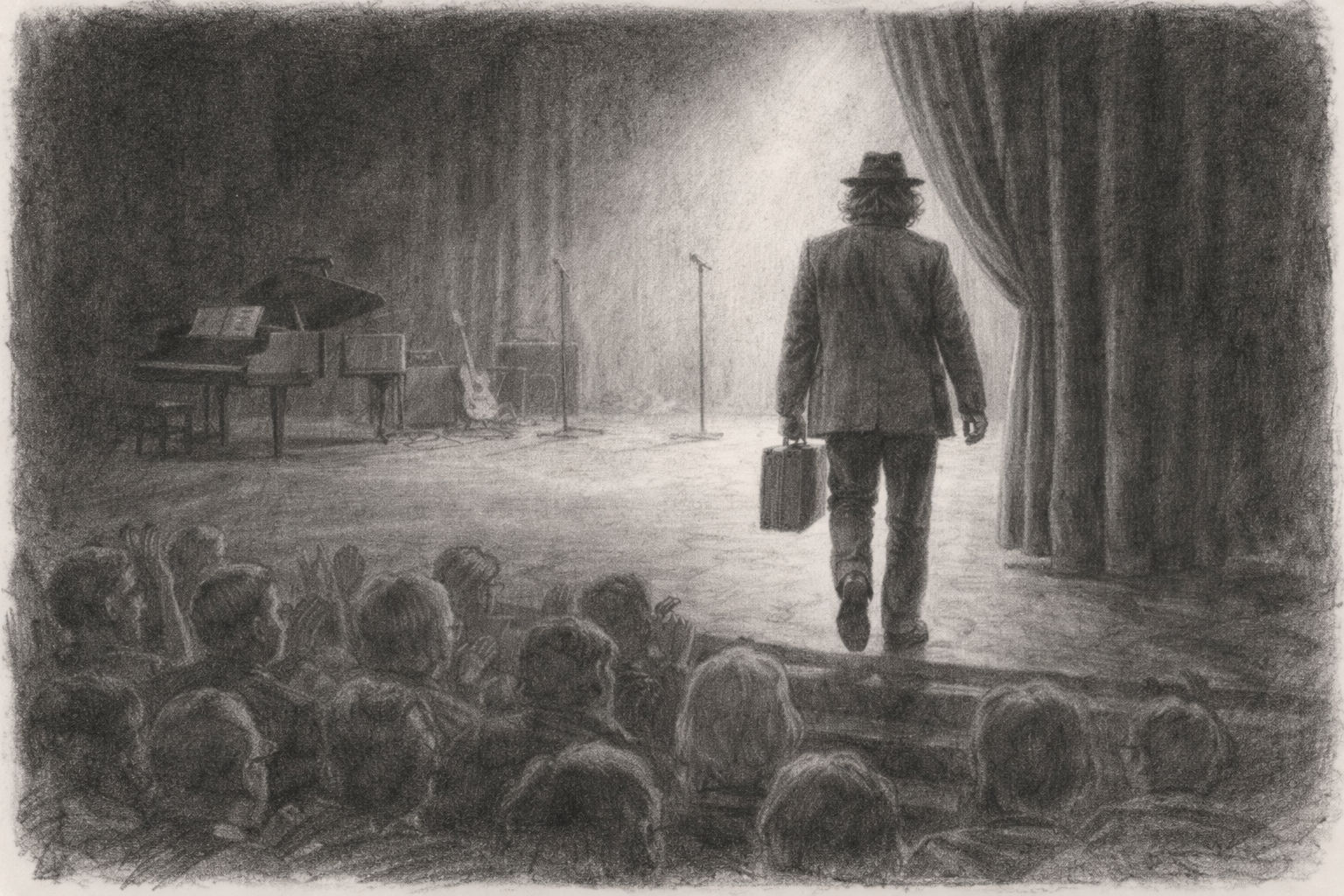
Anyone looking for clearly formulated social messages from Helge Schneider will be disappointed. No theses, no demands, no moral signposts. And yet it would be wrong to read his work as apolitical or indifferent. Helge Schneider's social criticism exists - it just operates on a different level. Quieter, more indirect, more difficult to grasp. And for this very reason it is astonishingly effective.
Helge Schneider does not criticize by naming what is wrong. Instead, he shows how fragile many of the things we take for granted are. His art exposes cracks without marking them. It creates situations in which routines stumble: language loses its purpose, processes get out of step, expectations come to nothing.
This is not criticism in the traditional sense, but a form of irritation. And irritation can be more productive than any clear message. Those who are irritated have to think for themselves. Those who are instructed can lean back and agree or disagree. Helge Schneider does not force anyone into these comfortable roles.
Skepticism towards rituals
A central motif of his quiet social criticism is scepticism towards ritualized behaviour. Many of his scenes seem like empty rituals: conversations that say nothing; processes that have taken on a life of their own; characters who fulfill functions without understanding them. This is not mockery, but observation.
These moments resonate with a deep skepticism towards a world that is increasingly defined by form and less and less by content. Helge Schneider does not comment on this - he exposes it. And leaves it to the audience to notice the emptiness.
Humor as a mirror, not a judgment
His humor does not judge. He reflects. And mirrors are unpleasant because they don't explain anything, they only show. If you look in them, you see yourself - or something you would rather have overlooked. This form of humor is not aggressive, but relentless.
This is precisely why it is difficult to politicize. There is no clear opponent, no identifiable target. The criticism is not directed outwards, but inwards. It does not ask: Who is to blame? but rather: What are we actually doing here?
Current survey on trust in politics and the media
Distance from the culture of excitement
In interviews and casual remarks, Helge Schneider repeatedly lets it be known that he is irritated by the increasing aggressiveness of public discourse. Not outraged, not angry - rather alienated. His reaction to this is not counter-attack, but distance. This distance is not an escape. It is a conscious refusal to be drawn into the logic of permanent agitation. While many artists raise their voices in order to be heard, Helge Schneider lowers them - and thus changes the space.
One remarkable effect of this attitude is the composition of his audience. People from the most diverse political, social and cultural backgrounds sit next to each other. Not because they agree, but because they share the same space for a moment.
Helge Schneider's art does not sort. It does not divide into camps. It does not create identities that need to be defended. Instead, it creates a shared space of experience in which differences do not have to play a role. This is not a solution to social conflicts - but perhaps a rare prerequisite for the ability to talk.
Criticism of unambiguity
A recurring motif in his work is the undermining of unambiguity. Language loses its clarity, meanings shift, statements tip over into the absurd. In a world that increasingly relies on clear attributions and simple narratives, this has an almost subversive effect.
This infiltration is not an intellectual gimmick. It points to a mistrust of simple explanations. Helge Schneider seems to be saying: it's not that simple. And he doesn't say it in a lecturing way, but playfully.
The political in the apolitical
Precisely because Helge Schneider does not explicitly express himself politically, his work becomes politically legible. It poses questions about freedom, about self-determination, about the role of the individual in standardized structures. It does so without slogans, without programs.
This form of criticism is difficult to grasp, but effective in the long term. It does not rely on short-term approval, but on lasting irritation. Once you have experienced how naturally many things can be questioned, you see the world differently.
Between seriousness and play
Another key lies in the constant alternation between seriousness and playfulness. Nothing is clearly serious, nothing is clearly silly. This state of limbo is uncomfortable because it does not allow for a clear stance. You can't simply agree or disagree.
This is a profound criticism of a society that increasingly demands clear positions. Helge Schneider shows that you can exist without committing yourself - and that this openness is not a flaw, but a strength.
Quiet, but not harmless
It would be a mistake to dismiss this quiet social criticism as harmless. It may be less visible than loud statements, but it goes deeper. It is not aimed at opinions, but at habits of thought. And changing these is much more difficult. Helge Schneider doesn't force anyone to think differently. But he shows that it is possible. And sometimes that's enough.
This chapter makes it clear that Helge Schneider's attitude lies not in clear statements, but in the in-between. In hints, shifts, pauses. His criticism is not a program, but an offer - for self-observation, for distance, for freedom.
The next chapter deals with the result of this journey: success without posturing, recognition without conformity and the question of what it means to remain independent in a world that is making independence increasingly difficult.
In conversation with Helge Schneider, we take a look at THE KLIMPERCLOWN, an unconventional artist documentary that deliberately dispenses with the classic interview format. Instead, it brings the audience closer to the man and musician Helge Schneider.

FilmTalk: In conversation with Helge Schneider | 42ND FILMFEST MUNICH 2025
Success without a pose
With Helge Schneider, success is never a goal. Rather, it is a by-product - something that happens while someone consistently sticks to their guns. This form of success is irritating because it does not follow the usual narrative. No ascent, no arrival, no moment of triumph. Instead, it is a long, continuous movement that defies any dramatization.
Helge Schneider has received widespread recognition over the years. Awards, sold-out halls, cult status. And yet you never got the impression that he had to deliver something that didn't suit him. There was no stylistic genuflection, no smoothing out, no simplification for a larger audience.
This recognition did not come about because he adapted, but because he remained consistent. It is the result of recognizability without repetition. You know that Helge Schneider will give you something of his own - but never exactly what. This uncertainty is part of the confidence.
Cult status without self-stylization
The term „cult“ is often used in an inflationary way. In the case of Helge Schneider, it seems to fit for once, precisely because it was not actively created. Cult arises where something cannot be explained, cannot be reproduced, is not fully available. This is exactly the case here.
Helge Schneider has never tried to stylize himself as a character. There is no „Helge“ brand that needs to be cultivated. No narrative that has to be kept consistent. Instead, there is a multitude of manifestations that are allowed to contradict each other.
Success as freedom, not as obligation
In many careers, success becomes a cage. It creates expectations, pressure to repeat, fear of deviation. With Helge Schneider, the opposite seems to be the case. Success expands his scope instead of limiting it.
He can do projects - or not. He can perform - or take a break. This freedom is not a luxury in the material sense, but in the artistic sense. It allows decisions that do not have to be explained. And it protects against the compulsion to fulfill expectations that come from outside.
One interesting aspect of this success is the relationship with the audience. There is no clear distinction between „fan“ and „artist“. Anyone who goes to a Helge Schneider evening knows that they are not being served. They are invited. To go along - or not.
This relationship is based on mutual respect. The artist has confidence in the audience. And the audience trusts the artist to know their way. This results in a rare form of loyalty that is not based on repetition, but on trust.
Independence as a way of working
Independence is not a programmatic claim for Helge Schneider. It is a way of working. It is evident in the selection of projects, in the form of appearances, in his dealings with the media. There is no permanent presence, no permanent visibility. Phases of publicity alternate with phases of calm.
These rhythms seem almost old-fashioned in an age of permanent availability. But this is precisely where their stability lies. If you don't have to be present all the time, you can be present when it makes sense.
Success without a degree
It is also remarkable that there is no point at which you could say: Now he has arrived. Helge Schneider never seems finished. He doesn't develop in the sense of linear progress, but in the sense of an open movement. Things change, others remain. Some motifs return, others disappear.
This openness prevents nostalgia. There is no „everything was better in the past“. There is only the now - and the possibility of shaping it differently. While many artists begin to take stock at some point, Helge Schneider seems to refrain from doing so. There are no grand retrospectives, no self-positioning in the canon. This composure is not a lack of interest, but an expression of confidence in his own path. He does not have to hold on to what was. He can let go - and move on.
This chapter shows that success can also look different: not as a goal, but as a side effect of consistency. Helge Schneider embodies a form of success that does not bind, but opens. That does not oblige, but enables.
The next and final chapter is about a figure that combines much of this: the „Klimperclown“. Not as a mask, but as a self-description. As an expression of an attitude that does not separate seriousness and play - and finds its freedom precisely in this.
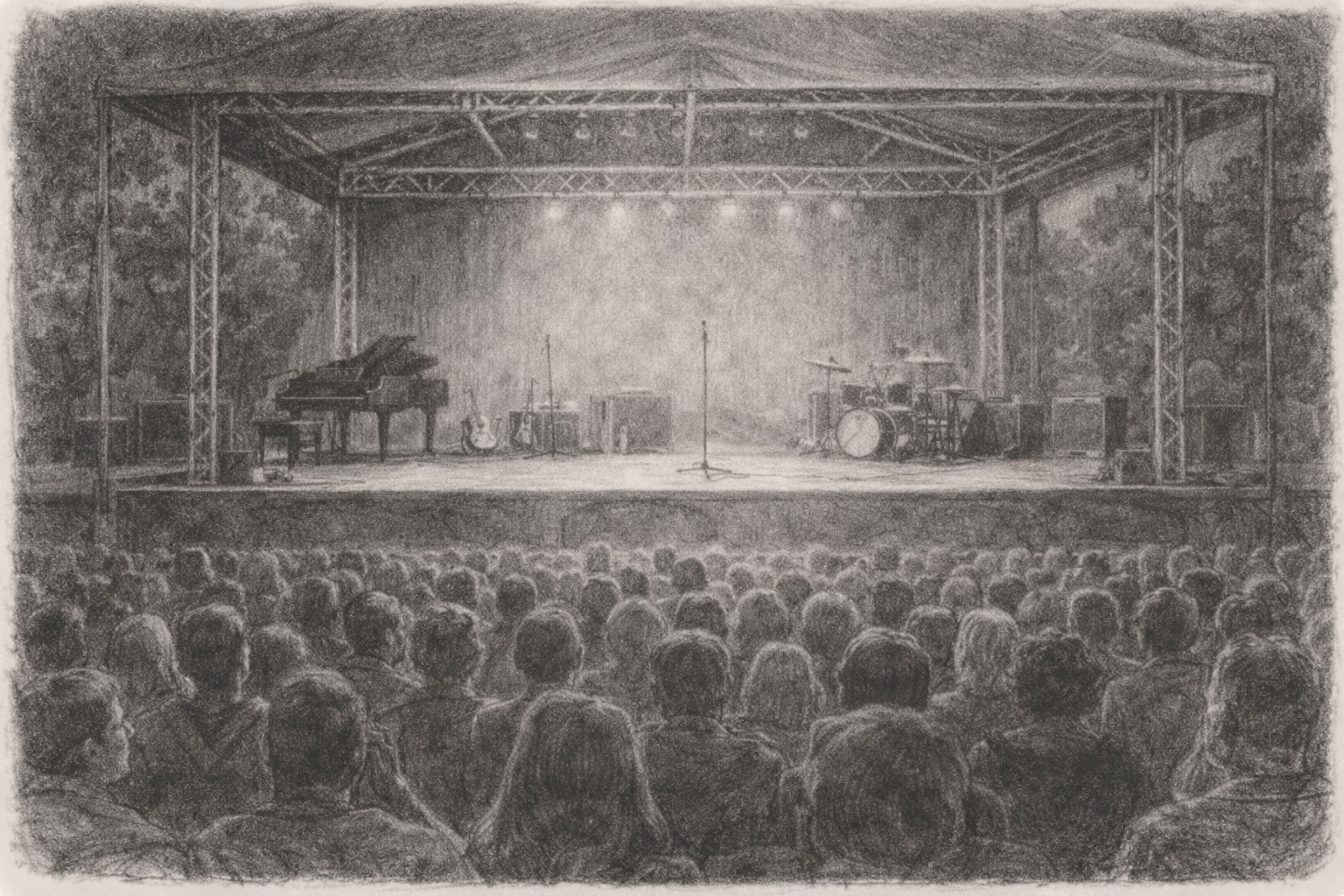
The Klimperclown - seriousness and play in the same breath
When Helge Schneider describes himself as a „Klimperclown“, this is not an ironic pejorative or a protective shield. It is an astonishingly precise self-description. It combines two poles that have never been separated in his work: serious craftsmanship and playful freedom.
Klimpern stands for music, for work, for practice. Clown stands for lightness, for the risk of the ridiculous, for the willingness not to take oneself seriously.
The two together do not result in a figure, but a posture.
Not a mask, but a state
The Klimperclown is not a role that you put on and take off. It is not a stage costume or a trick. It describes a state in which working and playing coincide. Music is made, not performed. Humor is created, not planned. Seriousness and nonsense are not mutually exclusive, they are mutually dependent.
That is perhaps the crucial point: Helge Schneider does not separate these levels. He doesn't switch between „now serious“ and „now funny“. He does both at the same time. Anyone who expects that is missing the point. The Klimperclown is not an interplay, but a simultaneity.
The clown who has nothing to prove
Clowns are traditionally figures who are allowed to fall. They fail publicly, stumble, make mistakes. In many modern forms, this fall is secured by irony. Helge Schneider lacks this protection. The clown risks failure - without a double bottom.
That is precisely where his dignity lies. He does not have to prove anything because he is not defending anything. He is allowed to fail because he is not dependent on recognition. This is a freedom that cannot be manufactured. You can only live it.
Seriousness without heaviness
The musical part of the Klimperclown is never incidental. It is concentrated, precise, disciplined. But this seriousness does not turn into heaviness. It remains flexible. Music is not a monument here, but a process. Something that emerges and fades away.
This attitude has become rare. It contradicts a culture that wants to preserve results and consolidate successes. The clown with the piano accepts the temporary. He knows that the next note can change everything - and that is precisely what makes him interesting.
The freedom not to commit
Perhaps the greatest quality of this figure lies in its indeterminacy. The Klimperclown cannot be pinned down. He is neither a pure musician nor a pure comedian. He is neither a commentator nor an escapist. He is something third - or rather something open.
This openness protects. It prevents appropriation. Those who do not position themselves clearly cannot be used clearly. This is not a strategy, but the consequence of an attitude that values freedom over unambiguity.
This portrait deliberately ends without a conclusion in the traditional sense. There is no point at which one could say: This is who Helge Schneider is. That would be presumptuous - and would contradict everything that defines him. He is not a completed object, but a movement. A process that continues to develop without explaining itself.
Perhaps that's exactly what fits as a conclusion: that nothing is concluded. No résumé, no summary, no exclamation mark. Instead, an open space - just as he always creates it himself. A space in which seriousness and play can coexist. Where you can laugh without knowing why. And where you don't have to take anything with you, except perhaps a quiet feeling of freedom.
The Klimperclown would perhaps leave it exactly as it is.


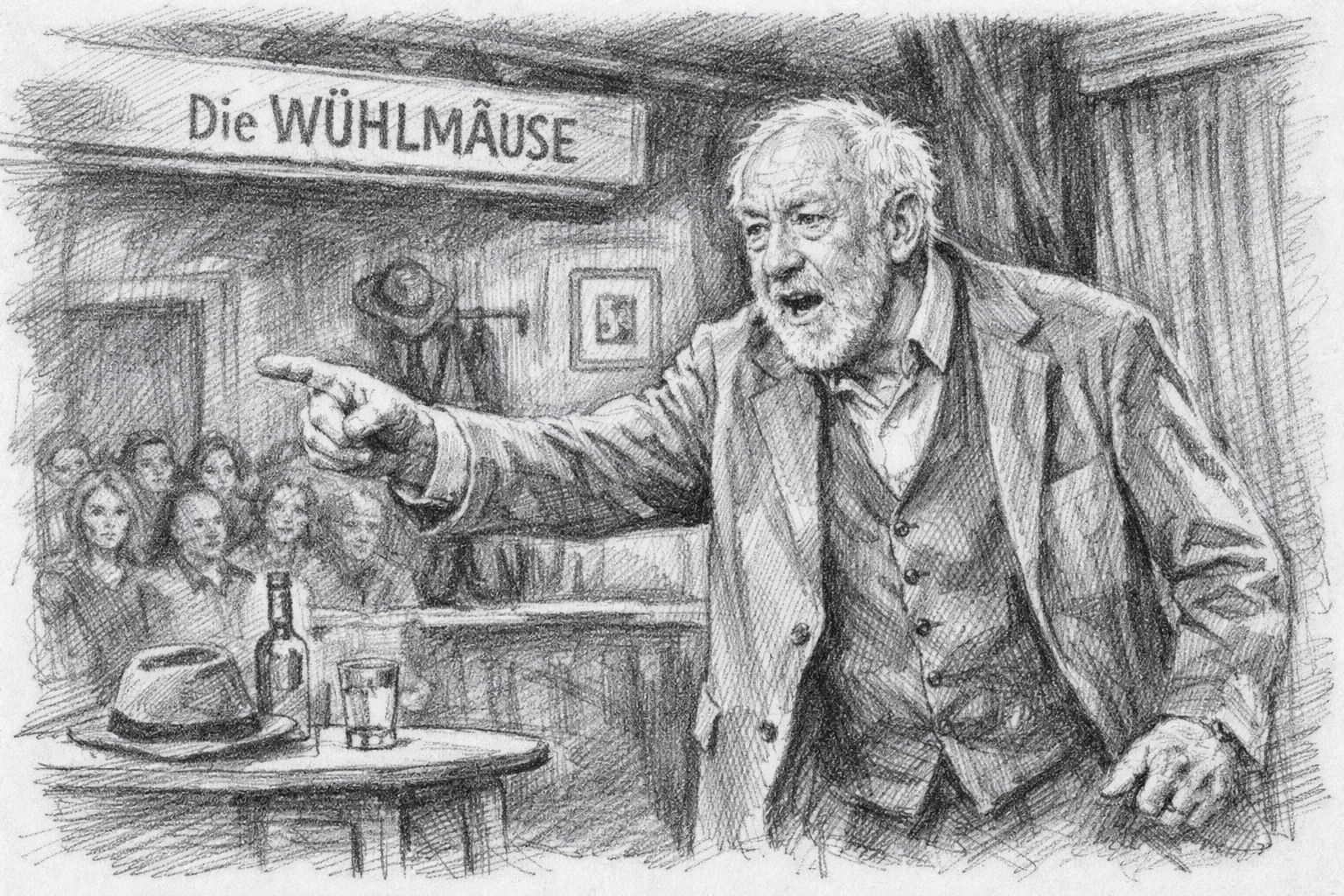

Frequently asked questions
- What makes Helge Schneider so special as an artist?
Helge Schneider is special because he consistently defies any clear categorization. He is neither a pure musician nor a classical comedian, neither a political commentator nor an escapist. His specialty lies in the simultaneity of seriousness and acting. He masters his craft at a high level, but uses these skills not for self-expression, but as a basis for freedom. It is precisely this combination of skill, restraint and consistency that makes him unique. - Why is Helge Schneider often underestimated, especially musically?
Many perceive the humor first and therefore listen less closely. Yet his musical training and practice - especially in jazz - is the foundation of his entire oeuvre. His improvisation, timing and structure are not products of chance, but the result of years of work. Anyone who sees him only as a „goof artist“ fails to recognize this basis and thus the core of his art. - Is Helge Schneider a political artist?
Not in the classical sense. He formulates no programs, issues no slogans and does not align himself with any camps. Nevertheless, his art is politically legible because it raises questions about freedom, self-determination and social routines. His attitude is not expressed in statements, but in decisions - and this is precisely what gives it depth. - Why does Helge Schneider rarely comment clearly on current social debates?
Because he does not see art as a commentary format. He avoids unambiguity in order to preserve his freedom. Instead of proclaiming positions, he creates spaces in which things become visible without being fixed. This silence or evasion is not a blank space, but part of his attitude. - How is his use of humor to be understood?
For Helge Schneider, humor is not a tool for instruction or criticism, but a state. It arises from displacement, from irritation, from playing with expectations. Laughter is a possible side effect, but not a goal. His humor demands attention, not approval. - What does the term „Klimperclown“ really mean?
The term combines two poles: musical work and clownish lightness. „Klimpern“ stands for practice, craft and seriousness, „Clown“ for risk, openness and the willingness to fail. Together, the Klimperclown does not describe a role, but an attitude in which seriousness and play can exist simultaneously. - What role does the Ruhr region play in Helge Schneider's attitude?
His origins in the Ruhr region stand for down-to-earthness, sobriety and a certain skepticism towards pathos. There, talking about things is less important than doing them. This characterization explains why Helge Schneider does not exhibit skill and does not proclaim attitude, but lives it. - Why doesn't Helge Schneider fit into traditional career models?
Because he has never aimed for ascent or arrival. His path runs sideways instead of upwards. He seizes opportunities without submitting to them and leaves structures when they no longer fit. For him, success is a side effect, not a goal. - How do you explain his consistent independence?
For Helge Schneider, independence is not a pose, but a way of working. It is evident in the selection of his projects, in breaks, in his use of media and in his renunciation of permanent visibility. This freedom is based on skill, composure and the willingness to endure uncertainty. - What significance did the coronavirus period have for his public image?
During this time, it became particularly clear how Helge Schneider takes a stand: by making decisions rather than statements. He did not perform under certain conditions without making a political statement. This consequence was misunderstood, but it made it clear how seriously he takes freedom as a prerequisite for art. - Why is Helge Schneider so difficult to capture?
Because he does not commit himself. His statements remain open, his art ambiguous. There are no clear messages that can be used for one's own purposes. This vagueness protects his work from instrumentalization and preserves its flexibility. - Is Helge Schneider's humor timeless?
Yes, precisely because he is not tied to the events of the day. His humor does not comment on headlines, but on human patterns, routines and absurdities. As a result, it ages more slowly than humorous forms, which depend heavily on the zeitgeist. - What role does improvisation play in his work?
Improvisation is not just a musical technique, but a principle of life. It requires discipline and attention and at the same time allows for openness. This principle shapes his music, his humor and his approach to uncertainty. - Why does Helge Schneider never seem complete or „arrived“?
Because he does not see his work as a work with an end point, but as an ongoing process. There is no final conclusion, no balance sheet. Things change, disappear, reappear. This openness prevents stagnation and nostalgia. - What connects its audience despite the great differences?
His art does not sort according to attitudes or opinions. It creates a shared space in which differences do not have to play a role for a moment. People laugh or wonder side by side without having to agree. - Why is his quiet form of social criticism so effective?
Because it does not instruct, but irritates. It does not change opinions directly, but habits of thought. This form of criticism has a slower but more lasting effect because it makes the individual responsible. - Is Helge Schneider more serious or more funny?
This question falls short. He is both at the same time. Seriousness and comedy are not mutually exclusive in his work, they are mutually dependent. It is precisely this simultaneity that makes his work so difficult to categorize - and so interesting. - Why is Helge Schneider worth a portrait?
Because he shows that attitude is also possible without loudness. Because it proves that artistic freedom is based on skill and consistency. And because it is a counter-design to a culture that demands clarity when openness would often be the better answer.