
...and why this is not a miracle, but the result of a clear strategy
For a long time, writing books was seen as something tedious - a lonely project that drags on for months or even years. But what if you let go of this image? What if you rethink writing - with a clear focus, well thought-out processes and targeted use of AI?
In my new book "Writing books 2.0 - a practical guide for authors in the age of AI" I describe exactly this path. A path that has enabled me to write five books in just four months, publish them in two languages - and not accept any loss of quality compared to traditional publishing.


The key: topics that you have mastered
The basis was simple: I wrote about things I know a lot about. Personal experience, professional know-how, observations from over twenty years in self-employment, software development, healthcare and strategic communication.
Because if you really have something to say, you don't need a long research process - you need a clear structure, a common thread and a clean writing process. This is exactly what "Writing books 2.0"How to turn your own knowledge into a strong, readable and marketable book.
AI is not a replacement - but a tool
The biggest mistake many people make today is that they expect AI systems to produce finished texts that they then only have to publish. The result? Interchangeable texts, soulless formulations and books without character.
I take a different approach. In my book, I show how to use AI as a tool - just like an editor, an assistant or an idea generator. The creative control remains with the human. The AI helps with structuring, revising, formulating or translating - but the content remains authentic.
In this article you will learn how to Artificial intelligence as a sparring partner to optimize your thinking and performance.
Current survey on writing books
Process thinking instead of writer's block
Another success factor was my own process chain: from jotting down initial ideas, to the outline and text creation, to the design with Affinity Publisher. Every step is well thought out - but not rigid. It's about a system that can be repeated quickly without losing the creative core.
In the book, I show you how to set up just such a system - even as an individual, without a publisher behind you and without a large budget. I explain how to prepare outlines, how to develop raw texts efficiently and which tools and strategies help you to keep an overview and still publish quickly.
Writing without software costs - an old idea, newly implemented
A key component of this project was the decision to use the Affinity graphics suite, which is now available free of charge. For M. Schall Verlag, this means that manuscripts are accepted directly in Affinity format. A prospective book author no longer needs any paid software for writing, layout, graphics and typesetting. No subscription, no license trap, no technical ballast.
This is exactly how publishing used to be thought of: the focus is on the craft, not the tool. If you want to write a book, you should be able to concentrate on content, structure and clarity - without financial hurdles even before the first chapter.
Simple typesetting with Affinity on Mac and Windows
What helped me in particular was the combination of structured preparation and a familiar layout process. As soon as the text is finished, I start typesetting straight away - not weeks later. This avoids frictional losses and ensures that you stay in the same mindset in terms of content and design. I consistently work with Affinity Publisher because it has proven to be the fastest and most flexible solution for me - both on macOS and Windows.
Many authors initially shy away from professional typesetting software. However, Affinity Publisher is not a monolith like InDesign, but an affordable, lightweight tool that can be used productively after just a few hours. The user interface is logically structured, the learning curve is pleasant - and the program offers everything you need for a typographically high-quality book: from paragraph and character formats to sample pages and print templates with bleed.
One particularly big advantage is that I can use Affinity Publisher to adapt existing books very quickly, e.g. for new editions, translations or revised forewords. I also often do the cover design in the same system - so everything stays consistent. In the book "Writing books 2.0" I show step by step what this workflow looks like - without any technical jargon, but with a focus on the essentials: a good book, cleanly implemented, efficiently produced.

Multilingualism without duplication of effort
The multilingualism was particularly exciting for me. All five books are now available in German and English, and some are also available in Dutch - thanks to a clever combination of AI-supported translation and manual post-editing by people who speak the language. The more professional the translation tool is (e.g. Deepl Pro or good AI translation), the less manual post-editing is required for the translated texts.
The same applies here: the AI provides the template - but the soul comes from humans. This turns a technical translation into a real book that also works in other languages.
From raw text to market-ready product
Another key point: the books that are produced in the end are not "somehow finished". They have a professional layout, a well thought-out cover, a clean imprint - and are indistinguishable from classic publishing books.
In the book, I show you how to create high-quality book layouts with Affinity Publisher or Adobe InDesign - even without studying graphics. And if you want, you can even purchase a suitable template package on my publishing site to get started right away.
Place books on the market quickly and easily with BoD
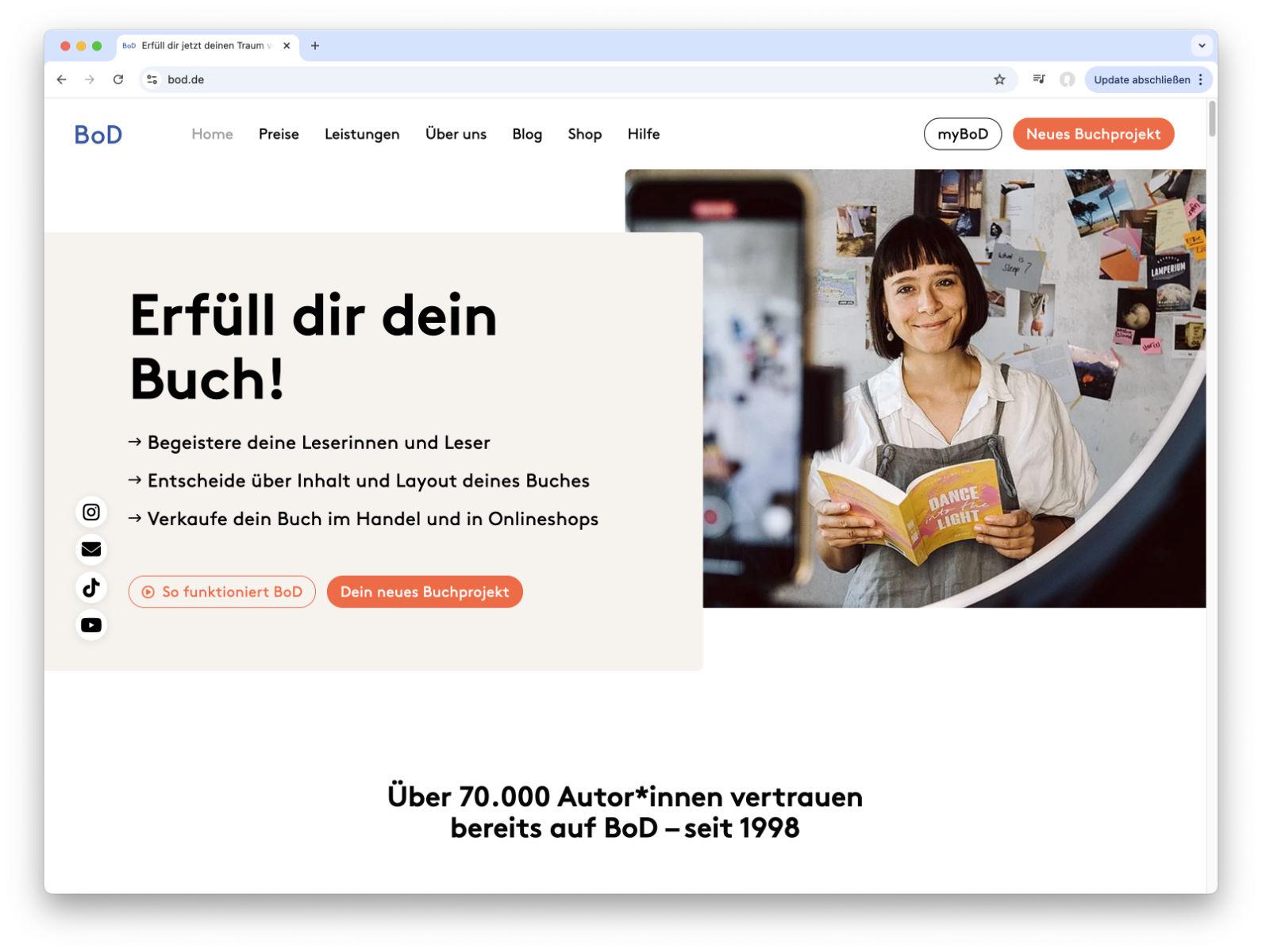
BoD stands for Books on Demand and is one of the leading providers of self-publishing and print-on-demand in Germany. The platform enables authors - as well as small publishers - to publish books cost-effectively and professionally without having to pre-finance a large print run. Thanks to the print-on-demand process, books are only printed when they are ordered - this saves storage costs and enables a high degree of flexibility. BoD takes care of the printing, delivery and connection to the book trade - both nationally and internationally.
Distribution and visibility: bookstores, Libri, Amazon & Co.
The books published via BoD - whether with a BoD or own ISBN - are automatically fed into the most important bar ranges such as Libri and Umbreit. This means that they can be ordered throughout the German book trade, as well as from Amazon, Thalia, Hugendubel and many others. Good VLB maintenance with meaningful descriptions, keywords and target group information is particularly important - because how well a title is found depends largely on this.
Higher margin - but also more personal responsibility
Those who publish via BoD as a publisher with their own ISBNs can achieve significantly higher margins than with the regular self-publishing model. The book trade price remains the same, but as the ISBN belongs to the publisher, sales are made directly via the publisher's own terms and conditions. In plain language, this means more sales per book. At the same time, however, you also bear more responsibility - for example for the correct metadata maintenance in the VLB, the professional design of the cover and inner section as well as for the legally compliant imprint.
Marketing remains manual work - but with great leverage
A realistic understanding of the book market helps enormously: even with BoD, you have to take care of your own marketing - for example through press work, your own website, social media, newsletters or targeted placements on LovelyBooks. The advantage: if you are prepared to make this effort, you keep all the strings in your hand and can test very efficiently what really works. Especially with niche topics - like many of my books - this is an invaluable advantage: targeted visibility instead of broad wastage.
Own ISBNs instead of standard package - more control for publishers
In contrast to many self-publishing platforms, BoD also allows you to publish via your own publishing account with your own ISBN numbers. This is a great advantage for anyone who not only wants to publish a single book, but also wants to build up their own brand or book series in the long term. With your own ISBNs, you retain complete control over titles, metadata, VLB entries and listings in the trade - and can also distribute the works via your own channels without having to rely on the platform ISBN.
Anyone can write books - if the process is right
 I am not a magician. And that's exactly the point: what I've achieved in four months is reproducible. Not just for me, but for anyone who is prepared to follow a clear path, use AI properly and take their own issues really seriously.
"Writing books 2.0" is not a guide to getting rich quick. It is a handbook for people who really have something to say - and want to bring it to the world in a modern way. Fast, efficient, but with depth.
You can find more information about the book here:
"Writing books 2.0" - To the book page
Would you like to write a book yourself? Then now is a good time
If you've been toying with the idea of publishing your own book for a while, it's no coincidence. Good books are rarely the result of actionism, but of maturity, experience and a clear inner impulse. M. Schall Verlag offers authors the opportunity to apply specifically and become part of this path.
About our Application form for authors you can present your project - calmly, objectively and without show. It's not about volume or trends, but about substance. Anyone who is prepared to work out their topic seriously and take responsibility for their work is invited to go down this path together.

Frequently asked questions
1. how is it possible to write several books in such a short time?
The key is not to rush, but to have structure. I focused on topics I know very well and organized my processes using AI tools and traditional typesetting software like Affinity Publisher so that every step meshed together efficiently. This enabled me to write five high-quality books in four months - each in German and English.
2. do you use AI to generate entire books automatically?
No - quite the opposite. In my book "Writing books 2.0" I show why AI should not be used as a substitute for real writing, but as a creative tool. The content comes from my experience, my thinking and my processes - the AI merely supports me with structuring, brainstorming, translation and routine tasks.
3. what distinguishes your books from classic AI-generated content?
My books are created with a clear human touch, a background of personal experience and a high standard of clarity, depth and relevance. The result is indistinguishable from a classic publisher's book in terms of content and design - because I consciously combine traditional methods with modern tools.
4. which tools and programs are used?
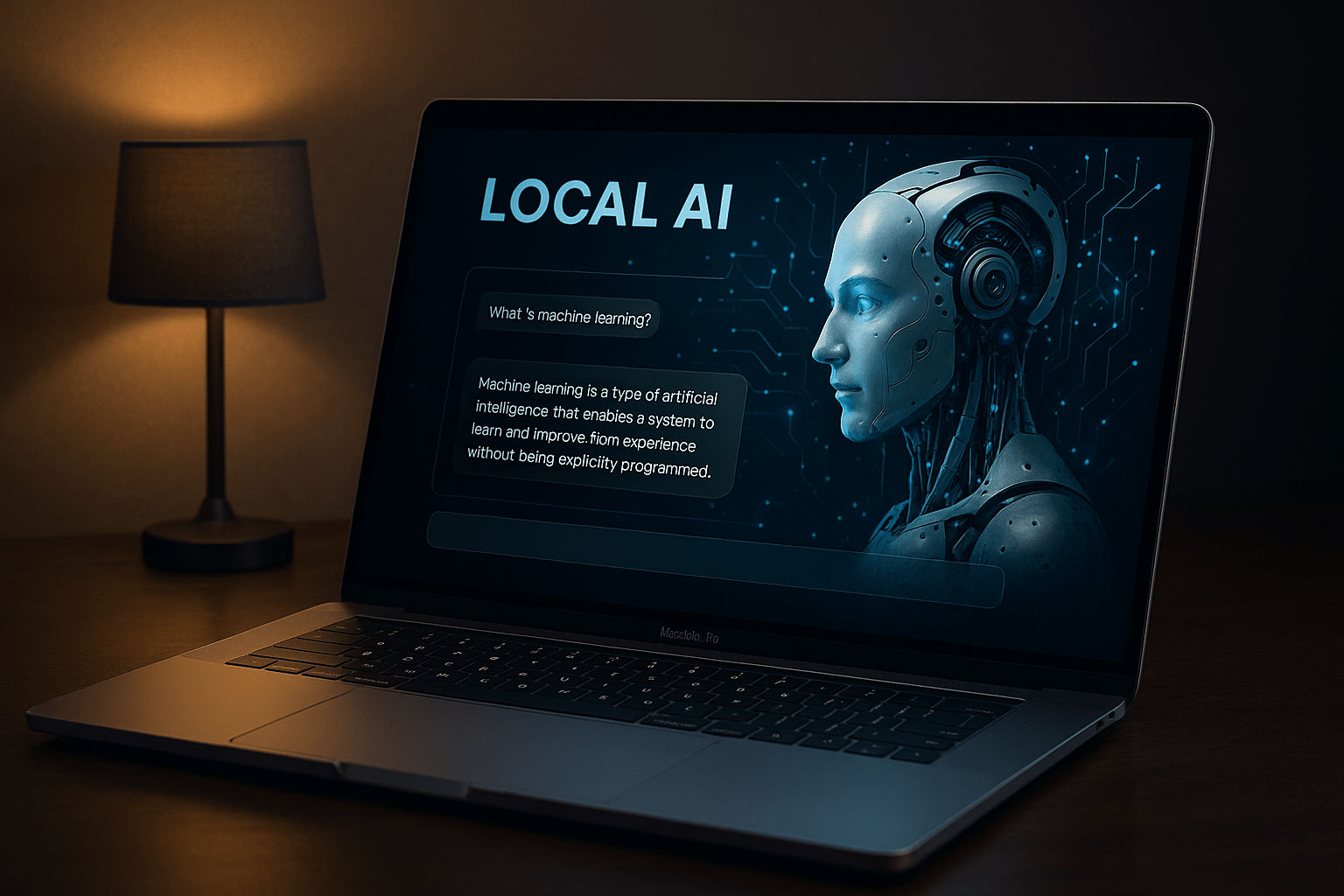
I mainly work with Affinity Publisher, an inexpensive and powerful typesetting software for Mac and Windows. For the creative and structural part, I use ChatGPT and local language models (e.g. with Ollama), simple prompt structures and, in some cases, I also speak in complex prompts by voice. - No black box automation.
5 How do you translate into several languages?
I write in German first and then use a combination of DeepL, local AI model and manual post-editing to create stylistically clean and reader-friendly translations. For Dutch, I get support from the family. The aim is always to get the cultural tone right, not just to translate the words.
6 Where are your books available?
All books are published by Books on Demand (BoD) and are available in bookshops, Libri, Amazon, Thalia and other online stores. Review copies can also be requested directly from M. Schall Verlag.
7. why did you choose BoD?
BoD enables me to work as an independent publisher with my own ISBNs - with a high degree of creative freedom, a fair margin and professional distribution. I take care of the layout, editing and marketing myself, which fits in perfectly with my process thinking.
8 What readers can expect in the book "Writing books 2.0"?
A compact practical guide for anyone who wants to write a book in the age of AI - without compromising on quality. The book shows in a practical way how to write faster, clearer and more structured with AI support - and how the idea becomes a finished book that doesn't have to shy away from comparison with classic publishing works.
