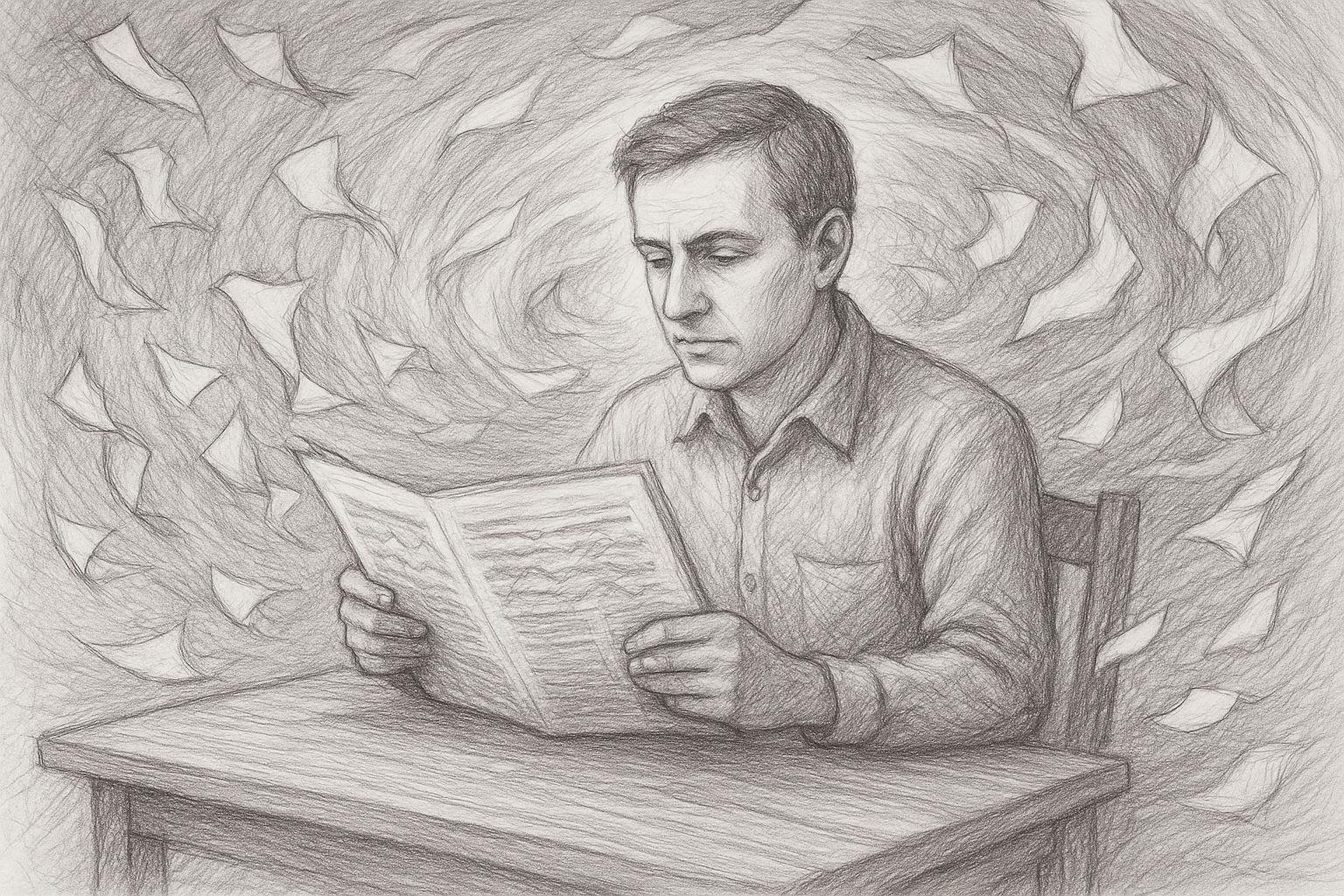
It's strange how certain developments creep up quietly and only reveal their full impact in retrospect. When I think about how I perceive the news today, I realize that my approach to it changed fundamentally more than twenty years ago. Since the turn of the millennium, I have hardly watched any traditional television news. It was never a conscious decision against something - more a gradual growing out of it. At some point, I simply realized that the daily bombardment of alternating doomsday scenarios was neither improving my life nor making my vision clearer.
Society
This section contains social developments, observations and tensions in the center - topics that affect our coexistence, our values and our cultural orientation. Some of these articles address current debates, others question long-established structures or look back at historical contexts. Often, it is not about making quick judgments, but about pausing, taking a closer look - and asking the question: where do we actually want to go as a society?
Those who read here will not find loud opinion theater, but calm analyses, clear words and an eye for what often lies between the lines. Especially in a time of increasing polarization, a differentiated view of social issues can help you to choose your own point of view more consciously - and to question it if necessary.
Jan-Josef Liefers: A portrait of attitude, origins and artistic freedom

When you see Jan-Josef Liefers today as the eccentric Professor Boerne in „Tatort“, it's easy to forget how long it took to get there. I myself have always enjoyed seeing him in this role: as a mixture of subtlety, narcissism, humor and astonishing clarity. But this mixture doesn't come out of nowhere. It is the result of a life that began in a completely different Germany - in the GDR, in a country with narrow borders and clear guidelines.
To understand why Liefers takes such a consistent stance today, you have to go back to his childhood, to his parents' theater world and to a time when criticism of the system was anything but without consequences.
State of the German economy in 2025: Five years of crisis, figures, trends and outlook
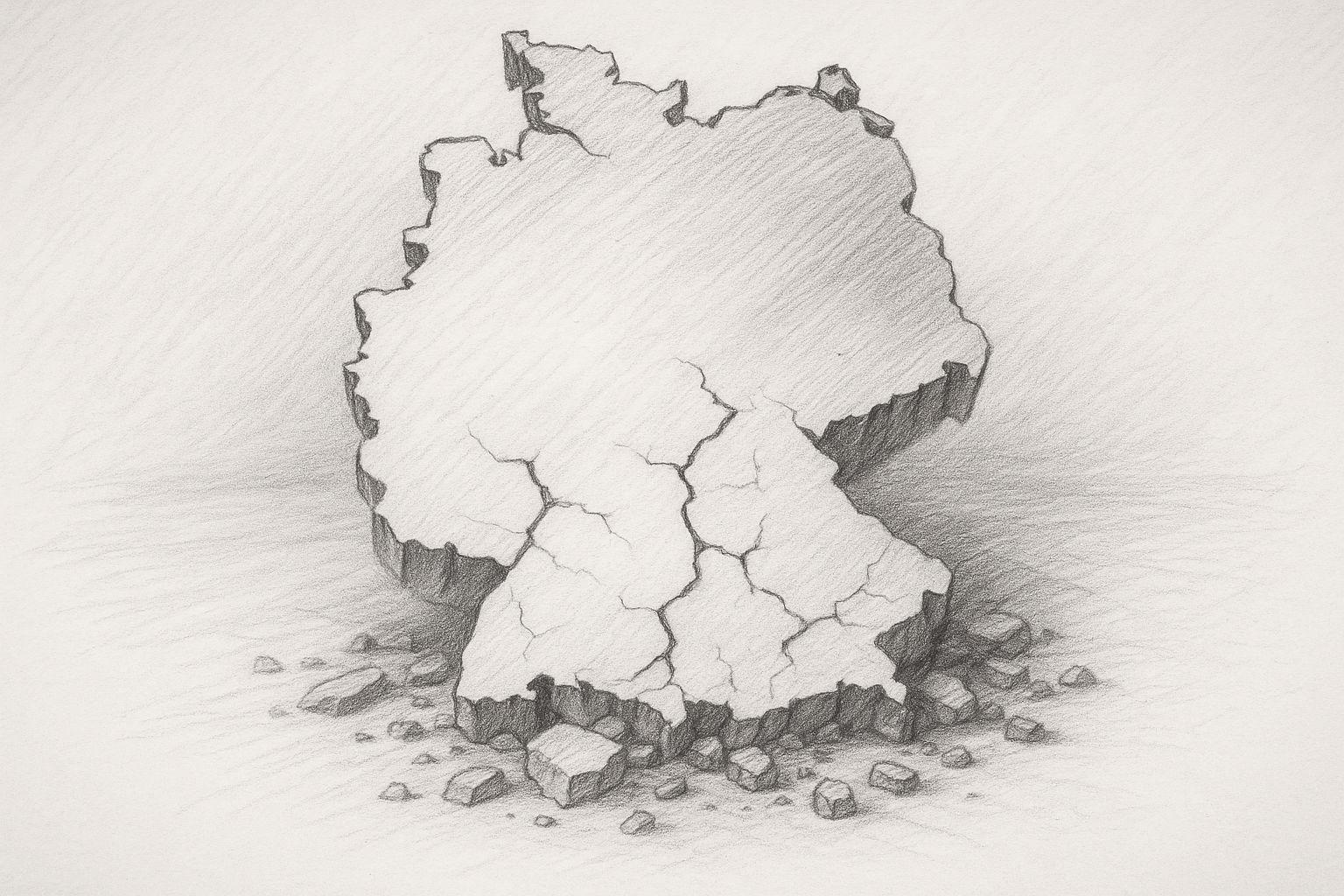
If you look at the German economy today, it is almost impossible to separate the last five years. It was a chain of events that overlapped, reinforced and in some cases blocked each other. The starting point was 2020 - the year in which the pandemic brought public life, supply chains and entire industries to a standstill in one fell swoop. Many companies had to close, production was interrupted and government aid was provided to prevent the economy from collapsing completely in the short term.
However, what seemed like a temporary exceptional situation at the time developed into something bigger: The consequences of the decisions made at the time still affect the everyday lives of entrepreneurs, the self-employed and employees today. Anyone who thought back then that after a few months everything would be „as it used to be“ can now see that many things have changed permanently.
Why Dieter Bohlen speaks when others remain silent: A portrait of diligence and clarity

There are personalities that you only really understand when you detach yourself from their public image. Dieter Bohlen belongs exactly in this category. Musically, I myself am not a big fan of his shallow, often very simple melodies - and yet, to be fair, it has to be said that what he created was extremely precise, target group-oriented and clearly structured for the 1980s. Bohlen was never the great artist in the romantic sense. But he was an outstanding businessman, a hard worker and someone who understood his craft in a way that few do today.
What makes him interesting for me is not so much his music - but the fact that he remained successful for decades, while whole generations of artists came and went around him. That he attended the same commercial college in Oldenburg as I did. And that today - after many years of silence - he is suddenly taking a clear stance on social issues. That is the reason why it is worth looking at Dieter Bohlen as a person beyond the usual media image: not as a pop titan, not as a TV pundit, but as a craftsman, businessman and mirror of a time that understands itself less and less.
The EU's 28th regime: The silent restructuring of the European Economic Area?
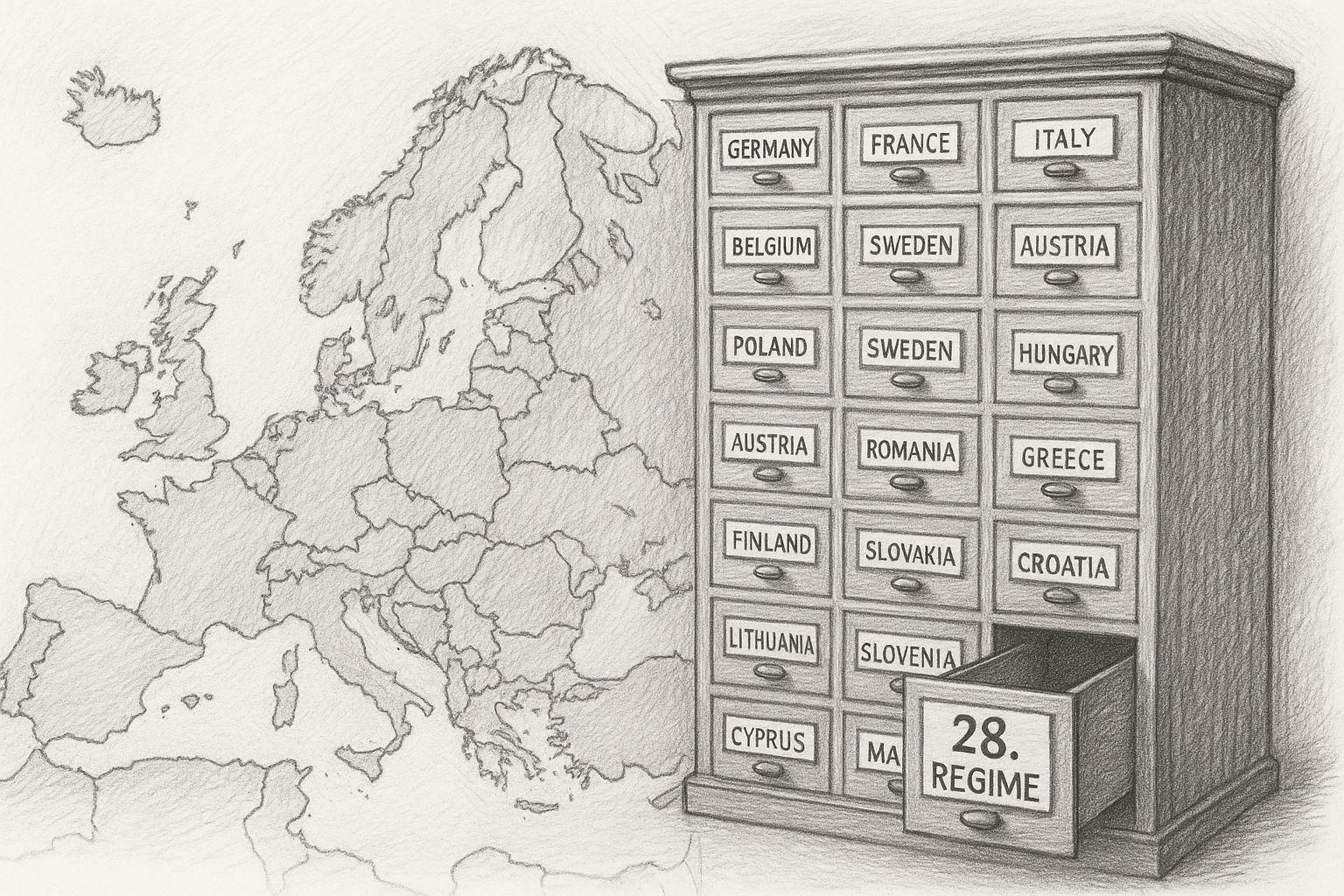
At the moment, half of Europe is talking about the so-called „28th regime“. Many are wondering what this is actually supposed to be. A new state? A secret EU project? Or just another attempt to modernize the single market? In fact, it is a concept that sounds grand, but in essence describes an additional form of company that is supposed to be optional and purely voluntary. The name „28th regime“ comes from the fact that there would be another set of rules in addition to the 27 national legal systems - like an additional tool in an already full toolbox.
The idea behind it did not come about overnight. Start-ups, investors and some SMEs have been complaining for years that the EU consists of 27 very different economic areas. Depending on which country you start up in, you have to follow different rules: different founding formalities, different liability rules, different requirements for employee participation or raising capital. This is an obstacle for international tech companies and often a deterrent for founders. This is precisely where the EU institutions want to start.
CLOUD Act, data sovereignty and Switzerland: a turning point for European IT strategies?

Something happened in Switzerland in mid-November that hardly anyone expected in this form: The country's data protection commissioners passed a clear, almost historic resolution. The message behind it is simple - and at the same time highly controversial: public authorities should no longer outsource their most sensitive data to international cloud services such as Microsoft 365 without hesitation. Why is that?
Immortality through technology: how far research and AI have really come
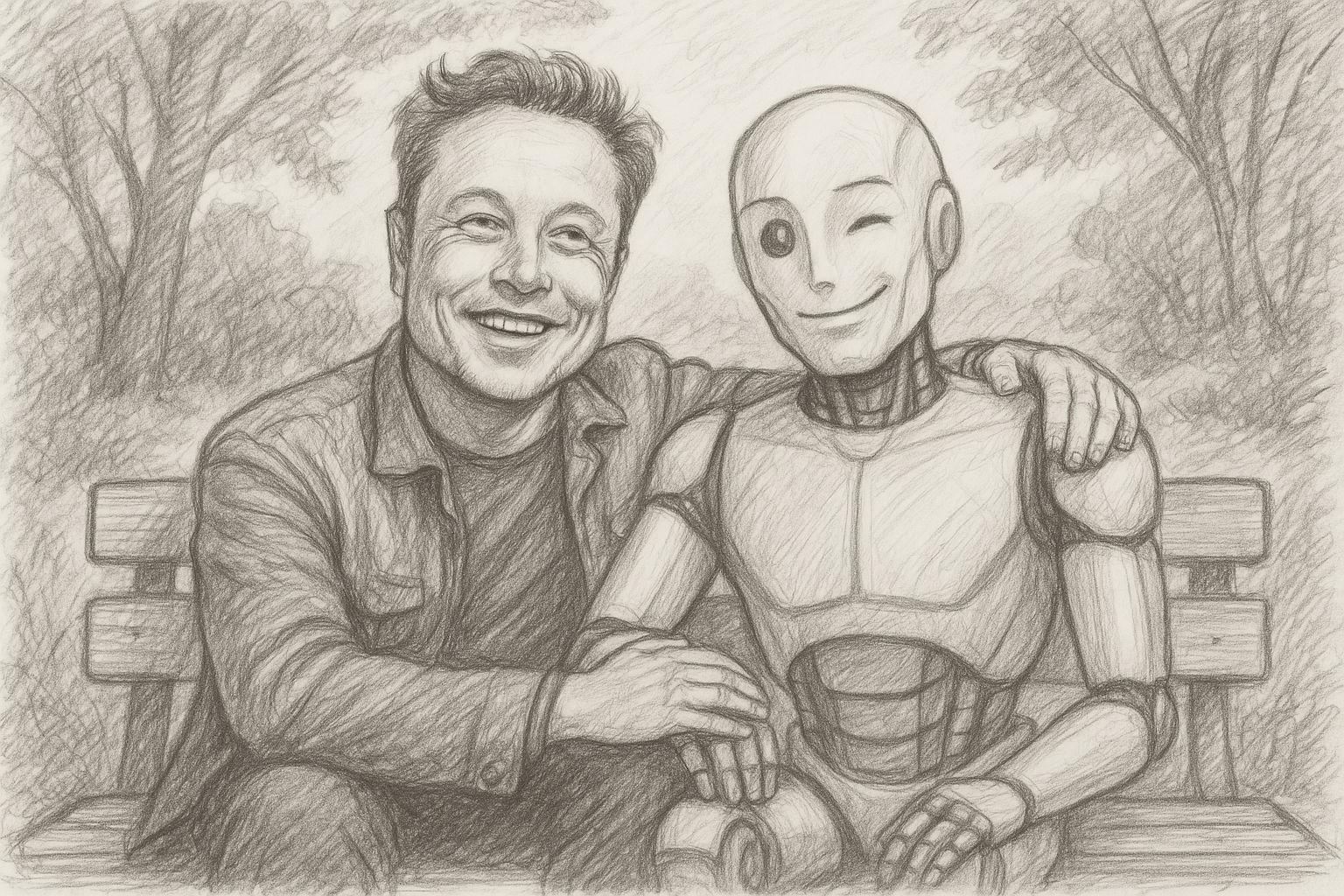
Ever since humans have existed, there has been a desire to prolong life - or preferably extend it indefinitely. In the past, it was myths, religions, alchemists or mysterious rituals that gave people hope. Today, it is no longer magicians sitting over ancient parchments, but some of the richest people in the world sitting over state-of-the-art biology and AI technology. At first glance, it sounds like science fiction: is it possible to stop ageing? Can you „preserve“ yourself digitally? Can you transfer your thinking to a machine?
But the topic has long since left the ivory tower. Big tech billionaires are now investing billions in projects that are seriously investigating precisely these questions. Not because they want to become immortal gods - but because they can afford to research the limits of what is possible. This article explains quite simply what is behind this idea, what technical developments already exist today, where the limits lie - and why this topic will become increasingly important over the next 20 years.
The new EU censorship laws: What Chatcontrol, DSA, EMFA and the AI Act mean

In an increasingly digitalized world, we spend a lot of time online: Chatting, shopping, working, informing ourselves. At the same time, the rules on how content is shared, moderated or controlled are changing. The Digital Services Act (DSA), the European Media Freedom Act (EMFA), the planned Regulation to Prevent and Combat Child Sexual Abuse (CSAR, often referred to as „chat control“) and the AI Act are key pieces of legislation proposed by the European Union (EU) to regulate the digital environment.
These regulations may seem far away at first glance - but they have an impact on you as a private individual as well as on small and medium-sized companies. This article will guide you step by step: from the question „What is planned here?“ to the background and timelines to the change of perspective: What does this mean for you in everyday life?