Taiwan has been in the headlines for years - sometimes because of military maneuvers in the Taiwan Strait, sometimes because of diplomatic tensions, sometimes because of the question of how reliable international rules are in an emergency. In recent days, this impression has become even more acute for many observers: the US operation in Venezuela, in which Venezuela's President Nicolás Maduro was detained, is the subject of controversial international debate, not only politically but also in terms of international law.
Why this could be relevant for Taiwan is less a question of “Who's right?”, When major players interpret rules selectively or enforce them harshly, other powers ask themselves - soberly and guided by their own interests - where their own leeway begins and ends. And it is precisely at this point that Taiwan becomes more than a distant island issue.



Latest news on Taiwan
27.03.2026: The state capital Dresden is moving to a Delegation trip to Taiwan The cooperation between the two companies is consistently positive and aims to intensify it in a targeted manner. The focus is particularly on the semiconductor industry, smart city projects and digital identities. Dresden was the only European representative to present itself at international conferences and met with great interest with its approaches to the use of AI and urban development. A key outcome of the trip is a Memorandum of Understanding with Taipei, which establishes long-term cooperation in technology, education and business.

Chip giant TSMC invests billions in Dresden: „Silicon Saxony“ gets its next plant | Handelsblatt
At the same time, the technical linking of digital identity systems between Europe and Taiwan is to be driven forward in order to enable cross-border applications. New contacts were also made in areas such as biotechnology and semiconductor production. The trip underlines the growing importance of Dresden as part of the European „Silicon Saxony“ and as a strategic partner of Taiwan in global technology issues.
Why Taiwan is back in the spotlight right now
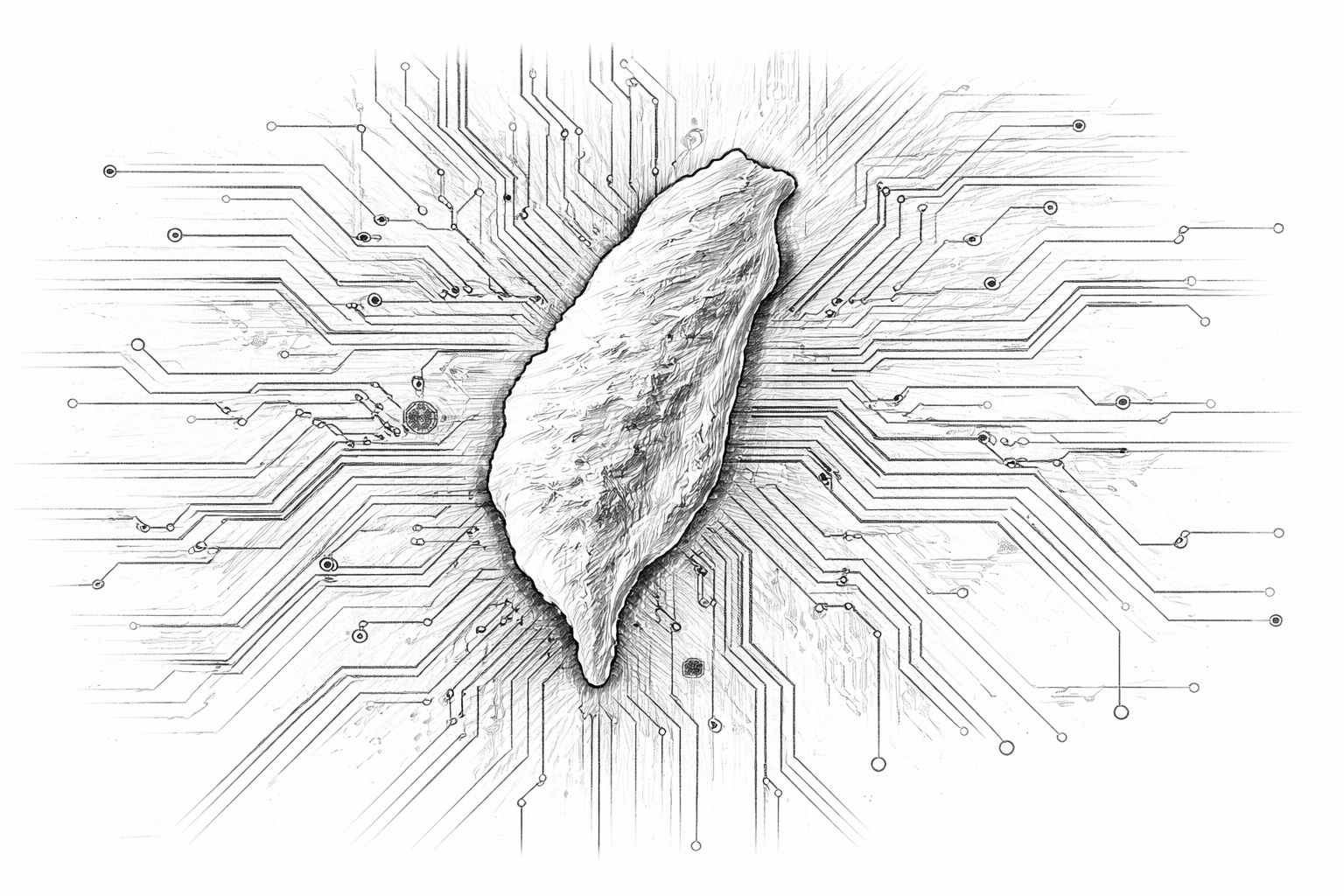
There is also a second, very tangible reason: Taiwan is not just any place on the map for the modern economy. The island is a central hub for global semiconductor and IT value creation - i.e. for servers, cloud infrastructure, smartphones, modern industrial electronics and much more.
If you want to understand why Taiwan is so strategically charged, you first need to know its history: It explains why Taiwan is politically a special case - and why this special case carries so much weight today.
Taiwan before the 20th century: Island, transit area, not a classic nation state
When we talk about Taiwan, an old principle helps: at first glance, many conflicts seem like modern power games, but they have deep historical roots. For a long time, Taiwan was not a “finished nation state” as we know it from European history books. Rather, the island was an area of contact and transition: indigenous societies, later immigration from mainland China and changing external influences.
This is not an academic quibble, but important for understanding the present. Because both of the great narratives that clash today are precisely at this point:
- One view emphasizes historical and cultural connections to mainland China.
- The other view emphasizes that Taiwan has taken its own path over a long period of time - and that today's political reality cannot simply be derived from old maps.
Anyone who wants to understand Taiwan should therefore move away from the expectation that there must be a simple, unambiguous historical “title deed”. In reality, Taiwan's history - like that of many islands - is characterized by layers.
1895-1945: Japanese rule as a turning point
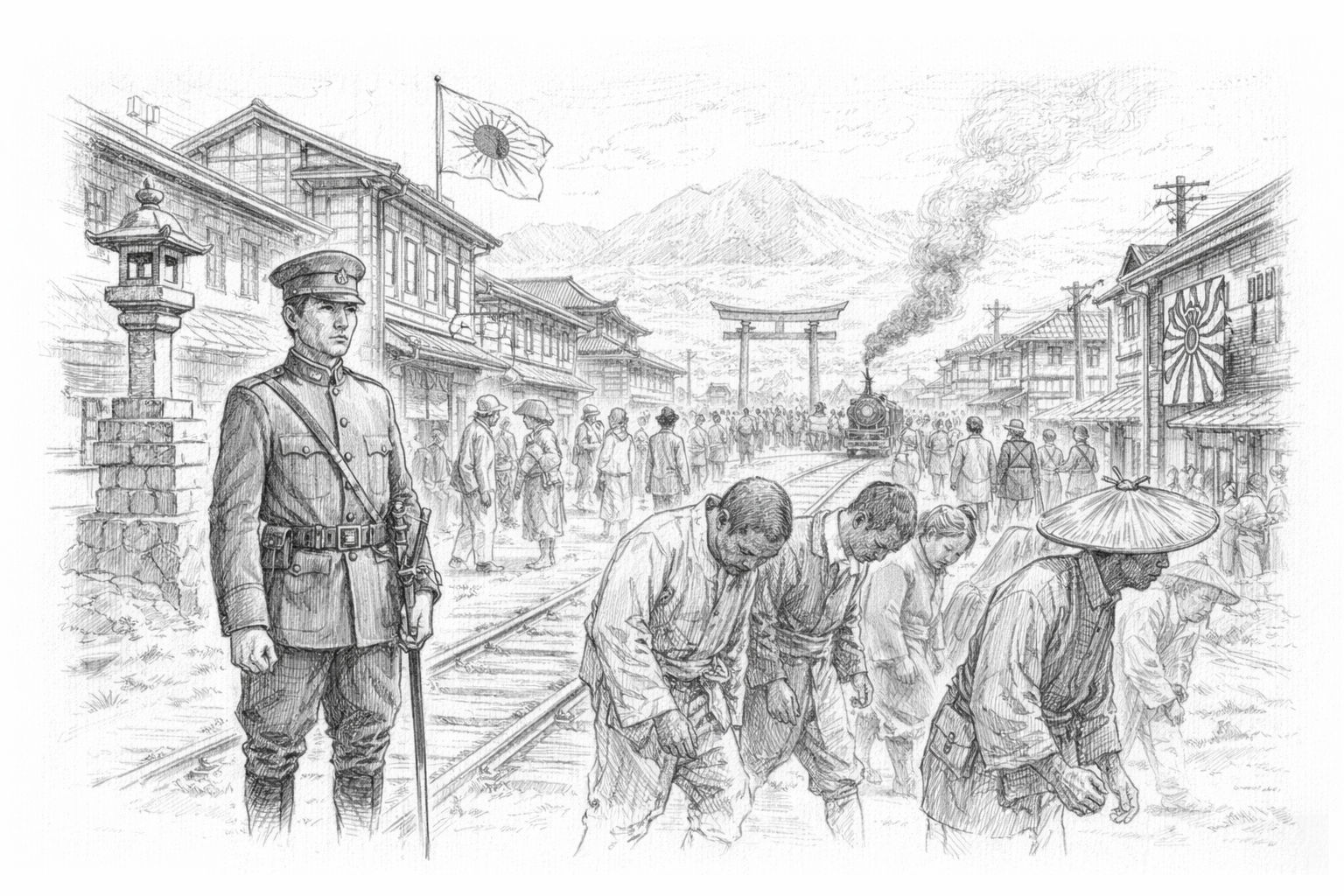
The first major, clearly datable turning point came in 1895: after the First Sino-Japanese War, Taiwan was ceded by China to Japan. This marked the beginning of a 50-year phase of Japanese colonial rule. This is crucial for today's debate for two reasons:
Firstly, Japan changed the island profoundly. Colonial rule meant not only modernization, but also control, cultural transformation and unequal power relations. In many Taiwanese family narratives, this period remains an ambivalent chapter to this day:
Development of infrastructure and administration on the one hand, colonial subordination and pressure to assimilate on the other.
Secondly, this era created a historical distance to the idea that Taiwan had simply “always” been a normal part of Chinese state development. This is because an entire generation grew up under a different political system, with different institutions and a different public order. This does not mean that identity becomes unambiguous - but it does explain why Taiwan does not automatically fit into a single national narrative later on.
1945-1949: The transition after the war - the moment when history splits
Japanese rule ended with the end of the Second World War in 1945. Taiwan came under the administration of the Republic of China (ROC), which at that time still functioned as the Chinese state government.
However, this transition was not simply a smooth “return”. Tensions arose early on in Taiwan, which intensified in 1947 in a historical trauma: the “228 Incident” (named after February 28), when protests and unrest were violently suppressed. Reuters summarizes this event as massive bloodshed, the number of victims of which has not been precisely determined to this day, but is considered to be very high.
Why is this so important? Because a pattern becomes visible here that reappears later: Distrust of centralized power that is perceived from the outside as corrupt or ruthless - and the experience that political conflicts are not resolved with words alone. This has shaped social memory to this day.
Then came the second, even bigger break in 1949: the Chinese civil war ended on the mainland with the victory of the Communists under Mao Zedong; the government of the Republic of China under Chiang Kai-shek retreated to Taiwan. Reuters describes this moment as a clear historical turning point: Chiang lost the civil war and “fled to Taiwan”. From now on, there were effectively two political realities:
- on the mainland the People's Republic of China (PRC)
- on Taiwan the Republic of China (ROC), which continues to govern there
This laid the foundation for today's status issue - long before the modern chip industry made Taiwan so important in the global economy.
1949-1987: State of emergency, “White Terror” and the long shadow of martial law
After 1949, Taiwan entered a long phase of a state of emergency. Martial law was established on the island, which - according to the official timeline of the Taiwanese government - was in force from 1949 to 1987.
This period is often summarized under the term “White Terror”: political persecution, restrictions on freedom of expression, arrests and harsh repression against perceived opponents. Even if the details and assessments vary depending on the source, the core is undisputed: for decades, Taiwan was not an open democracy, but a tightly controlled system that fought opposition.
For first-time readers, one point is particularly important: this authoritarian phase is not just “in the past”. It explains why Taiwan today has a particular sensitivity to issues such as the rule of law, free elections and pluralistic debates. When societies have been under pressure for a long time, they often develop a finer sense of how quickly freedoms can shrink again.
At the same time, it is historically fair not to ignore the other side: Taiwan experienced a remarkable economic rise during this period - later intensified. This is often described as the “Taiwan Miracle”. But economic success is no substitute for political freedom. Both are part of the truth of these decades: growth and repression.
From 1987: Democratization, identity - and a new status quo in practice
Martial law ends in 1987. This step marked the beginning of a profound change: the party landscape, media freedom and democratic institutions developed gradually - not overnight, but visibly and permanently. The Taiwanese government timeline explicitly names 1987 as the year of the end of martial law and the starting point of a broader liberalization.
From this point onwards, the Taiwan that many people have in mind today emerges: a democratic order that is legitimized through elections and a society that engages in open political debate. And this is precisely where the modern tension that continues to this day begins:
- Taiwan is politically and administratively self-governing.
- At the same time, international recognition remains limited and the status controversial.
This creates a lived status quo that is based more on practice than on formal contracts.
This development is the key to understanding the present: Taiwan is not a global issue because it has “suddenly” become important. It has become important because a historically evolved special situation meets a world that is more technologically and economically intertwined than ever before.
And this is exactly where the next step of the article comes in: If Taiwan's political status is so complex - why is so much global industry attached to this island of all places? Why does semiconductor production play a role here that remains almost invisible in everyday life, but changes everything in the event of a crisis?
Taiwan's current status - state, non-state, special case
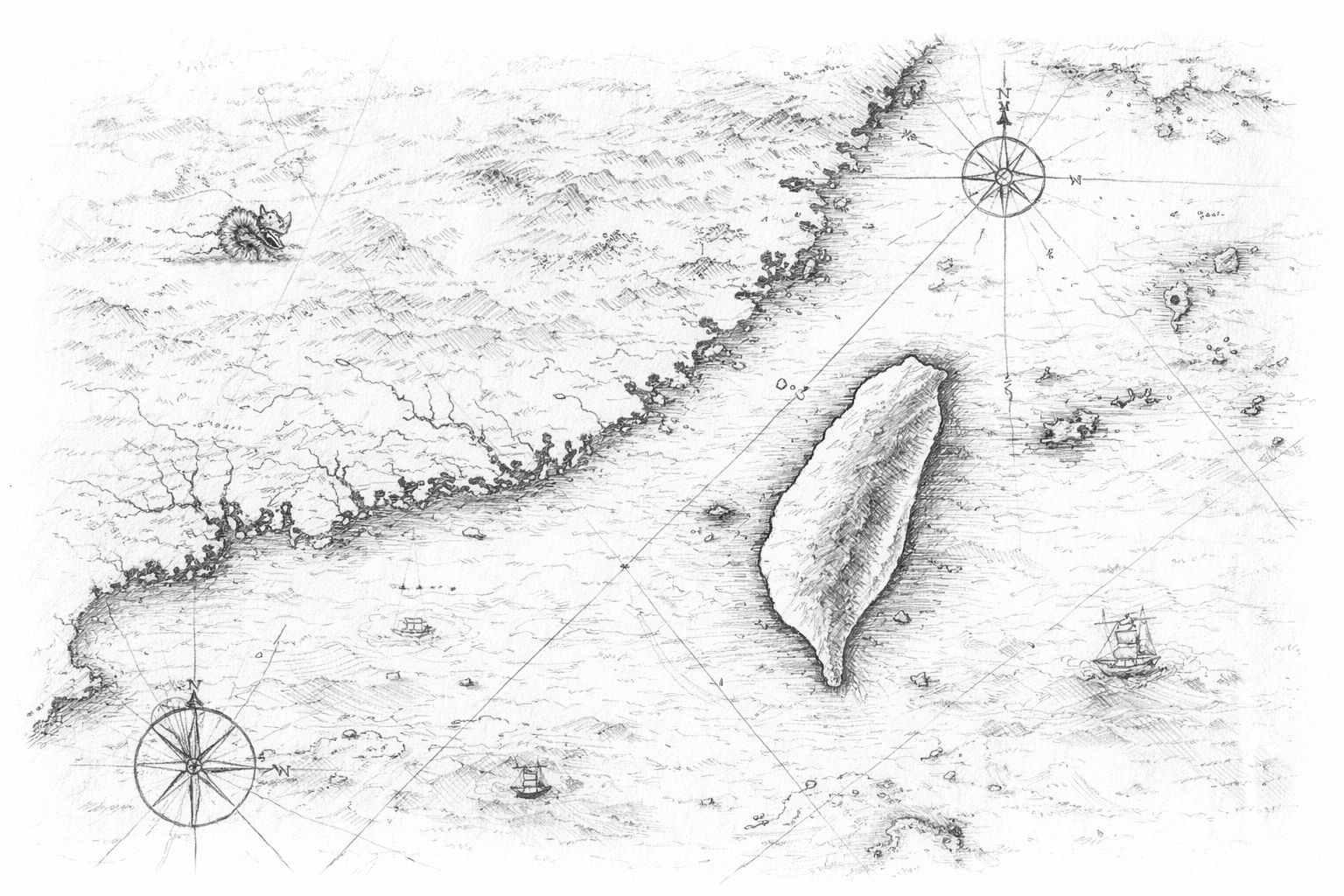
Now that we have seen how Taiwan's history has developed over the course of decades and ruptures, the next question almost inevitably arises: What is Taiwan today?
A state? A renegade province? A provisional arrangement? Or something else entirely?
The honest answer is: Taiwan is a special political case that does not fit neatly into traditional categories. This is precisely what makes the situation so stable - and at the same time so fragile.
De facto and de jure - why this distinction is crucial
To understand Taiwan's current situation, a simple but central distinction helps: de facto versus de jure.
- De facto describes reality: how something actually works.
- De jure describes the formal, legal status: what is officially recognized.
De facto Taiwan has been a fully functioning political community for decades. The island has:
- an elected government
- its own parliament
- an independent judiciary
- its own currency
- own armed forces
- own passports
- its own tax system
For the people who live there, Taiwan is a state like any other in everyday life. Authorities function, elections are held, laws are passed and changed again. Nobody in Taiwan waits for instructions from Beijing in the morning.
De jure, The situation is much more complicated under international law. Taiwan is only officially recognized as a sovereign state by a small number of countries. The vast majority of countries - including all the major economic powers - do not maintain formal diplomatic relations, although they cooperate intensively with Taiwan.
This tension between lived reality and formal recognition is not a marginal detail. It is at the heart of the entire Taiwan issue.
The Republic of China (ROC) - a state with an unusual biography
Another point often causes confusion: the name. Taiwan does not officially call itself the „Republic of Taiwan“, but Republic of China (ROC). This sounds paradoxical to many readers at first, because they automatically associate China with the People's Republic of China.
Historically, this is relatively easy to explain: the Republic of China was founded in 1912, long before the People's Republic of China existed. After the civil war in 1949, this government withdrew to Taiwan and continues to exist there to this day - albeit only on the territory of the island and a few small tributary islands. What is important here:
Today's Republic of China no longer lays any serious claim to the Chinese mainland. This idea still played a role in the first decades after 1949, but has long since become politically obsolete. Nevertheless, the state name has been retained - partly because any change would have an enormous political signal effect.
The name is therefore less an expression of an imperial claim than a historical relic that is still part of the complicated status issue today.
The People's Republic of China and the „One China Principle“
On the other side is the People's Republic of China (PRC) with its so-called one-China principle. This essentially states:
There is only one China - and Taiwan is part of it.
For Beijing, this position is not a tactical detail, but a core component of state legitimacy. In China, the Taiwan issue is closely linked to national unity, historical humiliation at the hands of foreign powers and the narrative of „resurgence“. It is therefore highly charged in terms of domestic politics. It is important to note something sober:
Even though the People's Republic of China claims Taiwan, it has never ruled the island. Political control has been held by the government in Taipei since 1945. Although this fact is recognized internationally, it is often formulated with diplomatic caution. It is crucial to understand the tensions:
Beijing's claim is not primarily militarily motivated, but politically symbolic. It serves both internal unity and foreign policy positioning.
One-China principle and one-China policy - an important difference
It is worth taking a closer look at the language here. Many misunderstandings arise because terms sound similar but mean different things.
- The One China principle is Beijing's position.
- The One-China policy on the other hand, is the formulation used by many other countries - including the USA and most European countries.
The difference is subtle, but significant:
- The People's Republic of China says: Taiwan is part of China.
- Many other states say: "We note that China takes this position.
This may sound like a bit of a mouthful, but it is diplomatically crucial. This deliberately open formulation allows countries to maintain official relations with the People's Republic of China on the one hand and close, albeit informal, relations with Taiwan on the other.
This linguistic construction is one of the reasons why the status quo has lasted so long. It is not a clean solution - but it is functional.
Current survey on trust in politics
The role of the United Nations - what Resolution 2758 does and does not regulate
A frequently cited point of reference in the debate is UN Resolution 2758 from 1971, which stipulated that the People's Republic of China would take over the seat of „China“ in the United Nations and that representatives of the Republic of China would be excluded. An often overlooked subtlety is important here:
The resolution clarifies China's representation in the UN, not explicitly Taiwan's sovereignty under international law.
In practice, however, it had far-reaching consequences. Taiwan lost access to most UN bodies and became increasingly isolated internationally. At the same time, the internal political reality on the island remained unchanged: Self-government, its own institutions, its own decisions. For many observers, this is precisely the core of today's ambivalence:
Taiwan exists politically - but it exists in an international system that is based on formal recognition and is ill-suited to gray areas.
Informal relations - diplomacy without embassies
Despite the lack of official recognition, Taiwan is by no means isolated. On the contrary: the island maintains a dense network of unofficial relations worldwide. These are expressed, among other things, through
- Business and commercial agencies
- cultural institutes
- Scientific cooperations
- Military talks at unofficial level
Taiwan is a normal partner for companies, universities and many governments. Only the form of the relationship is deliberately designed in such a way that it does not imply formal recognition. You can summarize it like this:
Taiwan is practically integrated internationally, but formally excluded.
A stable but tense status quo
All of this results in the current situation: a status quo that is not based on clear agreements, but on mutual restraint.
Taiwan renounces a formal declaration of independence.
- The People's Republic of China has - so far - refrained from asserting its claim militarily.
- Other states deliberately operate in the gray area between recognition and cooperation.
This state of affairs is neither ideal nor just, but it is functional. It has enabled Taiwan's economic development, created democratic stability and provided the world with decades of relative calm in the region.
At the same time, this status quo is sensitive. It thrives on perceptions, signals and unspoken rules. When the international environment changes - for example through rule-breaking, power shifts or new precedents - it is precisely this balance that comes under pressure. And this raises the next logical question:
- Why is it Taiwan of all places that is the subject of so much global nervousness?
- Why do markets, governments and companies react so sensitively to every movement around this island?
The answer leads away from diplomacy and history - and straight into the heart of the modern global economy.

War over Taiwan? | Weltspiegel Reportage | World mirror
The „Silicon Island“ - why Taiwan is economically systemically relevant
Up to this point, it has mainly been about history, politics and diplomacy. But all this alone would not make Taiwan one of the most sensitive points in world politics. Many regions of the world have unresolved status issues - without them regularly making stock markets, governments and companies nervous.
The decisive difference lies elsewhere: Taiwan today is a technical bottleneck in the global economy. And not because there is „a lot of industry“ there, but because there is very specialized industry - industry that cannot be replaced in the short term.
Why semiconductors are the nervous system of the modern world
To understand why Taiwan is so important economically, you first have to take a step back and ask yourself: What are semiconductors actually - and why are they so important? Semiconductors are not exotic high-tech toys. They are the basic building blocks of modern electronics. Without them, there would be:
- no smartphones
- No servers and data centers
- No cloud services
- No modern industrial automation
- No vehicles with assistance systems
- No medical technology at today's level
Semiconductors can be compared to the nervous system: they are not always visible, but they control, process, connect and coordinate everything else. If they are missing, it is not just „a product“ that comes to a standstill, but entire systems come to a standstill.
The world learned this painfully during the 2020-2022 chip crisis. And it is precisely this experience that explains why every geopolitical tension surrounding Taiwan is immediately interpreted in economic terms.
Not every chip is the same - an important difference
At this point, it is important to clarify something that gets lost in many debates: not all semiconductors are the same - and not all are equally critical. A rough distinction can be made between:
- more mature, simple chips (for control units, sensors, household appliances)
- highly complex logic chips (for processors, AI accelerators, modern servers, smartphones)
Most everyday products use chips that are based on older manufacturing processes. Theoretically, these can be manufactured in many places - at least in the long term.
The situation is completely different for state-of-the-art logic chips. These are created in manufacturing processes that are extremely precise, capital-intensive and technologically sophisticated. This is not about „a little better technology“, but about structures in the nanometer range, which only a few companies worldwide have mastered.
And this is where Taiwan comes into play.
TSMC - the invisible giant behind the digital world
The name TSMC (Taiwan Semiconductor Manufacturing Company) means little to many end customers. But anyone who uses a smartphone, operates a cloud service or talks about artificial intelligence cannot avoid this company.
TSMC is not a traditional electronics company that sells its own products. The company is a so-called foundry: it produces chips on behalf of other companies. Its customers include:
- large IT groups
- Chip designers without their own factories
- Manufacturer of high-performance processors
This business model has a decisive effect: TSMC bundles global demand, expertise and production capacity in one place. Today, TSMC is by far the most important manufacturer of the world's most advanced semiconductors. Concentration is extremely high, particularly in the most advanced production stages - i.e. precisely where performance, energy efficiency and miniaturization come together.
This does not mean that Taiwan produces „all the chips in the world“. But it does mean that a very small part of the chip world has extremely high leverage. And this leverage lies largely in Taiwan.
Why chip factories cannot simply be relocated
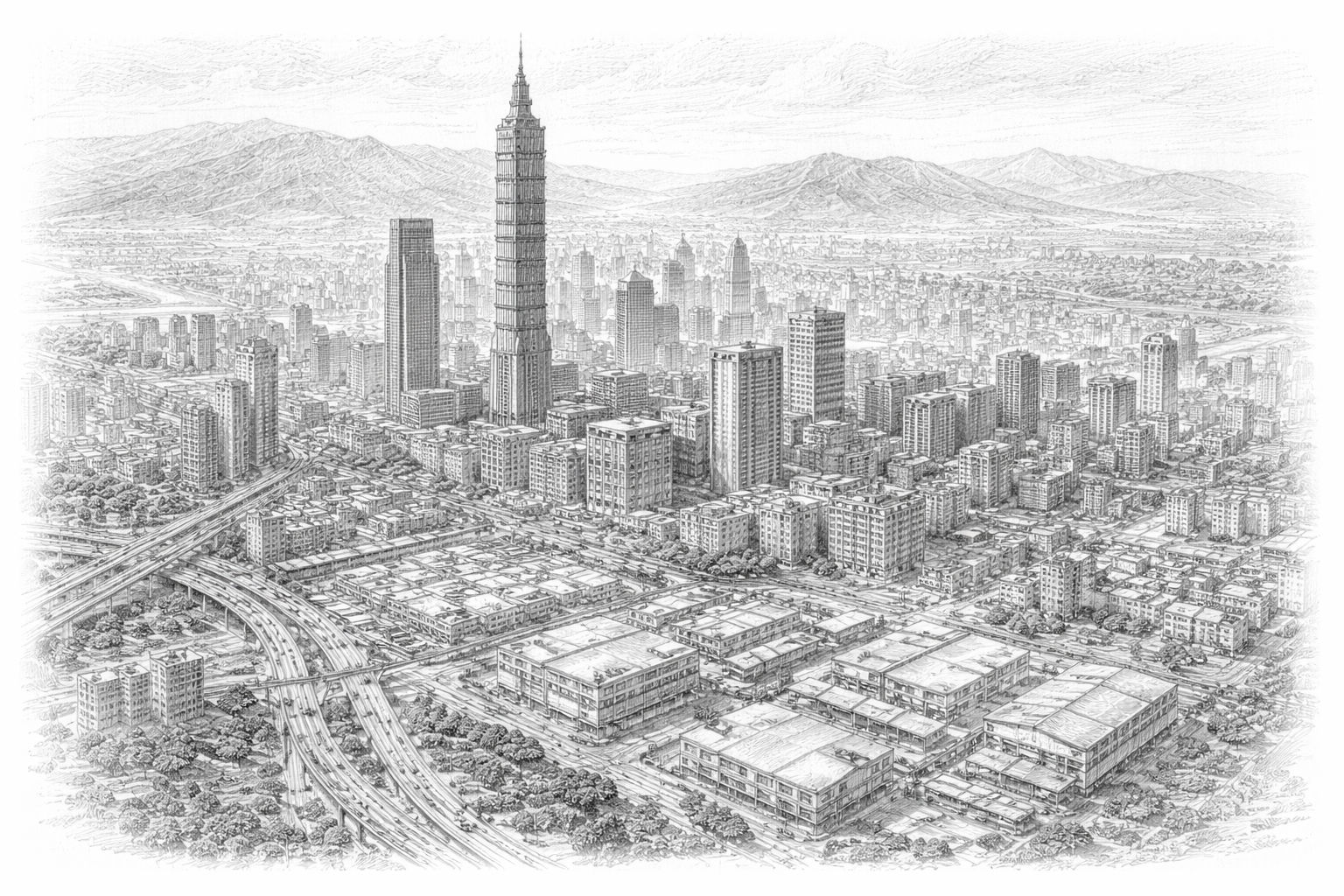
At this point, a seemingly obvious thought often arises: Why not just build these factories somewhere else?
The short answer is: because it takes years - and ties up enormous resources. A modern semiconductor factory doesn't cost a few million, but tens of billions. But money alone is not enough. There are other factors:
- Highly specialized machines
- Extremely clean production environments
- A dense supplier structure
- Thousands of highly qualified specialists
- decades of experience
Even if a decision is made today to build new capacities, it often takes five to ten years before they actually produce on a relevant scale. And even then, they are not automatically equivalent.
This is the reason why political programs to strengthen domestic chip production make sense - but are not a short-term safeguard.
Taiwan as an ecosystem - not just as a location
Another often underestimated point: Taiwan is not just a location for factories, but an entire industrial ecosystem.
A number of companies have settled around chip production:
- Suppliers of chemicals and materials
- Specialist companies for packaging and testing
- Logistics and maintenance service provider
- Training and research facilities
This interaction makes production not only efficient, but also stable. It is the result of decades of development - not a short-term political decision. You can't simply copy this ecosystem like a blueprint. It grows organically, through experience, mistakes, adaptation and specialization. This is precisely why Taiwan is so difficult to replace.
Why even minor disruptions have major effects
A crucial point for understanding global nervousness is the following:
It doesn't take a war to trigger massive economic consequences. Even minor disruptions can have major effects:
- Delays in deliveries
- Uncertainty regarding insurance and transportation
- Precautionary stock replenishment
- Prioritization of large customers at the expense of smaller ones
Such effects act as amplifiers. They are often not caused by actual shortages, but by expectations and risk assessments. Markets do not only react when something fails - but when they fear that it might fail.
This is precisely why Taiwan is so economically sensitive. The island is located at a point where technology, time, trust and planning security come together.
From the island to the world - why this affects everyone
At first glance, Taiwan may seem far away. But the economic ties extend into everyday life:
- If servers are not delivered, digitization comes to a standstill.
- If chips are missing, vehicle production is delayed.
- When there is a lack of planning security, prices rise - often invisibly, but permanently.
Taiwan is therefore not an exotic special case in world politics, but a systemic factor in our modern way of life. The island is representative of a global structure that is highly efficient, but also highly vulnerable.
And it is precisely at this point that it becomes clear why political tensions around Taiwan are taken so seriously. It's not just about territory or symbolism. It's about the question of how stable the foundations of our interconnected world really are. This sets the stage for the next step:
If so much depends on Taiwan - what exactly happens when the situation shifts? Which industries are affected, how quickly do disruptions have an impact, and why are small changes enough to trigger major chain reactions?
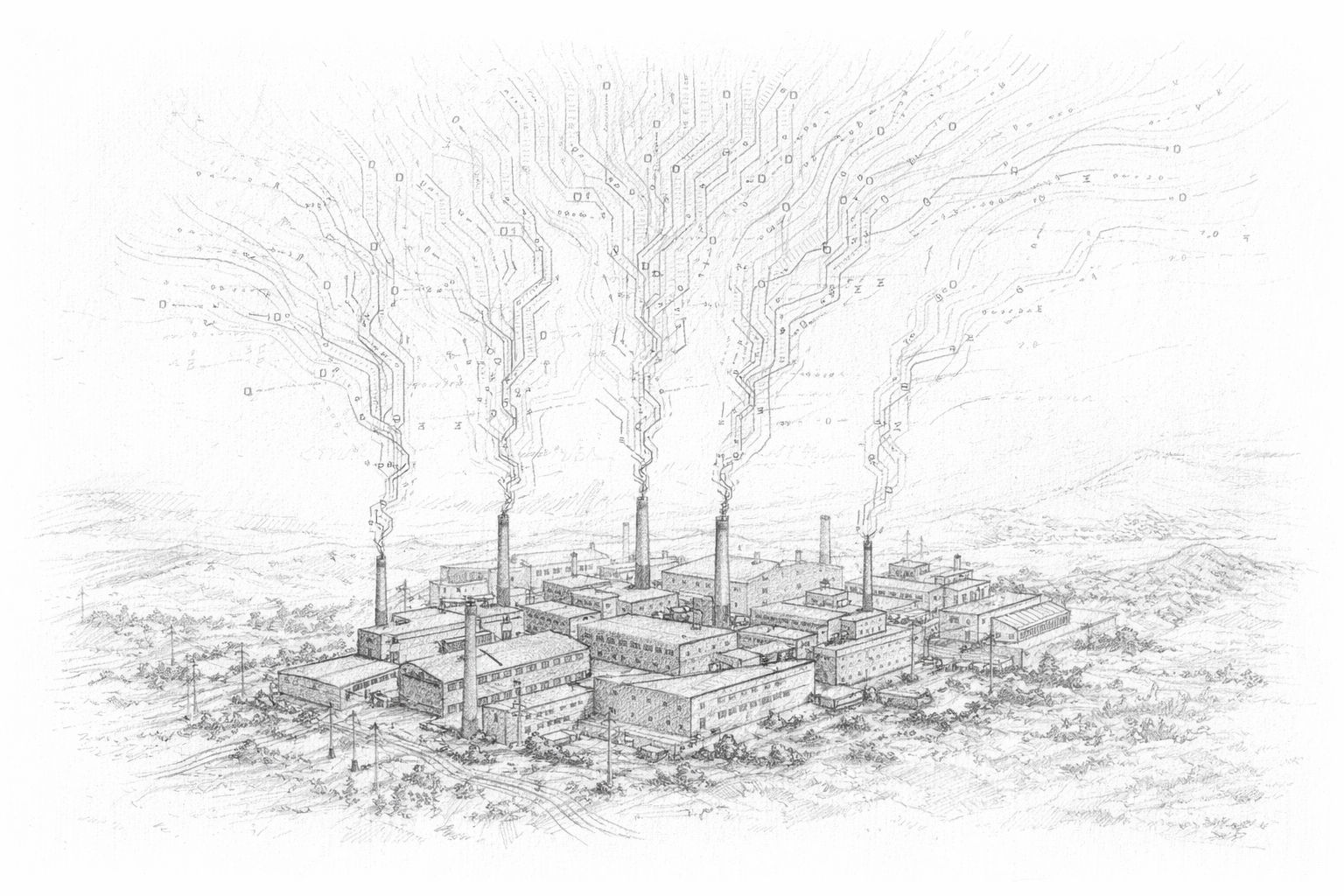
What's at stake - consequences for industry and society
Now that it has become clear why Taiwan is a technological bottleneck, the next question inevitably arises: What actually happens when this bottleneck narrows - or is temporarily blocked?
This is not about apocalyptic scenarios. The really relevant consequences usually arise much more quietly: through delays, planning uncertainty, price shifts and prioritization. It is precisely these effects that often hit industry and society harder than a clear, one-off shock.
The IT and cloud world - more sensitive than it seems
Let's start where the dependency is greatest: in the IT and cloud infrastructure. Data centers, cloud providers, AI systems and modern enterprise software rely on high-performance hardware. This hardware, in turn, relies heavily on the most advanced semiconductors - the very segment in which Taiwan plays a key role.
It is important to be realistic here: when disruptions occur, „the Internet does not go out“. But there are effects such as:
- Delays with new server generations
- lower availability of certain hardware
- rising prices for computing power
- stronger market advantages for very large suppliers
Small and medium-sized companies are often the first to notice such shifts. Large corporations secure long-term capacities, while smaller customers are left behind. This changes competitive conditions - quietly, but sustainably.
Artificial intelligence - growth with reservations
Artificial intelligence is a special case within IT. Modern AI models require enormous computing power, which in turn is based on highly specialized hardware. These chips are expensive, complex and in high demand - even without geopolitical tensions. If additional uncertainty is added, an effect that is already visible is amplified:
- Computing power becomes a strategic asset
- Access is becoming more important than innovation
- Financial strength determines the speed of development
This does not mean that technical progress will stop. But it will be distributed more unevenly. This is relevant for society because technological advantages are concentrated more quickly among a small number of players.
The automotive industry - old lessons, new vulnerabilities
The automotive industry is often seen as an example of how many vehicles do not need „high-end chips“. This is true - but still falls short. Modern vehicles today contain dozens to hundreds of chips: for engine control, safety systems, assistance functions, infotainment, battery management and much more. Many of these are based on older production technologies. But this is precisely where the problem lies:
The automotive industry traditionally works with just-in-time logistics and very tight stock levels. Even minor disruptions can bring entire production lines to a standstill - as the chip crisis a few years ago showed. If geopolitical tensions arise around Taiwan, there are several effects at once:
- Manufacturers secure capacities as a precaution
- Suppliers prioritize higher-margin customers
- Delivery times are extended
- Planning becomes less reliable
For consumers, this does not manifest itself as a sudden collapse, but as:
- Longer waiting times
- Limited equipment options
- Creeping price increases
Industry and SMEs - the silent dependency
Even less visible, but just as relevant, are the consequences for industry, mechanical engineering and SMEs. Many industrial plants contain specialized control systems that are only supplied by certain manufacturers. These components are often:
- certified
- safety-relevant
- Difficult to replace at short notice
When supply chains come to a standstill, such parts cannot simply be replaced. Even if technically similar components exist, there is often a lack of approvals, tests or empirical values. This leads to a paradoxical situation:
There is not a lack of innovation, but a lack of predictability. Companies then invest more cautiously, postpone projects or build up expensive inventories. This ties up capital and slows down growth - without there being a clear trigger that could be „fixed“.
Medical technology and critical infrastructure
One area that is often overlooked in the public debate is medical technology. Modern diagnostic devices, monitoring systems and therapy devices are highly electronic. The same applies here:
- Production downtimes are rarely immediately life-threatening
- Delays, spare parts shortages and price increases but real
In ageing societies in particular, this can become relevant in the long term because investments in healthcare technology are delayed or become more expensive.
The same applies to other critical infrastructures such as energy supply, telecommunications and traffic management systems. These areas usually function reliably - but they are technically highly intertwined and not very flexible when it comes to short-term changes.
Social consequences - beyond factories and markets
All of these effects are not limited to companies. They have an indirect impact on society. Typical consequences are
- Rising prices for consumer goods
- slower innovation cycles
- Greater market concentration
- Growing differences between large and small players
The invisibility of these processes is particularly critical. Many changes are not perceived as the result of geopolitical tensions, but as „normal market developments“. This makes social debates about causes and responsibility more difficult.
Efficiency or resilience - a quiet paradigm shift
This is where it becomes clear that the real challenge lies not in individual crises, but in system design. For decades, efficiency was seen as the overriding principle:
- Minimum bearings
- Global division of labor
- Maximum cost optimization
This model has brought enormous gains in prosperity. But it has also created vulnerabilities that are becoming increasingly visible today. Resilience - i.e. resistance to disruption - is slowly coming back into focus. This does not mean turning away from globalization, but rather a rebalancing:
- more redundancy
- Longer planning horizons
- higher costs - consciously accepted
Taiwan is symbolic of a larger question: How much vulnerability is a highly networked world prepared to accept in order to achieve maximum efficiency?
This question leads directly to the next chapter. After all, economic dependencies alone do not explain how conflicts arise or are avoided. This requires a look at escalation logics, perceptions and strategic decisions.
Possible effects at a glance
| Range | Status quo | Gray area | Strong escalation |
|---|---|---|---|
| IT & Cloud | Plannable growth | Higher costs, prioritization | Shortages, failures, delays |
| Automotive industry | Stable production | Planning uncertainty | Production stops |
| Industry & SMEs | Calculable supply chains | Inventory build-up, investment brake | Structural damage |
| Society | Barely perceptible | Rising prices | Noticeable restrictions |
| Politics | Diplomatic balance | Increased pressure to make decisions | Loss of room for maneuver |
Escalation logics - gray zone, blockade, invasion
When people talk about Taiwan, sooner or later the question almost inevitably arises: „Will it come to war?“
This question is understandable - but it falls short. In reality, modern conflicts rarely begin with a clear starting signal. They develop gradually, often over years, based on perceptions, reactions and misinterpretations.
To understand what is conceivable around Taiwan - and what is not - it helps to think not in terms of headlines, but in terms of escalation logics. These logics do not describe fixed plans, but typical patterns of how states act under uncertainty.
Why conflicts rarely „start“ today“
There are clear dates in classic history books: Declaration of war, start of battle, course of the front. The reality of the 21st century is different. Modern conflicts often arise in a gray area between peace and war. They are characterized by:
- Signals instead of overt actions
- Tests instead of decisions
- Reactions to reactions
Especially in a highly interconnected world, escalation is not a switch, but a process. Each side observes how far it can go without triggering a harsh backlash. This is precisely where the danger lies: it is not the big step that is risky, but the many small ones. Taiwan is a prime example of this dynamic.
The gray area - pressure without open conflict
Today, the gray zone is the most likely and at the same time the most difficult to grasp form of escalation. It refers to measures that remain below the threshold of an open military attack - but nevertheless generate tangible pressure. Typical elements are
- Military maneuvers and presence
- Violations or tests of airspace and sea zones
- Cyberattacks and information operations
- Economic pressure, sanctions, administrative hurdles
- diplomatic signals and rhetorical exaggerations
The great advantage of the gray area from the perspective of an actor: plausible deniability. Each individual measure can be portrayed as defensive, routine or misunderstood.
For Taiwan - and for international observers - this is precisely what is problematic. Because gray-zone measures create uncertainty without providing clear points of escalation. They demoralize instead of shocking.
The logic of the gray area: fatigue instead of decision
Gray zone strategies rarely aim for a quick breakthrough. Their goal is fatigue:
- political
- economic
- social
If pressure remains high over the long term, costs rise - not only financially, but also psychologically. Companies become more cautious, investments are postponed, international partners reassess risks. The decisive factor:
In the gray area, it is often not who is right, but who lasts longer. This is particularly relevant for the global economy. Even a prolonged phase of heightened uncertainty can be enough to restructure supply chains, increase prices or build up strategic reserves. The conflict then takes effect without ever „breaking out“.
Blockade or quarantine - escalation without exchange of fire
A much harsher form of escalation is the blockade - sometimes also referred to as a „quarantine“ in order to soften the military character of the language. In essence, this is what it is all about:
- Restrict trade routes
- Control sea and air traffic
- massively increase economic pressure
A blockade is not an invasion. It initially avoids direct combat on land. At the same time, it forces everyone involved to make decisions:
Do you accept the restrictions? Do you react diplomatically? Militarily? Economically? This is precisely why this option is highly explosive in terms of game theory. It shifts responsibility:
- Not only the blocking actor escalates
- Even those who react or do not react send a signal
A blockade would be existential for Taiwan. It would be a shock for the global economy - not necessarily immediately, but quickly noticeable.
Why blockages are difficult to control
Blockades are often seen as a „milder“ alternative to invasion. In practice, however, they are difficult to control. The reasons for this are:
- international trade commitments
- Insurance and liability issues
- Military escort measures
- Misunderstandings and incidents
A single incident - a damaged ship, a misunderstood maneuver - can be enough to escalate the situation. Blockades thrive on deterrence, but are susceptible to unplanned dynamics.
From an economic perspective, the announcement or hint of a blockade is enough to trigger massive effects. Markets react to expectations, not to formal declarations of war.
The invasion - the ultimate escalation
Invasion is the clearest, but also the riskiest form of escalation. It means the transition to open military conflict with the aim of creating facts. An invasion would have several characteristics:
- High military risks
- Massive international reactions
- Long-term economic and political costs
This is precisely why it is considered the last option. It is expensive, difficult to calculate and hardly reversible. Unlike the gray zone or blockade, it leaves little room for diplomatic retreat.
However, this does not mean that it is excluded. But it is embedded in an environment in which many other steps are conceivable beforehand - and are usually also tried out.
Escalation as a perception problem
One aspect that is often underestimated is the role of perception. Escalation is not only caused by actions, but also by interpretations. An actor can believe:
- act defensively
- Showing strength
- Ensure stability
The other can have exactly the same behavior as:
- Provocation
- Weakness
- Preparing for the next step
understand. This risk increases in situations without clear rules or neutral arbitration bodies. Taiwan is particularly sensitive in this respect because every move - political, military or economic - is automatically interpreted internationally.
Why forecasts reach their limits here
Caution is called for at this point. No one can seriously predict which path will be taken. There are too many factors involved:
- Domestic policy
- Economic situation
- International crises in other places
- Technological developments
What can be said, however, is that The escalation logics surrounding Taiwan do not follow simple black and white patterns. They are the result of trade-offs under uncertainty. And this is precisely where the real challenge lies: stability does not come from moral clarity, but from mutually accepted boundaries. If these boundaries become blurred, the risk increases - even if no one wants the conflict.
This brings us to the final chapter. Because the crucial question is not which scenario will occur. The crucial question is what Taiwan reveals about the state of our global order - and what we can learn from it.
Game theory and Taiwan - when strategies become more visible
In the article „Game theory explains 25 years of geopolitics - how Europe lost its strategic role“ this analytical view is deepened once again. Among other things, it includes a video by Professor Dr. Christian Rieck in which he classifies the strategies of the Taiwan conflict in terms of game theory.
Under the title „On the road to war? The strategies of the Taiwan conflict“ Rieck shows why escalations rarely arise from a single decision, but from repeated, rational-looking individual moves. The video complements the Taiwan article very well in terms of content, because it argues less morally, but reveals how actors think, weigh up and react to each other - often with long-term consequences that only become apparent in retrospect.
Possible escalation logics at a glance
| Scenario | Logic | Typical means | Effects |
|---|---|---|---|
| Status quo | Mutual restraint | Diplomacy, deterrence, informal rules | Relative stability with latent uncertainty |
| Gray area | Pressure without open conflict | Maneuvers, political signals, economic pinpricks | Rising risks, reluctance to invest |
| Blockade / Quarantine | Forced decisions | Sea and air controls, trade restrictions | Rapid disruption of global supply chains |
| Invasion | Open escalation | Military force, occupation | Massive, long-term global distortions |
Taiwan between great powers - when past and present collide
In the following video, Professor Jeffrey Sachs and Prof. Glenn Diesen place the Taiwan issue in a broader historical and strategic context. He describes how the USA and China are increasingly moving towards a course of confrontation without either side being willing to make substantial concessions. While Washington is increasingly supporting Taiwan politically, Beijing is linking the issue closely to its own historical self-image and the memory of the „century of humiliation“. Sachs makes it clear why, under these conditions, Taiwan could become less the cause and more the trigger of a major conflict between two superpowers.

Jeffrey Sachs: US and China Edge Toward War Over Taiwan | Glenn Diesen
Taiwan as a mirror of a vulnerable world order
After all the historical lines, economic dependencies and strategic considerations, a simple but uncomfortable realization comes to mind: Taiwan is not a special case, but a symptom. The island shows in a condensed form how fragile the foundations of our current world order have become.
This is less about the question of who is right and more about the question of how decisions are made under uncertainty - and which patterns are repeated in the process.
What is not likely
Let's start with what, on sober reflection, seems least likely. A sudden, open, large-scale military conflict over Taiwan is not a rational goal for any of the parties involved. The costs would be enormous:
- military
- economic
- political
- social
An invasion would not only shake Taiwan, but also large parts of the global economy. It would tear apart supply chains, destabilize markets and cause long-term damage - including for the invader itself. This is precisely why this option is present, but not a preferred solution.
This does not mean that it is excluded. But it is embedded in a logic in which many other steps are conceivable beforehand.
What is very likely: Continued gray area
The most likely scenario is not a dramatic break, but a continuation of what we are already seeing: Pressure in the gray area. This means:
- Sustained military presence without open attack
- Political and diplomatic signals
- Economic and administrative pressure
- Information and communication campaigns
This strategy has several advantages for all sides:
- It keeps room for maneuver open.
- It avoids irreversible decisions.
- It shifts risks into the future.
For Taiwan, this means everyday life with increased attention. For the world, it means lasting uncertainty that will not escalate - but will not disappear either.
Why the status quo remains stable despite everything
As paradoxical as it sounds, the current status quo is stable precisely because it is unsatisfactory. Neither side gets everything it wants. But each side avoids what it fears most:
- complete loss of control
- Massive economic damage
- International isolation
This situation is not based on trust, but on mutual caution. It works as long as all players believe that breaking the rules costs more than it benefits.
This is not an ideal order. But it is a functional one.
The actual shift is taking place elsewhere
The really relevant change lies less in Taiwan itself than in the global environment. We are living in a phase in which:
- international rules lose their binding force
- Power politics becomes more visible again
- economic dependencies are politicized
Taiwan inevitably comes into focus because it lies on several of these fault lines at the same time: Geopolitics, technology, economy and identity come together here in a very small space. This does not make the island more dangerous - but more symbolic.
What companies, states and societies can learn from this
There are some quiet but important lessons to be learned from all this.
For companies:
- Resilience is becoming more important than maximum efficiency.
- Dependencies must be made visible.
- Redundancy is not a waste, but a safeguard.
For states:
- Diplomacy in gray areas becomes a core competence.
- Language and signals are gaining in importance.
- Stability does not come from dominance, but from predictability.
For companies:
- Many of the effects of geopolitical tensions are indirect.
- Price increases, delays and imbalances often have deeper causes.
- Simplistic finger-pointing does not help with understanding.
Taiwan as an early warning system
In the end, Taiwan can be read as a kind of early warning system. Not for a specific war, but for structural weaknesses. The island shows:
- how concentrated critical technologies have become
- how dependent modern societies are on invisible supply chains
- how difficult it is to isolate political conflicts in an interconnected world
Taiwan forces us to think about questions that go far beyond the region:
- How much uncertainty can a globalized world tolerate?
- How stable are orders that are based more on habit than on clear rules?
- And how do we deal with dependencies that we have taken for granted for decades?
International law under pressure - why rules need to be explained again
The recent events surrounding Venezuela have raised an old question with new urgency: How resilient is international law when powerful actors create facts? In my article „Rule-based world order and international law“ is precisely about this point - not polemically, but in a regulatory way. If rules are interpreted or circumvented according to the situation, the result is less a breach of the law in individual cases than a signal effect for other areas of conflict.
This article on Taiwan deliberately ties in with this: There, too, stability depends less on written norms than on mutual restraint and credible predictability. Both texts together show why world order is not collapsing today - but has become quieter, more fragile and more in need of explanation.
Not an end, but a pause
This article deliberately ends without a definitive answer. Not because there are none, but because simple answers would not do justice to the complexity.
What is most likely today is not a major break, but rather a continuation of the same old way under different circumstances: more caution, more mistrust, more strategic consideration. A situation that appears stable - and yet needs to be constantly rebalanced.
Taiwan is not on the margins of world history, but right in the middle of it. Not as a trigger, but as a mirror. And perhaps this is precisely the most important idea:
The question is not what will happen to Taiwan.
The question is what we learn about ourselves from Taiwan.
Further sources & classification
All of the sources mentioned are not only suitable for securing facts, but also for classification, further reflection and long-term observation.
- United Nations - Resolution 2758 (1971)This UN resolution regulates China's representation in the United Nations and remains a central point of reference in the Taiwan debate to this day. What is important is less the often abbreviated reference to the resolution than its actual scope: it clarifies UN representation, not explicitly the question of Taiwan's sovereignty. It is precisely this difference that is politically highly relevant.
- Taiwan Government - Official historical timelinesThe Taiwanese government provides detailed chronologies of its own history, especially during the period of martial law, democratization and institutional change. These sources are helpful to better understand Taiwan's social sensibilities and political self-understandings - beyond external narratives.
- Encyclopaedia Britannica - Taiwan (History & Politics)Britannica offers a sober, historically accurate account of Taiwan's development from the colonial era to the present day. Particularly valuable is the factual presentation of the transitional phases after 1945 and the long-term consequences of the authoritarian system up to the 1980s.
- U.S. Congressional Research Service (CRS) - Taiwan ReportsThe CRS reports are considered to be factual, detailed and politically cautious. They offer deep insights into legal principles, security policy considerations and international response mechanisms - a valuable source for structured argumentation.
- Semiconductor Industry Association (SIA)The SIA regularly publishes reports on the global semiconductor industry, supply chains, market shares and technological dependencies. These sources help to realistically classify the economic significance of Taiwan - beyond simplified headlines.
- OECD - Semiconductor Value Chains & ResilienceThe OECD analyzes semiconductors not geopolitically, but structurally: value chains, resilience, location policy and long-term risks. Particularly suitable for an objective discussion of efficiency versus resilience issues.
- TSMC - Annual Reports & Corporate OverviewsAs a primary source, TSMC itself provides detailed insights into production logic, investment cycles and technological roadmaps. These documents are helpful to understand Taiwan's special role not only politically but also industrially.
- Reuters - International reporting on Taiwan & ChinaReuters is characterized by comparatively sober, fact-oriented reports. Particularly valuable are background articles on military maneuvers, diplomatic signals and economic effects - without strongly judgmental language.
- SIPRI (Stockholm International Peace Research Institute)SIPRI offers long-term analyses of security policy, armaments and strategic stability. Its strength lies less in daily reports than in structural observations of international power shifts.
- World Trade Organization (WTO)WTO reports help to classify the trade effects of conflicts. They show how strongly modern economies depend on stable transportation routes and legal frameworks - an important background for blockade and escalation scenarios.



Frequently asked questions
- Why is Taiwan always at the center of geopolitical debates?
Taiwan combines several sensitive factors in a small space: an unresolved political status issue, a strategically important location in East Asia and a central role in the global technology and semiconductor industry. As a result, any change around Taiwan is not only politically, but also economically and socially relevant. It is therefore not about a single region, but about global interdependencies. - Is Taiwan an independent state or part of China?
The answer depends on which perspective you look at it from. De facto, Taiwan has been self-governing, democratically organized and politically independent for decades. De jure, i.e. under international law, its status is disputed, as many states do not officially recognize Taiwan. It is precisely this tension that makes Taiwan a special case in the international system. - Why is Taiwan's status not simply clarified?
An unambiguous clarification would entail high risks for all parties involved. A formal declaration of independence by Taiwan could be seen as a provocation, while forced integration would have massive international consequences. The current status quo is unsatisfactory, but for many stakeholders it is the lesser risk. - What role does history play in today's Taiwan issue?
History explains why simple answers do not work. For a long time, Taiwan was not a classic nation state, but a transitional area with changing rulers. The Japanese colonial period, the Chinese civil war and decades of the state of emergency continue to shape identity, politics and perception to this day - both in Taiwan and abroad. - What does the „One China Principle“ mean in concrete terms?
The one-China principle is the position of the People's Republic of China, according to which there is only one China and Taiwan is a part of it. Many other states do not follow this principle, but a one-China policy that merely „takes note“ of this position. This linguistic difference is crucial for the continuation of the status quo. - Why is Taiwan so much more important economically than other conflict regions?
Taiwan is not a supplier of raw materials, but a technological bottleneck. The island plays a central role in the production of cutting-edge semiconductors, which are indispensable for IT, the cloud, artificial intelligence, industry and vehicles. This combination of political uncertainty and key economic position is unusual. - Does Taiwan really produce „all the chips in the world“?
No. That is a common misunderstanding. Taiwan does not produce all chips, but it does produce a very large proportion of the most modern and powerful logic chips, which can hardly be replaced in the short term. It is precisely these chips that have a particularly high leverage for the global economy. - Why can't these semiconductors simply be manufactured elsewhere?
The construction and operation of modern chip factories requires decades of know-how, extremely expensive special machinery, qualified personnel and a dense supplier network. Even with political support programs, it takes many years before new capacities are created - and even longer before they are comparably efficient. - Which industries would be affected first by tensions around Taiwan?
The IT and cloud sectors are particularly sensitive, as they rely on state-of-the-art chips. This is followed by sectors such as artificial intelligence, the automotive industry, industrial automation and medical technology. The effects do not usually manifest themselves as a collapse, but as delays, shortages and rising costs. - Would a conflict over Taiwan immediately lead to global supply disruptions?
Not necessarily immediately. Such crises often have a creeping effect: due to uncertainty, insurance problems, prioritization of large customers and precautionary warehousing. In the long term, these indirect effects can be just as damaging as a direct failure. - What is meant by „gray area“ in this context?
The gray zone refers to measures below the threshold of an open war: military presence, maneuvers, economic pressure, political signals or cyber activities. They allow escalation without a formal declaration of war and are therefore particularly difficult to classify - and difficult to respond to. - Why is a blockade considered particularly dangerous?
A blockade forces all parties involved to make decisions without fighting immediately. It creates economic pressure, international uncertainty and the risk of unintended incidents. Precisely because it appears „controllable“, it can quickly spiral out of control. - How realistic is a military invasion of Taiwan?
An invasion is the most extreme and risky option. It would cause massive economic, political and military costs - also for the aggressor. It is therefore considered less likely than gray zone strategies or indirect pressure, but is always part of the deterrence logic as a theoretical possibility. - What role do the USA and other countries play?
Many states are pursuing a strategy of deliberate ambiguity. They support Taiwan economically and politically without formally recognizing its independence. The aim is to prevent escalation without losing their own room for maneuver. - Why do markets react so sensitively to Taiwan news?
Markets react less to facts than to expectations. Even the prospect of disruption can slow down investments, increase prices and change supply chains. Taiwan is symbolic of the risk of key technologies suddenly becoming unsafe. - What does all this mean for companies in Europe?
For European companies, this means above all making dependencies visible, diversifying supply chains and planning not only for efficiency but also for resilience. The Taiwan question is not a distant political issue, but part of strategic corporate planning. - Does this mean that globalization has failed?
No. But the phase of uncritical efficiency optimization is over. Globalization is changing: away from maximum cost savings and towards more stable, redundant structures. Taiwan makes this shift particularly clear. - What is the most important insight from the article?
The central insight is not that conflict is inevitable, but that our world lives strongly from silent dependencies. Taiwan shows how closely intertwined technology, politics and business are today - and how important it is to understand these connections before they become a problem.