When security policy, the Bundeswehr and international obligations are discussed today, it is usually in the mode of the present: numbers, threat situations, alliance capabilities. Rarely, however, is it asked on what legal foundation all this actually stands. Yet there is a treaty that forms precisely this foundation - and yet is barely anchored in the public consciousness: the Two Plus Four Treaty.
Many people know it by name. Few know what exactly was regulated in it. Even fewer are concerned with the question of what significance these agreements still have today - more than three decades after German reunification, in a world that has changed fundamentally in political, military and social terms.


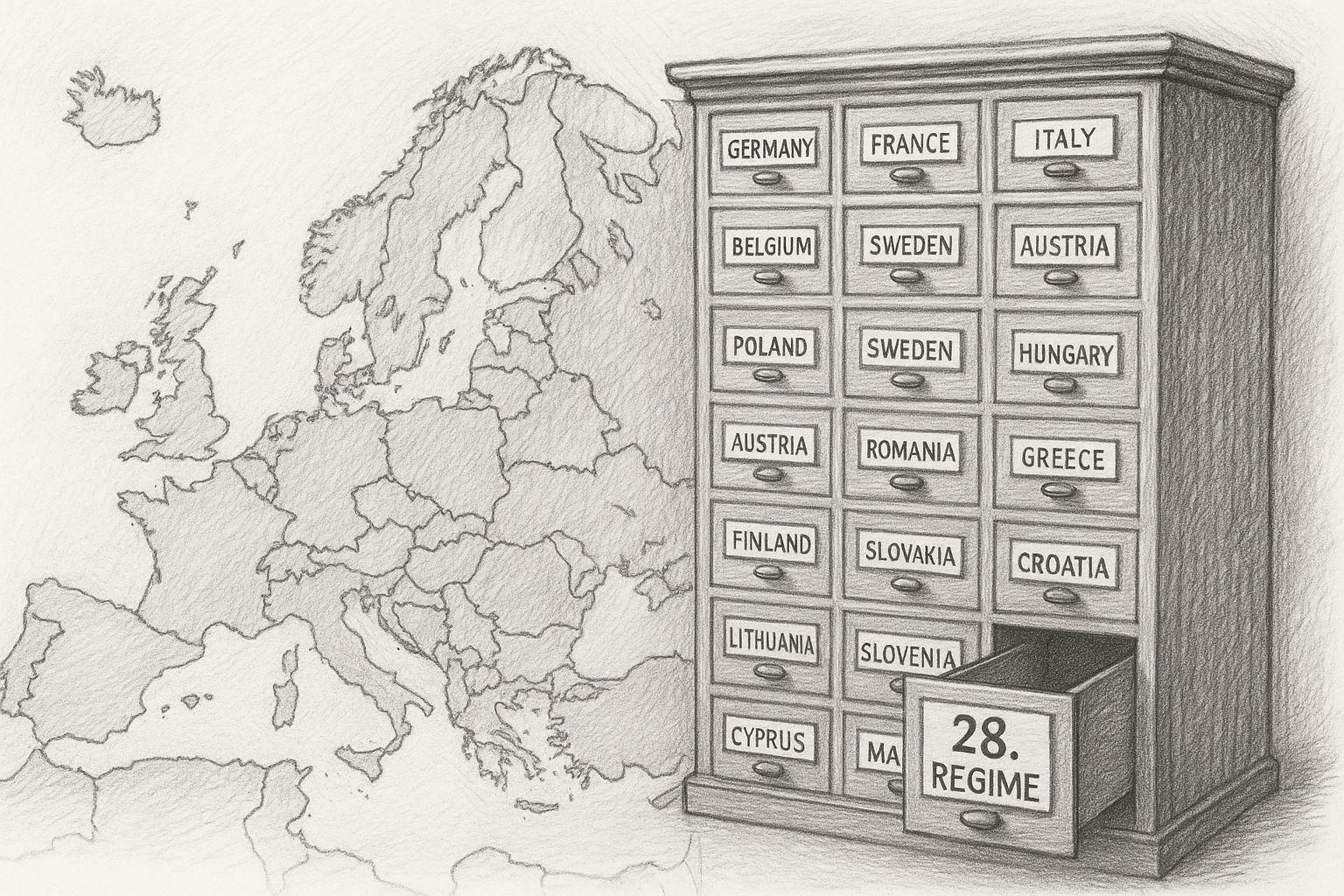
The Two Plus Four Treaty was never intended to be a mere formality. It was the prerequisite under international law for Germany to regain its full state sovereignty. Without it, reunification would not have happened in this form. It not only regulated borders, alliances and troop movements, but also the confidence of the victorious powers of the time in a predictable Germany in the future. This trust was not a matter of course - and it was linked to clear promises.
A contract from another time - with today's consequences
The treaty came about in a historic state of emergency: the end of the Cold War, the collapse of the Eastern Bloc, the withdrawal of Soviet troops from Central Europe. This situation opened a political window of opportunity that made it possible to overcome decades of bloc confrontation. The price for this was not subjugation, but mutual protection. Germany gained sovereignty - and in return committed itself to military restraint.
These self-restrictions included setting an upper limit for the armed forces, the renunciation of certain types of weapons and special regulations on the stationing of foreign troops on German soil. None of this was formulated casually, but was deliberately incorporated into a treaty that was intended to create international trust.
Today, this historical context is often ignored. Political debates tend to regard treaties as either untouchable or outdated. Both fall short. Treaties are an expression of their time - but they do not automatically lose their significance just because circumstances change. It is precisely then that it is worth taking a closer look.
Current debates, old foundations
The current discussion about an enlarged Bundeswehr, new military service models and extended NATO commitments inevitably raises questions that go beyond day-to-day politics. How binding are earlier commitments today? Where does legitimate adaptation end and creeping circumvention begin? And what role do legal subtleties play here, such as the distinction between „deployment“ and „rotation“ or between active troops and reserves?
These questions cannot be answered with buzzwords. They require classification, historical recourse and a sober consideration of what was actually agreed - and what was not. This is precisely where this article comes in.
Aim of this article
This text is neither an accusation nor a cry of alarm. It aims to understand, not to condemn. It is aimed at readers who do not need to have any prior legal knowledge, but who are prepared to engage in a differentiated analysis. The aim is to explain step by step,
- why the Two Plus Four Treaty was concluded,
- which central regulations it contains,
- how these regulations are interpreted today,
- and where real political tensions arise.
It will become clear that it is rarely about clear breaches of the law, but often about gray areas, political interpretations and the question of how much trust international agreements can still support when the balance of power shifts.
An invitation to sober reflection
Perhaps it is particularly helpful at a time of increasing tension to remember the quiet foundations of European post-war history. The Two Plus Four Treaty stands for a moment in which security was not defined by maximum strength, but by mutual limitation. Whether this way of thinking is still relevant today - or should be relevant again - is not a trivial question. But it can only be answered if you know what you are referring to.
This article invites you to do just that.
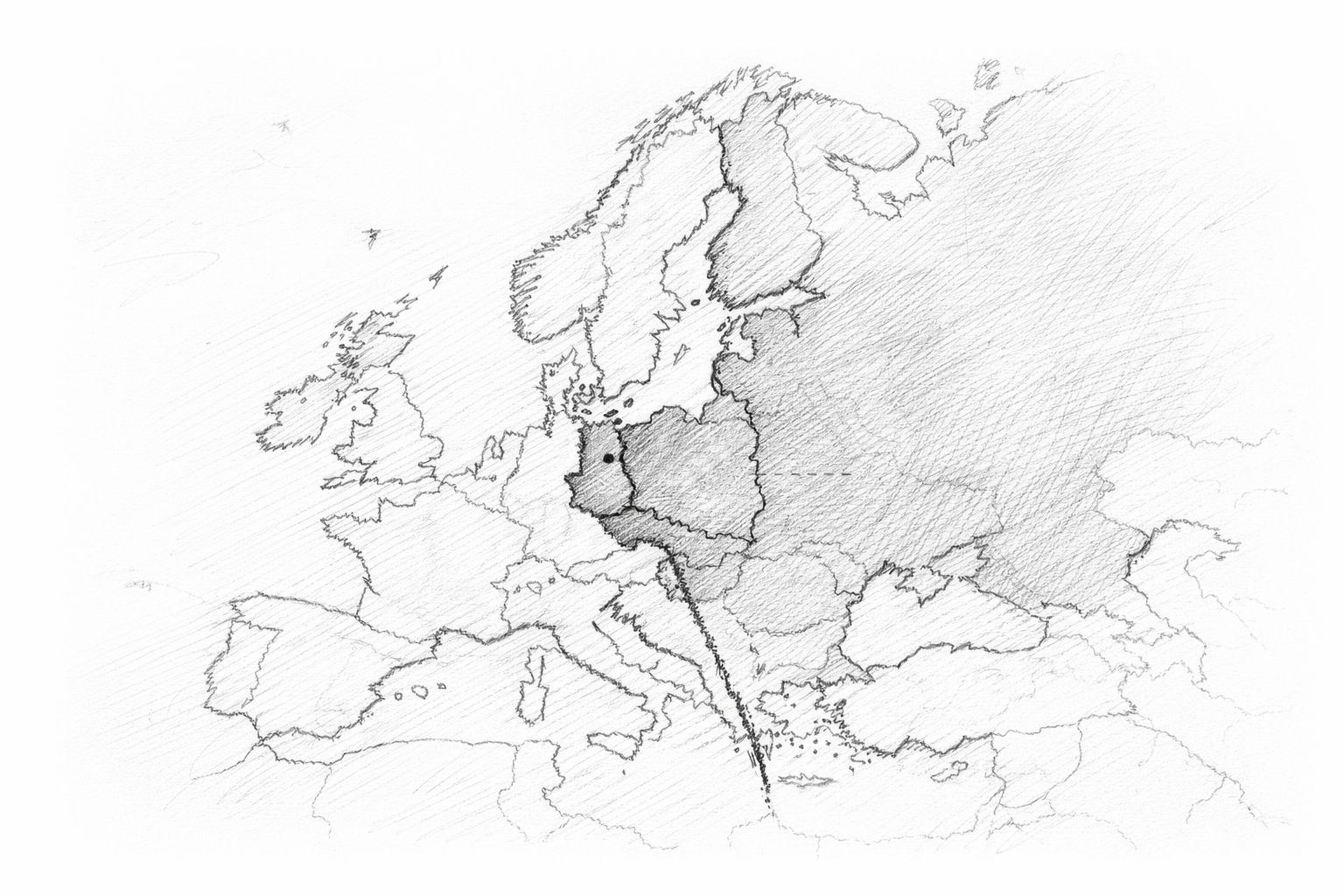
Why the Two Plus Four Treaty was needed at all
After the end of the Second World War, Germany was not a sovereign state in the traditional sense. There was neither a peace treaty nor a clear international legal order that permanently regulated the country's status. Instead, the four victorious powers - the USA, the Soviet Union, Great Britain and France - assumed extensive rights and responsibilities. Germany remained a political provisional arrangement with an open future.
This „German question“ was one of the central points of conflict in international politics for decades. It concerned not only borders and forms of government, but above all the fear that an economically strong Germany could once again become a military power. This fear had a deeper impact on the post-war order than is often realized today.
Two German states - but no final solution
The founding of the Federal Republic of Germany and the German Democratic Republic in 1949 created a de facto division. Politically, peace had returned, but not legally. Both states existed under reservation: the victorious powers reserved decisive rights for themselves, particularly with regard to Berlin, military issues and German unity as a whole.
This construction worked as long as the Cold War clearly defined the fronts. But it was never intended to be a permanent solution. Reunification remained the official goal - albeit under conditions that no one seriously spelled out. This only changed at the end of the 1980s.
The end of the Cold War as a historical window of opportunity
Political change in Eastern Europe, the Soviet Union's reform policy and the fall of the Berlin Wall opened up a window of opportunity that had previously been unthinkable. German unity suddenly became a realistic prospect. At the same time, a new uncertainty arose: how should a united Germany be embedded in the European and global order?
For the four victorious powers, it was clear that German unity was only acceptable if it was linked to clear commitments. These promises were intended to prevent old power constellations from returning unchecked. Reunification was therefore not a purely internal German project, but an internationally negotiated process.
Why a special contract was necessary
A classic peace treaty was out of the question. The historical interdependencies were too complex and the interests of the states involved too different. Instead, the so-called „two-plus-four format“ developed: two German states negotiated the external aspects of unity together with the four victorious powers.
The result was the Two Plus Four Treaty - no ordinary treaty, but a legal link between the post-war order and the new European reality. It was intended to bring closure to the past without repressing it.
A central motive of the treaty was trust. The victorious powers were prepared to grant Germany full sovereignty - but only on the condition that this Germany remained predictable. Military self-restraint was therefore not a concession out of weakness, but a deliberate political signal.
The logic behind this was simple: security should not be created through maximum armament, but through transparent limitation. At a time when millions of soldiers were stationed in Europe, restraint was seen as a stabilizing element. Germany accepted this role - also because it paved the way for unity.
The special role of military issues
Few areas were as sensitive as the military. The memory of two world wars was still present, especially in the negotiating partners east of the Elbe. Accordingly, questions of troop strength, types of weapons and stationing were regulated in detail.
These regulations were not a technical accessory, but the core of the trust mechanism. They signaled that the united Germany did not want to assume a role of supremacy, but rather to integrate itself into existing structures. For this very reason, the military commitments were inextricably linked to the regaining of sovereignty.
A treaty as a political conclusion
The post-war period formally ended with the Two Plus Four Treaty. The four-power rights expired, Berlin became part of a sovereign state and Germany was given full freedom of action in internal and external affairs. At the same time, the country voluntarily committed itself to clear limits on its actions.
This dual movement - freedom on the one hand, self-commitment on the other - is the historical core of the treaty. It is the expression of a political consensus that was considered historically reasonable at the time: a strong Germany embedded in rules.
Without this historical understanding, current debates can hardly be categorized. Those who view the treaty only as a formal document overlook its actual function. It was never intended as a short-term transitional solution, but as a long-term anchor of stability. This is precisely why it is worth looking back. Not out of nostalgia, but to understand why certain regulations exist - and the political ideas behind them. Only on this basis can we assess how viable they still are today.
The next chapter will therefore focus on what exactly was regulated in the contract - not in legal terms, but in a comprehensible form. Because only those who know the content can meaningfully discuss interpretation, adaptation or limits later on.
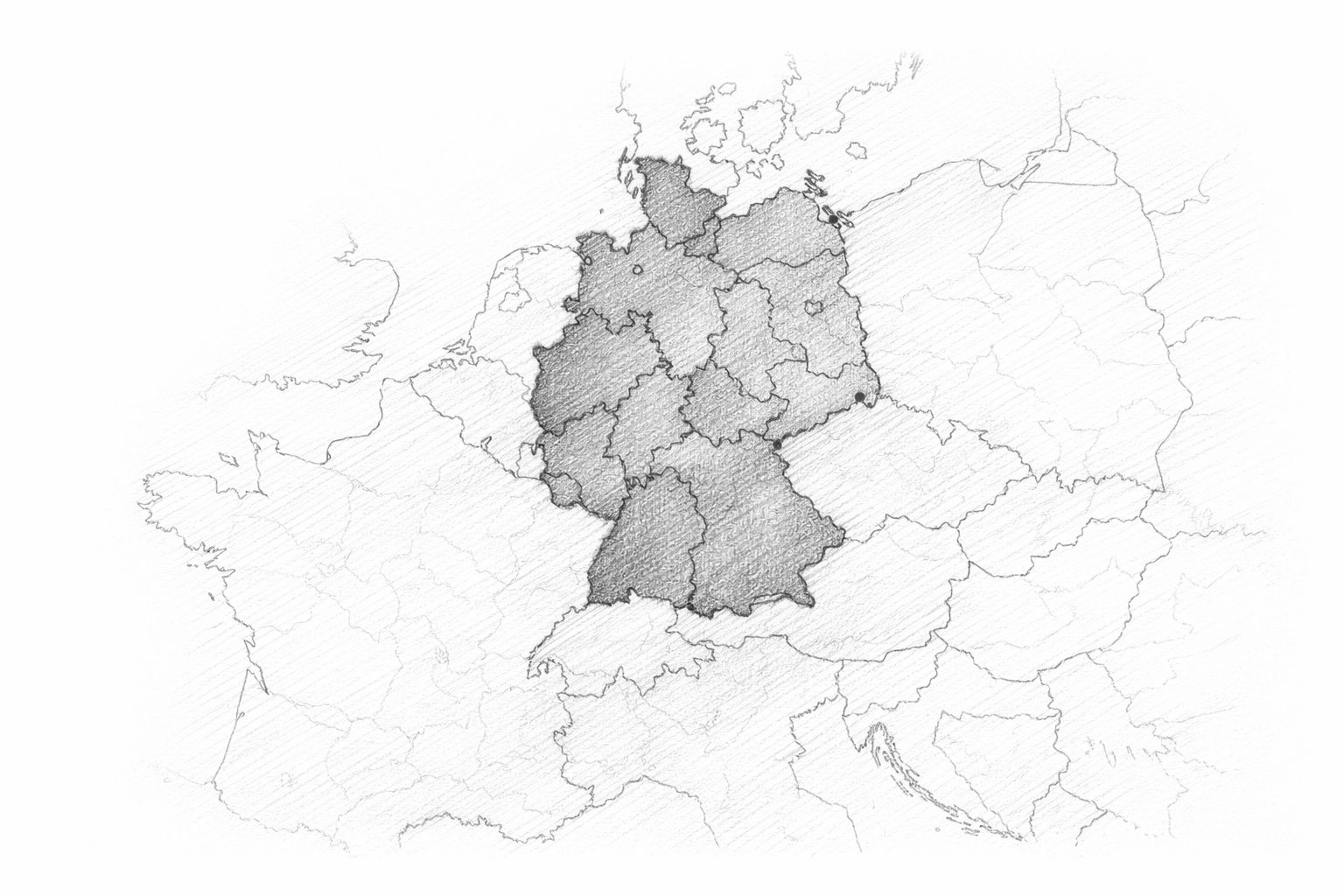
The treaty at a glance: What the Two Plus Four Treaty actually regulated
The Two Plus Four Treaty is not a loosely assembled bundle of political promises. It was conceived as an overall package in which individual provisions only unfold their full significance in context. Anyone who only refers to individual passages today - such as military figures or stationing issues - without considering the overall context runs the risk of missing the point of the treaty.
The aim was to secure German unity under international law and at the same time stabilize the European security order. The range of regulations is correspondingly broad.
Full sovereignty - with a clear end point for the post-war order
A central core of the treaty is the restoration of Germany's full state sovereignty. Its entry into force put an end to the special rights of the four victorious powers, particularly in relation to Berlin and security policy issues. Germany thus became legally equivalent to a „normal“ state - with its own freedom of decision in internal and external affairs.
This step also marked the formal conclusion of the post-war order. Decades of reservations, transitional solutions and special legal constructions came to an end. The treaty thus created clarity - not only for Germany, but for the whole of Europe.
Final limits - the deliberate renunciation of revision
Another cornerstone of the treaty is the recognition of the existing borders. Germany expressly confirmed that its territory consisted exclusively of the territory of the former Federal Republic, the GDR and the whole of Berlin. This was linked to the final renunciation of all further territorial claims.
This regulation was of enormous political significance. It signaled that the united Germany had no revisionist ambitions. For the neighboring states in the East in particular, this was a key prerequisite for agreeing to reunification. The border issue was thus deliberately closed once and for all.
Freedom of alliance - embedded, not isolated
The treaty made it clear that Germany had the right to decide freely on its membership of the alliance. This explicitly included membership of NATO. At the same time, this freedom of alliance was not intended as a blank check, but was embedded in the other obligations of the treaty.
Germany should be part of existing security structures - not their dominant actor. The basic logic of the treaty is also evident here: Integration instead of a special role, involvement instead of autonomy.
Military self-restraint as a signal of confidence
Particular attention was paid to the military regulations. Germany undertook to limit the strength of its armed forces and to dispense with certain types of weapons. These commitments were not technically motivated, but political. They were intended to create trust - especially among those states that were historically particularly sensitive to German military power.
It is important to note that these self-restrictions were accepted voluntarily. They were not imposed sanctions, but part of a political barter: sovereignty in exchange for predictability.
Renunciation of weapons of mass destruction
The treaty reaffirmed Germany's permanent renunciation of nuclear, biological and chemical weapons. This continued a line that had already been laid out politically, but was now clearly set out in international law.
This point is still relatively uncontroversial today. It underlines the fact that the treaty was not only aimed at short-term stability, but also at a long-term self-definition of Germany's security policy.
Deployment of foreign troops - a sensitive differentiation
One particularly sensitive area concerns the stationing of foreign armed forces on the territory of the former GDR. The treaty provided for clear restrictions here, which primarily took into account the security needs of the former Soviet Union.
These regulations were deliberately formulated precisely - and at the same time open enough not to completely block political developments. This is precisely where questions of interpretation arise to this day, for example in the distinction between permanent stationing, temporary residence and rotating contingents. These differentiations may be legally sound, but are not always politically convincing - an area of tension that will play a central role later on.
The withdrawal of Soviet troops - a prerequisite for unity
Another key point was the complete withdrawal of the Soviet armed forces from East Germany. This withdrawal was clearly regulated in terms of time and later fully implemented. Without this commitment, reunification would have been politically inconceivable.
At the same time, Germany pledged to support this process financially and logistically. This also shows: The treaty was not a unilateral dictate, but a complex network of mutual concessions.
Commitment to peace and political self-positioning
The treaty also contains a clear commitment to peace. Germany expressly declared that only peace should emanate from its soil. This formulation was more than symbolism. It served to position the united Germany in an international order that wanted to focus on cooperation rather than confrontation.
This voluntary commitment is less specific in legal terms than other regulations, but is no less important politically. It forms the normative framework within which the other provisions are to be read.
Why the individual points only make sense together
Looking at the Two Plus Four Treaty as a whole, it becomes clear that none of the provisions stand alone. Sovereignty, borders, non-alignment and military self-restraint form a balanced system. Whoever pulls at one point inevitably influences the stability of the whole.
This is precisely why it is problematic to discuss individual points in isolation without considering the historical and political context. The treaty lives from its inner logic - and this logic can only be understood through the interplay of its components.
The next chapter will therefore focus on one of the central points of contention: the upper limit set for the armed forces and its significance then and now.

Day of German Unity - tagesschau from October 3, 1990 | news program
The military ceiling: a figure with political weight
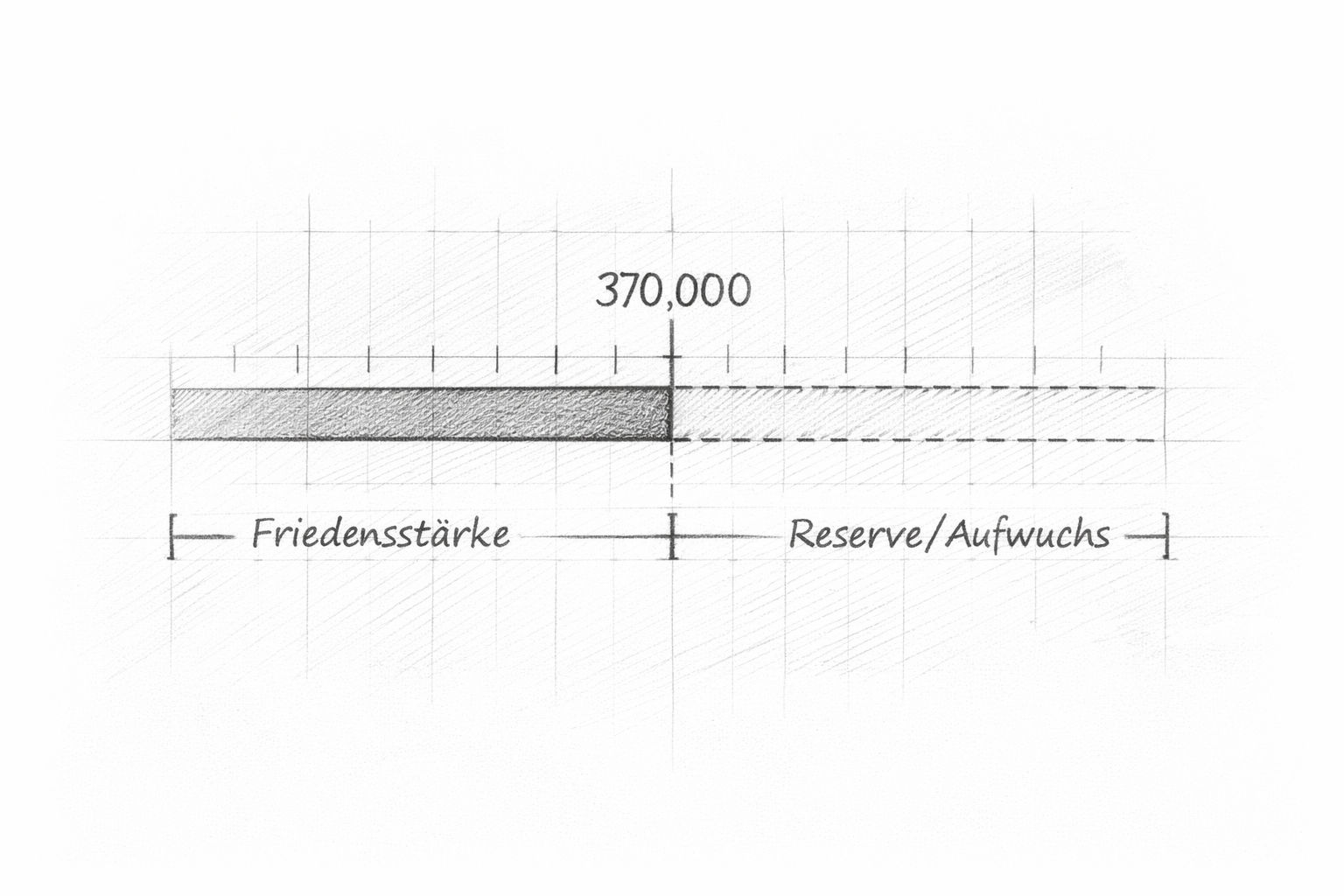
At the center of many of today's debates is a number that seems inconspicuous at first glance: 370,000. This refers to the upper limit for the strength of the German armed forces set out in the Two Plus Four Treaty. This figure often appears in isolation in political discussions - as a supposedly outdated parameter from another era. In fact, however, it is an expression of very concrete political thinking that went far beyond mere troop statistics.
The definition of this upper limit was not a product of chance or a minor accounting matter. It was the result of intensive negotiations and reflected the central need for security of the negotiating partners at the time: a united Germany should be strong enough to integrate itself - but not so strong that it rekindled old fears.
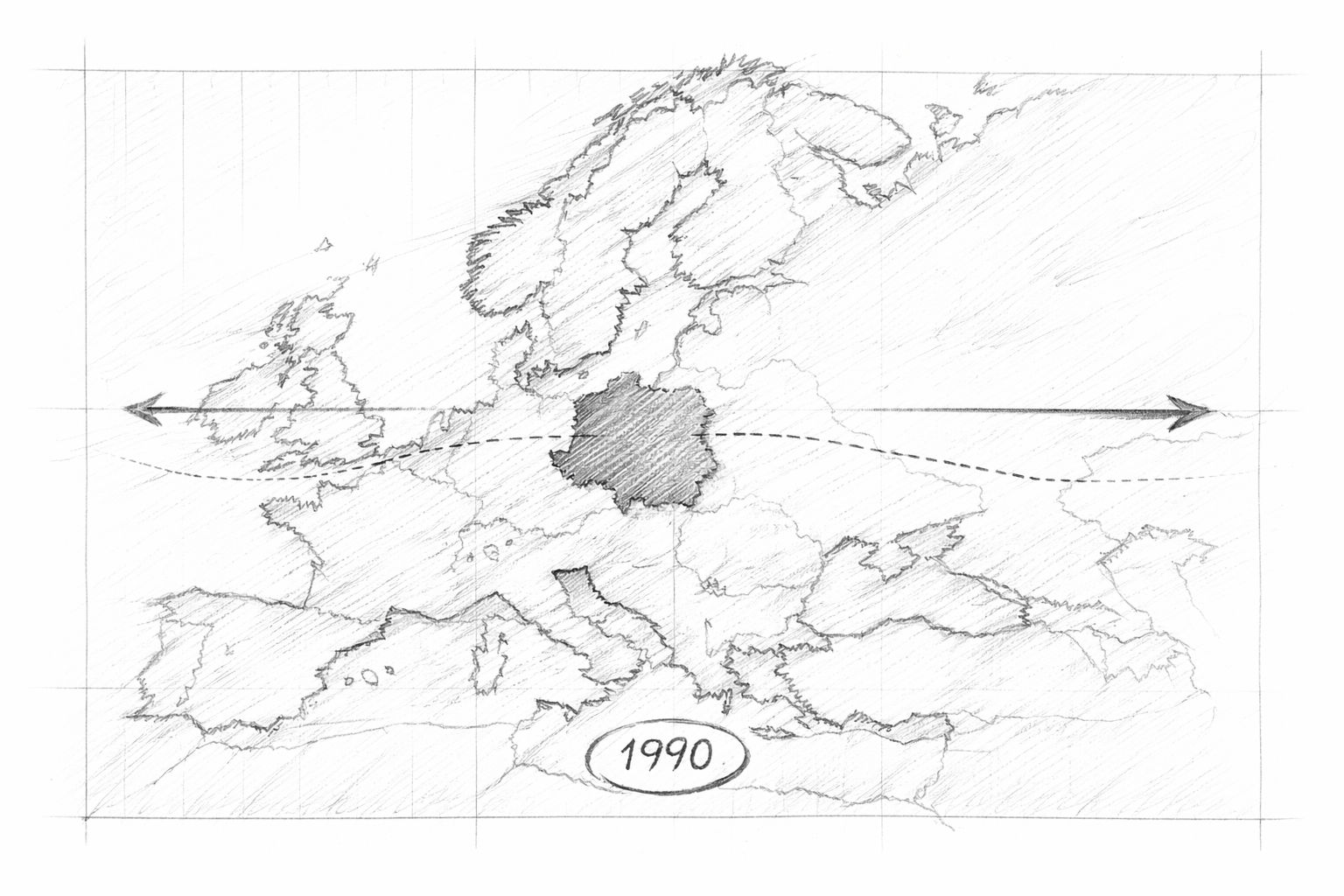
The security policy situation in 1990
In order to understand the significance of the 370,000 border, you have to consider the situation at the time. Europe was still characterized by millions of soldiers facing each other along the former bloc borders. The Bundeswehr of the old Federal Republic of Germany and the National People's Army of the GDR together had significantly higher personnel numbers than the later established upper limit.
The reduction to 370,000 therefore meant a substantial disarmament. It was part of a more comprehensive paradigm shift in security policy: away from mass armies and towards trust, transparency and mutual control. Germany deliberately took on a pioneering role in a phase in which many countries were still hesitant.
Peace strength instead of mobilization fantasy
The key question is what this figure refers to. The treaty refers to the strength of the armed forces in peacetime. What is meant is the active force, not a theoretical mobilization potential for defence. This distinction is crucial, but is often blurred in public debates.
The logic at the time was clear: as long as a state limits its military presence in everyday life, i.e. in peacetime, it signals restraint and predictability. What would happen in an extreme case of defense, on the other hand, was deliberately not specified down to the last detail. This also shows that the treaty was conceived politically, not technocratically.
Active troops and reserves - a deliberate separation
The concept of the reserve already existed in 1990. Nevertheless, it only played a subordinate role in determining the upper limit. The figure of 370,000 was aimed at the soldiers permanently on duty, i.e. the military presence that is permanently visible and politically perceived.
This separation was not a legal trick, but corresponded to the understanding of security at the time. A large reserve was not considered an immediate threat as long as it was not permanently activated. In other words: visibility creates impact - and it was precisely this impact that was to be limited.
Self-commitment as a prerequisite for sovereignty
The military ceiling was part of a larger political bargain. Germany received full sovereignty, including freedom of alliance and the ability to act internationally. In return, it bound itself. This self-commitment was voluntary - but it was the price of trust.
This point in particular is often overlooked today. The upper limit was not an imposed restriction, but a consciously made promise. It signalled: this Germany does not want to be a factor of uncertainty in security policy, but a stabilizing player.
Numbers are never neutral. They create expectations, set standards and structure debates. The 370,000 threshold fulfilled precisely this function. It gave Germany's neighbors - especially those with historically strained relationships - a concrete orientation.
The fact that this figure is perceived today as rigid or unrealistic says less about the treaty than about the change in political perception. Back then, it stood for relaxation and reliability. Today, it is increasingly interpreted as a restriction. This change in meaning is politically understandable, but not automatically legally or historically trivial.
The fine line between interpretation and circumvention
This is where the real tension begins. Treaties need to be interpreted because contexts change. At the same time, they lose their integrative power when interpretation becomes systematic circumvention. The military ceiling is a classic example of this fine line.
As long as the active peacetime strength remains well below the agreed limit, it can be argued that the spirit of the treaty is upheld. However, if an attempt is made to formally adhere to the limit while a permanent increase is actually taking place, this argument begins to falter. The difference between legal admissibility and political honesty then becomes apparent.
Historical reason instead of moral judgment
It is important to note that the treaty does not contain any moral judgment on military strength. It does not prohibit rearmament per se. It formulates a reasonable historical solution for a specific moment in history. This reason consisted of defining security not as a maximum, but as sufficient.
This way of thinking is under pressure today. Threat analyses have shifted, alliance obligations have grown, geopolitical certainties are crumbling. Nevertheless, the question remains whether every security policy adjustment necessarily requires a quantitative expansion - or whether other forms of stability are conceivable.
Why the 370,000 soldier limit is more than just a number
In the end, it can be said: The military ceiling in the Two Plus Four Treaty is not a technical detail from dusty files. It is a symbol of a way of thinking in terms of security policy that focused on self-limitation as a strength. Anyone discussing it today is therefore not only discussing troop levels, but also basic assumptions about security and trust.
The next chapter will address precisely this point: How are these historical commitments interpreted in the context of NATO, the East German question and modern deployment models - and where do new areas of tension arise?
Current survey on trust in politics
NATO, East Germany and the principle of non-deployment
Hardly any other area of the Two Plus Four Treaty remains as sensitive today as the issue of the stationing of foreign armed forces on the territory of the former GDR. This point was of particular importance in 1990 because it directly affected the security interests of the then Soviet Union. Accordingly, it was clearly stated that no foreign troops and no nuclear weapons were to be stationed there.
This regulation was not a technical addition, but part of the political trust mechanism that made German unification possible in the first place. It was intended to ensure that the geopolitical shift caused by reunification did not lead to an immediate military shift on the former eastern border of the Warsaw Pact.
Stationing does not equal presence
The wording of the treaty - and even more clearly in its later interpretation - already reveals a differentiation that is crucial for understanding: stationing means a permanent, structurally anchored presence of foreign armed forces. It is to be distinguished from temporary residence, exercises or transit.
This distinction is legally recognized and common in many international agreements. It allows states to cooperate militarily without formally violating stationing bans. At the same time, it is the point at which legal precision and political sentiment can diverge.
The rotation principle as a legal construct
In practice, the so-called rotation principle has become increasingly established in recent years. This means that foreign troop contingents are not left permanently in one place, but are replaced at regular intervals. Formally speaking, this is not a deployment, but a series of temporary stays.
Legally, this approach is difficult to challenge. Politically, however, some observers see it as circumvention by definition. In fact, the military reality - a continuous presence - hardly differs from a permanent deployment, even if it is labeled differently in legal terms. This is precisely where an area of tension arises that the treaty itself cannot explicitly resolve.

Rostock as a current example
The debate surrounding military facilities in Rostock is a good example of this problem. From the German and NATO perspective, these are structures that either do not fall under the deployment ban or are considered organizational, non-combatant facilities. From the Russian perspective, on the other hand, it is argued that the spirit of the treaty is being undermined here.
Both views follow their own internal logic. Legally, it can be argued that there is no prohibited deployment. Politically, it can also be argued that the de facto effect is relevant for the security situation - regardless of the formal categorization. The treaty itself does not provide a clear arbitration rule for this conflict.
The difference between right and effect
At this point, a fundamental problem of international treaties becomes apparent: they operate with terms that are legally precise but politically open to interpretation. What is legally permissible need not automatically be perceived as confidence-building. Conversely, politically comprehensible actions can be legally problematic.
The Two Plus Four Treaty relies heavily on the principle of mutual consideration. It depends on its contracting parties taking into account not only the letter but also the spirit of the agreement. If this balance is shifted, friction arises - even if no rule is formally violated.
NATO integration and treaty logic
Another aspect is Germany's integration into NATO. The treaty explicitly permitted membership of the alliance, but implicitly set a framework for this. NATO was not to become a projection surface for a new military front in East Germany. Here, too, the logic of the time is evident: integration yes, provocation no.
This logic has shifted as NATO's eastward expansion progresses and threat perceptions change. What used to be considered a sensitive border zone is now increasingly regarded as an equal part of the Alliance's territory. This shift can be explained politically, but raises questions about the long-term sustainability of the original commitments.
Legal cleanliness, political gray area
The use of differentiated terms - deployment, stay, rotation - is legally legitimate. It makes it possible to react to new security policy situations without openly breaking existing treaties. At the same time, it creates the impression that treaties can be formally complied with but their content undermined.
It is important to remain sober: The treaty does not prohibit cooperation, exercises or alliance integration. However, it does set limits where a permanent military presence could be perceived as destabilizing. Whether this limit is actually maintained by a rotating presence is less a legal than a political question.
International security policy does not only work through treaties, but also through perception. Even legally impeccable behavior can be seen as a provocation if it takes place in a climate of mistrust. Conversely, informal restraint can have a stabilizing effect, even if it is not prescribed by treaty.
The Two-plus-Four Treaty was created in a phase in which trust was to be built up. Its stationing regulations are an expression of this goal. If they are interpreted purely formally today, the treaty loses part of its original function - even if it remains legally valid.
Between adaptation and shifting boundaries
It would be too simplistic to describe all military activity in eastern Germany today as a breach of the treaty. It would also be too short-sighted to dismiss any criticism of it as unfounded. The treaty operates in a field of tension between historical self-commitment and current security logic.
This is precisely why it makes sense to name these questions openly. Not to apportion blame, but to understand where adaptation ends and border shifting begins. The Two Plus Four Treaty does not provide an automatic mechanism for this, but rather a yardstick - and this yardstick must be applied again and again.
The next chapter looks at the Bundeswehr's current plans: what goals is the Federal Government pursuing, how are they justified - and at what points do they affect the historical agreements of this treaty?




Today's Bundeswehr planning: figures, objectives and political justifications
The current debate on the future of the Bundeswehr marks a clear change of course. After decades of reduction, restructuring and shifting the focus to foreign missions, the idea of national and alliance defense is now once again at the heart of the debate. This shift is not an isolated German phenomenon, but part of a broader reassessment of the European security situation.
The German government believes that this change of course is necessary. The assumption that military deterrence has permanently lost its significance in Europe is considered outdated. Accordingly, the Bundeswehr is no longer thought of primarily as an operational army, but once again as a substantial armed force within the NATO alliance.
Concrete figures are at the center of the discussion. A long-term target of up to 460,000 soldiers is often communicated publicly. However, this figure is not made up of a uniform force, but of two different components: the active force and the reserve.
According to current plans, the active Bundeswehr is to be reduced in the medium term to around 250,000 to 260,000 soldiers increase. In addition, there is a significantly expanded Reserve, which in perspective orders of magnitude of 180,000 to 200,000 people should be reached. These figures are not formulated as a short-term goal, but as a development path over several years.
The decisive factor here is that the often quoted Total number of 460,000 does not describe permanently active personnel, but the combined availability in the event of tension or defense. This point is not always clearly communicated in the public debate, but is central to the legal and political classification.

The new military service as a structural foundation
A key instrument for achieving these targets is the so-called new military service. It is to take effect from 2026 and is based on the mandatory registration of young age groups, combined with a basically voluntary service model. The aim is to obtain an overview of available personnel at an early stage and to systematically build up the reserve.
The German government justifies this step with the realization that a purely volunteer army is reaching its structural limits. At the same time, it emphasizes that this is not a return to traditional compulsory military service. Rather, the aim is to create a flexible system that can be expanded if necessary.
This construction shows how much security policy thinking has changed: Away from permanent mass presence, towards available potential. The Bundeswehr should not be permanently deployed to the maximum, but should be able to grow quickly in an emergency.
NATO planning goals as a key driver
A central justification for the increase in personnel is NATO's planning goals. Germany has made a commitment within the alliance to provide certain military capabilities - not only technically, but also in terms of personnel. These commitments have grown significantly in recent years.
In particular, Germany's role as the logistical and operational backbone in Europe means that additional forces appear necessary. The German government argues that Germany can only fulfill its alliance responsibility if it has sufficient personnel - both in the active forces and in the reserves.
This argument is consistent from an alliance perspective. However, it shifts the focus from national self-restraints to collective requirements. This is precisely where the friction with historical agreements such as the Two Plus Four Treaty begins.
Security policy narratives and political communication
It is striking how strongly today's Bundeswehr planning is accompanied by communication. Terms such as „war capability“, „deterrence capability“ and „endurance capability“ characterize the discourse. They signal determination, but can also reinforce fears - especially in a country with a pronounced skepticism towards military power.
The German government is trying to master this balancing act. On the one hand, it emphasizes that rearmament is meant to be defensive. On the other hand, it clearly states the need to take military capabilities seriously again. This dual message is politically understandable, but communicatively challenging.
Active troops and reserves as a political dividing line
The distinction between active troops and reserves plays a central role, not only militarily but also legally. As long as the active peacetime force remains well below previous ceilings, it can be argued that existing obligations are being met. The massive expansion of the reserve is presented as unproblematic, as it is not permanently present.
This argument follows an established logic. However, it raises questions as soon as reserve structures are organized in such a way that they are de facto constantly available and regularly called up. Then the line between reserve and active troops becomes blurred - at least in terms of perception.
Financial and organizational dimensions
In addition to personnel numbers, financial aspects also play a role. The expansion of the Bundeswehr is associated with considerable costs, not only for equipment, but also for training, infrastructure and long-term supply. The German government sees this expenditure as a necessary investment in security.
At the same time, it is clear that organization and administration must keep pace with political demands. An increase in personnel alone does not create operational capability. Without functioning structures, there is a risk that numbers will impress politically but remain ineffective militarily.
Between adaptation and reinterpretation
In summary, it can be said that today's Bundeswehr planning is the result of a changed security policy situation and international obligations. It deliberately operates within the legal scope for interpretation left by historical treaties. At the same time, it shifts the practical significance of these treaties.
Whether this shift is seen as a legitimate adaptation or a creeping reinterpretation depends less on the wording than on the political context. This is precisely the explosive nature of the current debate.
The next chapter will therefore focus on the legal and political assessment of these developments: Where does interpretation end, where does circumvention begin - and what standards can be applied to objectively determine this boundary?



Collision or a matter of interpretation? Legal and political perspectives
International treaties are not rigid structures. They have to be interpreted because political, technical and security policy conditions change. This also applies to the Two Plus Four Treaty. However, there is a boundary between legitimate interpretation and de facto circumvention that is not clearly marked in legal terms, but is negotiated politically.
This is precisely why the contract is a suitable touchstone: it shows how resilient voluntary commitments are when interests shift - and how quickly interpretation can become a habit.
A diplomatic tour de force with open flanks
In retrospect, the Two Plus Four Treaty is often regarded as a diplomatic masterpiece that paved the way for German unity. But a closer look shows: Until shortly before it was signed, central issues were by no means conclusively clarified. National interests, historical experiences and security policy expectations clashed in the negotiations. The atmosphere was characterized by caution, mutual mistrust, but also by the common will to create a stable European order. In the discussion, it becomes clear that reunification was not a foregone conclusion, but the result of intensive discussions, personal responsibility and political willingness to compromise - under great temporal and historical pressure.

the discussion: 30 years of German unity - The two-plus-four treaty | phoenix
Tanja Samrotzki discusses these and other topics in this video with the following guests: Thomas de Maizière (CDU, former Federal Minister of the Interior and Federal Chancellor), Irmgard Schwaetzer (FDP, Minister of State at the Federal Foreign Office from 1987 - 1991), Prof. Irina Scherbakowa (Germanist and cultural scientist), John Kornblum (former US Ambassador to Germany), Anne-Marie Descotes (French Ambassador to Germany), Anne McElvoy (British journalist), Markus Meckel (Foreign Minister of the GDR in 1990)
The legal view: Wording, systematics, purpose
From a legal perspective, contracts are traditionally interpreted on the basis of three criteria: Wording, systematics and purpose. In the case of the two-plus-four treaty, this methodology leads to a differentiated picture.
The wording contains clear statements on certain points, such as the military ceiling or the stationing of foreign troops in East Germany. At the same time, it deliberately leaves room for maneuver, for example in the distinction between active troops and reserves or between permanent deployment and temporary stay.
The system of the treaty shows that these regulations are part of a larger balance. Military self-restraint is not isolated, but is directly linked to sovereignty and freedom of alliance. Finally, the purpose - confidence-building and stabilization - is the yardstick by which any interpretation must be measured.
Political practice: when interpretation becomes routine
In political practice, the purpose of a contract often takes a back seat to short-term requirements. Decisions are made that can be formally justified without sufficient consideration of their long-term impact. This is precisely where the tension begins.
The repeated reference to fine legal distinctions - for example between rotation and deployment or between peacetime strength and growth capability - can give the impression that treaties are primarily used as a limitation technology: One sticks to the minimum that is legally required and at the same time tests how far the limit can be pushed.
This practice is not unusual. It is part of international politics. It becomes problematic when it undermines the trust that the treaty was originally intended to create.
Being right versus being right
A central misunderstanding in many debates is to equate legal correctness with political wisdom. A state can be legally in the right and still lose trust politically. Conversely, political consideration may not be legally binding, but can have a stabilizing effect.
The Two Plus Four Treaty was concluded in a phase in which trust was to be actively built up. Its provisions are therefore not only legal boundary markers, but also political signals. Anyone who only reads them formally is ignoring this second level.
The gray area between reserve and permanent presence
This problem is particularly evident in the current role of the reserves. As long as reservists are only called up in exceptional cases, the separation from the active forces remains plausible. However, if structures are created that imply permanent operational readiness, the external effect changes.
Legally, it can be argued that the formal criteria are still fulfilled. Politically, however, the impression can arise that a de facto increase is taking place. This discrepancy between law and perception is a classic risk of international security architecture.
Historical ties versus current threat analysis
Another point of conflict lies in the changed threat analysis. The treaty was created in a phase of optimism about détente. Today, uncertainty, fragmentation and competition for power dominate. From this perspective, historical self-restraints appear inappropriate or naive to some.
This assessment is understandable - but it is no substitute for dealing with existing obligations. Treaties do not automatically lose their validity just because the situation deteriorates. They must either be renegotiated or consciously carried forward politically. Both are challenging, but more honest than creeping adjustments.
The price of creeping reinterpretation
If a contract is continually reinterpreted without openly addressing this, long-term costs arise. Other contracting parties feel ignored, trust erodes and the contract loses its guiding function. In the end, what remains is a document that is formally valid, but has hardly any practical steering effect.
This development can be dangerous, especially in the area of security policy. Contracts not only serve to regulate, but also to ensure predictability. If this predictability is lost, the risk of miscalculations increases.
Standards for a responsible interpretation
A responsible interpretation of international treaties therefore does not only follow minimum legal requirements. It also asks:
- Does the action still correspond to the original purpose of the agreement?
- Is the external impact taken into account?
- Is the adjustment communicated transparently?
These questions are uncomfortable because they demand political responsibility. That is precisely why they are necessary.
Between legal cleanliness and political honesty
The Two Plus Four Treaty does not force us to adopt a particular security policy line. However, it does force us to disclose our reasons. Anyone who deviates from its premises should not conceal this by using terminology, but should explain it politically.
The real question is therefore not whether today's measures are „just about“ legally permissible. It is whether they are in line with the spirit of an agreement that was aimed at trust, limitation and long-term stability.
The next chapter looks at the Russian perspective: how is the treaty perceived there today, how is it used politically or instrumentalized rhetorically - and what can be deduced from this for understanding the current tensions?
The Russian perspective: Treaty, protest and political interpretation
In the Russian perception, the Two Plus Four Treaty has never faded into a mere historical document. Rather, it is seen as a reference point against which security policy developments in Europe are measured. This is less about detailed legal issues and more about the overall political impact of what has happened since 1990. From a Russian perspective, the treaty stands for a promise of restraint - and for expectations that have been increasingly disappointed from Moscow's perspective.
This perception is not homogeneous. It is fed by official statements, parliamentary rhetoric, military analyses and media commentaries. What they all have in common, however, is a basic tone: the treaty is used as a yardstick when it comes to criticizing Western actions as contradictory or opportunistic.
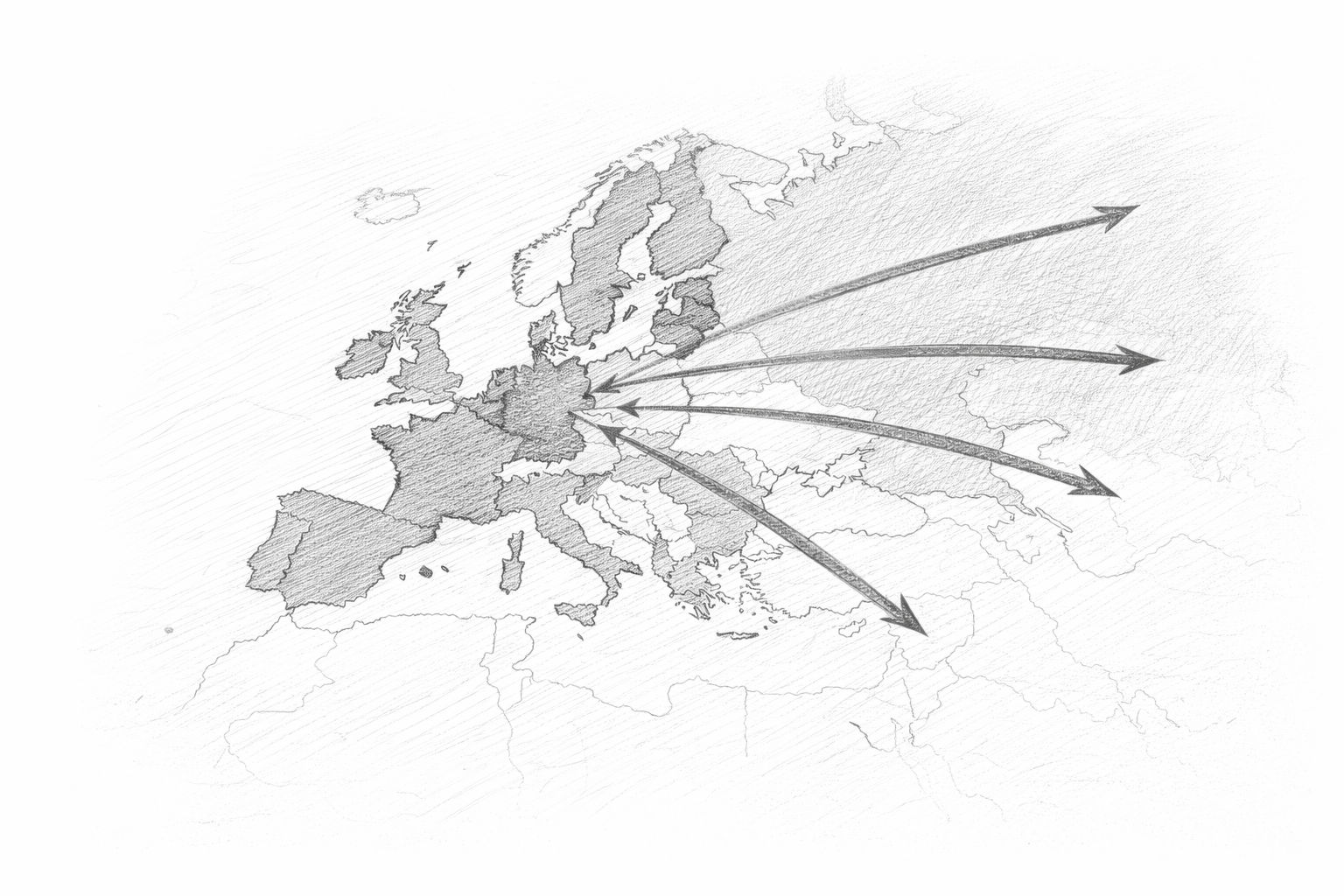
Official protests and diplomatic signals
This perspective is particularly visible where Russia reacts officially. In recent years, Moscow has repeatedly lodged diplomatic protests when military structures in Germany - particularly in the east - have been expanded or reorganized. Reference is regularly made to the deployment regulations of the treaty.
Such protests are not proof of a formal breach of the treaty; they are political signals. Russia is thus making it clear that it interprets the development not only in military terms, but also in terms of international law - and that it continues to regard the treaty as relevant. These signals are not only directed at Germany, but at the Western alliance as a whole.
Rhetoric, demands and the role of parliament
In addition to the executive branch, the Russian parliament, the State Duma, also plays a role in the debate. In recent years, individual MPs and committees have repeatedly called for a political reassessment of the treaty or even its termination. Such demands have been publicly documented, but have not been translated into formal resolutions.
This differentiation is important: the existence of political demands does not mean that the Russian government has initiated a concrete termination process. Rather, these voices show that the treaty is seen as a negotiable political instrument - at least rhetorically. It is used to exert pressure, claim sovereignty of interpretation or delegitimize Western actions.
Legal arguments and political impact
From the Russian perspective, it is often argued that although the West is formally complying with the treaty, it is undermining its content. The rotation principle and the differentiation of military presence in particular are cited as evidence of this. This argument follows its own logic: the decisive factor is not what something is legally called, but what military effect it has.
The treaty is read less as a precise legal framework and more as a political commitment. If this commitment - according to the Russian narrative - is relativized by technical definitions, it loses its meaning. It is not necessary to share this view in order to recognize its political effectiveness.
A personal approach to Gorbachev's era
In her lecture, Gabriele Krone-Schmalz traces the political and human lines associated with Mikhail Gorbachev. She describes disarmament, perestroika and glasnost not just as buzzwords, but as experiences that changed entire societies. In doing so, she combines historical classification with her own encounters and conversations. The focus is less on later conflicts than on the question of how much courage, uncertainty and hope existed side by side in those years - and why this period still has an impact today.

Mikhail Gorbachev On the 90th birthday of a phenomenon - Gabriele Krone-Schmalz
The contract as part of a larger narrative
In the Russian public sphere, the Two Plus Four Treaty is also embedded in a larger narrative about the post-Cold War period. This narrative emphasizes that Russia made concessions - such as the withdrawal of troops - without receiving a lasting security architecture in return that took sufficient account of Russian interests.
Whether this narrative is historically complete or selective is another question. What is decisive is that it guides political action. In this context, the treaty is used as a symbol for a missed or broken basis of trust.
No formal break, but strategic openness
It is striking that Russia has not yet taken any formal steps to terminate the treaty, despite harsh rhetoric. This suggests that the treaty is still regarded as a useful reference system. A formal break would remove this reference - and thus also a political argumentation tool.
Instead, the treaty remains in a kind of strategic limbo: it is criticized, interpreted, instrumentalized, but not abandoned. This attitude makes it possible to react flexibly to developments without committing oneself.
Perception and escalation dynamics
The Russian perspective illustrates the extent to which international security policy is shaped by perception. Even measures that appear defensive and compliant from a Western perspective can be read as a provocation on the other side. The Two Plus Four Treaty acts as a frame of reference that structures these perceptions.
This dynamic harbors risks. If treaties are primarily used as rhetorical weapons, they lose their stabilizing function. At the same time, the Russian attitude shows that old agreements do not simply disappear - they remain part of the political memory.
Game theory as the key to understanding geopolitical shifts
 For a quarter of a century, it has been possible to observe how international decisions have increasingly developed along the lines of strategic expectations. Who acts when, who reacts to what - and what signals are sent in the process?
The Looking back to the early 2000s shows that many of today's tensions did not arise suddenly, but have grown step by step. The game theory perspective helps to soberly organize these dynamics. It asks less about guilt than about logic - and thus opens up a perspective that is also remarkably informative for understanding the European security order after 1990.
Between instrumentalization and memory
It would be short-sighted to dismiss the Russian reference to the treaty solely as instrumentalization. It would also be naïve to see it as purely legally motivated. It moves between two poles: a reminder of binding commitments and political use in a changed situation.
It is precisely this ambivalence that continues to make the treaty relevant. It is not only the subject of historical research, but also part of current conflicts of power and interpretation.
The concluding chapter therefore takes a broader view: Why old treaties are regaining importance in a fragmented world - and what the Two Plus Four Treaty teaches us about dealing with self-commitment, trust and political responsibility.
Why old contracts are becoming relevant again today
International treaties are more than just legal texts. They are the memory of political decisions, condensed experiences from crises, wars and negotiations. This is precisely why they do not automatically lose their significance with the changing times. On the contrary: in phases of growing uncertainty, they often come to the fore again.
The Two Plus Four Treaty is one such document. It was created in an exceptional historical situation, but its basic assumptions - self-limitation, predictability, mutual trust - are timeless. The fact that it is being discussed again today is not a sign of a backward-looking approach, but a symptom of the erosion of familiar security mechanisms.

The end of taking things for granted
For many years, the European security order was considered stable. Arms limitation, confidence-building measures and multilateral agreements formed a framework that was hardly questioned. This self-evidence has disappeared. Agreements have been terminated, suspended or de facto invalidated.
In this situation, old treaties become visible again. They remind us that security is not only created through military strength, but also through mutual certainty of expectations. Where this is lacking, the risk of miscalculations increases - even with defensive measures.
Self-commitment as a political strength
A central motif of the Two Plus Four Treaty was the idea that self-commitment is not a sign of weakness, but of political maturity. Germany voluntarily committed itself to limitations in order to create trust. This attitude stood in contrast to a purely power-political logic.
Today, self-commitment is often perceived as an obstacle. Contracts are seen as a restriction on freedom of action. But it is precisely this restriction that can have a stabilizing effect. It creates predictability - for partners and potential opponents alike.
The danger of creeping devaluation
If treaties are not openly questioned but tacitly circumvented, they lose their regulatory function. Terms are stretched, exceptions become the rule, and what remains at the end is a document that is formally valid but no longer has any practical steering effect.
This creeping devaluation is more dangerous than an open dismissal. It undermines trust without creating a new order. The Two Plus Four Treaty is an example of how quickly political practice can move away from historically established voluntary commitments - often without a conscious decision.
Reminder of alternative security logics
The treaty also reminds us that there are other approaches to security policy. In the phase of its creation, the focus was deliberately on de-escalation. Limitation was seen as stabilizing, not risky. This way of thinking is unusual today, but not obsolete.
Old treaties are therefore not only legal points of reference, but also intellectual resources. They open up perspectives beyond short-term threat logics and invite us to think about security in a more holistic way again.
Responsibility towards history
Those who have benefited from historical agreements also bear responsibility for how they are handled. The Two Plus Four Treaty gave Germany full sovereignty in a sensitive international environment. This fact does not justify eternal immutability, but a special duty of care.
In this context, responsibility means making adjustments transparent, openly stating interests and not treating interpretations as mere technology. This is the only way to maintain political credibility.
Contracts as a benchmark, not a shackle
Old contracts do not have to be dogmatically defended. They are not an end in themselves. But they can serve as a benchmark: for political honesty, for dealing with power and for the question of how much trust an order can sustain.
The Two-plus-Four Treaty does not force us to make a specific security policy decision. It does, however, force us to declare ourselves. This obligation to declare is perhaps its most important current function.
In a time of loud debates, quick decisions and moral escalation, looking at a treaty from 1990 seems almost anachronistic. In fact, it is highly topical. It is a reminder that sustainable security does not come from maximization, but from balance.
Old contracts are not relics. They are touchstones. The Two Plus Four Treaty is one of them - and that is precisely why it is worth not just quoting it, but understanding it.
Current survey on a possible case of tension in Germany
An open contract in an open future
The Two Plus Four Treaty is one of those political documents that are rarely quoted as long as they work. It only comes back into focus when tensions arise. This is exactly what we are currently seeing. Not because it is suddenly being called into question, but because the security policy framework in Europe has changed noticeably.
This treaty is being discussed again in Russia today. Not always sober, not always legally precise, but visible and with political weight. This fact alone makes it relevant. Because it shows that old agreements do not simply disappear just because they have been removed from the public consciousness in the West. They remain part of the political memory - and therefore also part of current lines of interpretation and conflict.
This article is therefore not a plea for standstill. Nor is it an attempt to delegitimize current security policy decisions. Above all, it wants to do one thing: put things into perspective. It aims to explain why the Two Plus Four Treaty came into being, what it regulated and why its logic is not arbitrarily interchangeable. Anyone talking about its significance today should know what they are referring to.
One thing is clear: no one knows how the European security order will develop. Threat perceptions are changing, alliances are adapting, political realities are shifting. Treaties cannot and must not be frozen. They must be translated into new contexts. But this translation should take place consciously - not insidiously, not tacitly and not solely through legal fine-tuning.
The Two Plus Four Treaty was an expression of a way of thinking that did not define security unilaterally. It was based on the attempt to reconcile different interests instead of playing them off against each other. This was precisely its stabilizing effect. Germany gained sovereignty, its neighbors gained predictability, and Europe gained a security order based on balance.
It is clear that this order is under pressure today. This makes it all the more important to remember its foundations. Not out of nostalgia, but out of responsibility. Security is not created by strength alone, but by comprehensibility - by knowing where boundaries run and why they were drawn.
Perhaps this is where the Two Plus Four Treaty is really relevant: It is a reminder that sustainable security in Europe was always possible when interests were taken seriously, differences were recognized and solutions were shared. It is impossible to predict whether this approach will continue to work in the future. But it remains a benchmark against which political decisions can be measured.
This text does not claim to provide definitive answers. It is intended as an overview, an invitation to put things into perspective and an impetus to rethink things that are taken for granted. Because before deciding what to do next, it makes sense to understand how you got here.
Sources and further information
- Two-plus-four treaty (DE-Wikipedia): Overview of the central provisions of the 1990 treaty - including sovereignty, troop limitation, renunciation of NBC weapons, withdrawal of Soviet troops and stationing issues.
- Treaty on the Final Settlement with Respect to Germany (EN-Wikipedia): English presentation of the treaty („Treaty on the Final Settlement with Respect to Germany“) with context on its creation, signing, entry into force and its main contents.
- Bundestag - Two-plus-Four Treaty of 12.09.1990: Official presentation in the archive of the German Bundestag with legal information on stationing, troop numbers and NATO reference.
- Federal Ministry of Defense - Background article on the treaty: Overview text from the Federal Ministry of Defense on the treaty as a key document for German unity.
- Federal Agency for Civic Education - Background to the treaty: Analysis and summary of the main contents of the treaty, including sovereignty, borders, troop strength and renunciation of weapons of mass destruction, including excerpts from the preamble and articles.
- LeMO - German Historical Museum / Two-plus-Four Treaty: Historical classification of the negotiations and treaty contents with mention of conditions and results such as stationing requirements and limits.
- Residence and withdrawal agreement: Supplementary source on the practical implementation of the Soviet troop withdrawal, which is important in the context of the treaty.
- History of the Bundeswehr (DE-Wikipedia): Overview of the reduction of the Bundeswehr to 370,000 soldiers as part of the Two Plus Four Treaty and its effect on the Bundeswehr structure.
- BPB - Signing of the contract (Kurz-Knapp): Short daily dose summary of the signing with focus on troop withdrawal, border recognition and NATO free alliance choice.
- Two-plus-four treaty on deutschland.de: Compact presentation of the purpose of the treaty and its historical significance on the official information page.
- Federal Foreign Office - Treaty text and status list: Access to original treaty texts in various formats (PDF) via the Federal Foreign Office.
- Federal Government - Chronicle: Signing of the Two Plus Four Treaty: Official chronicle on the political embedding and the difficult negotiation points with NATO and Soviet representatives.
- Two-plus-four treaty - Legal Wiki: Legal explanation confirming that the treaty remains legally binding and regulates Germany's special position.

Frequently asked questions
- What is the Two Plus Four Treaty actually - and why is it considered the basis of German unity?
The Two Plus Four Treaty is the foundation of German reunification under international law. It was concluded in 1990 between the two German states and the four victorious powers of the Second World War. It was through this treaty that Germany regained its full sovereignty. It not only regulated formal issues, but also created an entire security policy order in which the united Germany was embedded. - Is the Two Plus Four Treaty still valid today or is it just a historical document?
The contract is still valid. It was not limited in time and was not terminated. Even if many of its provisions are rarely mentioned today, they are still relevant under international law. Its importance is particularly evident when security policy tensions arise and earlier commitments are recalled. - Why was a military ceiling for Germany set in the treaty in the first place?
The upper limit was part of a political trust mechanism. After two world wars, the negotiating partners had a strong need for predictability. The limitation of the armed forces was intended to show that the united Germany was not striving for military supremacy, but was consciously binding itself. - Does the upper limit of 370,000 soldiers refer to the entire Bundeswehr or only to the active troops?
According to the predominant legal interpretation, the number refers to the active peacetime strength of the Bundeswehr. Reservists who are not permanently called up are not automatically included. It is precisely this distinction that plays a central role in today's debates. - Is a Bundeswehr with a total of 460,000 soldiers automatically a breach of contract?
Not necessarily. The figure mentioned is made up of active troops and reserves. As long as the active peacetime force remains below the agreed upper limit, it can be argued that the treaty is formally complied with. Politically, however, this development can be viewed critically. - Why is the stationing of foreign troops in East Germany so sensitively regulated?
This regulation was a key condition for the then Soviet Union's agreement to German unification. It was intended to prevent the military situation on Russia's western border from shifting abruptly as a result of reunification. This is why this point is still a particularly contentious issue today. - What is the difference between deployment and rotation of foreign troops?
Deployment means a permanent, structurally anchored presence. Rotation describes temporary stays in which troops are regularly exchanged. Legally, this distinction is relevant, but politically it often seems artificial, as the military presence can in fact be permanent. - Why do critics see the rotation principle as a bypass?
Because it formally allows what in fact comes close to a permanent presence. Even if individual units change, the military structure remains in place. Critics see this as adherence to the letter while at the same time undermining the spirit of the treaty. - Has Germany broken the Two Plus Four Treaty so far?
A clear, formal breach of contract has not been established. Rather, the debates revolve around interpretation, political impact and trust. It is precisely these gray areas that make the treaty relevant again today. - Why does the treaty play such an important role in the Russian argument?
In Russia, the treaty is seen as a benchmark for Western commitments after the Cold War. It serves as a reference for criticizing military developments politically. This is less about legal subtleties than about the perceived overall impact of Western actions. - Has Russia already terminated the treaty or taken concrete steps to do so?
No. There are public demands from individual politicians and harsh rhetorical criticism, but no documented formal decision to terminate the agreement. Russia is apparently deliberately keeping the treaty in abeyance so that it can continue to use it politically. - Why is an open termination of the treaty possibly unattractive for Russia?
Termination would remove the treaty as a basis for argumentation. As long as it exists, Russia can refer to it and measure Western actions against it. Politically, this reference is often more effective than a formal breach. - Why are old contracts so important again today?
Because many newer arms and security agreements have been dropped or weakened. Old treaties are reminiscent of alternative security logics that rely on limitation, transparency and trust. In uncertain times, such standards are once again gaining in importance. - Are treaties such as the Two Plus Four Treaty an obstacle to a necessary security policy?
Not necessarily. They do not compel inaction, but justification. Anyone who wants to deviate from their premises must explain this politically. It is precisely this obligation to explain that can lead to more responsible decisions. - Why is it not enough to just formally adhere to the contract?
Because international security is not only based on law, but also on perception. Measures that are legally permissible can be perceived politically as a provocation. Treaties only have a stabilizing effect if their spirit is also taken into account. - What does the article mean by „creeping devaluation“ of the contract?
This refers to a practice in which a contract is formally valid but loses its de facto significance through continued interpretation and exceptions. This is more dangerous than an open termination because trust is lost without a new order being created. - Why was this article written just now?
Because the Two Plus Four Treaty is once again being openly discussed in Russia and is hardly known in Germany. This article aims to provide an overview, explain the background and show what the current debates are actually about - beyond buzzwords. - What is the key takeaway from this article?
That security in Europe has historically been stable when different interests have been taken into account and translated into binding rules. The Two Plus Four Treaty stands for this approach. Whether it will continue to work in the future remains to be seen - but it remains a useful benchmark for classifying today's decisions.