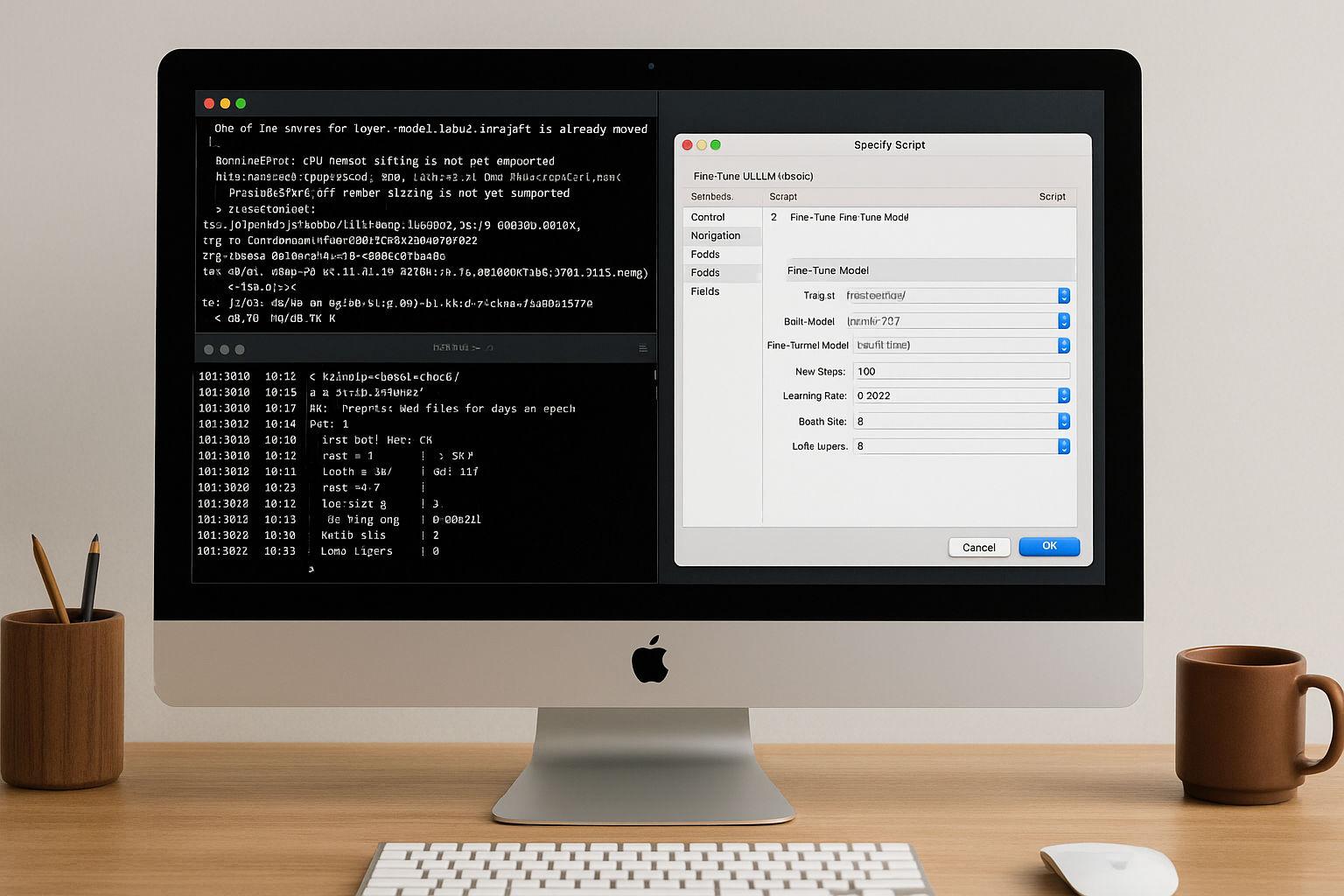
The world of artificial intelligence is on the move. New models, new methods and, above all, new possibilities are emerging on an almost weekly basis - and yet one thing remains constant: not every technical innovation automatically leads to a better everyday life. Many things remain experimental, complex or simply too costly for productive use. This is particularly evident in the so-called fine-tuning of large language models - a method of specializing generative AI to its own content, terms and tonalities.
I have accompanied this process intensively over the last few months - first in the classic form, with Python, terminal, error messages and nerve-wracking setup loops. And then: with FileMaker 2025. A step that surprised me - because it wasn't loud, but clear. And because it showed that there is another way.
In a detailed Technical article on gofilemaker.de I have documented precisely this change: the transition from open, flexible but unstable PEFT-LoRA training (e.g. with Axolotl, LLaMA-Factory or kohya_ss) to the integrated solution from Claris - via script, locally, traceable.

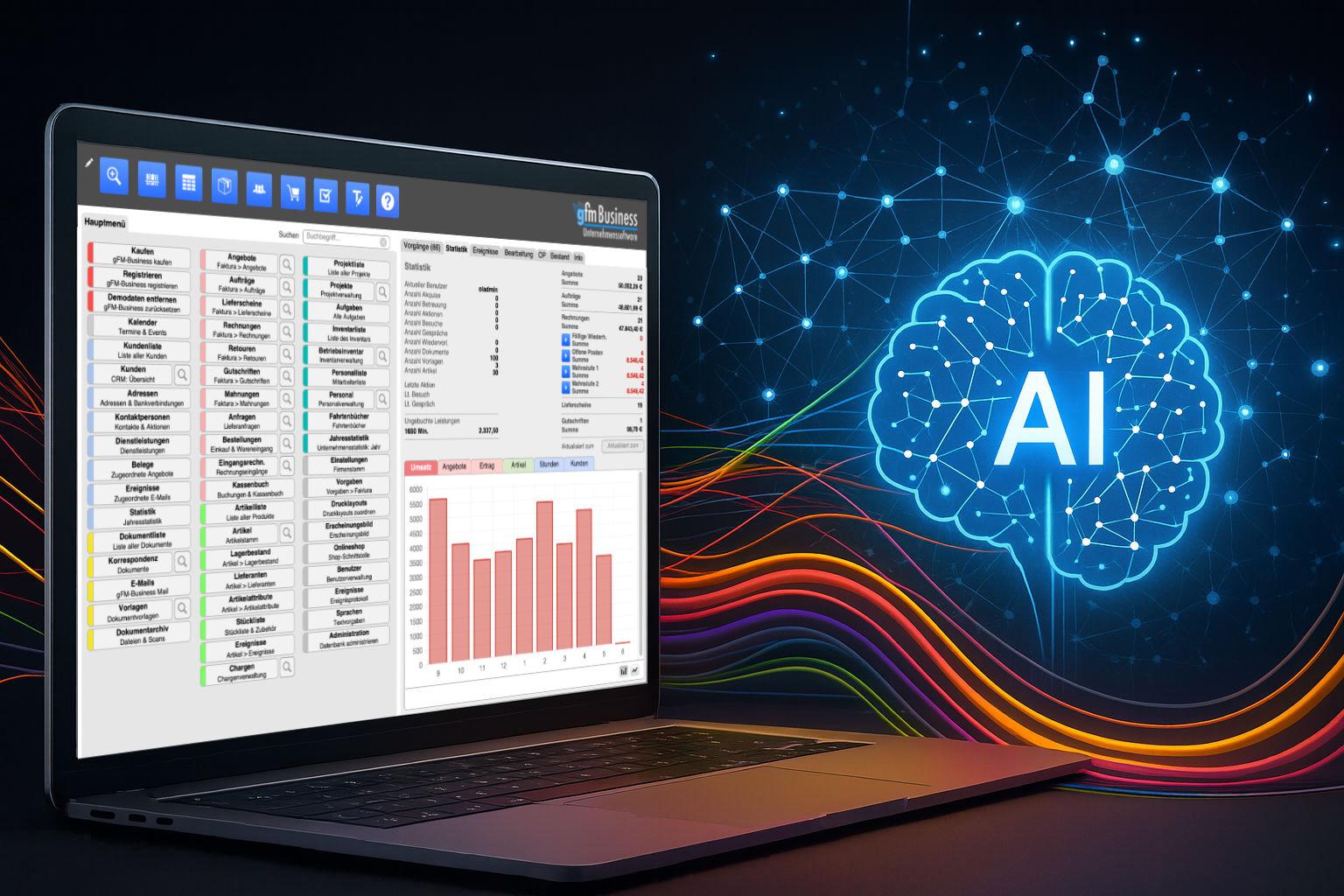
What is LoRA anyway - and why is it so important?
LoRA stands for Low-Rank Adaptation. Behind this technical-sounding term lies a simple but powerful principle: instead of retraining an entire AI model, only very specific parts are adapted - using so-called adapter weights, which are inserted and trained in a targeted manner. In recent years, this method has established itself as the gold standard for domain-specific fine-tuning - because it requires little computing power and still delivers excellent results.
The classic approach requires an arsenal of tools:
- a functioning Python environment,
- suitable CUDA and PyTorch versions,
- a training engine like Axolotl or kohya_ss,
- GPU resources to handle the whole thing,
- and last but not least: Patience. A lot of patience.
Because between YAML files, tokenizer conflicts and format conversions (from safetensors to GGUF to MLX and back), it often takes days before a usable result is achieved. It works - but it's not something to do on the side.
And then came FileMaker 2025.
With the introduction of the AI Model Server and a new script step called Fine-Tune Model, Claris is bringing this method into an environment in which it would not have been expected: a relational database.
What sounds unusual at first makes a lot of sense on closer inspection. Because what does good fine-tuning need?
- Structured data,
- a stable environment,
- clear parameters,
- and a defined application context.
FileMaker offers all of this - which is why the integration of LoRA in this environment does not look like a foreign body, but rather like a logical extension.

Training without a terminal - but not without control
In my article, I describe in detail what the training process in FileMaker feels like:
- Data input directly from existing tables or JSONL files,
- Hyperparameters such as learning rate or layer depth can be controlled directly in the script,
- Complete local operation on Apple-Silicon - without cloud, without upload,
- and above all: results that are reproducible and suitable for everyday use.
Of course there are limits. FileMaker does not (yet) allow multi-model serving, layer freeze strategies or export to other formats such as GGUF or ONNX. It is not a research tool, but a tool for clear use cases - such as adapting language models to company-specific terms, responses, product descriptions or internal dialog structures.
And therein lies the charm: it works. Stable. Repeatable. And faster than I ever thought possible.
Current survey on the future of FileMaker and AI
Who should take a closer look - and why?
This article is aimed at anyone who not only understands AI, but wants to use it:
- Managing Directorwho want to harmonize data protection and efficiency.
- Developerwho do not want to start from scratch every time.
- Strategistswho realize that AI can not only be "bought in" externally, but can also be trained internally.
In FileMaker 2025, the fine-tuning of language models will become part of the workflow - not as a foreign body, but as a real tool. This is a quiet but lasting change that shows how far we have come in the suitability of AI for everyday use.
To the article:
From terminal to script: FileMaker 2025 makes LoRA fine-tuning suitable for everyday use
In the next article, I will describe how a language model can be trained in practice with FileMaker and will also provide a corresponding example script.