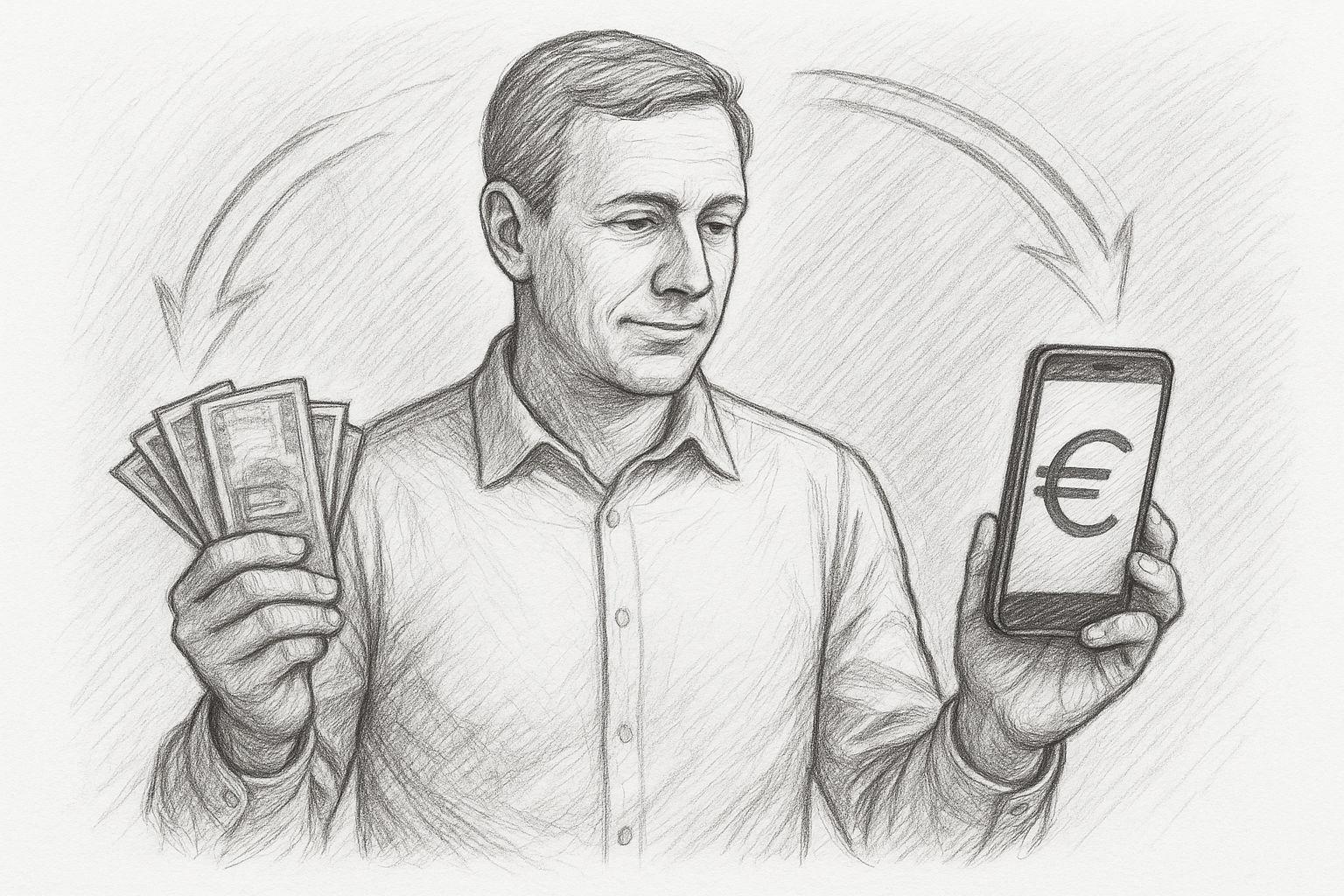
Public money is more than just a medium of exchange - it is a symbol of state sovereignty, a guarantor of economic order and a means for all citizens to participate freely in economic life. For centuries, cash was an expression of this freedom: anonymous, unconditionally usable, valid everywhere. With the gradual replacement of cash by digital payment methods, a central question is now being posed anew: who will control the money of the future - and under what conditions?
Europe
Europe is more than just a political institution or a geographical area. It is a historically evolved area of thought, culture and experience in which questions of democracy, freedom, the rule of law and coexistence are constantly being raised anew. The keyword „Europe“ therefore brings together contributions that deal with European ideas, developments and conflicts - from European politics and legislation to institutional decisions of the EU and biographical portraits of people who have shaped, criticized or developed Europe. The aim is not to reduce Europe to buzzwords or daily political events, but to make connections visible, classify backgrounds and juxtapose different perspectives. Europe does not appear here as a finished project, but as an open process that needs to be understood, discussed and shaped.