When you hear the word „cancel culture“ today, you quickly think of universities, social networks or prominent individuals who come under pressure for making a thoughtless statement. Originally, the phenomenon was actually very much located in the cultural and academic sphere. It was about boycotts, protests and symbolic distancing. But something has shifted in recent years. The dynamic has grown, it has become more serious - and above all: it has become more political.
Today, we are not just observing individual debates about lectures or Twitter posts. We see athletes who are not allowed to compete. Artists whose programs are being cancelled. Professors coming under massive pressure. Military officers whose statements make international waves within hours. States that keep lists. Entry bans. Sanctions that affect not just institutions, but specific individuals.
This is more than a marginal cultural phenomenon. It has become a political mechanism.


Latest news on the topic
22.04.2026A current lecture by the association „Lawyers for Enlightenment“ takes up the case of journalist Thomas Röper, who is on an EU sanctions list, and places it in a wider legal and political context. The focus is on the question of the conditions under which the European Union can impose sanctions on individuals and the specific consequences of such measures for those affected. In particular, it discusses the extent to which freedom of expression and freedom of the press are affected by such decisions and which legal bases are relevant for this.

EU sanctions journalists? The case that is hardly ever talked about | Lecture & Analysis | Lawyers for Enlightenment e.V.
The presentation presents a critical perspective on the existing regulations and raises fundamental questions about the balance between security policy interests and individual liberties. At the same time, it should be noted that the classification is based on a specific legal and political context and does not cover all aspects of the debate. The article is therefore primarily suitable as a complementary voice within a broader consideration of the topic.
10.04.2026: A German court has apparently ruled in favor of the Berlin journalist Hüseyin Doğru. „Serious doubts“ about the account freeze of his wife. This brings into focus a measure that was imposed as part of EU sanctions against Doğru and also has a massive impact on his family. While the account blocks against him were previously confirmed, the question now arises, at least in part, as to the legal basis for interventions against third parties. The background to this is that the authorities suspect that Doğru could indirectly dispose of his wife's account. However, the court signals that this assumption may not be entirely tenable. The case illustrates the far-reaching consequences of sanctions in the everyday lives of those affected and at the same time raises fundamental questions about proportionality and legal boundaries - especially when family members are affected without being sanctioned themselves.
29.03.2026A recent report sheds light on the consequences of sanctions against a Berlin journalist, the effects of which are now also affecting his family. Following the blocking of his account, it now appears that limited financial means of his wife, which further exacerbates the family's economic situation. According to the account, this threatens an existential emergency, as basic expenses such as rent, electricity or food can barely be covered. The central question is how far government measures can go in the context of sanctions - especially if they indirectly affect family members. While authorities point to the enforcement of sanctions and possible risks of circumvention, critics see this as a problematic extension with considerable social consequences. The case is an example of the tension between geopolitical measures and their concrete impact on the everyday lives of affected families.

Death By Sanctions: EU Destroys German Journalist in Germany | Neutrality Studies
Further interesting background information on this topic is also provided by the Foreign Office in the statements made by the Federal Foreign Office at the government press conference on 02.07.2025.
25.03.2026The EU Commission is currently attracting criticism because, according to reports, it is exerting pressure on the Venice Biennale, to exclude Russian artists. The background to this is Russia's planned return to the international art exhibition. The EU is apparently holding out the prospect of withdrawing funding if Russia is allowed to participate. Critics see this as a direct infringement of artistic freedom, as an international exhibition deliberately wanted to include artists from various conflict regions. Particularly explosive: the measure is justified with political sanctions, but actually concerns cultural cooperation. The event has triggered a debate about whether political conflicts are increasingly being enforced in art and culture.
In addition, a German court ordered the account freeze against the Berlin-based Journalists Hüseyin Doğru who is on an EU sanctions list. The application to relax the restrictions was rejected, as the court ruled that there was no entitlement to unrestricted access to the account. This significantly worsens the financial situation for the person concerned, as basic payments remain blocked. This now faces homelessness, according to the Berliner Zeitung. The background to this are EU sanctions due to alleged disinformation, which have already led to extensive restrictions on its ability to operate economically. The case once again raises questions about proportionality and legal protection for affected individuals.
Why „cancel culture“ is more than just social media today
It would be easy to dismiss the whole thing as an overheated online culture. As a storm in a digital teacup. As an outrage economy of platforms.
But if you take a closer look, you will see that the mechanics have long since left the digital realm. Today, decisions are made in ministries, international sports associations, universities and military command structures. They affect real careers, real CVs, real freedom of movement.
A pattern is repeated: a statement, an affiliation, an origin or a political classification becomes an opportunity to create distance - sometimes out of conviction, sometimes out of caution, sometimes out of political calculation. And this often happens in a climate in which differentiation is perceived as a risk.
The war in Ukraine has significantly accelerated this dynamic. In times of geopolitical confrontation, the moral temperature rises. Fronts harden. Shades of gray disappear. Anyone who calls for nuances runs the risk of being misunderstood or misclassified.
It is this context that leads me to view the topic not as an isolated phenomenon, but as part of a larger development.
Many levels, one pattern
What particularly concerns me about the current situation is not so much the individual case. Individual staff changes, individual rejections or individual sanctions can almost always be justified.
It becomes interesting where patterns emerge. If similar dynamics occur at different levels - in sport, in culture, at universities, in the military and at state level - then a more detailed analysis is worthwhile.
- In the Sport For example, we see how national affiliation suddenly becomes a central criterion again. Athletes compete under a neutral flag or are excluded.
- In the Culture The question of whether works can be separated from the biography or nationality of their authors is being discussed.
- To Universities There are more and more cases in which scientific statements are evaluated not only from a technical but also from a moral point of view.
- In the security policy area statements on international interests come under particular pressure.
- And on state level lists, entry bans and sanction mechanisms are created that affect not only abstract institutions but also specific individuals.
Each of these areas can be explained separately. Taken together, however, they form a picture that can no longer be ignored.
Between responsibility and overcontrol
Of course, not every measure is automatically a „cancel culture“. States are allowed to sanction. Institutions are allowed to position themselves. Universities are allowed to set standards. Military leadership must take political lines into account. A democratic society does not live from everything remaining without consequences. But this is where the real question begins:
Where does legitimate responsibility end - and where does a dynamic begin in which security, morality and reputation protection become more important than open debate?
In times of crisis, institutions tend to minimize risks. A misleading statement can create foreign policy tensions. An appearance can trigger diplomatic irritation. A staff retention can be seen as sending the wrong signal.
From an institutional perspective, decisions are then often rational. But if this rationality is systematically directed against ambivalence, a climate is created in which caution becomes more important than discourse.
The moral state of emergency
Wars and geopolitical conflicts create moral tension. In such phases, loyalty is demanded more visibly. Not officially, but atmospherically. A social framework of expectations is created in which restraint or differentiation can easily be misunderstood as taking sides.
This is not a new phenomenon. History has known many phases in which social unity was valued more highly than dissent. What is new, however, is the speed with which such dynamics take effect today. Digital communication spaces accelerate outrage. The media pick up on statements in real time. Political reactions take place within hours. Institutions react preventively.
What would previously have been an internal discussion process is now being negotiated in public - under high pressure.
Reason for and aim of this article
This article is not an attempt to condemn individual decisions across the board. Nor is it a plea for arbitrariness.
It is an attempt to view a development in a structured way.
If similar patterns occur in sport, culture, science, the military and foreign policy, then this deserves systematic analysis.
I am particularly interested in the question of whether we are dealing with a temporary crisis reaction - or a permanent shift in our debate culture.
- Is „cancel culture“ just a political slogan?
- Or does it actually describe a new form of social and institutional governance?
- And above all: how much contradiction can a liberal democracy withstand in times of external threat?
Before we can answer these questions, we must first establish order - conceptually, structurally and analytically. Because only if we make a clear distinction between legitimate sanctions, institutional caution and moral overriding can we assess what is really happening here.
In the next chapter, we will therefore clarify the term and differentiate between the three levels on which this dynamic plays out. Only then will it become clear whether we are dealing with isolated reactions or an underlying pattern.
The „serious situation“ and the logic of outrage
In an interview with Hotel Matze, Richard David Precht describes the current German situation as „serious“. This refers less to a single event than to a structural climate: fear is becoming the guiding principle of political communication, permanent surveys are shortening strategic horizons, media logic favors escalation instead of differentiation. Precht speaks of narrow scopes of power and an eroded promise of advancement that increases social insecurity. Outrage thrives particularly well in such an environment - it is quick, clear and emotionally connectable. Complex solutions, on the other hand, are slow and unattractive.

Richard David Precht on outrage culture, freedom of expression and the German depression | Hotel Matze
This diagnosis complements Cancel Culture's analysis: where fear and constant excitement dominate, tolerance for ambivalence shrinks. Debates become morally charged instead of structural. The question is then no longer just who is right - but who sends the stronger signal.
Definition: Three levels of exclusion
Before we look at individual cases, we need to organize the term. „Cancel culture“ has become a buzzword that can mean almost anything and nothing. For some, it describes a real threat to freedom of expression. For others, it is a rhetorical tool to delegitimize legitimate criticism.
Both fall short. If we seriously want to understand what has changed, we need to sharpen the concept analytically. A clear distinction between the levels at which exclusion or sanctioning takes place is crucial. Because not all criticism is cancel culture - and not every sanction is illegitimate.
I therefore propose a tripartite division: a social, an institutional and a state level. Only when we differentiate between these levels can we see where real problem areas arise.
1) The social level: boycott, pressure and moral distancing
The lowest level, but often the loudest in society, is the social level. This involves public criticism, calls for boycotts, waves of outrage, disinvitations and symbolic distancing. This form of exclusion is not new. Societies have always reacted when statements or actions are perceived as problematic.
What is new, however, is the speed and reach. Social networks make it possible to build up enormous pressure within hours. A single sentence can be spread hundreds of thousands of times in a very short time. The media pick up on it, comment on it and amplify it.
What is important is that at this level, it is first and foremost an expression of social opinion-forming. Criticism is legitimate. Boycotting is a legitimate means in a free society. It becomes problematic when the dynamic takes on a life of its own.
- When people no longer argue, but label.
- When moral classification becomes more important than objective debate.
- When fear of public reaction leads to debates no longer being held at all.
This level is atmospherically effective. It creates pressure of expectation. It is often the starting point for further steps - but it is not yet a formal sanction.
2) The institutional level: posts, contracts, careers
The second level is much more important: the institutional level. This is where organizations react. Universities, companies, associations, cultural institutions, media houses, military structures.
In contrast to the social level, this is about concrete consequences: resignation, dismissal, contract termination, non-renewal, exclusion from official programs.
Institutions act not only morally, but also strategically. They have to protect their reputation, take political conditions into account and ensure internal stability. Sensitivity increases in times of crisis. From an organization's point of view, it may seem rational to end a conflict at an early stage before it escalates.
But this is where the fine line begins. Is a decision made for objective reasons - such as professional incompetence or actual breach of duty? Or does it primarily serve to avoid public irritation?
This distinction is often difficult to recognize from the outside. Particularly in the case of management positions, there are legal instruments that make it possible to remove people from office or retire them without detailed public justification. Formally, this is legal and intended.
But when such decisions occur more frequently in politically heated times, the impression of a corridor of opinion is created. Whether this impression is justified or not, its effect is real. Institutional decisions are the point at which social pressure becomes actual career consequences.
3) The state level: sanctions and list policy
The third level is the strongest - and at the same time the least discussed in the context of Cancel Culture. Here, it is no longer a university or an association that acts, but the state.
Sanctions, entry bans, asset freezes, listings as an „undesirable organization“ - these are instruments of foreign and security policy. These measures are not primarily moral reactions, but political tools. They serve to exert pressure, act as a deterrent or send a signal.
Legally, they usually operate within a clearly defined framework. Politically, they are part of conflicts of power and interest. But for the people concerned, it makes no difference whether they are excluded out of moral indignation or for strategic reasons of state.
- When a scientist is no longer allowed to travel.
- If an artist does not receive a visa.
- When a politician ends up on a sanctions list.
Then political confrontation becomes a very personal matter. This is where the discussion shifts from freedom of expression to freedom of movement. From debate to diplomatic leverage.
The state level is not a classic „cancel culture“ in the original sense. But it follows similar logics of exclusion to some extent - only with incomparably greater power.
Why the levels must not be mixed
A common mistake in the debate is to lump all three levels together. Those who label all public criticism as cancel culture relativize real institutional or state interventions. Conversely, those who portray every institutional decision as a mere organizational measure ignore possible structural patterns. Analytical cleanliness is therefore crucial.
- Social outrage is part of democratic opinion-forming.
- Institutional decisions are part of organizational responsibility.
- State sanctions are part of geopolitical strategies.
We can only assess whether a measure is proportionate once we have clearly identified the level at which we are operating. The real question is not: „Is there a cancel culture - yes or no?“ - The real question is: At what level is what kind of pressure being exerted?
and how transparent, comprehensible and proportionate is this?
This distinction will be crucial in the rest of the article. Because only if we bring structure to the discussion can we recognize whether we are dealing with isolated reactions or a systematic shift in our debate spaces.
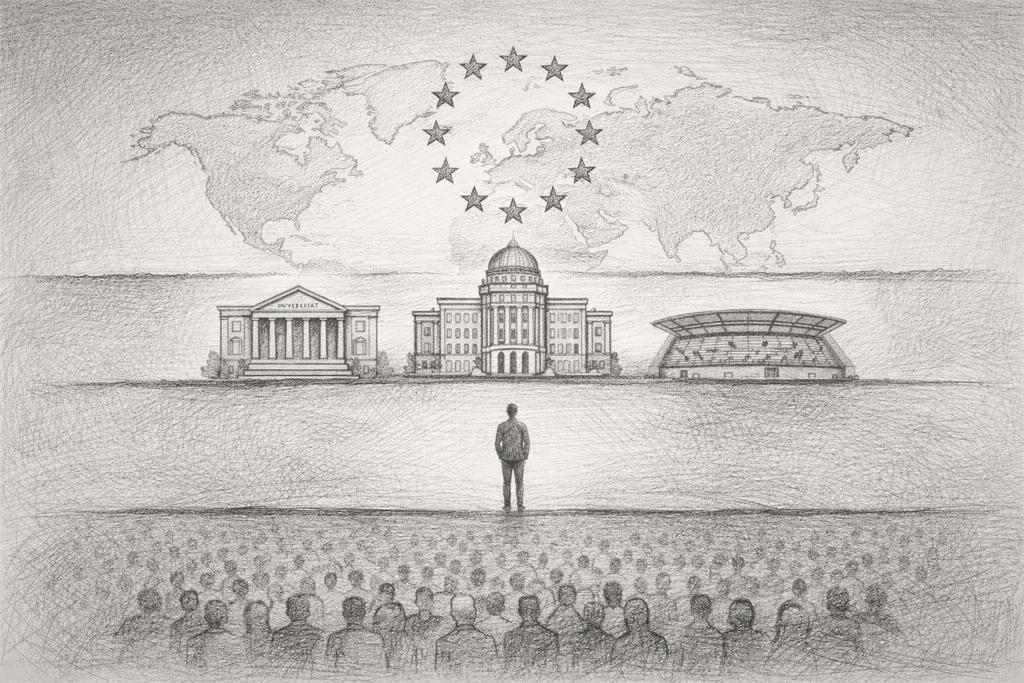
The three levels of exclusion at a glance
| Level | Actor | Typical measure | Exemplary effect |
|---|---|---|---|
| Social | Public, media, activists | Boycott, protest, shitstorm | Reputational pressure, shift in debate |
| Institutional | University, association, ministry | Dismissal, end of contract, disinvitation | Career break, loss of position |
| State | Government, EU, Foreign Ministry | Sanctions, entry ban, lists | Travel restrictions, economic consequences |
The accelerator: war as a moral state of emergency
Wars change societies. Not just on the front lines, but within. They change language, priorities, perceptions - and they change tolerance towards ambivalence. In this respect, the war in Ukraine is not only a geopolitical event, but also a moral one. It has created fronts, not only militarily, but also discursively.
Suddenly it's no longer just about political positions, but about attitude. And attitude quickly becomes a touchstone. In times of peace, differentiation is a virtue. In times of conflict, it is sometimes interpreted as weakness.
Wars generate clear narratives: perpetrators and victims, attack and defense, aggression and solidarity. This moral structure is comprehensible. It provides orientation.
But it has a side effect. The clearer the fronts appear, the less tolerance there is for nuances. Anyone who points out in a highly emotionalized environment that geopolitical interests are also complex runs the risk of being misunderstood. Anyone who asks whether diplomatic channels should be kept open can quickly be seen as naïve. Those who point to historical contexts may be suspected of wanting to relativize.
This does not mean that criticism or sanctions are fundamentally wrong. But it does mean that the frame of discourse is narrowing. Wars generate moral compression. And compression reduces room for maneuver.
When differentiation becomes suspicious
A central feature of exceptional moral states is the shift in evaluation standards. In normal times, a statement is primarily judged by its content. In times of crisis, it is increasingly judged by its effect. The question is no longer just „Is this factually correct?“, but „What signal does this send?“
This logic is changing decision-making processes. Institutions are beginning to pay more attention to how statements could be interpreted. Individuals weigh up not only whether something is correct, but whether it could be misunderstood. Caution leads to caution. And restraint sometimes leads to self-censorship.
Self-censorship is difficult to measure. It leaves no official traces. But it has an effect. When people start to stop asking certain questions in public because the risk seems too high, the discourse space changes - quietly, but permanently. This is not an orchestrated process. It is an atmospheric one. But atmosphere is politically effective.
The logic of „Whoever is not with us ...“
In polarizing conflicts, a binary expectation often arises: clear positioning or distancing. This expectation does not have to be expressed. It arises from the environment. Anyone who bears public responsibility - whether in sport, science, culture or the military - then finds themselves in a field of tension.
- On the one hand, there is the duty of loyalty to basic democratic values.
- On the other hand, there is a duty to be objective and differentiate.
In morally charged phases, these two principles come into conflict more easily. This does not necessarily lead to authoritarian states. But it does lead to a change in risk assessment.
Institutions tend to decide in favor of clear signals rather than open debates. Political decision-makers prefer clear messages to complex analyses. Public expectations reinforce this trend.
The result is not a formal ban on speaking. It is a shift in scope. And it is precisely this shift that forms the breeding ground for what is later perceived as „cancel culture“.
Speed as an amplifier
What distinguishes the current moral state of emergency from previous historical phases is its speed. Digital communication has drastically shortened the half-life of statements. A comment in a small circle can be spread globally within minutes. An incomplete quote can trigger international reactions before it has been categorized.
Political players react faster. The media report faster. Institutions decide faster. Acceleration reduces reflection time. And reduced reflection time increases the probability of overcontrol.
In an accelerated environment, risk avoidance becomes the dominant principle. This may be understandable from an institutional perspective. But from a social perspective, the question arises:
How much complexity is lost when decisions are primarily geared towards short-term signaling effects?
Crises as a catalyst - not as a cause
It would be too simplistic to see the war as the sole cause of the current dynamics. Many developments - polarization, digital outrage culture, reputation economy - already existed beforehand. The war acts more as a catalyst:
- It accelerates existing trends.
- It increases moral pressure.
- He shifts priorities.
In calm times, societies are better able to tolerate ambivalence. In times of crisis, this tolerance decreases. This does not mean that every decision made under wartime conditions is wrong. But it does mean that the framework conditions are exceptional.
And exceptional framework conditions require special attention. Because what appears to be necessary caution during a crisis can become a permanent restriction of discourse spaces in the long term.
The open question
So when we observe athletes being disinvited, professors coming under pressure, military leaders losing their posts in a very short space of time or states keeping lists, we have to consider the context. We are not living in a normal geopolitical phase.
But this is precisely why crucial questions arise:
- Will these mechanisms remain limited to the state of emergency - or will they become part of the new normal?
- Is the narrowing of the discourse temporary?
- Or is the threshold shifting permanently?
These questions cannot be answered with a simple yes or no. But they can only be seriously discussed if we recognize that war is not only effective on the front, but also within a society - in its language, in its institutions and in its willingness to endure contradiction.
In the next chapter, we turn to a particularly visible field: sport. This is an example of how national affiliation, political signaling and individual responsibility collide.
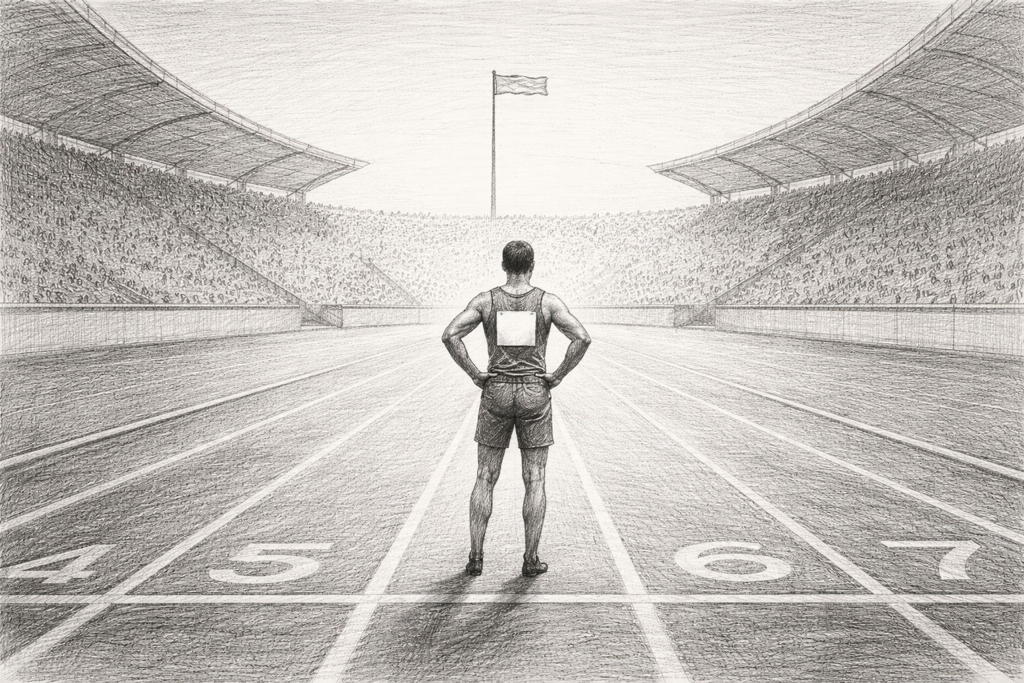
Sport: Collective liability under a neutral flag
There are few areas better suited to making social dynamics visible than sport. It is seen as unifying, as supranational, as a place of fair competition beyond political conflicts. And yet it is precisely here that it becomes particularly clear how closely sport and politics are intertwined.
Since the beginning of the war in Ukraine, sports federations, governments and international organizations have been confronted with a difficult question: How do you deal with athletes from a country that is considered an aggressor under international law?
The answers to these questions are not uniform - but they follow a recognizable logic.
Exclusions of Russian athletes
In the first few months after the start of the war, many international federations reacted with clear measures: Russian (and in some cases Belarusian) athletes were excluded from competitions. Teams were not allowed to compete. National flags and anthems were banned. The reasoning was politically understandable: They did not want to provide a forum that could be used by state propaganda. They wanted to demonstrate solidarity with Ukraine. They wanted to send a clear message.
However, the measures did not affect governments, but individual athletes. Many of them had not made public political statements. Some had been living abroad for years. Some were even critical of the war - others remained silent for understandable reasons.
This is where the central question begins: Is national affiliation alone a sufficient criterion for sporting exclusion?
Historically, sport has been politicized time and again - from boycotts during the Cold War to sanctions against apartheid South Africa. The idea that sport can be completely apolitical has always been an illusion.
However, the current situation highlights one area of tension in particular: between individual responsibility and collective attribution.
„Individual Neutral Athletes“ - solution or symbolic policy?
When the first wave of total exclusions proved difficult to sustain in the long term, a compromise model was developed: athletes were allowed to compete under a neutral flag - without national symbols, without an anthem, without an official national association. On paper, this is an elegant solution. It separates the individual from the state. It allows sporting participation without signaling political recognition.
But even this model is not free of contradictions. On the one hand, the origin remains de facto known. On the other hand, a kind of intermediate political status is created. Athletes sometimes have to make declarations of neutrality, distance themselves from certain organizations or meet certain conditions.
Critics see this as a form of indirect loyalty test. Supporters speak of a fair middle way in a difficult situation. Regardless of the assessment, there is a structural pattern here:
Political conflicts are translated into sporting arenas via symbolic sets of rules. Sport becomes a signal space.
Visas as political leverage
In addition to decisions under sports law, there is a second level: state intervention. A country can refuse an athlete entry. It can delay or refuse visas. It can set up formal hurdles that are effectively tantamount to exclusion.
This is where the dynamic shifts from association law to constitutional law. While international sports organizations can argue that they are merely applying their statutes, foreign policy considerations come to the fore in visa decisions.
A tournament then becomes not just a sporting event, but a diplomatic arena. This shift shows that sport cannot be viewed in isolation. It is embedded in geopolitical tensions. The question is not whether politics plays a role in sport - it always does. The question is rather how far this role extends.
Collective liability or legitimate sanction?
The central conflict can be reduced to a classic contradiction: Is it justified to sanction individuals on the basis of their nationality if the state to which they belong acts contrary to international law?
Supporters argue that national representation is inextricably linked to national symbolism. An athlete is not just competing for themselves, but for their country. Critics counter that individual responsibility should not be replaced by collective attribution. An athlete is not a foreign policy actor.
Both positions carry weight. But regardless of which one you share, it is clear that sport has become a field in which political conflicts are carried out by proxy. And where political signaling becomes more important than individual differentiation, a dynamic emerges that resembles the pattern we have already described:
Risk avoidance, symbolic politics, clear demarcation - at the expense of shades of gray.
Why sport is a mirror
Sport is particularly suitable as an example because it is emotionally charged. It is visible, present in the media and internationally networked.
If national affiliation is once again given more weight than individual performance, then that sends a signal far beyond the stadium.
It shows how strongly geopolitical conflicts affect social spaces. However, it also shows how difficult it is to consistently implement clear moral standards without creating new contradictions.
Sport can neither be completely apolitical nor become a complete instrument of politics without losing its own logic.
This tension makes it an ideal field of investigation.
In the next chapter, we turn to a similarly sensitive area: culture. There, the question of origin, responsibility and the separation of work and person arises once again in a different form - and with equally fundamental implications.
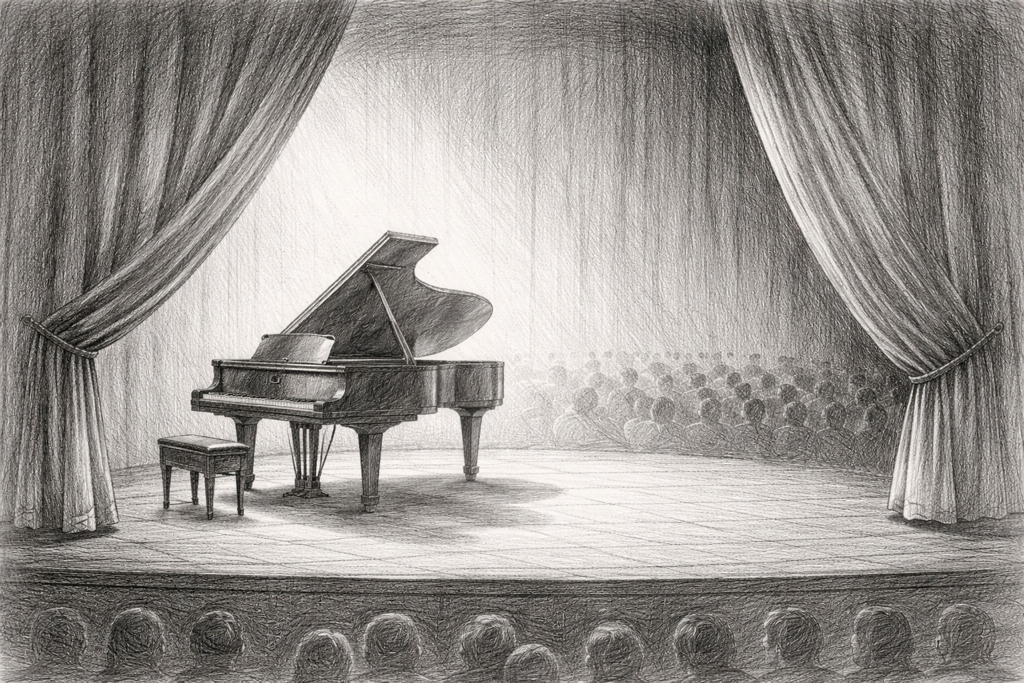
Culture and art: Can origin be a criterion?
Art is considered a space of freedom. It crosses borders, connects people across political systems and speaks a language that does not stop at national borders. This is precisely why the public is particularly sensitive when culture suddenly becomes a political battleground.
Since the beginning of the war in Ukraine, there has been intense debate about whether and to what extent Russian artists should be allowed to perform, whether works by Russian composers should continue to be played or whether cultural cooperation should be suspended.
What at first glance appears to be a purely moral decision touches on fundamental principles on closer inspection.
Concert cancellations and program changes
In the first few weeks after the start of the war, opera houses, orchestras and festivals canceled performances by Russian artists or suspended planned programs. In some cases this affected individuals, in others entire cultural collaborations. The reasons varied:
- They wanted to set an example.
- They want to show solidarity.
- The aim was to avoid cultural events being misunderstood as a platform for state propaganda.
Some decisions were specifically justified - for example, when artists had publicly expressed political positions. Others were made as a precautionary measure, without individual examination.
This reveals a central area of tension: cultural institutions are under public scrutiny. They are often state-funded. They represent values. In a morally charged phase, non-action can itself be interpreted as a statement.
The result is high expectations. But the question remains: Is origin alone a legitimate yardstick for cultural exclusion?
Work and person - an old debate
The discussion about the separation of work and artist is not new. It has accompanied art history for decades. Can you enjoy a work if the author acts in a morally questionable way? Is it permissible to play music by a composer whose political stance is problematic?
In the current context, this debate is intensifying because the focus is not on individual actions, but on national affiliation.
A classical musical work does not suddenly become political because the composer's passport indicates a certain nationality. And yet a symbolic connection is created in heated times.
Supporters of rejection argue that culture cannot exist in isolation from the political context. Critics, on the other hand, argue that art must unfold its unifying power precisely when political systems are in conflict.
Both perspectives contain truth. But here, too, a pattern is repeated: the stronger the moral pressure, the less willing people are to tolerate ambivalence.
Propagandistic instrumentalization
Another aspect should not be overlooked: The accusation of „cancelling“ is itself politically instrumentalized. When Western institutions uninvite Russian artists, this can be presented by the state as evidence of cultural hostility. The accusation that „our culture is being wiped out“ becomes part of their own domestic political mobilization.
This creates a paradoxical situation: measures that are intended as a moral signal can be reinterpreted for propaganda purposes.
This does not mean that every reaction should be avoided. But it does show how complex the chains of effects are.
Culture is never just culture. It is a symbol, identity and projection surface at the same time.
Historical parallels
The politicization of culture is not a new phenomenon. During the Cold War, artists were boycotted or put under pressure to show loyalty. In authoritarian systems, works were banned because they did not conform to the official line. Even in democratic societies, there were phases in which political affiliation influenced careers.
The difference today lies less in principle than in speed and publicity. Decisions are immediately perceived globally. Reactions are immediate. What would previously have been a local debate is now part of an international discourse.
The historical perspective calls for caution.
In times of crisis, societies tend to define cultural spaces more narrowly. However, in the long term, it has usually been shown that art has its strongest impact when it is not completely politically appropriated.
Between responsibility and freedom
Cultural institutions find themselves in a difficult situation. They have a responsibility - towards their audience, their patrons and society. At the same time, they are places of freedom and diversity.
The crucial question is therefore not whether culture can be political. It always has been. The question is rather:
To what extent can political signaling replace individual assessment?
When decisions are made primarily on the basis of collective attribution, a logic emerges that we have already seen in sport. If, on the other hand, individual responsibility is examined, differentiation remains possible.
It is not about absolute answers. It's about standards. Culture is sensitive. It reacts quickly. But it is also a seismograph of social development. If the willingness to be ambivalent decreases in cultural spaces, this is an indication of broader shifts.
In the next chapter, we turn to an area in which differentiation is actually a core principle: academia. There, it becomes clear how strongly social expectations and academic freedom intersect - and sometimes contradict each other.
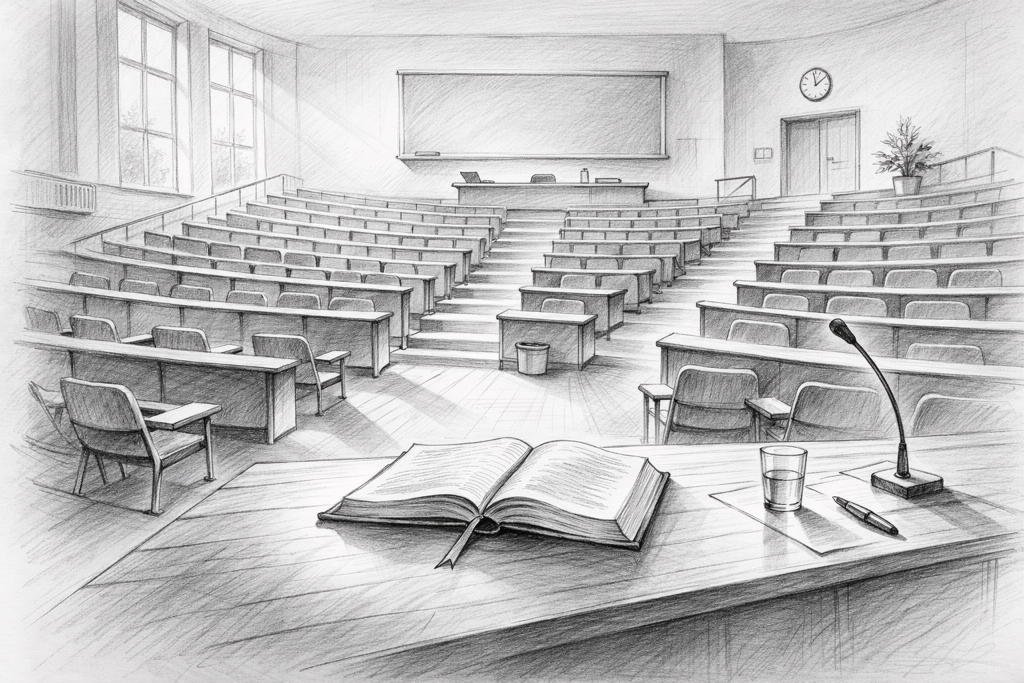
Universities: When debate becomes a danger zone
Universities are considered places of free speech. They are designed for testing hypotheses, questioning assumptions and discussing uncomfortable positions. Science thrives on contradiction. This is precisely why conflicts in the academic sphere are particularly sensitive.
When professors come under pressure, lectures are canceled or disciplinary proceedings are discussed publicly, the impression quickly arises that academic freedom is under attack. But here too, not every conflict is automatically a case of cancel culture. To understand the dynamics, it is worth taking a look at the data and structures.
Figures and trends: a growing phenomenon
Over the past two decades, the number of documented attempts to sanction scientists based on their statements or positions has increased significantly - particularly in the USA, where such developments have been systematically recorded.
A distinction must be made between attempted sanctions and actual dismissals. Not every demand leads to a measure. However, the increasing number of incidents shows that the pressure on academic debating chambers has increased.
In Europe, too, there are increasing reports of lectures being canceled, protests against certain speakers or internal disputes over teaching content.
It is important to note that these conflicts are not one-sided along political lines. Both conservative and progressive positions can be targeted - depending on the context and institution. The phenomenon is therefore not a party problem, but a structural problem.
The university is increasingly becoming a place for the social negotiation of moral issues.
Attempted sanctions vs. actual consequences
A crucial point in the debate is the differentiation between attempt and effect.
- Not every petition leads to termination.
- Not every protest action ends in disciplinary proceedings.
- In many cases, incidents remain without formal consequences.
And yet even unsuccessful campaigns have an impact. Public pressure, media attention and internal discussion create a climate of caution. Faculties weigh up more carefully which topics they place in the public eye. University management is looking more closely at how events could be perceived.
From the institution's point of view, this is understandable. It wants to safeguard its reputation and internal stability. But for individual scientists, even the attempt to impose a sanction can have an intimidating effect - even if it fails.
Self-censorship as an invisible consequence
Perhaps the most momentous change is not the formal dismissal, but the silent adjustment.
- When researchers avoid certain topics because they expect conflicts.
- When teachers break off discussions to prevent escalation.
- If invitations are omitted as a precautionary measure to avoid protests.
Self-censorship is difficult to prove. It leaves no record. But it does change the academic climate. Science depends on being able to examine controversial theses. This does not mean that every position is of equal value. But it does mean that evaluation should be based on arguments - not on moral labeling.
If the impression arises that certain questions are „too risky“, the research landscape shifts. And this shift has a long-term effect.
Science between activism and neutrality
An additional source of tension lies in the self-image of modern universities. In many countries, universities see themselves not only as places of research, but also as actors of social responsibility. Issues such as diversity, sustainability and social justice have become part of institutional mission statements.
This is legitimate in principle. However, it creates a dual role: universities are both spaces of knowledge and normative institutions. If normative goals are strongly emphasized, this can lead to conflicts with the principle of scientific neutrality. A researcher who puts forward an unpopular thesis is then not only evaluated from a scientific point of view, but also classified morally.
The danger is not that every dissenting opinion is immediately suppressed. Rather, the danger lies in the gradual narrowing of the accepted spectrum. In polarized times, the boundaries of what is considered worthy of discussion are shifting.
Between safe space and debating chamber
Universities face a dilemma. On the one hand, they should be a safe space for students, especially for minorities or groups that experience discrimination. On the other hand, they should be a space for debate in which uncomfortable positions can also be expressed.
These two goals can collide. If a statement is perceived as hurtful, the question arises: Does the idea of protection prevail - or the idea of discourse?
A democratic society must take both into account. But if protection is permanently given priority over debate, the character of the institution changes. The university then becomes less a place for examining arguments and more a place for drawing normative boundaries.
The long-term perspective
Academic freedom is not a given. It has been fought for historically - and it was never absolute. Even in the past, there were political influences, tests of loyalty and ideological conflicts. The difference today lies less in the existence of conflicts than in their intensity and visibility.
- Digital media intensify local disputes.
- Social polarization is reflected in the lecture hall.
- International conflicts have an impact on research debates.
The central question is therefore not whether universities are political - they always have been. The question is whether they retain their core function:
the ability to examine arguments independently of their political expediency. When spaces for debate become narrower, science loses its most important resource - open dissent.
In the next chapter, we turn to an area in which loyalty and discipline traditionally play a greater role than in academia: the military. Here we see how political line, institutional structure and individual expression come together - and what tensions can arise from this.
Ulrike Guérot and the conflict over academic freedom
 The case of Ulrike Guérot exemplifies the tensions between academic freedom, public discourse and institutional responsibility. The political scientist, who has been campaigning for a more integrated European republic for years, came under increasing criticism in the context of her statements on the war in Ukraine. As a result, her employment at the University of Bonn was terminated - officially for labor law reasons, but politically intensively discussed. Irrespective of the legal assessment, the case shows the extent to which academic positions today are caught between media logic, morality and political sensitivity. The case raises fundamental questions: How far does freedom of expression extend in the academic sphere? And how robust is the university as a place of controversial debate?
Military leadership and opinion corridor
The military is not a debating society. It is a hierarchical organization with clear chains of command, political involvement and a high level of internal and external responsibility. This is precisely why the standards here differ from those at universities or in cultural institutions.
And yet the military is also part of society. Its leaders are in the public eye, speak out on security policy issues and operate in a field of tension between professional analysis and political loyalty.
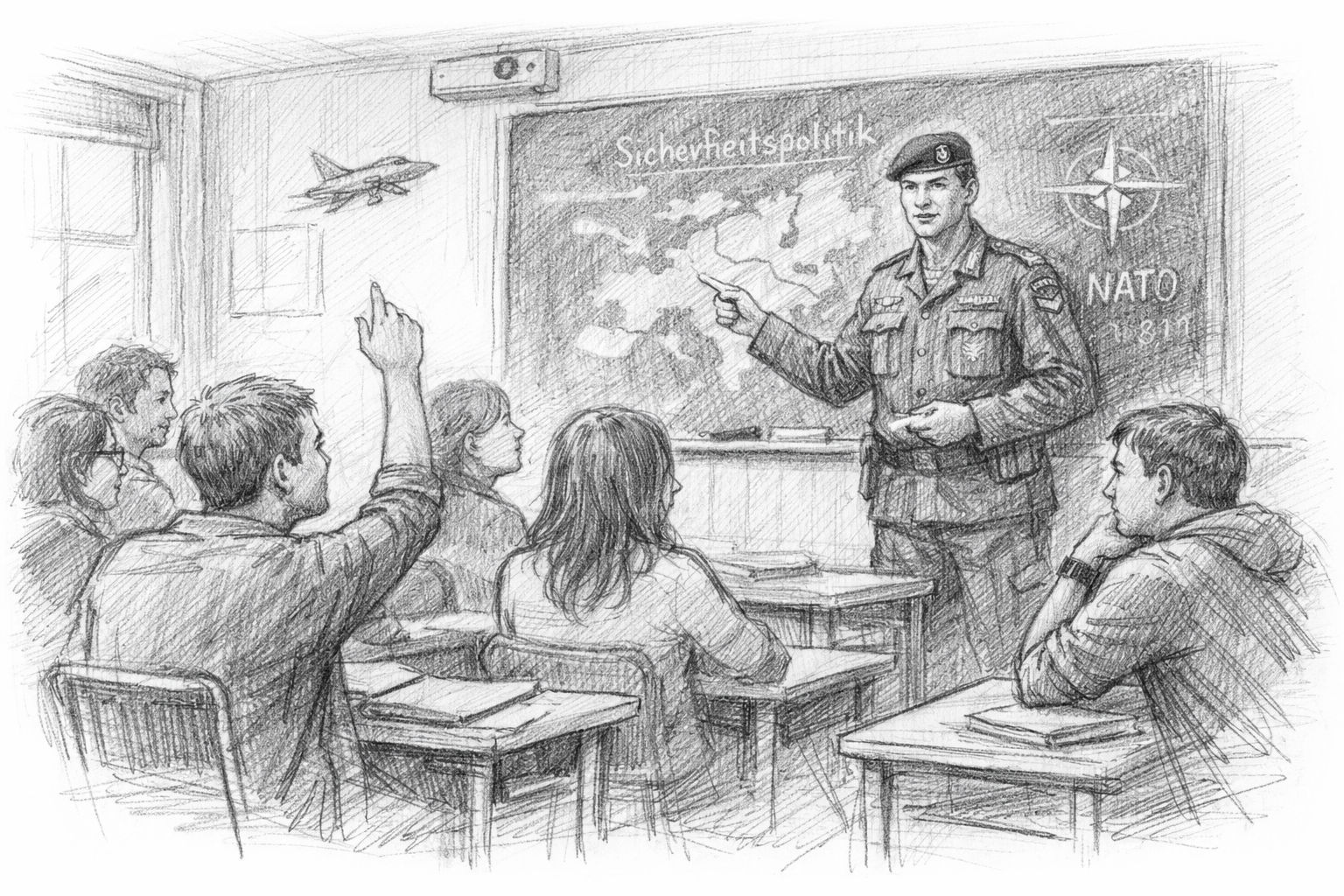
In recent years, there have been several prominent personnel changes in the Bundeswehr that were publicly perceived as abrupt or politically motivated. This became particularly clear in the case of the then inspector of the navy, who lost his post after making controversial statements on Russia policy. This case is a suitable starting point for examining the structural characteristics of military leadership.
The case of Schönbach as a case study
When the then naval inspector made statements in an international context in early 2022 that were interpreted as relativizing Russia, the reaction was swift. The statements were picked up by the media, commented on internationally and evaluated politically. Shortly afterwards, he resigned or was relieved of his post.
From an institutional perspective, the situation was delicate. A high-ranking military representative makes a public statement on a geopolitical conflict in which the German government is taking a clear line.
In a phase of high diplomatic tension, such statements can be seen as a foreign policy signal. The decision to resolve the personnel issue quickly was therefore politically understandable.
At the same time, the case showed how narrow the scope for public differentiation had become. A professional classification of interests was weighted differently in a highly moralized environment than in calmer times. Whether one considers this decision to be correct or excessive is a question of judgment. What is indisputable, however, is that the speed of reaction was an expression of a narrowed tolerance framework.
Temporary retirement - a structural instrument
There is a special legal feature for top military positions: generals can be temporarily retired. This instrument allows the political leadership to implement personnel decisions without lengthy justification procedures. Formally, this is part of the system. The Bundeswehr is subordinate to the political leadership. Strategic realignments or issues of trust can have personnel consequences.
However, precisely because this possibility exists, personnel changes often appear opaque to the outside world. If several managers change positions or leave prematurely within a relatively short period of time, the impression of political cleansing is quickly created - even if there are structural reasons for this.
Analytical sobriety is crucial here. Not every change is an expression of a corridor of opinion. Some are part of normal leadership rotations or strategic restructuring. But the instrument creates the possibility of rapid political correction - and this possibility influences perception.
Current survey on the new compulsory military service in Germany
Structural reform or political line?
Since the so-called „turnaround“, the Bundeswehr has undergone an organizational realignment. New management structures have been created, responsibilities adjusted and strategic priorities shifted. In such an environment, personnel changes are not unusual.
However, in politically charged phases, structural reform and political signaling easily merge in public perception.
When security policy debates are conducted emotionally, every change is interpreted as a potential sign. This applies not only to military leadership, but also to ministries as a whole. Political leadership wants to demonstrate reliability and unity.
In a phase of international tensions, unity is a strategic value. But the question is:
How much internal differentiation is possible when external unity is the top priority?
Loyalty and public discourse
Military leaders play a special role. They are experts in security policy, but at the same time part of a politically led organization. Unlike scientists or artists, they cannot express themselves publicly without restriction. Their statements have diplomatic relevance.
This restriction is not a sign of authoritarian structures, but an expression of democratic control of the military. And yet an area of tension remains:
- Professional analysis requires differentiation.
- Political communication requires clarity.
When these two requirements collide, loyalty is given higher priority than individual classification. In calm times, this tension can be managed relatively quietly. In times of crisis, it becomes visible.
Perception and reality
A central problem in the public debate is that perception and reality can diverge.
A change of personnel can be structurally justified - and still be read as a political signal.
Conversely, a politically motivated decision can appear to be a normal rotation.
It is therefore crucial for the assessment to recognize patterns. Individual cases can be explained. A systematic narrowing would be problematic.
So far, there are many indications that this is more a mixture of structural adjustments, political sensitivity and individual cases - not a coordinated „purge“.
But the dynamic shows how strongly a moral state of emergency and institutional caution can intertwine.
The special role of the military
The military is not an ideal place for open social debate. It must remain capable of acting, maintain clear chains of command and be politically integrated. This is precisely why it is important to take a sober view of personnel decisions.
Anyone who describes every recall as a cancel culture fails to recognize the structural characteristics of military organizations. Those who ignore any political sensitivity, on the other hand, underestimate the atmospheric shifts in times of crisis.
Like other institutions, the Bundeswehr is caught between professional expertise, political leadership and social expectations. In this area of tension, decisions can quickly be perceived as a sign of a narrower corridor of opinion, even if they formally have other causes.
In the next chapter, we leave the internal institutional space and turn to the state level. There, exclusion is no longer visible as a personnel decision, but as an instrument of foreign policy - in the form of sanctions, lists and entry bans.
Military perspective between loyalty and diplomacy
In a conversation with Alexander von Bismarck the former inspector of the German Navy, Kay-Achim Schönbach, comments in detail on Europe's security policy situation. The central question is whether Germany really needs to become „ready for war“ - or whether it should instead strengthen its ability to engage in diplomatic talks. Schönbach reports from his own experience in NATO structures and international missions and warns against an increasingly morally charged foreign policy. He criticizes the narrowing of the security policy discourse, the escalation of political language and the tendency to overlay geopolitical interests with enemy rhetoric.

„Ready for war“ instead of peace? An admiral reckons with Germany's new war rhetoric | Alexander von Bismarck
Regardless of the assessment of individual positions, the discussion makes it clear how sensitively military voices are perceived in the public sphere - and how narrow the line between strategic analysis and political controversy has become.
Sanctions, lists and entry bans
While social outrage and institutional personnel decisions still take place within social spaces, the state level operates in a different dimension. Here, it is no longer about reputation or internal organization, but about power, foreign policy and strategic interests.
Sanctions, entry bans and stop lists are instruments that states use to exert pressure or send political signals. They are legally regulated, diplomatically embedded and part of international conflict logic.
And yet they affect specific people. This is precisely why it is worth taking a closer look at this level - even if it differs formally from what is generally understood by „cancel culture“.
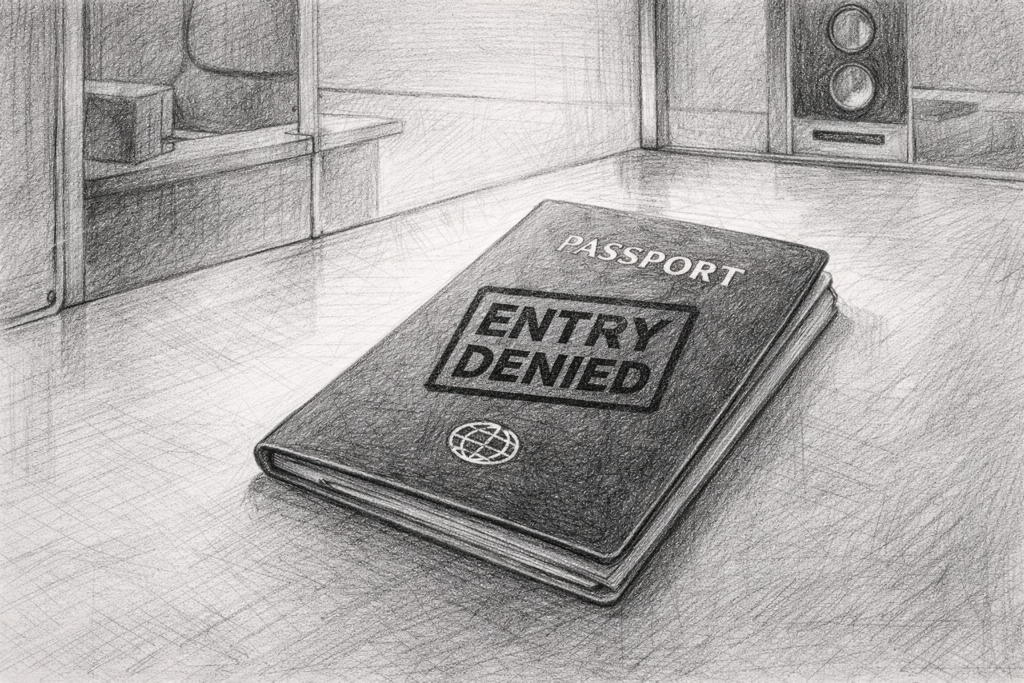
Russian stop lists against EU citizens
Since the first sanctions in the wake of the annexation of Crimea in 2014 and increasingly after 2022, Russia has repeatedly published lists banning European politicians, officials and other personalities from entering the country. These measures were officially declared as a reaction to EU sanctions. They were intended to create a counterweight, demonstrate diplomatic parity or exert political pressure.
For those affected, however, this meant a concrete restriction. Entry bans are not symbolic gestures. They are real restrictions on freedom of movement. It is important to understand this: Such lists are not a new phenomenon. Mutual sanction mechanisms have been part of international politics for decades.
What is new is the media visibility and the personal concreteness. When names are mentioned publicly, foreign policy is personalized.
And when diplomacy is communicated via lists, the perception shifts from political debate to individual sanctions.
European and German reactions
For their part, the European Union and its member states have adopted extensive sanctions packages against Russia. These include asset freezes, travel restrictions and economic measures against individuals, companies and state institutions.
From the EU's perspective, such measures are instruments of international law and political deterrence. They are intended to make it clear that certain actions have consequences. But here, too, state action affects specific individuals. If people end up on sanctions lists, they can no longer travel freely, accounts are frozen and economic relations are interrupted.
Sanctions are therefore a power-political tool with a personal impact. The difference to the social or institutional level is that a formal legal framework exists here. Decisions are legally justified, can be reviewed in court and are part of international agreements.
Nevertheless, the question remains: How does the perception of political debate change when it is increasingly expressed in personalized lists?
Diplomacy as signaling policy
In times of heightened geopolitical tensions, diplomacy becomes more symbolic. Entry bans are not only practical measures, but also communicative messages.
- They show toughness.
- They demonstrate demarcation.
- They signal determination.
However, there are risks involved in signaling policy. If diplomatic instruments are primarily used for public perception, the actual objective - de-escalation or room for negotiation - can fade into the background.
Lists create clarity, but they make gray areas more difficult. In an increasingly polarized world, such mechanisms are understandable. But they contribute to the hardening of fronts.
The difference to social exclusion
It is important not to prematurely equate state sanctions with social cancel culture. A state has the right - and in some circumstances the duty - to respond to actions that violate international law. Sanctions are an established tool of international politics. But the structural similarity lies in the mechanics:
- Exclusion as a reaction.
- Restriction as a signal.
- Personalization as an instrument.
While social outrage is often emotionally driven, government action follows strategic considerations. But for those affected, the result can be similar: limited options for action, public stigmatization or diplomatic isolation.
When foreign policy becomes personal
One major difference to earlier phases of the conflict is that sanctions policy is now more individualized. It is not just states that face each other, but specific names.
This individualization increases visibility. It creates clear attributions of responsibility. At the same time, it changes the perception of political conflicts.
Foreign policy is no longer negotiated in abstract resolutions, but in personal measures. This development can be explained rationally. It enables more targeted reactions. But it also reinforces the perception of a world in which affiliation and position have direct consequences.
Between legitimacy and long-term impact
Sanctions and lists are legitimate instruments of international politics. The crucial question is not whether they may be used, but how permanently they shape the international climate.
When personalized sanctions become the standard instrument, the culture of diplomatic conflict shifts. The transition from political difference to individual restriction becomes faster. In times of crisis, this appears to be a necessary harshness. In the long term, however, the question arises as to whether such mechanisms further reduce the willingness to reach an understanding.
The state level thus shows a different form of exclusion than the social or institutional level. It is more formal, legally embedded and strategically motivated. And yet it fits into a larger picture:
In all areas, we are observing that affiliation, signaling and risk assessment are playing a greater role than they did a few years ago. In the next chapter, we turn to the role of media and platforms. Without the accelerating power of modern communication spaces, many of these dynamics would hardly have become visible to this extent.
Dynamics in various areas
| Range | Typical conflict situation | Reaction pattern | Long-term effect |
|---|---|---|---|
| Sport | National affiliation vs. individual performance | Exclusion or neutral status | Politicization of sporting spaces |
| University | Controversial research or statement | Protest, test procedure, rejection | Caution, possible self-censorship |
| Military | Public classification of the geopolitical situation | Recall, retirement | Narrowed public scope |
| Foreign policy | International tensions | Sanctions lists, entry bans | Personalized diplomacy |
Media, platforms and the new power of interpretation
None of the dynamics described above unfold in a vacuum. Neither sporting exclusions nor university conflicts or state sanctions would be perceived with the same intensity if they were not mediated, commented on and amplified by the media.
Media - both traditional and digital - are not just observers. They are resonance spaces. And platforms are not just technical infrastructures, they structure visibility.
If you want to understand why the dynamics of exclusion are accelerating, you have to look at the role of communication spaces.
Narrative control and moral framing
The media don't just select topics - they frame them. A personnel decision can appear as a „necessary consequence“ or as „political pressure“. An exclusion can be described as „solidarity“ or „discrimination“. The choice of words shapes perception.
In polarized times, the media tends to present events in morally clear categories. This increases comprehensibility but reduces complexity. The competition for attention reinforces this effect. Headlines have to be to the point. Differentiation sells worse than exaggeration.
This creates narratives that have an impact beyond individual events. An individual case becomes a symbol. A decision becomes a trend. A measure becomes evidence for a larger thesis.
These narratives have an effect on institutions. Anyone who knows that a decision will be heavily interpreted by the media will weigh things up more carefully.
Platform logic and algorithmic reinforcement
Digital platforms follow their own rules. Visibility is not distributed neutrally, but is controlled algorithmically. Content that triggers strong emotions is shared more frequently, commented on and therefore amplified.
Outrage is an accelerator. This does not mean that platforms deliberately promote polarization. But their structure favors content that represents clear positions. Nuanced analyses are less likely to achieve the same reach as pointed accusations.
When debates increasingly take place online, the dynamic shifts. Institutions react not only to direct criticism, but also to the speed at which an issue spreads.
A hashtag can generate international pressure within hours. This acceleration is changing decision-making processes. Where internal consultations used to take weeks, reactions are now made within days or even hours.
Regulation and demarcation
In addition to algorithmic amplification, there is another factor: platform rules and state regulation. Social networks define their own guidelines on what content is permissible. States enact laws against disinformation or extremist content.
These measures are often well-founded. They are intended to prevent hate speech, manipulation or incitement to violence. But this also creates a field of tension:
- Where is the line between legitimate moderation and limiting opinions?
- Who decides what content is harmful?
- How transparent are these decisions?
When platforms remove content or block accounts, this is usually done on the basis of internal regulations. For those affected, this can have the effect of digital exclusion - even if it is formally a contractual issue between the user and the platform.
Self-censorship in the digital space
Perhaps the most powerful effect of modern communication spaces is not the deletion of individual posts, but the expectation of possible reactions. Anyone who knows that every statement can be archived, quoted and disseminated without context will weigh things up differently.
- Digital permanence changes language behavior.
- A thoughtless sentence remains discoverable.
- A misleading quote can reappear years later.
This permanence increases the pressure to be cautious. Self-censorship arises not only out of fear of state sanctions, but also out of concern about a permanent digital presence. This not only affects celebrities, but also scientists, journalists, civil servants and entrepreneurs.
Media as an amplifier - not as a cause
However, it would be too easy to blame the media and platforms alone. They reinforce existing conflicts, but they do not create them out of nothing. Political tensions, the formation of moral fronts and institutional caution exist independently of algorithms.
However, the communication structure determines how visible, how quickly and how intensely these tensions take effect. In a networked world, every decision is potentially perceived globally.
This visibility in turn generates political and institutional pressure. This creates a cycle:
Event - media framing - public reaction - institutional decision - renewed media interpretation.
Understanding propaganda - history, methods and modern forms
 The background article „Propaganda: history, methods, modern forms and how to recognize them“ offers a calm and analytical addition to the debate on discourse culture and information control. Instead of seeing propaganda merely as a relic of authoritarian systems such as the Third Reich, the text shows how its forms have developed historically - from ancient symbols and mass media to subtle, modern techniques. Especially in open societies today, propaganda rarely appears as a loud slogan, but works through selection, repetition and framing. The article helps to recognize why influence is often not created through blatant lies, but through structural control - and how these mechanisms can be concealed in the digital communication landscape.
The new power of interpretation
In traditional democracies, it was long assumed that public debate is stabilized by diversity. Today, it is not only arguments that compete, but also interpretative frameworks. Those who manage to define an event at an early stage have a lasting impact on its perception. A change of personnel can be seen as a necessary disciplinary measure or as an example of cancel culture.
This interpretation determines how similar cases will be evaluated in the future. Media and platforms are therefore not only transmitters, but also power factors. They structure what becomes visible, how it is categorized and which reactions appear plausible. If we look at the dynamics of recent years, it becomes clear that without the accelerating power of modern communication spaces, many developments would have been perceived less dramatically.
But the real question is not whether the media have influence - they always have. The question is whether the combination of moral fronting, institutional caution and digital amplification will lead to narrower spaces for debate in the long term.
In the next chapter, we will examine the underlying mechanics of these processes in more detail: Why do institutions react the way they do? What role do reputational economics, risk assessment and moral outbidding play?
Current survey on trust in politics and the media
The mechanics of exclusion
Up to this point, we have looked at various fields: Sport, culture, universities, the military, foreign policy, the media. Each of these systems follows its own rules. And yet a similar dynamic is evident in all of them.
If patterns are repeated across different areas, it is worth asking about the underlying mechanics:
- What makes institutions react quickly and clearly?
- Why do narrower opinion corridors emerge in times of crisis?
- And why do such processes often reinforce each other?
This chapter attempts to identify the structural drivers behind the observed developments - without dramatization, but with analytical clarity.
Reputation economy: protecting the image
Reputation is a key resource in modern societies. Companies, universities, associations and state institutions are under constant public scrutiny. Trust is their capital. If this trust begins to waver, it can have immediate consequences:
Funding, members, votes or international cooperation are at stake. In a digitally networked public, accusations spread quickly. Damage to a company's image can occur within a matter of days.
From an institutional perspective, it is therefore rational to minimize risks at an early stage. If a person or decision generates potentially negative headlines, it often seems wiser to end the conflict quickly - even if the factual situation is more complex.
Reputation economy rewards clarity and speed. Differentiation, on the other hand, costs time - and creates uncertainty.
Institutional risk assessment
Institutions are not individuals. They do not act primarily emotionally, but strategically.
- A university management not only asks whether a thesis is scientifically justifiable, but also what form protests might take.
- A sports association not only checks the individual innocence of an athlete, but also the political signal effect.
- A ministry assesses not only the professional competence of a general, but also the foreign policy impact of his statements.
This risk assessment is not a sign of moral weakness. It is part of institutional rationality. But it shifts priorities.
If avoiding negative perceptions becomes more important than substantive debate, an asymmetrical decision-making logic arises. The lesser risk is often to exclude someone than to keep them under controversial conditions.
Moral outbidding
Another driver is the tendency to take the moral high ground. In polarized situations, there is competition for the clearest stance. Those who condemn more strongly are seen as more consistent. Those who differentiate may appear hesitant. This dynamic is particularly intensified in social media, where visibility often goes hand in hand with escalation.
Institutions are therefore under double pressure: they are expected to demonstrate moral responsibility, but must not appear inconsistent.
The result can be a spiral in which measures are formulated ever more clearly - not necessarily because they are factually compelling, but because they appear symbolically necessary. Moral outbidding creates clear fronts, but it reduces complexity.
Fear as an accelerator
An often underestimated factor is fear. Not the big political fear, but the concrete fear of losing control.
- Fear of reputational damage.
- Fear of political misunderstanding.
- Fear of public outrage.
Fear rarely leads to open debates. It leads to cautious, quick decisions. In times of crisis, the need for security increases. Institutions want to demonstrate their ability to act. Quick, clear measures convey control.
However, the more fear shapes decisions, the less willing people are to endure uncertainty.
The cycle of reinforcement
The factors described - reputation, risk assessment, moral outbidding and fear - do not work in isolation. They reinforce each other.
- A media accusation creates reputational pressure.
- Reputational pressure leads to quick decisions.
- The decision is in turn interpreted by the media.
- This interpretation will influence future risk assessments.
This creates a cycle. This cycle does not have to be consciously controlled. It results from the structures of modern communication and organizational systems.
Structure instead of conspiracy
Importantly, this mechanism does not require any secret coordination. No central plan is needed to trigger similar reactions in different institutions.
If the structural conditions are similar - high public pressure, moral polarization, digital acceleration - then similar reaction patterns are likely.
This explains why comparable dynamics can occur in sport, culture, science and the military without being centrally controlled.
Structures generate behavior.
The fine line
The mechanisms described are not illegitimate per se.
- Reputation protection is rational.
- Risk assessment is necessary.
- A moral attitude is part of democratic responsibility.
It only becomes problematic when these mechanisms systematically lead to differentiation disappearing. When decisions are primarily made out of caution. When the discourse space becomes narrower because uncertainty is to be avoided. This creates the impression of a corridor of opinion - even if each individual decision appears to be justified in its own right.
The analysis of the mechanics leads back to the initial question: Are we dealing with isolated reactions to exceptional circumstances - or a permanent structural shift?
Answers to these questions cannot be given too quickly. But one thing is clear: the dynamics of exclusion do not arise by chance. They follow rational patterns of modern institutions in times of moral compression.
In the next chapter, we will therefore take a step back and look at the opposite position: Is „cancel culture“ itself possibly an overused term? Is a buzzword being used here that obscures more than it explains?
Game-theoretical dynamics of cancel culture
Economist Christian Rieck looks at cancel culture from a game theory perspective and points to two structural mechanisms. Firstly, repeated public attacks - for example through the deliberate misinterpretation of statements - can lead to the person concerned increasingly only surrounding themselves with supporters. This social narrowing fosters a creeping radicalization that may not have been planned beforehand. Secondly, Rieck describes a coordination equilibrium: if a certain threshold value is exceeded in public perception, even previously neutral actors feel compelled to publicly signal distance. Not necessarily out of conviction, but out of strategic adaptation.

Cancel Culture and character assassination | Prof. Dr. Christian Rieck
This creates a self-reinforcing dynamic in which reputational damage, social isolation and public positioning form a stable but discourse-constricting equilibrium.
Is „cancel culture“ just a buzzword?
Up to this point, we have looked at structures, dynamics and examples. But any analysis remains incomplete if it does not question its own use of terms.
„Cancel culture“ is a term with enormous political explosive power. It is used to name grievances - and at the same time to reject criticism. It is therefore necessary to take a step back.
Is what we are seeing really a new form of systematic exclusion?
Or has „cancel culture“ itself become a fighting term that generates more emotion than clarity?
The exaggeration thesis
Critics of the term argue that „cancel culture“ is a rhetorical exaggeration. Societies have always discussed controversy, protested and imposed sanctions.
Anyone who talks about cancel culture today is trivializing legitimate criticism and constructing a climate of oppression that cannot be empirically proven. In fact, much of what is discussed under this buzzword can also be described differently:
- public debate, moral positioning, institutional responsibility.
- Not every rejection is censorship.
- Not every personnel decision is a political purge.
- Not every sanction is suppression of opinion.
The exaggeration thesis therefore calls for caution. Anyone who evaluates every conflict event as evidence of cancel culture loses analytical acuity.
Instrumentalization by political camps
In addition, the term itself is politically charged. In some political milieus, it is used to portray progressive movements as intolerant across the board. In others, it is used as a diversionary tactic to delegitimize criticism of discriminatory behaviour.
This creates a paradoxical situation: the term, which is actually intended to denote exclusion, itself becomes an instrument of polarization. Anyone who describes themselves as a „victim of cancel culture“ automatically positions themselves within a political framework of interpretation.
This makes sober analysis more difficult. The discourse on cancel culture itself becomes a battlefield.
When the term makes analytical sense
Despite this problem, however, it is not convincing to completely deny the phenomenon. If similar patterns of exclusion are evident in different institutions - especially under moral and reputational pressure - then it is legitimate to speak of a structural development.
The definition is crucial. Cancel culture should not refer to every form of criticism. Rather, it describes situations in which social or institutional pressure aims to exclude people from public or professional spaces - primarily due to their expression of opinion or affiliation.
This definition is narrower than the popular use of the term. It makes it possible to distinguish between legitimate sanctioning of misconduct and problematic narrowing of debates.
The danger of generalization
A key risk is to generalize individual events. A prominent case can give the impression that an entire institution has become intolerant. A highly publicized incident can be read as evidence of a general trend.
But social reality is more complex. In many cases, controversial voices remain present. Many institutions consciously defend open debates. Not every wave of outrage leads to lasting consequences.
The challenge is to recognize patterns without rashly assuming a systematic approach. Anyone who interprets every personnel event as part of a major cancel strategy fails to recognize the diversity of causes.
Between sensitivity and hypersensitivity
Another aspect concerns social sensitivity to discrimination and exclusion.
In recent decades, awareness of hurtful language, structural discrimination and power asymmetries has grown.
This development is not negative per se. It is an expression of a democratic maturing process. However, sensitivity can turn into hypersensitivity if every deviation is seen as an attack.
There is a fine line between justified criticism and hasty labeling. Cancel culture does not emerge where criticism is voiced, but where criticism is aimed at permanently removing people from the discourse.
Despite its political charge, the term has an analytical use. It draws attention to processes of exclusion that do not formally appear to be censorship, but can in fact lead to similar results. It reminds us that spaces for debate can be narrowed not only by laws, but also by social dynamics. At the same time, it forces us to define precisely what is actually meant.
A term is only as helpful as its application.
Self-criticism as a strength
A mature debate requires self-criticism. Those who diagnose cancel culture should ask themselves:
Is a systematic pattern actually becoming visible here - or am I reacting to individual, particularly visible cases?
Anyone who rejects the term should ask themselves:
Are there structural changes that I underestimate because I dismiss them as normal conflicts?
This double self-check increases the credibility of every analysis.
Between reality and rhetoric
In the end, it remains to be said: Cancel culture is neither pure imagination nor an all-encompassing conspiracy. It is a controversial term for real, but differently pronounced processes of exclusion under moral and reputational pressure. Its political instrumentalization complicates the debate.
But that is precisely why it is worth using it precisely - not as a buzzword, but as an analytical category.
Historical parallels
Anyone who wants to assess current developments would do well to take a step back. The formation of moral fronts, demands for loyalty and political exclusion are not phenomena of the 21st century.
In times of crisis, societies have repeatedly experienced phases in which the scope for dissent has become narrower. A look at history puts premature dramatization into perspective - and at the same time prevents naive trivialization.
The McCarthy era: loyalty as a touchstone
In the 1950s, the United States experienced a period of intense anti-communist loyalty testing. Politicians, artists, scientists and civil servants came under suspicion of being close to communist organizations. Committees of inquiry, public hearings and so-called „blacklists“ led to careers being destroyed - often without evidence that could stand up in court.
The McCarthy era was a classic example of moral compression in a geopolitical conflict. The Cold War generated fear of internal infiltration. Anyone who demanded differentiation or restraint risked coming under suspicion themselves.
In retrospect, this phase is seen as an overreaction - as an expression of a society that placed loyalty above the rule of law in times of uncertainty. The comparison with today's developments should not be exaggerated. We are not living in a phase of systematic political persecution.
However, historical experience shows how quickly a moral state of emergency can turn into institutional pressure.
Professional bans and loyalty issues in Germany
In Germany, too, there were phases in which political convictions led to professional consequences. In the 1970s, applicants for the civil service were checked for their adherence to the constitution as part of the so-called „Radical Decrees“. The aim was to prevent extremist influences in the civil service.
From today's perspective, this practice is often viewed critically because it created generalized suspicions and made it difficult to differentiate between individuals. The debate at the time revolved around the same basic question that is still relevant today:
How does a state protect its order without jeopardizing the openness of discourse?
Cold War and cultural frontlines
The Cold War was not only a military and political conflict, but also a cultural one. Artists were boycotted, cultural cooperation was restricted and declarations of loyalty were expected. At the same time, culture and science were used as instruments of soft power.
Here, too, a pattern emerges: geopolitical tensions have an impact on social spaces. The difference to the present lies less in the principle than in the intensity of media communication. What used to take months now takes hours.
But the basic logic - loyalty, demarcation, signaling policy - is historically familiar.
What is different today
Despite all the parallels, the present differs in key respects:
- Firstly, there are now stronger control mechanisms under the rule of law. Personnel decisions, sanctions and bans can be legally reviewed.
- Secondly, the public sphere is more pluralistic. Different media and platforms enable opposing positions.
- Thirdly, society has become more sensitive to the abuse of power.
This means that even if moral compression occurs, there are more corrective measures than in previous eras. At the same time, there are new challenges. Digital acceleration intensifies conflicts. Global networking makes national decisions internationally visible. Economic and political interdependencies increase complexity.
The present is therefore neither a repetition of history nor a completely new phenomenon. It is a combination of old patterns and new framework conditions.
The value of historical sobriety
Historical comparisons do not serve to dramatize current developments. They serve to establish benchmarks.
If earlier societies prioritized loyalty over differentiation in times of crisis, it is worth consciously paying attention to balance today. If earlier overreactions were later criticized, this is a warning to be cautious when making quick decisions.
At the same time, not every form of sanction should be interpreted as the start of an authoritarian phase. History shows that democracies are capable of correcting undesirable developments - as long as the debate remains open. Looking back protects against two extremes:
- Before Alarmism, who interprets every decision as a sign of decline.
- And before Indifference, which overlooks structural shifts.
Anyone familiar with historical parallels will recognize both the dangers of moral overcontrol and the resilience of democratic institutions.
This dual perspective is crucial in order to soberly classify the present.
In the next chapter, we turn to the question of how legitimate sanctions can be distinguished from problematic exclusion.
After all, a democracy needs criteria - not just historical comparisons - to distinguish between necessary responsibility and excessive reaction.
List of criteria: What is a legitimate sanction - and what is not?
After analyzing structures, examples and historical parallels, the crucial question now arises:
How can a distinction be made between legitimate reaction and problematic exclusion?
Democratic societies may - indeed must - react when rules are violated, rights are disregarded or violence is legitimized. At the same time, they must not treat every dissent as a threat.
A robust framework of criteria helps to draw this line more clearly. Not as a rigid scheme, but as a guide.

Actions versus opinions
A key distinguishing feature concerns the object of the sanction. Is a person being held accountable for specific actions - such as violations of the law, breaches of duty or verifiably false information? Or are they primarily sanctioned for expressing an opinion that is controversial but not unlawful?
Actions are subject to clear rules. They can be reviewed, evaluated and legally categorized. Opinions, on the other hand, are protected by freedom of expression - even if they are uncomfortable, unpopular or exaggerated.
The more strongly sanctions are linked to mere opinion or interpretation, the greater the risk of narrowing the scope of debate.
Individual responsibility versus collective attribution
A second criterion concerns the question of attribution. Does a measure affect a person because of their individual actions - or because of their affiliation? The distinction is essential.
Individual responsibility is a core principle of the rule of law. Collective attribution, on the other hand, is problematic because it replaces differentiation. If affiliation - such as national origin or institutional integration - is sufficient to justify restrictions, the standard shifts.
Times of crisis increase the temptation to use affiliation as a proxy for attitude. But in the long term, this logic undermines the idea of individual responsibility.
Transparency of decision-making processes
A third criterion concerns transparency.
- How comprehensible is a decision?
- Are the reasons publicly accessible?
- Is there a procedure in which arguments have been examined?
Non-transparent decisions generate mistrust - even if they may be objectively justified. Transparency, on the other hand, strengthens legitimacy.
Particularly in the case of institutional measures - such as personnel decisions or event cancellations - comprehensible justification is crucial.
The clearer the criteria, the lower the risk that measures will be perceived as arbitrary or politically motivated.
Proportionality
Not every problematic statement requires maximum consequences. Proportionality is a central principle of democratic order. There are considerable differences between public criticism, temporary suspension and permanent exclusion.
The question is therefore: Is the measure proportionate to the act or statement complained of?
Overreactions may seem decisive in the short term, but they can undermine trust in the long term.
Reversibility and possibility of correction
Another criterion concerns the possibility of correction. Are decisions final - or is there room for review and redress?
Constitutional structures are characterized by the fact that wrong decisions can be corrected. If exclusion is permanent and irreversible, the risk of structural hardening increases.
Reversibility signals openness - even to one's own mistakes.
Signal effect versus substance
In polarized times, symbolic actions gain in importance. However, symbolic politics does not automatically replace substantive problem-solving. A decision can primarily serve to demonstrate moral clarity without actually addressing structural problems.
Here it is worth asking the question: Is it primarily about external impact - or about actual substantive debate?
The signal effect is part of political communication. But it must not be the sole yardstick.
Protection of legitimate interests
Not every sanction is an expression of narrow-mindedness. Institutions must protect their ability to function. States must guarantee security. Platforms must enforce rules.
The crucial question is not whether protective measures may exist - but whether they are clearly justified and proportionate.
An open society needs both freedom and order. The balance is challenging, but necessary.
A pragmatic testing framework
A pragmatic testing framework can be derived from the above points:
- What exactly is objectionable - action or opinion?
- Is the responsibility attributed individually or collectively?
- Are the reasons for the decision transparent?
- Is the measure proportionate?
- Is there a way to check or correct it?
The more of these criteria are met, the more likely it is to be a legitimate sanction.
The fewer, the closer you are to problematic forms of exclusion.
The responsibility of democratic institutions
Democratic institutions are under double pressure: they should represent clear values - and at the same time facilitate open debate.
This tension cannot be completely resolved.
But it can be consciously shaped. Dealing with conflicts in a transparent, proportionate and differentiated manner strengthens trust in the long term.
Hasty, symbolically charged decisions may generate approval in the short term - but they can reinforce the impression of a narrowing discourse space.
This list of criteria concludes the analytical phase of the article. The final chapter will deal with the attitude a liberal democracy should adopt in times of moral compression - and why the ability to endure ambivalence is one of its greatest strengths.
Legitimate action vs. problematic narrowing
| Criterion | Legitimate sanction | Problematic narrowing | Democratic key question |
|---|---|---|---|
| Starting point | Concrete act / breach of duty | Mere opinion / interpretation | Is behavior or attitude assessed? |
| Attribution | Individual responsibility | Collective attribution | Is the measure personalized or blanket? |
| Proportionality | Graduated reaction | Maximum consequence without consideration | Is the measure proportionate? |
| Transparency | Justification publicly comprehensible | Non-transparent decision | Are the reasons disclosed? |
Outlook: Enduring ambivalence in troubled times
Before we conclude, one last, sensitive point is worth making: the question of democratic legitimacy.
In recent years, numerous sanctions have been adopted at European level - often by the European Union, sometimes prepared or coordinated by the European Commission. For many citizens, this creates an impression of distance: decisions with tangible consequences are made by institutions whose members are not directly elected by the people. This perception deserves a sober assessment.
The European Commission is not actually a directly elected body. Its members are proposed by the governments of the Member States and confirmed by the European Parliament. Sanctions themselves are decided in the Council of the European Union - i.e. by the elected governments of the Member States.
Formally, therefore, democratic legitimacy exists via indirect structures. But politically, the question remains justified:
How transparent and comprehensible are such decisions for citizens?
When sanctions have far-reaching economic and personal consequences, the need for democratic accountability grows. Not because every sanction is illegitimate - but because trust thrives on transparency.
Especially in geopolitically tense times, it is crucial that measures are not only legally correct, but also explainable in terms of communication. After all, democratic resilience is not created by formal procedures alone, but by the feeling of being involved.
Democracy as an imposition
Democracy is not a state of harmonious unity. It is a system of organized impositions.
- It demands that contradictory positions exist side by side.
- It allows uncomfortable opinions to be expressed.
- She puts up with the fact that debates are exhausting.
This imposition is particularly noticeable in times of crisis.
- The desire for clarity is growing.
- The desire for clarity is increasing.
- The desire for a quick reaction overrides the patience for differentiation.
But if democracy only produces unambiguity, it loses part of its substance.
The temptation to simplify
In morally dense phases, ambivalence appears suspicious.
- Those who differentiate appear hesitant.
- Anyone who asks questions is considered unsafe.
- Anyone who describes complex interests runs the risk of being misunderstood.
It is tempting to interpret simplification as a strength. But simplification has its price. Complex realities do not disappear simply by hiding them. They come back later - often with greater intensity.
Strength through ambivalence
A liberal democracy shows its strength not only through clear positions, but also through its ability to tolerate dissent. This does not mean tolerating every position. It means distinguishing between legitimate criticism and destructive action.
It means not seeing differentiation as a weakness.
In sport, culture, science, the military and foreign policy, we have seen how quickly moral pressure can influence decision-making processes.
These dynamics can be explained. They are structurally comprehensible. However, their long-term effect depends on how they are consciously dealt with.
The responsibility of the institutions
Institutions have a special responsibility. They must ensure stability - and at the same time maintain openness. They must represent clear values - and yet allow for differentiation.
Transparency, proportionality and individual responsibility are not abstract principles, but practical guidelines.
- If decisions are explained in a comprehensible way, the impression of arbitrary exclusion is reduced.
- If sanctions are clearly justified, their legitimacy increases.
- When spaces for debate are consciously protected, trust grows.
The role of citizens
Democracy is not a spectator system. Citizens also bear responsibility for the climate in which debates take place.
- Those who label prematurely contribute to narrowing.
- Anyone who interprets every measure as an authoritarian step promotes mistrust.
- Differentiated argumentation strengthens the culture of discourse.
This applies in social media as well as in personal conversations.
A realistic outlook
Will the culture of debate relax again?
Historical experience suggests that moral consolidation is often linked to specific crises. With time, differentiation and sobriety regain ground.
At the same time, structural changes remain - particularly as a result of digital communication and global networking. The challenge is to combine these new framework conditions with traditional democratic virtues.
Own platform instead of dependency: stability in uncertain times
 The discussion surrounding Cancel Culture clearly shows how quickly public spaces can change - often without clear rules and with consequences that are difficult to predict. Those who distribute their content exclusively via large platforms become structurally dependent: visibility can be restricted, reach reduced or content categorized differently than originally intended.
The classic counter-design is as simple as it is effective: an own platform. Having your own magazine creates a space that is not controlled by external algorithms or guidelines, but is based on clear, self-imposed principles. This is exactly where a concept like „Your international magazine“ comes in. Content remains permanently available, can be further developed and embedded in a larger context. This not only creates independence, but also a certain calm when dealing with sensitive topics - because your own voice is not dependent on external factors, but works from a stable structure.
The open final question
There is no simple answer at the end of this article. Cancel culture is neither an all-encompassing reality nor a pure invention. It describes real dynamics that are more prominent in certain contexts - especially in times of geopolitical tensions.
The crucial question is not whether they exist. The crucial question is:
How consciously do we deal with it?
How clearly do we distinguish between legitimate sanctions and hasty exclusion? How transparent are our institutions? How much ambivalence are we prepared to tolerate?
An open society is not characterized by the fact that it avoids conflict. It is characterized by the fact that it endures conflicts without abandoning its own principles.
This brings this article full circle. What is visible in sports arenas, universities, cultural centers, military command structures and European institutions is part of a larger challenge:
The balancing act between moral clarity and democratic openness.
Whether this balancing act succeeds will not be decided by individual headlines - but by the long-term culture of interaction.
Related sources on the topic Cancel Culture
- Wikipedia: Cancel CultureA comprehensive, neutral introduction to the term „cancel culture“, its use, criticisms and examples, including debates about freedom of expression, cultural controversies and academic discussions. Also includes historical references and reception in Germany and the USA.
- Study on academic freedom of speech (ZEIT-Stiftung)Analysis of freedom of speech at universities and the question of how „cancel culture“ works in universities. Examines whether and how spaces for debate are restricted in academia today.
- Deutschlandfunk Kultur: Kulturkampf in den USA - Cancel Culture from the RightReport on the political instrumentalization of „Cancel Culture“ in the US culture war: Republicans accuse Wokeness of simultaneously enforcing their own restrictions.
- Constitution Blog: Peaceful and Neutral GamesLegal perspective on the exclusion of Russian and Belarusian athletes in sport: discussion on neutrality, human rights and sanctions in international competition.
- Research & teaching: German students are willing to cancelReport on a study that shows the extent to which students at German universities are prepared to evaluate controversial positions as „cancel-worthy“ - an empirical contribution to the debate.
- Friedrich Naumann Foundation: „Cancel Culture“ - Illiberal, intolerant and inhumaneCritical assessment from a libertarian perspective: Arguments for why „Cancel Culture“ is seen as a threat to freedom of expression and an open society.
- IAI: The Sporting Sanctions Against Russia - Debunking the Myth of Sport's NeutralityScientific analysis of sports sanctions following the war in Ukraine. Examines how neutrality in sport is called into question by political expectations and sanctions.
- arXiv: That is Unacceptable - The Moral Foundations of CancelingA research paper that analyzes canceling from a moral psychological perspective. It discusses how different moral attitudes influence the perception of „Canceling“.
- arXiv: A Science4Peace Initiative - Alleviating the Consequences of SanctionsStudy on the impact of scientific cooperation after sanctions. Relevant for chapters on state exclusion and the importance of international exchange despite conflicts.
- arXiv: Science4Peace in Difficult TimesAnalysis of how scientific cooperation can be continued despite political tensions. Focus on dialog, collaboration and open discourse between scientists.


Frequently asked questions
- What exactly do you mean by „cancel culture“ in this article - and why do you use this controversial term at all?
In the article, „cancel culture“ is not used as a political term, but as an analytical category. It refers to processes in which social, institutional or state pressure leads to people being excluded from public, professional or cultural spaces - primarily because of their statements or affiliations, not because of clear violations of the law. The term is politically charged, yes. But that is precisely why it is worth defining it precisely instead of either reflexively defending it or rejecting it across the board. - Isn't it perfectly legitimate for institutions to take a clear stance in times of crisis?
Yes, that is legitimate. Institutions have a responsibility towards their members, employees and society. Attitude is not a mistake. It only becomes problematic when attitude replaces differentiation - in other words, when decisions are made primarily out of fear of loss of reputation or symbolic outbidding, without individual scrutiny or proportionality. The article does not question the existence of sanctions, but rather their standards. - Why are you comparing current developments with historical phases such as the McCarthy era or occupational bans? Isn't that exaggerated?
The comparison does not serve to equate, but to classify. Historical parallels help to recognize patterns: moral compression, loyalty requirements, institutional caution. Today, we are not living in a phase of systematic political persecution. But history shows how quickly the discourse can narrow in times of crisis. This reminder is more reassuring than alarmist - it shows that democracies can be corrected. - Aren't exclusions of Russian athletes simply a logical reaction to a war of aggression?
They are politically comprehensible, but normatively complex. Athletes are individuals, not foreign policy decision-makers. If they are excluded because of their nationality, the question of individual responsibility versus collective attribution arises. The article does not make sweeping judgments, but reveals that two legitimate principles collide here: political signaling and individual fairness. - Isn't it dangerous to problematize EU sanctions when they are democratically legitimized?
The article does not call formal legitimacy into question. Sanctions are decided by elected governments in the Council and implemented by European institutions. Nevertheless, the question of transparency and traceability remains important. Democratic legitimacy is more than a formal act - it thrives on comprehensibility and public involvement. This demand is not an attack, but part of democratic self-examination. - Aren't universities precisely places where problematic positions should be critically scrutinized?
Absolutely. Criticism is the core of scientific work. The article does not criticize criticism. It problematizes situations in which there is no argumentative contradiction, but rather institutional exclusion. Academic freedom does not mean protection from contradiction, but protection from premature sanctioning of mere expressions of opinion. - Isn't „Cancel Culture“ often just a victim narrative for people who can't deal with criticism?
In some cases, yes. The term is politically instrumentalized. That is why the article emphasizes the need for clear criteria. Not all public criticism is cancel culture. But there are constellations in which social or institutional pressure actually leads to real exclusions. The challenge is to distinguish between the two. - Why does the article focus so heavily on reputational economics and risk assessment?
Because institutions act rationally. They minimize risks. In a digitally accelerated public sphere, damage to image can be serious. This structural logic explains why similar reactions occur in different areas without the need for centralized control. It's about structures, not conspiracy. - Is self-censorship really a relevant problem or rather a subjective feeling?
Self-censorship is difficult to measure, but it is real. If people avoid topics because they fear negative consequences, the discourse space changes - even without formal bans. An open society thrives on people being able to argue without excessive fear of social or professional sanctions. - Are military personnel decisions not necessarily political - why should they be considered problematic?
Military leadership is politically involved, that is correct and necessary. The article does not claim that every dismissal is problematic. It merely shows that in times of crisis, the scope for public differentiation becomes smaller. There is a sensitive area of tension between legitimate political leadership and the perceived corridor of opinion. - What distinguishes legitimate sanctions from problematic exclusion?
The article proposes several criteria: Actions versus opinions, individual responsibility versus collective attribution, transparency, proportionality, reversibility. The more of these criteria are met, the more likely it is that the sanctions are legitimate. The fewer, the greater the risk of structural narrowing. - Why does the role of the media play such an important role in the article?
Because media and platforms massively increase the speed and reach of conflicts. They frame events, reinforce narratives and generate pressure. Without this accelerating force, many dynamics would be less intense. Media are not a cause, but an amplifier. - Isn't moral clarity more important than ambivalence in times of a war of aggression?
Moral clarity is important. But the ability to be ambivalent is just as important. Democracy means enduring contradictions. If moral clarity supplants all differentiation, the discourse becomes poorer. Strength is shown not only in clear positions, but also in the ability to name complex realities. - Can art really be separated from politics?
Probably not completely. Culture has always been political. But the question is whether works and artists should be judged solely on the basis of their national affiliation. The article does not argue for political neutrality at all costs, but for individual examination instead of blanket attribution. - Isn't it unfair to accuse institutions of acting out of fear?
Institutions act out of responsibility - and responsibility involves weighing up risks. Fear is not meant here in moral terms, but in structural terms: the fear of loss of control, damage to image or political escalation. Naming this mechanism does not mean condemning it morally. - Why is transparency so important?
Because transparency creates trust. Even controversial decisions are more likely to be accepted if the reasons for them are comprehensible. Lack of transparency, on the other hand, feeds speculation and reinforces the impression of arbitrariness. - Is there evidence of a coordinated strategy to narrow debate spaces?
The article shows that structural mechanisms are sufficient to generate similar effects. Reputational logic, moral compression and digital acceleration lead to parallel reactions without the need for central control. - In your opinion, what would be a positive signal for a healthy culture of debate?
Institutions that allow differentiation even under pressure. Media that don't over-hastily moralize complex issues. Political decisions that are explained transparently. And citizens who criticize without rashly labeling. - Is this article ultimately a pessimistic finding?
No. It is a sober stocktaking. Democracies have survived crises in the past precisely because they are capable of self-correction. The analysis is not intended to create fear, but awareness. Awareness is the prerequisite for ensuring that openness is not gradually lost, but consciously defended.