Understanding Taiwan: History, status issues and the risks of an interconnected world

Taiwan as a tipping point

Taiwan has been in the headlines for years - sometimes because of military maneuvers in the Taiwan Strait, sometimes because of diplomatic tensions, sometimes because of the question of how reliable international rules are in an emergency. In recent days, this impression has become even more acute for many observers: the US operation in Venezuela, in which Venezuela's President Nicolás Maduro was detained, is the subject of controversial international debate, not only politically but also in terms of international law.

Why this could be relevant for Taiwan is less a question of “Who's right?”, When major players interpret rules selectively or enforce them harshly, other powers ask themselves - soberly and guided by their own interests - where their own leeway begins and ends. And it is precisely at this point that Taiwan becomes more than a distant island issue.

Read more

Electric car, hybrid and e-scooter: a realistic view beyond ideology

Electromobility - e-scooter/scooter, hybrid, electric car

For many people, electromobility is an abstract topic, characterized by political debates, subsidy programs and marketing promises. In practice, however, a completely different picture emerges as soon as you drive an electric vehicle yourself. Today, personal experience often goes further than any theoretical discussion - from e-scooters and electric scooters to hybrid vehicles.

This perspective is important because electromobility rarely starts where it is publicly discussed. It doesn't start with the electric car, but much earlier - with small, lightweight vehicles, short distances and very pragmatic everyday issues.

Read more

AI for beginners: How to get started with artificial intelligence without prior knowledge

AI for beginners

Artificial intelligence seems like a sudden phenomenon to many people. Just a few years ago, it hardly played a role in everyday life, but today it is constantly present - in the news, in discussions, in conversations at work. However, this impression is deceptive. AI did not emerge overnight. It has been researched, developed and used in specialist areas for decades. What is new is not the idea, but the approach.

Artificial intelligence has been around as a research idea for decades. For a long time, it was a topic for universities, large corporations and special applications. The big difference today is that many AI systems have matured to the point where they can be used by normal people in everyday life - via a simple input window, on a computer or smartphone.

Read more

The Affinity graphics suite becomes free: What professional users need to know now

Affinity graphics suite free of charge

If, like me, you have been working with layout and typesetting programs for decades, you usually notice such changes more clearly than those who have only recently entered this world. I have seen many things come and go over the years: In the early nineties, I worked on the Atari ST with Calamus SL and later, under Windows, with CorelDraw! Later came QuarkXPress, then iCalamus, Adobe InDesign - and finally, a few years ago, Affinity Publisher. Since then, the Affinity suite has accompanied me through almost all my book projects. Over the years, it has been a reliable tool, pleasantly straightforward, clearly structured and free of the ballast that many large software houses have added to themselves over the years.

Read more

Immortality through technology: how far research and AI have really come

Digital immortality

Ever since humans have existed, there has been a desire to prolong life - or preferably extend it indefinitely. In the past, it was myths, religions, alchemists or mysterious rituals that gave people hope. Today, it is no longer magicians sitting over ancient parchments, but some of the richest people in the world sitting over state-of-the-art biology and AI technology. At first glance, it sounds like science fiction: is it possible to stop ageing? Can you „preserve“ yourself digitally? Can you transfer your thinking to a machine?

But the topic has long since left the ivory tower. Big tech billionaires are now investing billions in projects that are seriously investigating precisely these questions. Not because they want to become immortal gods - but because they can afford to research the limits of what is possible. This article explains quite simply what is behind this idea, what technical developments already exist today, where the limits lie - and why this topic will become increasingly important over the next 20 years.

Read more

The EU's digital ID: linking, control and risks in everyday life

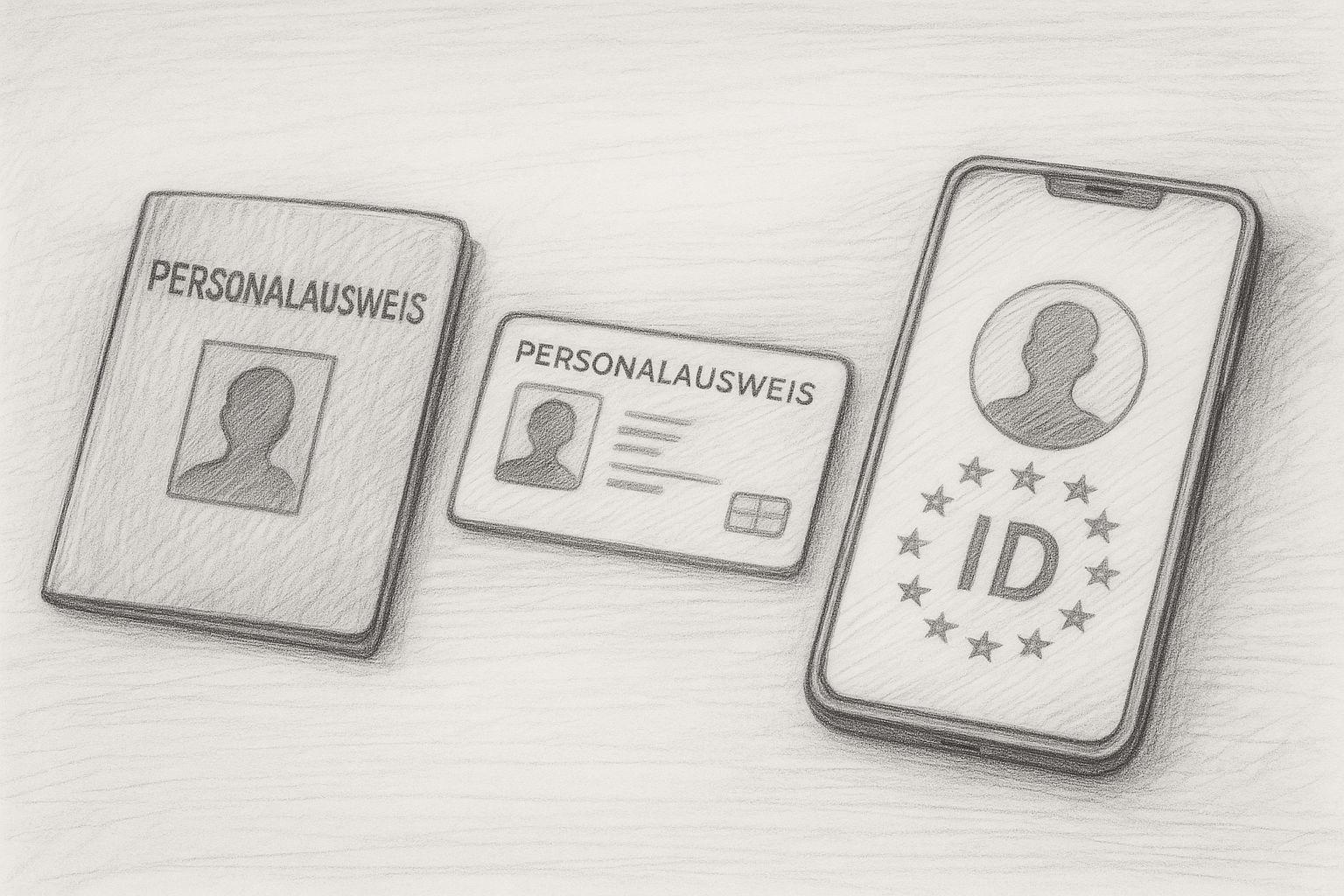
Digital ID of the EU

When you hear about „digital ID“, „European identity wallet“ or „EUDI wallet“, it sounds abstract at first - almost like another complicated IT project from Brussels. Many people have never consciously heard of „eIDAS 2.0“, the underlying EU regulations. And yet this project will affect almost every citizen of the European Union in the long term.

In essence, it is about something that we have been carrying around with us on paper or as a plastic card in our everyday lives for decades: official proof of our identity. Until now, we have had various documents - ID card, driver's license, health insurance card, tax ID, account login, insurance number. Each system works separately, each with its own processes, often confusing and sometimes annoying.

The EU is now pursuing the goal of merging these scattered areas of identity into a standardized digital solution.

Read more

A fact check on the electronic patient file (EPR): risks, rights and objections

All the facts about electronic patient records

The electronic patient file, or ePA for short, is one of the most ambitious digitization projects in the German healthcare system. It is intended to bundle medical information centrally - from findings and laboratory values to medication plans, vaccinations and hospital reports. The aim is to better connect doctors, therapists, pharmacies and patients, avoid duplicate examinations and improve the quality of treatment.

What sounds modern and efficient on paper raises numerous questions in practice: Who has access? How secure is the data? And above all: do I even want all my health information to be stored and accessible centrally - even if I haven't asked for it?

Read more

Forced migration at HostEurope: When emails suddenly end up in the cloud

Hosteurope migration to Microsoft 365

There are decisions that self-employed people like to put off because they are inconvenient. Changing hosting providers is undoubtedly one of them. As long as the websites are running, the emails are arriving and the bills are being paid, you think: Why touch something that works?

But sometimes you realize too late that "working" no longer means "right". My web hosting provider Hosteurope was of the opinion that it had to force its customers to migrate to Microsoft 365 for a fee without their active consent. The following is my experience, which ended for me with a migration to another hosting provider.

Read more