Immortality through technology: how far research and AI have really come

Digital immortality

Ever since humans have existed, there has been a desire to prolong life - or preferably extend it indefinitely. In the past, it was myths, religions, alchemists or mysterious rituals that gave people hope. Today, it is no longer magicians sitting over ancient parchments, but some of the richest people in the world sitting over state-of-the-art biology and AI technology. At first glance, it sounds like science fiction: is it possible to stop ageing? Can you „preserve“ yourself digitally? Can you transfer your thinking to a machine?

But the topic has long since left the ivory tower. Big tech billionaires are now investing billions in projects that are seriously investigating precisely these questions. Not because they want to become immortal gods - but because they can afford to research the limits of what is possible. This article explains quite simply what is behind this idea, what technical developments already exist today, where the limits lie - and why this topic will become increasingly important over the next 20 years.

Read more

The EU's digital ID: linking, control and risks in everyday life

Digital ID of the EU

When you hear about „digital ID“, „European identity wallet“ or „EUDI wallet“, it sounds abstract at first - almost like another complicated IT project from Brussels. Many people have never consciously heard of „eIDAS 2.0“, the underlying EU regulations. And yet this project will affect almost every citizen of the European Union in the long term.

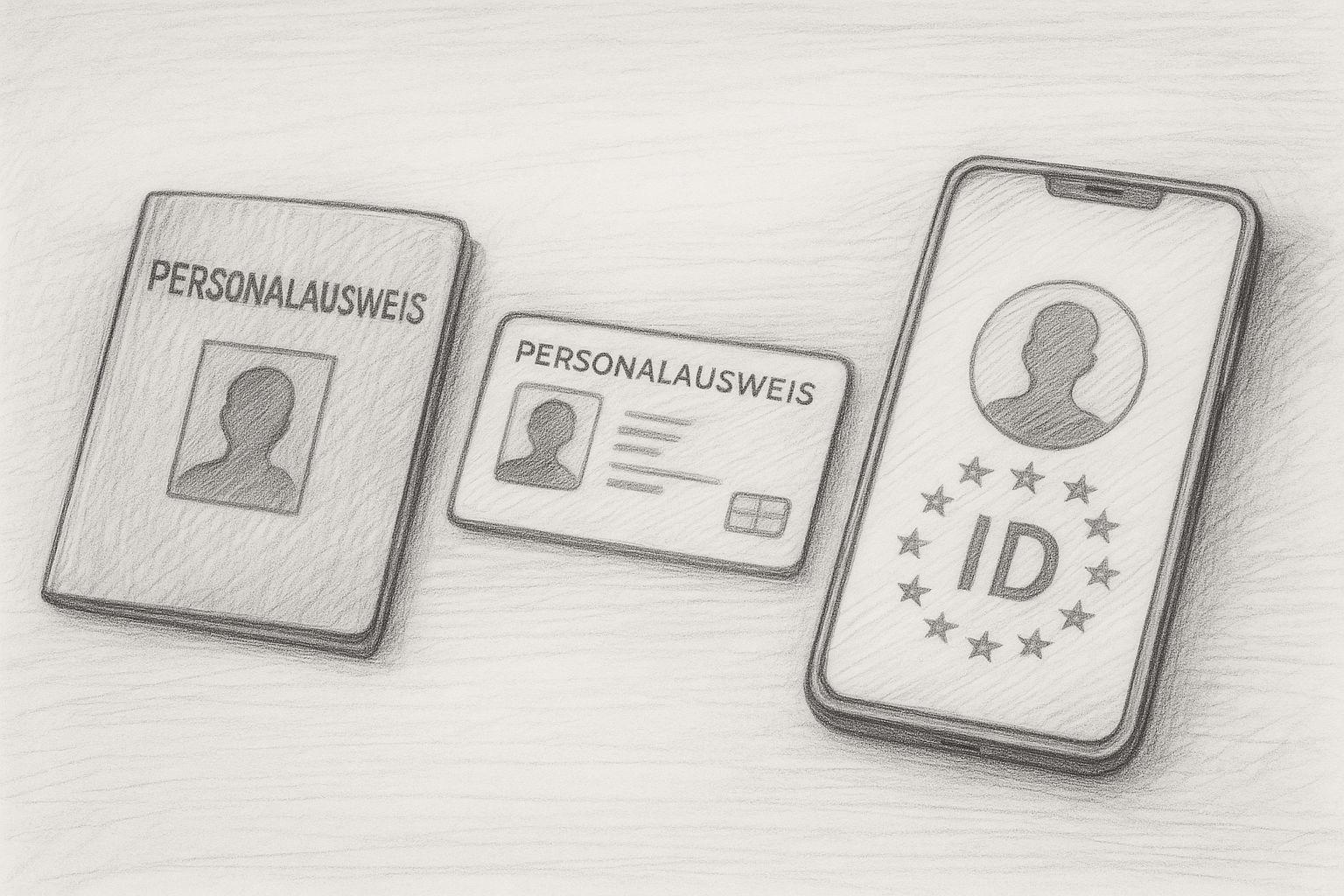
In essence, it is about something that we have been carrying around with us on paper or as a plastic card in our everyday lives for decades: official proof of our identity. Until now, we have had various documents - ID card, driver's license, health insurance card, tax ID, account login, insurance number. Each system works separately, each with its own processes, often confusing and sometimes annoying.

The EU is now pursuing the goal of merging these scattered areas of identity into a standardized digital solution.

Read more

A fact check on the electronic patient file (EPR): risks, rights and objections

All the facts about electronic patient records

The electronic patient file, or ePA for short, is one of the most ambitious digitization projects in the German healthcare system. It is intended to bundle medical information centrally - from findings and laboratory values to medication plans, vaccinations and hospital reports. The aim is to better connect doctors, therapists, pharmacies and patients, avoid duplicate examinations and improve the quality of treatment.

What sounds modern and efficient on paper raises numerous questions in practice: Who has access? How secure is the data? And above all: do I even want all my health information to be stored and accessible centrally - even if I haven't asked for it?

Read more

Forced migration at HostEurope: When emails suddenly end up in the cloud

Hosteurope migration to Microsoft 365

There are decisions that self-employed people like to put off because they are inconvenient. Changing hosting providers is undoubtedly one of them. As long as the websites are running, the emails are arriving and the bills are being paid, you think: Why touch something that works?

But sometimes you realize too late that "working" no longer means "right". My web hosting provider Hosteurope was of the opinion that it had to force its customers to migrate to Microsoft 365 for a fee without their active consent. The following is my experience, which ended for me with a migration to another hosting provider.

Read more

Stress is not a force of nature - How to reclaim your freedom, step by step

Stress is not a force of nature

"You have too much stress."

That's what my dentist said to me when I was being treated for my CMD problems. And my spontaneous answer was one that many people would probably give:

"Yes, what am I supposed to do - I have the stress."

But his next sentence stuck in my head. He just said calmly:

Read more

Electronic invoices for SMEs: XRechnung, ZUGFeRD and ERP at a glance

Overview of the obligation to issue electronic invoices

Germany did not invent the e-invoice overnight - it is the result of years of standardization work (EN 16931), federal and state regulations (B2G) and now, via the Growth Opportunities Act, the gradual expansion into everyday B2B life. Since January 1, 2025, a new legal situation has applied: an "electronic invoice" is only an e-invoice if it is structured and machine-readable - pure PDF attachments by email are no longer an e-invoice according to the definition. This sounds technical, but has operational consequences from invoice receipt to accounting and archiving.

Read more

Why ERP software alone is not enough - and how to really understand processes

ERP software: Understanding operating processes before digitalization

In many companies, it always follows the same pattern: at some point, management realizes that "something is no longer running smoothly". Perhaps processes have become too slow, errors are accumulating, or the company is increasingly losing track of figures, customers or internal processes. The call for a new software solution becomes loud - preferably a modern, powerful ERP software that "can do everything". But this is often where a fatal fallacy begins.

Read more

How I wrote five books in two languages in four months

Writing books with Affinity and BoD

...and why this is not a miracle, but the result of a clear strategy

For a long time, writing books was seen as something tedious - a lonely project that drags on for months or even years. But what if you let go of this image? What if you rethink writing - with a clear focus, well thought-out processes and targeted use of AI?

In my new book "Writing books 2.0 - a practical guide for authors in the age of AI" I describe exactly this path. A path that has enabled me to write five books in just four months, publish them in two languages - and not accept any loss of quality compared to traditional publishing.

Read more