A good ten years ago, I happened to watch a lecture on the transition from the information society to the knowledge society. At the time, much of it still sounded theoretical, almost academic. It was about concepts such as data sovereignty, ownership of information and the question of who will actually determine what is accessible in the future - and what is not. Today, with a little distance, this lecture seems surprisingly precise. After all, much of what was described as a development back then has now become reality. More and more data has migrated to the cloud. More and more information is no longer stored on in-house systems, but in external infrastructures. And increasingly, it is no longer the user but a provider, a platform or a set of rules that decides what is possible.
To understand this development, it is worth taking a step back. The information society in which many of us grew up was not a normal state. It was a historical exception.
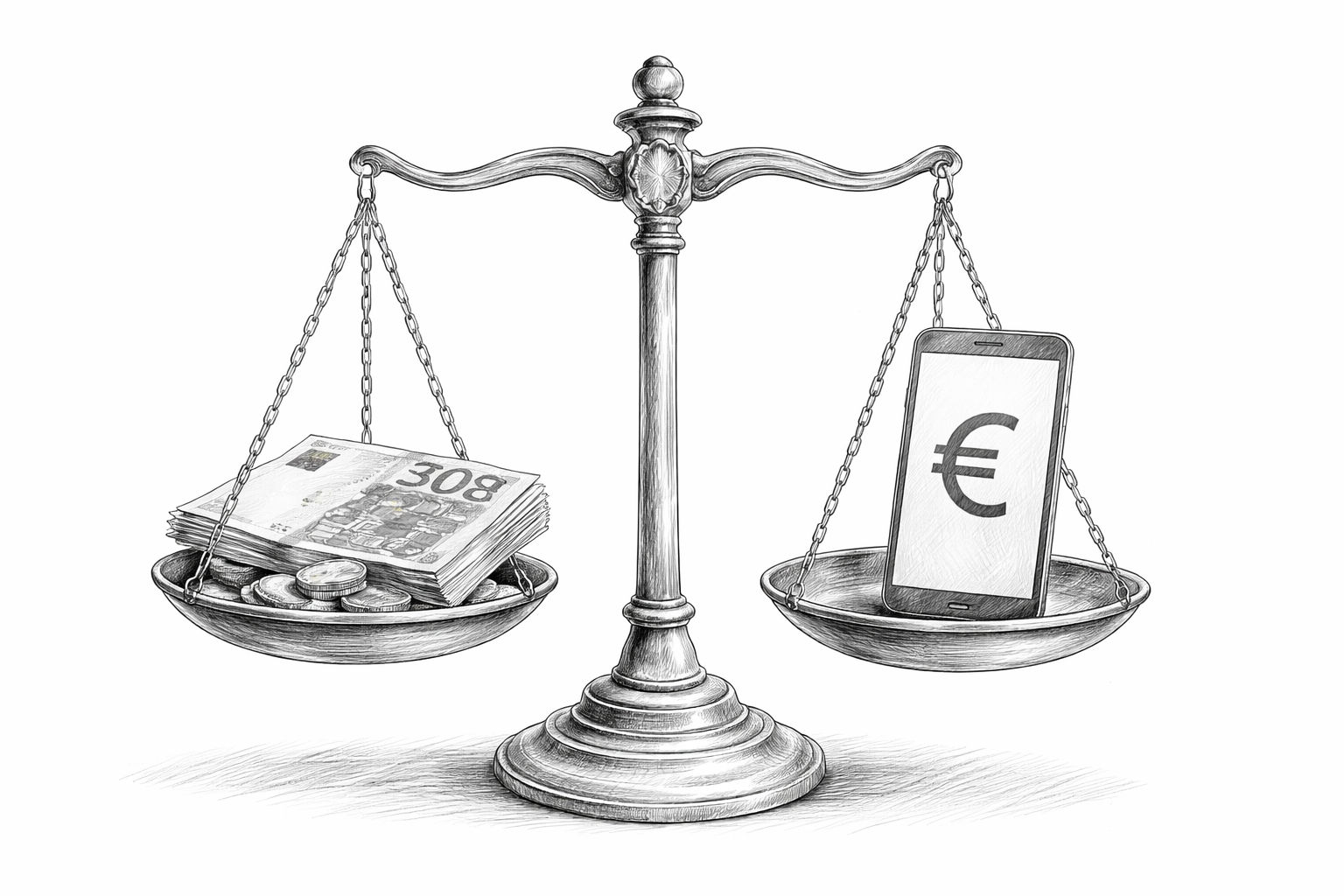

The information society - a special historical case
The information society was characterized by a simple but effective principle: information was easily accessible. If you wanted to know something, you could search for it. Websites, forums, blogs, online archives and later search engines ensured that knowledge was available seemingly without limits.
The decisive factor here was not the quality of each individual piece of information, but the fact that access was basically open. You didn't have to ask, you didn't have to apply, you didn't have to be activated. You could read, compare and form your own opinion.
In short: access was power.
Why this phase felt so normal
Many people still take this time for granted today. This is because an entire generation was socialized during this phase. Information was „just there“. If something was missing, it was usually because people hadn't looked for it properly. It is often overlooked that this openness was the result of certain technical, economic and cultural conditions:
- Decentralized websites instead of centralized platforms
- Own servers instead of external clouds
- Content that was distributed instead of controlled
This constellation was favorable - but it was not permanently guaranteed.
The role of the Internet as an open network
The early Internet was not a marketplace or a stage, but first and foremost a network. Content was located in many places, was linked, copied and mirrored. There was no central authority that decided what information was allowed to be visible. This had two consequences:
- Knowledge could grow and branch out
- Dependencies remained comparatively low
If you operated your own website, you owned your content. If you operated a server, you controlled your data. This was technically more demanding than today - but structurally clear.
Why the information society was not a permanent state
With increasing convenience, behavior changed. Own servers were replaced by rented ones. Local systems gave way to cloud services. Platforms took over functions that used to be distributed. This was not wrong and not meant in a bad way. It was efficient, cheap and convenient. But it had a side effect:
Control shifted. Information was still available - but it was increasingly in the hands of others. And so the balance of power slowly began to shift.
Looking back, we can say that the information society was a transitional phase in which access was more important than ownership. It is precisely this point that is increasingly being called into question today. The more information is stored, evaluated and filtered centrally, the more decisive the question becomes rather than access:
Who actually owns the data?
We are thus entering the field of the knowledge society - and different rules apply there.
Observations from practice
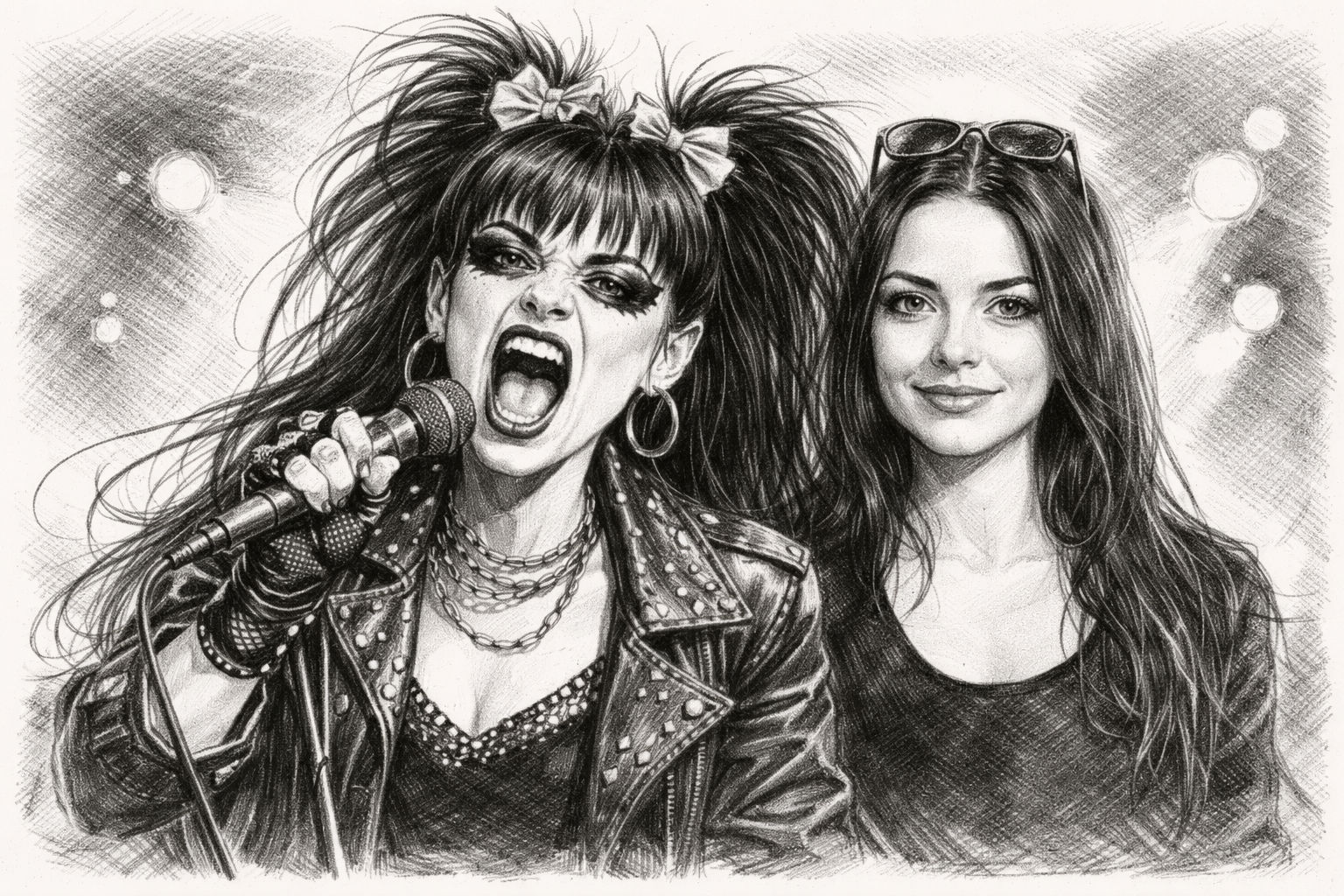
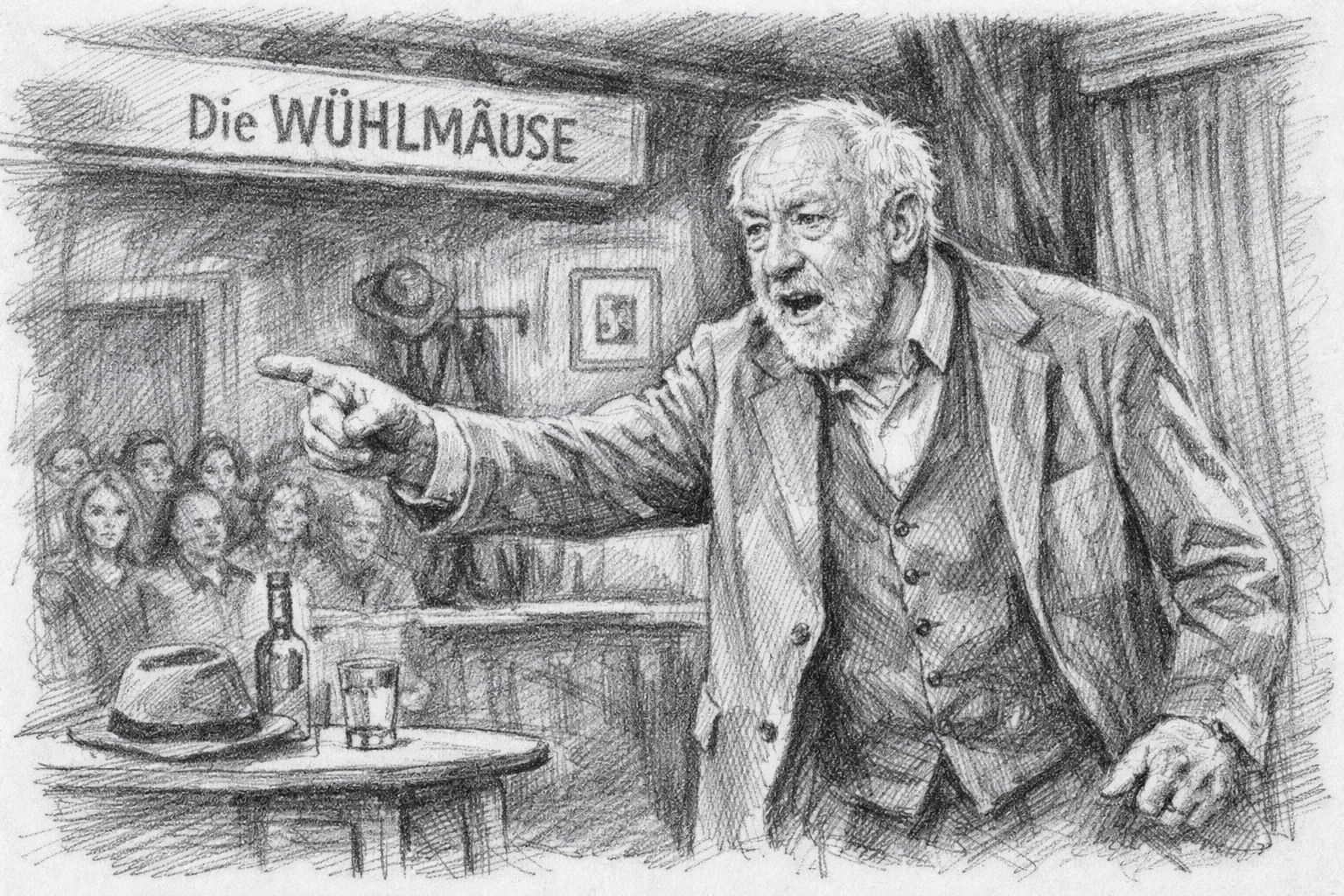
These thoughts did not arise theoretically, but quite practically during the research for several articles. When I became more intensively involved with personalities such as Dieter Bohlen, Jan-Josef Liefers and also Prof. Dr. Christian Rieck I noticed something that initially seems banal, but on closer inspection says a lot about our times: none of them really have their own, well-maintained website as a content hub. Instead, you can find them almost exclusively on platforms such as YouTube, Instagram or in third-party media appearances.
All three undoubtedly have reach. But this reach does not belong to them. It belongs to the platforms on which they take place. What looks like visibility is actually dependency. This observation was an important trigger for questioning the relationship between reach, ownership and knowledge creation more fundamentally.

The creeping end of free information
Saying that information is becoming „scarcer“ today sounds paradoxical at first. Because of course there is still an infinite amount of information on the internet. Millions of new pieces of content are published, videos uploaded and articles written every day. And yet for many people, it feels as if they are finding less at the same time - or at least less of what really matters.
The reason is simple: it's not about quantity, but about availability. And availability is different from „exists somewhere“. In the past, information was often publicly findable, freely accessible and relatively easy to search. Today, information is becoming scarce again in several steps - not through one large, visible measure, but through many small changes that add up over the years.
Paywalls, closed platforms and algorithmization
An important factor are Paywalls. Newspapers, magazines and specialist portals have realized that free content may bring reach, but it does not ensure a stable existence. So articles are moved behind paywalls. This is understandable from the providers' point of view - and often fair. Nevertheless, it means that part of the public knowledge space is moving back into private spaces. Those who pay are allowed to read. Those who don't pay stay out.
In addition Closed platforms. In the past, content was available as websites that could be accessed directly or found via search engines. Today, a lot of content is stored in systems that are „online“ but no longer really open: social media posts, groups, comment areas, video platforms, chat communities. Content is there - but it is not freely searchable, cannot be found permanently and is often only useful within an app. You could say that it is there, but it no longer belongs to the public space, but to an operator.
This effect is made even stronger by Algorithmization. In the past, the order of the results was not neutral either, but it was comprehensible for many people: You search for something, you get hits, you click through. Today, algorithmic systems are increasingly deciding what you „should“ see. Two people search for the same term - and get different results depending on their profile, location, language, device or expected interests. This means that information is not only filtered, but also personalized. And while personalized knowledge is convenient, it comes at a price: you no longer see the web, but a section of it.
Another point is subtle but very effective: Summaries instead of sources. More and more often, you no longer get the original text, but an abridged version, a snippet, an AI overview, an „answer“. That saves time, of course. But it changes the way we deal with information. Because if you only consume summaries, you forget to check sources, compare contexts and categorize things independently. This turns information into a pre-filtered product.
And then there is another very practical, less spectacular reason: a lot of content simply disappears. Websites are shut down, forums die, blogs are no longer maintained, links come to nothing. This doesn't happen out of malice, but because projects end, servers are terminated, people give up their hobby or platforms change their policies. The web is not automatically an archive. It is more of a flow. If you don't actively archive, you lose.
All of these developments lead to a result that can be felt in everyday life: information is not gone - but it is no longer free as a matter of course. You have to pay more, register more, be guided more or move more on platforms that have their own rules.
This means we are already in the middle of the transition: away from open access - towards the question of who exercises control.
The transition from access to control
In the information society, the central question was:
How do I gain knowledge?
In the emerging knowledge society, the question is increasingly being asked:
Who decides whether I can get here?
This is a fundamental change. And it's not happening as a big bang, but as a gradual shift in responsibilities. In the past, the user was often the one who organized access. If you published something, you put it on your website. If you wanted to read something, you called up the page. Search engines were intermediaries, but the content was decentralized. Access was essentially technical: URL, browser, Internet connection - done. Today, access is increasingly becoming a question of rules. It's not just about technology, but also about rights, guidelines, accounts, restrictions and conditions. Access is managed. And those who manage, control.
It starts with simple things: A platform operator can throttle reach. An algorithm can push topics out of the field of vision. An account can be blocked. Content can be „downgraded“. A post can still exist, but become practically invisible. This is not a classic deletion, but it is a form of control over visibility.
Then comes the next step: Centralization of the infrastructure. If data and applications are no longer stored locally, but in external data centers, the power over this data is also shifted. Whoever operates the infrastructure can set the conditions. Whoever sets the conditions defines the limits.
And this is where it gets exciting: many users believe they have control because they have uploaded „their data“ somewhere. But ownership is not the same as use. If your data is stored in a system that you do not control, then you essentially only have a right of use - and often not even that in full. You can use it as long as you accept the rules. And these rules can change.
Companies are also increasingly experiencing this. In the past, it was normal for a company to itself operation: servers in the basement or in the data center, clear responsibilities, physical access. Today, many processes are outsourcedCRM, accounting, documents, communication, databases. That looks modern. But it also means that the company is more dependent on contracts, platforms and external framework conditions. A system failure, a price change, a regulatory problem or a conflict with the provider can suddenly become existential.
And this brings us to a key point that is often underestimated: Control is not only technical, but also political and economic. Whoever operates a platform can decide what content is permitted. Whoever operates a data center can determine which countries are granted access, which authorities can make requests and which data is processed and how. Whoever collects the data can use it to create profiles, automate decisions, control advertising or influence markets. The shift from access to control is therefore not only reflected in the question of whether something is online. It can be seen in the power relations behind it.
And here we come full circle to my original observation from the first part: many people believe that reach is ownership. In reality, reach on platforms is merely a result that can be changed at any time. Whoever controls the platform controls the reach. Whoever controls the infrastructure controls the data. And whoever controls the data controls the knowledge that arises from it in the long term.
The information society has accustomed us to the feeling that access is a matter of course. The knowledge society reminds us that access always depends on ownership and control - even if we tend to forget this in everyday life. This prepares the ground for the next chapter: What exactly distinguishes information from knowledge - and why is data sovereignty becoming the new power issue?
Current survey on digitalization in everyday life
Knowledge society - when possession becomes more important than reach
In the information society, it was often enough to find something. If you could search quickly, you had an advantage. If you knew the right sources, you had a head start. But now that information is no longer freely available as a matter of course and is also constantly being filtered, summarized or included in platforms, the game is changing.
Then it is no longer enough to have access somewhere. What counts is whether you can turn the flood of information into knowledge. The difference can be explained very simply: Information is raw material. It can be correct or incorrect, important or unimportant, complete or fragmented. Information is initially just a piece of content. Knowledge is created when information is put into context:
- through experience
- through classification
- by comparison
- through repetition
- through structure
Those who possess knowledge do not just have individual facts. They have an inner model of the world, a kind of mental map. And it is precisely this map that is more important in the next phase than the question of who is the loudest or has the most clicks.
Because reach can generate attention. But attention is fleeting. Knowledge, on the other hand, is sustainable. You can see this very clearly when you look at how people consume content today. Many jump from headline to headline, from clip to clip, from „hot take“ to „hot take“. This creates a feeling of being informed. But it's often just a feeling. There is a lack of consolidation, order and consistency. The knowledge society does not reward those who are seen the most, but those who best understand what they are seeing.

Why data sovereignty is becoming the new question of power
In the knowledge society, the focus shifts once again. What counts here is not only who can build up knowledge, but also who controls the raw materials for it: Data. This is because knowledge is increasingly being created not only in the minds of individual people, but also in systems. In databases, in analysis tools, in AI models, in evaluation pipelines. And an old, almost commercial rule applies to all of this: whoever owns the raw materials determines the market. Data is the raw material from which systems can derive forecasts, automate decisions and control behavior. Whoever has data sovereignty can:
- Recognize patterns
- Optimize processes
- Assessing risks
- Read markets
- Addressing target groups precisely
- Making decisions faster than others
And anyone who does not have data sovereignty becomes a user, not an owner. They consume knowledge that others gain from their data. This is not automatically malicious. It is simply a power imbalance that arises from ownership. Data sovereignty does not just mean „I have a copy somewhere“. Data sovereignty means:
- I decide, where the data is located.
- I decide, who can access it.
- I decide, like long they are stored.
- I decide, for what they are used.
- I can export, save, archive and migrate them.
The moment these decisions are made by an external provider, the sovereignty is gone. Then - again - you only have a right of use.
And this is precisely why the knowledge society is so closely linked to the issue of ownership. Not in an emotional sense, but in a structural sense. Anyone who owns data and infrastructure has the prerequisites to build up and preserve knowledge independently. This applies to companies as well as individuals. On a small scale, this means having your own content, your own archives, your own systems. On a large scale, it means: digital sovereignty, legal clarity, control over central infrastructures.
And this brings us very close to the topic of reach. Because reach without data sovereignty is ultimately just a measured value in a third-party system.
| Aspect | Information society | Knowledge society |
|---|---|---|
| Key question | How can I find information as quickly as possible? | Who controls the data, context and utilization of knowledge? |
| Power factor | Access (searchability, open sources, decentralized websites). | Ownership & data sovereignty (infrastructure, rules, models, evaluation). |
| Availability | Lots of content free and easy to find. | More paywalls, platform silos, pre-filtering, summaries. |
| Role of platforms | In addition: many independent sites, forums and blogs. | Central: Platforms control visibility, rules and data flows. |
| Visibility | Relatively comprehensible via links and search results. | Algorithmically distributed, personalized, more rule-based. |
| Quality problem | Information overload: a lot is available, but not everything is relevant. | Knowledge gap: Summaries replace sources, context becomes rarer. |
| Central skill | Search, filter, find sources, compare. | Structuring, evaluating, archiving, building up and securing knowledge. |
| Economy | Content often free of charge, financing via advertising/traffic. | More payment systems, data utilization, platform ecosystems, subscriptions. |
| Risks | Misinformation, excessive demands due to quantity. | Dependency, loss of control, invisible filters, legal spaces. |
| Strategic consistency | Achieve reach, be findable, become visible. | Creating your own knowledge spaces: Ownership, data sovereignty, local alternatives. |
„Own“ reach - the big misunderstanding
Reach is seductive. It is visible, measurable and fast. You can see the numbers: Views, likes, comments, shares, followers. And every person who publishes something instinctively senses that if many people react, that means it is relevant. That's not wrong either. Reach is a real signal. But it is not a possession. And this is where the misunderstanding begins.
Reach often feels like you've built something. You have „a community“, you have „an audience“, you have „influence“. And to a certain extent this is true - but only on one condition:
As long as the platform allows it.
This condition is often ignored because it is inconvenient. Those who have reach want to believe that it belongs to them. That it is the result of their work. That it remains permanently available. But in most cases, reach is just the current output of an algorithm. It is not the audience itself. It is the momentary visibility that is assigned to you.
It's like saying: „I own this shopping center because I have a store there and a lot of people walk by.“
In reality, you don't own the shopping center. You only have a retail space - and the operator decides how well located it is, how high the rent will be and whether the store can still open tomorrow.
Who really owns reach
To put it harshly but objectively, the same principle applies to almost all platforms. The platform owns:
- the infrastructure
- the user relationships
- the data
- the rules
- the visibility
The Creator owns:
- Contents (partial)
- Attention (at the moment)
and often not even the possibility of direct contact with his audience. That is the core. You can have a million subscribers on YouTube - but you can't just write to them if you want to. You can have hundreds of thousands of followers on Instagram - but if your account is restricted or blocked, they're gone. You can have reach on platform X - but if the algorithm changes, it drops without you having done anything wrong.
This means that reach is not property, but a kind of loan. And loans can be withdrawn. This becomes even clearer when you look at the economic side. Platforms live from pulling third-party content into their own systems. They create an environment in which users spend time. The more time, the more advertising, the more data, the more revenue. Content is the fuel.
This does not mean that platforms are „the bad guys“. You can use platforms, and you should even use them if it fits strategically. But you should use them like a publisher would have used a newsstand in the past: as a distributor, not as property. Because if you confuse reach with ownership, you are building your house on someone else's land. And then you shouldn't be surprised if the landlord changes the terms one day.
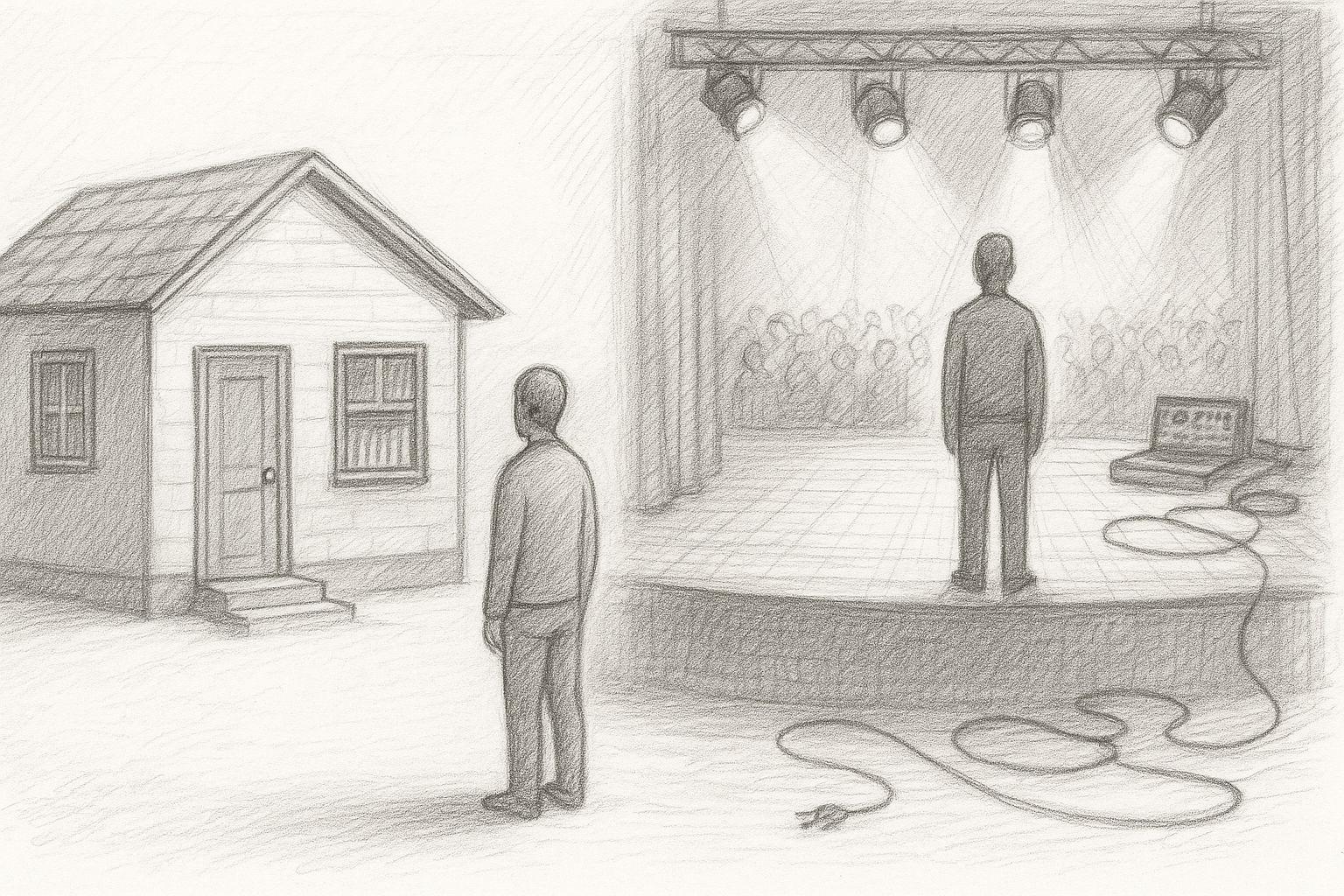
The knowledge society exacerbates this problem even further. Because if knowledge is created from data and data sovereignty is power, then outreach without ownership is basically a public stage on which one speaks - while others control the microphones, the camera, the editing and the archive in the background. And this is precisely why a stable strategy always requires a foundation of ownership:
- own website
- own domain
- Own content archive value
- Own newsletter or mailing list if required
- Own data storage
- Own structure
Reach can then come - and it can also grow up. But it remains a tool, not a home.
Ownership - the unspectacular foundation
Ownership has an image problem. It is seen as old-fashioned, slow and cumbersome. In a world where everything is supposed to be flexible, scalable and „on demand“, ownership seems like a relic from another era. And yet it is precisely this relic that is regaining importance in the knowledge society. Because ownership does not mean stagnation. Ownership means power of disposal. In the digital space, this means in very concrete terms:
- one own website, that nobody can switch off
- one own domain, that does not depend on a platform
- own contents, that are not algorithmically hidden
- own data, which can be exported, saved and archived
It all sounds unspectacular. And that's exactly where the strength lies. Property doesn't have to shine. It has to last. That used to be a matter of course. A publishing house owned its printing presses, its archives, its rights. A company owned its files, its customer data, its systems. If you had property, you could plan, make decisions and survive crises. Today, this logic is often reversed: people use other people's systems because they are convenient and hope that everything goes well. This usually works for a while. But hope is not a strategy.
Why property is becoming attractive again
The more control, filtering and dependencies increase, the more attractive what you control yourself becomes. Not for ideological reasons, but for practical ones. Ownership offers three decisive advantages:
- Consistency. An own article does not disappear just because an algorithm changes. Your own page does not lose its raison d'être overnight.
- Context. Your own content is not isolated, but rather in a context. They refer to each other, build on each other and grow into an archive over time. This is exactly where knowledge comes from.
- Sovereignty. If you have property, you can use reach without being dependent on it. Platforms become tools, not lifelines.
You can see this difference very clearly in people and organizations that think long-term. They do not primarily invest in visibility, but in structure. Visibility then emerges - sometimes faster, sometimes slower - but it is not existential. In this sense, ownership is not a counter-model to modernity, but a prerequisite for not losing control in it.
| Criterion | Ownership (own structures) | Reach (platform structures) |
|---|---|---|
| Control | You determine the rules, presentation, access and availability. | The platform determines rules, visibility and reach distribution. |
| Consistency | Content remains findable as long as you maintain and host it. | Visibility can fluctuate; accounts, formats and rules change. |
| Dependence | Low: You can change providers, migrate and archive content. | High: You are dependent on algorithm, platform policy and access. |
| Data sovereignty | You have data, logs, user relationships and can export. | User data and contacts are primarily held by the platform. |
| Contact with the public | Direct (e.g. newsletter, own accounts, own community tools). | Indirectly (followers formally belong to the platform, not to you). |
| Monetization | You decide on models: book, course, consultation, subscription, sponsoring. | Platform sets framework: Advertising shares, rules, blocks, limits. |
| Risk | Technical/organizational (hosting, maintenance, security) - but controllable. | Control and visibility risk - often sudden and difficult to influence. |
| Long-term value | High: Content forms an archive that grows and sustains over the years. | Fluctuating: Range depends on the moment and is not automatically archivable. |
| SEO & findability | Easy to control: internal linking, structure, multilingualism, schema. | Limited: Searchability depends on the platform and its indexing. |
| Strategic role | Foundation: Your own knowledge space and your own brand. | Distributor: Generate attention and lead back to your property. |
From a rented audience to your own magazine
If range is not property, the next question inevitably arises:
How can digital property be created at all?
One of the most stable answers to this is to have your own online magazine. Not as a marketing gimmick, but as a structured platform around your own core topic. Content that is created there remains findable, networks with each other and has an impact for years - regardless of whether ads are currently being placed or not.
A magazine like this belongs to you. It is not a channel that an algorithm can throttle at any time, but an infrastructure of its own. Every published article, every thought, every classification pays directly into this digital property.
Digital substance instead of short-term campaigns
Having your own magazine does not replace advertising - it changes the perspective. Instead of renting attention, it creates substance. Instead of short-term peaks in reach, long-term visibility grows. Especially in combination with multilingualism, internal linking and automated content streams, the impact of each individual article can be multiplied.
The key difference is that the effort is not invested in something ephemeral, but in a structure that lasts. If you start today, you build a digital foundation step by step that will last tomorrow.
Your own magazine as a strategic starting point
If you no longer want to be solely dependent on external reach, but want to build your own digital property, your own magazine may be the right next step. Not as an additional project, but as a long-term starting point for visibility, ranking and trust.
If you are interested in setting up your own magazine and developing digital property step by step, I also offer a suitable magazine system. It is aimed at companies and self-employed people who not only want to publish content, but also structure it for the long term and make it visible independently of platforms.
An overview of the structure, technical basis and possible application scenarios can be found here:
Classify range correctly - tool instead of target
Reach is not a bad thing. On the contrary: it can be very valuable. But it only unfolds its value if it is classified correctly. In a stable strategy, reach is reach:
- a whistleblower
- an amplifier
- an inflow
It shows which topics generate resonance. It brings people to content that they would otherwise not have found. It can initiate discussions and trigger thought processes. But reach must not be the foundation. It is the wind in the sails, not the hull of the ship. If you only build on reach, you will drift - sometimes quickly, but without direction. Used sensibly, reach always leads back to ownership:
- From the platform to your own website
- From a short impulse to a longer text
- from moment to substance
This is how reach has always been used. In the past, it was newspaper articles, interviews or television appearances that referred to books, lectures or companies. Today it is platforms, feeds and search engines. The logic is identical.
Back to the examples
If you look at the examples mentioned at the beginning, the difference becomes very clear. With personalities such as Dieter Bohlen or Professor Rieck, you can see how powerful reach can be - but also how fleeting it is if it is not embedded in a permanent foundation of its own. Reach generates attention, but it does not automatically explain connections.
This is exactly where the space for classification, for depth, for texts that last longer than a performance or a video is created. The view of the Cloud Act and the issue of data sovereignty shows the structural side of this problem. Those who hand over data and infrastructure relinquish control - often without realizing it immediately. Reach does not help here. Ownership of systems, data and decision-making channels is crucial.
And finally the local AIIt is a very tangible example of what ownership and sovereignty can look like in practice. Anyone who operates models locally, who does not necessarily transfer data to external clouds, who understands tools instead of just consuming them, builds up knowledge - not just user competence. All of these examples follow the same pattern:
- Reach can create attention.
- Ownership creates substance.
- Knowledge is created where substance is cultivated over time.
The silent shift in standards
We are not at the beginning of a loud revolution, but in the middle of a quiet shift. The information society, in which access was everything, is giving way to a knowledge society in which ownership, structure and data sovereignty count again.
Those who understand this difference will not reject reach - but they will no longer confuse them. And those who build up ownership will not be rewarded immediately, but will be independent in the long term. The question is therefore not whether you have reach.
The question is where it will lead - and what will remain if it becomes less tomorrow.



Frequently asked questions
- What is this article actually about?
The article describes a fundamental social change: the transition from the information society to the knowledge society. It shows why mere access to information used to be decisive, but why ownership, data sovereignty and structural control are becoming increasingly important today. It explains why reach is often overestimated and why it is no substitute for ownership. - What exactly is meant by „information society“?
The information society refers to a phase in which information was largely freely accessible. Websites, search engines, forums and blogs made it relatively easy to find knowledge. Those who could search had advantages. Control played a subordinate role, access was the central factor. - Why is the information society described as a special historical case?
Because this openness was not a matter of course and is not permanent. It was created by technical developments, low regulation and a decentralized network structure. These conditions have gradually changed in recent years. - Why does the article say that information is becoming scarcer again today?
Not because there is less content, but because it is less freely available. Paywalls, closed platforms, algorithmic filters and summarizing systems ensure that, although we consume a lot of information, we have less and less direct access to original sources. - What does the transition from access to control mean in concrete terms?
In the past, it was easy to access content. Today, platforms, algorithms, terms of use and legal frameworks decide whether and how content is visible. Access is no longer granted technically, but based on rules - and can be changed at any time. - What is the difference between information and knowledge?
Information is a single datum, a statement or a fact. Knowledge is only created when information is categorized, compared, repeated and linked to experience. Knowledge is structured information with context and meaning. - Why is knowledge more important than reach in the new phase?
Because reach only generates attention, but knowledge provides orientation. Attention is fleeting, knowledge has a long-term effect. In a complex world, it is not who is the loudest that counts, but who understands the context. - Why is data sovereignty described as a new question of power?
Because data is the raw material from which knowledge, forecasts and decisions are made. Those who have access to and control data can manage processes, understand markets and build systems. Those who do not have data sovereignty remain users of external knowledge. - What does data sovereignty mean in practical terms?
Data sovereignty means being able to determine where data is stored, who has access to it, how it may be used and whether it can be exported. It means being not just a user, but the owner of your own data. - Why is range not property?
Because reach on platforms is always borrowed. It depends on algorithms, rules and decisions made by others. Visibility can increase or disappear without the creator having done anything wrong. - Who owns the reach on platforms such as YouTube or Instagram?
The platform operator controls the infrastructure, user relationships, data and visibility. Creators provide content, but generally have neither direct contact with the audience nor the framework conditions. - Why do many still feel safe when they have reach?
Because reach is measurable and signals short-term success. Numbers convey stability, even if they are structurally fragile. This security is often psychological, not strategic. - What role do platforms play in the knowledge society?
Platforms are tools for distributing content. It only becomes problematic when they become the only foundation. If you don't have your own structures, you are dependent on platforms. - What does the article mean by digital property?
Digital property means own websites, domains, content, archives and data storage. It is about the ability to permanently secure, control and independently operate content. - Why does property often seem unattractive today?
Because it requires time, care and responsibility. Ownership grows slowly and does not deliver instant applause. In a culture geared towards speed, this seems old-fashioned, but it is stable. - What advantages does ownership offer over range?
Ownership is permanent, independent and contextual. Content is related to each other, builds up an archive and remains available even when attention wanes. - How do personalities like Dieter Bohlen fit into this theme?
They have a wide reach, but hardly any digital property of their own. Their visibility is high, but their content is predominantly on third-party platforms. This shows the difference between attention and control. - Why does the Cloud Act play a role in this context?
Because it makes it clear that data sovereignty is not only technically relevant, but also legally relevant. Anyone who uses cloud infrastructure is subject to external legislation and access options. - What is the significance of local AI in the context of the article?
Local AI is an example of digital sovereignty. Data remains with the user, models are operated by the user, knowledge is created independently of external infrastructures. - Should you avoid platforms completely?
No. Platforms are useful as distributors and amplifiers. It is crucial that they are not the foundation, but refer to their own structures. - What is the central message of the article?
Reach is a tool, not a possession. Ownership creates substance. Knowledge is created where content, data and structures are under long-term control.