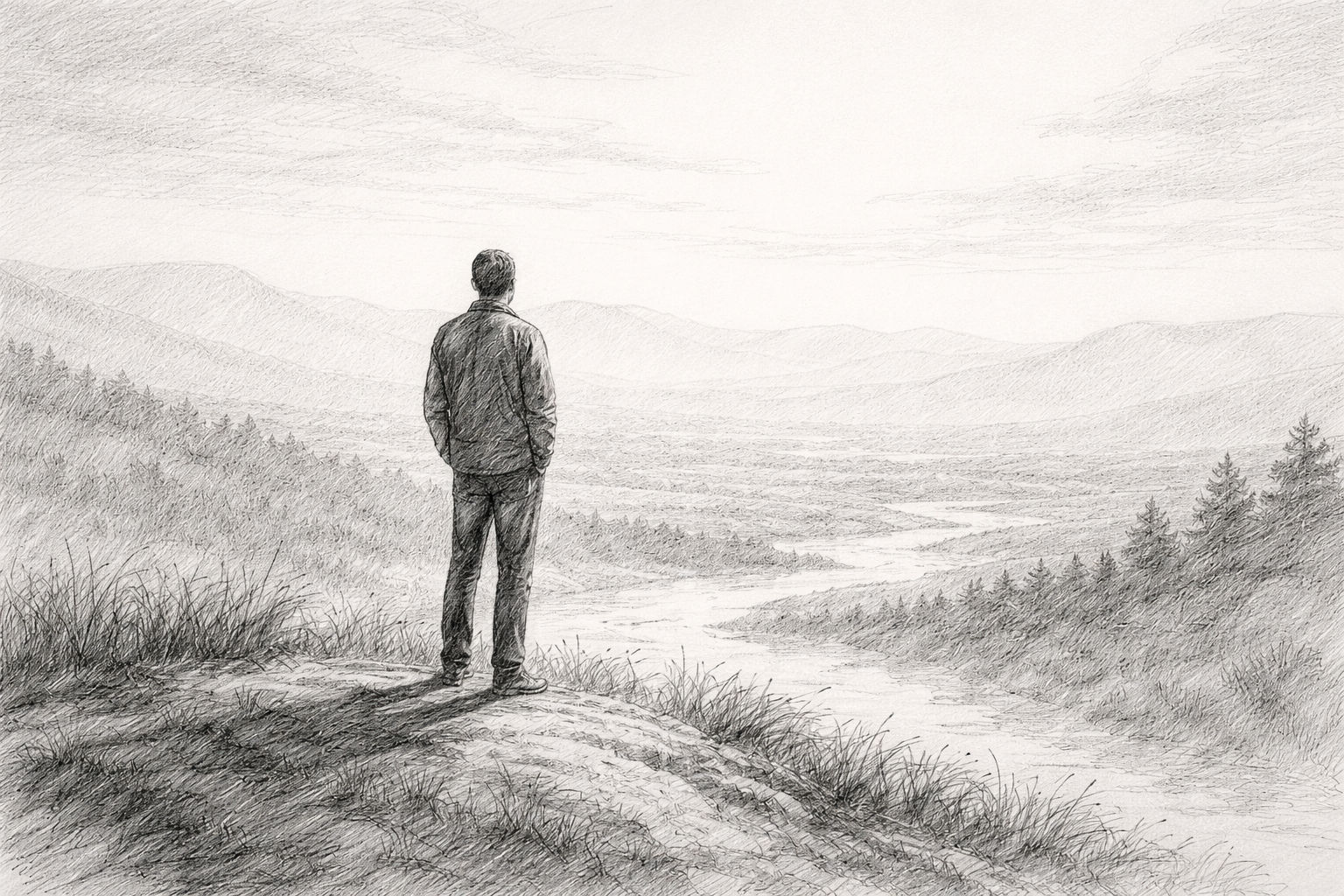
When you are in the middle of a crisis, everything seems urgent. You have the feeling that you have to act immediately, speak immediately, decide immediately. And there is often a second feeling on top of that: If you don't keep at it now, everything will slip away. That's understandable. It's also human. But this is exactly where the mistake often begins.
Because closeness is not automatically clarity. Proximity can also mean that you are too close to see what is really happening. Just like you can't recognize a painting if your nose is stuck to the canvas. You then only see individual brushstrokes - and think they are the whole painting.
A freeze-out, properly understood, is nothing more than a step back. Not to run away, but to be able to see again.

„Freeze-out“ - the borrowed term
The term „Freeze-out“ sounds harsh. It sounds like coldness, like control, like a technique to punish or manipulate someone. And yes - it does exist. People can break off contact to build up pressure, demonstrate power or make the other person feel insecure. That's a different topic, and that's not what we're talking about here.
When we talk about freeze-out here, we do not mean „I deprive you of closeness so that you can function“. We think so: „I deprive myself of the constant stimulus so that I can think again.“ That is a crucial difference.
An honest freeze-out is not a method of changing the other person. It is a way of sorting yourself out again. And that's exactly why it's so valuable - because it doesn't focus on external impact, but on inner orientation.
Classification of the term „freeze-out“
The term „freeze-out“ originally comes from the so-called Pick-up– and the dating scene. There, it is often described as a technique for triggering specific reactions or behavioral changes in the other person through deliberate withdrawal of contact. In this context, the “freeze-out” is a means of exerting influence—externally directed, strategically employed, and often deliberately manipulative. This article expressly distances itself from precisely that.
The freeze-out described here has a completely different aim: it is not aimed at the other person, but at oneself. It is not about getting someone to do something, but about rediscovering your own perception, gaining inner clarity and no longer making decisions out of pressure, but from a stable inner standpoint.
Freeze-out as a deliberate interruption
You can put it quite simply: a freeze-out is a break. An interruption. A temporary break in contact that is not caused by indifference, but by a very clear need: distance. And this distance is not a luxury. In some situations, it is the prerequisite for you to become „you“ again.
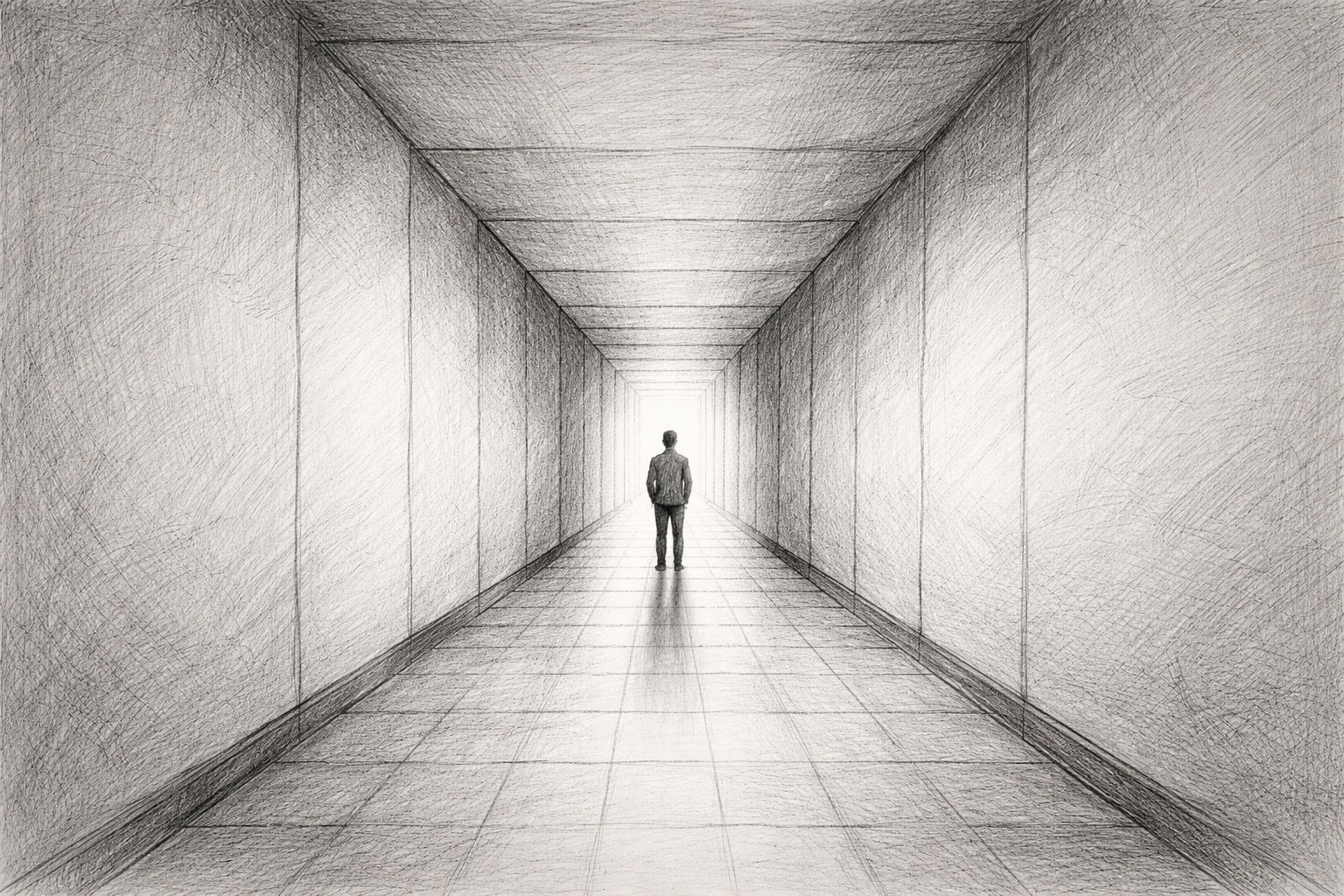
Because in crises, people often lose something that they normally take for granted: a calm inner standpoint. You only react. You jump from thought to thought. You look for explanations. You want control back. And the more you try to regain control, the more you slip into the tunnel.
A break interrupts this tunnel. The important thing is: a break is not automatically cowardly. It is not automatically immature. And it is also not automatically a „refusal“. On the contrary, it can be a very mature step. One that says: „I don't make decisions in the fog now. I'll decide when I can see again.“
Why this is so difficult
Many people feel that they need to keep their distance - and still don't do it. Not because they are stupid. But because it goes against several inner programs that almost all of us have learned.
- For example, there is this sense of duty: „I can't leave now.“
- There is the thought: „If I keep my distance now, it will escalate.“
- And there is the fear: „If I withdraw, I lose the person or the situation for good.“
This fear is often not unfounded. But it leads to a paradoxical dynamic: you stay in it, even though you already realize that you are getting worse at it. You stay in it even though you already realize that you are losing yourself. You stay in it because you believe it is responsible - and overlook the fact that responsibility sometimes means exactly the opposite: taking a step back.
You have to think of it like an engine that overheats. You can't just keep accelerating and hope it gets better. You have to take it out, let it cool down and check it. Anything else will eventually end in total failure.
Delimitation: break is not „termination“
A freeze-out is not a separation by radio silence. Nor is it a „I'll be gone until you've changed“. If you do something like this, it's a power play - and power plays are the surest way to make things worse in a crisis. Ideally, a freeze-out is clearly limited and internally clean:
- You take a step back to regain clarity.
- You keep your distance so as not to act in the heat of the moment.
- You take a step back to find out what the issue really is.
This could mean that you don't write for a few days. Or that you deliberately spend a weekend alone. Or that you take yourself out of an ongoing communication that only consists of justifications and misunderstandings.
The point is not the form. The point is the function: you create a space in which you can think again without new stimuli constantly coming your way.
Why „clarify immediately“ is often the wrong thing to do
There is a widespread belief that problems can be solved if you just talk about them long enough. And yes - in many situations this is true. If both sides are calm. If there is enough trust. If you really listen to each other. When not every statement is taken as an attack.
This is often not the case in real crises. The situation is already so charged that every conversation immediately falls back into old loops. You explain yourself - and all the other person hears is a justification. The other person explains themselves - and all you hear is an accusation. And in the end, you don't come out of the conversation any wiser, but more confused. Not calmer, but more exhausted. Not closer to the solution, but deeper in the fog.
You can look at it very soberly: Communication needs bandwidth. If your inner bandwidth is blocked by stress, anxiety, pressure or constant stress, then communication is of no use to you - it overloads you even more.
And this is where distance can actually be the responsible thing to do: stop talking until you can hear yourself again.
The silent difference between reaction and decision
A crisis often forces you into reaction mode. You react to news. You react to tone of voice. You react to expectations. You react to the inner turmoil.
A freeze-out is an attempt to get out of reaction mode. Because decisions that you make in reaction mode are rarely good decisions. They are almost always short-circuit decisions:
- The main thing is that the pressure eases. The main thing is that something happens.
- The main thing is that I no longer have to endure this feeling.
This is understandable, but dangerous. A freeze-out gives you the opportunity to get back into a state where you can decide instead of just reacting. It's a difference like night and day. And once you've experienced it, you'll understand why many people say in retrospect:
„If only I had kept my distance earlier.“
What you can allow yourself
Perhaps this is the most important sentence in this chapter: You can allow yourself distance.
Not as an excuse. Not as an escape. But as a tool to become clear again. It is not a sign of weakness when you say:
„I need space for now.“
It is often a sign of strength because it means that you don't want to make things worse out of impulse. That you won't keep running blindly just because moving feels better than standing still.
In the past, this would simply have been called „gathering“. Today, this is often confused with „avoiding“. But there is a difference between avoidance and collection: avoidance does not want to look. Gathering first wants to be able to see again.
A freeze-out is not a destination - it is a transition
You shouldn't romanticize a freeze-out. It is not a cure. It is not a guarantee for a good solution. It is not a trick that puts everything in order immediately. But it is often the transition from chaos to clarity.
And that makes it something that has become surprisingly rare in modern crises: a conscious interruption before you get stuck.
The next chapters will deal with precisely this: why we so easily fight the wrong problem in crises, why tunnel vision is so difficult to recognize - and how distance can work in practice without it becoming a drama.
Because sometimes the best thing you can do is not another conversation, not another analysis and not another attempt to fix everything immediately. Sometimes the best thing you can do is simply to take a step back.
Current survey on e-mobility
Fighting the wrong problem
In crises, people look for causes. Not out of curiosity, but out of necessity. The feeling of losing control is unpleasant, sometimes almost unbearable, and so we instinctively reach for the next best explanation. Something has to be „the reason“. Something tangible, nameable, as concrete as possible.
This is often the partnership. Or a certain conflict at work. Or a single decision that you mark as a mistake in hindsight. These explanations seem logical because they are close. They are emotionally present. And they have a big advantage: you can work through them.
The only problem is that proximity is not a criterion of truth. Just because something is in the foreground does not mean that it is the cause. In many crises, what comes to the fore first is merely the symptom - not the core.
Projection as a survival strategy
From a psychological point of view, this is nothing unusual. When internal pressure increases, the view narrows. Complex relationships are simplified, diffuse dissatisfaction is projected onto specific people or situations. This is not malice, but a survival strategy: the brain tries to create order by reducing complexity.
This is particularly evident in relationships. The partner is emotionally close, constantly present and therefore an ideal target for projections. What has built up over the years - excessive demands at work, inner emptiness, a lack of perspective, a life plan that no longer works - is then discharged in seemingly „relationship-typical“ conflicts.
You argue about little things. About tones of voice. About expectations. About things that hardly played a role in the past. And you think that's where the problem lies.
It is often just the place where something breaks out.
The moment of interruption
This is precisely where a freeze-out can have a decisive effect. Not because it provides immediate answers, but because it interrupts the constant stimulus. When the daily exchange ceases, when the constant emotional feedback stops, something interesting happens: the focus turns inwards.
It was exactly the same in my case. Contact was discontinued, initially on the assumption that the relationship itself was the problem. That's not an unusual thought, it's almost the norm. When there's a rift between two people, the obvious conclusion is that „it just doesn't fit anymore“.
But after just a few days away, something else became apparent. The inner turmoil did not disappear. The mental loops were not about the relationship, but about something much more fundamental: their own path in life. It was not a sudden flash of inspiration, not a dramatic realization. Rather a quiet but persistent feeling: this goes deeper. It has to do with how I live - not just with whom.
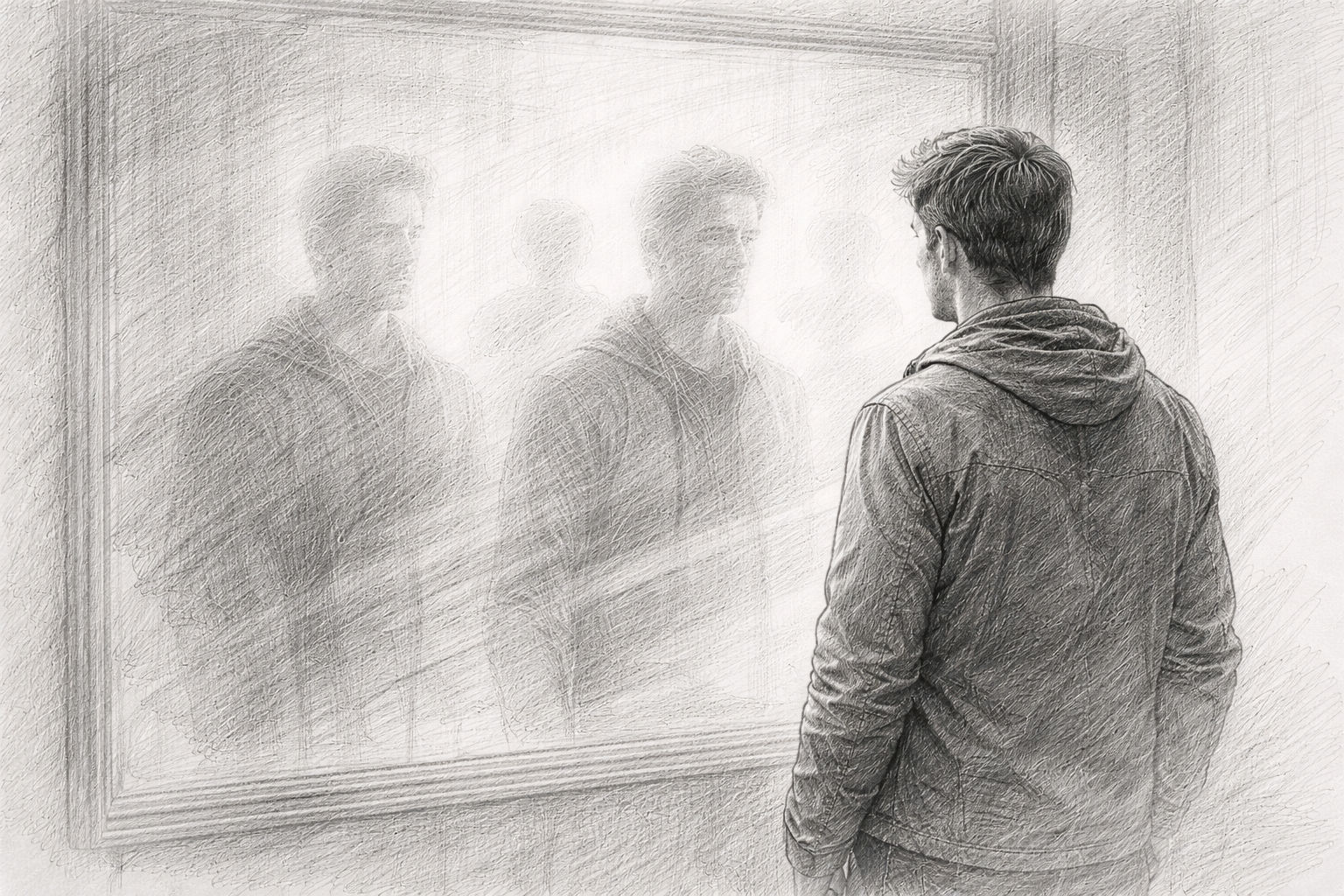
When the fog lifts
This moment is often unspectacular, but crucial. When the external trigger disappears and the inner discomfort remains, it becomes clear that you have been fighting the wrong problem. The relationship was not the cause, but the mirror. It made something visible that had been in the system for a long time.
That is uncomfortable. Because it means that you can no longer hide behind a conflict. You can no longer say: „Once that's sorted out, everything will be fine again.“ Instead, a bigger question arises:
What is wrong with my previous life model?
This question is more difficult to answer than any relationship question. It cannot be resolved in one conversation. It requires time. And it requires honesty with yourself.
The dangerous logic of perseverance
Many people reach this point - and still don't move on. They realize that something is fundamentally no longer right, but decide to „carry on for now“. Out of a sense of duty. Out of fear of change. Or because they hope that the problem will resolve itself if they just persevere long enough.
This logic is deceptive. Perseverance is not a virtue in itself. It can be useful if you know what you are persevering for. It becomes dangerous if you persevere without questioning your direction.
In such phases, you often tell yourself that it's just a temporary dry spell. That you simply have to invest even more. Even more energy, even more time, even more adaptation. And you don't realize that you are moving further and further away from yourself.
The freeze-out acts like a stop sign here. It interrupts the automatic forward movement and forces you to pause. Not to immediately overturn everything, but to check whether the path is still the right one.
Gratitude instead of apportioning blame
An important point in this context is the question of guilt. If it turns out that the real problem was not in the relationship, but in your own life plan, this changes the way you look at the other person.
In my case, there was no bitterness, but on the contrary a form of gratitude. Without this relationship, without this specific conflict, the fundamental imbalance might have remained undiscovered for a long time. The external cause was the trigger - not the cause.
This distinction is important. It prevents you from apportioning blame afterwards or getting caught up in a victim narrative. Instead, you recognize that some encounters are signposts. They point to something that had to be seen anyway.
When clarity becomes uncomfortable
Clarity is not a pleasant state. It rarely feels like relief, at least not immediately. It often goes hand in hand with uncertainty, with the feeling of being at a crossroads without knowing exactly where the new path will lead.
But clarity has a decisive advantage: it is honest. And honesty is the prerequisite for any viable decision. Without the distance of the freeze-out, this clarity would hardly have been possible. The closeness would have clouded things further, the dynamic would have intensified itself and the real issue would have disappeared under layers of everyday conflicts.
Why many avoid this step
It is understandable that many people shy away from this step. If you are fighting the wrong problem, you can at least be active. Anyone who recognizes that the real issue lies deeper than that will initially stand still. And standing still feels threatening, especially in a society that confuses movement with progress.
But it is precisely this standstill that is often the turning point. Not as a permanent state, but as a transition. As a moment in which you stop reacting reflexively and start asking the right questions.
The next chapter will look at why this tunnel vision is so difficult to recognize - and why you almost always only notice it when you've been stuck in it for a long time.
Tunnel vision: why you almost never notice it in time
Tunnel vision rarely occurs suddenly. It is not a dramatic break, not a clearly recognizable moment at which you could say: From now on, I'm thinking in a restricted way. On the contrary. Tunnel vision develops gradually. It grows with every additional responsibility, with every further compromise, with every step you take, even though you have long felt inside that something is no longer right.
Many people live in a state of constant tension for years without even realizing it. Stress becomes a habit. Exhaustion becomes background noise. Dissatisfaction is put into perspective because „others are no better off“. And therein lies the danger: what is permanent is no longer noticeable.
You work. Tasks are completed. You fulfill expectations. And because all of this appears stable on the outside, you believe that you are also stable on the inside. But you have long since adapted to a state that would actually be a warning signal.
The loss of the inner reference point
Tunnel vision does not mean that you stop thinking. On the contrary: many people in the tunnel think non-stop. They analyze, plan, optimize, justify. What they lack is not activity, but an inner reference point.
This reference point is the feeling for whether something is fundamentally right. Whether the path you have chosen is still viable. Whether your own energy is flowing in a direction that makes sense in the long term. If this inner compass is ignored over a long period of time, it does not fall silent immediately - but it does become quieter. And at some point you can hardly hear it anymore.
Instead, we focus on external factors: deadlines, duties, numbers, expectations. Life becomes reactive. You respond to demands instead of setting your own direction. And because you are constantly busy, you don't realize how much your own horizons have narrowed.
Tunnel vision often feels rational
One particularly insidious aspect of tunnel vision is that it often feels reasonable. After all, you have good reasons. You can explain why you act the way you do. You can justify every decision logically. And that's exactly what makes it so difficult to recognize the tunnel as such. You say to yourself:
- Now is not the right time.
- Or: I still have to go through with it
- Or: That would be irresponsible at the moment.
These sentences are not wrong. They are just incomplete. This is because they usually only take short-term logic into account - not the long-term effect. Tunnel vision is rarely irrational. It is often over-rational, but internally decoupled.
Experience from the crisis: when the view narrows
Looking back, phases of tunnel vision can often be clearly recognized. While you are in the middle of it, almost never. This also applies to serious crises such as insolvency. The tunnel is obvious there: financial worries, external pressure, existential questions. Everything revolves around one central issue and everything else fades into the background.
What is less obvious is that a new tunnel can form long after such crises - more subtle, quieter, but no less effective. People become more cautious, perhaps even wiser. People avoid risks. You build up security. And at some point you no longer notice that these securities have themselves become a limitation.
Experience from previous crises can be double-edged. It protects against recklessness, but it can also lead to people remaining in structures for too long that no longer fit. For fear of falling into an abyss again, people prefer to stay in the familiar narrow corridor - even if it no longer offers any prospects.
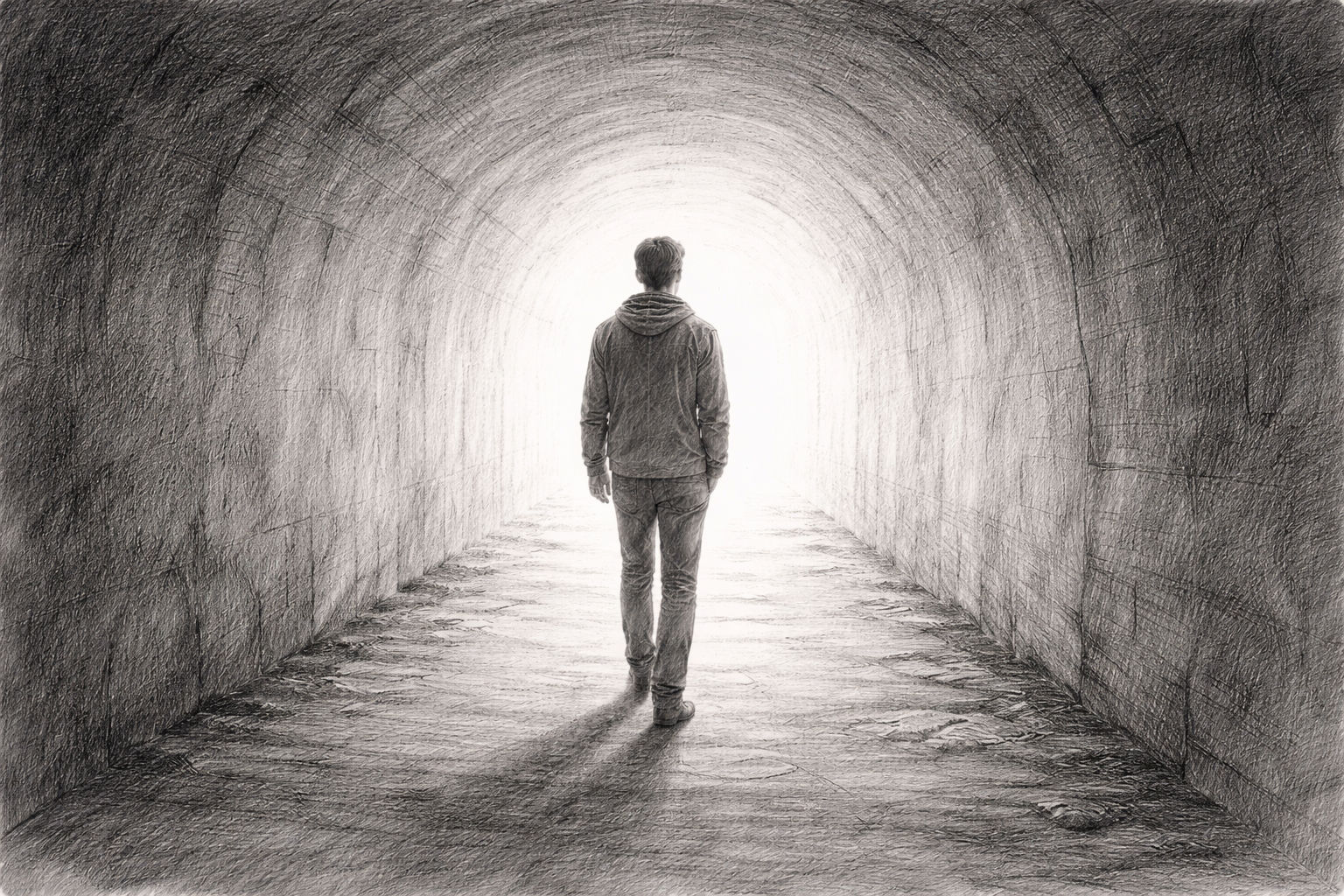
Why you make the wrong decisions in the tunnel
Decisions in the tunnel are rarely completely wrong. They are functional. They keep the system running. But they are often not sustainable. They are geared towards damage limitation, not development.
Typical for tunnel decisions is a greatly shortened time horizon. No more questions are asked:
Where do I want to be in five or ten years?
You just ask: How do I get through the next few weeks?
This logic makes sense in acute emergencies. It becomes problematic when it becomes permanent. Then you gradually sacrifice long-term coherence in favor of short-term relief. You accept burdens that you would not have accepted in the past. You lower your own standards - not consciously, but out of exhaustion.
The illusion of control
Another effect of tunnel vision is the illusion of control. You have the feeling that you have everything under control because you are constantly intervening. You monitor, correct and react. Standing still feels dangerous because it seems to take control away.
In reality, it is often the other way around. The narrower the tunnel, the less actual control you have. We are driven by external circumstances, internal pressures and self-imposed obligations. Constant activity does not replace the lack of direction - it only conceals it.
A freeze-out has the effect of a temporary loss of control. And that is precisely why many people find it so difficult. Those who are used to the tunnel initially perceive the step out as a threat. Only with a little distance does it become clear that it was not a capitulation, but a necessary course correction.
Why outsiders see the tunnel earlier
Interestingly, outsiders often recognize tunnel vision earlier than those affected themselves. They notice that someone is more irritable, less flexible, less open to new ideas. They sense that conversations are going round in circles, that every alternative is immediately rejected.
However, hints from outside often bounce off. Not out of stubbornness, but because they don't fit into the internal coordinate system. If you are stuck in a tunnel, you only listen to what fits the current logic. Everything else seems unrealistic, naive or irresponsible.
Only when the stimulus level drops - for example through distance, rest or a conscious break in everyday life - is there room for other perspectives. And this is where the real benefit of a freeze-out begins.
The first view over the edge of the tunnel
The moment when you recognize the tunnel as a tunnel is rarely spectacular. It's not a big aha moment, more of a quiet shock. You realize: I was thinking that narrowly. Not out of stupidity. But out of overload.
This moment is valuable, even if it is unpleasant. Because it shows that your inner vision has widened again. That you are beginning to see connections that were previously hidden. That you can see alternatives again - even if you can't grasp them yet.
The freeze-out is not the solution. But it is often the first step out of the tunnel. Not because it provides answers, but because it creates the conditions for asking questions again that go beyond immediate functioning.
The next chapter will look at why distance is so difficult to maintain in today's culture - and why it is nevertheless one of the oldest and most reliable forms of self-responsibility.
Distance is not an escape
We live in an age in which accessibility is almost equated with reliability. Those who respond quickly are seen as committed. Those who respond immediately are seen as responsible. Those who avoid being contacted have to explain, justify and give reasons. Distance has become in need of explanation.
This expectation not only affects the professional context, but also extends deep into the private sphere. Relationships, friendships and even family ties are under the unspoken pressure to be available at all times - both emotionally and communicatively. Anyone who withdraws, even temporarily, risks misunderstandings. Or worse: moral attributions.
Historically, this permanent proximity is the exception rather than the rule.
Just a few generations ago, it was completely normal to withdraw. Not demonstratively, not dramatically, but simply as part of a healthy rhythm of life. People went „into themselves“. You took your time. You were unavailable for a while - without this immediately being construed as a problem.
This retreat had nothing to do with escape. It was an expression of a sense of responsibility. Anyone who realized that they were losing the big picture withdrew, collected themselves and put their thoughts in order. Only then did they speak, decide and act.
Today, this behavior seems almost alien to many. As if you have to justify yourself if you don't react immediately. As if distance per se is a sign of weakness or a lack of commitment.
The modern fallacy: movement is always better than standing still
A central cultural error of our time is the equation of movement with progress. Those who act are considered active. Those who pause are passive. Those who keep talking are seen as solution-oriented. Those who remain silent are seen as problematic. This overlooks something essential: not every movement leads forward. You can also go round in circles very quickly. Or run deeper and deeper into a dead end.
This misconception is reinforced in crises. Standing still is perceived as a threat, as a loss of control. So you keep talking, keep explaining, keep reacting - even though you have long since realized that you are moving further and further away from clarity.
In this context, a freeze-out is like breaking the rules. It contradicts the expectation of being constantly present. And that is precisely why it is so often misunderstood.
Why distance seems almost suspicious today
Distance has an image problem in our culture. It is quickly equated with disinterest, devaluation or emotional coldness. Especially in relationships, the fear arises that if I keep my distance now, I am sending the wrong signal.
This fear is not unfounded, because communication today is so condensed that every gap is immediately interpreted. Silence is not understood as space, but as a statement. And anyone who says nothing is supposedly already saying everything. This leads to a paradoxical situation: people remain in conversations even though they are empty inside. They discuss even though they no longer perceive anything. They explain even though they no longer understand themselves. And all this just to avoid sending the wrong signal.
The real wrong sign is often precisely this: to carry on, even though you have long since lost ground inside.
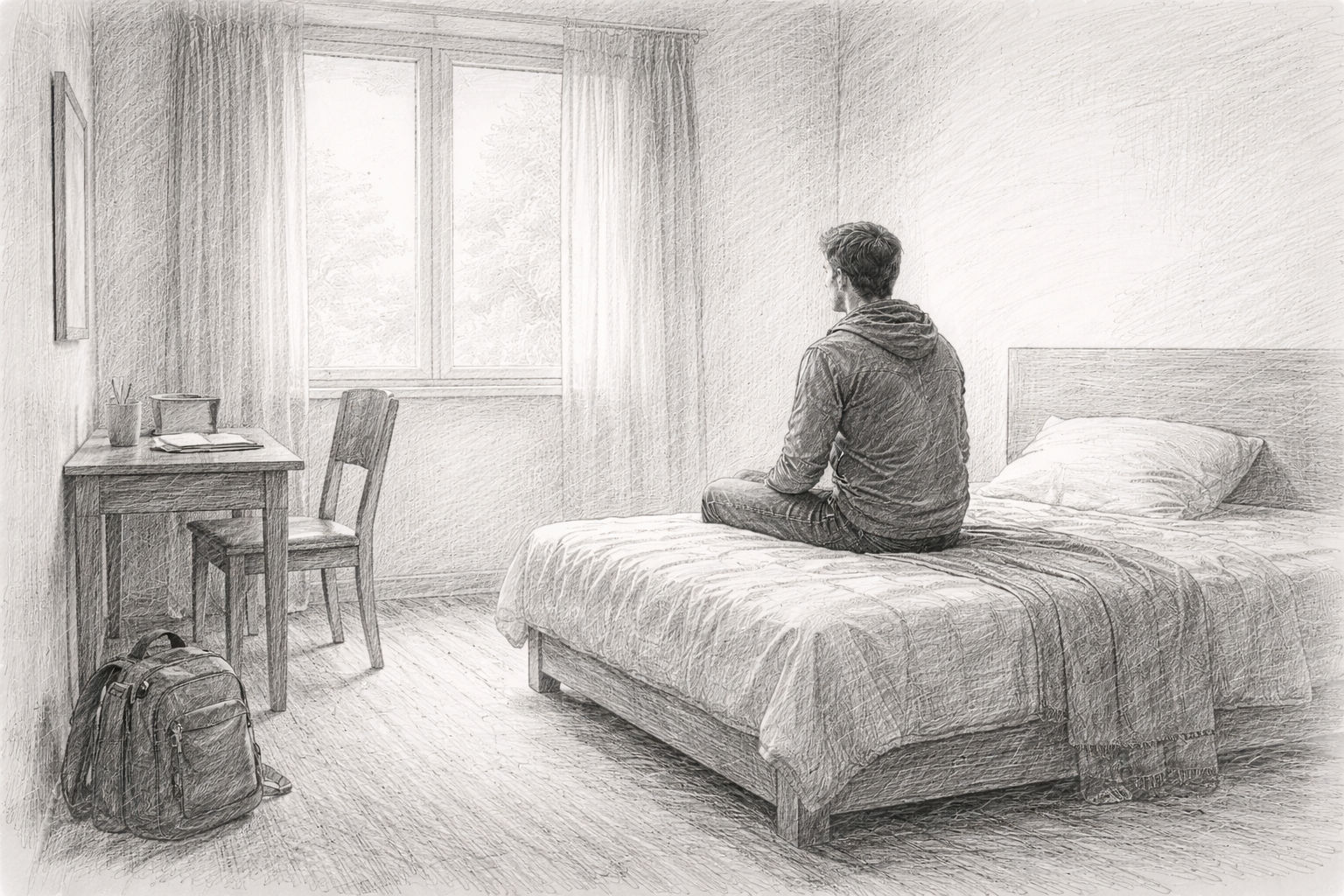
Distance as a form of responsibility
Distance does not mean shirking responsibility. On the contrary: it can be an expression of a deeper responsibility. Responsibility not in the sense of „I can take anything“, but in the sense of
„I don't act unless I trust myself“.
That is a subtle but crucial difference.
Those who continue to make decisions in the midst of inner chaos are not taking responsibility - they are spreading risks. They shift uncertainty to the outside. They bind other people to a situation that has not been clarified themselves.
A freeze-out says instead: I can hold out in this state for a short time so that I can act cleanly later. That is not a weakness. It is self-management.
The fear of idling
Another reason why distance is so difficult is the fear of being idle. In the silence, questions arise that have been successfully covered up in everyday life. Doubts that had no place. Thoughts that are uncomfortable.
The constant exchange protects against these questions. It keeps the internal noise level high. Distance, on the other hand, lowers it. And suddenly you hear things that you didn't want to hear for a long time.
Many people avoid this moment - not out of cowardice, but because they are overwhelmed. Because once you really stop for a moment, you can't guarantee that everything will continue as before. And this is precisely where the real explosive power of distance lies: it makes change possible without forcing it.
No retreat forever
It is important to make a clear classification at this point: distance is not a permanent state. A freeze-out is not a way of life. It is a phase, not a goal. Those who permanently distance themselves lose contact - with others and, at some point, with themselves. The value of social distancing lies in its limitations. In the conscious decision not to react, not to clarify, not to function for a certain period of time.
And then - with more inner order - to enter into a relationship again. Or to make a decision that was not possible before.
Distance as a cultural countermovement
In an age that relies on permanent presence, distance is almost a counter-movement. Not out of protest, but out of necessity. It is a reminder that clarity does not come from speed, but from depth.
Perhaps that is one of the reasons why social distancing seems so unusual today: it requires something that we hardly practise any more - patience with ourselves. And the courage to do nothing for a moment so that we can do the right thing later.
The next chapter will focus on what distancing can look like in practice - without dramatization, without grand gestures, without the mechanics of advice. Instead, it is a simple, practicable practice that creates space in the mind instead of new demands.
Gain distance - find clarity
This video is about something that is often underestimated in everyday life: conscious distance. We show you why distance doesn't have to be a retreat, but can be a prerequisite for regaining inner peace, clarity and balance.

So you can gain distance and detachment Psychotherapy Lukas Rick
Using practical examples and calm impulses, the aim is to temporarily detach oneself from stressful situations, thoughts or dynamics in order to feel one's own point of view again. The video complements the article by showing concrete ways in which healthy boundaries, self-reflection and mindfulness can help you to shape your own life more consciously and make sustainable decisions for your own well-being.
A Practical Perspective – What a Freeze-out Might Look Like in Practice
When we talk about distance, many people immediately think of radical steps. Separations, taking months off, cutting off contact completely. This is off-putting - and leads to people preferring not to change anything at all. Yet the real value of the freeze-out often lies in its simplicity.
Distance does not have to be spectacular. It doesn't have to be announced like a turning point in life. In many cases, a small but clear interruption to the familiar is enough to give us a breath of fresh air. The decisive factor is not the size of the step, but its consistency.
A freeze-out is effective not because it is dramatic, but because it consistently creates space.
Short breaks - and why they are sometimes enough
Sometimes even a very short interruption is enough. An hour without an exchange. An evening without conversation. A walk without music, without a podcast, without distractions. Such mini-breaks are often underestimated, but can be surprisingly effective in acute situations.
Especially people who are otherwise constantly under pressure realize for the first time in such moments how high their inner noise level actually is. It is only when it decreases that you realize how much you were caught up in reaction mode.
These short breaks are no substitute for more distance, but they can be a first test. A cautious approach to the experience of how it feels not to have to react immediately.
When a weekend brings more than a hundred conversations
In other cases, one hour is not enough. You can feel that your head is still spinning, that your thoughts are not coming to rest. In this case, it may make sense to take a longer break - a weekend alone, for example.
A change of location often works wonders here. Not because it solves problems, but because it interrupts familiar stimuli. Different surroundings, different noises, different routines. A small Airbnb, a guesthouse, a place where you don't have to explain anything to anyone.
The location is less important than the attitude: this weekend is not a vacation, but neither is it a self-optimization measure. It's not about making plans or forcing solutions. It's about creating space.
Many people are surprised at how quickly the inner pressure is reduced when the daily dynamics are removed. Not everything becomes clear - but some things become quieter. And that is often the first step towards clarity.
What you should consciously avoid during this time
A freeze-out is not a project. It doesn't need a program or a plan. On the contrary: the more you try to „use“ it, the faster it loses its effect. There are a few things you should consciously refrain from doing during this phase:
- No fundamental decisions
- No long internal debates
- no mental justifications to others
- No mental test conversations
All of this keeps the old mode alive. Internally, you remain in the relationship, in the conflict, in the problem - even if you have distanced yourself externally.
The purpose of the freeze-out is not to think about the situation, but to perceive your own state.
Perceive instead of analyze
Many people are used to approaching problems analytically. This is a strength - in stable phases. In crises, it can become a trap. Because analysis without inner calm rarely leads to insights. It usually only produces further thought loops. The phase of distance is therefore about something else: perception.
- How does the body feel when there is no exchange?
- Is the inner restlessness becoming less or more?
- Do certain thoughts keep reappearing - or do they disappear?
These observations are often more meaningful than any analysis. They show where the real tension lies. Not logically, but tangibly.
Do not force immediate clarification
A common mistake is to see the freeze-out as preparation for a „big clarifying conversation“. This creates pressure - and brings the dynamic back too early. Clarity does not come on command. It often arises indirectly. You suddenly realize that certain topics are becoming less important. Or that other issues come to the fore that were barely visible before.
This shift should be taken seriously. It is not a sign of repression, but of reorganization. If you overlay it with conversations too soon, you risk falling back into old patterns.
The right time to return
Distance does not automatically end after a certain time. There is no fixed measure. The right time to return to the exchange can often be recognized by the fact that you no longer have to, but can.
You feel that you can listen again without losing yourself. That you can speak without having to justify yourself. That you can ask questions without immediately needing answers.
This is not a perfect state. But it is stable enough to enter into a relationship again - be it in the form of a conversation, a decision or even a separation, which is then not based on emotion.
Distance as a repeatable practice
A freeze-out is not a one-off tool. It can become part of a more conscious way of dealing with crises. Not automatically, but as an option. As an option that you are aware of and can use when you notice that your view is narrowing again.
Looking back, many people report that they wish they had taken this step earlier. Not because it would have solved everything, but because it would have prevented them from losing themselves over a longer period of time.
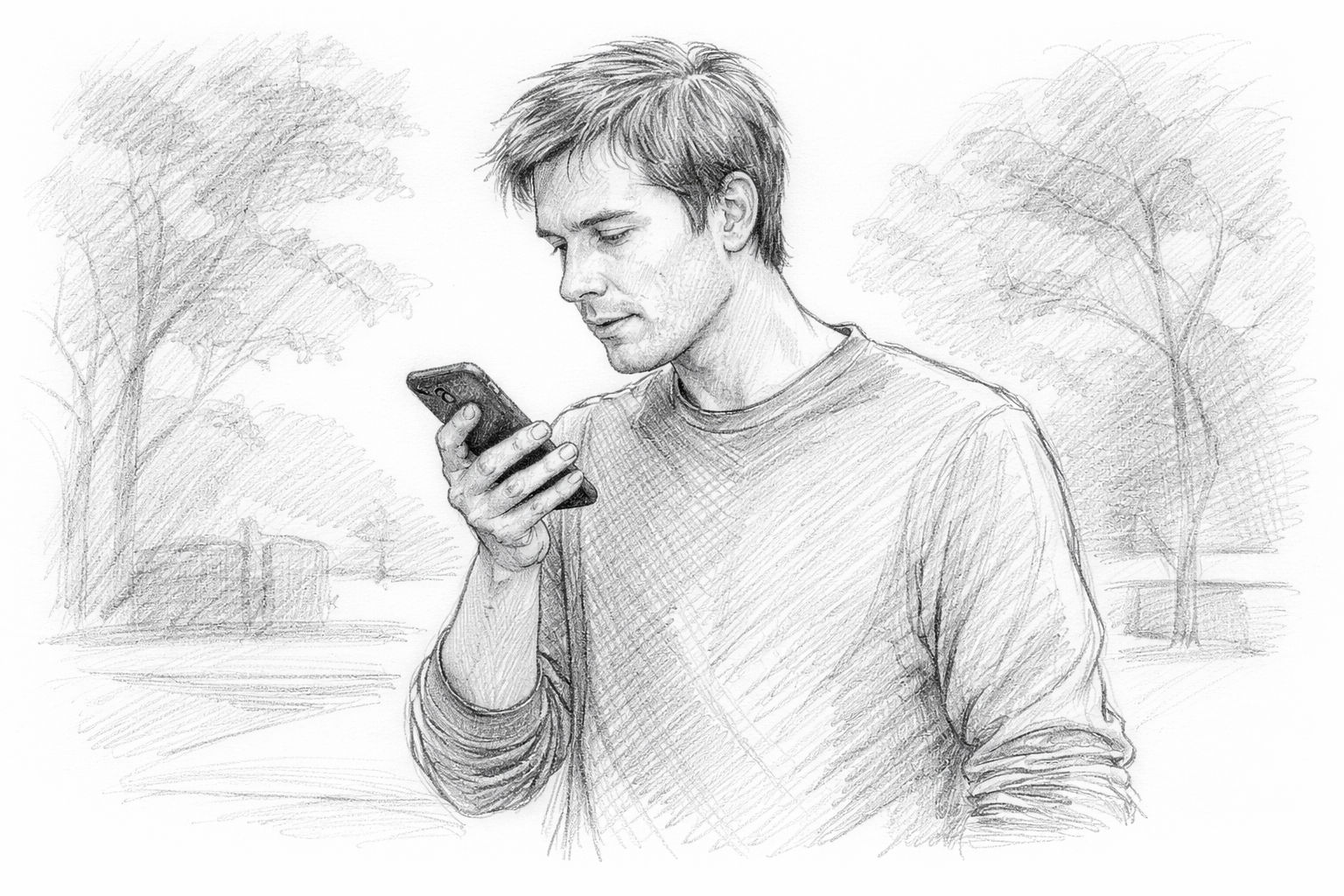
Self-reflection with AI - a modern thinking space in freeze-out
A freeze-out does not mean that you are completely thrown back on yourself. Distance from people does not necessarily mean distance from reflection. Especially when you are alone, it can be useful to structure your inner dialog - not through distraction, but through a counterpart who listens without reacting, judging or having expectations.
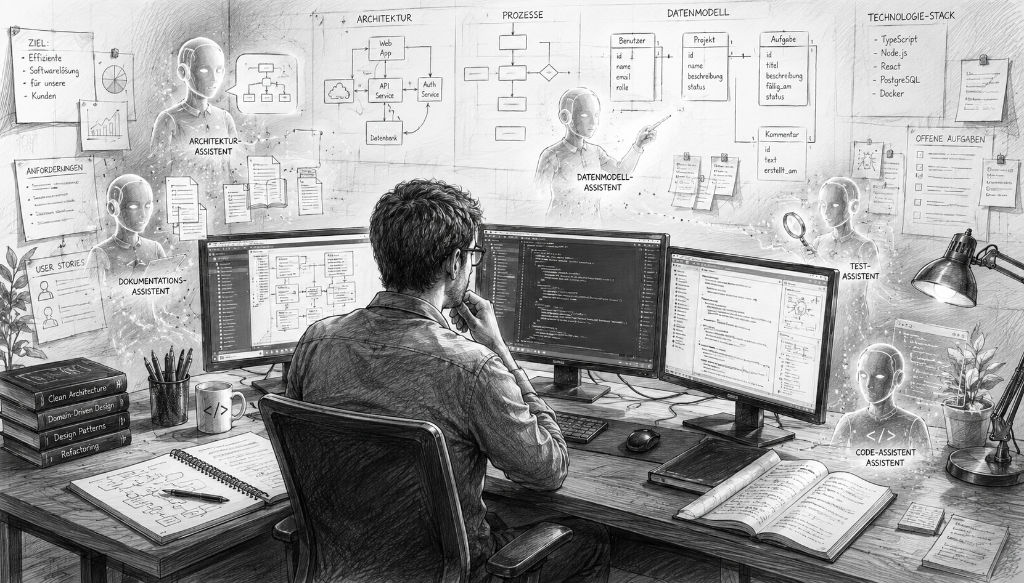
Used correctly, AI can play an amazingly helpful role here. Not as an advisor, not as a substitute for your own decisions, but as a mirror. As a tool for organizing thoughts, making blind spots visible and recognizing connections faster than you can often do in quiet reflection.
Why talking to yourself in your head often goes round in circles
Many people use distance to „think“. What they often do, however, is something else: they repeat the same thought loops. The same arguments, the same justifications, the same worries over and over again. This is not real reflection, but mental self-preoccupation.
The reason is simple: your own mind rarely really asks new questions. It confirms what it already knows. Especially in crises, we are internally biased - in favor of certain explanations, against others. AI can fill a gap here, not because it is smarter, but because it asks different questions.
AI as a structured conversation partner
The great advantage of AI in a freeze-out phase lies in its neutrality. It is not emotionally involved. It does not feel attacked. It does not react defensively. And it is available at all times without making demands.
When you begin to describe your own situation to the AI—calmly, objectively, without dramatization—something often quickly emerges that is difficult to achieve in your mind alone: structure. Thoughts that were previously vague become more tangible. Contradictions become apparent. And sometimes you suddenly realize that you’ve been circling around a question for weeks that you’ve never clearly articulated.
Faster to the core - without shortcuts
A common objection is: „You have to sort it out yourself.“ That's true - but clarifying things doesn't mean finding out everything on your own. AI does not take decisions off your hands. It does not replace responsibility. But it can help you get to the heart of the matter more quickly.
This is particularly evident in the professional sphere. Many people feel dissatisfied, but can't put their finger on the cause. Is it the job? The structure? The responsibility? Or their own level of expectations? A well-conducted AI conversation can separate these levels and make visible what would otherwise become blurred.
The same applies in the private sphere. Instead of thinking in general terms that „everything no longer fits“, you can differentiate with the help of AI: What exactly feels incongruous? Since when? In which situations in particular? Such questions are uncomfortable - but they bring movement into entrenched thought structures.
Not a therapy, but an effective tool
It is important to be clear: AI is not a therapy. It does not replace professional help or human conversations when these are necessary. But it is a tool that is underestimated if it is only used as a source of information.
Used correctly, AI can help to speed up internal processes without shortening them. It forces formulation. And anyone who formulates something must have at least a rudimentary understanding of it. Many insights are not gained through answers, but by asking the right question.
Current survey on the use of local AI systems
The attitude determines the benefit
Whether AI is helpful in a freeze-out phase depends less on the tool than on the attitude. Those who use AI to get quick confirmation will gain little. Those who use it to allow uncomfortable questions can get surprisingly far.
It is helpful not to start with a goal, but with an open mind. Don't: „Tell me what to do.“
But rather: „Help me understand what's actually going on here.“
This attitude goes well with the freeze-out itself. Both are not a flight forward, but a movement inwards - supported by structure rather than distraction.
A modern, quiet thinking space
In the past, you might have looked for a mentor, written in a diary or gone for long walks. All of this still has its value. AI complements these forms, but does not replace them. It offers a quiet thinking space that is available at all times, without social dynamics or expectations.
This can be particularly relieving during periods of distance. You can try out thoughts, discard them, reformulate them - without consequences. And sometimes it is precisely this freedom that allows you to be more honest with yourself than you could be in a conversation with others.
In this sense, AI is not a foreign body in the freeze-out, but a contemporary extension: a tool that not only helps to maintain distance, but also to use it sensibly.
What becomes possible after a freeze-out
Clarity rarely announces itself with big words. It does not come as a sudden enlightenment, not as a ready-made plan and certainly not as a euphoric feeling. It is usually quiet. Unspectacular. Almost inconspicuous. You notice it more when something disappears than when something new emerges.
Thoughts that previously circled constantly lose their urgency. Conflicts that seemed to overshadow everything become more realistic. And decisions that used to seem like insurmountable hurdles suddenly seem manageable - not because they are easy, but because you trust yourself again. This form of clarity is not a goal, but a state. And it almost always comes about indirectly.
A freeze-out doesn't have to be short to be effective. In my case, it lasted much longer than many would probably consider „appropriate“. Two to three months. No constant contact, no half-hearted „take a look“, but a consistent distance that left space - both internally and externally.
Looking back, it is precisely this duration that is decisive. Not because people were constantly thinking or analyzing during this time, but because layers that have been superimposed for years can become detached. Habits. Self-images. Expectations that were never consciously chosen, but were nevertheless fulfilled.
Only after this time did it become clear how many everyday decisions were based on automatisms - and how little of them were really reflected upon. In the following, I describe the experiences I had after my last freeze-out.
Getting to know yourself anew
What happened during this phase was not so much a reorientation as a re-encounter. With oneself, but also with one's own environment. Family, familiar relationships, the professional context - none of this was re-evaluated in the sense of „good or bad“, but seen in a new light.
You suddenly recognize patterns. Your own and others'. You understand why certain dynamics occur again and again. Why you react to certain stimuli the way you do. And why some things may have worked in the previous life model, but were no longer supported internally.
This kind of realization cannot be forced. It only arises if you remain still long enough to perceive it.
Decisions without internal counter-pressure
Perhaps the biggest difference after a longer freeze-out is the way decisions are made. Not faster. Not easier. But calmer. Without the inner counter-pressure that previously accompanied every consideration. You realize that a decision no longer needs to be defended - neither to others nor to yourself. It is simply there. Not as a perfect solution, but as a coherent next step.
This coherence is difficult to describe, but easy to recognize once you have experienced it. It has nothing to do with euphoria. Rather with inner peace. With the feeling that you are no longer working against yourself.
Gratitude instead of idealization
Another effect of this clarity is a changed attitude towards one's own history. Things that used to appear as failures lose their sharp edge. Relationships that did not last no longer need to be glorified or devalued. They are given their place in the overall picture.
In retrospect, the freeze-out itself does not appear as a state of emergency, but as a necessary phase. Not as a break, but as a transition. And that is exactly how it should be understood: as a time that made something possible that was not possible before.
Gratitude here does not arise from romanticization, but from understanding.

Rethinking responsibility
After a freeze-out, the understanding of responsibility often changes. Responsibility then no longer means putting up with or going through with everything. It means making conscious choices - even if these choices are uncomfortable.
You realize that long-term responsibility sometimes means pausing for a moment. That clarity is more valuable than speed. And that decisions made from an inner order are more sustainable than those made under pressure.
This attitude affects all areas of life. On relationships. On career paths. On how you deal with yourself.
A freeze-out is not a panacea. It guarantees nothing. It is no substitute for debate or decision-making. But it does create the conditions for meaningful debate and honest decisions.
Not everyone needs months. Not every crisis requires the same distance. But the willingness to take time is often the decisive difference between reaction and organization.
Reading tip: Crises as turning points - learn, grow, shape

If you would like to delve deeper into the thoughts in this article, you will find the following in the book Crises as turning points - learning, growing, shaping a consistent continuation. The book starts where the freeze-out begins: with honest self-reflection, beyond actionism and perseverance slogans. It combines personal experiences with clear thought models and shows how crises can become genuine decisions on direction.
A separate focus is on modern self-reflection with AI - not as a substitute for your own thinking, but as a structured tool to get to the core faster and make sustainable decisions for the next stage of your life.
A quiet but lasting upheaval
Perhaps the most important point at the end is this: the biggest upheavals in life are often the quietest. They don't happen in moments of maximum activity, but in phases of retreat. Not when you think you have everything under control, but when you are ready to let go of control for a moment.
For me, the freeze-out was just such an upheaval. Not a dramatic one, not a loud one - but a lasting one. It didn't solve everything. But it opened our eyes. And that is often enough to take the next step in the right direction.
Sometimes distance is not a retreat. It is the beginning of orientation.
Frequently asked questions
- What exactly do you mean by „freeze-out“ - and how does it differ from breaking off contact or separation?
A freeze-out is not a break-off or separation, but a deliberate, temporary interruption of contact or dynamics. It is not intended to exert pressure or change the other person, but to regain clarity. The decisive difference lies in the attitude: a freeze-out is directed inwards, not outwards. It is a space for thinking and perception, not an instrument of power. - Isn't a freeze-out just running away from problems?
It can be - if it arises from fear. In the sense described here, however, it is the opposite. It is a pause in order to be able to recognize problems properly in the first place. Those who continue to act in an inner fog often run deeper into the crisis. Distance can be the more responsible step because it prevents decisions being made out of excessive demands. - When is the right time for a freeze-out?
Typically when conversations only go round in circles, when every communication creates new tensions or when you realize that you are only reacting instead of making decisions. Another sign is the feeling that you can no longer hear yourself properly. The freeze-out is less a question of timing than of inner perception: when clarity is lacking, distance often makes sense. - How long should a freeze-out last?
There is no fixed duration. For some, hours or days are enough, for others weeks or months. The decisive factor is not the length, but the quality of the interval. The article deliberately shows that a longer freeze-out - around two to three months - can also be useful if it enables inner processes that would otherwise not be given space. - Can a freeze-out destroy a relationship?
It can - if it is used as a tool of power or not communicated properly. Understood correctly, however, it tends to increase the chance of honest decisions. Relationships rarely break down because of distance, but because of unresolved inner ambiguity. A freeze-out makes it clear whether a relationship is sustainable or just held together by habit. - What if the other person doesn't accept the distance?
This is a real difficulty. A freeze-out is not a contract, but a personal decision. You can explain why you need distance, but you can't „enforce“ it. It is important not to get caught up in justifications. If you need distance for reasons of clarity, you can allow yourself to do so - even if it causes discomfort. - Why do problems in relationships often feel bigger than they actually are?
Because relationships are often projection surfaces. They are emotionally close and therefore ideal for revealing underlying dissatisfaction. The article shows that conflicts in relationships are often symptoms - indications of a life model that is no longer sustainable. - What does tunnel vision actually mean in everyday life?
Tunnel vision manifests itself in shortened time perspectives, constant reactions, inner constriction and the feeling of having no alternatives. You think a lot but see little. Decisions are then made primarily for short-term relief, not for long-term coherence. - Why do we often not even notice the tunnel vision?
Because it feels rational. You have reasons, explanations, arguments. It is precisely this apparent rationality that makes it so difficult to recognize. Only with distance does it become clear how narrow your own view has actually become. - Why is social distancing so difficult in our society?
Because permanent availability is confused with responsibility. Distance is quickly seen as disinterest or weakness. Historically speaking, this is new. In the past, withdrawal was a natural part of orientation and decision-making. - What should you consciously avoid during a freeze-out?
It is important not to make any hasty decisions, not to engage in mental dialogs of justification and not to build up any internal pressure to perform. A freeze-out is not a project that needs to be optimized, but a space that is allowed to work. - What does „perceiving instead of analyzing“ mean in concrete terms?
It means shifting the focus from explanations to sensations. How does the body react to the distance? Does the inner restlessness decrease? Which thoughts keep reappearing - and which ones disappear? These observations are often more honest than any analysis. - How can AI help with self-reflection without dictating decisions?
AI can serve as a neutral discussion partner that brings structure to thoughts, asks questions and makes contradictions visible. It does not take any decisions, but it does speed up understanding. This can be very helpful, especially in the silence of a freeze-out. - Isn't AI too technical or impersonal for such processes?
That depends on how it's used. AI is no substitute for a relationship It is not a form of therapy, but it can provide a quiet space for reflection where one can formulate, discard, and reorganize thoughts—without social dynamics or pressure to conform. - How do you recognize that the freeze-out has „worked“?
Not because everything is clear, but because the inner pressure has eased. Decisions feel calmer. Conversations become possible again without immediately falling into old patterns. You no longer have to react, you can choose. - What happens when you realize after the freeze-out that something fundamental has to change?
Then this is not a failure, but a result. Clarity can also mean letting go of life plans, roles or relationships that no longer fit. The freeze-out does not provide any answers, but it does make honest decisions possible. - Why do you emphasize gratitude instead of blame?
Because guilt rarely leads anywhere. When you realize that a conflict has pointed to something deeper, gratitude can arise - not from idealization, but from understanding. Some situations are signposts, not mistakes. - What is the most important thought I should take away from the article?
That distance does not have to be a retreat, but a step towards more responsibility. If you want to hear yourself again, you sometimes have to become quieter. The freeze-out is not a goal, but a transition - but often a decisive one.