
For years now, I have noticed how often politicians and the media talk about a „rules-based world order“ is being discussed. The current conflict between the USA and Venezuela has brought this topic back to the fore. In the past, this term hardly ever came up, but today it almost seems like a standard reflex: if something happens somewhere, it is quickly said that we have to „defend the rules“. At the same time, I have gained the impression that the same people who refer to these rules particularly often no longer feel consistently bound by them themselves when in doubt. It was precisely this contradiction that made me wonder.
What's more, the more often you hear such terms, the more vague they seem. „Rules-based“ sounds clear, but often remains vague. And „international law“ is often used as a moral seal of approval, although it is actually a legal framework - with conditions, limits and loopholes. I have therefore decided to take a closer look at this topic. Not as a lawyer, but as someone who wants to understand what this order once was at its core - and what its real strength lay in.


Latest news on international law
17.03.2026Donald Trump's latest statements on the possible „takeover“ of Cuba once again raise fundamental questions of international law. In the midst of a severe energy and economic crisis on the island, he declared, in essence, he could „do what he wants“ with Cuba“ - a formulation that makes the claim to political and economic influence clear. At the same time, Cuba is under massive pressure from US sanctions and a de facto oil blockade, while talks between the two countries are taking place in parallel. The statements are caught between geopolitical power politics and the principle of state sovereignty under international law.

President Trump and Vice President JD Vance Participate in Signing Time, Mar. 16, 2026 | The White House
Especially against the backdrop of historical interventions in Latin America, the rhetoric seems like a return to old logics of influence - with unclear but potentially far-reaching consequences for the international order.
05.03.2026: A current Contribution by Deutsche Welle raises the question of whether the Iran war has crossed a „red line“ of the international system. International law experts point out that military attacks without a mandate from the UN Security Council or without clearly demonstrable self-defense fundamentally violate the UN Charter's prohibition on the use of force can. At the same time, UN Secretary-General António Guterres also warned of a dangerous escalation and called for a return to diplomacy. Observers therefore see the conflict as a further stress test for the so-called rules-based world order. Critics argue that military action without a clear basis in international law could weaken trust in international institutions in the long term and reinforce the impression that geopolitical power politics is increasingly taking precedence over applicable law.
10.01.2026: A current report from the Berliner Zeitung documents how Donald Trump in one Interview with the New York Times explains, he „do not need international law“ and sees his own morality as the only limit to his power - a statement that immediately makes waves in the political debate. This stance not only coincides with recent US military actions, such as the attack on Venezuela and the Arrest of President Maduro, but also marks a clear departure from the rules of the UN Charter, which prohibits violence between states. When even a leading state publicly declares that international law is dispensable, it becomes clear how much normative rules are under pressure in practice. This underlines why a well-founded classification of international law is more important today than ever before.
06.01.2026: In an unusually sharp statement to the UN Security Council, the US economist Jeffrey Sachs raised the Venezuela debate to a fundamental level. Sachs described the crisis not as a question of individual political actors, but as a test of international law itself. He referred to decades of US interventions, questioned the legality of sanctions and the use of force and warned urgently of the consequences of eroding UN rules - especially in a time of nuclear deterrence. A few weeks ago, Sachs had already made similar Warnings in an open letter to Federal Chancellor Friedrich Merz, in which possible breaches of the law were also addressed.

Venezuela Meeting At UNSC: Jeffrey Sachs Dares UN To Stand Up | Hindustan Times
05.01.2026Following the controversial US military operation in Venezuela with the arrest of President Nicolás Maduro and his transfer to the USA, the international and particularly the German debate on the assessment of the operation is causing tensions. While US President Trump presents the operation as a success in the fight against drug cartels and for stabilizing the country, critics emphasize that such a military strike is contrary to international law. The Tagesschau headlines: „Merz must take a clear stance“. In Berlin, the German government is calling for a rational, political solution and compliance with international legal norms, while various parties and players are reacting differently to the action and calling for a broad discussion about Germany's role and the future of Venezuela.
The basic idea after the world wars: order through rules, not emotion
If you want to understand why there is such a thing as international law and international institutions in the first place, you have to go back in time. After the experience of two world wars, it was clear to many states that international politics based solely on power, emotion and retaliation would regularly end in disaster. So something was needed to contain conflicts - not by making people „better“, but by limiting states.
This is an important point: the classic international order was not conceived as a moral competition to see who was the „good guy“. At its core, it was a pragmatic system of damage limitation. States remain states, with interests, rivalries and power games. But they should resolve these conflicts within a framework that makes escalation more difficult. This is less heroic, but much more stable.
Contracts as a foundation: commitment does not come from fine words
The stability of this order is based above all on international treaties. That sounds dry, but it is the decisive difference between a perceived order and a legal order. A treaty is uncomfortable because it makes expectations concrete. It binds, even if it later becomes impractical. That is precisely its purpose.
In practice, this means that states agree on rules, accept them voluntarily and thus create predictability. This is the real currency of an international order: not sympathy, not moral superiority, but reliability. If I as a state know that the other state will stick to its agreements, I can plan, de-escalate and negotiate. If I can no longer count on this, all behavior becomes a bet - and bets are a poor substitute for justice.
Why this seems so „old-fashioned“ - and why it is so important
This contractual logic seems almost old-fashioned today because it doesn't sound like a headline. It is slow, bureaucratic and often unpleasant. You have to negotiate, accept compromises, sometimes even swallow things that you actually reject. But this is exactly how international stability has traditionally been established: not through moral declarations, but through tough, clear agreements.
An „order“ is only an order if it applies in difficult moments. If rules only apply as long as they are convenient, they are not rules, but situational arguments. And as soon as other players realize this, the entire logic shifts:
Then the question is no longer asked „What has been agreed?“, but „What can I get away with?“.
The United Nations: not a world state, but a common point of reference
The role of the United Nations is also part of this post-war logic. Many expect the UN to be a kind of global government. They are not. The UN is more of a framework in which states talk to each other, formulate rules and - ideally - deal with conflicts in a controlled manner. They do not replace national interests, they do not automatically force states to be reasonable. But they do create something that is almost always missing without them: a common point of reference.
What is important here is that the UN is not „good“ because it is morally superior, but because it offers procedures. Procedures are often unromantic, but they are the core of law. Where procedures are lacking, power decides in the end. And even if procedures are sometimes blocked, the idea remains decisive: conflicts should not be resolved by spontaneous strikes, but through legitimized processes.
Security Council, veto power and reality: why the construction still makes sense
The UN Security Council is a good example of how compromising this system is. From today's perspective, the veto right of the permanent members seems unfair. Historically, however, it is also a concession to reality: without the major powers, no system would have been created after the Second World War that they would have joined in the first place. A structure was therefore chosen which is not ideal, but which makes a common platform possible in the first place.
This is a typical characteristic of the classical order: it does not try to make the world fair. It tries to make it manageable. And it knows that states do not suddenly become angels just because they sign a charter. Nevertheless, even an imperfect set of rules can have a stabilizing effect - as long as those involved fundamentally accept that rules apply even when they are disruptive.
If you wanted to sum it all up in one sentence, it would be this: the classic international order thrives on states binding themselves. Not because it makes them look „better“, but because they benefit in the long term. Because accepting rules creates trust - and trust reduces the risk of conflicts escalating out of control.
This is precisely where the problem begins, which we will take apart in the next chapter: As soon as self-binding is replaced by exceptions, as soon as „rules“ become a flexible concept that is reinterpreted depending on the situation, the foundation shifts. Then it is no longer about contracts and procedures, but about interpretation, narratives and power.
And it is precisely at this point that a legal order gradually becomes a power order again.

What exactly is international law? - An understandable classification
The term „international law“ is often used today as if it were a kind of global code of law with clear paragraphs, judges and immediate consequences. However, it is precisely this idea that regularly leads to misunderstandings - and disappointment. This is because international law works in a fundamentally different way to the law within a state.
For a long time, I felt the same way as many readers: You constantly hear that something is „contrary to international law“ or „covered by international law“, but what this means in concrete terms often remains unclear. It is therefore worth taking a step back and looking at what international law actually is - and what it is not.
The most important point first: there is no world state. And therefore there is no central power that automatically enforces international law. No international police force that moves out as soon as a rule is broken. No global court whose rulings are always and everywhere enforced.
International law is therefore not a system of orders, but a regulatory framework. It is based on the fact that sovereign states accept rules because they have recognized that long-term stability is more beneficial for everyone than short-term arbitrariness. That may sound fragile - and it is. But it is at the heart of the matter.
States as central players
In international law, the focus is not on individual people, but on states. States are the subjects of law. They conclude treaties, recognize jurisdictions or reject them. This also means that a state can evade international law, at least in part - often with political, economic or diplomatic consequences, but not automatically with direct coercive power.
This is precisely where international law differs fundamentally from national law. Within a state, it is almost impossible to evade the legal system without quickly being confronted with the police, courts and sanctions. Internationally, this only works to a limited extent - and this is precisely why trust is so crucial.
The basic principles of international law
Despite all the differences, there are some central principles in international law that have served as a foundation for decades. One of the most important is the State sovereignty. Every state is initially regarded as equal and independent. No state may simply dictate to another how it should organize itself domestically.
Closely linked to this is the Prohibition of violence. Military force is prohibited in principle. That sounds obvious, but historically it is an enormous achievement. For centuries, war was a legitimate means of politics. International law attempts to curb precisely that - not perfectly, but recognizably.
Another core principle is the Non-interference in internal affairs. This principle also often seems fragile today, but it is central to understanding international order. Without this principle, there would no longer be any clear boundaries between legitimate criticism and de facto influence.
Current survey on trust in politics
Exceptions that burden the system
Of course, international law also recognizes exceptions. The most important is the Right to self-defense. If a state is attacked, it may defend itself. There are also military measures with a mandate from the United Nations, such as peacekeeping or conflict containment.
It becomes problematic where exceptions are extended or reinterpreted. Humanitarian interventions, for example, are often convincingly justified from a moral point of view, but are legally in a gray area. The more frequently such exceptions are applied without clear mandates, the more the character of international law shifts: from a set of rules to a set of arguments.
The role of the United Nations as a legal point of reference
The United Nations is not an all-powerful actor in international law, but it is a central point of reference. It offers forums, procedures and institutions through which rules can be formulated, conflicts discussed and - at least in part - legally assessed. Precisely because there is no world state, such common structures are crucial.
It is important to understand this: The UN does not replace international law, it structures it. They create a framework in which legitimacy becomes visible. If military measures are covered by UN mandates, they are considered to be better protected by international law - not necessarily as morally superior, but as formally legitimized.
Courts without coercive power
International law also includes international courts, such as the International Court of Justice or the International Criminal Court. These institutions play an important role in the interpretation and further development of international law. However, their impact depends heavily on whether states recognize their jurisdiction.
Here, too, the basic logic becomes clear: law does not come into being through the mere existence of an institution, but through acceptance. A court can pass judgment - but without recognition, the judgment remains political, not necessarily practically effective.
Why it all works anyway - most of the time
In view of these weaknesses, the legitimate question arises: Why does anyone abide by international law at all? The answer is sober: Because the alternative is worse. States know that an area completely free of rules and treaties is less secure, more expensive and more dangerous in the long term than an imperfect set of rules.
International law does not work because it is perfect, but because it stabilizes expectations. It creates a minimum level of predictability. And even where it is broken, the breach often requires explanation. This need for justification alone is a sign that rules still work.
This idea is central to what we will consider later: international law does not thrive on moral outrage, but on self-commitment and recognizability. As soon as states begin to use rules merely as a rhetorical instrument, these rules lose their regulatory power.
This is precisely where the transition to the so-called „rules-based world order“ becomes exciting - and problematic. Because if it is no longer clear which rules apply and who defines them, the emphasis shifts from law to interpretation. In the next chapter, we will take a step-by-step look at what this means in concrete terms.
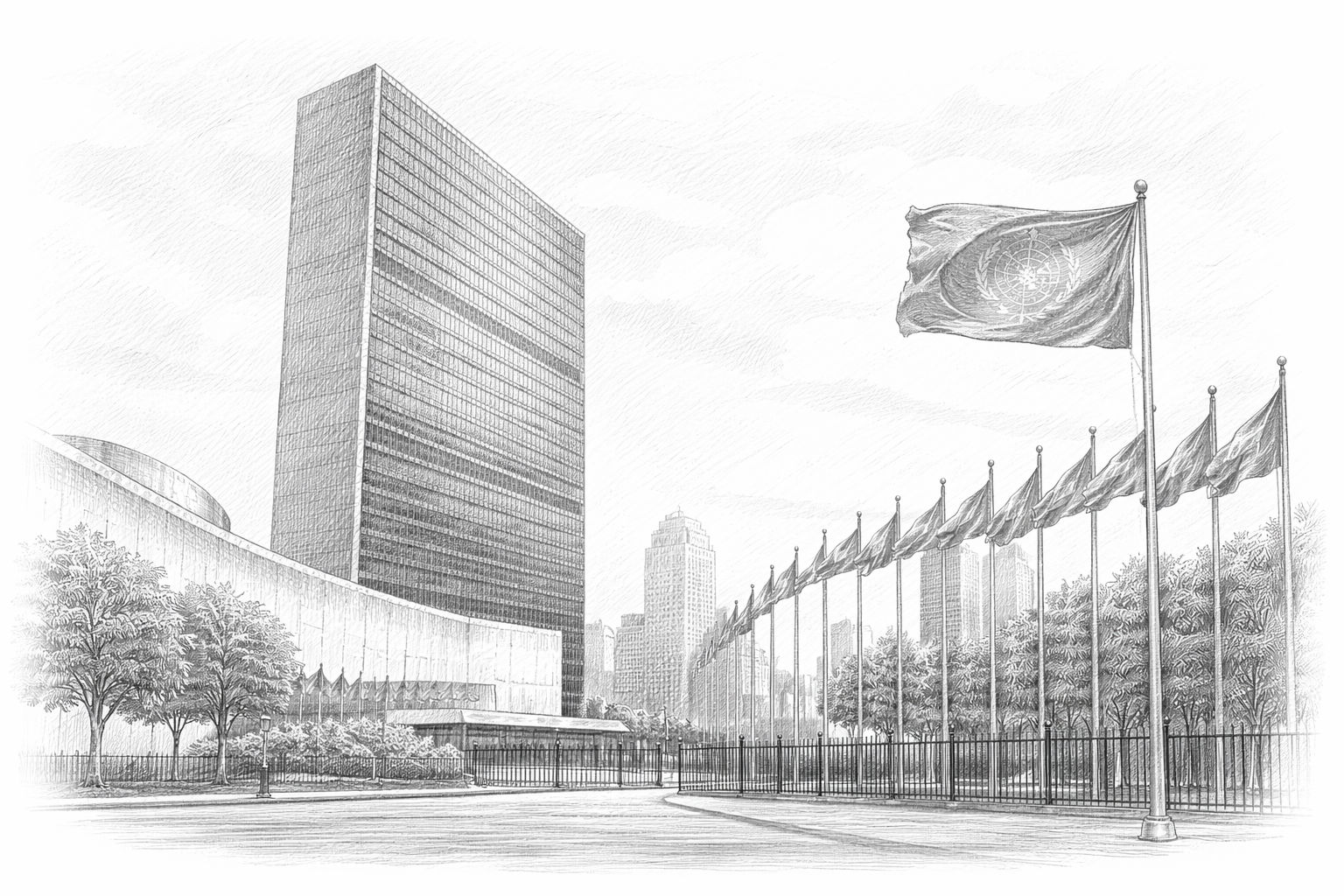
From contract law to a „rules-based world order“
If you read older texts on foreign policy, you notice something: The term „rules-based world order“ did not play a major role for a long time. People talked about treaties, alliances, the UN Charter, diplomacy, sometimes also about „international order“ or „international law“.
At some point, however - especially in recent years - this term began to appear more and more frequently. And the more it was used, the more it seemed like a substitute for something that used to be more clearly named.
This is no small linguistic difference. Language is never just decoration in politics. Terms are tools. And when a new term is suddenly in constant use, it is worth taking a skeptical look: What is it replacing? What is it shifting? And what does it make less clear, although it should actually be clear?
Because „rule-based world order“ sounds positive at first. Who could be against rules? The only problem is that while treaties and international law have a source, it is often unclear what rules are meant by this „rules-based world order“, who sets them and how they are actually to be enforced.
When and why this term came about
The term seems like modern packaging for something that is historically older: the idea that international relations should be governed not just by brute force, but by recognized rules. In practice, „rules-based“ is often used when you want to defend an order without committing to a specific set of treaties.
There may be several reasons for this. One reason is convenience: it is easier to invoke a „rules-based order“ than to laboriously explain which specific norms of international law apply, which exceptions exist, which mandates exist and which do not. A second reason is more political: the term leaves more leeway. Those who speak of „rules“ can emphasize whatever suits the situation - without having to be measured against a clear text.
The result is something that could be described as a rhetorical shift: Away from precise sources, towards a moral-sounding catch-all term. This makes debates faster - but it also makes them less clear. And in a world of war, sanctions and interventions, vagueness is not a harmless mistake, but a risk.
„Rule-based“ sounds binding - but is often undefined
The decisive difference between international law and a „rules-based world order“ lies in the way it is anchored. International law has - at least ideally - a comprehensible basis: treaties, the UN Charter, recognized principles, court rulings, international practice. You can argue about how you interpret this, but you know what you are referring to.
It is often different with the „rules-based world order“. The term is rarely clearly defined. It is used as if it were clear what is meant - and this creates a kind of linguistic fog. For the normal reader, but often also for everyday political life, it then becomes blurred:
- Is it about international law?
- Is it about Western alliance rules?
- Is it about values?
- Is it about economic norms?
- Or is it simply about the order preferred by the powerful players?
The problem is not that you want to describe an order. The problem is that the term is so flexible that it can always be made to fit when in doubt. And that means it loses precisely what rules are actually about: reliability and verifiability.
Who defines these rules?
This is where it gets really interesting - and also unpleasant. If you claim that there is a „rules-based world order“, then you have to ask: Who decided on these rules? Where do they stand? Who legitimized them? And who decides what is „rule-based“ in the event of a dispute?
In a classic, treaty-based order, this can be answered at least in part: states conclude treaties. They join them or not. The UN Charter is a point of reference. Courts and international institutions create a framework for interpretation. Not perfect, but at least comprehensible.
In a „rule-based world order“, as it often appears in political parlance, the focus shifts: rules suddenly seem less like commonly agreed norms and more like a set of expectations that are formulated and enforced by certain actors. This can then quickly tip over into a tacit hierarchy: Some define what is „rule-based“ - and others are expected to follow.
That is a fundamental difference. Because when rules are no longer decided jointly, but are de facto interpreted and determined by one side, then law becomes politics again. And in the international arena, politics is often simply power in polite packaging.
The difference between law and narrative
At this point, it is worth making a clear distinction: law is something that can be tested. A narrative is something to be believed. The two can overlap, but they are not the same thing.
When someone says: „This is contrary to international law“, you can - at least theoretically - check which standard has been violated. You can argue whether an exception applies. You can name sources. This is tedious, but it can be rationally verified.
When someone says: „This violates the rules-based world order“, it sounds similar, but is often much less tangible. It immediately resonates with moral pressure: Anyone who disagrees is quickly seen as a rule-breaker, troublemaker or even an enemy of order. But which specific rule has been broken often remains a mystery. And that is precisely what is dangerous: if the justification is vague, it can support almost anything.
This is where the zone begins in which many debates tip over. Not because people are evil, but because language is often faster than law in political reality. And because it is convenient to invoke „order“ without openly discussing the specific legal situation.
The problem of sovereignty of interpretation
Interpretive sovereignty means that whoever controls the terms often also controls the discussion. When „rule-based world order“ becomes a moral cipher, a situation arises in which an actor no longer just acts, but also provides an evaluation of their actions. This can be seen in how often political communication feels like this: the action is not first classified legally, but is immediately framed morally. The action is „necessary“, „without alternative“, „to protect freedom“, „to preserve order“. Anyone who asks questions is quickly seen as naive or suspicious.
Yet it is precisely this questioning that is at the heart of a stable order: What rules? What legal basis? What responsibility? What consequences if everyone acts this way? These questions are not destructive, but traditionally what would have been understood as responsible scrutiny in the past.
However, when interpretative sovereignty becomes stronger than legal clarity, the yardstick shifts: then it matters less whether something is legally clean, but whether it can be communicatively sold as „compliant“. And if a regulation can only be sold instead of being verified, it is in a bad state.
Why this shift is so momentous
The shift from treaty law to „rules-based“ rhetoric has a side effect that is easily underestimated: it changes the learning processes of other states. In international relations, what actually happens is observed very closely - not just what is said.
If a state or an alliance talks about rules, but interprets these rules according to the situation, then others learn: Rules are flexible. Or to put it more harshly: rules are what the powerful make of them. And if that is the lesson, a domino effect is created. Because then it becomes rational for everyone to also become more flexible, to also build narratives, to also use legal gray areas.
In this way, an order cannot collapse abruptly, but slowly fray. It loses edges. It loses predictability. And at some point you realize that although you still have the language of order, there is less and less substance behind it.
This chapter was basically the bridge: away from the old idea that order comes from contracts and procedures, towards a modern language in which „rules“ are often more of an aspiration than a verifiable basis.
The UN between aspiration and reality
80 years after the UN Charter came into force, the picture is sobering: At the United Nations headquarters in New York, the mood is not one of celebration but one of concern. The multilateral order, which is based on international cooperation and the strength of the law, is under massive pressure. Instead of binding rules, the law of the jungle is increasingly prevailing. This is particularly evident in the UN Security Council, where the veto powers are blocking each other and central decisions are not being made. This crisis is exacerbated by massive financial cuts, the consequences of which primarily affect poorer countries. And yet the UN remains an indispensable place - the only place where all the world's states continue to come together.
The following video takes a closer look at this situation. In an interview with international law expert Stephan Wittich from the University of Vienna, it becomes clear why the United Nations should not be written off despite political blockades and financial weakening. The video sheds light on the tensions between power politics and the legal order, classifies the role of the veto powers and explains clearly why the UN retains its value, especially in times of crisis - not as a perfect institution, but as the last common platform of the global community.

UN under pressure - 80 years of work for world peace and human rights | ORF Podcast
How narratives replace rules
Anyone dealing with the so-called rule-based world order will inevitably come across another topic: propaganda. Because the more vaguely terms such as „rules“, „values“ or „order“ are used, the greater the importance of interpretation and narrative.
The article „Propaganda: history, methods, modern forms and how to recognize them“ shows exactly how such narratives are created, why they work and why they are so effective in complex political issues. He explains in an understandable way how language, repetition and moral framing are used to legitimize actions without providing a clear legal justification. Anyone who has read the article on international law will find here the missing link between law, power and public perception.
Dismissals, evasions and the creeping loss of trust
An important difference is often overlooked in the public debate: International order rarely breaks down because rules are spectacularly broken. Much more often, something more subtle happens. Rules are broken, undermined or simply circumvented. This seems less dramatic, but is often more destructive in the long term.
This is because an open breach of the rules is visible, vulnerable and in need of explanation. A termination or circumvention, on the other hand, may appear formally correct, even though it undermines the spirit of the order. This is precisely where the creeping loss of trust that increasingly characterizes international relations begins.
Withdrawal from international agreements
In recent decades, more and more states - especially Western states - have withdrawn from international agreements or have effectively restricted their validity. Disarmament treaties, arms control agreements, international jurisdictions and multilateral agreements have been terminated, suspended or deliberately weakened.
Formally, this is often permissible. Treaties contain termination clauses. States are allowed to withdraw. The problem lies not in the act of termination itself, but in the accumulation and direction. If central pillars of the order gradually fall away, what remains in the end is formal sovereignty, but less and less common structure.
For other countries, this is a clear signal: commitment is optional. Those who are strong enough can opt out. Those who are weak must hope that the rules will still apply.
Circumvention instead of open confrontation
Even more problematic than open dismissals is the systematic circumvention of existing rules. Instead of clearly stating: „We no longer adhere to these rules“, new justifications are constructed, exceptions are extended or existing standards are reinterpreted.
This is often technical, legally complex and difficult for outsiders to understand. Terms such as „preventive self-defense“, „extended security interests“ or „new threat situations“ are then used to shift old boundaries without officially abolishing them.
The effect is the same: the rule remains on paper, but loses its binding force. And that is precisely what is more dangerous for an order than an open break, because it undermines orientation.
When procedures become a minor matter
Procedures were a central element of the classical order. Decisions were not to be made spontaneously, but within clear processes. Mandates, consultations, votes - all of these were intended to ensure that power was not used arbitrarily.
In practice, however, there is an increasing disdain for such procedures. They are seen as slow, obstructive or politically impractical. Instead, it is argued that it is necessary to „remain capable of acting“. This sounds plausible, but shifts the benchmark: the focus is no longer on legality, but on speed.
In the long term, this leads to a dangerous logic. If procedures are only used when they deliver the desired result, they lose their legitimizing function. Then they are no longer a protective mechanism, but a backdrop.
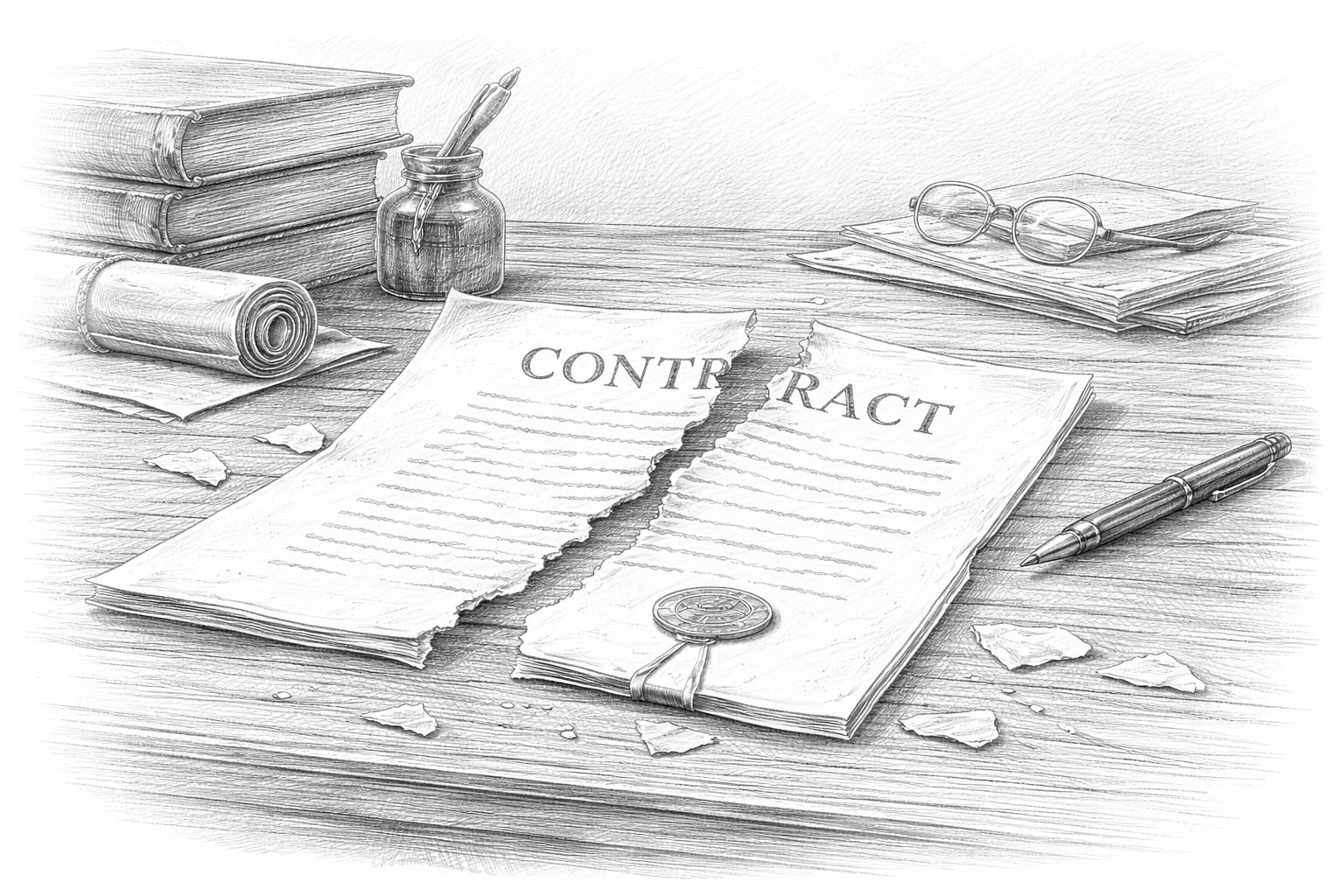
The erosion of mutual trust
International order only works if states can assume that commitments have a certain durability. Trust is not created through sympathy, but through repeatability. Those who behave reliably become predictable - even for opponents.
It is precisely this trust that is damaged by terminations, circumventions and flexible interpretations. Not necessarily immediately, but cumulatively. Each individual step may be explainable. However, the overall result is a climate in which no one can be sure whether rules will still apply tomorrow.
This is particularly problematic for smaller or weaker states. They are more dependent on rules than on power. When they experience that even central players are increasingly breaking away from the order, they often only have the choice between adaptation or resignation.
International politics follows a simple but often underestimated logic: behavior is copied. Not morally evaluated, but functionally analyzed. States observe very closely what others do - and what the consequences are.
If terminations remain without consequences, they become more attractive. If rule circumvention is tolerated, it becomes an option. This creates an imitation effect that gradually, rather than abruptly, dissolves the order.
The dangerous thing is: Nobody has to deliberately destroy the order. It is enough for more and more actors to act rationally while at the same time rhetorically invoking the same rules. In the end, what remains is an order that only exists in language.
Order as a cost factor
Another aspect plays a role here: rules cost something. They cost room for maneuver, time and sometimes also political influence. As long as everyone bears these costs, order is worthwhile. However, as soon as some players start to avoid these costs, others come under pressure.
Why should we limit ourselves if others no longer do so? This question is human - and politically highly effective. It leads to self-restraint no longer being perceived as a strength, but as a disadvantage.
This overturns the logic of order. What used to create stability suddenly seems naive. And it is precisely at this point that the return to the logic of power begins - not out of aggression, but out of adaptation.
This chapter thus shows the structural level of erosion. The focus here is not on individual military operations, but on the environment that makes them possible. Terminations, evasions and dwindling trust prepare the ground for precisely those developments that we looked at specifically in the next step.
Because if rules lose their binding force, it is only a matter of time before military force once again appears as a normal instrument. Not as a breach of the rules, but as a pragmatic option. This is precisely where the following chapter comes in - where theory becomes practice.
Military actions without clear mandates
So far, we have dealt with concepts, principles and shifts. At this point at the latest, however, the topic can no longer be dealt with in the abstract. After all, an international order does not manifest itself in Sunday speeches, but in concrete actions. It is precisely where military force is used that it becomes clear how seriously rules are actually taken.
This is expressly not about moral assessments of individual conflicts. Nor is it about naming culprits or providing simple answers. Something else is crucial: what standards are applied - and do they apply equally to everyone?
In recent years, there has been an increase in military actions that are not clearly covered by a United Nations mandate. These include air strikes, targeted attacks, covert operations or open military presence on foreign territory - often justified by security interests, deterrence or the protection of certain values.
Examples such as operations in Syria or, more recently, actions in connection with Venezuela show a recurring pattern: the legal basis remains unclear, is presented in abbreviated form or is completely ignored. Instead, the political justification comes to the fore. It is then said that there was „no choice“, that we „had to react“, that we were acting „preventively“ or „in the interests of stability“.
The problem is not that states want to protect their interests. They always do. The problem lies in the fact that the legal framework is increasingly treated as subordinate - or as something that can be replaced by communication when it is not convenient.
The central contradiction: demanding rules, circumventing rules
This is where the internal contradiction of the so-called rules-based world order becomes particularly clear. On the one hand, other states are insistently demanded to abide by international rules. Border violations, military escalations or breaches of treaties are sharply criticized - often rightly so. On the other hand, the country's own military actions are treated as special cases.
The argumentation often follows the same logic: breaking the rules is not described as breaking the rules, but as an exception, a necessity or a special responsibility. Rhetorically, one remains on the side of the order, but in practice one disregards its core principles.
This is highly problematic for order. After all, rules do not live from being invoked, but from being adhered to when things get uncomfortable. Those who only demand rules from others send a clear signal: these rules are negotiable - at least for those who have enough power.
Who controls the inspector?
In a traditional legal system, this question is clearly answered. Power is controlled, decisions are verifiable, procedures are transparent. Internationally, this is more difficult, but not fundamentally impossible. UN mandates, international courts and multilateral votes are designed precisely for this purpose: to contain power, not to legitimize it.
However, if military force is used without these procedures, a vacuum is created. Who then decides whether a deployment was justified? Who draws the consequences when boundaries have been overstepped? And above all: who enforces these consequences?
In practice, the answer is often: no one. Or more precisely: no one with sufficient power. And this is precisely where the order shifts back towards a system that is based less on law than on the balance of power.
The international signal effect of such actions
International politics is a learning system. States observe each other very closely. Not only official statements, but above all actual actions. If military actions without a clear legal basis have no consequences, a precedent is set.
Other countries draw their conclusions from this. Not necessarily out of malice, but out of rationality. If rules can be interpreted flexibly, if mandates are optional, if might effectively replaces right, then it is logical for everyone involved to adopt these rules of the game.
If you don't do this, you risk being at a disadvantage.
In this way, a new normality is gradually emerging: the focus is no longer on „What is allowed?“, but on „What is tolerated?“. And tolerance is not a stable foundation for order, but a short-term condition that changes with the balance of power.
The long-term damage to credibility
The loss of trust is particularly problematic. An order depends on its central players being perceived as credible. Credibility is not created through moral appeals, but through consistency. Those who admonish others must themselves act with particular care.
However, if the impression is created that rules are applied situationally, any criticism of other states loses weight. It may be correct in terms of content, but it has a selective effect. And selectivity is the enemy of any regulatory system. Because it invites counter-arguments:
„You do it the same way.“
The result is a creeping erosion. Not loudly, not spectacularly, but gradually. The language of order remains, but its core is being eroded. The end result is a world in which many people still talk about rules - but are less and less willing to adhere to them.
Why this is not a marginal issue
One might be tempted to dismiss these developments as normal power politics. States have always acted in this way. But that falls short. The crucial difference lies in the fact that today we officially live in an order that actually wanted to overcome precisely this behavior.
If military force becomes an accepted means again, without a clear legal framework, then this is not just a relapse, but a structural problem. It does not affect individual conflicts, but the basic assumption that rules should apply universally.
And it is precisely at this point that the uncomfortable question arises, which we will address in the next chapter: What does this mean for the future? Do we still live in a rule-based order - or are we already back in a power order that only uses the language of rules?
Prof. Glenn Diesen and Prof. Jeffrey Sachs: Venezuela as a warning signal
In another recent video, Glenn Diesen discusses the latest events surrounding Venezuela with US economist Jeffrey Sachs. The conversation focuses on the US military actions and the reports about the kidnapping of President Nicolás Maduro.
Sachs clearly classifies these events as part of a dangerous development in which international legal boundaries are increasingly being disregarded. Together, the two discuss the signal effect such interventions have on the international order and why repeated breaches of the law undermine the global security system in the long term. The discussion complements the analyses presented here with a pointed yet calm classification from an international perspective.

Jeffrey Sachs: USA attacks Venezuela and kidnaps President Maduro | Glenn Diesen
When the West itself becomes a precedent
One of the most delicate but also most necessary questions is: What happens to an international order when the very states that see themselves as its guardians become rule-breakers themselves? This question is uncomfortable because it leaves the moral safe space and confronts legal reality.
This is not about relativizing foreign breaches of the law. On the contrary. Anyone who takes international rules seriously must also name them where they have been violated by their „own side“. Otherwise, international law becomes a political instrument - and that is precisely what contradicts its original purpose.
The NATO operation against the Federal Republic of Yugoslavia
The air war against the Federal Republic of Yugoslavia in 1999 is still considered one of the best-known examples of a military operation by Western states without a mandate from the UN Security Council. At the time, NATO justified its actions with humanitarian arguments and the need to prevent an escalation in Kosovo.
Under international law, however, this mission remained highly problematic. There was no UN mandate and the UN Charter's ban on the use of force was deliberately circumvented. In retrospect, many Western international law experts did not describe the operation as „legal“, but at most as politically motivated or morally justified. This distinction is crucial: moral motives are no substitute for law.
The Yugoslavia operation thus became a precedent. It showed openly for the first time that military force can be used even when formal procedures are blocked - provided that political support is strong enough. It is precisely this signal that continues to have an impact today.
Syria: Permanent presence without a clear legal basis
The military involvement of Western states in Syria has also been operating in a legally controversial area for years. Air strikes, special forces and military infrastructure have been and continue to be deployed in some cases without the consent of the Syrian government and without a clear mandate from the UN Security Council.
The justifications range from combating terrorism to self-defence and regional stabilization. Politically, these arguments may seem plausible, but in terms of international law, they remain flawed. Above all, the permanent military presence on foreign territory without clear consent or mandate calls into question the principle of state sovereignty.
Here, too, the pattern is evident: the legal framework is not openly negated, but stretched through flexible interpretation. This means that although the action can be explained, it is not clearly legitimized in legal terms.
Current developments around Venezuela
Current actions in connection with Venezuela are particularly sensitive. Military operations, covert actions or direct interventions against state actors of a sovereign state without a UN mandate are generally within a very narrow framework under international law - and often exceed it.
Regardless of how one assesses Venezuela's domestic political situation: International law does not recognize a general right to military intervention to enforce political objectives or changes of government. Interventions of this kind are therefore considered impermissible from a traditional international law perspective, unless they are clearly covered by self-defense or a UN mandate.
Current cases in particular also reveal another problem: the assessment is often extremely quick, politically charged and without a clear legal classification. This makes a sober debate more difficult - and reinforces the impression that the law is being communicated rather than actually applied.
Why these examples are so important
These three examples are not isolated. They mark turning points. Each individual case has shifted the understanding of what is considered acceptable. Not because all the rules were suddenly suspended, but because exceptions became the new normal.
The decisive factor here is not whether the motives were „good“ or „bad“. The decisive factor is that the procedure - i.e. the legal framework - became increasingly secondary. This is precisely what undermines any order based on rules in the long term.
Because if even serious interventions without clear mandates remain without consequences, the law loses its binding effect. Other players are observing this very closely - and drawing their own conclusions.
These examples are just the tip of a larger iceberg. However, they already show why the discussion about international law and rules-based order is not academic, but highly practical. Every precedent changes the rules of the game - often permanently.
When geopolitical reality puts international law to the test
 Many of the issues surrounding international law and the „rules-based world order“ initially seem abstract. However, international crises quickly reveal how great the tension between aspiration and reality actually is. It is precisely this tension that is currently evident in the conflict between Israel, the USA and Iran. Military escalation, mutual retaliatory strikes and strategic interests are once again raising the question of what role international law can still play in an increasingly multipolar world - and where its limits lie. In my new background article „The Iran-Israel conflict: Why this escalation is the West's strategic nightmare“ I analyze the geopolitical background to the current developments and show why this conflict goes far beyond a regional crisis. It touches on fundamental questions of international order and the global balance of power.
Other controversial interventions under international law
| Country (destination country) | Official justification (short) | Why controversial under international law |
|---|---|---|
| Venezuela (Operation to arrest Nicolás Maduro, 2026) | Presentation as „law enforcement“ / arrest on drug and terrorism charges; partly security arguments | Unlawful according to numerous international law experts: no UN mandate, no consent from Venezuela and no plausible self-defense situation under Art. 51 UN Charter; additionally problematic due to sovereignty and (presumed) immunity of a head of state |
| Syria (Air strikes 2018 by USA/UK/FR) | Response to the use of chemical weapons; deterrence, „humanitarian intervention“ / protection of civilians | No UN Security Council mandate; „humanitarian intervention“ is highly controversial under international law (not generally recognized as a permissible exception); therefore often criticized as a violation of the prohibition of the use of force |
| Libya (2011) | UN Security Council Resolution 1973: Protection of the civilian population / no-fly zone („Responsibility to Protect“) | The entry was covered by a UN mandate - however, it is criticized that parts of the support/operation management went beyond the mandate limits (exceeding the mandate, de facto partisanship/regime change logic) |
| Pakistan (Drone attacks, 2000s/2010s) | Counter-terrorism / self-defense against non-state actors | Controversial under international law due to violation of sovereignty without clear consent or transparent legal basis; assessed as unlawful in some specialist literature (especially if „unwilling or unable“ argument does not hold water) |
| Iraq (2003) | Enforcement of previous UN resolutions, alleged weapons of mass destruction, defense against terrorism / security arguments | Mainly judged illegal because there was no new explicit UN Security Council decision to invade; central justifications were criticized as unsustainable under international law |
| Federal Republic of Yugoslavia / Serbia (Kosovo War, 1999) | Humanitarian justification: Prevention/stopping of massive human rights violations, protection of the civilian population | No UN Security Council mandate and no classic self-defense situation; therefore considered by many international law experts to be an unlawful use of force („illegal“, sometimes described as „illegal but legitimate“) |
| Panama (1989) | Protection of US citizens, defense of democracy/human rights, „war on drugs“, protection of canal contracts | Widely criticized as a violation of the prohibition of the use of force: lack of UN mandate; the reasons given are considered insufficient under international law for an invasion; international condemnations (including UN GA/OAS) have been documented |
| Grenada (1983) | Protection of US citizens (including students), request from regional partners/government representatives, stabilization of the situation | No UN Security Council mandate; violation of prohibition of the use of force/territorial sovereignty - UN General Assembly condemned the intervention as a „flagrant violation“ of international law |
Why this list contains only a few examples
Anyone who takes a serious look at operations by Western states since the Second World War that violate international law or are controversial under international law quickly encounters a practical problem: the number is large - and it varies greatly. Depending on the definition, time period and delimitation, we are not talking about a dozen cases, but several dozen, sometimes even well over a hundred military interventions, covert operations, air strikes or permanent military presence on foreign territory.
In addition, there are missions that formally began with mandates but were later legally exceeded, as well as conflicts such as Israel's military actions in the Gaza Strip (Gaza / Israel), where the assessment under international law is highly controversial and differs depending on the aspect.
This is precisely the crucial point: international law is not a simple label. „Legal“ or „illegal“ can rarely be answered in general terms. Some operations are clearly carried out without a UN mandate, others are based on self-defense, others on humanitarian grounds or previous resolutions. Some are classified as illegal by the majority of international law experts, others are in gray areas that are controversial even among experts. A complete overall table would inevitably blur these differences - and thus create confusion rather than clarity.
The selection shown here is therefore deliberately limited. It is not intended to accuse, but to make a pattern visible: that rules have repeatedly been stretched, circumvented or selectively applied in practice - even by those states that see themselves as guardians of the international order. Anyone who recognizes this pattern will better understand why terms such as „rules-based world order“ are used so frequently today - and why it is so important to critically question them.
From international law to escalation logic: the case of tension
 If you want to understand how quickly a supposedly stable order can topple, you need to familiarize yourself with the so-called state tension deal with. It describes the transitional area between peace and open war - legally blurred, politically highly dangerous. In this gray area, rules are stretched, responsibilities are shifted and military measures are prepared, often without a formal declaration of war.
This case of tension shows how fragile a rule-based world order can be in practice when power interests, security logic and political narratives come together. A more in-depth classification can be found in the linked article.
Current survey on a possible case of tension in Germany
What does this mean for the future? - Do we still live in an order?
You rarely recognize major upheavals by the fact that something suddenly disappears. Usually the concepts remain the same, the rituals too, sometimes even the institutions. What changes is the inner content. This is exactly what seems to be happening with the international order at the moment. People continue to talk about rules, about law, about responsibility - but more and more often it seems as if these terms no longer carry what they used to.
This is not a dramatic thesis, but an observation. There is no clear break, no official departure from international law. Instead, we are experiencing a gradual shift: away from binding procedures and towards flexible justifications. Away from clear mandates and towards political narratives. And it is precisely because this process is taking place so quietly that it is so difficult to grasp.
Are we living in a power structure again?
An uncomfortable question arises: Have we in fact already moved closer to an order in which might is more decisive than right? Not openly, not officially, but in practice?
In a classic power structure, it is not what has been agreed that counts, but what is enforceable. Rules then only exist as recommendations or as an aid to argumentation. Those who are strong enough can stretch or ignore them. Those who are weak are reminded of them. Historically, this is not an exceptional situation, but rather the normal case - with all the known consequences.
The real progress of international law was to at least contain this normal case. Not to abolish it, but to tame it. If the basis for this containment is now removed, chaos will not automatically return. First of all, something else returns: uncertainty.
The paradoxical consequence of selective rules
The following is particularly paradoxical: The more often rules are applied selectively, the less they can stabilize. Those who only allow rules to apply when they suit their own interests are destroying the very thing that rules are supposed to achieve - namely reliability.
This creates a dilemma for other countries. If they adhere strictly to the rules, they risk being exploited. If they adapt to the new flexibility, they themselves contribute to the erosion of order. Both are rational - and both are problematic in the long term. This creates a dynamic in which mistrust becomes a reasonable attitude.
Order thrives on self-limitation
One point that is often underestimated is that order is not created by controlling others, but by limiting yourself. This applies on both a small and large scale. States that are prepared to abide by rules even when they are inconvenient create trust - even among opponents.
This self-limitation was always the core of a rule-based order. It was never perfect, never completely fair, but it had a clear direction. If this willingness fades, all that remains in the end is the law of the jungle - even if it continues to be clothed in the language of rules.
The role of the public: taking terms seriously
Another aspect is often overlooked: The public and the media also play a role. When terms such as „rule-based world order“ are uncritically adopted without asking about their concrete meaning, vagueness is normalized. The less people ask, the easier it is to frame political decisions in moral terms instead of justifying them in legal terms.
But asking questions would be a sign of maturity: Which rule? Which legal basis? What mandate? And what are the consequences if other states act in the same way? These questions are not disloyal, they are necessary. Because an order that can no longer be explained is not an order, but a claim.
This article therefore does not end with a conclusion in the traditional sense. It would be too easy to formulate clear accusations or offer quick solutions. The situation is more complex - and therefore serious.
Perhaps we no longer live in a clearly rule-based world order. But perhaps we are also not yet completely in a pure power order. We are probably somewhere in between - in a transitional phase in which old rules are still invoked, but are less and less binding.
The crucial question is not what you call this phase. The crucial question is whether you recognize it at all. Because only those who recognize that rules are eroding can consciously decide to take them seriously again - or openly say that they no longer want them.
Both would be more honest than the current situation. Because an order that is only asserted but no longer binding is not a stable basis for a common future. It is a promise without liability.
And that is precisely what should make us think - regardless of our political sympathies.
When rules become morals - and morals become exclusion
 The article „Cancel Culture in the West“ expands the analysis of the rules-based world order to include a domestic political perspective. While norms, sanctions and international rules are often discussed in a geopolitical context, this editorial shows how similar mechanisms also operate within Western societies. Sports bans, university debates, military personnel changes and EU sanctions lists are not viewed in isolation, but rather as an expression of structural dynamics. The focus is less on outrage and more on the question of how moral compression and reputational logic change debate spaces. Anyone who wants to understand how foreign policy principles feed back into social discourse will find a systematic and differentiated analysis here.
Open letter from Prof. Jeffrey Sachs to Federal Chancellor Friedrich Merz
In the debate about a new world order, it is becoming increasingly clear that security and the rule of law cannot be thought of separately.
The US economist Jeffrey Sachs calls in a open letter to Federal Chancellor Friedrich Merz historical honesty and diplomatic foresight instead of one-sided escalation logic, because a security architecture that ignores the legitimate interests of others destroys trust and peace in the long term. Sachs warns against the normalization of measures that undermine international legal standards and call into question Europe's role as a force for order. Accepting breaches of the law and spirals of escalation not only endangers stability, but also the basis of the rules-based international order - a point that is often neglected in current strategic debates.

Frequently asked questions
- What is the difference between international law and a „rules-based world order“?
International law is a historically evolved, legally established system of treaties, conventions and recognized principles based on the formal consent of states. A „rules-based world order“, on the other hand, is not a clearly defined legal concept, but a political term. It is often used to describe a desired order without specifying exactly which concrete legal sources or treaties are being referred to. It is precisely this vagueness that makes it problematic. - Why was there less talk of a rules-based world order in the past?
Because they referred more to concrete legal bases. International politics traditionally argued with treaties, UN resolutions and principles of international law. The concept of a rules-based world order only gained importance when these clear references were increasingly circumvented or became politically impractical. - Is international law binding at all if there is no world police force?
Yes, but differently than national law. International law works through self-commitment, international expectations, diplomatic pressure and long-term interests. It does not work through direct coercion, but through the realization that breaking the rules creates long-term instability - even for the rule-breakers themselves. - So why do states abide by international law at all?
Because predictable rules are more favorable than permanent uncertainty. Even powerful states benefit when others know where they stand. International law reduces the risk of escalation, misunderstandings and uncontrolled reactions - at least as long as it is taken seriously. - What exactly does the prohibition of violence in international law mean?
The ban on the use of force generally prohibits military force between states. Exceptions only apply in very limited cases, for example in self-defense or with a mandate from the UN Security Council. Anything that goes beyond this is highly controversial, to say the least in legal terms. - Why are humanitarian interventions so problematic under international law?
Because they seem morally plausible, but have no generally recognized legal foundation. International law does not recognize a general right to intervene militarily to redress grievances. As soon as moral motives replace legal procedures, the prohibition on the use of force is undermined. - Was the NATO operation against Yugoslavia in violation of international law?
From a legal perspective, yes, because there was no UN mandate and there was no classic self-defense situation. Even many Western international law experts consider the operation to be unlawful, even if it was defended politically or morally. - Why is the war in Yugoslavia such an important precedent?
Because it showed that military force can also be used without a mandate if there is sufficient political support. This opened a door through which many other exceptions later passed. - Are all Western military operations automatically illegal?
No. Some operations are covered by international law, for example by clear UN mandates or clear self-defense situations. The problem lies not in every single action, but in the increasing willingness to accept or ignore legal gray areas. - Why is the situation in Syria so controversial under international law?
Because Western military actions there are sometimes carried out without the consent of the Syrian government and without a UN mandate. The justifications cited are in a legal grey area and are not uniformly recognized internationally. - Why is the current intervention against Venezuela particularly critical?
Because military or police actions against a sovereign state without a UN mandate, without consent and without a clear self-defense situation are inadmissible under classic international law. Political assessment by the government is no substitute for a legal basis. - What does „selective application of rules“ mean in concrete terms?
It means that rules are strictly demanded by some actors, while exceptions are granted to themselves. As a result, rules lose their universal validity and become instruments of power. - Why is this a problem for other countries?
Because they learn from this that rules are obviously negotiable. When powerful states interpret them flexibly, this creates an incentive for others to do the same. This accelerates the erosion of order. - So is the rules-based world order just a pretext?
Not mandatory. The term can be useful if it honestly refers to existing law. It becomes problematic when it serves as a substitute for concrete legal bases and deflects critical questions. - What role do the media and the public play in this?
A big one. When terms are adopted uncritically without questioning their legal meaning, an atmosphere is created in which political narratives override the law. Maturity begins with precise questions. - Does criticizing the West automatically mean relativizing other breaches of the law?
No. Just the opposite is the case. Anyone who takes international law seriously must apply it universally. Selective criticism undermines the credibility of the law as a whole. - Do we still live in a rule-bound world order today?
Probably in a transitional phase. The language of rules still exists, but its binding nature is visibly diminishing. It remains to be seen whether this will lead to a return to an open power structure. - What would be the most honest way to deal with this development?
Either to take rules seriously again and to consistently bind yourself to them - or to openly say that you accept a power-based order. Anything in between creates uncertainty. - Why does the article end without a clear conclusion?
Because there are no simple answers. The central task is not to apportion blame, but to sharpen perception. Only those who recognize that something is shifting can consciously decide how to deal with it.