
Just a few years ago, artificial intelligence was a topic for research institutes and large corporations. People talked about neural networks, deep learning and speech recognition - but it hardly played a role in everyday life. Today, AI is no longer a topic for the future, but a reality: it writes texts, creates images, analyzes data and controls production processes. Whether in administration, trade or industry - it can now be found everywhere.
Data logic
Article about data logic and structures. This is about processes, dependencies and the organization of data so that systems remain comprehensible and efficient.
Digital dependency: how we have lost our self-determination to the cloud

I've always thought it was a mistake for people to hand over their data - be it in the cloud, via apps or with any „free“ services. For me, data sovereignty has never been a buzzword, but a question of self-respect. Anyone who uses technology without considering the consequences is entering into a dependency that often only becomes noticeable years later - but then has an even deeper impact.
Why ERP software alone is not enough - and how to really understand processes

In many companies, it always follows the same pattern: at some point, management realizes that „something is no longer running smoothly“. Perhaps processes have become too slow, errors are accumulating, or the company is increasingly losing track of figures, customers or internal processes. The call for a new software solution becomes loud - preferably a modern, powerful ERP software that „can do everything“. But this is often where a fatal fallacy begins.
"The Unconventional Database Book" introduces the process way of thinking.
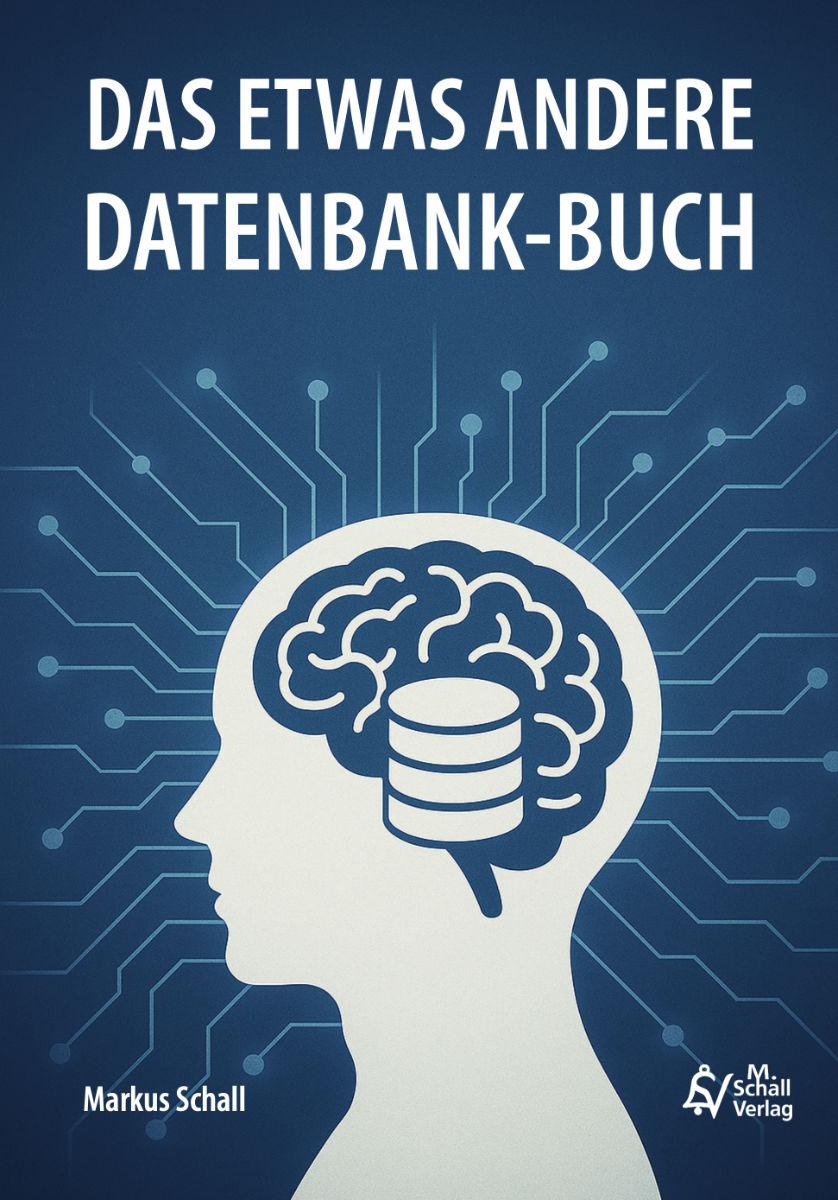
What do cell phone contacts, to-do lists, calendars and even your own closet have in common? That's right: they can be displayed as tables - and that's no coincidence. Data has long since become a basic building block of our everyday lives. If you understand it, you understand the world a little better. This is exactly where „The database book with a difference“ comes in.
Because anyone who can understand processes and backgrounds in everyday life is automatically able to design software processes quickly and intuitively and implement them in practice.