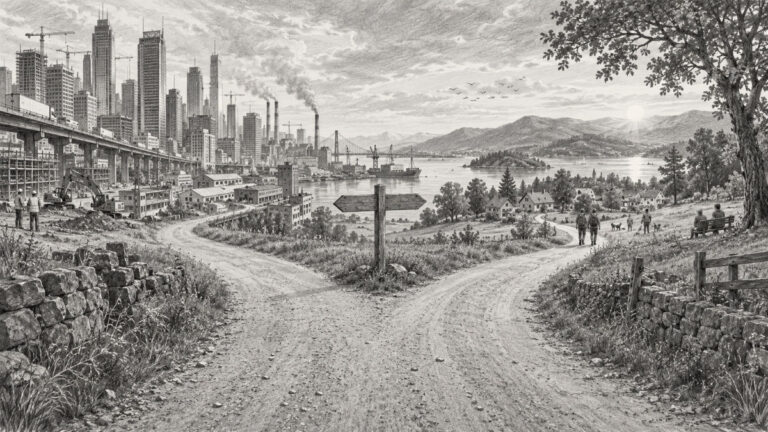
I've always thought it was a mistake for people to hand over their data - be it in the cloud, via apps or with any „free“ services. For me, data sovereignty has never been a buzzword, but a question of self-respect. Anyone who uses technology without considering the consequences is entering into a dependency that often only becomes noticeable years later - but then has an even deeper impact.

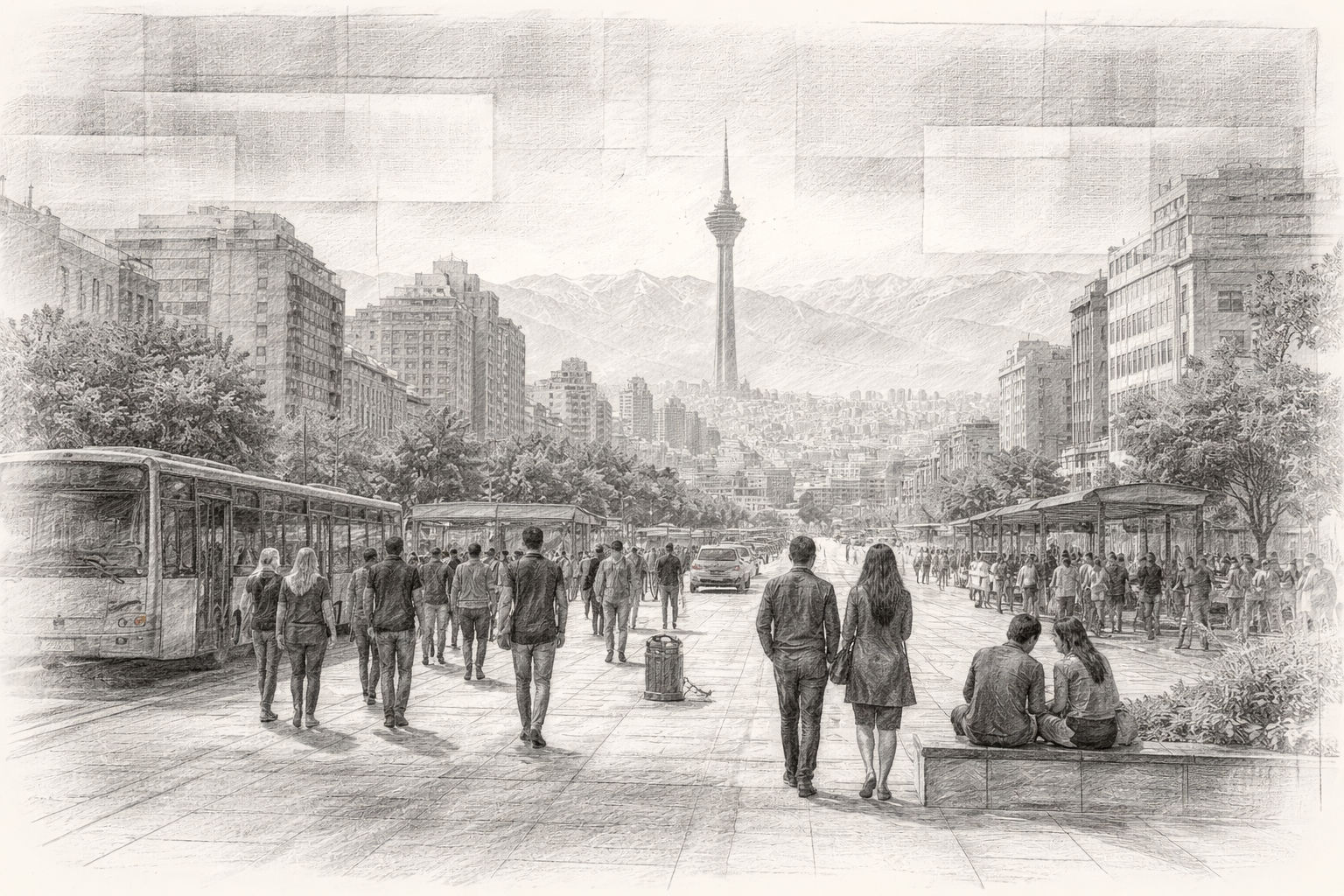

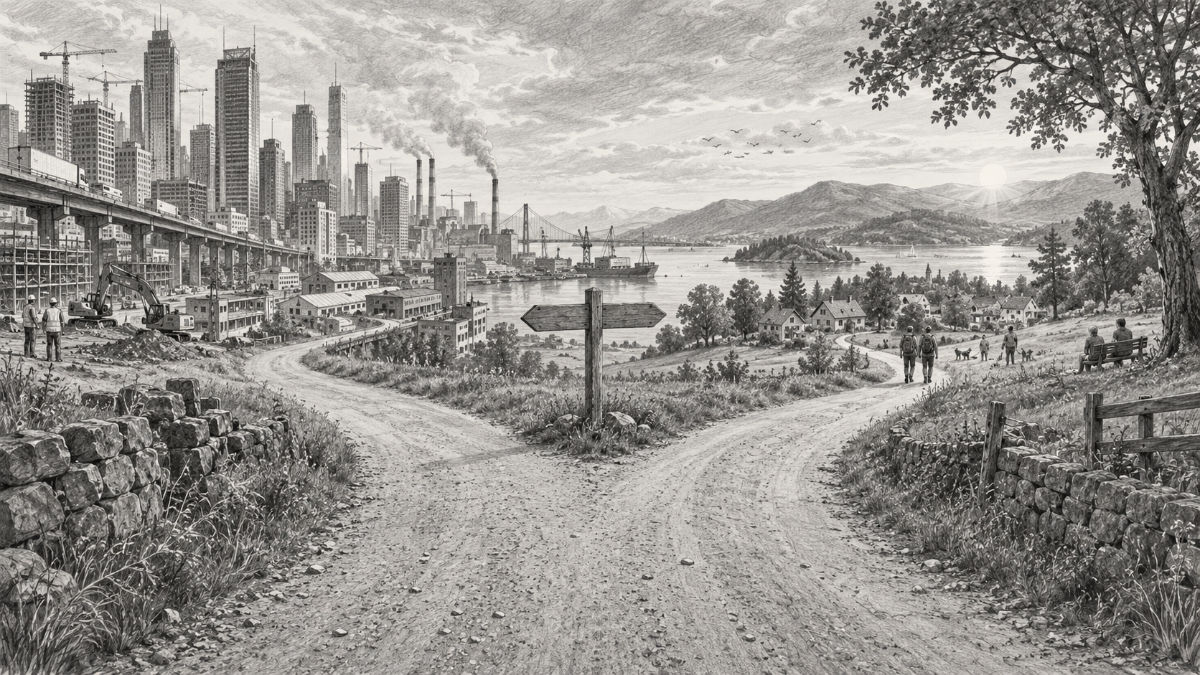
Latest news on the topic
20.09.2026: The outage of an AWS region by Amazon Web Services in Bahrain demonstrates how extensive the dependence on cloud infrastructures has become. After months of recovery attempts, Amazon Web Services declared that data and resources stored exclusively in the affected region are no longer accessible. Particularly noteworthy: The region consisted of three separate Availability Zones, thus featuring an architecture designed to mitigate failures at individual sites.
AWS Gives Up: Data from Three Data Centers No Longer Accessible | heise & c't
The incident makes it clear that regional redundancy does not automatically protect against the failure of an entire region. Therefore, an independent backup strategy remains crucial. A file in the cloud is not yet a backup if it exists there only once. The classic 3-2-1 rule continues to be recommended: three copies, two different storage media, and one copy at a different location.
18.05.2026The Connection of ChatGPT with bank accounts and financial data shows how quickly digital dependencies are now spreading. In the US, OpenAI already enables accounts to be connected via the financial services provider Plaid, allowing ChatGPT to analyze account balances, transactions and liabilities. The aim is to increasingly integrate artificial intelligence into everyday financial decisions. At the same time, banks such as BBVA are already experimenting with their own ChatGPT banking applications. The new function is currently only available in the USA - a launch in Europe may only be a matter of time.
This means that another central area of life is increasingly shifting to large cloud and AI systems. What used to be stored locally at your own bank or on your own computer is now processed via international platforms and interfaces. Critics see this not only as a convenience, but also as a growing dependency on a few global technology providers. This is particularly sensitive when it comes to financial data, as trust, privacy and economic self-determination are directly affected. The development shows how closely AI, cloud services and digital infrastructure are now merging.
OPENAI JUST ENTERED YOUR BANK ACCOUNT | ChatGPT Finance Tools Explained | DailyNoons
Despite this basic attitude, I have to admit to myself that I haven't been completely spared either. Things creep in - unnoticed, quietly, comfortably. In my case, it was the issue of payment. For years, I paid almost exclusively by card, completely automatically, without giving it much thought. Simply because it was „more convenient“.
But at the latest since my Stay in the Czech Republic has sharpened my focus again. Not only have I started withdrawing cash regularly again, but I've also made a conscious decision to pay more in cash. And I'm glad about that - glad that I can pay there with krona, a traditional currency, without digital euros, without tracking, without links to any apps or bonus systems.
What struck me was that people there pay in cash much more often than in Germany. It somehow seems healthier, more natural - almost as if they haven't forgotten that freedom always has something to do with self-determination. And that starts with paying. This small change in perspective has shaken me up. Because it shows in an exemplary way how deeply we have long been anchored in digital systems - often without even realizing it. It starts harmlessly and often ends in complete dependency.
The silent entry: how convenience becomes a trap
It starts harmlessly. A new smartphone, an assistant who kindly asks if you want to save the photos "for security reasons" in the Cloud would like to save. Of course - who wants to lose memories? And anyway, you have nothing to hide. So you click on „Yes“. Once. Then again. And suddenly everything is in the cloud: vacation photos, bills, copies of passports, private chats, sometimes entire diary pages.
But what begins as help becomes a habit - and habit becomes structure. At some point, the data is no longer on your own device, but somewhere out there. You often don't even know exactly where it is anymore. You rely on the fact that everything is already „safe“. But only one thing is certain: that you are relinquishing control bit by bit.
Convenience has a price
It's a strange trade-off we're making - convenience for control. We do without our own backups, local copies and data carriers. Instead, we let corporations „think for us“. Automatic synchronization. Access from anywhere. And if something goes wrong, we hope that support will be able to help us - if it still exists at all.
This kind of comfort is deceptive. Because it conditions us to dependency. It makes us forget how to save, structure and secure things ourselves. And it gives us the feeling that we no longer have to decide anything. Yet making decisions is one of the most important skills in a digital world.
Personal experience: One click too many
I myself have observed this development over the years - not only with others, but also with myself. Many years ago, in the early days of Facebook, I - like so many others - uploaded photos as a matter of course. Even pictures of my children. It was „normal“ back then. The platform was new and a lot of things seemed harmless. But at some point I started to have doubts.
- Who has access to these images?
- Who do they actually belong to?
- What happens if the terms and conditions change?
A few years later, I went to the trouble of deleting all my children's pictures. That was before the big wave of data scandals, even before Facebook openly traded in data. Today I'm glad I did. Because looking back, it was a wake-up call. A small step towards taking back something that I had recklessly given away: responsibility.
Inconspicuous, but irreversible
Digital dependency does not creep into our lives by force - it comes in through the back door. It disguises itself as simplification, as innovation, as convenience. And it is so dangerous because it is hardly noticeable in everyday life. Nobody is forced to upload photos to the cloud. And yet millions do. No one is forced to use voice assistants - and yet they are in thousands of households, always ready to listen.
The trap doesn't snap shut, it closes slowly. Those who do not consciously take countermeasures will eventually find themselves caught in a web that they themselves have helped to weave. And this web is rarely neutral - it belongs to someone, often a corporation, whose interests are not identical to ours.
Current survey on digitalization in everyday life
The invisible network: Where we are already dependent everywhere today
If you take a sober look at today's digital infrastructure, you quickly realize that we live in a network that we barely have an overview of ourselves. And even more rarely question it. Almost every action - whether it's writing a document, opening a calendar or sending a message - is now linked to central services that don't belong to us.
Let's take Apple. If you use an iPhone, there is practically no getting around the Apple ID. Almost nothing works without it: no app installation, no backup, no synchronization. As soon as iCloud Drive is activated - often with a harmless tick during setup - the shift begins: files that were previously stored locally on the device are moved to the cloud. The user hardly notices. Only when access is lost - for example if there is a problem with the Apple ID - do they realize how much control the provider now has.
Also with Google it is no different. Today, it is almost impossible to use an Android smartphone without a Google account. Gmail, Google Drive, Google Docs, calendar, contacts, notes - everything is tied to a central account. If you lose this account, you often lose more than just your emails. It's as if you've moved your digital identity to a rented apartment - and the landlord can terminate the contract at any time.
Digital tenancies instead of ownership
The picture is similar for Microsoft. Who today Office 365 no longer pays for software, but for a time-limited right of use. Without an active subscription, you're locked out - even with locally-used programs. You rent your typewriter, your notebook, your calculator. In the past, this would have been considered absurd. Today it's standard.
The real change is that we no longer own software, but are only allowed to use it - as long as we pay. And this right of use is linked to conditions that can change at any time. Who controls when we have access controls what we can do. This form of digital dependency is subtle - but extremely effective.
A personal alternative
I myself have observed this change very consciously - and decided against it in some areas. When it came to email in particular, I made sure not to use cloud services right from the start. Since the 1990s, my emails have always been sent via Own domains, own servers, own mailboxes. Even in the past, with the simple 1&1 packages, this was possible without any problems. And for me it was never a question of convenience, but of principle. When I write, I want to know where my words are. Who could read them. And who could delete them.
I know that hardly anyone does this anymore. Many young people don't even know what a mail server is anymore. For them, digital communication begins and ends with a Google or Apple account. This is convenient - but also dangerous. Because if you no longer know where your data is, you don't know who you've left it with.
A network without an emergency exit
The really worrying thing about all this is not that people are using services - but that it is becoming increasingly difficult to avoid them. Even operating systems now require a cloud connection. Windows 11 can hardly be operated completely without a Microsoft account. macOS keeps pushing users back to the iCloud, be it via photos, keychain synchronization or document management.
It is a network that is growing in all directions - invisible, but tangible. And it is a network that no longer leaves any real loopholes. If you want to get out, you don't just have to give up convenience, you have to actively work against the system. It takes knowledge, will and sometimes renunciation - but above all it needs clarity.
When the provider decides what we are allowed to do
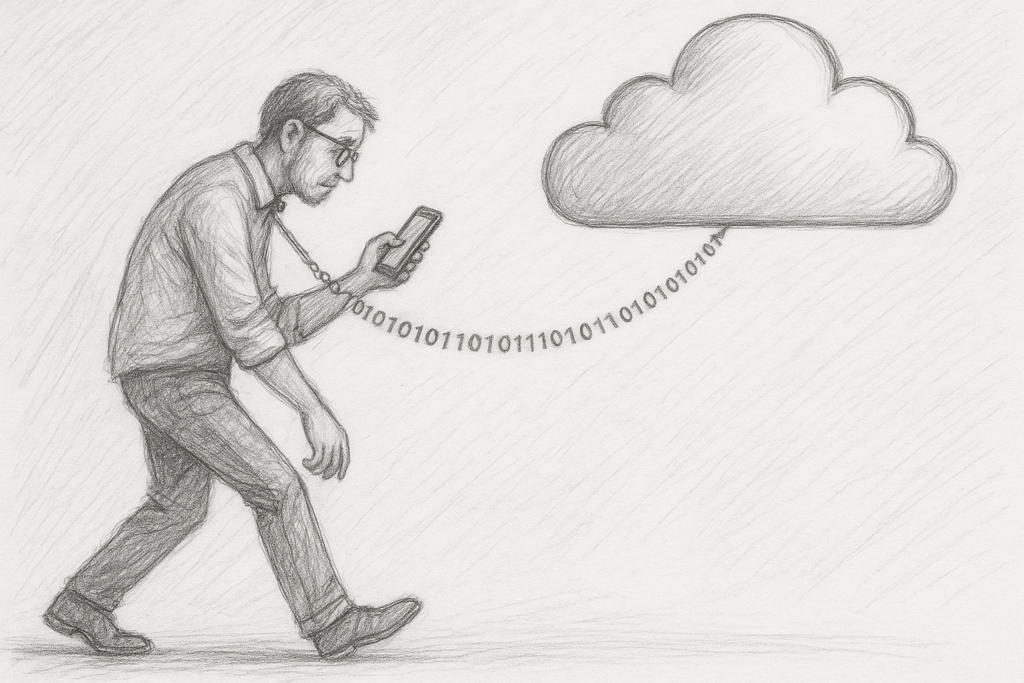
What once began as a service often grew into a threat. Platforms that were supposed to make our lives easier have reached a point where their rules define our scope of action. When a provider decides how content is visible, who is allowed to sell what or how revenues are paid out, this is no longer a service - it is domination in digital form.
My experience with eBay many years ago is an apt example of this. At one time, everything was simple and transparent: Items appeared chronologically, everyone had the same chances. Then the logic changed. A straightforward marketplace mechanism became an algorithm that specified "popularity" and other criteria - criteria that were no longer transparent and could change at any time. For a small business, such a change can be existential. If the business model is based on an external platform, then suddenly the entire business is dependent on a third-party decision. This is not an oversight - it has become the nature of the digital infrastructure.
Arbitrariness and unpredictability
The arbitrariness of these systems is not just theoretical. As a developer, you feel this particularly keenly. A Apple developer ID, the conditions of which change on a monthly basis, means constant adjustment, renegotiation and uncertainty. What was permissible yesterday may result in a block tomorrow. Often these changes happen without any real alternatives or transition periods - accept or be turned off.
This has a similarly painful effect on business relationships: In my experience, PayPal freezes accounts, for example, if sales increase "suspiciously" - a mechanism that is intended to prevent fraud, but in practice often affects entrepreneurs who are currently successful. Money that is suddenly unavailable can bring a supply chain to a standstill, jeopardize wages and threaten livelihoods. At such times, the platform not only has a technical or contractual function - it has the de facto power to prevent business from continuing.
Rights in general terms and conditions and the illusion of choice
A central problem is the Asymmetrical legal situationTerms of use are long, legally worded and change regularly. Hardly anyone reads the hundred pages, hardly anyone understands the legal pitfalls - and yet they are binding. The "choice" that is often offered to us is a sham choice: Accept or renounce. In practice, this often means: if you want the reach, the market or the convenience, you accept the conditions - and thus the provider's claim to power.
This is particularly noticeable on platforms such as Facebook or Instagram. What you upload is still legally yours - formally speaking. In practice, however, access lies with the platform, which can monetize content based on your profile, block it or use it for advertising purposes. This leads to a situation in which personal content, business documents or customer data end up in an environment in which the original owner only has limited power of disposal.
The lesson learned
This is not pessimism for pessimism's sake. It is a sober observation: platform dependency is both a business risk and a freedom problem. Anyone who conducts their business, communication or social life entirely via third parties is not only giving up convenience, but also freedom of choice.
The only sensible response is two-pronged. On the one hand, we need awareness: understanding where the dependencies lie and what consequences they can have. On the other hand, we need design: diversification of channels, our own infrastructures where it is critical, and contracts that leave real exit options. This does not mean banning all services - but deciding wisely which ones should be allowed into the deep core zone of our lives and which ones should not.
Technological progress - or digital disenfranchisement?
Technological progress has always been associated with promises: more comfort, more possibilities, more freedom. And for a long time, this was true. The first computers gave us tools with which we could design things ourselves for the first time. The early cell phones gave us mobility. The Internet opened up knowledge, communication and trade in a new way - decentralized, open, free.
But today we are experiencing a paradoxical development: the more technology we use, the less we seem to have at our disposal. Progress is no longer necessarily a path to freedom - it is increasingly becoming a one-way street towards control. And this is not happening through coercion, but through a promise that is slowly turning into the opposite.
When new functions replace old freedoms
Many so-called advances do not solve real problems - they create new dependencies. Automatic synchronization of all devices, for example, sounds practical. But it also ensures that no device works „for itself“ any more. Without a network connection, often nothing works at all. And anyone who wants to reset a device quickly realizes: without access to the cloud, the account or the online service, the home screen remains dark.
The forced connection to app stores is another example of this new dependency. What is sold as a security advantage is actually a license system - a gate that can only be passed with permission. Devices that we pay dearly for often only belong to us formally. Functionally, they are under the control of corporations that can block, remove or reconfigure apps at any time - with a single update.
The loss of offline mode
Offline„ used to be the normal state - today it is an exceptional case that many systems no longer allow. Office programs won't start without the internet. Music can no longer be listened to easily without cloud access, books can no longer be saved permanently and photos can no longer be saved locally. Even navigation systems increasingly only work with an active connection. The idea of a device functioning completely independently is slowly becoming an anachronism. This has far-reaching consequences. If you go to remote regions, are traveling or simply have no reception, you are suddenly “cut off„ - not because the technology is missing, but because it refuses to work if it is not connected to the network. The device is there - but it doesn't obey. And that should give us pause for thought.
The suggestion of a lack of alternatives
One of the most dangerous aspects of this pseudo-progress is its rhetoric. Because it rarely appears openly. Instead, it paints a picture in which every step backwards is seen as a step backwards. Anyone who does not keep up is labeled as old-fashioned or technophobic. But it's often not about hostility to technology at all - it's about the desire for control, for ownership, for independence.
The choice between online and offline, between cloud and local, between subscription and purchase - all of this is increasingly becoming an illusion. The systems are built in such a way that there is only one way: through the portal controlled by the provider. This is not a technical necessity. It is a business strategy - and a silent form of disenfranchisement.
What would really be progress
Real progress is the opposite of dependence. Progress means being able to decide more for yourself - not less. It means having alternatives, not monopolies. And above all, it means understanding what is happening under the hood - and not blindly trusting.
When technology tells us that we no longer need to understand anything, this is not a service, but an invitation to convenience. And convenience has never been a good teacher for maturity.
Claris FileMaker for extensive data systems without the cloud
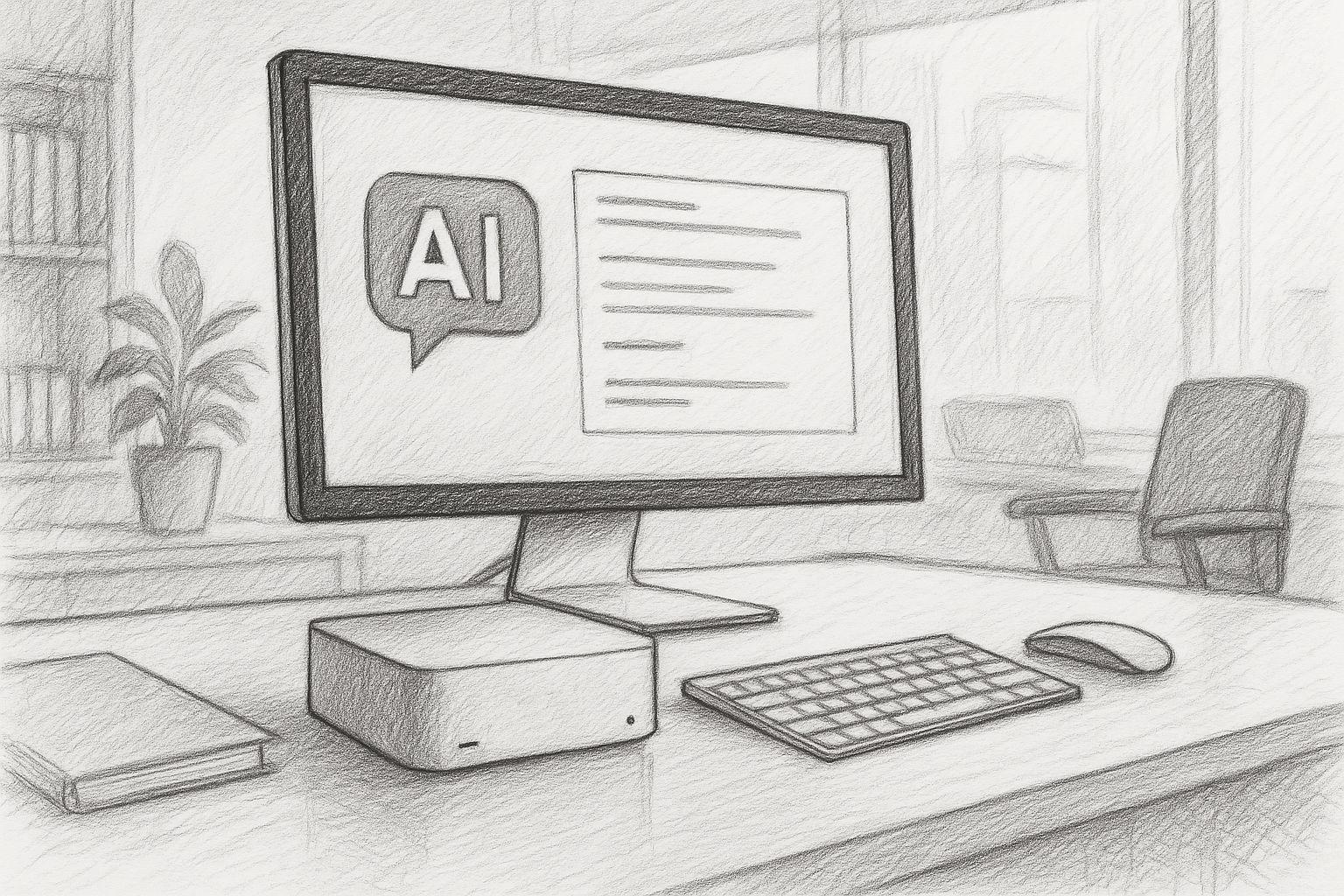
An often overlooked way out of digital dependency lies in choosing the right tools - especially when it comes to business software. Claris FileMaker is one such tool: a database-based system that allows you to operate your own cloud in the best sense of the word - locally, on your own server or on a hosting provider of your choice. The difference to traditional cloud services is that the user remains the owner of the data structure. No automatic backups to external data centers, no external licenses that can be withdrawn without warning, no forced synchronization with central accounts. Filemaker also supports the Apple MLX framework, which enables the execution of local AI systems with FileMaker supported. Anyone who works with FileMaker works in their own digital house - with their own key.
For precisely this reason, my gFM-Business ERP software completely to FileMaker. The decision was a conscious one: I wanted to create a solution that would not require companies to place their sensitive business processes in external hands. Although gFM-Business can theoretically also be operated in the FileMaker Cloud or on Amazon AWS, this is optional. If you are serious about digital sovereignty, install runs the solution on your own Mac, PC or dedicated server. This gives you full control - over data, access, security and future viability. For me, this is modern IT at its best: decentralized, autonomous, free. All future AI functions of the gFM-Business ERP software are also supported locally.
Info video from gofilemaker.de on the advantages and disadvantages of cloud systems
Ways out of the trap: How to regain digital sovereignty
The path back to self-determination does not begin with technology - but with attitude. Anyone who recognizes that many modern systems contribute to incapacitation rather than relief has already taken the most important step: they have begun to think for themselves again. Ultimately, it's not about being hostile to technology or refusing progress, but about reclaiming freedom of choice.
We don't need to completely abandon everything digital - but we do need a new awareness: What belongs in the cloud and what doesn't? What can be automated - and what should I rather control myself? Asking these questions is not a step backwards, but a sign of digital maturity.
Local instead of central: sovereignty starts with the storage location
One of the most pragmatic steps is to get your own data back. Photos, documents, backups - all of this can also be organized locally. A simple NAS hard disk in the home network replaces the cloud for many use cases - without a subscription, without data outflow, without third-party access. E-mails can be managed via your own servers and domains - as I have been doing myself since the 1990s. If you want, you'll find a way. And if you don't look for ways, you remain comfortable - and therefore manipulable.
The use of cloud-based office solutions can also be questioned. Open source alternatives such as LibreOffice or OnlyOffice have long offered solid working environments without the need for a license. Notes, calendars and password managers are also available in local versions - at a one-off cost, but with lasting benefits: independence.
And now also for AI: local is key
These considerations apply today more than ever - especially in the field of artificial intelligence. Many people believe that you have to rely on large platforms to be able to work with AI in a meaningful way. But this is exactly where the old mechanics come into play again: First you are „taught“, then you are made dependent. Providers such as OpenAI or Google offer impressive tools - but they run exclusively via central servers where control, costs and access can be changed at any time.
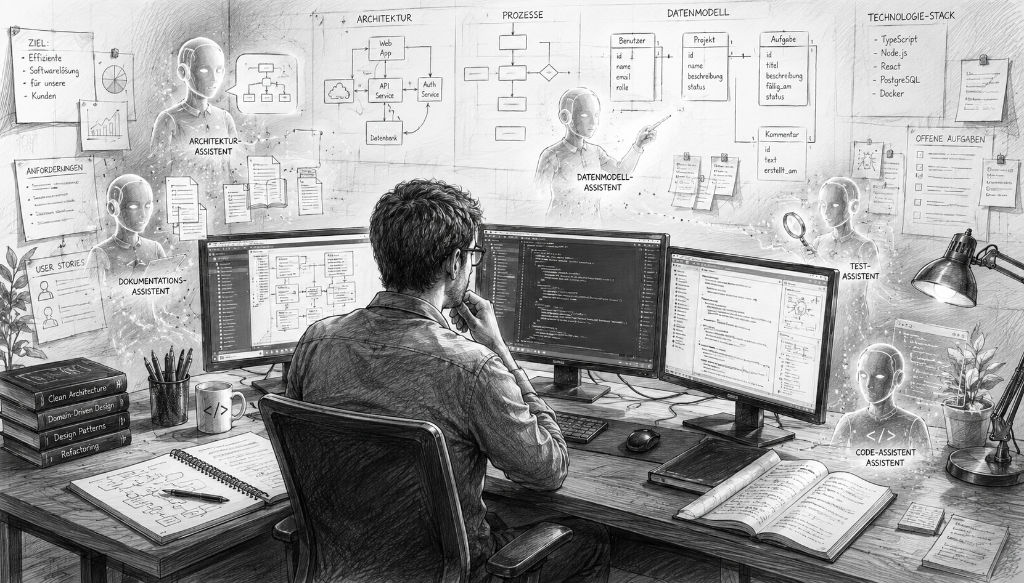
That's why I'm deliberately taking a different approach with my ERP software gFM-Business. In future, the solution will also support local AI systems that run on your own computer or server - without an internet connection, without external access and without ongoing fees. This means that not only data sovereignty remains with the user, but also the integrity of the work processes.
Fortunately, Apple is also moving in the right direction - for once. With the new MLX framework For Apple Silicon, it is now possible to use powerful AI models locally and across devices. This is a significant step that shows that technology and sovereignty do not have to be mutually exclusive - if you want them to be.
Summary: Mature handling instead of naive use
We live in a time in which digital progress makes many things easier - but also imperceptibly takes many things out of our hands. Convenience is not the devil's work, but it becomes dangerous when it becomes a habit. Anyone who places their data, software, communication and now also their AI processes completely in the hands of others is entering a form of modern dependency that is difficult to reverse.
But there are alternatives. If you consciously choose what you use and what you don't, if you are prepared to get to grips with technology again instead of outsourcing everything, you will remain capable of acting - and that is worth more than ever today.
Digital maturity does not begin with a new device - but with an old virtue: responsibility.


Frequently asked questions (FAQ): Digital dependencies & data sovereignty
Why are digital dependencies a problem at all?
Digital dependencies seem harmless at first - often even helpful. However, those who use more and more centralized services are increasingly losing control over their data, work processes and ultimately even their digital selves. The danger lies not in the individual case, but in the gradual process: what seems convenient today can become a trap tomorrow - for example, if access is blocked, conditions are changed or services are discontinued.
What is the difference between technical convenience and dependency?
Convenience is not a bad thing at first. But as soon as a system stops working, if a provider fails or a connection is unavailable, we are talking about dependency. The user is then no longer supported, but guided by the system - or blocked, depending on the provider's decision.
How can I tell that I am already addicted?
If you can no longer do without services such as Google, Apple or Microsoft without suffering significant data loss or restrictions - then you are already addicted. Even if your photos, notes, contacts, emails and calendars are no longer stored locally, but only in the cloud, you should take pause.
Is cloud use fundamentally bad?
No, not necessarily. But it is problematic if there is no alternative. Conscious use can make sense - as an additional backup, for example. It becomes critical if you only store data there, without local copies or your own access rights.
What are the dangers of cloud accounts such as Apple ID, Google account or Microsoft 365?
These accounts bundle a lot of information and access. The loss or blocking of such an account can mean that you suddenly no longer have access to your devices, emails, files or projects. In many cases, the user then remains powerless, even if they are a paying customer.
How can I manage my emails without the cloud?
You can use your own domains and mail servers - many hosters offer this. Since the 1990s, it has been technically possible to organize mail communication in a self-determined way without Google, Apple or Microsoft. This means a little more setup, but complete control.
Is the use of platforms such as eBay, PayPal or Facebook dangerous?
Not per se - but they are not neutral marketplaces. As soon as algorithms or terms and conditions are changed, this can significantly disrupt business models or personal processes. History shows that platforms have changed rules time and again - and users have often suffered as a result, without having a say.
Why are updates and new features viewed critically?
Because today they often not only bring improvements, but also contain control mechanisms. New versions can remove functions, tighten terms of use or enforce a cloud connection. Many systems now only work with an active internet connection - a real step backwards in terms of independence.
What does "digital disenfranchisement" mean?
Digital disenfranchisement describes the situation in which users no longer determine how technology works themselves, but instead have to comply with external rules. This usually happens unnoticed - through apps, accounts, updates or algorithms that take control of our devices and data.
Are there still alternatives to cloud and subscription systems today?
Yes, many open source projects and local solutions offer exactly that: data sovereignty, one-off acquisition costs and offline use. Whether LibreOffice, a NAS hard disk, local calendars or password managers - alternatives exist if you actively look for them.
What does it mean in concrete terms to regain "digital sovereignty"?
Digital sovereignty means being able to decide again where data is stored, processed and backed up. It means choosing systems in which the user retains sovereignty over access, security, transfer and use. It is about clarity, control - and sometimes also about doing without.
What role does artificial intelligence play in this context?
The growing dependency on AI is also becoming clear. Many services only run via central servers (e.g. ChatGPT, Google Gemini, Copilot). Anyone who enters their own data here is also giving up some control. This is why local AI is becoming increasingly important in order to keep sensitive content under your own control.
Are there sensible approaches for local AI solutions?
Yes, local AI can be operated on your own computer - e.g. via systems such as Ollama or MLX on Apple devices. Markus Schall is actively pursuing this approach in its ERP software GFM Business in order to integrate local AI systems there in the future - without cloud, without license commitment, without data outflow.
What role does Apple play in local AI?
Apple is currently one of the few providers that are seriously promoting local AI. With the MLX framework, modern Apple computers can run powerful models directly - without a cloud connection, offline and under user control. A rare ray of hope in an otherwise centralized market.
Is withdrawal from the cloud realistically feasible?
Yes - but not overnight. It takes planning, change and sometimes new habits. But every step counts. You don't have to live 100 % offline, but you should know exactly which 30 % are particularly worth protecting. And that's where maturity begins.
What is the most important insight from the article?
Technological progress is only valuable if it does not lead to dependency. Those who take responsibility for their digital infrastructure not only become more independent - but also more capable of taking action. The future does not belong to the loudest or the fastest, but to those who understand and master their tools.