Why having your own magazine is more important for companies today than advertising

Magazine as property

When you talk to entrepreneurs about visibility these days, it's almost always about reach. People talk about findability on Google, social media, paid ads on Google or other platforms, click numbers, followers and interactions. Visibility is considered a prerequisite for commercial success, and in many industries this is true.

What is rarely discussed is a quiet but decisive shift: most companies are visible today - but on spaces that do not belong to them. This development has not been dramatic. It was convenient, gradual and seemingly logical. That is precisely why it is hardly questioned.


Read more

Understanding digital money: Bitcoin, stablecoins and CBDCs explained simply

CBDCs, cryptocurrencies and stablecoins

There were times when money was simply „there“ in everyday life. You earned it, withdrew it, paid with it, transferred bills - done. And that was one of the quiet qualities of the old system: it was so reliable that you hardly noticed it.

Many technical things work best when they remain invisible. Cash is a good example of this: it is tangible, easy to understand and allows for an exchange without a system immediately running in the background that logs or evaluates everything. This was normal for decades. You didn't have to be an expert to participate in business life. That will change in the future.

Read more

Reach is not ownership - Why visibility is no longer enough today

Reach vs. ownership

A good ten years ago, I happened to watch a lecture on the transition from the information society to the knowledge society. At the time, much of it still sounded theoretical, almost academic. It was about concepts such as data sovereignty, ownership of information and the question of who will actually determine what is accessible in the future - and what is not. Today, with a little distance, this lecture seems surprisingly precise. After all, much of what was described as a development back then has now become reality. More and more data has migrated to the cloud. More and more information is no longer stored on in-house systems, but in external infrastructures. And increasingly, it is no longer the user but a provider, a platform or a set of rules that decides what is possible.

To understand this development, it is worth taking a step back. The information society in which many of us grew up was not a normal state. It was a historical exception.

Read more

Cloud AI as head teacher: why the future of work lies with local AI

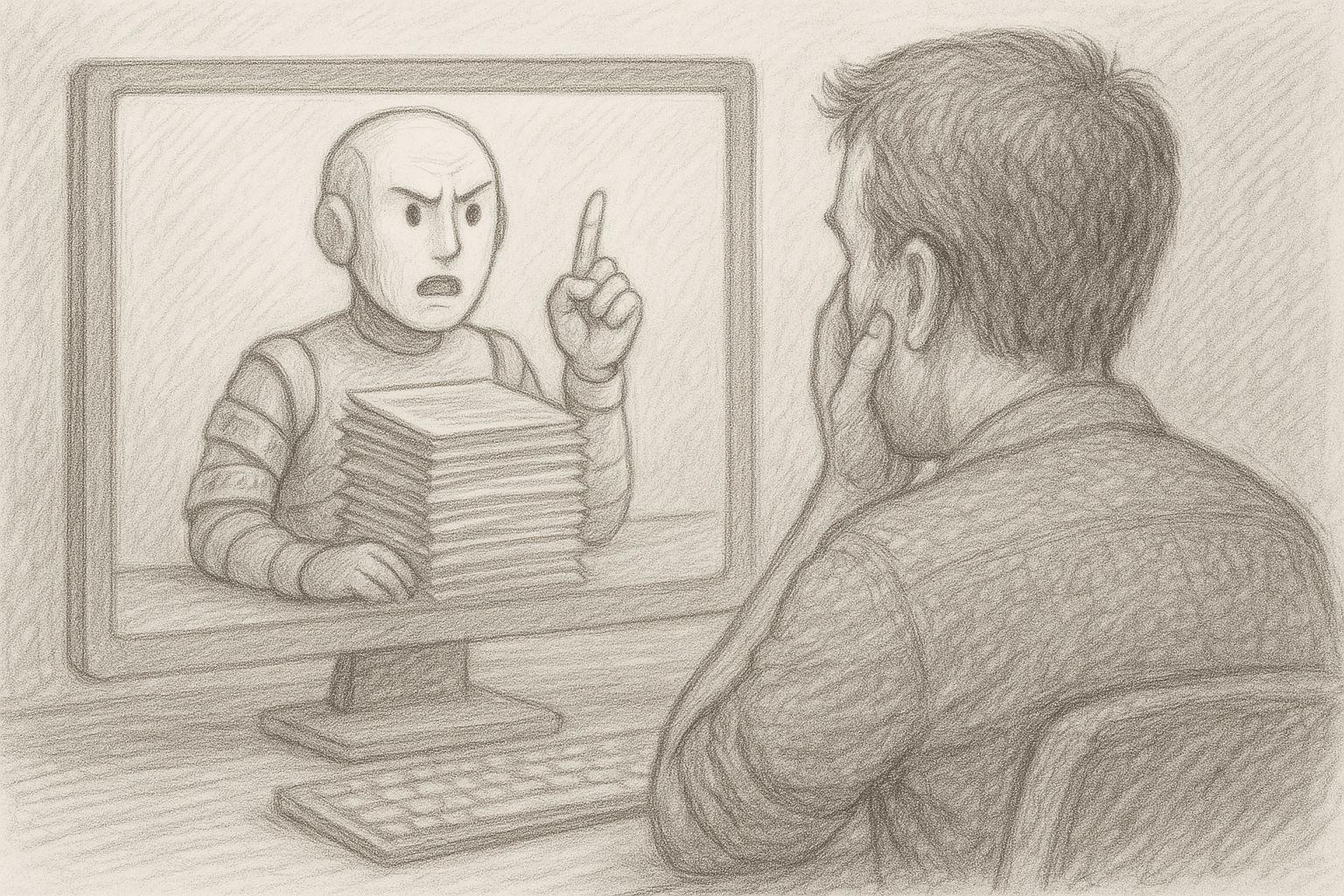
Cloud AI becomes the head teacher

When the large language models began their triumphal march a few years ago, they almost seemed like a return to the old virtues of technology: a tool that does what it is told. A tool that serves the user, not the other way around. The first versions - from GPT-3 to GPT-4 - had weaknesses, yes, but they were amazingly helpful. They explained, analyzed, formulated and solved tasks. And they did this largely without pedagogical ballast.

You talked to these models as if you were talking to an erudite employee who sometimes got lost, but basically just worked. Anyone who wrote creative texts, generated program code or produced longer analyses back then experienced how smoothly it went. There was a feeling of freedom, of an open creative space, of technology that supported people instead of correcting them.

Read more

CLOUD Act, data sovereignty and Switzerland: a turning point for European IT strategies?

What the Swiss cloud resolution means for Europe

Something happened in Switzerland in mid-November that hardly anyone expected in this form: The country's data protection commissioners passed a clear, almost historic resolution. The message behind it is simple - and at the same time highly controversial: public authorities should no longer outsource their most sensitive data to international cloud services such as Microsoft 365 without hesitation. Why is that?

Read more

AI Studio 2025: Which hardware is really worth it - from the Mac Studio to the RTX 3090

Hardware 2025 for AI studio

Anyone working with AI today is almost automatically pushed into the cloud: OpenAI, Microsoft, Google, any web UIs, tokens, limits, terms and conditions. This seems modern - but is essentially a return to dependency: others determine which models you can use, how often, with which filters and at what cost. I'm deliberately going the other way: I'm currently building my own little AI studio at home. With my own hardware, my own models and my own workflows.

My goal is clear: local text AI, local image AI, learning my own models (LoRA, fine-tuning) and all of this in such a way that I, as a freelancer and later also an SME customer, am not dependent on the daily whims of some cloud provider. You could say it's a return to an old attitude that used to be quite normal: „You do important things yourself“. Only this time, it's not about your own workbench, but about computing power and data sovereignty.

Read more

The new EU censorship laws: What Chatcontrol, DSA, EMFA and the AI Act mean

EU censorship laws

In an increasingly digitalized world, we spend a lot of time online: Chatting, shopping, working, informing ourselves. At the same time, the rules on how content is shared, moderated or controlled are changing. The Digital Services Act (DSA), the European Media Freedom Act (EMFA), the planned Regulation to Prevent and Combat Child Sexual Abuse (CSAR, often referred to as „chat control“) and the AI Act are key pieces of legislation proposed by the European Union (EU) to regulate the digital environment.

These regulations may seem far away at first glance - but they have an impact on you as a private individual as well as on small and medium-sized companies. This article will guide you step by step: from the question „What is planned here?“ to the background and timelines to the change of perspective: What does this mean for you in everyday life?

Read more

Digital dependency: how we have lost our self-determination to the cloud

Digital dependency with cloud systems

I've always thought it was a mistake for people to hand over their data - be it in the cloud, via apps or with any "free" services. For me, data sovereignty has never been a buzzword, but a question of self-respect. Anyone who uses technology without considering the consequences is entering into a dependency that often only becomes noticeable years later - but then has an even deeper impact.

Read more