Anyone who deals with the topic of artificial intelligence today almost inevitably encounters a strange feeling: constant restlessness. No sooner have you got used to one tool than the next ten appear. One video follows the next on YouTube: „This AI tool changes everything“, „You absolutely have to use this now“, „Those who miss out are left behind“. And every time, the same message resonates subliminally: You're too late. The others are further ahead. You have to catch up.
This doesn't just affect IT people. Self-employed people, creative professionals, entrepreneurs and ordinary employees are also feeling the pressure. Many don't even know exactly what these tools actually do - but they have the feeling that they could be missing out on something. And that's exactly what creates stress.
It is interesting to note that even where people are professionally involved with software, there is a great deal of uncertainty. At conferences, in conversations, during breaks, you hear the same phrases over and over again: „It all happens so quickly“, „You can't keep up with it all“, „Actually, it should be dealt with, but...“. Some jump frantically on every bandwagon. Others resign themselves quietly and do nothing at all for the time being.


Both are understandable. Because the pace is indeed fast. And yes, there are impressive developments. But the crucial question is asked surprisingly rarely: Do I really need this - for my work, my everyday life, my way of thinking?
Instead, there is a kind of constant noise. New tools, new interfaces, new promises. And anyone who tries to keep an eye on everything quickly realizes that the real problem is not a lack of technology, but a lack of orientation. People used to ask themselves:
How do I work well?
Today, many people ask first:
Which tool do I need?
This is where the misunderstanding begins.
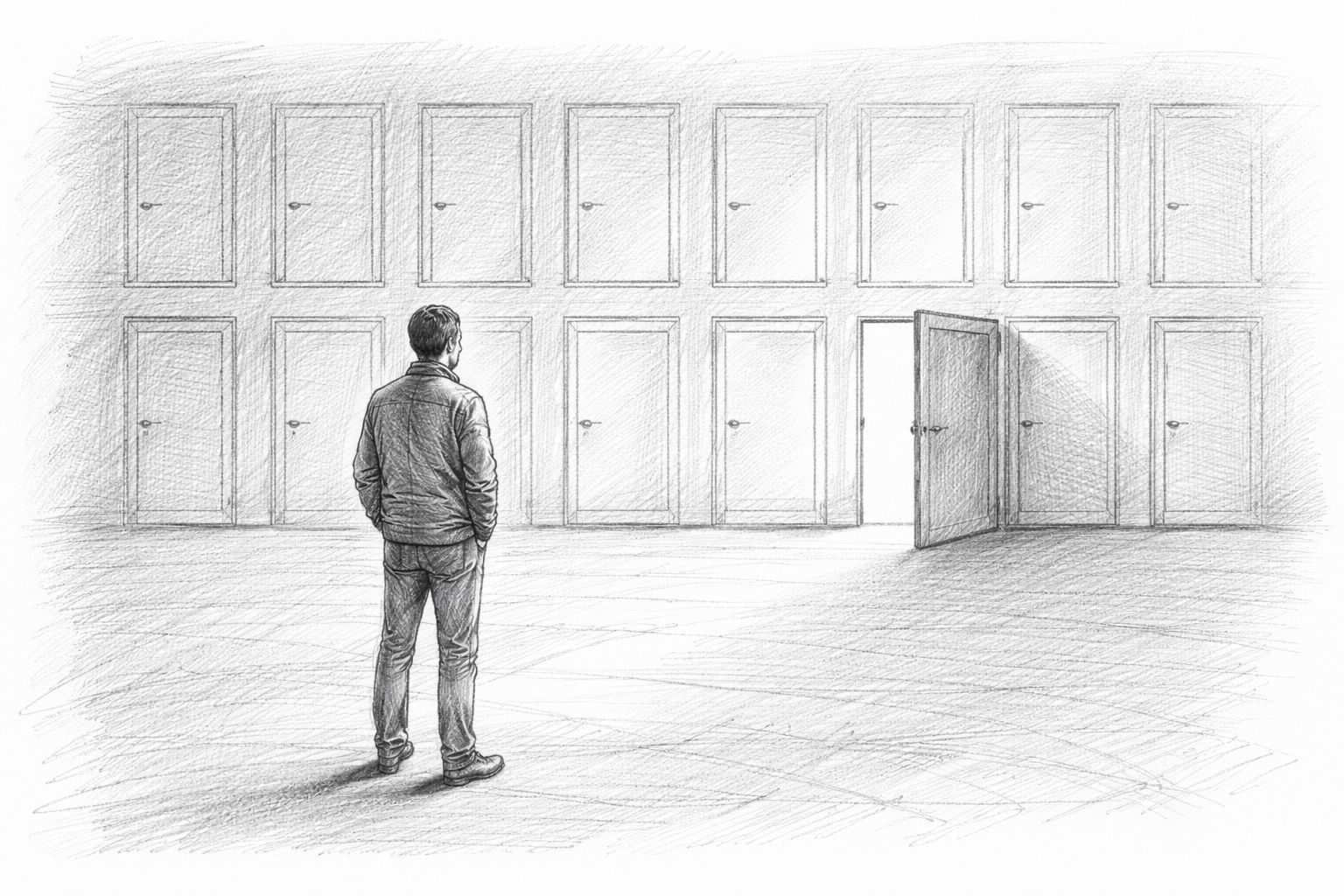
Tools do not replace a way of working - they only reinforce it
A tool is never neutral. It reinforces what is already there. If you work clearly, you work more clearly with a good tool. Those who work in an unstructured way only become unstructured more quickly with powerful tools. That has always been the case. A powerful text editor does not automatically make someone a good writer. A professional camera is no substitute for a feel for image composition. And a spreadsheet doesn't automatically lead to clean decisions. Tools are amplifiers, not saviors.
AI is no different - on the contrary. AI can accelerate errors in thinking, conceal uncertainties and elegantly cover up a lack of clarity. If you don't know what you actually want, you get answers but no direction. If you don't know your own process, you quickly get lost in trial and error.
There is another point that many people underestimate: Every new tool requires attention. You have to understand it, set it up and test it. Something doesn't work as expected. Something doesn't quite fit in with your own process. Then the adaptation, conversion and readjustment begins. It all takes time - and above all focus.
In the past, it was taken for granted that you first developed a way of working. You knew how to think, plan, write or decide. The tools were subordinated to this process. Today, it's often the other way around: the process is adapted to the tool. Not because it's better - but because it's just there.
This is precisely the core of the problem. Not too little AI, but too little clarity about how you actually want to work. AI can help to structure thoughts, check ideas or refine texts. But it cannot replace internal order. Nor can it take away responsibility.
If you accept this, you will automatically adopt a calmer attitude. Then you don't have to test every new tool. Then you can consciously leave things lying around. Then technical hecticness becomes a toolbox again - with few but familiar tools.
And that's exactly why I don't need 20 AI tools. Not because they are bad. But because good work rarely comes from quantity, but from fit.

Podcast: A critical look at AI and LLMs with Lucas Dohmen | Eberhard Wolff
My reality: Few tools, clear purpose
When I talk about AI, it's not from a theoretical perspective, but from my day-to-day work. I don't sit there all day testing new tools. I also don't collect screenshots of interfaces just to be able to say that I've „seen it all“. I work - and I ask myself pretty sober questions about every tool:
Is that helping me right now or is it holding me back?
In fact, I only use very few AI tools on a regular basis. Not out of principle, but from experience. A key tool for me is ChatGPT. Not as an oracle, not as a substitute for thinking, but as a sparring partner. I use it to sort out thoughts, structure texts, check counter-arguments or take a step back if I'm too deep into a topic myself. It doesn't replace a decision, but it helps to see decisions more clearly.
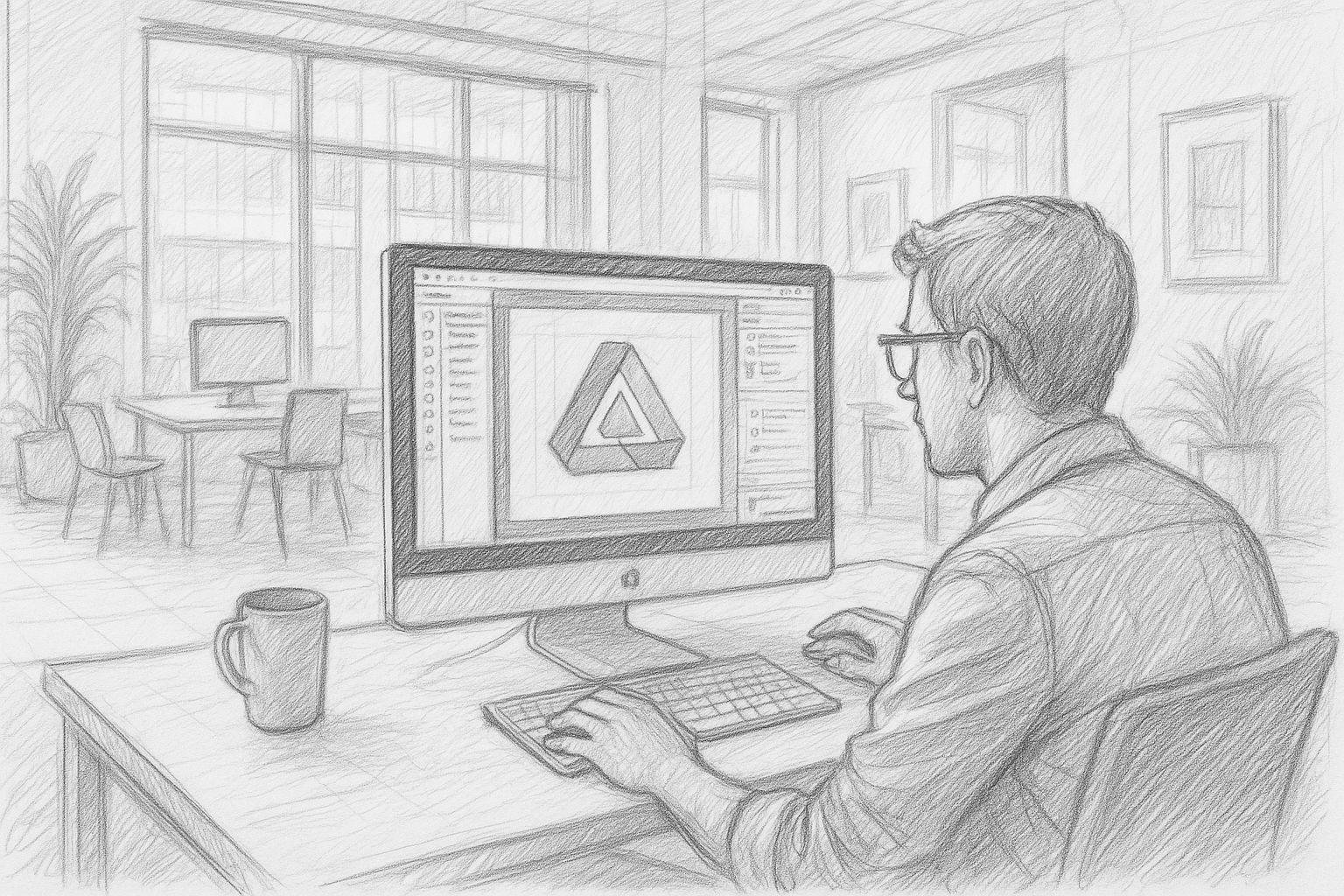
I also have an image AI from the Adobe environment. Not because it's „the best“ or because it can do everything, but because it fits well into my existing work process. Reference images, controllable results, an environment that I am familiar with. The same applies here: I don't expect miracles. I expect reliability. If a tool delivers exactly that, that's often enough.
Local AI as an independent option
And then there's the issue of local AI. For me, this is not a dogma or a status symbol. It is an option. A way to work independently, to try things out without having to constantly think about cloud services or business models. But the same applies here: I use it where it makes sense - not because it's technically appealing.
What all these tools have in common: They are subordinate to my way of working. Not the other way around. I don't adapt my thinking to a tool. I adapt the tool to my way of working. And that's exactly why I don't need many of them. I prefer one tool that I know well to five that can do more in theory but require constant attention in practice.
Why I consciously do without many things
Of course I get to see what's going on. Claude, for example, is considered extremely strong, especially when it comes to programming or complex analyses. That may all be true. And it's probably also a very good tool. But a tool is not useful just because it is powerful. It has to fit into your everyday life.
Time is limited. Attention is limited. And every new software comes with a learning curve - even if it's well made. I have to familiarize myself, compare, try things out. I have to find out where the strengths lie and where the limits are. That's nothing negative, but it is an effort. And this effort is not always in proportion to the benefit.
The situation is similar with many video and image AI systems. The results are sometimes impressive, no question. You can see things that would have been unthinkable just a few years ago. But here, too, I ask myself a simple question: do I need this for what I'm currently doing? In my case, the answer is often: not really. Not because it's bad - but because it's not my focus.
I think it's a mistake to go too far out on a limb and judge things that you don't use intensively yourself. That's why I say quite deliberately: many of these tools are justified. For other ways of working, other professions, other goals. But they are not automatically useful for everyone.
It used to be normal to specialize. You couldn't do everything well at the same time. Today, the tool landscape suggests that you have to do everything at the same time. But that's exactly what leads to many people being busy but not really making progress.
I do not renounce out of rejection. I renounce out of clarity. And this clarity doesn't come from technology, but from experience. From knowing how I work - and how I don't. Everything else is ultimately just noise.
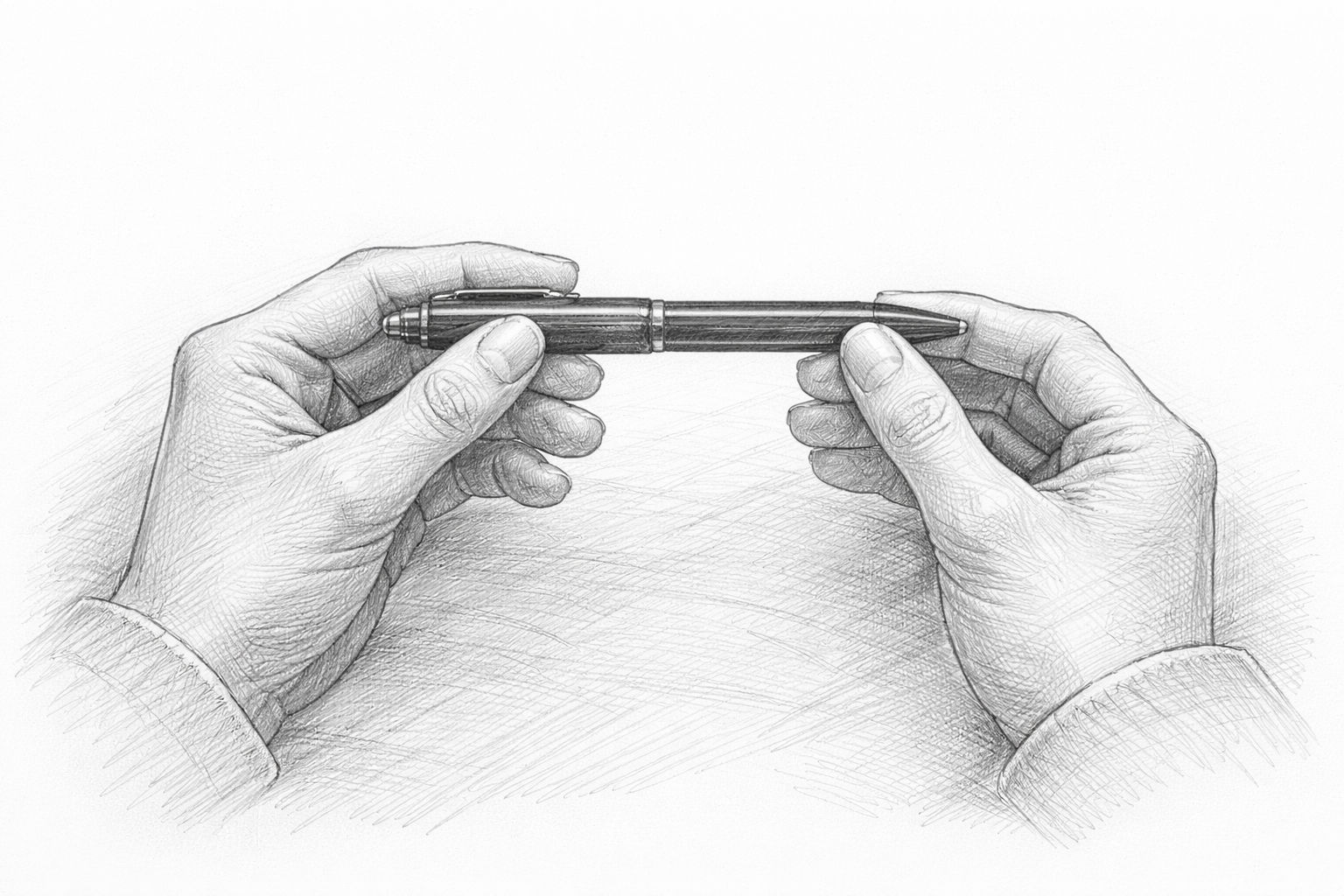
The real scarcity is not technology, but focus
Looking at all the new AI tools, you might think that the biggest problem of our time is a lack of possibilities. In fact, the opposite is true. We have more possibilities than ever before - and that is precisely the problem.
Time is limited. And attention even more so. Every new service, every new tool, every new interface demands a little bit of it. You have to log in, get your bearings, understand, try things out. Even if everything is done well, one thing always remains the same: your head is somewhere else again.
Concentration used to be a quiet state. You sat down to a task and worked through it. Today, concentration is something that has to be actively defended. Against notifications, against news - and also against the constant temptation to try out yet another tool that is supposed to make everything easier.
AI exacerbates this problem if you are not careful. Because AI is not just a tool, it is a promise. It suggests that you could work faster, better, more efficiently - if only you use the right system. But this „if“ is rarely fulfilled. Instead, a cycle of trial and error, comparison and rejection ensues.
The truth is more uncomfortable: productivity does not come from maximum tool usage, but from minimal friction. The less you have to think about tools, the more energy you have for content, decisions and real work. If you have to constantly realign your focus, you will eventually lose it completely.
So for me, the crucial question is not: What can this tool do?
But rather: What does it cost me in terms of attention?
Current survey on the use of local AI
Local AI: Independence instead of constant sound reinforcement
Local AI plays a special role in this context. Not because it is „better“ than cloud solutions or because it is technically superior, but because it enables a different way of working. Quieter. More controlled. Without constant background noise.
Working without outside interests
Anyone working with local AI will quickly notice a difference: there is no account that needs to be optimized. No platform that evaluates usage data. No subtle pressure to use certain functions more often. You start a model, work with it - and switch it off again. That's it.
That sounds banal, but it's not. Because it changes the feeling of working. AI is once again becoming what it should actually be: a tool. Not a service, not an ecosystem, not a permanent offering. It's something that you consciously use - or not. This attitude fits well with a way of working that relies on clarity and personal responsibility. You decide for yourself when you need support. And you also decide when you don't.
Local AI on your own computer: getting started instead of dogma
Getting started with local AI does not have to be a major project. If you are curious, you can gain initial experience with a manageable amount of effort. Especially on the Mac, this is now surprisingly uncomplicated. In a separate article, I described how Ollama locally on the Mac installieren and can be used - without delving deep into technical details.
It is important to me that this is not a call to change everything immediately. It is an invitation to try things out independently. Without obligation. Without a subscription. Without pressure of expectation. Anyone who realizes that it suits their own work will stick with it. Those who don't will at least have gained clarity.
If you want to go deeper: choose hardware consciously
For some, the path goes further. Anyone who regularly works with local models, processes larger contexts or simply wants to understand what is technically possible will eventually come to the hardware question. The same applies here: don't do everything at once, don't blindly follow the hype.
In my article „AI Studio 2025 - which hardware is really worthwhile“ I have categorized exactly that: What makes sense, what is overkill, and for whom is which approach worthwhile - from Mac Studio to dedicated GPU. Not as a purchase recommendation, but as a guide.
After all, the same principle applies to hardware as it does to software: more performance is no substitute for a clear objective. If you know what you are using a system for, you will make better decisions - and ultimately save time, money and nerves.
Local AI is not a creed. It is a way of decoupling work from constant noise and external logic. For some, this is a decisive advantage. Not for others. Both are fine. The important thing is to make a conscious decision - instead of letting yourself drift.
For whom many AI tools can be useful
With all that said, one thing is important: this is not a plea against diversity. Nor is it a devaluation of all those who work with many AI tools. On the contrary. There are ways of working and professions for which a broad tool set is not only useful, but necessary.
Anyone who develops, programs, produces audiovisual content at high speed or works in agency structures has different requirements than someone who writes, designs or thinks strategically. In such contexts, specialized AI tools can bring real productivity gains. That's where training pays off. That's where complexity pays off.
Curiosity is also not a mistake. Trying things out is part of it - especially in a phase in which technologies are developing so quickly. If you enjoy testing new systems, you don't automatically become superficial. The only thing that matters is why you do it.
It only becomes problematic when diversity becomes an end in itself. When you collect tools without really using them. When you spend more time comparing working methods than actually working. Or when you have the feeling that you are constantly lagging behind - even though objectively you have long been well positioned.
That's why it's not about right or wrong, but about fit. It's about asking the honest question: Is this helping me right now? Not theoretically. Not at some point. But now, in my everyday life.
Those who take this question seriously often make surprisingly clear decisions.
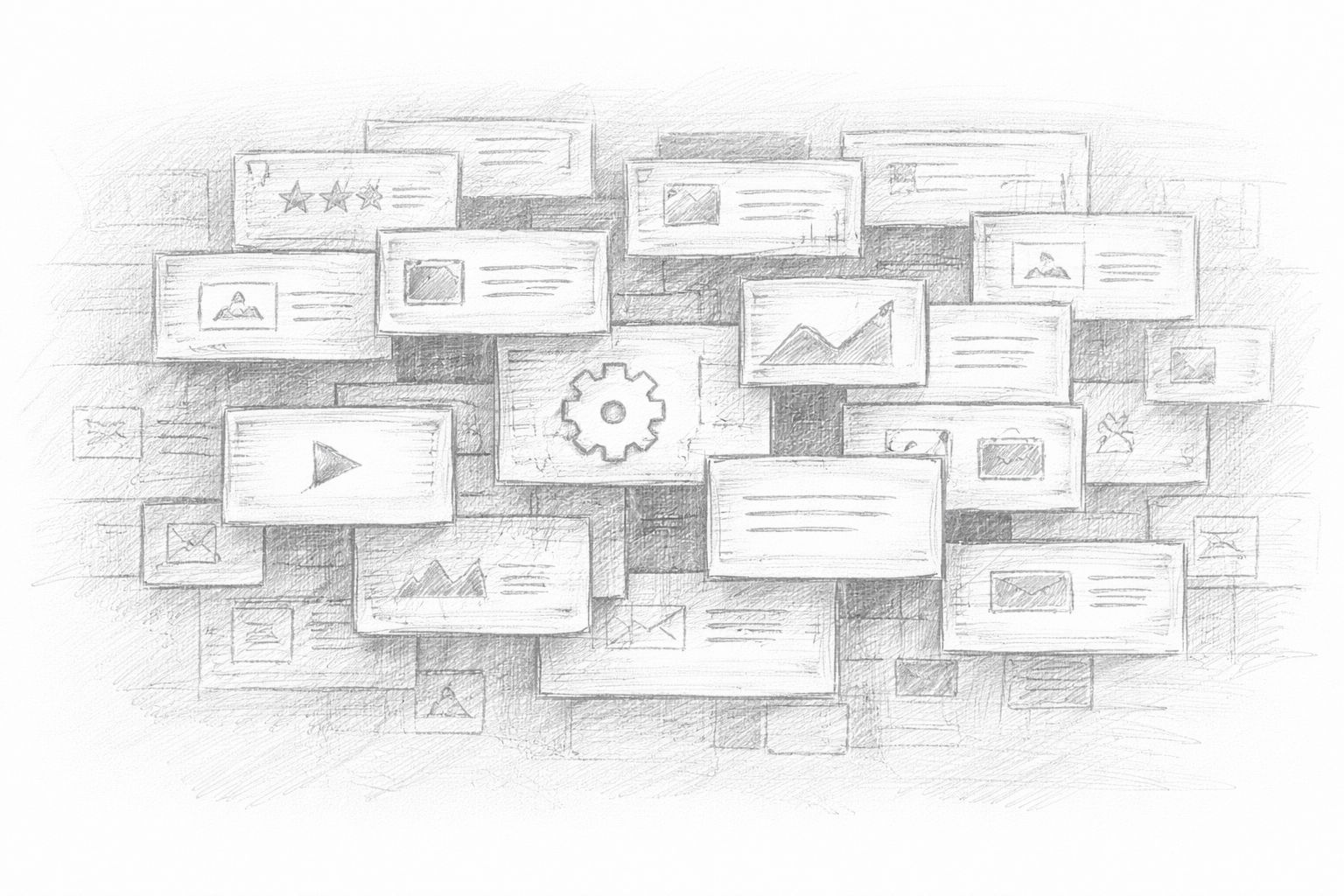
Fewer tools, more peace and quiet - and still remain open
In the end, it all boils down to one simple thought: openness and restraint are not mutually exclusive. You can remain curious without chasing every trend. You can take new tools seriously without immediately adopting them. And you can consciously decide not to use something - without having to justify yourself.
AI is here to stay. It will become better, more ubiquitous, more self-evident. This is precisely why it is worth developing your own attitude early on. Not in defense, but in clarity. If you know how you work, it will be easier for you to classify new tools. If you know your focus, you won't lose it so quickly.
So maybe we don't need new tools all the time. Perhaps it is enough to understand the existing ones better. To use them more deeply. To use them more calmly. Good work is rarely the result of maximum equipment. It is created where thinking, experience and tools interact in a meaningful way.
Stay open - yes, but get bogged down - no.
And perhaps that is precisely the real progress: not being able to do everything, but knowing what you really need.
Invitation to join in: How do you use AI in everyday life?
Artificial intelligence is used differently by everyone - and that is precisely what makes the topic so exciting. Some people work with a few familiar tools, while others deliberately use many specialized AI tools. Both can make sense, depending on your way of working, profession and personal focus. If you like, feel free to share in the Comments, how you use AI: Do you use many tools or only a few? What has worked for you - and what hasn't? Sharing different perspectives often helps more than any tool recommendation.


Frequently asked questions
- Do I really not need a lot of AI tools to work productively today?
No. Productivity does not come from the number of tools used, but from clarity in one's own work. Many people have been working successfully for years with a few well-understood tools. AI can support this way of working - but it does not replace it. If you try to integrate every new tool, you often lose more time than you gain. - Am I missing out if I don't follow every AI trend?
Usually not. Trends primarily generate attention and pressure. The actual benefits often only become apparent later - and usually only in certain use cases. Those who observe calmly and only act when a tool really fits often make the better decisions in the long term. - Why does the topic of AI feel so stressful for many people?
Because it's not just about technology, but about the feeling of having to keep up. Constantly new terms, new tools and new promises create anxiety. The stress is not so much caused by AI itself, but by the expectation of having to react immediately. This expectation is usually unfounded. - Can AI improve the way I work, even if I'm not a tech pro?
Yes - if AI is used as support, not as a substitute for thinking. AI can be very helpful for structure, texts, planning and reflection in particular. The key is to use it consciously and not expect it to automatically deliver better results. - Why is it problematic to adapt your way of working to tools?
Because tools come and go, but a good way of working remains. If you constantly change your process, you lose your bearings. It's better to know how you work first - and then select tools that support this process. - Doesn't it make sense to try out as many AI tools as possible to keep an overview?
Curiosity makes sense, continuous testing is rare. A rough overview is usually sufficient. Depth is not achieved through trial and error, but through use. If you really integrate a tool into your everyday life, you will gain more than someone who knows ten tools superficially. - Why does focus play such an important role in the context of AI?
Because AI demands attention. Every new tool brings with it new options, settings and possibilities. Without a clear focus, AI quickly becomes a distraction. Good work is created where there is as little friction as possible - not where there is constant switching. - Is local AI really useful or just a tech toy?
Local AI can be useful when independence, peace of mind and control are important. It is not a must, but it is an alternative. If you want to work without cloud constraints or deliberately keep data locally, it offers real added value. - Do I need to familiarize myself with the technology in order to use local AI?
No. Getting started can be very easy. It's not about understanding everything, but about using the tool sensibly. If you realize that local AI suits your own work, you can always delve deeper later. - Why does the article deliberately omit tool recommendation lists?
Because such lists rarely help. They suggest objectivity, although each tool is only useful in context. What works perfectly for one person is superfluous for another. The article therefore focuses on attitude rather than recommendations. - Isn't it risky to rely on just a few tools?
No, as long as these tools are stable and fit your own work. A few, familiar tools reduce complexity and sources of error. Flexibility does not come from quantity, but from understanding. - For whom are many specialized AI tools still useful?
For developers, agencies, creative professionals with high output or very specific requirements. This is where the effort for training and maintenance pays off. However, this article is aimed at people who want to focus on their work - not tool collectors. - Why do many people find it difficult to consciously do without tools?
Because doing without is often perceived as a step backwards today. Yet conscious choice is a sign of maturity. Not everything that is possible makes sense - and not everything that is new brings real progress. - Can AI also promote lazy thinking?
Yes, if you use it without reflection. If you let AI provide answers without checking or thinking for yourself, you will lose depth in the long term. AI is most valuable where it supports thinking, not replaces it. - How do I find out which AI tools are useful for me?
By starting from your own everyday life. Which tasks take up time? Where is there a lack of structure? Where is work repetitive? Only then is it worth looking for a tool. Not the other way around. - Is it a problem if I haven't done anything with AI before?
No. AI is not a compulsory program. If you start today, you are not too late. Much is still in flux. A calm start with clear objectives is often better than rushing to catch up. - What does „a separate ecosystem“ mean in the context of AI?
A dedicated ecosystem consists of tools, content and systems that fit together: software, knowledge, processes. AI is a building block in this - not the center. The aim is independence and coherence, not maximum automation. - What is the most important message of the article in one sentence?
You don't need more AI - you need more clarity about how you want to work.