Stress is part of life. Without stress, we would probably hardly get out of bed in the morning, avoid challenges and simply not get many things done. For thousands of years, the human body has been designed to be able to react quickly in certain situations: Recognize danger, mobilize energy, act. In such moments, the organism runs at full speed - heart rate, breathing, alertness and muscle tension increase. This state can even be life-saving.
However, stress becomes problematic when it no longer ends. Many people today live in a state that no longer feels like acute stress, but rather like a permanently elevated baseline level. Deadlines, conflicts, a flood of information, constant availability - the body often reacts as if it is constantly in a potentially dangerous situation. However, while our ancestors were able to calm down again after a short period of tension, this phase of real relaxation is often missing today.



I have studied the topic of stress more intensively in recent years, also for a very practical reason. In my articles on CMD (craniomandibular dysfunction) - i.e. functional disorders in the jaw area - it has become clear time and again that stress is one of the most important amplifiers of these complaints. Many sufferers clench or grind their teeth, unconsciously tense their muscles or develop permanent tension in the neck and shoulder area. The trigger is often not just in the jaw itself, but in the entire stress system of the body.
If you want to understand why tension, sleep problems or concentration problems arise, you need to take a step back and look at the body as a whole. Stress is not just a feeling in the head - it is a biological condition that affects the entire organism: nervous system, hormones, muscles, digestion and immune system.
In this article, we therefore take a closer look at what actually happens in the body when stress arises - and why it is crucial for our health that the body can find its way back to a state of calm. Because this is where real regeneration begins.
The evolutionary stress mechanism - why our body can sound the alarm
Stress is not a fault of our body. Quite the opposite: the stress mechanism is one of the oldest and most important protective systems we have. Over many thousands of years, it has helped humans to react quickly in dangerous situations.
Let's imagine an early human who suddenly encounters a predator. At this moment, there is no time for long reflection. The body has to decide immediately: fight or flee. Within a few seconds, the nervous system activates a whole series of processes that prepare the organism for maximum performance.
The pulse increases, breathing becomes faster, the muscles tense up. Energy is mobilized from the reserves so that the body can react immediately. At the same time, attention is strongly focused on the current situation - everything unimportant is blocked out.
This mechanism is deeply rooted in our nervous system. It has developed over millions of years and still works amazingly reliably today.

What happens in the body in seconds
When the body perceives a threat - whether real or just emotionally felt - an alarm reaction is triggered in the brain. The so-called autonomic nervous system activates several physical processes within seconds. The adrenal glands release stress hormones such as adrenaline. This hormone ensures that the heartbeat speeds up and more blood reaches the muscles. At the same time, breathing expands so that the body can take in more oxygen.
Perception also changes. Many people know the feeling that everything suddenly seems very clear in stressful situations or that they are extremely focused. This is because the brain directs its attention to the essentials.
At the same time, other bodily functions that are not immediately essential for survival are shut down. This includes digestion, for example. The body concentrates all its resources on performance and rapid response.
In short: the organism becomes a high-performance machine for a short time.
Why this mechanism is actually ingenious
If stress only occurs briefly, this state can even be extremely helpful. It boosts our performance, increases our concentration and enables us to cope with difficult situations. We also experience such short-term stress reactions in modern everyday life. An important presentation, a difficult conversation or a sporting challenge can trigger similar processes in the body. In such moments, the stress mechanism helps us to be alert and efficient.
The crucial point, however, is that the body needs a recovery phase after exercise. This is precisely why our nervous system has a second, equally important mode - a state in which the body regenerates, repairs itself and comes to rest again. During this phase, the pulse and muscle tension drop, digestion returns to normal and the body can build up new energy.
Health does not come from constant activity, but from alternating between tension and relaxation. The problem with our modern way of life, however, is that this alternation is becoming increasingly rare. Many people hardly ever leave their body's alarm mode - and this is where the transition from normal stress to chronic stress begins.
Sympathetic and parasympathetic nervous system - the balance of our nervous system
Many of our body's most important processes are completely automatic. We don't have to think about making our heart beat or regulating our breathing. These tasks are performed by the so-called autonomic nervous system.
It works around the clock in the background and controls a large number of vital functions: Heartbeat, blood pressure, respiration, digestion, metabolism and many hormonal processes. The great advantage of this system is that it can react quickly and efficiently to changes - without us having to consciously intervene.
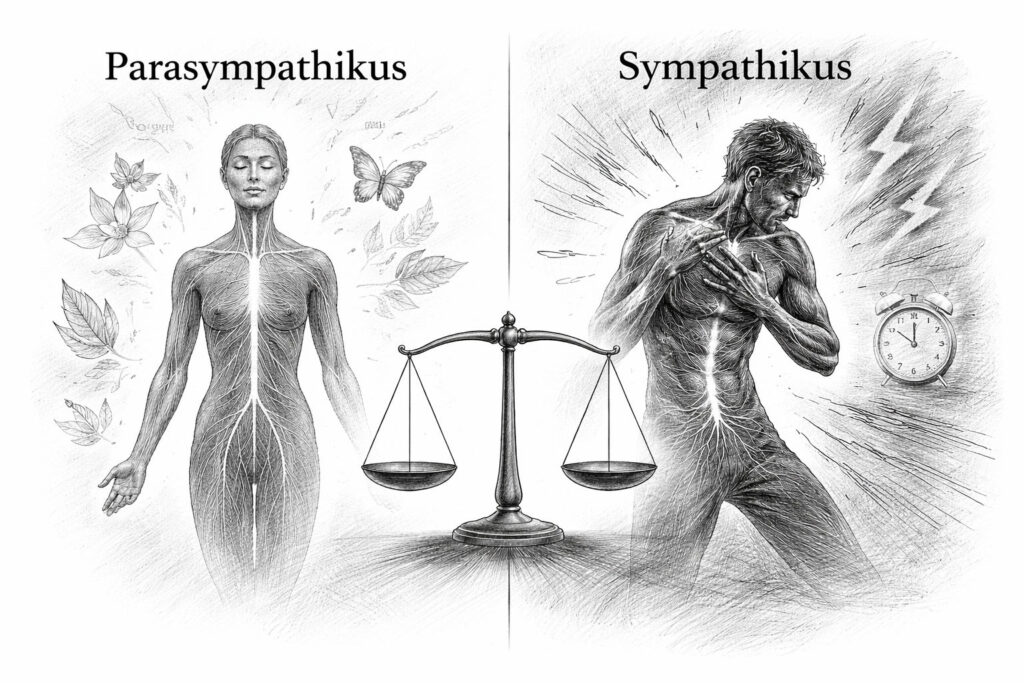
Within this system, there are two central counterparts that work together in a constant balance: the Sympathetic nervous system and the Parasympathetic nervous system.
In simple terms, these two systems can be thought of as two different operating modes of the body. The sympathetic nervous system is responsible for activity and performance, while the parasympathetic nervous system is responsible for regeneration and recovery. Health is achieved above all when both systems can switch flexibly with each other.
The sympathetic nervous system - the body's activation mode
The sympathetic nervous system is the part of the nervous system that puts the body in a state of heightened alertness. It always becomes active when the body perceives a challenge or potential danger. In this mode, the heart rate and blood pressure increase, breathing becomes faster and the muscles are supplied with more blood. At the same time, energy is mobilized from the reserves so that the body can react quickly.
Attention also changes in this state. The brain concentrates more on the essentials and blocks out less important stimuli. Many people therefore experience a special form of clarity or focus in stressful situations.
In the short term, this state is completely normal and even helpful. It enables us to cope with tasks, solve problems or act quickly in difficult situations.
However, it becomes problematic if the sympathetic nervous system remains permanently active. This is because while the activation mode is primarily geared towards performance, other functions are consciously downregulated during this phase - for example digestion, regeneration and repair processes in the body.
If the body remains in activation mode for a longer period of time, this creates an imbalance.
The parasympathetic nervous system - the regeneration mode
In a way, the parasympathetic nervous system is the counterpart to the sympathetic nervous system. While the sympathetic nervous system prepares the body for activity, the parasympathetic nervous system ensures rest, recovery and regeneration. In this state, the heartbeat slows down, breathing becomes calmer and the muscles relax. At the same time, processes that are crucial for long-term health are activated: Digestion, cell repair, immune system and hormonal balance.
This state can also be seen as a kind of biological repair mode. The body uses this phase to repair damage, build up energy and restore inner balance. Many people are familiar with this state from moments of genuine relaxation - for example after a walk in nature, after physical exercise or in the quiet evening hours when the day slowly draws to a close.
At such moments, the parasympathetic nervous system takes control of the nervous system. The body can then shut down again.
The natural balance - why the parasympathetic nervous system should actually dominate
The following video shows a particularly interesting aspect that is often completely overlooked in everyday life: the relationship between the sympathetic and parasympathetic nervous system. While today we often have the feeling of being permanently „under power“, this was originally thought to be different. The parasympathetic nervous system - the part of the nervous system responsible for rest, regeneration and digestion - should actually dominate most of our time. In the video, this ratio is vividly described as approximately 70 % parasympathetic to 30 % sympathetic. This means that our body is evolutionarily designed for relaxation - not for constant stress. This is precisely the central problem of our modern lifestyle, which often reverses this ratio unnoticed.

That's why you're constantly stressed - Vegetative nervous system | Doc Thiemo Osterhaus
When the balance tips - permanent stress as the new normal
Building on this, the video clearly shows how much this original balance has shifted in today's everyday life. Constant stimuli, time pressure and mental stress ensure that the sympathetic nervous system is active much more frequently than would be biologically intended. As a result, the body is in a state that was previously only necessary in the short term in the event of real danger. What is particularly critical is that many people are no longer even aware of this state because it has become a habit. The video thus provides an important classification: it is not the stress itself that is the problem, but the lack of return to regeneration - and this is precisely where the path back to better health begins.
Health comes from balance
The decisive factor is not which of these two systems is stronger. Both are important and fulfill a clear function. The sympathetic nervous system enables activity and performance, while the parasympathetic nervous system ensures recovery and regeneration.
Health arises from the constant alternation between these two states. After a phase of intense activity, the body needs a phase of rest. Ideally, stress is followed by relaxation. Tension is followed by recovery. This interplay is a fundamental principle of biological systems.
However, the problem with our modern way of life is that this rhythm is often disrupted. Many people find themselves in a state of heightened activation for hours or even days on end - due to work pressure, conflicts, a constant flood of information or simply the feeling of having to function all the time.
The parasympathetic nervous system then has less and less opportunity to develop its regulating effect. Over time, the body can forget how to really switch off.
Ways to activate the parasympathetic nervous system
The good news is that the nervous system can be influenced. Certain behaviors can specifically activate the parasympathetic nervous system and help the body to get out of alarm mode.
This includes, for example, calm breathing, regular exercise, walks, sufficient sleep or conscious breaks in everyday life. Techniques such as meditation or breathing exercises can also support the transition from activity mode to regeneration mode.
Another approach that has been discussed in recent  increasingly being discussed for years is the use of microdosed lithium orotate. At very low doses, some people report that this substance can have a calming effect on the nervous system. It appears to help support parasympathetic nervous system activity and reduce overall stress levels in some users.
Lithium is not a new element in medicine - it has been used in significantly higher doses in psychiatry for decades. In microdoses, however, it is also being discussed by some researchers and therapists in connection with stress regulation and emotional stability.
Of course, it is important to always consider such approaches in a responsible and informed manner. Ultimately, it is not a single substance that is decisive, but a fundamental understanding of how our nervous system works. Because only when we realize that the body cannot remain permanently in activity mode does it become clear why rest is not a luxury - but a biological necessity.
Cortisol and constant stress - when the body can no longer shut down
In addition to the rapid stress reactions triggered by adrenaline, the body also has a second, somewhat slower-acting system: the release of the hormone cortisol. This hormone is produced in the adrenal glands and plays a central role in the body's stress response.
Cortisol is by no means fundamentally harmful. On the contrary: it fulfills important metabolic tasks and helps the body to cope with stress. Among other things, cortisol ensures that the body has sufficient energy available. It influences blood sugar levels, regulates inflammatory processes and helps the body adapt to physical or psychological challenges.
Cortisol also plays an important role in the normal daily rhythm. Cortisol levels naturally rise in the morning. This so-called cortisol wake-up response helps us to wake up and start the day. Over the course of the day, the level normally falls again so that the body can enter a state of rest in the evening.
Cortisol fulfills a sensible and important function in this natural rhythm. It only becomes problematic when this rhythm is permanently disrupted.
When stress becomes chronic
If the body repeatedly experiences stressful situations, the stress system remains active over a longer period of time. The body continues to produce cortisol because it assumes that the stress is not yet over. This is not a problem in the short term. However, if the stress lasts for weeks or months, the cortisol level can remain permanently elevated. The body is then in a kind of permanent biological standby mode.
This has several consequences. Firstly, the nervous system remains in a state of heightened activation. Many sufferers describe this feeling as a mixture of inner tension and simultaneous exhaustion. The body appears tired, while the head remains under tension.
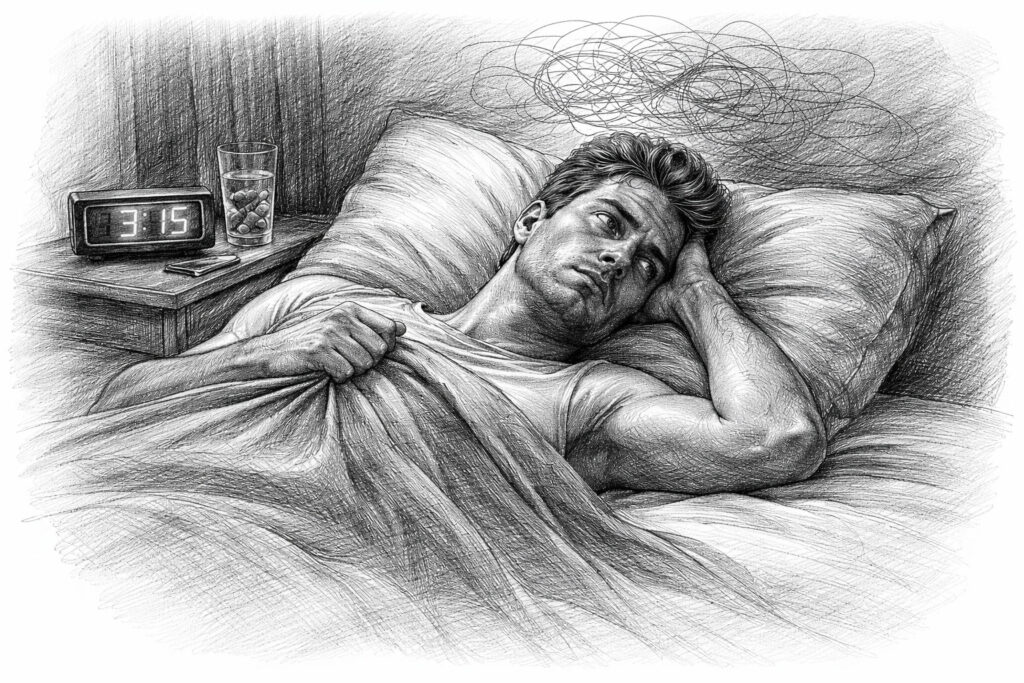
Secondly, the natural circadian rhythm is thrown out of balance. If the cortisol level does not drop sufficiently in the evening, the body finds it difficult to switch to sleep mode. It becomes more difficult to fall asleep, and even if you do sleep, the quality of recovery is often significantly poorer.
These changes usually occur gradually and go unnoticed for a long time.
The body remains in alarm mode
Permanently elevated cortisol levels affect many areas of the body. As the stress system was originally developed for short-term stress, the body is not actually prepared for such a permanent state. One example of this is the energy balance. Cortisol ensures that energy is quickly available to the body - among other things by mobilizing stored reserves. If this state persists, it can lead to constant overactivation of the metabolism.
At the same time, the muscles often remain in a heightened state of tension. Many people are familiar with the feeling that their neck or shoulders feel permanently tense without a clear trigger being recognizable. The jaw area is also frequently affected by this - a connection that can play an important role in complaints such as CMD.
The body then finds itself in a state that was originally only intended for a short time: increased alertness, tense muscles, limited regeneration. Over time, however, this state becomes the new normal.
The creeping consequences
Chronic stress rarely has a spectacular effect. The changes are usually subtle and develop slowly over a longer period of time.
Many people initially report concentration problems or increasing irritability. Things that used to be easy suddenly take more energy. At the same time, there can be a feeling of being under constant pressure - even if objectively there is no acute stress.
Another typical sign is a strange combination of tiredness and inner restlessness. The body appears exhausted, while the nervous system is still tuned to activity. Those affected often feel tired and tense at the same time.
Physical complaints can also increase. Muscle tension, headaches or digestive problems occur more frequently. Some people become more susceptible to infections or notice that their sleep is less restful than before.
The key point is that these symptoms do not develop suddenly, but gradually. This is precisely why they are often accepted for a long time as a normal part of a stressful everyday life.
But if the body is constantly working in alarm mode, it lacks one of the most important prerequisites for health: the ability to regularly return to a state of real rest.
Understanding cortisol - between necessary stress and health problems
This video addresses a topic that affects many people today: the influence of cortisol on our body and our well-being. Doctor Dr. Julia Fischer explains the role of this stress hormone in acute situations - and why it becomes problematic in the long term if the body can no longer rest.

Lowering cortisol: tips on nutrition and exercises to combat stress | ARD Healthy
The reference to current trends such as the so-called „cortisol face“, which is being discussed in social media, is particularly interesting. It becomes clear that long-term stress is not an abstract concept, but often manifests itself in very concrete symptoms such as sleep disorders, weight gain or inner restlessness. The video therefore provides a solid basis for better classifying your own stress and recognizing initial connections.
Stress system of the body: sympathetic nervous system, parasympathetic nervous system and cortisol
| System / Factor | Function in the body | Effects of permanent stress |
|---|---|---|
| Sympathetic nervous system | Activates the body for performance and reaction. Heart rate increases, breathing becomes faster, muscles are supplied with more blood. | Remains permanently active. The body is constantly in alarm mode and finds it difficult to regenerate. |
| Parasympathetic nervous system | Provides relaxation, regeneration and digestion. Heartbeat and breathing become calmer. | Becomes active too rarely. Recovery processes, digestion and repair mechanisms are limited. |
| Cortisol | Stress hormone that provides energy and supports the body under stress. | Permanently elevated levels can cause sleep problems, exhaustion and permanent activation of the nervous system. |
| Constant stress | Prolonged activation of the stress system due to occupational, emotional or mental stress. | The body loses the natural alternation between activity and rest. |
How long-term stress changes bodily functions
Chronic stress is rarely limited to the psyche. As soon as the stress system remains active over a longer period of time, the entire organism begins to react to it. This is because the nervous system and stress hormones influence numerous bodily functions - from digestion and sleep to the immune system.
To a certain extent, the body switches to a survival mode in which short-term performance becomes more important than long-term regeneration. Processes that are not immediately necessary for survival are throttled back or postponed. This makes sense in the short term. But if this state persists, noticeable changes can develop over time.
Many people only notice individual symptoms at first. Only when the various areas are taken together does it become clear how far-reaching the effects of constant stress can be.
Sleep - when the body can no longer switch off at night
One area that is particularly sensitive to stress is sleep. Normally, sleep follows a natural rhythm. In the evening, the activity of the nervous system decreases, the body slowly winds down and hormones such as melatonin help us to fall asleep. At the same time, the cortisol level drops so that the body can switch to regeneration mode.
With chronic stress, this transition often no longer functions smoothly. The nervous system remains active even though the body actually needs rest. Many people therefore know the feeling of lying in bed in the evening and not really being able to switch off inside. Thoughts continue to circle, the body remains tense and sleep becomes lighter and more restless.
Even if you sleep long enough, the quality of recovery can be significantly poorer. The important deep sleep phases, in which the body and brain regenerate, are often shorter. The next morning, you then feel less rested - a state that can in turn increase the stress of the next day. This can easily lead to a cycle of stress and poor regeneration.
Digestion - when the body redistributes energy
Another area that is strongly influenced by the stress system is digestion. When the body is in activation mode, digestion is consciously downregulated. From an evolutionary perspective, this makes perfect sense: when a person is fleeing from danger or fighting, it is more important that energy is available for the muscles and brain than that food is digested.
This redistribution of resources is not problematic in the short term. However, if stress becomes a permanent condition, digestion can be impaired in the long term. Many people then report symptoms such as stomach discomfort, a feeling of pressure in the abdomen or altered bowel function. Changes in appetite are also not uncommon. Some people lose their appetite under stress, while others eat more during stressful periods.
This shows how closely the nervous system and digestion are connected. The gut is therefore often referred to as the „second brain“ because it reacts particularly sensitively to emotional and nervous stress.
Immune system - when the body's defenses are weakened
The immune system also reacts sensitively to chronic stress. One of cortisol's properties is to regulate inflammatory reactions. In the short term, this can even be helpful because it can dampen excessive immune reactions. However, if the cortisol level remains permanently elevated, this can impair the activity of the immune system in the long term.
The body then becomes more susceptible to infections. Many people are familiar with the phenomenon of catching colds more often or recovering more slowly from illnesses during particularly stressful times.
Wound healing processes can also be slower under constant stress. The body continues to invest its resources in activity and vigilance, while repair processes take a back seat. This shows once again how important the regeneration phases are for health.
Muscle tension - when tension becomes a permanent condition
One particularly visible effect of chronic stress is the change in muscle tension. When the body is in activation mode, the muscles automatically become more tense. This increased basic tension is intended to prepare the body to be able to react quickly. Normally, this tension is released again as soon as the stressful situation is over.
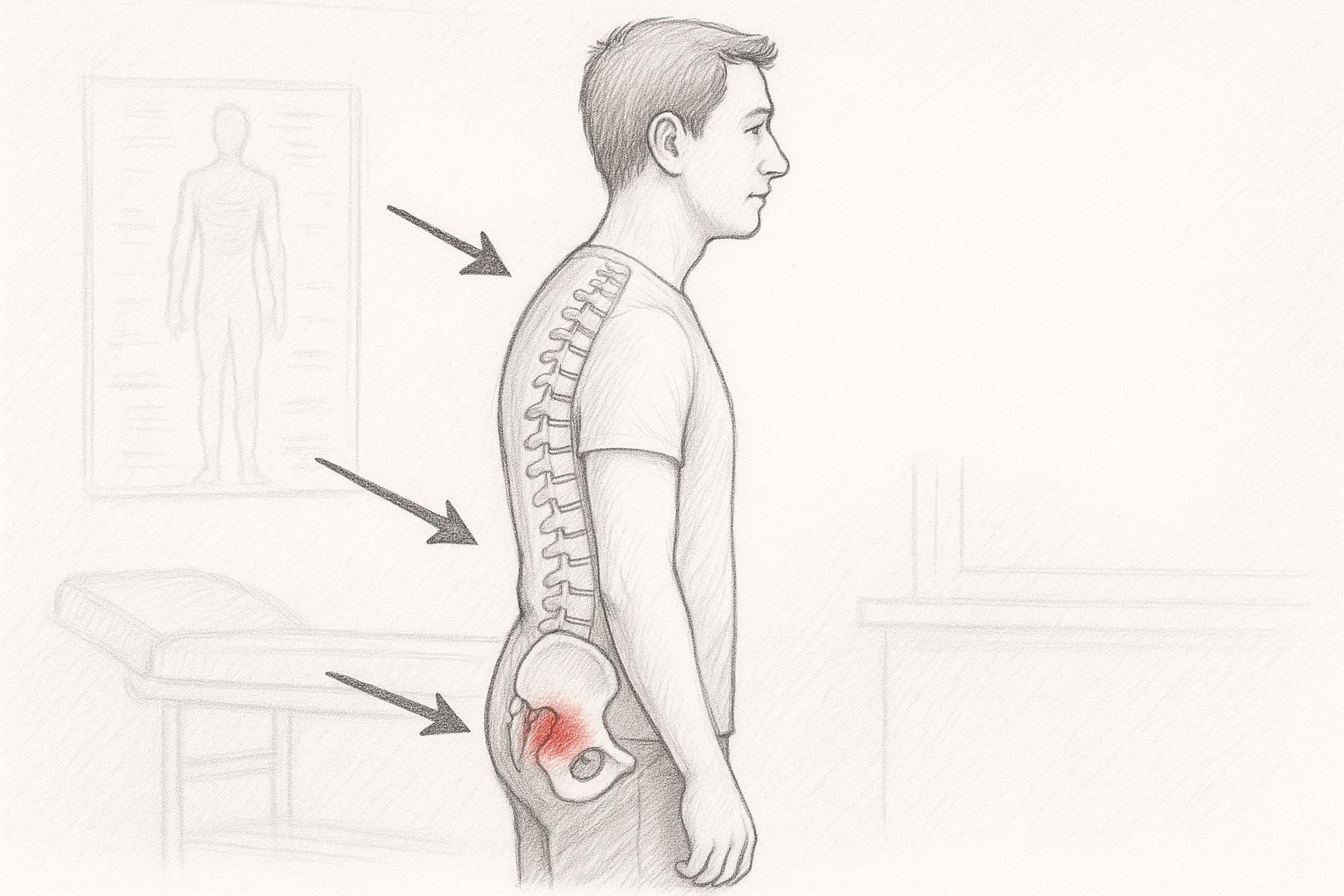
However, if the stress persists, the muscles also remain in a permanent state of slightly increased tension. This particularly often affects the neck, shoulders and back. Many people notice that their shoulders unconsciously pull upwards or that their neck feels stiff. Tension headaches can also occur in this context.
 One area that is often underestimated is the jaw. Under stress, many people unconsciously clench or grind their teeth. This constant strain on the jaw muscles can lead to problems in the long term - such as discomfort as part of a Temporomandibular Disorder (TMD).
This shows once again how closely stress and physical symptoms are linked. The body not only reacts emotionally to stress, but also very specifically via the muscles, nervous system and metabolism. If this tension is not relieved regularly, it can slowly become established throughout the body.
And that is precisely why it is so important to find ways to deal with stress not only mentally, but also physically.
How stress changes bodily functions and why we often don't notice it
| Range | Typical changes due to constant stress | Why it often goes unnoticed for a long time |
|---|---|---|
| Sleep | Problems falling asleep, restless sleep, fewer deep sleep phases. | Many people sleep long enough, but still feel permanently tired. |
| Digestion | Stomach discomfort, feeling of pressure in the abdomen, altered bowel function. | Digestive problems are often blamed on diet or individual foods. |
| Immune system | More frequent infections or slower recovery after illness. | The link between stress and the immune system is often not recognized. |
| Musculature | Permanent tension in the neck, back or jaw. | Tension is often interpreted as a result of posture or work. |
| Mental perception | Inner restlessness, concentration problems, irritability. | The increased stress level becomes the new normal and is therefore hardly noticed. |
Why many people no longer even notice their stress
Chronic stress is treacherous. While acute stress is clearly noticeable - for example in the form of nervousness, palpitations or inner tension - long-term stress often develops gradually. Many people don't even notice for a long time that their nervous system is under constant tension.
One of the reasons for this is that the body can adapt surprisingly well to stress. What is initially perceived as stressful or unusual becomes the new normal over time. The body gets used to an increased stress level - and this is precisely part of the problem.
Because when stress becomes a permanent condition, the awareness that stress is still present at all often disappears.
Getting used to continuous stress
The human body is a master of adaptation. This ability is fundamentally a strength, as it enables us to cope with a wide variety of life situations.
However, this same adaptability can also lead to stress slowly creeping into everyday life. What initially begins as a particularly stressful phase - due to work pressure, family conflicts or other challenges, for example - can develop into a permanent condition over time. Many people then say things like:
„There's just a lot going on at the moment.“
Or: „That's just the way life is.“
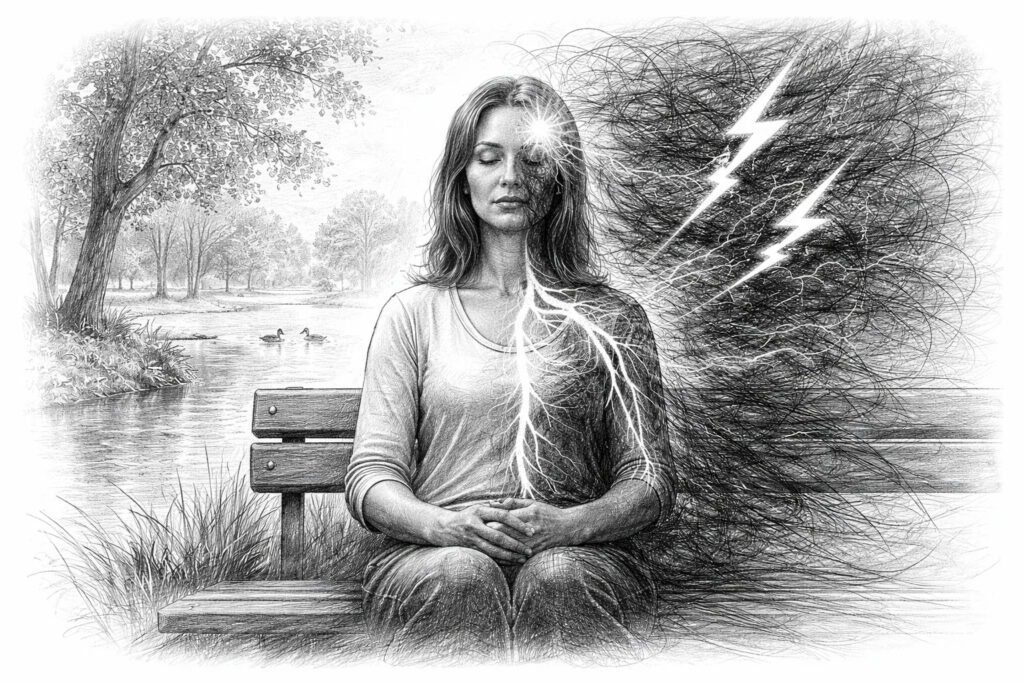
Over time, the increased inner tension becomes a familiar background feeling. The body continues to work in activity mode, but because this state lasts so long, it is hardly consciously perceived. Stress is then no longer something that occurs occasionally - it becomes the new normal.
The silent alarm mode
What is particularly problematic is that chronic stress does not always appear loud or dramatic. On the contrary, it often manifests itself rather subtly. The body remains slightly but permanently activated. The muscles are somewhat tenser than usual, the pulse is slightly elevated and thoughts are racing. At the same time, everyday life continues to function seemingly normally. You work, complete tasks, make decisions.
From the outside, everything seems stable. But on the inside, the nervous system continues to run at high speed in the background. The parasympathetic nervous system - the part of the nervous system responsible for rest and regeneration - barely comes into play.
Many people only notice that something is wrong when the body reacts more clearly. This is when symptoms suddenly appear that are initially difficult to classify: persistent tiredness, sleep problems or diffuse tension. The body's alarm mode has often been active for a long time before these signals become visible.
Typical warning signs
Even if chronic stress often begins unnoticed, the body sends out various signals over time. These signals are not always unambiguous, but as a whole they often paint a clear picture.
A typical sign is a persistent inner restlessness. Those affected have the feeling of being constantly tense inside, even when there is no acute stress.
Another warning signal can be a altered sleep be. Although many people sleep long enough, they don't really feel refreshed in the morning. The nervous system remains partially in activity mode even during the night.
Physical symptoms also occur frequently. These include, for example
- Chronic muscle tension
- Frequent headaches
- a feeling of pressure in the neck or shoulder area
- Increased irritability or concentration problems
Some people also notice increasing exhaustion, even though they are not objectively sleeping or working less than before.
The difficult thing is that these symptoms are often considered individually. You might treat the tension, try to sleep better or resolve to do more sport. Only when you look at the system as a whole does it become clear that all these signals can point to the same source: a nervous system that has not really been able to rest for a long time.
This is precisely why it is so important to understand stress not just as a short-term burden, but as a condition that can affect the entire organism - often long before we are consciously aware of it.
Strategies for regulating the nervous system
| Measure | Effect on the nervous system | Practical implementation in everyday life |
|---|---|---|
| Movement | Reduces stress hormones and muscle tension. | Walks, moderate sport or regular exercise in everyday life. |
| Conscious breathing | Activates the parasympathetic nervous system and calms the nervous system. | Slow, calm breathing exercises or short breathing breaks during the day. |
| Breaks | Interrupt the permanent activation of the stress system. | A short break from screens, work or information overload. |
| Body awareness | Helps to recognize and relieve tension at an early stage. | Pay attention to posture, muscle tension and jaw. |
| Everyday structure | Creates a natural alternation between activity and relaxation. | Regular sleep times, exercise and fixed rest periods. |
Ways back into balance - how the nervous system can be regulated
The good news is that the nervous system is not a rigid system. Even if chronic stress has persisted over a long period of time, the body has an amazing ability to regulate and adapt. However, the prerequisite is that we give it the opportunity to come out of permanent activation mode.
This is usually not about a single measure, but about several small changes in everyday life. Even relatively simple habits can help the nervous system to switch to regeneration mode more frequently.
Exercise as a natural stress reliever
One of the most effective methods of reducing stress is physical exercise. From an evolutionary biology perspective, this is easy to understand. The stress mechanism was originally developed so that the body would react to danger with movement - either by fleeing or through physical activity. However, when we experience stress today, this movement often does not take place. Instead, we sit at our desk, in front of the computer or in the car.
The energy mobilized in the process gets „stuck“ in the body, so to speak. Regular exercise helps to relieve this tension. It doesn't always have to be intensive sport. Even walks, moderate training or other forms of physical activity can help to relax the muscles and bring the nervous system back into a more balanced state.
Many people notice a clearly perceptible inner calm after exercise - a sign that the parasympathetic nervous system is becoming more active again.
Respiration and nervous system
Another amazingly direct access to the nervous system is breathing. While many bodily functions are controlled automatically, we can consciously influence our breathing. This creates a kind of interface between conscious action and autonomic processes.
Slow, calm breathing can activate the parasympathetic nervous system and thus support the body's regeneration mode. Breathing techniques in which the exhalation is slightly longer than the inhalation are particularly helpful.
Such breathing patterns signal to the nervous system that there is no acute danger. Many relaxation techniques - from meditation to yoga - use precisely this mechanism. They not only have an effect on the mental level, but also directly on physiological processes in the body.
Current survey on digitalization in everyday life
Breaks and relaxation in everyday life
Another important factor is the regular interruption of stress. In many modern work and life situations, activity and relaxation no longer alternate automatically. Instead, deadlines, tasks and information stimuli often follow one another without any major breaks.
This keeps the nervous system active for many hours. Conscious breaks can help to interrupt this cycle. Even short moments of rest - such as a walk, a few minutes of conscious breathing or simply a few minutes without a screen - can noticeably relieve the nervous system.
The length of the break is less important than its quality. It is crucial that the body really gets the opportunity to wind down.
Body awareness and muscle tension
Stress not only shows itself in the mind, but also in the body. Many people only notice how tense their nervous system actually is through physical signals.
Increased body awareness can help to recognize these signals earlier. This includes, for example, paying regular attention to posture and muscle tension.
- Are the shoulders raised?
- Is your neck tense?
- Is the jaw unconsciously clenched?
Simply being aware of such tension patterns can help to release them. In addition, methods such as stretching exercises, physiotherapy or relaxation techniques can help to loosen up the muscles.
This physical approach to stress plays a particularly important role in connection with complaints such as CMD.
Small steps with a big impact
The path back to balance rarely consists of a single major change. It usually involves many small adjustments that gradually give the nervous system more opportunities to regulate itself again.
More exercise, conscious breathing, regular breaks and better body awareness can together help to restore the alternation between activity and rest.
And it is precisely this change that is one of the most important foundations for long-term health.
Stress itself is not a problem. The human body is excellently prepared to cope with short-term stress. The stress mechanism enables us to perform, concentrate and react quickly. It only becomes problematic when the body no longer has sufficient opportunity to return to regeneration mode.
The balance between activity and relaxation
Health arises from a natural alternation: activity and recovery, tension and relaxation, performance and regeneration. If this rhythm is lost, the body remains in activation mode for too long. Over time, this can lead to complaints that are initially hardly associated with each other - from tension and sleep problems to exhaustion.
But behind many of these symptoms there is often the same mechanism: a nervous system that works under tension for a long time.
Perhaps the most important finding, however, is another. The body has an amazing ability to self-regulate. If we give it space for movement, rest and conscious recovery, the nervous system can rebalance itself step by step.
Many small changes in everyday life can have a big impact. Health therefore doesn't just start with individual symptoms or organs - it begins with the interaction between our nervous system and our lifestyle.
And this is where we often have more influence than we initially think.

Frequently asked questions
- How do I even realize that I am under chronic stress?
Many people expect clear signs of stress, such as severe nervousness or obvious excessive demands. However, chronic stress often manifests itself much more subtly. Typical signs are persistent inner restlessness, sleep problems, difficulty concentrating or the feeling that you can never really switch off. Physical symptoms such as neck tension, headaches, digestive problems or frequent infections can also be indications that the nervous system has been working in activation mode for a long time. The decisive factor is often not a single symptom, but the interplay of several small changes in everyday life. - What is the difference between normal stress and chronic stress?
Normal stress is a short-term reaction of the body to a challenge or danger. In such situations, the nervous system activates energy, increases alertness and prepares the body for performance. As soon as the situation is over, the body returns to a state of calm. Chronic stress, on the other hand, occurs when this activation persists. The body then remains in alarm mode, even though there is no longer any immediate danger. It is precisely this permanent state that can cause long-term health problems. - What role does cortisol play in stress?
Cortisol is one of the body's most important stress hormones. It is produced in the adrenal glands and helps the body to provide energy and adapt to stress. In the short term, cortisol fulfills important functions, such as regulating the metabolism or controlling inflammatory processes. However, if cortisol levels remain elevated over a longer period of time, the nervous system can remain permanently activated. This can lead to sleep problems, exhaustion, concentration problems and other complaints. - Why does stress have such a strong influence on sleep?
The nervous system plays a central role in the transition between activity and rest. When the body is under stress, the activation mode lasts longer. Cortisol levels often do not drop sufficiently in the evening and the body finds it more difficult to enter sleep mode. Many people therefore experience problems falling asleep, frequent waking or less restful sleep. As sleep is in turn an important prerequisite for regeneration, a vicious circle of stress and poor recovery can develop. - Why does stress so often lead to muscle tension?
Stress automatically activates the muscles. This mechanism was originally intended to prepare the body for movement - for escape or physical activity, for example. However, if stress arises in everyday life without this movement taking place, the muscle tension often persists. The neck, shoulders, back and jaw area are particularly affected. This permanent tension can lead to pain, restricted movement or complaints such as CMD in the long term. - Why do the digestive system and intestines react so sensitively to stress?
In stress mode, the body concentrates its energy on quick reactions. Processes such as digestion or regeneration are downregulated in this phase. This is not a problem in the short term, but chronic stress can affect digestion in the long term. Many people then notice symptoms such as stomach pressure, abdominal pain or altered bowel function. The gut is closely connected to the nervous system and is therefore particularly sensitive to psychological stress. - Why are many people not even aware of their stress?
The body has a strong ability to adapt. If stress persists over a longer period of time, the nervous system becomes accustomed to an increased state of activation. This state is then perceived as normal, even though the body is still under tension. Only when clear symptoms appear - such as sleep problems, tension or exhaustion - do many people realize that their stress levels have been elevated for a long time. - Can stress really cause physical illness?
Stress alone does not automatically cause illness, but it can influence many physical processes. The nervous system is closely linked to hormones, the immune system, muscles and metabolism. If stress persists over a long period of time, these systems can become unbalanced. This can cause complaints or exacerbate existing problems. This is why many doctors today consider chronic stress to be an important risk factor for numerous health problems. - What role does exercise play in reducing stress?
Exercise is one of the most natural ways to reduce stress. The stress mechanism was originally developed so that the body reacts to stress with movement. Today, when we experience stress without moving physically, the activated energy often remains in the body. This tension can be released through movement. At the same time, physical activity activates the parasympathetic nervous system, which is responsible for recovery and regeneration. - Why does breathing have such a strong effect on the nervous system?
Breathing forms a direct link between conscious behavior and the autonomic nervous system. Slow and calm breathing patterns can activate the parasympathetic nervous system, which is responsible for relaxation. This is why breathing techniques play an important role in many relaxation techniques. Conscious breathing signals to the body that there is no acute danger and that the organism can shut down again. - What role does the parasympathetic nervous system play in health?
The parasympathetic nervous system is the part of the nervous system responsible for regeneration, digestion and repair processes. While the sympathetic nervous system activates the body, the parasympathetic nervous system ensures relaxation and recovery. Many important processes such as cell repair, immune reactions or hormonal balance take place primarily in this state. It is therefore crucial that the nervous system can regularly switch to parasympathetic mode. - Why are breaks in everyday life so important for the nervous system?
Without regular breaks, the nervous system remains in activity mode for many hours. Even short interruptions can help to change this state. Walks, short breathing exercises or a few minutes of conscious rest give the body the opportunity to shut down. This can activate the parasympathetic nervous system and weaken the stress response. - Can stress also affect concentration and performance?
In the short term, stress can even improve concentration because the body is particularly alert and focused. However, if stress persists over a longer period of time, this effect can be reversed. Chronic stress often leads to mental exhaustion, concentration problems and reduced performance. This is because the nervous system is permanently overloaded and the brain has less energy available for complex thought processes. - What role does the jaw play in stress?
Many people react to stress by unconsciously clenching or grinding their teeth. This puts permanent strain on the jaw muscles. This increased tension can lead to discomfort in the area of the temporomandibular joints and promote craniomandibular dysfunction. At the same time, the jaw, neck and shoulders are closely connected, meaning that tension often affects the entire upper back area. - Why does body awareness help reduce stress?
Stress not only manifests itself in thoughts or emotions, but also in physical tension patterns. If you learn to recognize these signals early on - such as a tense posture or clenched teeth - you can take countermeasures more quickly. Even consciously relaxing certain muscle groups can help to calm the nervous system. - What role does the nervous system play in general health?
The nervous system is a central control center of the body. It influences heartbeat, breathing, digestion, hormones and many other processes. If the nervous system is permanently under stress, this imbalance can affect numerous areas of the body. Conversely, a well-regulated nervous system can positively support many health processes. - How long does it take for the nervous system to calm down again?
The regulation of the nervous system is an individual process. For some people, just a few days with more rest, exercise and conscious relaxation are enough to notice a significant improvement. In other cases, it can take longer, especially if the stress has persisted for many months or years. It is important that changes are implemented regularly and sustainably. - What is the most important first step in reducing chronic stress?
The most important step is often to become aware of your own stress in the first place. Many people don't realize how stressed their nervous system is until it's too late. Those who start to consciously pay attention to sleep, muscle tension, breathing and general well-being develop a better understanding of the body's signals. This awareness is often the starting point for changes that can lead to greater inner balance in the long term.