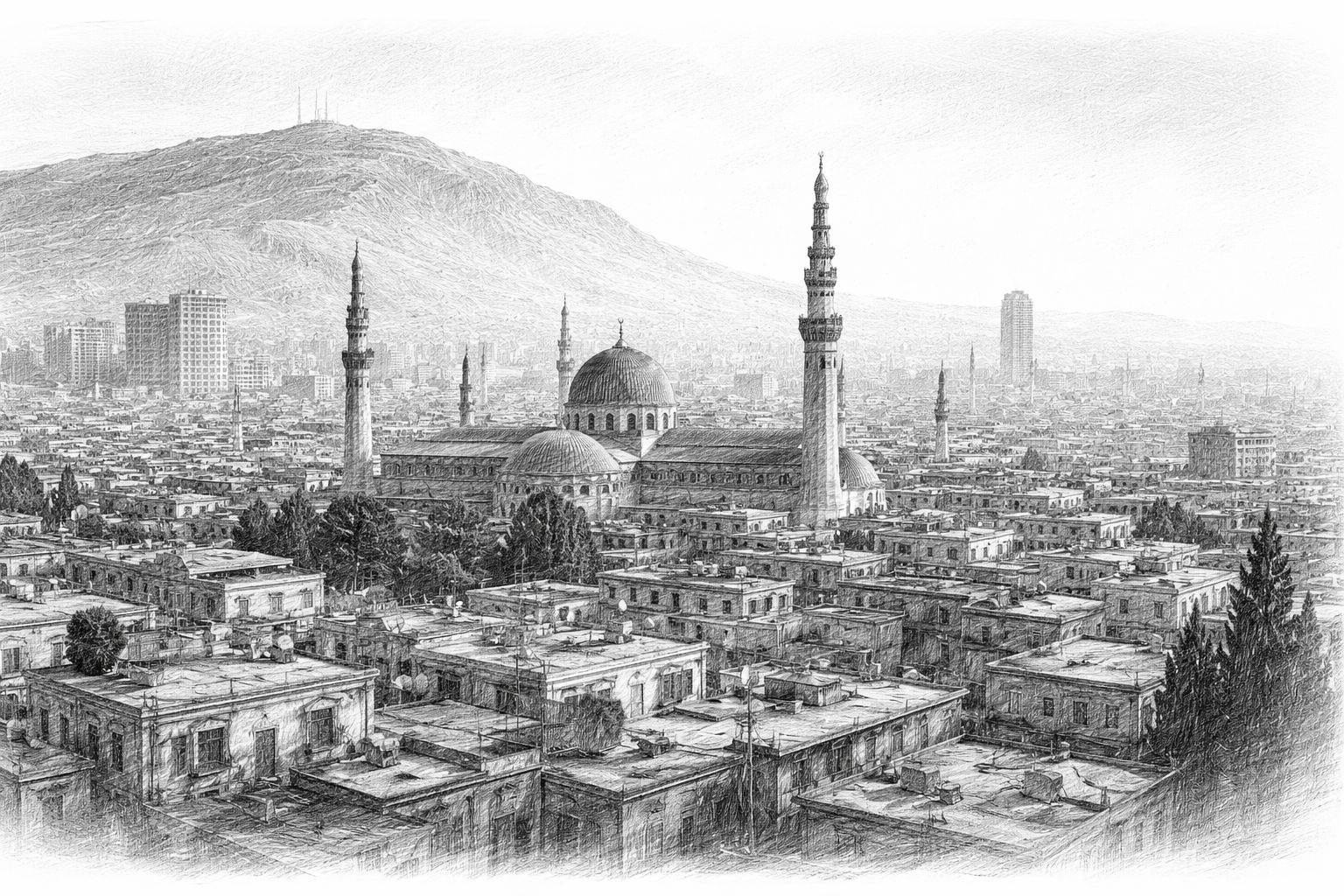
For me, Syria is not an abstract news country, not just a crisis concept in the headlines. I have been following this country - from a distance, but continuously - for around twenty years. Not out of political activism, but out of genuine interest. For me, Syria has always been an example of how the world is more complicated than simple good-and-evil narratives. A country in the Middle East that was secularly organized, relatively stable and socially much more modern than many would have expected.
An additional point that aroused my interest early on was the person of Bashar al-Assad himself. A man who had studied in Switzerland, trained as an ophthalmologist, knew the realities of life in the West - and then stood at the head of a Middle Eastern state. That didn't fit the usual mold. It was all the more irritating for me to observe how quickly public perception narrowed, how a complex state became a pure symbol of violence, flight and moral simplification within just a few years. The shock for me was not so much that Syria ended up in a war - history knows many such ruptures - but how little room there was left for differentiation afterwards. This article is therefore also an attempt to bring order back to a topic that is often only presented as chaos in the media.
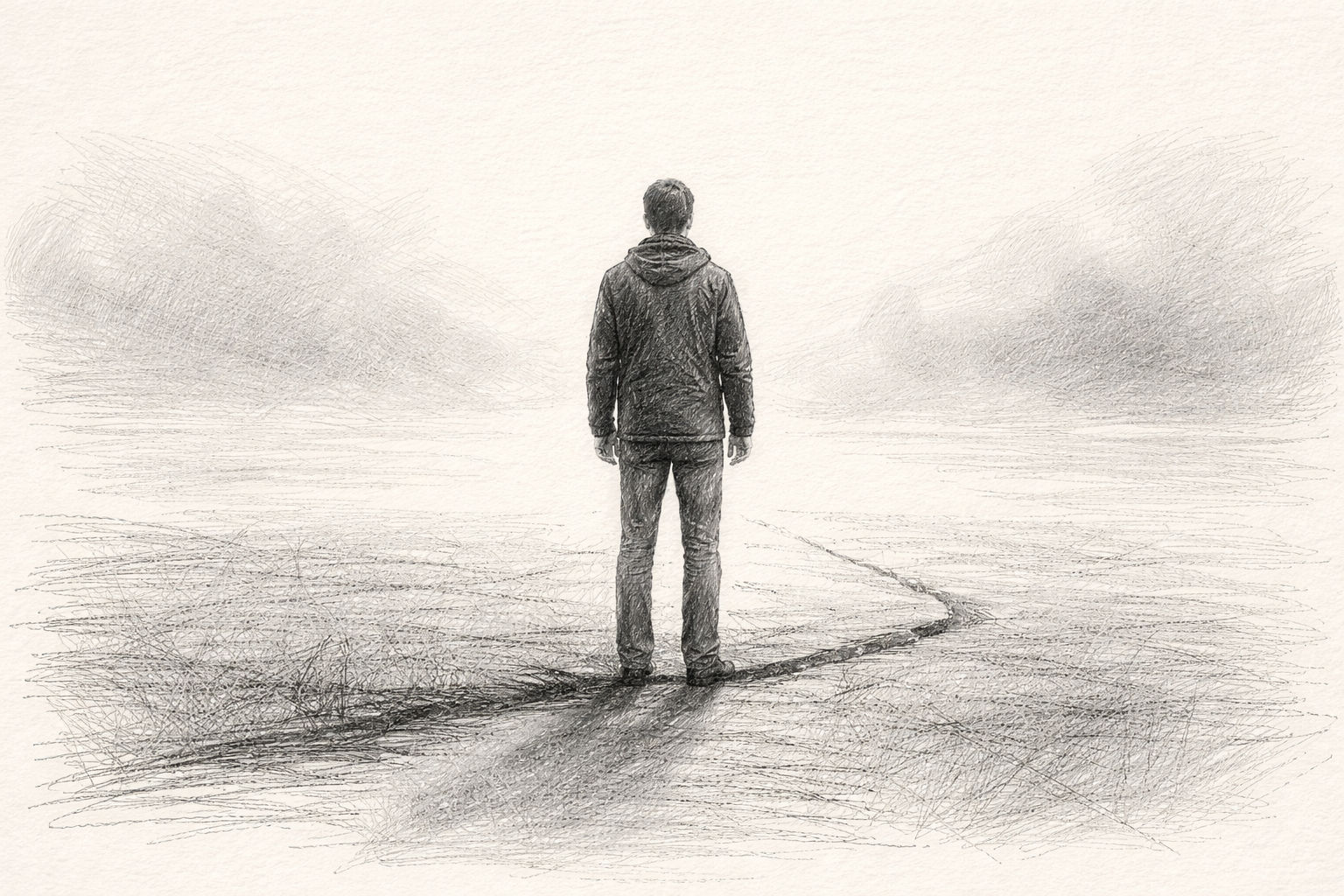


Syria before the war - a modern, secular state that many no longer know
Before we talk about overthrow, flight, new governments and current conditions, we need to do something that almost never happens in the public debate: first clarify what Syria was in the first place. Not morally, not ideologically, but quite banal.
How did people live there?
What was everyday life like?
How did the state function?
If you skip this step, you misunderstand everything else. Then the war seems like an inevitable development, the collapse like some kind of natural event. But that is exactly what it was not. Syria was not a backward, religiously rigid state that was „ripe for upheaval“. On the contrary.
A secular state in a religious region
For decades, Syria was one of the most secular states in the Arab world. Religion was present in society, but was deliberately politically contained. The state did not define itself in religious terms, but in national terms. This was no coincidence, but a fundamental principle. In everyday life, this meant
Religion was a private matter. No one was forced by the state to follow religious rules. There were no dress codes, no compulsory religious symbols in public spaces, no religious surveillance. If you were a believer, you lived your faith. Those who were not were not forced to do so.
This is particularly important to emphasize from today's perspective, because this secular foundation was later completely shattered.
Women's rights as a matter of course, not as an ideology
One particularly clear difference to many neighboring states was the treatment of women. Syria was not a Western equality state, but women were visible, independent and socially integrated.
Women studied at universities, worked as doctors, teachers, engineers and civil servants. They moved around in public spaces as a matter of course. The headscarf was a personal choice, not a social or state compulsion. Many did not wear one - without pressure to justify themselves, without making a political statement.
This normality is often underestimated today. It was not a special case of individual large cities, but part of the general social framework. It was precisely this framework that was later lost.
Religious and ethnic diversity as a lived reality
Syria was religiously and ethnically diverse - and this diversity was not merely tolerated, but protected by the state. Christians, Sunnis, Alawites, Druze and other groups lived side by side. Not without conflict, but without a permanent religious state of emergency.
Christian communities existed openly, churches stood in the middle of cities, public holidays were recognized. Minorities were part of public life, not marginalized groups. The state saw itself as an arbitrator that limited religious conflicts, not fueled them.
This role of the state as a neutral regulatory framework was one of Syria's most important stability factors.
Everyday life, infrastructure, normality
Syria was not a country in permanent crisis. People worked, started families, studied and traveled. Cities like Damascus or Aleppo were lively urban centers with trade, crafts, culture and education.
The infrastructure worked. Electricity, water, healthcare, schools - it was all there. There were state hospitals, universities with internationally recognized degrees, a functioning administration. Tourism played a role, especially cultural tourism.
This all sounds unspectacular, but it is crucial: Syria was a normal state. Not a prosperous paradise, but a functioning community. Yes, Syria was ruled by an authoritarian regime. Political opposition was restricted, power was highly centralized, freedom of the press was limited. That is part of the truth.
But it is also true that this system deliberately focused on order, stability and state control in order to prevent religious division and regional fragmentation. In a region where precisely these factors regularly led to civil wars, stability was seen as the ultimate goal. The state did not promise freedom, but security. And for a long time, it kept this promise.
The role of Bashar al-Assad
This course was continued under Bashar al-Assad. He was not a reformer in the Western sense, but neither was he a religious ideologue. His government adhered to the secular state model, protected minorities and preserved social openness.
Many Syrians were critical of him. Corruption, concentration of power and a lack of political participation were real problems. Nevertheless, many saw him as the guarantor of order - not out of enthusiasm, but out of consideration. For many, the alternative seemed riskier than the status quo.
This ambivalence is crucial to understanding why the later collapse was not simply experienced as a „liberation“.
Syria before and after the war - Basic comparison
| Aspect | Syria before 2011 | Syria today |
|---|---|---|
| Form of government | Authoritarian, centralized state | Fragmented, transitional regime |
| Religious policy | Secular, religious neutrality | Regional differences, partly religious pressure |
| Women's rights | Largely secured | Informally restricted |
| Minority protection | Guaranteed by the state | Dependent on local power structures |
| Rule of law | Limited, but clearly structured | Inconsistent, often unclear |
Why this Syria is hardly mentioned today
The image of a modern, secular Syria fits poorly into simple narratives. It disturbs the idea that the war was the necessary step from dictatorship to freedom. That is why this former Syria quickly disappeared from public perception.
What remained was a country that, in retrospect, is portrayed as having inevitably headed for its downfall. This portrayal is convenient - but it ignores what was actually lost.
To understand why this functioning, albeit authoritarian, system came under pressure, it is not enough to look inwards. Syria was part of larger power blocs, embedded in regional and global interests, closely linked to Russia, China and Iran - and that is precisely what made it vulnerable.
The next chapter therefore deals with the question of what role Syria played in the international power structure and why this position became a problem.

Assad, balance and external interests - Syria's place in the power structure
Anyone who views Syria solely through the person of Bashar al-Assad is falling short. States do not function like character dramas, and politics is rarely a question of individual sympathies. To understand why Syria came under pressure, why it became the scene of a proxy war and why the conflict has been so persistent, Syria must be seen as part of a larger power structure.
This is precisely where the core lies - and this is where it becomes uncomfortable for many representations.
Balance of power instead of loyalty to the alliance
For decades, Syria was not a classic vassal state, but a balancing player. The country tried to preserve its room for maneuver by not completely subordinating itself to a bloc. This strategy was risky, but logical from a Syrian perspective: in a region where states are quickly torn between zones of influence, independence is not an ideal, but a survival concept.
Syria continued along this line under Bashar al-Assad. Not as an ideological project, but as a pragmatic reason of state. It kept its distance from Western power structures without completely sealing itself off. At the same time, closer ties were forged with actors who were less interested in internal transformation than in stability and strategic cooperation.
The axis to Iran, Russia and China
In terms of foreign policy, Syria operated primarily in an environment characterized by three actors: Iran, Russia and China. This proximity was no coincidence, nor was it an ideological love affair, but the result of shared interests.
Iran regarded Syria as a strategic partner in the Middle East. Not because of cultural proximity, but because of the regional balance vis-à-vis Israel, the Gulf states and Western military structures. Syria, in turn, benefited from political backing and economic cooperation.
Russia saw Syria as a key state for its influence in the Mediterranean region. Military presence, political loyalty and geopolitical reliability made Syria an important anchor point for Russian foreign policy. For Damascus, this meant protection from international isolation.
China played a quieter role, but a long-term one. Economic relations, infrastructure projects and a shared interest in state sovereignty created a further level of strategic security.
Why this position became problematic
From a Western perspective, this constellation was increasingly undesirable. Syria not only withdrew from political influence mechanisms, but also blocked specific projects. This became particularly clear when it came to regional energy and transit issues. Syria was located - geographically inconspicuous, strategically crucial - on possible routes for gas and infrastructure projects that would tie Europe more closely to Western allied producer countries.
The refusal to open up to these projects without reservation was not accepted as a sovereign decision, but interpreted as an obstacle. Syria was therefore no longer a neutral player, but a disruptive factor in larger plans.
Not a „reform partner“, not an enemy - but uncomfortable
Syria did not fit into any simple category. It was not an open enemy of the West, but neither was it a reliable partner. It was precisely this intermediate position that made the country vulnerable. Pressure to reform, sanctions, diplomatic isolation - all of this was built up over years, long before open conflict broke out.
It is important to note this soberly: The West did not primarily demand democracy, but predictability. States that can be clearly categorized are easier to handle. Syria defied this categorization.
Domestic policy as a foreign policy risk
Syria's authoritarian structure increasingly became a foreign policy lever. Internal weaknesses - corruption, concentration of power, social inequalities - provided targets. Protests that arose from real problems encountered an environment that was prepared to exploit and intensify these tensions.
This is not a special case in Syria. It is a well-known pattern of international politics: internal conflicts become dangerous when external actors begin to instrumentalize them. Syria was not isolated because of its problems, but because these problems became politically exploitable.
In this context, Bashar al-Assad was perceived less as a shaper than a stabilizer. His role was to preserve the existing balance of power, not to implement major reform projects. This made him unattractive from a Western perspective, but predictable from a regional perspective.
For many Syrians, this predictability was crucial. They knew what they could expect from the state - and what they could not. Change was not hoped for, but a complete loss of control was feared. This attitude may seem resigned, but it was rational in an environment that left little room for experimentation.
The point at which balance was no longer tolerated
The more the global order moved towards bloc confrontation, the less room there was for states with an independent line. Syria entered precisely this phase. The policy of balance, which had worked for a long time, was suddenly read as a provocation.
From that moment on, it was no longer about reform, but about realignment. Not about adaptation, but about a shift in power. Syria was no longer up for debate, it was up for discussion.
When the first protests began to form in 2011, they came up against a state that was tense domestically and under pressure from foreign policy. What began as social discontent quickly became part of a larger game. The escalation was no coincidence, but the result of this constellation.
The next chapter therefore deals with the decisive turning point: how protest became an internationalized conflict - and why Syria lost control of its own development in the process.
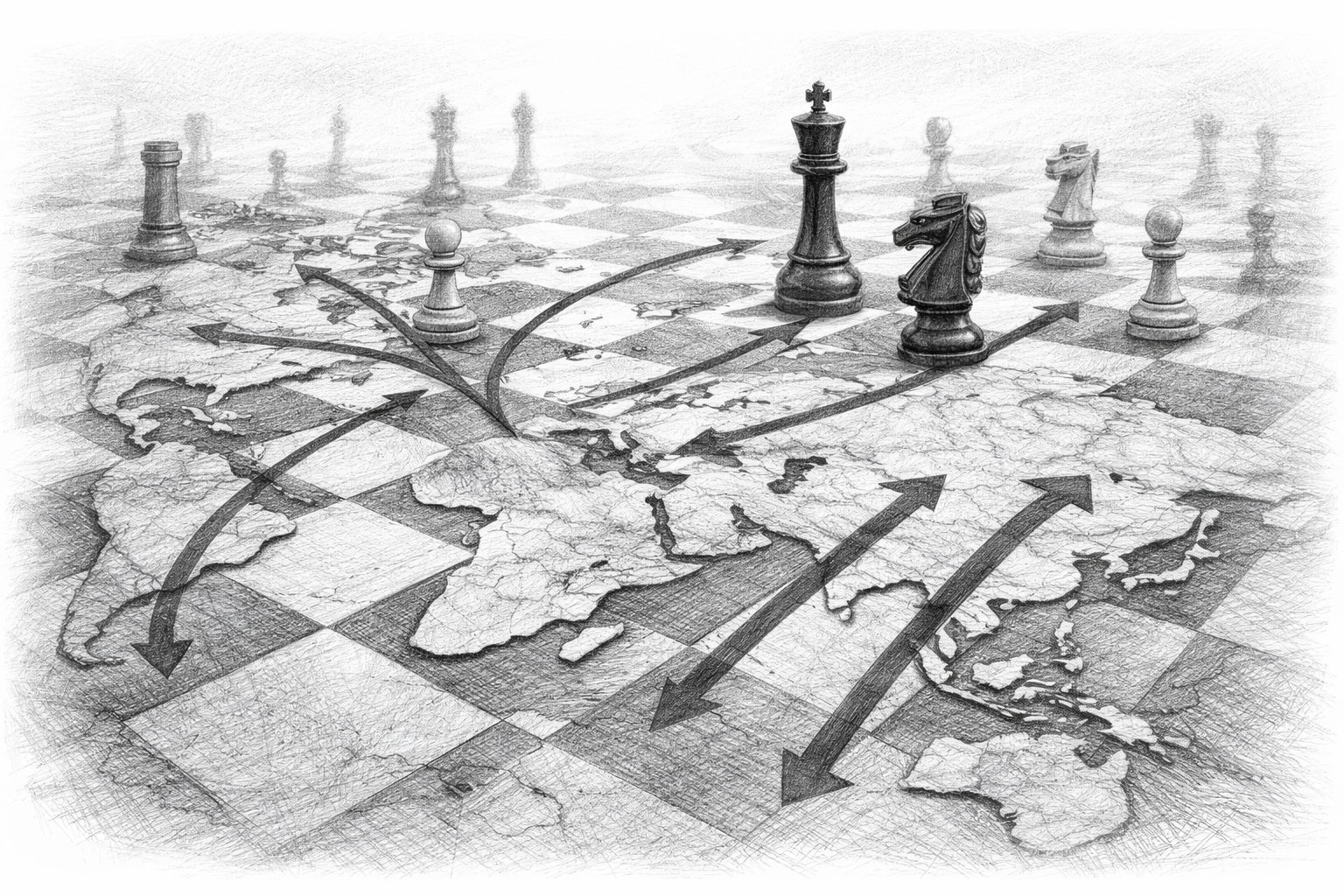
From protest to proxy war - how Syria lost control
When people talk about the „Syrian civil war“ today, it sounds like an internal affair: one state, one people, one conflict. This term is convenient, but misleading. After all, what began in Syria in 2011 was an internal protest, but it quickly turned into something completely different. To understand this transition, you have to look closely - and above all take the chronological sequence seriously.
The first protests in Syria were neither exceptional nor particularly radical. They were part of a phase of regional tensions, rising prices, social inequality and political frustration. Corruption, nepotism and a lack of political participation were real problems. The government was also aware of this.
It is important to note that these protests were initially limited, local and by no means widespread. They were directed against specific grievances, not against the existence of the state as such. Many Syrians observed the events cautiously, not euphorically. There was no broad revolutionary mood, but rather uncertainty.
Early escalation - and why it came so quickly
Even in the initial phase, the state reacted harshly. Security forces took repressive action, demonstrations were broken up and arrests followed. This reaction was authoritarian, short-sighted and contributed significantly to the escalation.
But this is where the crucial point begins: the escalation was not limited to the state versus the demonstrators. Armed actors emerged very early on who were neither part of the original protest movement nor purely locally organized. Weapons, money and logistics flowed into the country faster than one would expect from a spontaneous popular movement.
Militarization instead of political negotiation
Instead of negotiations, a different pattern prevailed: Armed conflict. Within a few months, the conflict shifted from street protests to armed clashes. This speed is no coincidence. It indicates that existing networks were used to escalate the conflict.
This crossed a threshold. From that moment on, it was no longer about reforms or concessions, but about power. And questions of power attract players who reach far beyond national borders.
The entry of external players
Syria increasingly became a projection space for external interests. Different states, organizations and networks began to use the conflict to pursue their own goals. This did not happen openly, but through proxies:
- Financial support for certain groups
- Arms deliveries via third countries
- Training and logistical support
- Media and diplomatic backing
This distorted and intensified the original conflict. Local dynamics lost importance, while international strategies determined the direction.
Fragmentation instead of opposition
With increasing militarization, the opposition disintegrated into numerous groups with very different goals. What was often referred to as „rebels“ from the outside was in reality a heterogeneous mixture of local militias, Islamist groups, foreign fighters and power-political projects.
A common political program hardly existed. Instead, short-term alliances, rivalries and ideological differences dominated. For the civilian population, this meant insecurity on all sides.
For the Syrian government, this development meant a permanent state of emergency. The conflict could no longer be contained locally and could no longer be politically moderated. Security issues overshadowed any debate on reform. The state reacted increasingly militarily - not because this was a strategic vision, but because it had few alternatives.
This does not justify violence, but it does explain the dynamic: a state in survival mode acts differently than a state in a reformist mood.
The loss of intrinsic logic
With each passing month, Syria lost more control over its own conflict. Decisions were no longer made in Damascus alone, but in regional capitals, intelligence centers and international forums. The war was no longer driven by Syrian needs, but by geopolitical calculations.
At this point, the term „civil war“ was definitely inaccurate. Syria had become a proxy war - with Syrian soil, Syrian victims and foreign agendas.
The role of Bashar al-Assad in this phase
During this phase, Assad became less of a political actor than a symbol. For some, he was the epitome of the regime to be toppled, for others the last guarantor of state order. This polarization facilitated external intervention because it reduced complexity.
The more Assad was personalized, the less room there was for differentiated solutions. The conflict narrowed down to the question of „Assad yes or no“ - and lost any real political depth in the process.
The civilian population as losers
While international actors pursued their interests, the population paid the price. Cities became front lines, neighborhoods became battlefields, everyday structures broke down. Flight, impoverishment and radicalization were not side effects, but direct consequences of this dynamic. Many Syrians not only lost their homes, but also any possibility of influencing the development of their country.
Once the conflict was fully internationalized, the question was no longer whether the existing system would survive, but for how long. The pressure on the government grew, state structures eroded and, in the end, there was an unstoppable loss of power.
The next chapter therefore deals with the decisive turning point: the fall of Assad, his flight to Moscow and the end of the old Syrian order.
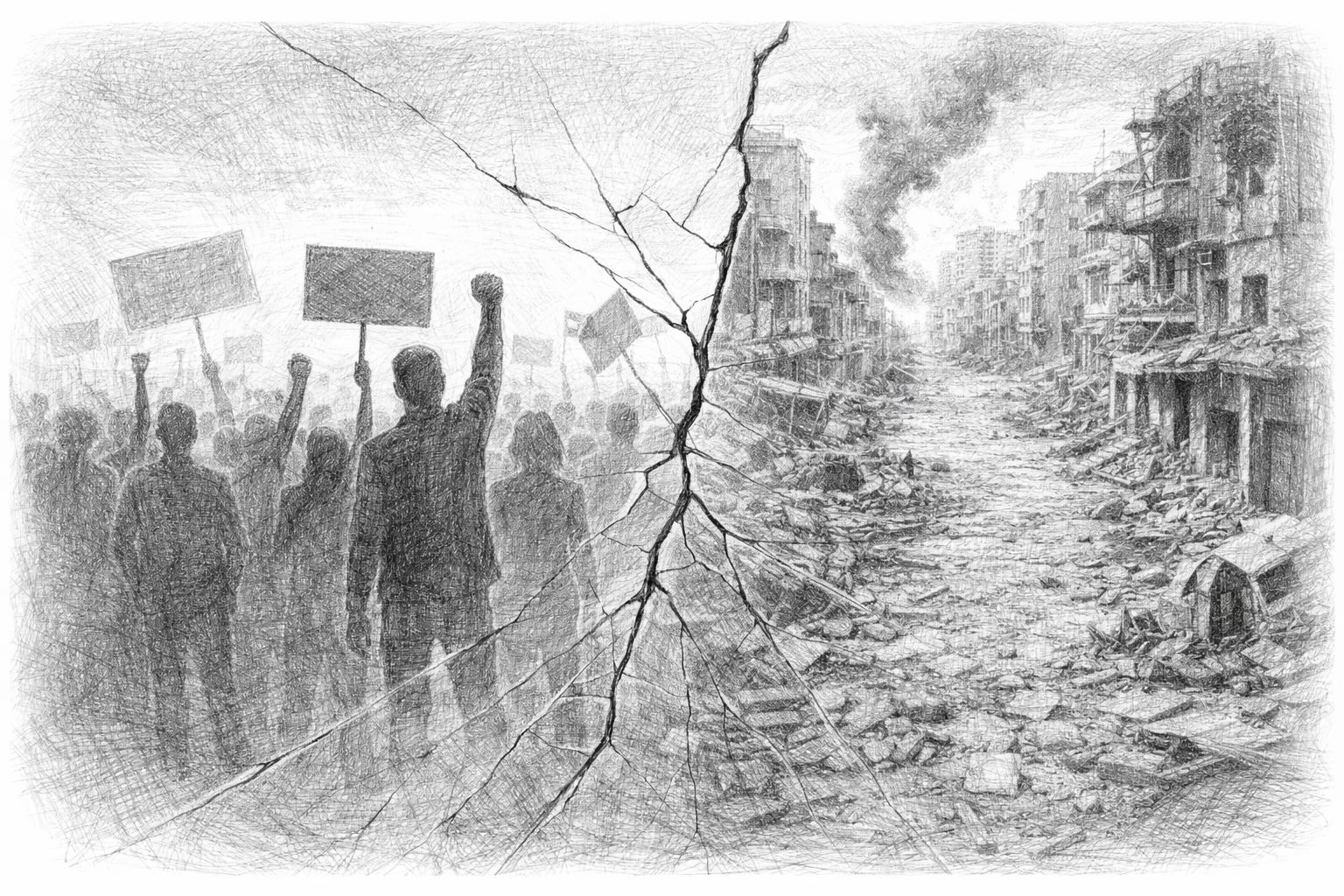
The fall of Assad and the flight to Moscow - the end of the old order
At some point, every conflict tips over. Not necessarily in one big, clear moment, but gradually, through erosion. In Syria, too, the decisive break did not come overnight. It was not a dramatic upheaval with a clear turning point, but the result of years of wear and tear, military exhaustion, political isolation and growing internal disruption. When Bashar al-Assad finally left the country, the old order was no longer viable.
After years of war, the Syrian state was only able to act to a limited extent. Administration, economy, infrastructure - everything functioned only fragmentarily. Large parts of the country were no longer under central control, loyalties were disintegrating and military successes were sporadic but not sustainable.
The state continued to exist, but it no longer governed across the board. Decisions were increasingly made reactively, not strategically. The state of emergency had become the norm. In this state, even an authoritarian system loses its most important resource: predictability.
International isolation and political wear and tear
At the same time, international isolation intensified. Sanctions not only affected the leadership, but also the entire state structure. Financial flows dried up, trade relations collapsed and reconstruction failed to materialize. Even allies began to calculate their support more soberly.
Russia and Iran held on to Syria, but there was also a growing interest in stabilization rather than a permanent crisis. An endless conflict ties up resources and creates uncertainties. The question slowly shifted: no longer how Assad could be held, but how a complete loss of control could be prevented.
The moment when options disappear
In authoritarian systems, the scope for leadership is often smaller than it appears from the outside. Decisions have to secure loyalties, reassure power centers and serve external expectations. The longer the war lasted, the fewer realistic options remained.
Reforms would have signaled weakness, military escalation was hardly feasible and negotiations were seen as a loss of face. The room for maneuver shrank to a minimum. In this phase, political leadership began to limit damage rather than shape it.
The fall - not a triumph, but a collapse
Assad's loss of power did not come as a triumphant „liberation“, but as a political collapse. State structures continued to disintegrate, power was decentralized and central loyalties collapsed. In this situation, it became clear that the presence of the president no longer stabilized anything, but rather blocked new arrangements.
The decision to flee was not a heroic act, but a sober step. Staying would neither have saved the state nor ended the conflict. It might have exacerbated it further.
The escape to Russia
When Bashar al-Assad left Syria and went to Russia, it effectively marked the end of the old Syrian order. Russia was not a place of refuge out of friendship, but out of calculation. Moscow provided protection because it wanted to secure influence, limit escalation and protect its own interests.
For Assad himself, the flight meant a complete withdrawal from the political process. He was no longer an actor, but a thing of the past. The Syrian state, as it had existed for decades, ceased to be capable of acting at that moment.
What followed was not an orderly transition, but a power vacuum. Institutions still existed, but without clear authority. Different actors began to occupy spaces - politically, militarily, ideologically. The state as a uniform regulatory framework had disappeared.
For many Syrians, this moment was not a stroke of liberation, but the final loss of security. The old order was gone, without a new functioning order taking its place.
The role of the international community
Internationally, the fall of Assad was often portrayed as a turning point. In fact, it was more of an end point. The conflict had long since taken on a life of its own. The international community reacted more than it shaped. Concepts for a stable transition remained vague, contradictory or unrealistic.
Instead of a clear political vision, short-term interests, tactical alliances and symbolic gestures dominated. Syria was not rebuilt, but continued to be administered - from the outside.
Assad as a finished symbol
With Assad's flight, the central projection surface also disappeared. For many years, the entire conflict had been focused on his person. His departure removed this simplification - and revealed just how confusing the situation actually was.
This did not make the conflict easier, but more honest. Suddenly you had to deal with structures, groups and power interests that had previously disappeared behind the personalization.
After the fall of Assad, the question was not whether Syria would be reorganized, but by whom. Who would fill the power vacuum? Who claims legitimacy? And according to what rules?
The next chapter therefore deals with Syria's new reality: the actors who are in power today, their origins, their ideology - and why their rule is anything but an improvement for many Syrians.

The new power in Syria - who really rules now?
After the fall of Assad, a question quickly arose that is surprisingly rarely answered clearly in many reports: Who actually took power? Not who was announced, not who was diplomatically received, but who actually makes decisions, enforces rules and controls people's everyday lives. This is precisely where the discrepancy between official portrayal and experienced reality begins.
No clear change of power, but a mixture of powers
Syria has not experienced a clean transition after Assad. There was no nationally legitimized reestablishment of the state, no widely accepted constitution, no democratically secured new order. Instead, a mixture of powers emerged, consisting of former rebel structures, military networks, transitional bodies and regional authorities.
What is described from the outside as a „new government“ is in reality a fragile construct. It is based less on consent than on control. Those who have influence have not won it through elections, but through military presence, alliances and international backing.
The formal tip - and what it really means
At the head of this system today is Ahmed al-Sharaa, who is presented as the leading figure of the new political framework following Assad's loss of power. However, his role is less that of a classic president and more that of a coordinator of competing interests.
Formally, there are ministries, transitional councils and administrative structures. In fact, their assertiveness depends on which groups they support - and which they have to tolerate. Decisions are not made at the cabinet table alone, but in negotiations with military actors, local rulers and foreign influencers.
A key point that is often only mentioned in passing in the Western media is the origin of the new power elite. Many of today's influential players do not come from civilian opposition movements, but from armed groups. Some of them have their roots in Islamist milieus, others in regional militias with clear vested interests.
This does not mean that all actors are ideologically identical. But it does mean that violence is not a tool of the past, but part of the political DNA of the new system. Those who gain power through weapons rarely give it up voluntarily through institutions.
A rare glimpse behind the new Syrian reality
This reportage is more than a travelogue - it is a personal experience report from a country in upheaval. The author returns to Syria in 2025 after being denied entry in 2019 because his videos did not fit in with the image of the regime at the time. This time, he experiences a different Syria: open, contradictory, in a state of flux.
The video can be viewed here in English or on YouTube in German with AI translation.

Entry to Syria in 2025 | New Government in Power | Drew Binsky
From the ancient streets of Damascus to the ruins of Palmyra, it gives an unfiltered impression of how people live today under the new order. The documentary combines personal encounters with historical depth and shows a country beyond political buzzwords. Created over four intensive weeks, it is an exceptionally close and honest look at Syria after Assad.
Criticism one: lack of democratic legitimacy
Probably the most fundamental point of criticism is that this government is not democratically legitimized. Elections in the Western sense have not taken place. Participation of the population is limited, opposition is institutionally weak or not permitted at all.
Critics point out that only the form of power has changed, not the principle of power. Instead of an authoritarian central state, there is now an authoritarian fragmented order in which power is exercised less centrally, but no less restrictively.
Criticism two: Dealing with minorities
The treatment of religious and ethnic minorities is particularly sensitive. While the old Syrian state actively included these groups - not out of idealism, but out of an interest in stability - they are now often under pressure. Reports from various regions speak of:
- Growing insecurity for Christians, Alawites and Druze
- informal religious norms in the public sphere
- limited cultural and religious visibility
What used to be protected by the state is now often dependent on the local power constellation. Rights no longer apply nationwide, but regionally - a massive step backwards for social coherence.
Criticism three: Women's rights and social freedom
Another point that is repeatedly emphasized by critics is the creeping re-Islamization of the public sphere. Although there are no uniform national laws, local power structures are increasingly enforcing social norms that restrict women's rights.
Women report growing pressure to conform, informal dress codes and restricted freedom of movement. Not by law, but through social control. It is precisely this form of exercising power that is difficult to grasp - and particularly effective politically.
Security instead of justice
The new order relies heavily on security logic. Stability is not created through law, but through control. Checkpoints, armed presence and local militias are commonplace in many places. For the population, this does not mean security in the traditional sense, but permanent uncertainty about which rules apply at any given time - and who is enforcing them.
Critics speak of a „militarization of the state“. The monopoly on the use of force is not clearly regulated, but distributed. Conflicts are not resolved legally, but through power relations.
International perception vs. local reality
Internationally, the new leadership is often accepted as a necessary transition. The hope: stabilization, return of refugees, gradual reconstruction. This hope is understandable - but it clashes with the reality on the ground. Many Syrians are not experiencing liberation, but a loss of reliability. The old state was repressive, but predictable. The new order is more flexible, but more unpredictable. For everyday life, this is often more important than political symbolism.
One reason why this criticism rarely appears prominently is due to the narrative economy. After years of war, there is a strong need for a „positive turning point“. The new government fulfills this role - at least on paper.
Critical voices are disrupting this narrative. They make it clear that the price of regime change was high - and that it did not automatically lead to more freedom. Such voices are uncomfortable, both politically and in the media. The crucial question is therefore not whether Assad was better or worse. This comparison falls short. The decisive factor is what has actually happened - and how it affects people's lives.
The next chapter therefore deals specifically with the critics' perspective: human rights, protection of minorities, new forms of repression - and why many Syrians are quieter today than they used to be.
What critics say - human rights, minorities and the reality on the ground
After every regime change, there are two narratives. One is the official one: Transition, stabilization, new beginnings. The other is quieter, more fragmented, often only in reports, conversations and side notes. This chapter is deliberately dedicated to the second perspective. Not because it is more spectacular, but because it is closer to the reality of many people living in Syria today.
Between hope and disillusionment
Immediately after the change of power, there was also hope in Syria. The hope that violence would decrease, that arbitrariness would end, that spaces would open up. This hope was not naive, but human. After years of war, the prospect of less insecurity is often enough to raise expectations.
However, disillusionment set in relatively quickly. Critics unanimously report that although the players have changed, the logic of exercising power has remained the same. Instead of a central authoritarian state, there are now several centers of power, each of which enforces its own rules. For the population, this does not mean more freedom, but more confusion.
Human rights without a clear addressee
A central problem of the new order is that human rights are no longer tied to a clearly responsible authority. In the past, there was a state against which one could turn - at least in theory. Today, responsibility and power are distributed among various actors. Reports from human rights organizations and local observers speak of:
- Arbitrary arrests
- non-transparent prison conditions
- lack of legal procedures
- Intimidation of critics
The decisive factor here is not the mere existence of such incidents, but their lack of traceability. Who is responsible? Who is liable? Who can demand accountability? There is often no clear answer to these questions.
Minorities under new pressure
Religious and ethnic minorities are particularly affected by this lack of clarity. Groups that used to be consciously integrated by the secular state now find themselves in a situation in which their security depends on local power relations.
Christian communities report growing insecurity, not necessarily through open violence, but through subtle pressure: limited visibility, social exclusion, informal rules. Alawites, who used to be identified with the state, are now generally regarded as suspects in many places. Druze and other minorities are moving with increasing caution, avoiding publicity and political statements.
Critics emphasize: There is no nationwide campaign of extermination against minorities. But there is no reliable protection either. Rights are not guaranteed, they are situational.
Women's rights - the silent step backwards
One of the clearest breaks with the pre-war era can be seen in women's everyday lives. The regression is rarely enacted by law, but is almost always informal. This is precisely what makes it difficult to grasp - and easy to overlook politically. Women report on:
- growing social pressure to adapt
- informal dress standards
- restricted freedom of movement
- declining presence in public space
Not everywhere, not simultaneously, but noticeably. Critics speak of a creeping re-Islamization that is not centrally controlled but arises from local power constellations. Those who adapt have peace of mind. Those who don't risk conflict.
Security as a pretext
The new order justifies many measures with reference to security. After years of war, this argument is effective. But critics warn that security is increasingly replacing justice. Decisions are not reviewed from a legal perspective, but are justified on the basis of security logic.
Checkpoints, armed presence and local militias are omnipresent. For the population, this does not mean protection, but constant evaluation: Who controls this place? What rules apply here? What can be said and what is better kept quiet?
This uncertainty generates adaptation - and adaptation generates silence.
Media, freedom of expression and self-censorship
Open repression against the media is less visible today than in the past, but no less effective. Critics report that self-censorship is the dominant strategy. Journalists often know which topics are risky - and avoid them.
Independent reporting exists, but under precarious conditions. Local media are often dependent on political or military actors. International attention fluctuates, resulting in a lack of leverage. The result is an information space that is fragmented, insecure and susceptible to manipulation.
Current survey on trust in politics and the media
Everyday life without reliability
Perhaps the most important point from the point of view of many critics is that life has not become more predictable. People used to know what was allowed and what was not. This clarity was repressive, but unambiguous. Today, rules are often situational. What was tolerated yesterday can be problematic tomorrow.
This form of uncertainty has a demoralizing effect. It makes long-term planning difficult, inhibits economic activity and undermines trust - not only in the state, but also between people.
One reason for the low visibility of this criticism lies in the international context. After years of violence, there is a strong need for a positive narrative. Stabilization, reconstruction, return - these terms have political appeal.
Critical voices disturb this picture. They remind us that regime change is not automatic progress. That old problems can disappear - and new ones can arise. Such perspectives are uncomfortable because they distribute responsibility instead of simplifying it.
No nostalgia, but comparison
Critics repeatedly emphasize that this is not about glorifying the past. The old Syrian state was authoritarian, unjust and incapable of reform. But the comparison is unavoidable. And this comparison is sobering for many. Not because everything was good in the past, but because many things are more unclear, less secure and less protected today.
After six chapters, one uncomfortable realization remains: the fall of a regime is no guarantee of better conditions. In Syria, the change of power has not solved many problems, but transformed them - often in more subtle, less tangible forms.
The final chapter is therefore not about apportioning blame, but about classification: What can be learned from Syria? And what does this conflict tell us about regime change, power politics and Western expectations?
The new Syria - everyday life between change of power and fear
The fall of Assad has not led Syria to a secure new beginning, but to a fragile interim phase. This video accompanies a journey through a country scarred by more than a decade of civil war: destroyed neighborhoods, looted military installations, children playing among live ammunition and districts that are avoided after dark. The reporters meet new rulers - and people whose everyday lives are still characterized by fear.

New Syria: How are the people doing now? | CRISIS - Behind the front line
This video makes it clear that the „new Syria“ is not a liberated country, but one in which insecurity, violence and mistrust dominate everyday life.
Syria as a warning, not an exception
There is no clear conclusion at the end of this article. No „everything got better after that“, no clear turning point, no conciliatory conclusion. And perhaps that is precisely the most honest way to end this text. Syria is not a closed chapter, but an open one.
A country that failed not because it was bound to fail, but because it was crushed between power interests without anyone seriously wanting to take responsibility for the aftermath.
In the Articles on Iran it is becoming clear that similar dynamics are taking hold there too - even if the regime in Iran is not really comparable with the situation in Syria before 2011.
The great error of regime change
One of the central errors of Western foreign policy is the assumption that the fall of an authoritarian system automatically creates space for something better. Syria shows how deceptive this hope can be. The old state was repressive, but functional. The new order is more pluralistic, but fragmented. Freedom was promised, insecurity delivered.
This is not a special case. Syria is part of a chain of countries in which existing orders have been destroyed without viable alternatives emerging. The term „failed state“ seems almost too technical. In fact, these are orphaned societies in which responsibility has been diffusely distributed and political organization has been outsourced.
Nobody takes over the whole thing
What Syria lacks today is not good intentions, but an integrating idea of statehood. There are actors, programs, aid initiatives, security concepts. But there is no actor who credibly stands for the whole. No common project, no unifying framework.
The international community acts selectively, regionally, guided by interests. Humanitarian aid alleviates symptoms, but does not replace order. Diplomatic processes remain abstract as long as they do not reach people's everyday lives. Syria is being administered - not rebuilt.
The comparison that many Syrians themselves draw is particularly tragic. Not out of nostalgia, but out of experience. They do not compare freedom with oppression, but predictability with insecurity. Order with fragmentation. Protection with situational arbitrariness.
This comparison is rarely made in public because it seems politically incorrect. But it does exist. And it shapes the behavior of many people: Withdrawal, adaptation, silence. Not out of agreement, but out of exhaustion.
Syria as a mirror, not a side issue
Syria is not a distant, marginal issue that can be morally ticked off. It is a mirror. A mirror of how power politics works when it hides behind values. A mirror for how quickly complex societies are reduced to simple narratives. And a mirror for how little interest there often is in the long-term consequences.
If you want to understand Syria, you have to accept that there are no clear culprits and no clear heroes. There are interests, wrong decisions, dynamics - and people who got caught in the middle.
Is there hope?
Hope is no longer a big word in Syria. It does not manifest itself in political programs, but in everyday life: in people who stay, teach, treat, help. In local initiatives that try to maintain structures despite everything. In the fact that society does not disappear completely, even when the state collapses.
This hope is quiet, unspectacular and fragile. It is not suitable for headlines, but it exists. Perhaps it is the only realistic starting point.
This article deliberately ends openly. Not out of convenience, but out of respect for reality. Syria cannot be closed, cannot be balanced, cannot be morally resolved. It remains a country in limbo - and a reminder. A reminder that stability is not a luxury. That regime change is no substitute for a repair manual. And that it is sometimes easier to destroy a state than to bear responsibility for the aftermath.
If this text fulfills a purpose, then perhaps it is this: not to judge more quickly, not to tell the story more simply - and not to forget what has been lost before deciding what should have come.
Perhaps that's all you can ask for in the end.
Return between ruins and hope
One year after the fall of Assad, this documentary shows a Syria caught between destruction and cautious hope. It accompanies returnees from Germany who are trying to make a fresh start in cities such as Homs, Idlib and Aleppo - often under the most difficult conditions. Alongside these personal stories are the impressions of a country characterized by the ruins of war, poverty and a lack of supplies. Particularly impressive are the encounters with children, war orphans and internally displaced persons, which show everyday life in the „new Syria“ in an undisguised way.

Back from Germany. Syria a country between ruins and hope | World mirror
The reportage makes it clear how wide the gap is between political debates in Germany and the reality on the ground - and why hope alone cannot replace reconstruction.
Syrian refugees in Germany - figures, integration and the reality of life
When we talk about Syria, we must not leave out one aspect that gives this whole debate a concrete, human dimension: The people who have left the country and are now living in Germany. Their stories, their integration, their everyday lives - all of this shows how global politics works on a small scale.
How many Syrians are currently living in Germany?
Germany has been one of the main destination countries for Syrian refugees since the start of the war in 2011. Many Syrians came to Germany in the course of the large refugee movement in 2015/16, when the borders were open and hundreds of thousands sought protection. In the meantime, the number of these people has stabilized, but it still provides an important indication of long-term developments.
According to the Federal Statistical Office, there were around 973,000 Syrian nationals living in Germany at the end of 2023 - one of the largest groups of origin for refugees. The majority of them had subsidiary protection or asylum status, many of them for years.
More recent figures show that the total number of Syrian citizens in Germany in 2025 has remained slightly below one million - with slight annual fluctuations, but these are mainly due to naturalized citizens and returnees.
It is important to understand here: These figures refer to nationality, not to all people of Syrian origin. According to statistical estimates, there are significantly more people with a Syrian migration background living in Germany - around 1.2 to 1.3 million if you also take into account those who have already been naturalized or were born here.
Protection status and asylum applications
For many years, Syrians were considered one of the groups with the highest protection rates in Germany. The recognition rate for asylum applications was very high for many years - because war, persecution and humanitarian emergencies were clearly verifiable.
However, there was a significant decline in asylum applications in 2025. In the first half of 2025, significantly fewer initial applications were received from Syrian nationals than in the previous year - which is due both to fewer refugee movements to Europe and to political and practical obstacles.
Labor market - integration, opportunities and limits
Integration begins in everyday life - and a central element of this is work. Syrian refugees in Germany are making progress here, but there are also challenges.
According to labor market analyses, the employment of Syrian nationals has increased significantly in recent years. The employment rate has risen over time, especially as the length of stay increases: after seven to eight years, around 61 % of Syrian asylum seekers in Germany are considered to be employed, with clear differences between men and women.
Other evaluations show that around 42 % of all Syrian citizens of working age are now actually employed, which is a considerable increase compared to previous years.
A large proportion of these employees work in systemically relevant and bottleneck occupations, such as construction, care, logistics and food production. This means that many Syrian refugees are not only present in the labor market today, but are also actively contributing to the supply - in areas in which Germany traditionally has a need for skilled workers.
At the same time, all the data shows that integration proceeds very differently depending on the population group. Men have - statistically - significantly higher employment rates than women, and women's participation in the labor market is often lower because they first have to overcome language and qualification barriers.
Perspectives of Syrian refugees in Germany
| Perspective | Status | Assessment |
|---|---|---|
| Long-term retention | high | Families, work, naturalization |
| Voluntary return | low | Uncertain situation in Syria |
| Labor market integration | medium to rising | Depending on education & language |
| Social participation | different | Highly dependent on the environment |
Citizenship and long-term prospects
Another important aspect of long-term integration is naturalization. There have been significant changes here in Germany in recent years. In 2024, Germany reached a record number of naturalizations, with Syrians forming the largest single group. Around 83,000 Syrian nationals were granted German citizenship in 2024, which corresponded to around a quarter of all new naturalizations.
Over the years, more than 160,000 people from Syria have already been naturalized, many after years of residence and language acquisition. For many people, naturalization not only means legal security, but also the opportunity to integrate into society in the long term, gain political rights and become part of the country they have called home for years.
Return - voluntary, political or realistic?
With the fall of the Assad regime at the end of 2024, the debate in Germany changed: suddenly there was public discussion about whether and how Syrian refugees could return to their homeland. Some politicians said that conditions had changed, while others emphasized that a safe, humane reconstruction was still not realistic.
Official figures show that by mid-2025, only a relatively small number of Syrian refugees had officially returned to Syria via return programs - in the low four-digit range in each case.
This means that the great wave of returns that some people hoped for has not yet materialized. Many of the Syrians living in Germany have built up families, children, jobs and social networks. For many, the decision between „rebuilding their homeland“ and „shaping their future in Germany“ is not an easy one - and conditions in Syria remain precarious.
Everyday life and social reality
Figures alone do not tell the whole story. The reality of life for Syrian families in Germany is complex. Many are well integrated - they work, continue their education, get involved locally. Others continue to experience hurdles, such as access to the job market, recognition of qualifications, or they do not feel that they have fully arrived socially.
Around a quarter of the Syrian community was born in Germany or has family connections here. This speaks for a new generation that is navigating between its origins and its future.
Neither return nor complete assimilation
If you look at the figures and stories together, the following picture emerges:
Germany continues to be home to almost one million people of Syrian origin - with a slight downward trend among nationals, but a stable number of people overall.
Labor market integration has made progress, many Syrians are employed and contribute to everyday economic life. A significant number of refugees have been granted German citizenship, a sign of longer-term prospects. The actual voluntary return figures are low because many people are rooted in Germany and the situation in Syria remains uncertain.
At the same time, integration remains a long-term, multi-layered task that varies depending on the life situation.
A realistic view instead of political simplification
In the public debate, these data often become political buzzwords: „return“, „allowed to stay“, „deportations“. But the reality is more sober and complicated. People are not simply numbers in a statistic, and decisions about their lives and future are not made in a political vacuum.
Syrian refugees in Germany today are caught between two worlds - they have found a new home, but in many cases are still connected to their origins, their families abroad and the question of a possible return. They also show that integration is not just a political buzzword, but a lengthy, multi-layered process that can take decades.
Relevant sources for Syria
International organizations & long-term observers
- UNHCR - Refugees & ReturnThe UN Refugee Agency is one of the most important sources on Syrian refugees, internally displaced persons and return movements. Its reports on the voluntary nature of return, security situations and structural obstacles to reconstruction are particularly valuable.
- Amnesty International - Human Rights & MinoritiesAmnesty has been following the Syrian war from the beginning and is also documenting the situation after Assad. Important for reports on minorities, prison conditions, arbitrary violence and informal repression.
- Human Rights Watch - Power structures & violent actorsHRW analyzes in detail who exercises violence, how power is exercised and where responsibility lies - including with non-state actors. Very helpful for the phase after the regime change, because not everything can be explained by „the state“.
Research & Analysis
- International Crisis Group - Conflict dynamics & new orderOne of the best sources for sober analysis. The ICG describes very precisely how power transitions work, why violence persists and which actors have real influence. Ideal for classification beyond blame.
- European Council on Foreign Relations - Syria & EuropeHelpful to understand the European perspective on Syria: Sanctions, return debates, security policy assessments. Less emotional, more strategic.
Regional & specialized observers
- Syrian Observatory for Human Rights - Violence & number of victimsControversial, but for years one of the few continuous sources on fighting, massacres and regional escalations. Always read with caution, but good for trend analysis if you cross-check several sources.
- Carnegie Middle East Center - Society & StatehoodVery good analyses on the question of how statehood in the Middle East is disintegrating or emerging. Less topical, but structurally strong.
Journalistic long form & reports
- Deutschlandfunk - Background & MinoritiesDeutschlandfunk often provides differentiated long-form programs on Syria, minorities (Druze, Alawites, Christians) and the situation after Assad. Less emotionalized than many TV formats.
- The Guardian - Change of power & Assad in exileBackground to the phase of Assad's loss of power, exile issues and international reactions. Clearly western perspective, but well researched.


Frequently asked questions
- Why are you writing this article about Syria at all?
Because for me, Syria is not an abstract crisis country, but an example of how complex reality can be if it is not reduced to headlines. I have observed the country for many years and was irritated by how quickly a functioning state became a pure symbol of chaos in the public perception. This article is an attempt to bring order to this perception. - Was Syria really as modern as you describe it before the war?
Yes - at least in a regional comparison. Syria was not a Western constitutional state, but it was a secularly organized, relatively open state. Women could live without headscarves, religious minorities were protected, education and infrastructure functioned. This does not make the state ideal, but it contradicts the image of a backward country. - Does that mean you want to defend Assad?
No. It's not about idealizing Assad or justifying his authoritarian rule. It's about distinguishing between criticism and simplification. You can criticize a repressive system and at the same time acknowledge that its collapse had massive negative consequences. - Why did Syria play a geopolitical role at all?
Because Syria was strategically located between different power blocs and did not clearly align itself with the West. Its proximity to Russia, Iran and China made the country a geopolitical disruptive factor. Syria was not a small peripheral country, but a hinge state in the Middle East. - Was the war in Syria a civil war from the start?
No. It began with protests, but very quickly developed into an internationalized conflict. The early militarization and the massive influence of external actors indicate that Syria lost control of its own development relatively quickly. - Why did protest turn into violence so quickly?
Because real social discontent met an authoritarian state - and at the same time an environment that was prepared to arm this conflict. Without external weapons, money and logistics, the conflict would very likely have developed differently. - Why did Assad ultimately lose power?
Not because of a single event, but through years of erosion. Military exhaustion, economic collapse, international isolation and internal disintegration meant that the old order was no longer viable. - Why did Assad flee to Russia?
Because Russia was one of the few actors that could both offer protection and safeguard its own interests. The flight was not a political manoeuvre, but a de facto admission that its presence could no longer stabilize the state. - Who really rules Syria today?
There are formal transitional structures, but real power is fragmented. It lies with a mixture of former rebel leaders, military networks and regional authorities. It is difficult to speak of a clearly legitimized central government. - Is the new government more democratic than the old one?
By Western standards: no. There were no free elections, no broad social participation and no stable rule of law. Instead of an authoritarian central state, today there is an authoritarian fragmented order. - How has the situation changed for minorities?
The situation has worsened for many minorities. Rights are no longer guaranteed nationwide, but depend on local power relations. Protection is not systematic, but situational. - What has happened to women's rights?
There is no nationwide legal regression, but there is a clear informal one. Women report growing social pressure, limited visibility and new expectations regarding behavior and clothing. The regression is quiet, but noticeable. - Is Syria safer today than it used to be?
Security is defined differently today. There are fewer blanket fronts, but more insecurity in everyday life. Rules are unclear, responsibilities change, violence is less centralized but more diffuse. - Why is there so little criticism of the new order?
Because there is a strong political need for a positive narrative. After years of war, people want to see a „new beginning“. Critical voices disrupt this image and are therefore often ignored or relativized. - How many Syrian refugees are living in Germany today?
Officially, there are just under one million Syrian nationals living in Germany. If you include naturalized citizens and people with a Syrian background, the figure is around 1.2 to 1.3 million. - How well are Syrian refugees integrated in Germany?
Integration is very different. Many are working, continuing their education and have been naturalized. Others continue to struggle with language, recognition of qualifications or social isolation. Integration is not a uniform state, but a long process. - Do many Syrians now want to return?
The number of returns has been low so far. Many people have made a life for themselves in Germany, while the situation in Syria remains uncertain. A large wave of returns is not realistic at present. - What is the most important lesson from Syria?
That the fall of a regime is not a solution in itself. Stability, however imperfect it may be, is a value. Those who destroy existing orders bear responsibility for the aftermath - and this responsibility was not taken on in Syria in many cases. - Why does the article end without a clear solution?
Because Syria itself has no clear solution. An open ending is not a flaw, but an expression of honesty. Sometimes the value of a text is not to provide answers, but to break down false certainties.