Hardly any other country conjures up such fixed images as Iran. Even before a single detail is mentioned, the associations are already there: mullahs, oppression, protests, religious fanaticism, a state in permanent conflict with its own population. These images are so familiar that they are hardly questioned. They seem self-evident, almost like common knowledge.
And therein lies the problem. Because this „knowledge“ rarely comes from personal experience. It comes from headlines, from commentaries, from stories that have been repeated for years. Iran is one of those countries about which many people have very clear opinions - even though they have never been there, don't speak the language, don't know everyday life. The picture is complete, cohesive, seemingly free of contradictions. And that is precisely why it is so convincing. But what happens when a picture becomes too smooth?

Latest news on Iran
09.03.2026: In the escalating conflict between Iran and Israel, the situation has escalated once again. dramatically sharpened. According to various media reports, following the death of the previous Iranian leader in a missile attack, his son Modshtaba Khamenei was elected as the new head of the country. He is regarded as a strict hardliner from the circles of the Iranian Revolutionary Guard. In addition to his father, his wife and other members of his family were killed in the attack on his family. Shortly after he took power, there was a further massive escalation: Iran launched the largest missile attack on Israel since the beginning of the current conflict. Israel responded with counter-attacks on Iranian targets in the region.
Parallel growth according to Wallstreet Online There is global concern about the economic consequences. Observers warn that an escalation of the conflict could endanger shipping traffic through the strategically important Strait of Hormuz. A significant proportion of the global oil trade is transported through this strait. If the sea route is blocked, rising energy prices and trade disruptions could trigger a global economic slowdown or even a recession.
06.03.2026: In the escalating conflict between the USA and Iran, US President Donald Trump has made a drastic demand. As reported in the Liveblog of the Süddeutsche Zeitung Trump stated on his Truth Social platform that an agreement with Tehran is out of the question for him at the moment. Instead, he believes that the conflict should be turned into a „Iran's “unconditional surrender" to lead to a military conflict. Washington is thus clearly stepping up its rhetoric and signaling a hard line in the ongoing military conflict. At the same time, international media are reporting on further military operations and increasing tensions in the region. Observers see this as a possible further escalation, while diplomatic initiatives have so far made little progress.

Iran war: Trump goes all-in - oil price explodes! Market whisper | FinanzmarktWelt.de
04.03.2026: As the Süddeutsche Zeitung reported in a liveblog, The US military said it had taken out a large part of the Iranian navy in the Persian Gulf. The US Central Command (CENTCOM) stated that American forces had destroyed 17 Iranian warships, including a submarine, and simultaneously attacked almost 2,000 targets in Iran. According to the military command, the aim of the operation was to neutralize Iran's ability to block the strategically important Strait of Hormuz. The commander of the US Central Command stated that there are currently no Iranian ships operating in the Persian Gulf, the Strait of Hormuz or the Gulf of Oman. The information comes from US military sources and cannot currently be independently verified. The Strait of Hormuz is considered one of the most important energy transportation routes in the world: around a fifth of the global oil and LNG trade passes through the route between Iran and Oman.
01.03.2026: Iran's spiritual leader Ayatollah Ali Khamenei is dead - This was confirmed by Iranian state media a few hours after an earlier announcement by US President Donald Trump. According to information from Iran, the 86-year-old died in the heavy airstrikes by the USA and Israel, and a 40-day period of national mourning was declared. According to media reports, close family members, including his daughter and granddaughter, were also killed in the attacks. The Iranian Revolutionary Guards announced retaliation, while Trump described Khamenei's death as an opportunity for the Iranian people.
28.02.2026: On February 28, 2026, Israel, together with the USA, launched military attacks on targets in Iran, pushing the long-standing Middle East conflict into a new, dangerous phase. According to a report in Wirtschaftswoche Iranian facilities were targeted, while clouds of smoke rose over the city and explosions were recorded in Tehran. The offensive marks a significant escalation in the dispute over Iran's nuclear program and follows months of tension between Israel, the United States and Tehran. The Iranian leadership is threatening to retaliate, which is why international observers fear that the situation will deteriorate further.
The country we think we know
Media work with compression. Complex realities are compressed into short texts, images and concepts. This is not a reproach, but a necessity. But when the same terms are repeated over and over again over the years, something other than information is created: a narrative.
In the case of Iran, these terms are well known. „Regime“ instead of government. „Hardliners“ instead of politicians. „Oppression“ as a permanent base foil. Of course there are reasons for this choice of words. But language steers perception. Those who constantly report in moral categories leave little room for nuances.
A look at leading Western media - such as Der Spiegel - shows how consistently this image has been reproduced over the years. Individual events change, but the narrative structure remains surprisingly stable. Protests are read as the rebellion of an entire people, state reactions as proof of totalitarian structures. In between, there is little room for ambivalence.
When images become stronger than reality
The problem with such narratives is not that they are completely false. It is that they are rarely complete. A country with over 80 million inhabitants, thousands of years of history and enormous cultural diversity cannot be reduced to a few moral markers. Yet that is exactly what happens.
Iran is often described as if it consisted exclusively of political symbols. People only appear as victims or activists. Everyday life disappears. Normality as well. Infrastructure, education, functioning systems - all of this fits poorly into the established image and is therefore hardly ever discussed.
This creates a strange effect: the longer a narrative exists, the less verifiable it seems. Deviating observations immediately appear suspicious. Anyone who reports on functioning cities or satisfied people has to justify themselves. It is not the negative image, but the deviation from it that is considered in need of explanation.
Moral certainty as a comfort zone
This form of reporting has a pleasant side effect for the reader: it offers moral clarity. Good and evil are clearly divided. Solidarity is easy. So is outrage. You know where you stand without having to think too much.
But political reality rarely works like this. Countries with a history of conflict, external threats and internal tensions in particular develop complex social arrangements. These cannot be understood if they are measured exclusively by Western standards or sorted morally.
Iran is not a special case. Similar mechanisms can also be observed in other countries, which have been described as problem cases for years. However, this dynamic is particularly strong in Iran - perhaps because the country consistently defies Western categorization.
The first irritation
At this point, it is worth taking a step back. Not to reject the previous picture, but to open it up. What if the dominant Iran narrative depicts aspects of reality but systematically ignores others? What if protests are real, but do not represent the whole country? What if there is state control, but everyday life is still possible?
These questions seem banal at first. And yet they are rarely asked. Because they interrupt the usual narrative. They require us to look at several levels simultaneously: Politics, society, history, interests. But this is precisely what is needed if you want to take a serious approach to Iran.
What this text is not about
Before we go any further, a clarification is necessary. This text is not intended to idealize Iran. It does not seek to defend any government, belittle any problems or pursue any political agenda. Nor does it seek to provide counter-propaganda. All that would just be a reflection of familiar patterns.
Instead, it's about something more uncomfortable: differentiation. About enduring contradictions. About the willingness to open up a closed picture and examine where it holds up - and where it doesn't.
This article is aimed at readers who are prepared to tolerate uncertainty. Who accept that political reality is rarely unambiguous. And who understand that there is a difference between criticism and caricature.
Iran is particularly well suited for such an examination. Not because it is unique, but because it exemplifies how strongly our perception is shaped by narratives. Those who engage with it will not be rewarded with clear answers - but with a deeper understanding.
And that's where the real journey begins.

A country beyond the headlines
Anyone who only knows Iran from Western media enters the country with clear expectations. You expect controls, visible tension, an atmosphere of restriction. One expects a country that is difficult to function, if at all. This makes the first impression all the more irritating for many who actually arrive there.
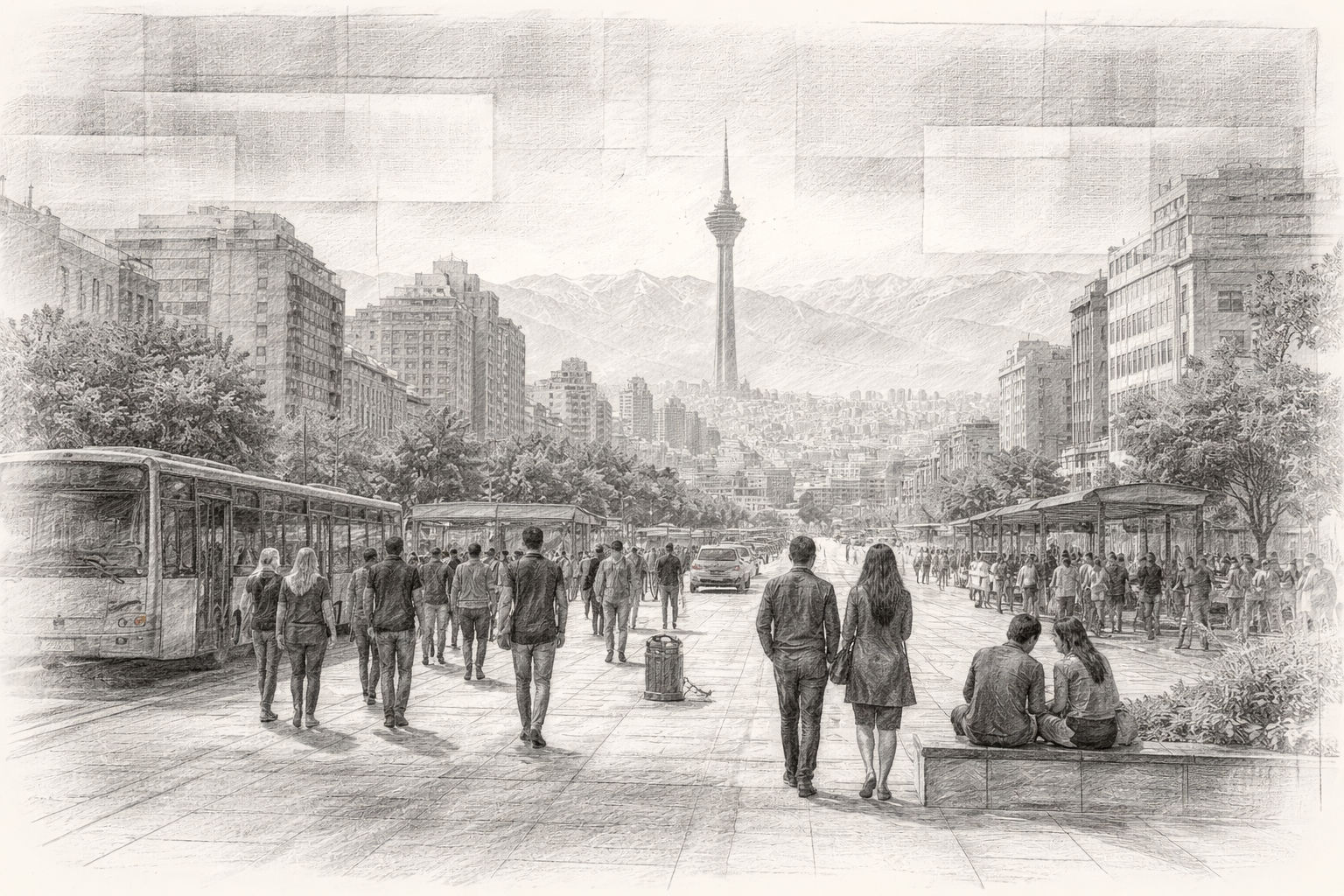
Instead of chaos, they encounter organization. Instead of improvised makeshift solutions, they encounter functioning processes. Airports, traffic, orientation - everything follows clear rules. In cities like Tehran, it quickly becomes clear that this is a metropolis of millions that does not exist in a state of emergency, but in everyday life.
This initial irritation is not an isolated case. It runs through many reports of experiences - regardless of whether the visitors are politically interested or not. It is the moment when the media image begins to crack.
Infrastructure as an unspectacular matter of course
Infrastructure is rarely spectacular. This is precisely why it is a good reality check. Because it is difficult to stage. Either it works - or it doesn't.
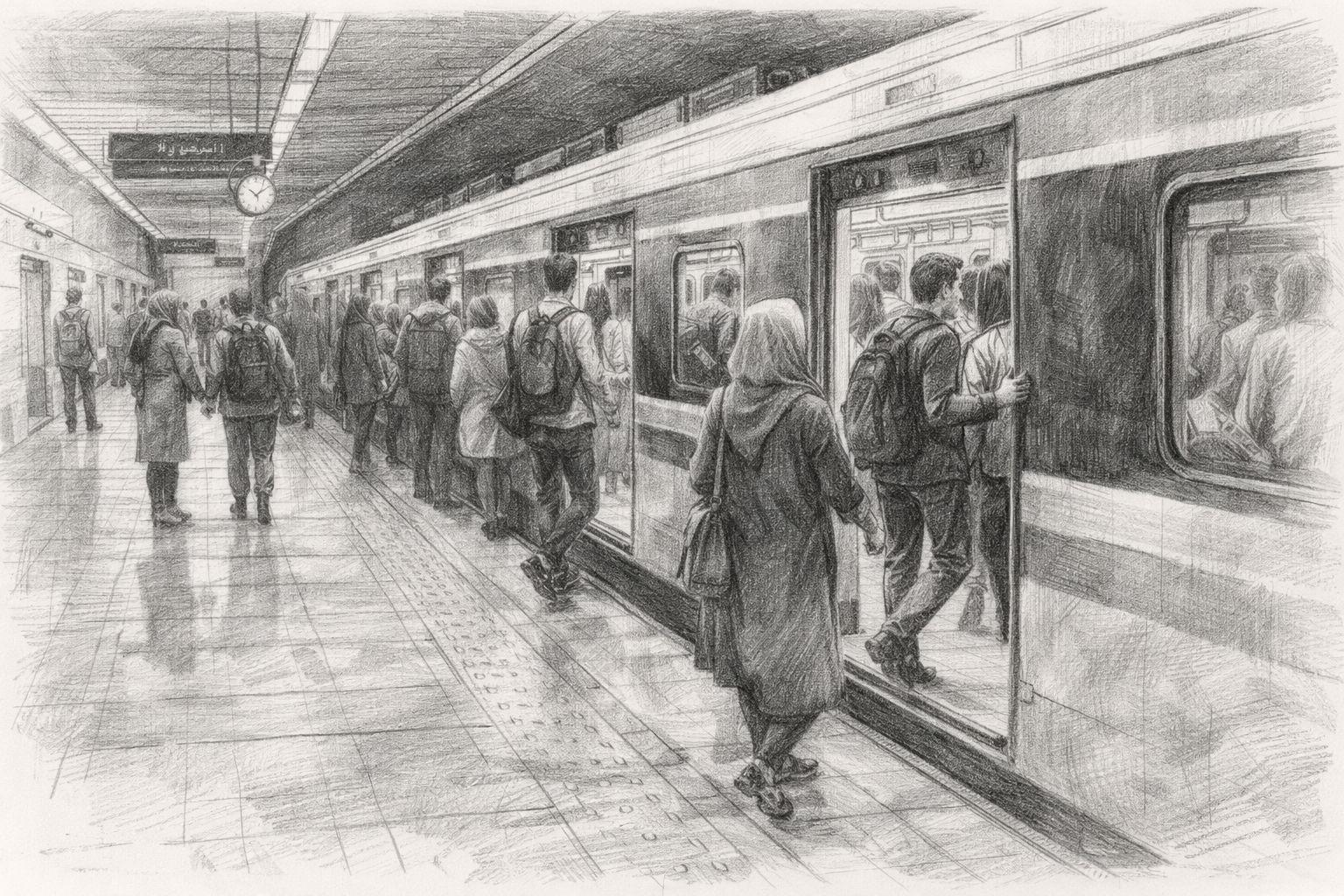
Iran has a dense transportation network, modern metro systems in large cities, long-distance buses, train connections and digital booking systems. Public transportation is clean, cheap and reliable. This comes as a surprise to many visitors - not because they were expecting a developing country, but because such a well-functioning everyday life does not fit the usual image.
This normality is also evident beyond the traffic: electricity, water, mobile communications, internet - everything is available, everything is used, everything is part of modern urban life. None of it seems provisional or makeshift. On the contrary: many things are organized efficiently because the state has learned from decades of sanctions to build robust systems.
Cities that live - not protest
Western reporting shows Iranian cities almost exclusively in exceptional situations: Demonstrations, clashes, funeral processions, police presence. What is lost is the decisive factor: the majority of urban life takes place outside of such moments.
Cafés are full, parks are busy, shopping centers are bustling. Families stroll, young people meet, students discuss. The picture is not one of an intimidated population, but of a society that has settled in - with all the contradictions that entails.
This normality is difficult to convey because it is not dramatic. It contradicts the idea of a country that is permanently on the brink of uprising. And yet it is central to understanding Iran.
Education, technology and everyday practice
Iran has been investing heavily in education for decades. Universities, technical institutes and research facilities characterize the urban centers in particular. Many young people are highly qualified, technology-savvy and internationally oriented. Software development, engineering and medicine all play a major role in everyday life in Iran.
This expertise is not only academic, but also tangible in practice. Digital payment methods, local platforms, independent solutions for logistics and communication are part of everyday life. Sanctions have not led to a standstill, but to independence. The result is a society that has learned to function within restrictions - often surprisingly efficiently.
Food, cleanliness and social order
Public space is an often underestimated indicator of social stability. Cleanliness, supply and social interaction say more about a country than political slogans.
Food is omnipresent in Iran - not as a scarcity, but as a culture. Street stalls, small snack bars and restaurants in every price range characterize the cityscape. Much of the food is fresh, regional and not very industrialized. For visitors, this is not exotic, but pleasantly familiar. And often of better quality than one would have expected.
Sanitary facilities, public facilities and transportation are also generally well maintained. This may sound banal, but it is crucial. Because it contradicts the image of a decaying system. Here, order is not the result of fear, but of habit.
Everyday life is not a political statement
One of the biggest mistakes Western observers make is to automatically interpret everyday life in political terms. Those who do not protest are seen as conformists. Those who function are considered oppressed. But it's not that simple.
For many Iranians, everyday life is not an expression of political approval - it is simply life. Work, study, family, leisure. Politics is present, but does not dominate everything. Many people make a very clear distinction between their attitude towards the government and their desire for stability. They know what they are risking - and what they could lose.
This attitude is neither cowardly nor uncritical. It is pragmatic. And it can hardly be understood without knowledge of the country's historical experience.
Why this normality is hardly ever told
Why does this image appear so rarely in Western media? Not out of malice, but for structural reasons. Normality sells poorly. It does not generate outrage or a clear moral position. It is difficult to condense and contradicts established narratives.
Moreover, it does not fit in with the need to classify political conflicts into clear categories. It is difficult to categorize a country that simultaneously has authoritarian traits and yet functions in everyday life. It forces us to differentiate - and that is precisely what many formats avoid.
A first reality check
This chapter is not intended to whitewash anything. It is merely intended to show that the common image of Iran is incomplete. If you want to understand Iran, you have to take everyday life seriously. Not as a counter-argument to criticism, but as the basis for any serious analysis.
Because a country that functions in everyday life is not an abstract construct. It is a living system. And it is precisely this system that forms the framework for everything that follows in the next chapters: Protests, conflicts, influence - but also stability, adaptation and self-logic.
An observation that doesn't fit the picture
Hardly any other name polarizes as reliably as Scott Ritter. For some, he is an uncomfortable critic of Western foreign policy, for others a figure whose positions are rejected or at least viewed with skepticism. But regardless of this assessment, one thing can hardly be denied: Ritter has been dealing with international conflicts, power structures and societies that lie beyond Western comfort zones for decades.
This is precisely why it is worthwhile not to dismiss his observations prematurely. Not because they are automatically „correct“, but because they are based on his own experience. And one's own view has become rare in reporting on Iran.
Scott Ritter is a former US officer and international arms inspector, best known for his work as a UN weapons inspector in Iraq in the 1990s. In this role, he was instrumental in the verification of Iraqi weapons of mass destruction and was one of the inspectors who pointed out early on that key claims about active weapons programs were unsubstantiated. After leaving official service, Ritter became a fierce critic of Western military interventions and the associated political communication.
Today, he mainly appears as an author, analyst and interview guest and regularly comments on geopolitical conflicts, security issues and international power structures. Regardless of how one assesses his current positions, he is regarded as someone who has been intensively involved with security policy issues and the internal dynamics of conflict regions for decades - often from a perspective that does not coincide with the Western mainstream.
A journey that irritates
In interviews, Ritter reports on stays in Iran that do not fit the image that many readers have in their heads. He describes a country with an ultra-modern infrastructure, functioning public transport systems and an everyday life that has surprisingly little to do with a state of emergency.
Subways, buses, streets - everything is organized, clean, reliable. Public spaces appear well-kept, not improvised. Even banal things like sanitary facilities, snack bars or services leave an impression that is more reminiscent of well-functioning European cities than the image of an isolated, ailing state.
He particularly remembers the food: fast food is available, yes - but less industrialized, fresher, healthier. No shortages, no emergency supplies, but everyday culture. None of it seems spectacular. And that's exactly what makes it so remarkable.
Why such observations make us suspicious
At this point, skepticism often sets in. How can a country with an Islamist government appear so „normal“? How does functioning modernity fit in with a system that is usually described as backward in the West?
This skepticism is understandable. It does not arise from malice, but from cognitive dissonance. Two images do not go together: that of the authoritarian theocracy and that of a functioning everyday society. So one of them is called into question - usually the second.
But this is precisely where it is worth pausing. Because it may not be observation that is the problem, but the simplification with which we view political systems.
City, country - two political realities
One aspect of Iranian reality that is often overlooked is the clear division between urban and rural areas. Political preferences there differ significantly - a pattern that is also familiar from Western democracies, but is rarely discussed in Iran.
In rural regions, religious authorities and conservative candidates traditionally enjoy a high level of support. Social structures are closer there, religious ties are stronger and state stability is more important than social change. In the big cities, on the other hand - such as Tehran, Isfahan or Shiraz - lifestyles are often more modern, secular and individualistic. Criticism of the government is more widespread there, even if it is not always openly articulated.
Elections in Iran reflect this division. The result often seems paradoxical from a Western perspective, but it follows an internal logic. To speak of a classic dictatorship is not enough. The system is authoritarian, yes - but it is based on real social majorities in certain regions.
Why stability is more important than ideology for many
Ritter's observations can also be read against this background. A functioning everyday life is no coincidence, but the result of political priorities. The Iranian state invests specifically in infrastructure, supply and order - not out of liberal idealism, but out of the knowledge that stability is the basis of all power.
For many people, this stability means security. Not freedom in the Western sense, but reliability. In a country with a long history of external threats and internal upheaval, this is no trivial value.
This also explains why many Iranians do not have to love their government in order to tolerate it. There is a wide range of pragmatic acceptance between approval and rejection.
Observation is not a relief
What is important is what this chapter does not do. It does not absolve any government. It does not relativize repression. It does not morally explain away any political decisions. It merely describes an observation that does not fit into the usual picture - and asks why.
Scott Ritter's Iran is not an ideal state. It is a functioning state with internal tensions, social conflicts and political borders. It is precisely this mixture that makes it difficult to grasp - and unsuitable for simple narratives.
Why such voices are rarely given space
Reports like Ritter's are uncomfortable in Western discourse. They are difficult to categorize because they neither outrage nor reassure. They contradict expectations without attacking them head-on. And they force us to differentiate between criticism of the system and everyday reality.
That is exhausting. For journalists and readers alike. But it is necessary if you want to approach Iran beyond the headlines.
This chapter is not evidence. It is a lead. One of many. It does not lead to a clear truth, but to an important realization: Iran is more contradictory, more modern and more everyday than we often perceive it to be.
And it is precisely this contradiction that forms the basis for everything that follows - in particular for the question of why protests arise, how they take place and whose interests they may affect.
Drew Binsky in Iran - Insights beyond the headlines
In this extraordinary video, American travel YouTuber Drew Binsky takes us on his trip to Iran. Binsky is one of the few content creators in the world to have traveled to every country in the world and shares his experiences in very personal, unagitated images. The embedded video is in English, with optional German subtitles via the cogwheel symbol - when the video is opened on YouTube, it starts with German translation.

Explore Iran as an American in 2025 | Drew Binsky
In the video, he documents his stay as a US citizen in Iran, showing everyday life, conversations with locals, food culture, street scenes and impressions of daily life. Instead of political analysis, the focus is on interpersonal encounters and everyday scenes - a look at what many travelers experience when they move away from the headlines. A worthwhile example of how everyday life, people and culture can be experienced in Iran.
Protest, dissatisfaction and generational conflict
Anyone who writes about Iran and conceals protests would be painting a distorted picture. Dissatisfaction exists. It is palpable, visible and, in certain phases, loud. Demonstrations, strikes, symbolic actions - all of these are part of the Iranian reality of recent years.
But the opposite is just as problematic: presenting protests as the sole reality. Western reporting tends to generalize individual events. Local or temporary protests quickly turn into the impression of a permanent uprising. This generates attention, but it distorts the view.
Protest in Iran is not a permanent state, but a recurring tension that is ignited by specific triggers - economic, social or cultural. If you want to understand it, you have to take these triggers seriously.
Economic pressure and social disruption
A key factor for dissatisfaction is the economic situation. Sanctions, inflation and restricted international trade opportunities are affecting the middle class and young people in particular. Prices are rising, prospects are shrinking and life plans are becoming more difficult to plan.
Many well-educated Iranians are unable to find work that matches their level of qualification. Others see their future abroad rather than in their own country. This brain drain is not a political buzzword, but a real problem - and a source of frustration.
However, this dissatisfaction is not automatically directed against the entire political system. It is often directed against specific grievances: corruption, nepotism, lack of transparency. The aim of many protests is not to overthrow the system, but to improve it.
The young generation and their expectations
More than half of the Iranian population is young. This generation is networked, educated and globally oriented. They are familiar with Western lifestyles, music, fashion and discourse - not just from the internet, but from their own experience. At the same time, they live in a system that sets clear boundaries.
This contradiction creates tension. Many young Iranians want more individual freedom, less moral control, more cultural freedom. These wishes are real - and they are legitimate.
But here too, desire does not equal revolution. Many young people consciously move within the existing boundaries, explore them, creatively circumvent them or ignore them in their everyday lives. Protest is one of several strategies - but not the only one.
Women between everyday life and symbolic politics
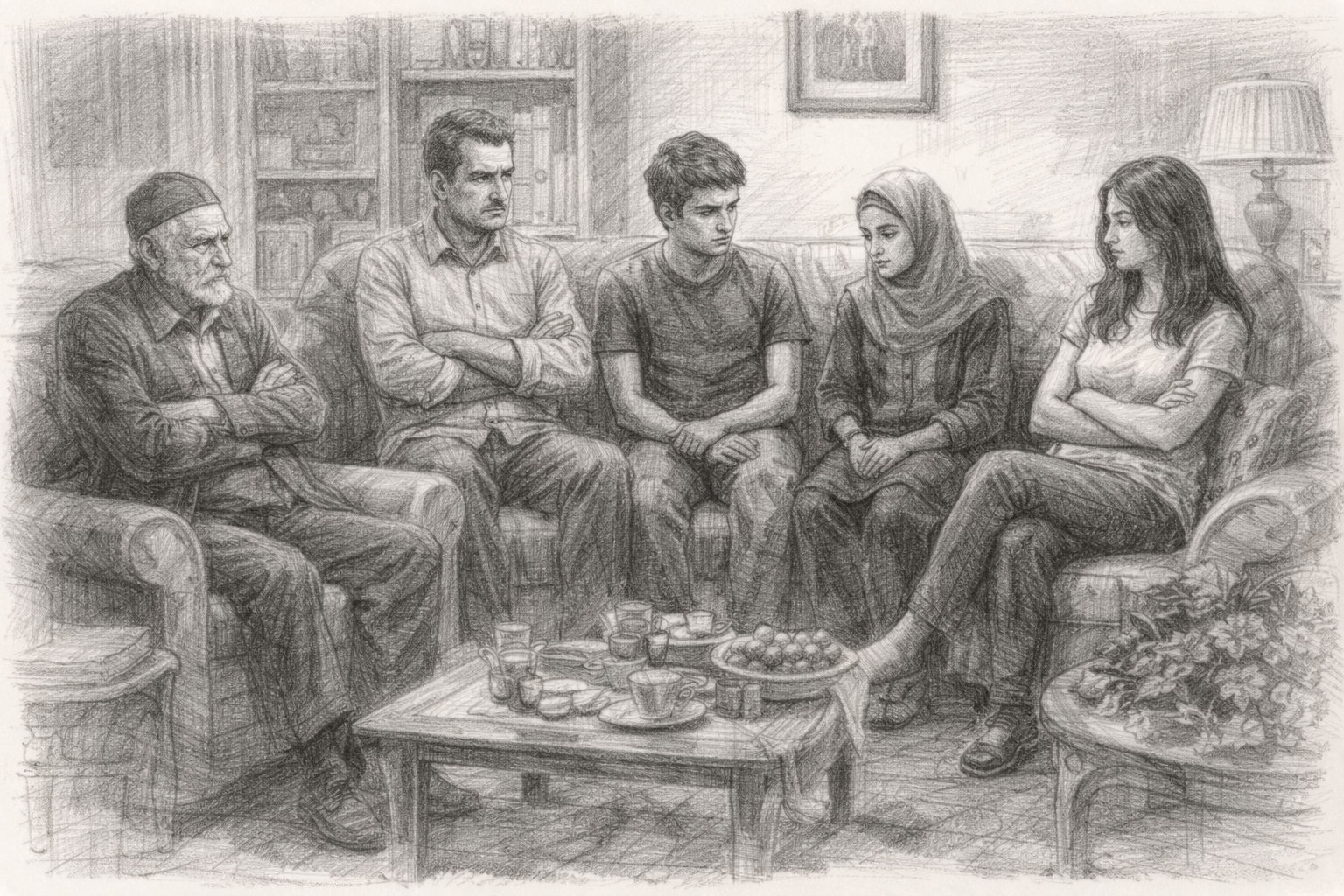
The role of women is one of the most emotional topics in Iran reporting. And rightly so: dress codes, legal restrictions and social control are real factors. Women protest against them - openly or subtly, visibly or in private.
At the same time, women are highly present in Iran: in universities, in professional life, in culture. Many of them are self-confident, assertive and socially active. This area of tension is often reduced to a single symbol in the Western media - the headscarf.
This hides a lot of reality. For many women, the conflict is more complex: it concerns not only clothing, but also self-determination, role models and social recognition. Protests are an expression of this conflict, but not a complete reflection of it.
City versus country - a familiar pattern
One crucial aspect that explains many misunderstandings is the urban-rural divide. In urban centers such as Tehran, Isfahan or Mashhad, lifestyles are more modern, criticism is louder and political expectations are higher. Protests are more frequent and more visible here.
In rural regions, on the other hand, stability, tradition and religious ties play a greater role. There, the government is often not supported out of enthusiasm, but out of conviction or pragmatism. This division shapes election results as well as social debates.
This pattern is by no means unique. It can be found in many countries - even in the West. In Iran, however, it is rarely mentioned openly, even though it is central to understanding political dynamics.
Why protest is not automatically majority opinion
A common mistake in external perception is to interpret protests as the voice of „the people“. However, protesters are only ever a part of society - often a committed, courageous, but numerically limited part.
Many Iranians observe protests with sympathy, but also with caution. They share criticism, but fear instability. The memory of regional wars, civil war states and failed overthrows is present. Order is not romanticized, but appreciated.
This attitude is often misunderstood in the West or interpreted as adaptation. In fact, it is an expression of historical experience.
State reaction: control instead of dialog
The Iranian state's response to protests is usually repressive. Security forces intervene, assemblies are broken up and the media are controlled. This increases tensions and feeds international criticism.
At the same time, the state focuses on prevention: social programs, subsidies, infrastructure investments. Repression and welfare exist side by side - a contradictory but functional instrument of power.
This dual strategy explains why protests flare up but rarely escalate. It also explains why the system remains stable despite internal tensions.
Between the desire for change and fear of stability
The central conflict in Iran is not between the government and the people, but within society. Between the desire for change and the fear of chaos. Between global openness and national sovereignty. Between individual freedom and collective order.
Protests are an expression of this conflict, not its solution. They show where there is friction - but not where the journey is heading.
This chapter is necessary in order not to whitewash the picture. Iran is not a harmonious state. It is a society caught between tradition, modernity and geopolitical pressure. But anyone who looks at these tensions in isolation only understands part of the reality. Only in combination with everyday life, infrastructure, history and external interests does a more complete picture emerge.
And it is precisely at this point that the next, most difficult track opens up: the question of who is observing, using - or possibly reinforcing - these tensions.
| Aspect | Large cities | Rural regions | Significance for politics |
|---|---|---|---|
| Lifestyle | Modern, globally oriented | Traditional, communal | Different expectations |
| Religious practice | Often private, pragmatic | More firmly anchored | Declares election results |
| Tendency to protest | Higher | Lower | Media distortion possible |
| Proximity to the state | More critical | Accepting | Stability factor |
| Media access | High | Restricted | Asymmetrical perception |
The dark trail - influence, interests and hidden levers
At this point at the latest, a question arises that only appears in passing in many analyses: Why do certain protests in Iran receive such enormous international attention, while comparable developments in other countries are barely noticed? Why do internal tensions so quickly turn into a global narrative?
This question is tricky because it can easily be misunderstood. Anyone who asks it is quickly suspected of wanting to delegitimize protests. But that is not the point. It's about standards. And about interests.
Political conflicts never exist in a vacuum. They are observed, categorized, amplified - or ignored.
And this is where the dark trail begins.
The historical shadow of foreign influence
For Iran, the idea of foreign interference is not an abstract mistrust, but is historically shaped. The collective memory goes back a long way - especially to events in which external actors intervened openly or covertly in the country's political order.
This experience still has an impact today. It shapes state action as well as social perception. Distrust of Western intentions is not an ideological construct, but the result of concrete historical experiences. Anyone who ignores this context does not understand the country's sensitivity.
This does not mean that every criticism or protest is „externally controlled“. But it does explain why the idea of exerting influence is immediately taken seriously there.
Secret services: myths and reality
Secret services have a bad reputation - and an exaggerated one at the same time. In many stories, they appear omnipotent, omniscient and omnipresent. The reality is more sober. Secret services operate with limited resources, under uncertainty, often with incomplete information.
And yet they have tools at their disposal that are not visible in the open political arena. Influence is rarely exerted directly. It works with levers: money flows, contacts, passing on information, media amplification, timing.
In the Iran debate, actors such as the CIA, Mossad or the British MI6 are repeatedly mentioned. Such evidence usually comes from Iranian sources, occasionally from Western analyses, often from indirect circumstantial evidence. Evidence in the classical sense is rarely publicly available - which is the nature of such operations.
Plausible mechanisms instead of fantasies of omnipotence
A clear separation is necessary to avoid slipping into speculation. Not everything that is conceivable is also real. But some things that are real remain invisible. Plausible mechanisms of foreign influence are well documented - not only in Iran, but worldwide. These include
- Support for political groups in exile
- Financing of media projects
- Training for activists
- Provision of technical infrastructure
- Targeted public relations work in western media
None of this means that protests are „externally controlled“. It means that existing tensions can be used, intensified or internationalized. Influence does not replace social discontent - it builds on it.
Current survey on trust in politics and the media
The role of exile
A central, often underestimated factor is Iranian exile. Many opposition voices live outside the country, especially in Europe and North America. They have access to the media, political networks and funding structures. Their perspective strongly influences the international discourse.
The exile is not a homogeneous bloc. It ranges from liberal reformers to radical opponents of the system. However, these differences are rarely visible in Western discourse. Criticism from exile is often perceived as the authentic voice of „Iran“ - even though it only reflects a part of social reality.
This shift has far-reaching consequences. It reinforces certain narratives and suppresses others. And it creates a sounding board on which external actors can dock.
Media as amplifiers, not as masterminds
A further differentiation is important: the media are usually not the masterminds in this process, but amplifiers. They pick up on topics that promise attention, that appear morally clear and that are easy to tell.
Protests in Iran fulfill these criteria. They can be emotionally illustrated, politically categorized and geopolitically charged. The fact that certain voices are heard more often than others is less a conspiracy than a structural problem.
But this structure is vulnerable. It can be used deliberately. Narratives can be set, reinforced and shifted - without the need for a direct command.
Where provability ends
At this point, any serious analysis reaches its limits. Concrete operational details are rarely publicly verifiable. Documents remain secret, sources anonymous, statements contradictory. Anyone who claims absolute certainties here is abandoning the ground of seriousness.
That is why restraint is necessary. It is legitimate to say that there are indications, clues, historical experience and plausible interests. It is not legitimate to say: that's how it was.
This openness is not a weakness, but a strength. It protects against ideologization - in both directions.
Cui bono - the old question
A classic instrument of any analysis is the question of benefit. Who benefits from instability in Iran? Who from sanctions? Who benefits from a weakened regional player?
These questions do not automatically lead to apportioning blame, but they do sharpen the focus. In a region where the balance of power is crucial, no conflict is without consequences. Iran is not just a state, but a factor - politically, militarily and economically.
It is no secret that external players want to observe and influence this dynamic. The question is not whether, but to what extent.
The dark trail as an open chapter
This chapter does not provide a resolution. It does not determine the perpetrators. It follows a trail - cautious, skeptical, open. The dark trail does not consist of certainties, but of overlaps: of interests, possibilities and historical experiences.
It shows why it would be too simplistic to view protests in Iran solely as an internal phenomenon - and equally wrong to externalize them completely.
Reality moves between these poles. And it is precisely there that Iran becomes what makes it so difficult to understand: a country whose internal conflicts always generate external resonance.
| Year | Event | Actors involved | Type of influence | Classification |
|---|---|---|---|---|
| 1979 | Overthrow of the Shah and Islamic Revolution | Domestic political actors, exile opposition | Political upheaval | Starting point of today's order |
| 1980-1988 | Iran-Iraq war | Iraq, Western and regional states | Military support for Iraq | Shaping safety thinking |
| 1990s | Sanctions regime and isolation | USA, allies | Economic pressure | Long-term structural effect |
| 2009 | Protests after presidential election | Opposition groups, exile media | Media internationalization | First major global narrative |
| 2018 | Withdrawal from the nuclear agreement | USA | Tightening of sanctions | Economic escalation |
| 2022-2023 | Waves of protest and international campaigns | Activist networks, media, governments | Political-media influence | Strong narrative effects |
A country at the crossroads of interests
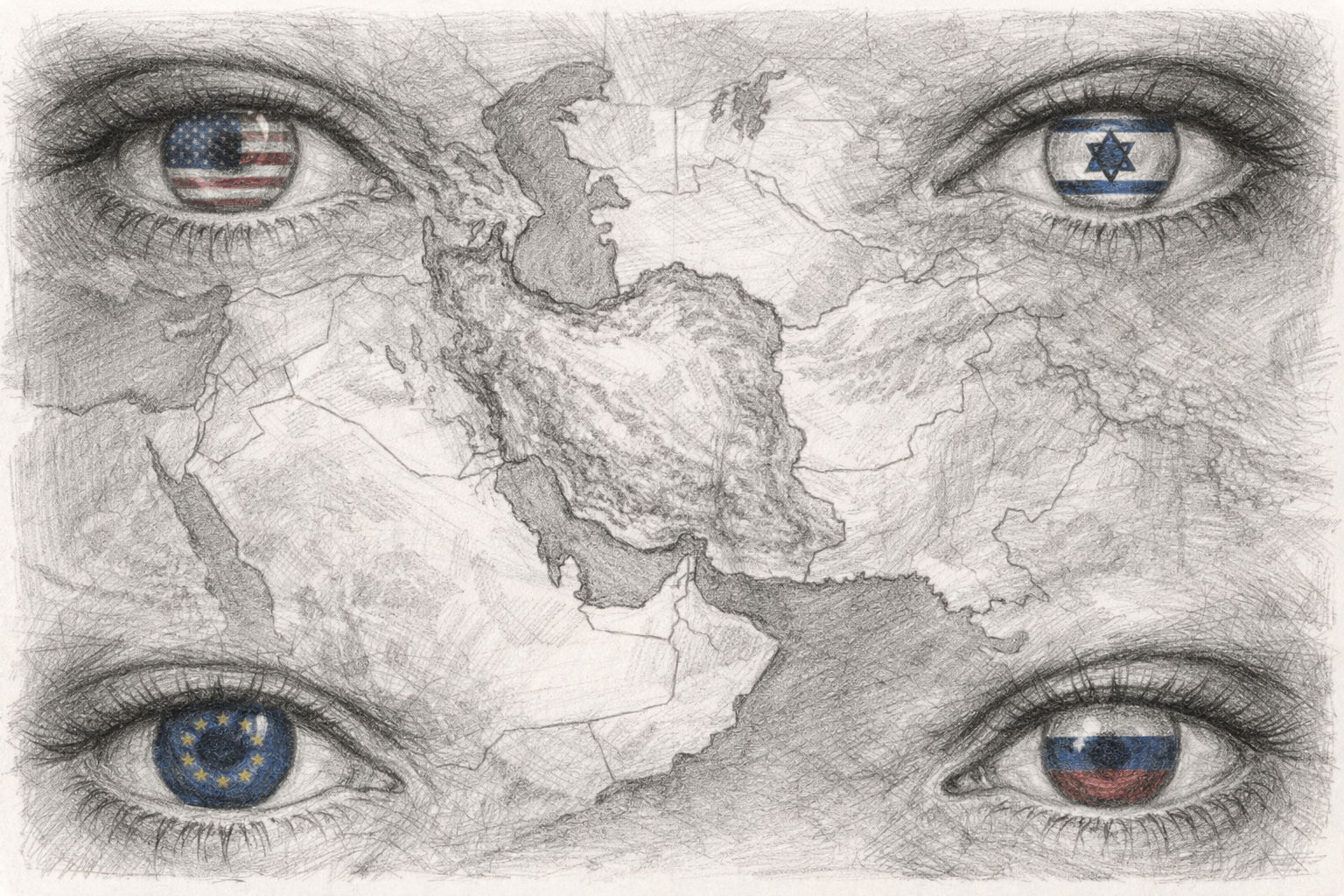
Iran is not an isolated state on the fringes of world politics. It is located at one of the most sensitive geopolitical junctions of all. Anyone looking at Iran inevitably looks at trade routes, energy flows, military zones of influence and historical rivalries.
Its location on the Persian Gulf and in the immediate vicinity of the Strait of Hormuz alone makes the country strategically important. A significant proportion of the global oil trade passes through this corridor. Stability or instability in Iran therefore never only has a regional impact.
This geographical reality explains why Iran has been the focus of international attention for decades - regardless of how its domestic politics develop.
Iran as a regional power factor
Iran does not see itself primarily as a Western-style nation state, but rather as a regional power. This self-perception is based on history, culture and political experience. It explains why Tehran is present in neighboring regions - politically, militarily or ideologically.
For many Western observers, this stance appears expansive or destabilizing. From an Iranian perspective, on the other hand, it appears defensive: as a safeguard against encirclement, sanctions and military pressure.
There is no misunderstanding between these interpretations, but rather a classic conflict of interests. And this conflict shapes almost every foreign policy assessment of Iran.
Israel, security and existential narratives
Few relationships are as charged as the one between Iran and Israel. Two mutually exclusive security narratives collide here. For Israel, Iran represents an existential threat - both ideologically and militarily. For Iran, on the other hand, Israel is part of a Western-dominated power structure that limits its regional autonomy.
This constellation explains the harshness of the rhetoric on both sides. It also explains why every domestic political movement in Iran is immediately interpreted in geopolitical terms. A weakened Iran would shift the regional balance of power - a stable Iran would keep it in equilibrium.
It is no surprise that intelligence services, the military and strategists are constantly monitoring this area of tension; it is the norm in international politics.
The USA and the long memory
Iran's relationship with the United States is characterized by mistrust and historical ruptures. Over the decades, sanctions, threats and diplomatic ice ages have created a dynamic in which any rapprochement remains fragile.
For the USA, Iran is less a country than a factor: in energy policy, in the security architecture of the Middle East, in relations with allies. Domestic political developments in Iran are therefore always viewed through a strategic lens.
This perspective reduces complexity. It asks less about social reality and more about geopolitical impact. Protests thus quickly become proxies for larger issues of power.
Game theory, Trump and the Iranian nuclear program
Another interesting perspective on the conflict over Iran comes from the field of game theory, as presented by Christian Rieck in a detailed YouTube video. This analysis examines how political actors make strategic decisions when conflicting interests clash - for example, in the case of Iran's nuclear program and American policy under President Donald Trump. Rieck uses game theory to examine how pressure, „maximum pressure“ strategies and possible military options interact with each other to influence or block the development of nuclear capabilities.

Iran's nuclear program destroyed - President Trump's strategy | Prof. Dr. Christian Rieck
This approach does not simply attempt to evaluate political decisions as good or bad, but to read them as strategic moves in a complex international game - with mutual expectations, threats and possible retreats for both sides. The video thus offers an analytical supplement to journalistic and historical observations of the Iranian nuclear program, as discussed in discussions about current sanctions and military operations.
Europe between morality and dependence
Europe - and therefore also the European Union - plays an ambivalent role. On the one hand, there is the claim to defend human rights standards. On the other hand, there are economic and security policy interests that would require cooperation.
This tension leads to a policy of half-steps: criticism without consequence, dialog without breakthrough. Iran is addressed morally, but is rarely really involved strategically. This reinforces the feeling of mutual insincerity.
For Iran, this behavior confirms the assumption that European positions are ultimately overridden by transatlantic interests. This does not build trust.
Energy, sanctions and structural constraints
Energy policy is an often underestimated driver of geopolitical tensions. Iran has enormous oil and gas reserves. At the same time, it is largely cut off from the international market by sanctions.
This situation creates paradoxical effects. On the one hand, sanctions weaken the economy. On the other hand, they force self-sufficiency, regional networking and the strategic search for partners outside Western structures.
As a result, Iran is less isolated than often assumed - but it is networked differently. This networking changes global axes of power and at the same time makes the country more unpredictable for Western players.
Domestic policy as a projection surface
Against this background, it becomes understandable why domestic political conflicts in Iran are rarely seen for what they are: An expression of social conflict. Instead, they become a projection screen for geopolitical expectations.
A protest is then no longer assessed solely in terms of what it achieves in Iran, but also what it could mean for regional power relations. This superimposition distorts the view - both outwards and inwards.
For many Iranians, this gives the impression that their country is perceived less as a society than as a playing field.
Why Iran must never be „normal“
An uncomfortable thought comes to mind: Iran fits poorly into a world order that prefers clear-cut classifications. It is neither a clear ally nor a clear opponent. It is both modern and traditional, stable and conflict-ridden, integrated and isolated at the same time.
This ambivalence makes it difficult to handle. And it explains why Iran is rarely treated as a normal country. Normality would mean recognition - and thus a loss of influence for other actors.
This chapter shows why any analysis of Iran remains incomplete if it is limited to domestic politics. Iran is part of a larger game - not as a victim, not as a mastermind, but as an actor with its own interests and limited options.
If you want to understand Iran, you have to think about these levels together. Social tensions, protests, state reactions - all of this only unfolds its significance in a geopolitical context.
And that is precisely why the path now leads to the final step: the question of what we can derive from all this - and what we cannot.
The uncomfortable realization and why simple answers don't help
At the end of every long analysis there is usually one expectation: a clear answer. Who is right? Who is wrong? Who is to blame? But the deeper you delve into Iran, the clearer it becomes that this clarity is precisely the problem.
Iran defies simple interpretations. Not because it is particularly mysterious, but because it is contradictory - like many societies that are under pressure. Political systems, social realities, historical experiences and external interests overlap. Anyone who tries to form a clear story from this inevitably loses parts of reality.
This realization is uncomfortable. Because it requires us to give up certainties.
Neither demon nor ideal
Iran is neither the sinister distorted picture that some headlines paint, nor a misunderstood victim with no responsibility of its own. It is a state with authoritarian structures and real restrictions. At the same time, it is a society with a functioning everyday life, internal diversity and pragmatic arrangements.
Both exist at the same time. And it is precisely this simultaneity that is often not tolerated in public discourse. Criticism is either morally exaggerated or reflexively relativized. Understanding is confused with justification, skepticism with partisanship.
But understanding does not mean approving. And criticism does not lose its sharpness if it is formulated in a differentiated way.
The limits of moral narratives
Moral narratives have a powerful effect. They structure perception, create orientation and mobilize indignation. But they also have a limit: they simplify.
In the case of Iran, this simplification leads to political processes being personalized, social tensions being homogenized and external interests being ignored. The result is a picture that may be emotionally convincing, but explains little analytically.
Anyone who takes a serious look at Iran must leave this moral comfort zone. This does not mean abandoning values. It means not using them as a substitute for analysis.
Media literacy as a political responsibility
A central finding of this text does not concern Iran, but us. The way we talk about other countries says a lot about our own habits of thought. About our willingness to accept ambivalence. About our patience with complexity.
Media provide offers. They set priorities, choose images and formulate interpretations. But readers are responsible for how they accept these offers. If you take every headline as the whole truth, you delegate thinking. If you only read what confirms your own attitude, you narrow your view.
This responsibility is particularly crucial when it comes to geopolitically charged topics. After all, words shape reality - at least our perception of it.
What remains when you take a closer look
So what remains when you look at Iran beyond the headlines?
It remains a country with internal tensions, but also with remarkable stability. A society that balances between adaptation and change. A political system that is authoritarian, but not arbitrary. And a geopolitical player that not only reacts, but also pursues its own interests.
Above all, however, the realization remains that reality rarely lies where it is claimed the loudest.
No easy conclusions - but better questions
This text does not provide instructions for action. It does not say what you „should“ think. It merely calls on us to take a closer look. To ask questions instead of assuming answers. To endure contradictions instead of resolving them.
Perhaps that is the most important point: political maturity is not shown in clear judgments, but in the ability to accept uncertainty.
Iran will remain an issue in the future. Protests will come and go. The media will report, comment and escalate. Interests will take effect - openly or covertly. All of this is part of a reality that cannot be resolved. What can change is how we deal with it.
Those who are prepared to break away from simple narratives do not gain a moral advantage. But they will gain something else: a clearer view.
And sometimes that is exactly the maximum you can achieve.

Older news on the topic
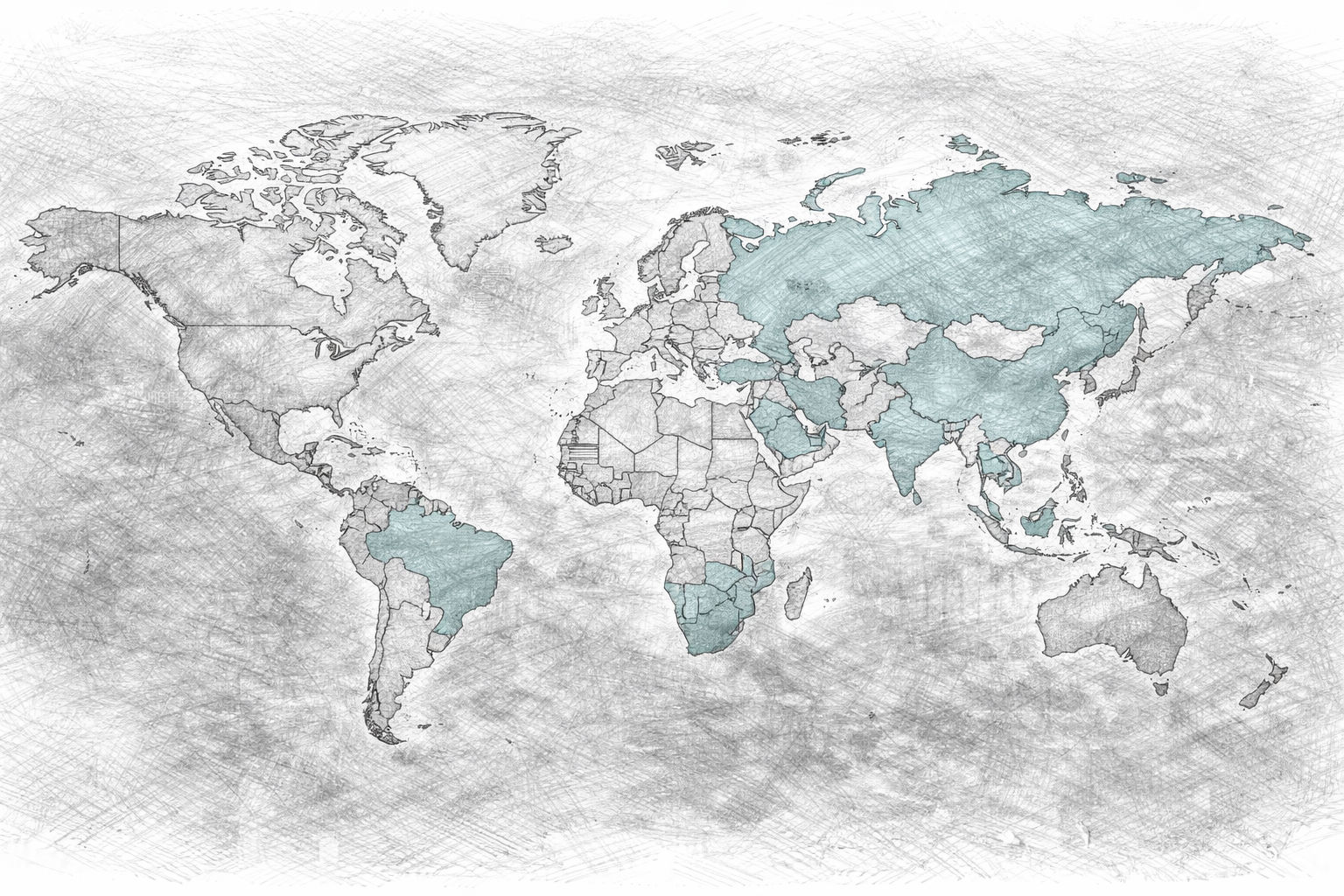
26.02.2026The situation in the Middle East is escalating dramatically. The USA is deploying additional warships, aircraft and soldiers to the region, while Iran is repairing its missile factories, reinforcing air defense positions and continuing to harshly suppress protests. At the same time, a final diplomatic solution is being sought in Geneva: A „nuclear deal 2.0“ is intended to once again limit Iran's nuclear program and ease sanctions in return. However, the ultimatum set by Donald Trump expires in a few days - and Washington is signaling that military intervention is on the cards if no agreement is reached. At the same time, Russia and China are demonstrating political support with joint naval exercises off the Iranian coast. Several countries are now explicitly warning their citizens against traveling to Iran - a sign of the growing threat of war.

War with the USA? This is how Iran is preparing THE TIME
18.02.2026After a second round of indirect talks between the US and Iran over its nuclear program, US media report that the negotiations are at an impasse and an American attack is becoming increasingly likely. The Frankfurter Rundschau quotes insiders as saying that the US military leadership is apparently preparing for a large-scale operation that could last several weeks and would differ significantly from previous limited operations. According to the report, Israel could also be involved. Iranian representatives continue to emphasize a willingness to talk about the nuclear program, but concrete agreements have yet to be reached, while diplomatic options appear to be dwindling.
12.02.2026: Following a meeting with Israeli Prime Minister Benjamin Netanyahu, US President Donald Trump has reaffirmed that negotiations with Iran on a possible nuclear deal will continue. Nuclear agreement continued should be made. Trump wrote on his platform that he had „insisted“ on finding out whether a deal was possible and emphasized that he preferred negotiations to military action. Netanyahu had repeatedly urged that the talks should not be limited to the nuclear program, but should also include Iran's ballistic missiles and support for militias such as Hamas and Hezbollah.
05.02.2026How the Handelsblatt reports, A new diplomatic initiative is emerging in the nuclear dispute between the USA and Iran. Tehran has announced its intention to hold talks with the United States in Oman on Friday, with the Omani capital Muscat as a possible venue. According to Iranian sources, the nuclear talks are due to begin at around 10 a.m. local time, while Washington has signaled its willingness to hold talks, but has left final confirmation open for the time being. The negotiations are taking place against a backdrop of growing tensions, as US President Donald Trump has recently exerted both military pressure on Iran and at the same time expressed hopes for a diplomatic solution. Observers once again see Oman as a neutral mediator between the two states. Handelsblatt is following the developments on the linked page with a continuous live ticker that chronologically documents the events, reactions and diplomatic steps.
29.01.2026: The European Union has New sanctions against Iran and, among other things, officially classified the paramilitary Islamic Revolutionary Guard Corps (IRGC) as a terrorist organization. The EU thus joins a number of Western states that have criticized the role of the Revolutionary Guard for its involvement in the brutal suppression of protests and human rights violations. At the same time, other Iranian officials and organizations have been subjected to punitive measures, including entry bans and asset freezes. The decision was taken after internal wrangling in Brussels and marks a tougher political stance against Tehran. Iran described the move as provocative and announced possible countermeasures, such as the classification of European armed forces as „terrorists“. The sanctions are part of a series of international pressure measures in the context of the ongoing political crisis in Iran. Friedrich Merz said that he expected the current regime to come to an end soon, whereupon Iran could German ambassador summoned has.
29.01.2026US President Donald Trump has, according to a Report in the Handelsblatt once again stepped up his rhetoric in the dispute with Iran and did not rule out military consequences. Trump called on Tehran to come to the negotiating table quickly and to renounce any ability to develop nuclear weapons - otherwise there would be a threat of a harsher military strike than in previous attacks on Iranian nuclear facilities.
According to the news agency dpa, Trump also emphasized that an „armada“ of warships, led by the US aircraft carrier USS Abraham Lincoln, is heading to the region to exert pressure. Iran's leadership rejected Trump's demands and stressed that the nuclear program was primarily for civilian purposes. Tensions over nuclear and security issues remain high.

Frequently asked questions about Iran
- Why does the image of Iran in the Western media appear so closed and unambiguous?
Because certain terms, images and patterns of interpretation have become entrenched over the years. The media work with repetition and consolidation. This creates orientation, but also means that deviations from the established narrative are hardly noticed. Complexity is reduced, not out of malicious intent, but for structural reasons. - Does differentiation automatically mean that problems in Iran are relativized?
No. Differentiation does not mean trivialization. It means looking at problems in the right context. Criticism remains possible and necessary, but loses its sharpness if it is generalized. Those who differentiate criticize more precisely - not weaker. - How can an authoritarian system have a functioning everyday life at the same time?
Authoritarian structures do not preclude a functioning infrastructure. Many states consciously focus on stability, order and supply in order to ensure social acceptance. Everyday life and political freedom are not automatically linked. - Are the positive everyday observations not just isolated cases or anecdotes?
Yes, they are observations - not statistical evidence. But precisely because they contradict the dominant picture, they are relevant. They show that reality is more complex than is often portrayed and that sweeping judgments are problematic. - Why is the everyday life of people in Iran so rarely discussed?
Because everyday life generates little attention. The media prefer to report on conflicts, protests and escalations. Functioning normality is not considered newsworthy, even though it is central to understanding a country. - How real is the dissatisfaction in Iranian society?
It is real and diverse. Economic pressure, social inequality, cultural restrictions and generational conflicts create tensions. However, this dissatisfaction is not automatically directed against the entire political system. - Why is protest often interpreted as the voice of the people as a whole?
Because protest is visible, emotional and easy to exploit in the media. It is often overlooked that protesters only ever represent a part of society. Silent majorities are more difficult to categorize, but are no less politically relevant. - What role does the generational conflict play in Iran?
A central one. Young people are globally networked, well educated and have different expectations of freedom and self-determination than older generations. This conflict strongly influences everyday life, forms of protest and social debates. - Why are election results in Iran often seen as proof of a dictatorship?
Because the political system does not correspond to Western democracies. It is often overlooked that there are real social majorities, especially outside the big cities. Authoritarian elements and social consent exist simultaneously. - What is the significance of the urban-rural divide?
It is decisive. Cities are more critical, modern and politically diverse. Rural regions often place greater value on stability, tradition and religious order. This division shapes politics, elections and protest dynamics. - Is foreign influence in Iran just a conspiracy narrative?
No, influence is historically proven and geopolitically common. At the same time, this does not mean that every protest movement is controlled. Serious analysis distinguishes between proven facts, plausible mechanisms and unsubstantiated claims. - Why is it so difficult to provide evidence of secret service activities?
Because such activities are by definition covert. Public evidence is rare. Therefore, caution is required. Indications and clues can be discussed, but absolute certainties are dubious. - What role do exile groups play in the international discourse on Iran?
A big one. Exile groups have access to Western media and political networks. Their perspectives have a strong influence on the discourse, but do not necessarily reflect the breadth of society in Iran. - Are the media part of a targeted influence campaign?
Usually not active. The media tend to act as an amplifier. They pick up on topics that emotionalize, appear morally clear and generate attention. However, this logic can be used by other actors. - Why is Iran so important geopolitically?
Through its location, its energy resources and its regional role. Developments in Iran affect trade routes, security architectures and power relations in the Middle East - and therefore global interests. - Why is Iran rarely considered a „normal“ country?
Because he cannot be clearly categorized. It is neither a clear ally nor a simple opponent. This ambivalence disrupts fixed ideas of order and makes a differentiated view necessary - but uncomfortable. - What is the biggest mistake in the Iran debate?
The belief that there are simple explanations. Those who judge only morally or think only strategically overlook essential parts of reality. Iran cannot be grasped one-dimensionally. - What should the reader take away from this article?
No ready-made opinions, but better questions. The willingness to endure contradictions, to examine sources critically and not to be satisfied with simple narratives. - Why is differentiation more important today than ever before?
Because political communication is becoming increasingly polarized. Differentiation is not a sign of weakness, but of maturity. It protects against manipulation - and against hasty judgments.