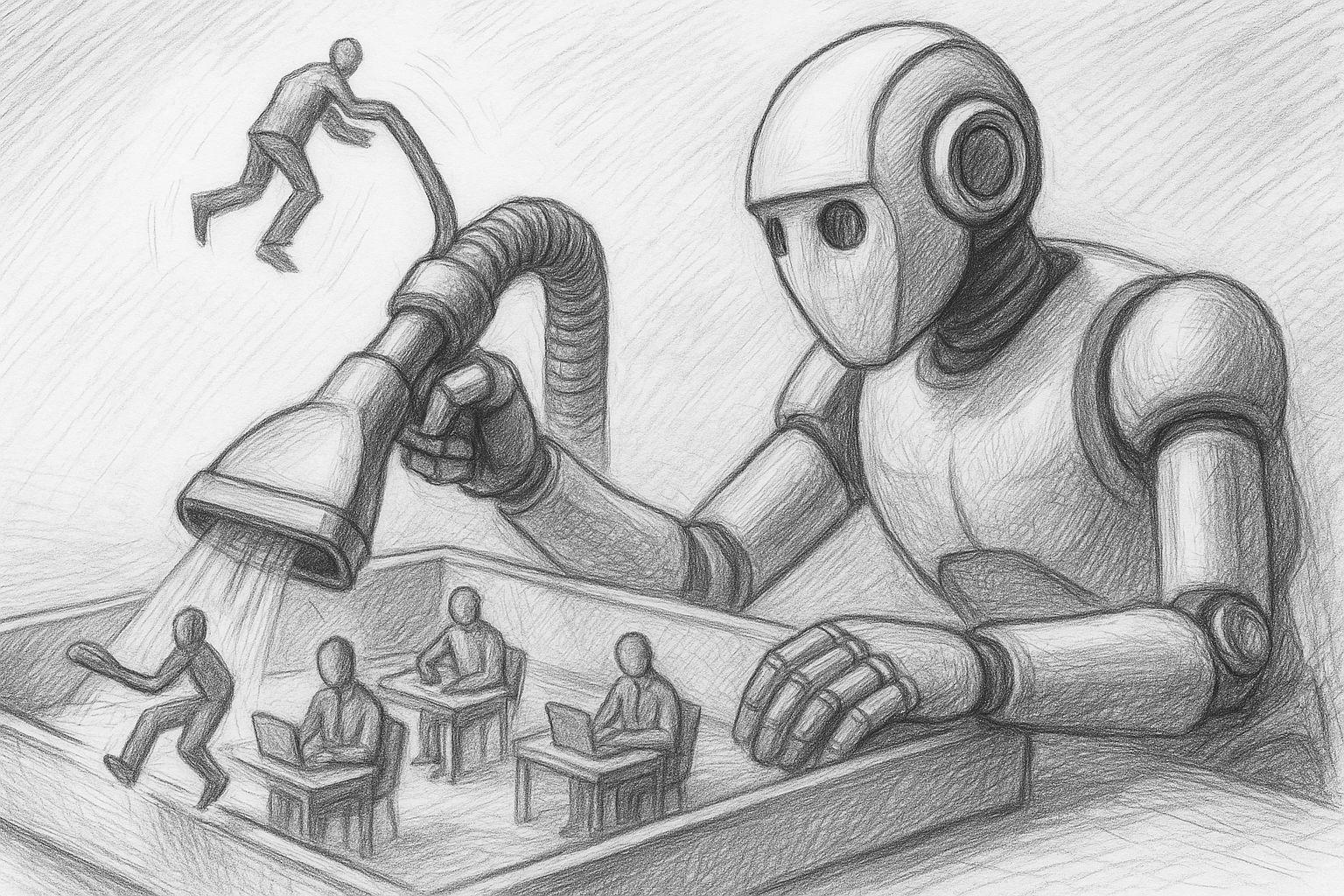
Looking back, it all started for me in 2007 with a business model that was surprisingly stable. I was selling refurbished Apple hardware and had a direct contact with Apple. More specifically, someone who was in charge of the refurbished department at the time. It wasn't an anonymous relationship, but a working relationship with clear agreements. The goods were in demand, the prices were realistic and the margins were solid - measured against what was to come later.
This model had a decisive advantage: it was flexible. The goods were cheaper to buy, the target group was price-sensitive but appreciative, and expectations were clear. Nobody expected high gloss, but function. This is often the healthiest phase for an entrepreneur: manageable costs, clear processes, few illusions.



The next step: The idea of a „real“ Apple store
As is so often the case, the turning point did not come from a crisis, but from an impulse to move forward. A business partner came up with the idea of making the whole thing more professional - with its own store in Oldenburg, a clear brand and a stronger presence. An official Apple store. No longer a side project, but a visible company.
It sounded logical at the time. Apple was growing strongly, the brand had traction, and a brick-and-mortar store conveyed reliability, consistency and a future. We decided to go down this path - with everything that entailed. Remodeling, structure, processes, commitments. And finally the status of Apple Premium Reseller. From that moment on, the game changed fundamentally.
Apple Premium Reseller: More shine, less substance
What many outsiders don't know - and what you only understand when you're in it yourself: The margins as a Apple premium reseller were significantly worse than before with refurbished goods. Significantly worse. The status brought visibility, but also constraints. No more refurbished goods. Fixed price structures. Tight specifications. High costs. And at the same time, margins that left hardly any room for maneuver. The business became more professional - but not more robust.
Looking back, this is a classic constellation: you swap entrepreneurial freedom for brand prestige. You gain image - and lose scope.
As long as everything is running smoothly, this is not noticeable. Only when external factors intervene does it become apparent how thin the air has actually become.
eBay as a sales pillar - and the underestimated dependency
Online trading, especially via eBay, ran parallel to the retail business. That was completely normal at the time. eBay was not a marginal channel, but a mainstay of sales. The items were well listed and sales were stable. The system was known, predictable and worked.
Until August 2008, when eBay changed its entire listing system. Away from the chronological display, towards the so-called „most popular items“. At the same time, star ratings were introduced - extremely strict right from the start. Delays in delivery, especially for accessories, immediately led to poorer ratings. And poor ratings meant poorer visibility.
The decisive factor: This change came suddenly within a few months and was unforeseeable. Sales plummeted within a short space of time - by around 60 percent. Not a slow decline, but an abrupt cut. A functioning sales channel lost its viability practically overnight.
The creeping structural break
At this point, something began that you can hardly grasp at the moment. On the outside, everything still looked „normal“:
- The store was there.
- The brand stood.
- The customers came - just far fewer of them.
Internally, however, the ratios shifted. Fixed costs remained constant, turnover fell. Scope became narrower. Decisions had to be made more quickly, often under pressure. And this is precisely where it becomes clear how dangerous a business model based on several external systems can be: Manufacturer, platform, bank.
Nothing had been decided yet. It was still believed that countermeasures could be taken. But the foundation had already been damaged. And that is often the real beginning of the end:
Not the big bang, but the moment when a previously stable system loses its elasticity.
Current survey on digitalization in everyday life
The pressure is growing: when you have your back to the wall every day
There is a phase in which, as an entrepreneur, you no longer shape things, but only react. In the beginning, you think a slump in sales is a dent that you can straighten out with more effort and a few clever measures. You extend your opening days, sharpen your product range, look for additional channels, negotiate harder, optimize processes. That's the normal reflex: you tighten the reins.
But at some point the situation changes. Then it's no longer about optimization, but about damage limitation. The mind is no longer in build-up mode, but in fire-fighting mode. You no longer think in months, but in days. And often only in hours.
That was exactly the feeling during this time: a permanent pressure that hardly lets up.
Everyday life before insolvency: demands, threats, escalations
When a business starts to stumble, voices that were hardly noticeable before suddenly come into play. Suppliers get in touch more frequently. Customers become more nervous. And people who used to be relaxed suddenly become tough. Not necessarily because they are bad - but because they themselves no longer feel secure.
For me, this was particularly evident in these situations, which you never forget because they seem so absurd: an employee called me from the store. A customer was there, supposedly from Flensburg, and demanded his money „immediately“. Otherwise he would „call someone“. Such sentences are psychologically effective because they create a kind of threat without being specific. And because you are already at your limit at that moment, it hits you twice as hard.
This is one of the invisible burdens in crises: You're not just carrying numbers, you're also carrying other people's emotions - unfiltered. Everyone has their own problem, everyone wants a solution, everyone wants to be first. And you are the point where it all comes together.
The most dangerous reflex: „I have to save this somehow“
In a situation like this, a reflex arises that is human, but risky: you want to save it somehow. You don't want to disappoint anyone, you want to keep the wheel turning, you want to gain time. And that's exactly where many people make mistakes that really hurt later, either legally or financially.
Because in the final phase, every measure is no longer „entrepreneurial fighting spirit“, but sometimes simply an overstepping of boundaries. Not out of criminal intent, but because you try to please everyone for too long. And because you hope that the next week will be better. This is a key point that the article should later state calmly and clearly:
If it is foreseeable that the system will collapse, what is needed is not more actionism, but order.
Filing for insolvency - and why it's not just an end
When it became clear to me that things couldn't go on like this, I filed for insolvency myself. I remember that day very clearly. I drove to the local court by car. I had the envelope in my hand and, like many people, it was a moment of mixed emotions: Shame, fear, anger, sadness - all mixed together. After all, you haven't „given up“, you've simply lost to a combination of circumstances that you couldn't control.
Another reason why I filed for insolvency myself was the statutory filing deadline, which is intended to prevent insolvency being filed „too late“ and thus being accused of delaying insolvency. According to German law:
As soon as insolvency or over-indebtedness has occurred, an application for insolvency must be filed without culpable delay, but at the latest within around three weeks of the occurrence of insolvency, and within six weeks in the case of over-indebtedness. If this deadline is exceeded or there is a delay, this can be considered a delay in filing for insolvency and result in consequences under criminal and liability law (§ Section 15a of the Insolvency Code - InsO).
I was aware of this deadline and it was important to me: I didn't want to get into a situation where I would be accused afterwards of having recognized the time and then waited too long. Acting properly, in good time and without hesitation was a clear step for me - not only professionally, but also in human and legal terms.
Then something unexpected happened: on the way back, I suddenly felt liberated. Not euphoric. Not „everything is fine“. But liberated in the sense of: The permanent alarm sound in my head was gone for a moment. It was as if someone had taken off a heavy rucksack. The pressure wasn't gone - but it was no longer just my pressure. From that moment on, it was no longer about improvisation, but about procedures, rules and order.
And that is precisely why insolvency - if it is done properly and on time - is not the downfall for many, but the beginning of stabilization.
The most important mental step: end the fight before it damages you
This is the most difficult part for many: you have to accept internally that the rescue project is over. Not because you are weak, but because you are taking responsibility.
- The field is cleared in an orderly fashion.
- You don't let everything burn.
- You stick to the facts.
- Deadlines are adhered to.
- It is documented.
Decisions are no longer made out of hope, but out of a sense of duty to what is right. That's a difference that outsiders often don't understand. But it will later decide whether you are „only“ insolvent - or whether you will also be in trouble for years to come.

The reality after registration: order in chaos
Many people imagine this part to be like a scene from a bad movie: Door open, everything emptied, humiliation, neighbors watching.
In reality, it can be quite different - at least that's how it was for me. A bailiff came, and he was remarkably friendly. No appearances, no fuss. He looked at the matter and made it very clear what he was concerned with: business assets and business items. Privately, he simply didn't care about many things. Even things that make you think „that looks expensive“ - such as a large television - were not an issue. He would say: "That's not going anywhere. He was interested in company things, not his private life.
This is an important message for readers who are afraid of this moment: Not every step in the process is an attack. Much of it is routine - and often surprisingly human.
The insolvency administrator takes over - with great relief effect
Shortly afterwards, the insolvency administrator takes over. And yes: these are often people who manage many proceedings in parallel. This doesn't always seem like „tailor-made help“, but more like a standardized process.
But this is precisely where the pressure is taken off. Because from this moment on, you are no longer the bruiser for all claims. The administrator is the official interface. And that means you no longer have to explain, discuss, negotiate and reassure every day. You no longer have to play the role of the human lightning rod. You can fall back on a phrase that is unfamiliar at first, but incredibly effective:
„Please contact the insolvency administrator.“
This feels hard at first, because as an entrepreneur you are used to being responsible. But at this stage, it's the right thing to do - and it protects you. It protects you from false promises, from emotional arguments and from actions that could later be held against you.
Calm after the storm: why the procedure can feel like „purging“
Perhaps the most surprising effect was that it became quieter. Not immediately beautiful - but calm.
- BeforeConstant calls, demands, pressure, panic, escalations.
- AfterwardsRules, processes, responsibilities.
You shouldn't romanticize it. Insolvency remains a tough experience. But it can - especially if you do it cleanly and in good time - create something that was previously completely lost: structure. And structure is worth its weight in gold in a crisis. Because structure takes the power out of chaos.
Costs that many overestimate - and why you don't freeze in the face of „huge sums“
Many people have vague ideas that everything will immediately become unaffordable: Court, administrator, enforcement, fees. Yet some items are surprisingly manageable - at least in relation to the pressure previously experienced. In my case, the bailiff cost around 100 or 150 euros a year. And the decisive factor is not even the figure, but the principle: these steps are often less „financial horror“ than organizational routine.
Of course, this does not mean that the procedure as a whole is „cheap“ or has no consequences. But it is important to understand the acute anxiety: The biggest burden at the beginning is often psychological - not the individual fee notice.
When you no longer have to fight, but can think again
This is the point that many readers will find particularly valuable later on: After signing up, I was able to think more clearly again. Not because everything was solved, but because the constant fire was gone.
Insolvency is not just an end, but also a radical cut that sorts things out. It automatically purges. It forces you to put things in order. And it can - if you go along with it inwardly - be the beginning of a new, much more stable phase of life.

Insolvency for the self-employed and freelancers: What should I bear in mind? | Debt counseling
In court after insolvency: when it happens and what is negotiated there
Not every insolvency automatically leads to court. In many cases, proceedings are purely administrative: insolvency administrator, creditors, liquidation, discharge of residual debt. Criminal or court proceedings usually only come into play when certain suspicious facts need to be investigated. Typical triggers are, for example
- Suspicion of delay in filing for insolvency
- unresolved incoming payments shortly before registration
- Allegations from creditors that money has been „embezzled“
- Uncertainties regarding advance payments or deliveries
- contradictory bookkeeping or missing documents
It is important to note that a procedure does not mean that misconduct has already been established. Initially, it only means that an investigation is being carried out. Especially with more complex business models - online trading, platform sales, payment service providers - this check is almost standard today.
What is actually examined in court
Such proceedings are less about emotions than about procedures. The court is interested in structures, deadlines and traceability. Typical questions are:
- When was it objectively recognizable that insolvency was imminent?
- What measures have been taken since then?
- Were advance payments still accepted?
- Were individual creditors given preferential treatment?
- Is there complete documentation?
That sounds dry - and that's exactly what it is. Courts are not looking for a moral assessment, but clean processes. Those who change early, work transparently and do not conceal anything have a solid starting position here.
Public hearings: An unfamiliar but sober situation
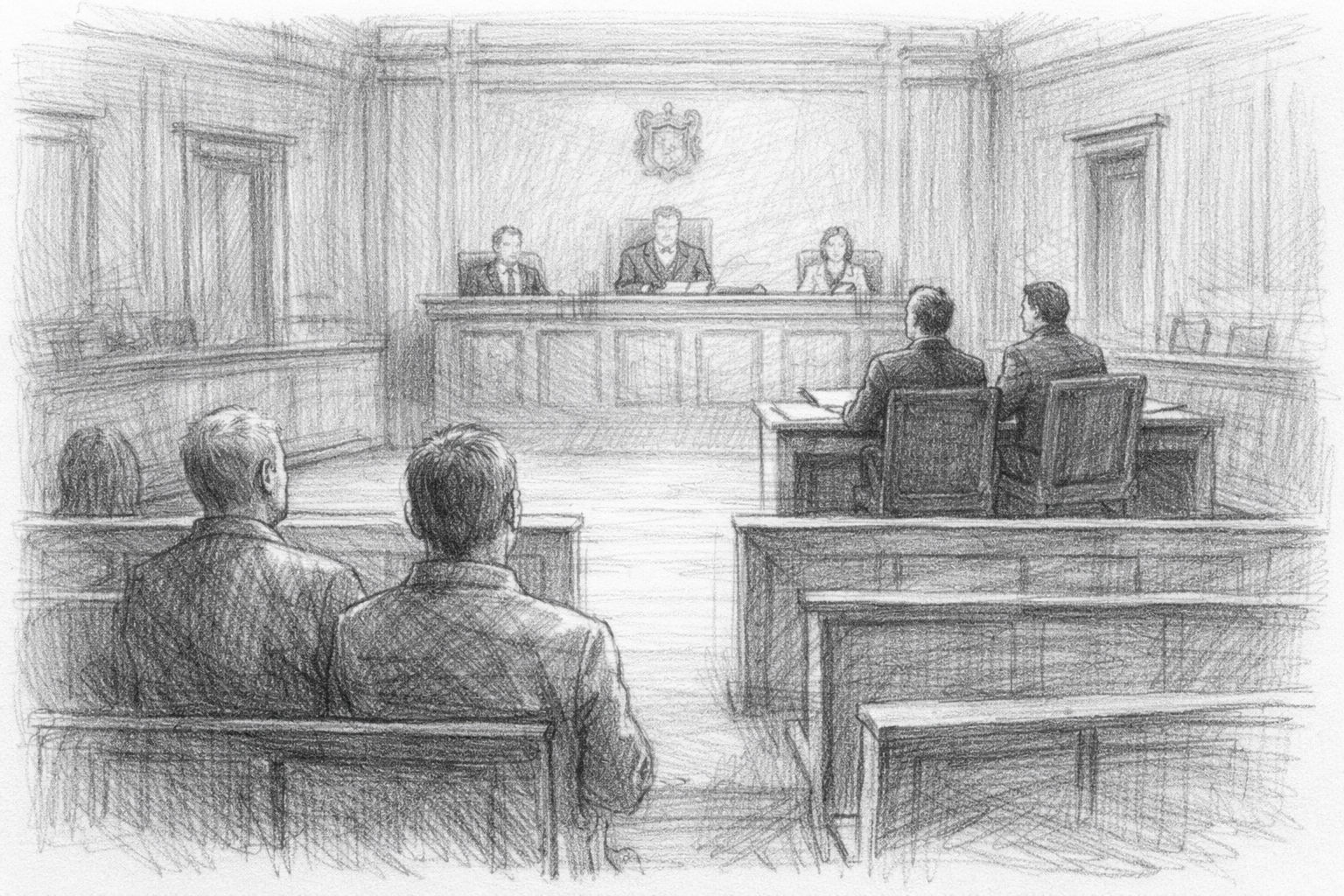
In my case, there were three public main hearings. Public means that anyone can theoretically sit in the spectator area. That seems strange at first, especially if you've never been in this role before.
At the first hearing, there were actually some spectators in the hall. That intensified the feeling of being in the spotlight. I was very pleased that my stepfather, a former senior public prosecutor, was among the spectators. It was much quieter at the later hearings - sometimes there was hardly anyone left. This also shows that such proceedings quickly lose their „excitement“ for outsiders as soon as it becomes clear that it is a matter of factual examination and not a spectacular case.
Nevertheless, it remains an exceptional situation for the person concerned. You are not sitting there as an observer, but as a participant. And that alone is enough to leave a lasting impression of the experience.
Lawyer, public prosecutor and reality in the courtroom
One point that surprises many: the role of your own lawyer is not always as active as you would expect. In my case, I had the impression that my lawyer had little overview of the content - especially the technical and structural aspects of the business model.
The actual factual dialog ultimately took place between the public prosecutor and myself. She was technically well prepared, understood the IT-related contexts and asked precise questions. This is an important point: public prosecutors are not „opponents“ per se. They investigate. And if they understand how a system worked, they can also make a clear distinction between corporate failure and criminal conduct.
The crucial point: deadlines, changeover, verifiability
What tipped the scales in the end was not rhetoric, but verifiability. I was able to prove that I had reacted in good time when it was foreseeable that things would become critical. Among other things, I stopped accepting advance payments around two weeks before filing for insolvency and switched to cash on delivery.
This conversion is highly relevant in legal terms. It shows that there was no intent to collect funds without intending to deliver. The fact that payment defaults nevertheless occurred was not due to intent, but to a system failure that had already begun.
The acquittal - and what it means
In the end, he was acquitted. No criminal offense, no embezzlement, no deception. A perfectly normal corporate bankruptcy in a complex environment.
This is a sober result - but an important one. It shows that the legal system can distinguish between criminal behavior and business failure. But only if the facts are clear and can be clearly explained.
This chapter is so important for readers because it debunks a common misconception. Court does not automatically mean guilt. Publicity does not automatically mean exposure. And multiple hearings do not necessarily mean that something was „wrong“.
If you put things in order early on, meet deadlines and act honestly, you can also get through this part of the journey.
Not without tension - but without lasting damage.
Reading tip: Crises as turning points - learning, growing, shaping

This book is aimed at people who are not satisfied with quick slogans, but want to understand crises for what they often are: Turning points. "Crises as turning points - learn, grow, create" uses clear thoughts, personal experiences and sober classification to show how to not only survive crises, but actively use them to reorganize your own life.
This is not about motivation in the traditional sense, but about inner attitude, structure and responsibility. A special part of the book is also dedicated to the sensible use of AI as a tool for reflection, decision-making and organizing thoughts - not as a replacement for your own thinking, but as modern support in difficult phases. The book is deliberately written in a calm, respectful and forward-looking manner and is particularly suitable for people who are currently under pressure and still want to remain clear.
The lessons: What you should pay attention to in the imbalance
The most important principle: order beats actionism. When a company gets into financial difficulties, the biggest enemy is not a lack of money, but a loss of order. Many entrepreneurs react instinctively with actionism: one more offer, one more loan, one more rescue attempt. This feels proactive, but is often dangerous in this phase.
As soon as it is foreseeable that solvency is seriously threatened, a different standard applies. Then it is no longer creativity that counts, but structure. Not hope, but comprehensibility. Not speed, but correctness. This change of perspective is difficult, but crucial - and it influences everything that follows.
Deadlines: The common thread running through the entire process
Deadlines are the backbone of any subsequent evaluation. Those who adhere to them are on the safe side legally. If you ignore or suppress them, you open flanks - even if there was no malicious intent. Above all, it is important:
- Take insolvency or over-indebtedness seriously as soon as it becomes objectively recognizable
- Do not „delay“ insolvency, but file in good time
- From this point on, do not make any more risky maneuvers to gain time
Many problems do not arise from the insolvency itself, but from the weeks leading up to it. Staying clean here will save you a lot of trouble later on.
Payment transactions: what you should change immediately
Payment transactions are one of the most sensitive points in the imbalance. This is where processes are checked particularly closely later on. Be sure to pay attention:
- No longer accept advance payment as soon as a critical situation is recognizable
- Instead, switch to cash on delivery, cash on delivery or other secure models
- No preferential payments to individual creditors, not even out of sympathy or pressure
The switch away from prepayment in particular is a strong signal. It shows that money will no longer be accepted without delivery being immediately guaranteed. Legally, this is often a decisive point.
Equal treatment of creditors: a classic stumbling block
A common mistake in crises is trying to „quiet the loudest first“. This may be humanly understandable, but it is legally problematic. As soon as an imbalance becomes apparent:
- No more individual agreements that disadvantage other creditors
- No special payments to certain suppliers or banks
- No repayments out of „goodwill“
Insolvency law assumes equal treatment. Anyone who deviates from this risks being accused of disadvantaging creditors later on - even without intent.
Documentation: The most important life insurance
Clean documentation is the strongest protective shield you can have in this phase. Courts, administrators and public prosecutors do not work with feelings, but with files. Documentation is essential:
- Points in time when problems were recognizable
- Decisions derived from this
- Changes in payment transactions
- Communication with banks, platforms and advisors
- Stock levels, open orders, delivery status
The more sober and factual these documents are, the better. If you can later show that you have reacted step by step, you are on solid ground.
Strictly separate private and business spheres
In good times, these boundaries often become blurred. In bad times, they may no longer be. From the moment things go wrong:
- No more private expenses via the company
- No mixing of accounts
- Clear separation of business and private assets
This separation not only protects you legally, but also psychologically. It helps to maintain an overview and draw clear lines.
Communication: Explain less, refer more
Communication is an underestimated stress factor. Many entrepreneurs try to explain everything to everyone. That costs energy - and achieves little. It makes sense:
- Communicate briefly, factually, without promises
- Don't make promises you can't keep
- Consistently refer to the insolvency administrator after filing for insolvency
This is not rudeness, but legally correct behavior. And it protects you from becoming entangled in contradictions.
Consultant choice: Experience beats title
Not every tax consultant or lawyer is automatically suitable for crisis situations. Many are familiar with normal business operations, but not with the dynamics of insolvency. The important thing is:
- Choose advisors who have insolvency experience
- Asking questions that concern practical processes, not just theory
- Not to rely blindly on „authorities“, but to think for yourself
In the end, no one knows your business better than you do. Consultants are companions - not a substitute for your own judgment.
The mental aspect: keeping your composure
In addition to all the legal and organizational points, there is an inner attitude that is crucial. If you panic, you make mistakes. Those who are ashamed remain silent for too long. If you accept reality, you can act. The important thing is
- Do not suppress, but recognize
- Don't dramatize, but classify
- Don't tense up, but take a structured approach
- You stay upright. Even then - or especially then - when things get uncomfortable.
These points don't just apply to insolvency in 2009, they apply just as much today. Platform dependency, payment service providers, banks, digital processes - all of this has become more complex, not simpler. Those who take these lessons to heart will not only protect themselves legally, but also humanely. Because in the end, it's not just about surviving a lawsuit, but about not losing yourself.
| Topic / Criterion | What you should do specifically | What you should avoid | What can happen if you ignore it | Legal reference (DE, selection) |
|---|---|---|---|---|
| Early detection of the crisis | Check liquidity status daily (incoming / outgoing payments, open items), calculate worst-case scenario, record bottlenecks in writing. | Pushing away warning signals, „next week will be better“ thinking without a basis in figures. | Later, it looks as if you have ignored the situation; increased risk of accusations of delayed action. | General duties of care; in the case of corporations, managing director duties where applicable (e.g. GmbHG/InsO context). |
| Timely filing for insolvency | As soon as insolvency/over-indebtedness (in the case of legal entities) is foreseeable: have an expert check and register in good time. | Delaying, „saving quickly“ through risky maneuvers, without legal examination. | Risk of consequences under criminal and liability law; greater personal burden and poorer negotiating position. | Procrastination in insolvency: Section 15a InsO (for legal entities). Different standards for sole traders, but obligations remain. |
| Acceptance of payment (prepayment etc.) | In the event of foreseeable difficulties: change payment methods (e.g. cash on delivery/cash on delivery), only accept if delivery is certain. | Continue to collect advance payment even though it is unclear whether and when delivery can be made. | Allegations such as fraud/disloyalty can arise in the first place; civil law reclaims, criminal investigations possible. | Depending on the case constellation: fraud § 263 StGB, embezzlement § 266 StGB (always depending on the individual case). |
| Equal treatment of creditors | Payments only according to clear, documented rules (and later according to the insolvency administrator's specifications). Withstand pressure. | „Serving the “loudest first"; selective repayments, special deals. | Reclaims / rescission; suspicion of creditor disadvantage; additional dispute with administrator/creditors. | Insolvency avoidance §§ 129 ff. InsO; possibly bankruptcy offenses / preferential treatment of creditors (depending on the individual case). |
| Documentation & verifiability | Save decisions, times, changes, communication processes in writing (e-mails, logs, screenshots). | „Keep in mind“, scatter documents, do not save relevant documents. | You can't prove honesty later; the process becomes tougher; the risk of misinterpretation increases. | Commercial/tax retention obligations (HGB/AO), depending on the type of company. |
| Separation private / business | Clean separation of accounts; do not use company funds privately; book everything clearly. | Run private expenses „quickly“ via company account. | A target for accusations, reclaims, tax problems, loss of trust in the process. | Depending on the case: AO/HGB; possibly § 266 StGB (breach of trust) in the event of misappropriation of funds. |
| Communication with customers & suppliers | Brief, factual, without promises; consistently refer to insolvency administrator after filing. | Promises made under pressure („the money will arrive tomorrow“) that you cannot keep. | You get tangled up in contradictions; arguments escalate; possible accusations become more likely. | Liability risks under civil law; in the event of deception, possibly Section 263 StGB (individual case). |
| Inventory & delivery capability | Check stock levels in real terms; only sell what is actually available; clearly regulate cancellations/refunds. | List articles, although you only „hope“ to be able to deliver. | More conflicts, reclaims, negative evaluations, additional escalation in the final phase. | Consumer law obligations (BGB, distance selling), depending on the constellation. |
| Bank / Payments | Check chargeback/fraud rules, set up monitoring, document incidents immediately; obtain written statements. | Trust that „the bank will notice“; lack of fraud monitoring. | Late chargebacks can blow up the situation; disputes about liability become more difficult without documentation. | Contractual basis (general terms and conditions/contracts); legal claims usually enforceable under civil law. |
| Platform dependency (e.g. marketplaces) | Diversify sales sources, measure dependencies, strengthen own channels (store, regular customers, newsletter). | Put everything on one marketplace, ignore ranking/policy changes. | Sudden slump in sales without counter-leverage; increased susceptibility to crises. | No special law - rather corporate risk management. |
| Advisors & Responsibilities | Choose a tax consultant/lawyer with insolvency experience; put questions in writing; keep a record of decisions. | Trusting blindly without checking whether the consultant has a practical command of the subject. | Wrong steps out of ignorance; unnecessary costs; longer procedures. | General contract/professional law; liability of the consultant is possible but difficult to enforce. |
| Mental stability & crisis mode | Sleep, structure, fixed times for phone/emails; don't stay alone; focus on clean steps. | Panic, permanent availability, impulsive commitments, „bite through at all costs“. | More mistakes, poorer decisions, escalating conflicts, health consequences. | Not a law - but a practical protective factor for everything else. |
| After filing for insolvency: „referral practice“ | Use standard wording: „Please contact the insolvency administrator.“ Keep communication factual. | Negotiate further, make promises, want to solve individual cases „privately“. | Unnecessary conflicts, contradictions, possible contestation/liability risks. | Procedural framework InsO; specific obligations depending on role/form of company. |
When entire regions falter: Insolvency as a structural risk
Insolvencies no longer just affect individual companies, but sometimes entire regions. A recent „Arte Re:“ report by SPIEGEL TV shows how 580 employees of an automotive supplier in Saxony-Anhalt fear for their livelihood and the survival of their home town. At the same time, the traditional porcelain industry in central England is struggling to survive - with tangible consequences for entire towns.

Insolvencies: When the wave of bankruptcies rolls in SPIEGEL TV for Arte Re:
Such developments make it clear that economic difficulties often have systemic causes and go far beyond individual business decisions. Insolvency is then not only relevant in business terms, but also in social terms.
A fresh start: Why insolvency can bring order, clarity and new strength
Looking back, one of the most important factors was that I had worked properly right from the start. During the proceedings, I was able to prove what had happened - not with explanations, but with documents. Lists from the online store, order overviews, proof of payment, dates of changes. Everything printed out, traceable, organized.
Courts don't like stories, they like structures. And back then, paper still played a major role. Printouts carried weight. Whoever could present them had a clear advantage. In my case, this meant that things were assessed soberly: Deadlines met, payment methods changed on time, no covert maneuvers. This invalidated the core of the accusations. The result was accordingly clear. And it shows an important point:
If you keep things in order during a crisis, you don't have to justify yourself later.
Life during insolvency: restricted, but not degrading
The insolvency period itself was less dramatic than many people imagine. Yes, life is restricted. You can't get an overdraft facility, no traditional credit card, often only prepaid models. Contracts are more difficult. Spontaneity is limited. But it's not a life in a state of emergency. It's more a life with clear guard rails.
I lived frugally during this time - not ascetically, but consciously. That changed the way I dealt with money. You think more carefully about what is really necessary. You separate comfort from habit. And you realize that a surprising amount of what you previously thought was „normal“ is actually unnecessary.
This phase has a grounding effect. It forces you to achieve clarity - not only financially, but also in your thinking.
Remain independent, continue working, reorganize
A point that is often underestimated: It is perfectly possible to work during insolvency. Even self-employed. At least that was the case at the time - and for many readers this may be important information. I was able to continue working independently and worked for a much larger Apple premium reseller for a while. A company with 17 or 18 branches. Professional, large, established. And yet a few years later, this company went bankrupt for almost the same reasons that had affected me before: low margins, high fixed costs, dependence on manufacturers and platforms.
That puts a lot of things into perspective. Size does not automatically protect. Structures can be deceptive. And sometimes you only realize in retrospect how fragile certain business models actually are.
Peace and quiet as an unexpected benefit
What many do not expect: After the insolvency, peace returns. No more calls for payment. No more escalations. No daily borderline situations. If someone gets in touch, they are referred to the insolvency administrator - and that is correct.
This calm creates space. Space to think. Space to organize. Space to rebuild something - or to consciously decide on a different path. Some use this time for a new start as an entrepreneur, others for a phase as an employee. Both are legitimate. The important thing is that you are not blocked. You are not „shut down“. You are merely in a regulated process.
The time of insolvency is finite. In my case, it meant six years with fixed rules, clear duties and manageable obligations. You pay the agreed amounts, stick to the rules - and live your life. These years feel long at first.
In retrospect, they are manageable. And above all, they are calculable. In a world full of uncertainty, that alone is a value in itself.
Reading tip: Writing books 2.0 - a practical guide for authors in the age of AI
 Writing books 2.0 - practical guide for authors in the age of AI is aimed at people who want to record their knowledge, their experiences or their view of the world permanently. The book shows in a practical way how to create books efficiently, structured and independently today - also with the support of AI, without giving up your own authorship.
One aspect is particularly important in the context of this article: books are subject to copyright protection for 70 years after the author's death and cannot be seized. They are not a fleeting social media contribution, but long-term intellectual property. The book makes it clear why writing is not only a creative act, but also a form of self-determination, security and wealth accumulation - especially in times when many things have become short-lived and uncertain.
The real turning point
Today, with distance, I don't see this time as a flaw, but as a turning point. It showed me how important structure is. How dangerous dependencies can be. And how valuable it is to take responsibility early on - even when it hurts.
Insolvency is not a personal failure. It is often the result of systems that no longer work under certain conditions. Those who recognize this can learn from it - and do better next time.
If you are reading this article and find yourself in an imbalance, then the most important message is:
You are not alone. And it's not the end. Keep order. Stay clean. Meet deadlines. Document. And have the courage to take clear steps in good time. The legal system is not perfect - but it does distinguish between fraud and honest failure.
You can come out of insolvency with more clarity, more calm and more inner strength than when you went in. Not despite this experience - but because of it. And that is where the real new beginning lies.
Source and guide for economic difficulties
- Federal Ministry of Justice - Insolvency law
At the Federal Ministry of Justice you will find the legal Insolvency basics in an understandable, official form. The explanations on insolvency, over-indebtedness, the obligation to file for insolvency and deadlines are particularly helpful. It is a good way to get an initial feel for when action is required - without scaremongering. - Insolvency Code (legal text)
The complete, official legal text of the Insolvency Code (InsO). Not an evening read, but an important reference if you want to look up specific paragraphs, for example on delay in filing for insolvency (Section 15a InsO), avoidance or the duties of the insolvency administrator. Serious, authoritative, unchanged. - Chambers of Industry and Commerce (IHK)
The IHKs offer neutral Information pages on business crises, restructuring and insolvency. Many regional IHKs have guidelines, fact sheets or contacts that are particularly helpful for sole traders and smaller companies. No sales pressure, no coaching business. - Debtor and insolvency counseling centers (municipal or non-profit)
Many cities and districts offer free or very inexpensive advice - also for the self-employed. These offices explain procedures, help you to assess your own situation and tell you openly when a lawyer or tax consultant makes sense. Important: look out for non-profit status, not „insolvency marketing“. - Specialist law firms for insolvency law (information areas, not initial consultation)
Many specialized law firms provide well-written specialist articles on their websites: Deadlines, typical mistakes, course of proceedings, differences between private and standard insolvency. A useful source of information - but decisions should never be based solely on marketing pages. - Consumer centers
Even if they are primarily aimed at consumers, they offer Consumer centers Very clear explanations of debts, insolvency, seizure protection and account issues. Particularly helpful with topics such as P-accounts, current contracts and everyday restrictions during insolvency. - Local courts - insolvency departments (regional)
The websites of many local courts contain information sheets on filing for insolvency, the required documents and the procedure. This is an important source - factual, without judgment - at the latest when you are actually thinking about filing. - Tax consultant with proven insolvency or restructuring experience
Not as a website link, but as a hint: tax consultant chambers and regional directories enable targeted searches for consultants with this focus. The title is less important than practical experience with insolvencies and crisis cases. - Reputable specialist portals
Some specialist portals such as. haufe.de or Beck Online publish well-researched articles on insolvency, liability, payment transactions and managing director responsibility. Not everything is freely accessible, but many basic articles are openly readable and clearly formulated. - Creditreform Podcast
With the Creditreform Podcast the credit agency offers a monthly podcast that focuses on all topics that are important for entrepreneurs in the SME sector: From digitalization, sustainability, transformation, financing, creditworthiness, liquidity to receivables management and much more. - Own documents and figures - the most important source of all
As banal as it sounds, the most important source of information is your own material. Bank statements, open item lists, order overviews, payment methods, changeover dates. If you collect and understand these things in a structured way, you are one step ahead of any external source.


Frequently asked questions
- Looking back, what was the actual trigger for the insolvency?
The actual trigger was not a single mistake, but a chain reaction. First, external changes at eBay led to a massive slump in sales that could not have been foreseen. At the same time, the switch to Apple Premium Reseller led to a significant deterioration in margins. The final break came as a result of retroactive credit card fraud bookings via an interface provided by the bank, which caused high five-figure losses. Taken together, this was no longer economically viable. - Why did the company deliberately file for insolvency itself and not wait?
Because waiting in this phase usually does more harm than good. As soon as it is foreseeable that insolvency is imminent, timely action is the most responsible step. Our own application was not a sign of abandonment, but of order and clarity. This had a positive effect on the entire process later on. - What does the moment of filing for insolvency actually feel like?
It is emotionally difficult, but often different than expected. Of course, this step is accompanied by fear, shame and uncertainty. At the same time, however, there can be a noticeable sense of relief as the constant pressure ends. From this moment onwards, the chaotic, constant stress becomes a regulated process with clear responsibilities. - Do you have to expect to lose everything during insolvency?
No. This is a widespread myth. In practice, bailiffs are primarily interested in business assets. Private items usually remain untouched as long as they are not exceptional or clearly business-related. Experience shows that this part of the procedure is often much more sober and humane than many fear. - What exactly does the insolvency administrator do?
The insolvency administrator becomes the central interface for all claims and entitlements. He takes care of creditors, settlement and distribution. For those affected, this means an enormous relief because they no longer have to negotiate, explain or react themselves. From this moment on, it is correct to consistently refer to the insolvency administrator. - Why do some cases go to court and others do not?
Court hearings usually arise when it is necessary to examine whether legal boundaries have been exceeded. This includes, for example, allegations of delay in filing for insolvency, unresolved incoming payments or creditor complaints. However, this does not automatically mean guilt, but initially only examination. This examination is not uncommon, especially in the case of complex business models. - What is mainly investigated in such court proceedings?
It is less about morality than about procedures. The court examines when an imbalance was recognizable, how it was responded to, whether deadlines were met and whether payments were processed correctly. Documentation and traceability are crucial here. - Why were printouts and lists from the online store so important?
Because they provide objective evidence. Order lists, payment overviews and dates show that decisions were not made arbitrarily, but in a structured manner. Printed documents played a particularly important role back then because they signaled clarity and order. - What role did the timely switch to cash on delivery play?
It was legally central. The changeover showed that no more money was accepted without a delivery being secured. As a result, accusations such as embezzlement or deception could be refuted. This step alone can make all the difference later on. - Why is documentation so much more important than good explanations?
Because courts and authorities do not work with intentions, but with evidence. Good explanations without evidence appear weak. Clear documentation, on the other hand, speaks for itself and makes many things verifiable in the first place. - How restricted is life really during insolvency?
It is limited, but not destroyed. There is no overdraft facility, often no traditional credit card and less financial flexibility. Instead, a clear structure is created. Many people find that they manage surprisingly well with fewer resources and develop a more conscious approach to money. - Can you continue to work or be self-employed during insolvency?
Yes, in many cases it is possible to remain self-employed or employed. Income is generally permitted as long as the agreed contributions are paid. This phase can even be used to prepare new career paths. - Why is size no protection against insolvency?
Because size does not make structural problems disappear. Even large companies with many branches can fail due to the same factors as smaller ones: low margins, high fixed costs and dependence on manufacturers or platforms. This shows that insolvency does not have to be an individual failure. - Looking back, what was the biggest psychological benefit of this time?
The peace and quiet. After the registration, the calls and escalations disappeared. This calm creates space to think, organize and rebuild. It is often the first step back to clarity. - Why is equal treatment of creditors so important?
Because any preferential treatment can later be interpreted as disadvantaging others. Even well-intentioned payments can become problematic. Equal treatment protects against additional accusations and makes the process cleaner. - What mistakes do entrepreneurs make most often when they are in difficulties?
Acting too late, lack of documentation, continuing to accept advance payment and hoping for a spontaneous rescue. These mistakes are usually the result of pressure and fear, not malicious intent. - Why is insolvency not a personal defeat?
Because it is often the result of external factors and structural constraints. Those who act properly, take responsibility and learn from the experience do not emerge from this phase weakened, but matured. - What has changed in the way we handle money in the long term?
There is more awareness. Expenditure is questioned, priorities are set more clearly. Looking back, many see this change as a gain, not a loss. - How long does insolvency last and what happens afterwards?
The duration is clearly regulated. In my case, it was six years; since the reform of October 1, 2020, the good conduct phase has been three years. During this time, taxes are paid and rules are adhered to. After that, the process is complete. For many, a new phase then begins - with more experience, serenity and more realistic expectations. - What is the central message of the article?
That insolvency is not the end, but can be a turning point. Those who keep order, meet deadlines and act honestly can survive this phase and emerge stronger. Not despite the insolvency - but because of the lessons it brings.