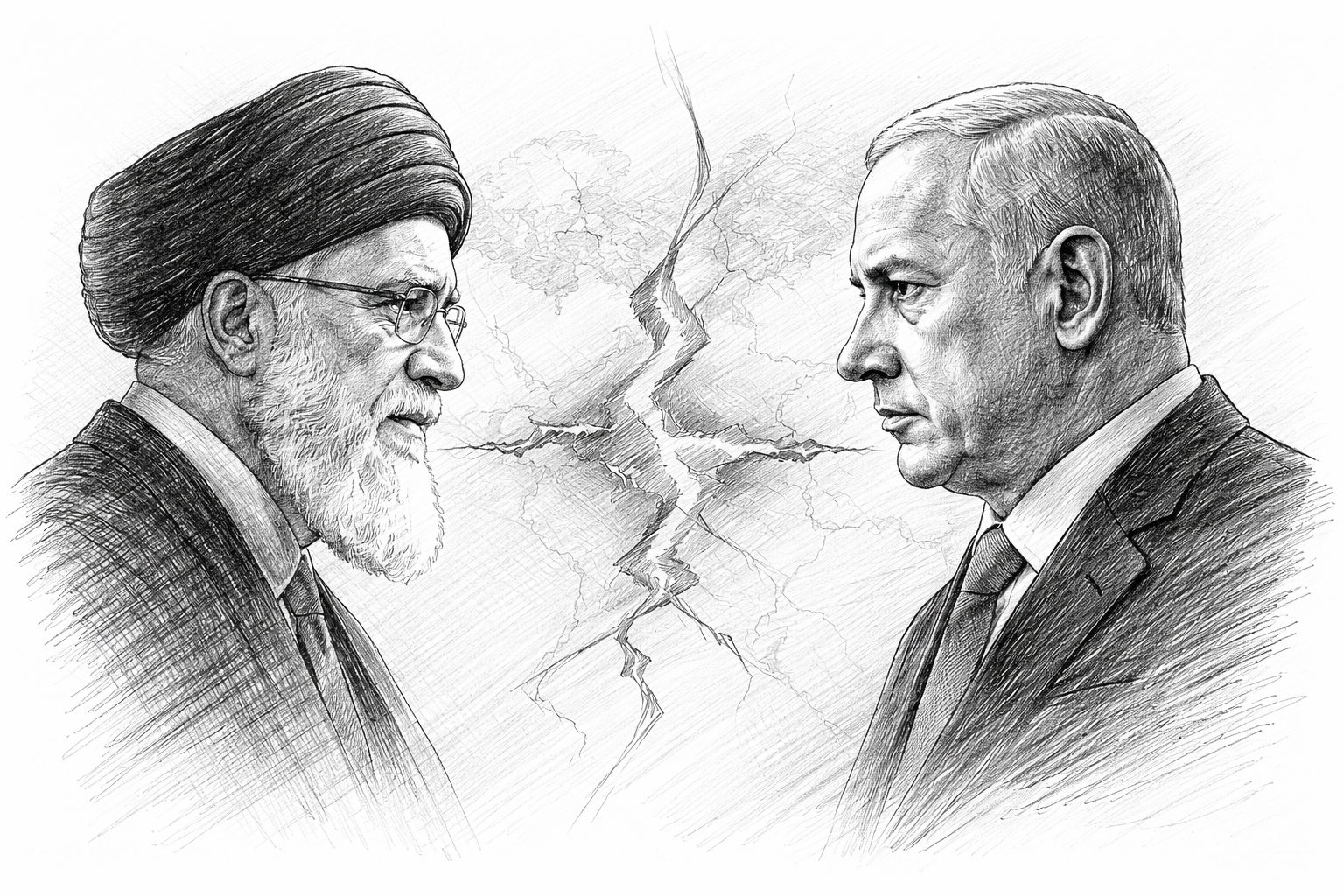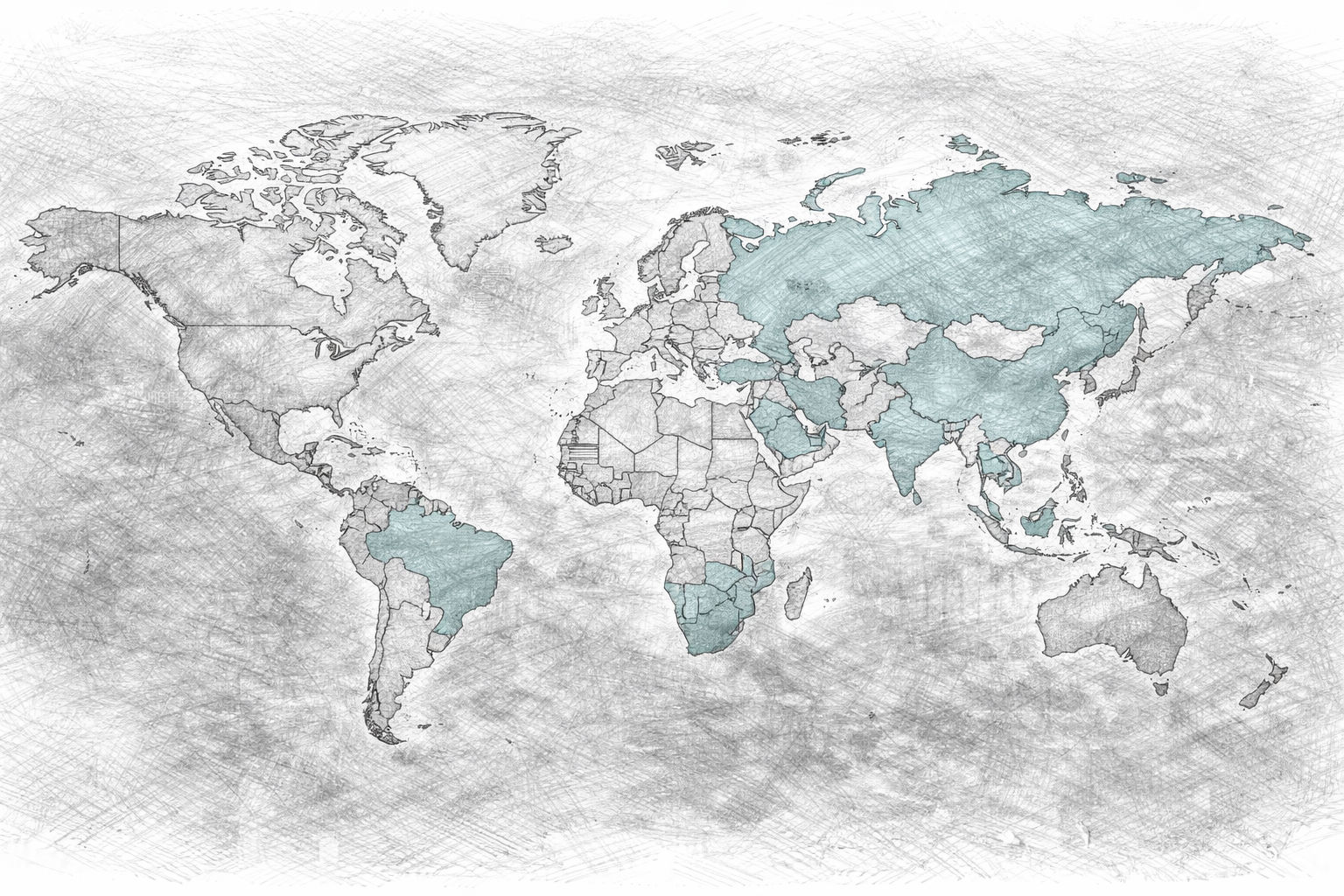
If you take a sober look at the figures, you will rub your eyes: today's BRICS countries account for almost half of the world's population. Billions of people live in these countries, work there, produce, consume, build infrastructure and shape their future. In terms of population, economic output (especially in terms of purchasing power) and raw materials, they are by no means a marginal phenomenon in global politics. And yet the BRICS countries usually only play a minor role in the daily reporting of Western media - often reduced to individual events, conflicts or buzzwords.
This is precisely where this article comes in. Not to celebrate or defend BRICS, but to understand what is behind this acronym, how it came about and why it plays a role today that cannot simply be ignored.


Latest news on BRICS
07.02.2026: The Berliner Zeitung has published a current Article on BRICS published. The article describes the discrepancy between the apparent size and real impact of the BRICS states. At first glance, the loose confederation of states unites large populations and a significant share of the global gross domestic product. However, a closer look reveals that BRICS is politically divided, institutionally weak and economically poorly integrated, according to the article. In terms of monetary policy, the dollar remains dominant, common strategies are lacking and different interests make cooperation difficult, even in trade and institution-building. Instead of developing real power, BRICS functions more as a symbol of the West's weakness than as a real alternative. Critically, the article emphasizes that without real integration, BRICS will not automatically become an effective counterpart, despite its impressive figures.
Why BRICS hardly occurs in this country
In Europe - and especially in Germany - the view of the world has been strongly transatlantic for decades. Political, economic and cultural points of orientation lie primarily in the USA and within the EU. This is historically understandable and has been successful for a long time. At the same time, however, this perspective means that developments outside this framework are often perceived as secondary.
BRICS fits poorly into this familiar order. The association of states is neither a classic ally nor a clear opponent, neither a military alliance nor an economic union based on the European model. It is inconsistent, contradictory and difficult to categorize. This is precisely what makes it uncomfortable for many editorial teams - and explains why it often only appears when it is suitable as a contrasting foil to the „West“.
The abbreviation that is more than just a political buzzword
The term „BRIC“ did not originally come from politics, but from the world of finance. At the beginning of the 2000s, a Western economist used it to describe emerging economies that were expected to grow strongly in the long term: Brazil, Russia, India and China. It was about investment, not global politics.
Only later was South Africa added, and „BRIC“ became „BRICS“.
This origin is important because it shows: BRICS was not an anti-Western invention, not a counter-project to NATO or the EU. It began with a sober observation of economic developments - formulated from a Western perspective.
From the concept of analysis to political reality
It was only over the years that the term became a political format. The participating countries began to meet regularly, coordinate positions and publish joint declarations. A label became a discussion group, and the discussion group became a loose association of states. Initially, the focus was on very specific issues:
- How do we respond to global financial crises?
- How do we ensure that our interests are adequately taken into account in international institutions such as the International Monetary Fund or the World Bank?
- Why are we contributing more and more to the global economy, but have comparatively little influence on its rules?
These questions were - and are - not ideological, but systemic. They concern the distribution of power, representation and stability.
BRICS as an expression of a shift
The fact that BRICS is attracting so much attention today is due less to aggressive intentions than to a fundamental change in the world order. The phase in which economic and political power was almost exclusively concentrated in the West is visibly coming to an end. New centers are emerging, old certainties are losing their validity.
BRICS is a symptom of this development. The association of states brings together countries that have long been described as „emerging“ and are now pillars of the global economy in many areas. Their interests do not always coincide, their political systems differ greatly, as do their historical experiences. What unites them is less a shared ideology than the experience that existing structures do not adequately reflect their reality.
Not a united front, but a community of purpose
A common mistake in the public debate is to view BRICS as a closed block. It is not. There are sometimes considerable tensions, competing interests and different strategic goals between the member states. India and China, for example, are closely intertwined economically, but are geopolitical rivals. Brazil has different priorities to Russia, South Africa has different priorities to the Gulf states.
It is precisely this lack of uniformity that makes it clear that BRICS does not function as a classic instrument of power. Decisions are made by consensus and commitments are often deliberately vague. This may seem inefficient from a Western perspective, but it protects the association from internal fractures.
Why this article is necessary
In the public debate, BRICS is often either overestimated or dismissed. Some see it as the beginning of a new world order, others as a loose round of talks without any real significance. Both views fall short of the mark.
To be able to classify BRICS, you need distance, context and historical depth. You need to understand where this format comes from, which problems it wants to address and which expectations are realistic - and which are not. This article aims to do just that.
His aim is neither to warn nor to reassure, but to explain. Because if you want to understand global developments, there is no getting around BRICS - regardless of your political stance on individual member states.
The following chapters therefore continue step by step: from the historical origins to the institutional structure and economic reality to the question of how Europe and Germany could deal with this development. Not in the sense of an either-or, but in the sense of an open, sober assessment of the situation.
BRICS is not a marginal topic. And that is precisely why it deserves more than headlines - namely a calm, explanatory look.
The 2008 financial crisis as a catalyst
The global financial crisis of 2008 and 2009 was far more than a temporary economic slump. It called into question fundamental assumptions on which the international economic order had been based for decades. Banks began to falter, states had to step in with enormous sums of money and it suddenly became clear how fragile a system that had previously been considered largely stable could be.
This crisis was a wake-up call for many countries - including those that later came together under the acronym BRICS.
Who paid the bill - and who made the rules
It was striking that although the crisis originated in the financial markets of the western industrialized countries, its consequences were felt worldwide. Even countries that had had little influence on the emergence of the problems were confronted with slumps in trade, capital outflows and economic uncertainty. At the same time, it became clear that the central decision-making structures continued to be heavily dominated by Western countries - for example in the International Monetary Fund or the World Bank.
This created a sense of tension for emerging economies: they increasingly contributed to global growth, but had comparatively little influence on how crises were managed and which reforms were adopted.
The feeling of structural underrepresentation
Countries such as China, India and Brazil in particular had considerable economic dynamism even before the crisis. Nevertheless, this reality was insufficiently reflected in voting rights, quotas or leadership positions in international institutions. Although reforms were announced, progress was slow and often fell short of expectations.
The financial crisis exacerbated this imbalance. While Western countries put together extensive rescue packages and stabilized their financial systems, many other countries were left with the role of bystander - with all the consequences for their own economies. The question of whether the existing system was still fit for purpose became unavoidable.
From individual interests to a shared perspective
A rethink began in this situation. The later BRICS countries realized that they had similar experiences and were asking similar questions. Not in the sense of a common ideological project, but out of practical necessity. How can economic stability be ensured if the central control mechanisms are outside of their own sphere of influence? How can we better protect ourselves against external shocks?
The response to this was initially cautious and pragmatic: exchange, coordination, agreement. No grand programs, no revolutionary demands - just the simple need to no longer be exclusively dependent on the decisions of others.
The role of the G20 - and its limits
The G20 gained in importance in the immediate crisis phase. It was intended to offer a broader forum than the traditional G7 round and also include major emerging economies. For many of those involved, this was a step in the right direction. At the same time, however, it became apparent that even in this expanded framework, old power relations continued to prevail.
The G20 remained an important forum for discussion, but was unable to resolve the fundamental issue of lasting representation. For the later BRICS states, it became clear that selective integration was not enough to correct structural imbalances.
An often underestimated effect of the financial crisis was the loss of trust. Not only towards banks or financial products, but also towards the ability of existing institutions to recognize crises at an early stage and limit them effectively. For countries outside the Western core, the question increasingly arose as to whether they wanted to tie their economic future completely to a system whose control mechanisms they could hardly influence.
This mistrust was not expressed in open rejection, but in the desire for additional security mechanisms. People didn't want to get out, but they wanted alternatives.
The transition from analysis to action
Against this backdrop, the originally purely analytical term „BRIC“ took on a new meaning. The countries involved began to see themselves not just as similar cases in a study, but as players with common interests. Meetings at ministerial level, and later at the level of heads of state and government, were the logical consequence.
The tone remained objective. It was not about confrontation, but about complementarity. The financial crisis had shown that global stability could not be guaranteed by just a few players. Many countries shared this insight - even if they drew different conclusions from it.
Why these countries came together
The fact that Brazil, Russia, India and China - later joined by South Africa - chose this path had less to do with ideological proximity than with their position in the global system. They were big enough to carry weight, but not powerful enough to set the rules on their own. At the same time, they had sufficient economic substance to support their own initiatives in the long term.
The financial crisis acted like a magnifying glass here. It made visible what had previously remained rather abstract: the discrepancy between economic reality and political power.
In retrospect, it can be said that the financial crisis was not the cause, but the decisive accelerator for the emergence of BRICS. It brought together existing developments, consolidated interests and created the space for new forms of cooperation. Without the crisis, BRICS might have remained a marginal note in economic history. With it, it became a politically relevant format.
The next chapter looks at how concrete structures emerged from this initially loose coordination - and why BRICS deliberately chose a different path than traditional Western organizations.
BRICS summit in Johannesburg: power shift or projection?
The ZDFheute report places the BRICS summit in Johannesburg in a wider geopolitical context. The focus is on the question of whether a new world order is currently emerging - and what role the BRICS countries are playing in this. The Ukraine war forms an important backdrop, but is not the only topic of the meeting.

Brics instead of G7: How a world power is shaping up against the West | ZDFheute live
Observers believe that Russia and China in particular are attempting to seize on dissatisfaction with the international order, which is perceived to be dominated by the West, and use it to expand the alliance. The video also highlights the growing economic and demographic importance of the BRICS states, the interest of numerous other countries in joining and the possible consequences for Europe, the West and current international conflicts.
How BRICS became capable of acting without narrowing down
After the first summit meetings and joint declarations, BRICS faced a classic fork in the road: either it remained a forum for talks with a symbolic effect - or it created structures that could also have a practical effect in an emergency. The decision was deliberately made to take a middle course. BRICS wanted to become more capable of acting without forcing itself into a rigid set of rules or copying a supranational organization based on the Western model.
This approach still characterizes the association of states today. It explains why BRICS has a few, but carefully selected instruments - and why many things were deliberately left open.
Consensus instead of governing through
A central feature of BRICS is the consensus principle. Decisions are not enforced with majorities, but are only made if everyone involved can agree. At first glance, this seems slow and cumbersome. In fact, it is a consequence of the heterogeneity of the member states: different political systems, economic models, regional interests and historical experiences.
The advantage of this approach lies in its stability. What is decided has a high level of acceptance. The disadvantage is obvious: ambitious projects can only be implemented step by step. BRICS consciously accepts this limitation - as the price of cohesion.
The deliberate demarcation from the EU and NATO
BRICS is designed neither as an economic union nor as a military alliance. There is no overarching administration, no uniform legislation, no binding sanction mechanisms. This makes the alliance fundamentally different from the European Union or NATO.
This demarcation is no coincidence. Many BRICS countries have historically experienced that too strong institutional ties restrict the scope for political action. Accordingly, they are reluctant to establish joint structures. Cooperation yes - transfer of sovereignty no.
The New Development Bank as a central tool
The most important institutional step was the founding of the New Development Bank (NDB). It marks the transition from mere coordination to concrete implementation. The aim of the bank is to finance infrastructure and development projects in member states and selected partner countries - in addition to existing institutions, not as a replacement for them.
The NDB deliberately follows different principles than traditional development banks. Projects should be approved more quickly, take greater account of regional needs and contain fewer political conditions. At the same time, the bank remains comparatively lean in its organization. It is not an all-encompassing financial instrument, but a targeted tool.
It is no coincidence that BRICS established structures in the financial sector of all areas. The experience of the financial crisis had shown how strongly economic stability depends on external financing, currency issues and capital flows. Those who have no leverage of their own are particularly vulnerable in times of crisis.
In addition to the NDB, a joint reserve mechanism was therefore also created to provide liquidity in an emergency. It is not intended as a fully-fledged alternative to international rescue packages, but as an additional safeguard. Once again, the basic pattern is evident: not to replace, but to supplement.
Less visible, but politically significant
Many of these structures appear unspectacular from the outside. There are no large central buildings, no spokespeople present on a daily basis, no detailed rules and regulations. This is precisely why they are often underestimated in the West. However, their political significance lies less in their size than in the signal they send out: BRICS countries no longer want to rely exclusively on existing institutions.
This signal is not only directed outwards, but also inwards. It strengthens the self-image of the participating countries as shaping players - and not merely as participants in a system determined by others.
Flexible formats instead of fixed devices
In addition to financial instruments, BRICS has relied on a large number of thematic working groups, ministerial meetings and dialog formats. These range from business and finance to health, education, science and security issues. A characteristic feature is the flexibility: not every topic has to be dealt with equally intensively by all member states.
This „variable geometry“ principle allows progress to be made where interests coincide without blocking the entire association. At the same time, it prevents BRICS from getting lost or overwhelmed by detailed issues.
Why BRICS remains deliberately „incomplete“
From a Western perspective, BRICS often appears unfinished. There is a lack of clear responsibilities, binding rules and enforceable institutions. Yet it is precisely this incompleteness that is part of the concept. BRICS sees itself less as a finished order and more as a process.
This process allows for adaptation. New topics can be included, formats changed and priorities shifted without the need for lengthy contract amendments. In a world that is becoming increasingly dynamic and unpredictable, this is an advantage for many of those involved.
The chosen structure also made it possible for BRICS to grow at a later date. New members and partners could be integrated without having to fundamentally restructure existing institutions. The low institutional density acts as a buffer against overloading.
BRICS thus laid the foundation for its later expansion at an early stage - not through detailed accession rules, but through openness and adaptability.
Between aspiration and reality
Of course, questions remain unanswered. How resilient are the structures created in an emergency? Are voluntary cooperation and consensus enough to act effectively in global crises? These doubts are justified and have accompanied BRICS from the very beginning.
At the same time, the progress to date shows that the association of states has found its own path: cautious, pragmatic and deliberately different from Western models. The next chapter will show how this structure deals with the growing number of members and rising expectations - and what tensions arise from this.
Growth and expansion - why BRICS became bigger and more complex at the same time
With increasing visibility and growing economic weight, BRICS inevitably became the focus of other countries. Countries from Asia, the Middle East, Africa and Latin America watched closely as the alliance developed - and asked themselves a simple question:
Could this format also be relevant for us?
BRICS thus faced a challenge that many international associations are familiar with: How do you remain capable of acting when interest grows? And how do you prevent expansion from leading to dilution?
Expansion not as a coincidence, but as a strategy
The opening of BRICS was not a spontaneous act, but the result of lengthy discussions. It became clear early on that although the original group of five was symbolically strong, it did not represent the entire breadth of the so-called „Global South“. If BRICS wanted to be more than an exclusive club, it had to find ways to include others.
It was not about mass for the sake of mass, but about strategic additions. New members were to contribute regional reach, economic resources or geopolitical significance - without destroying the fragile balance of the alliance.
The big step from 2023
This approach was visibly implemented for the first time with the enlargement decisions from 2023. Several countries were invited to join BRICS, while others were given a new status as so-called partner countries. The association thus finally left the phase of a closed circle and opened up to the outside world.
This step marked a turning point. BRICS not only became larger, but also more diverse - culturally, economically and politically. At the same time, the complexity of coordination increased considerably.
Full membership and partnership - two levels of affiliation
To manage this complexity, BRICS opted for a tiered model. In addition to full members, there are now partner states that can participate in certain formats without entering into all the obligations of membership.
This differentiation is more than a technical detail. It allows countries to approach BRICS without immediately being deeply involved in the internal processes. It creates flexibility for the association itself: cooperation can be deepened without overburdening the decision-making mechanisms.
Attractiveness despite inner contradictions
It is remarkable that interest in BRICS is growing precisely despite - or perhaps because of - its lack of unity. The member states are not united by a common ideology, a political system or a coherent world view. This is precisely what is attractive to many candidate countries.
BRICS does not promise a normative framework, but scope for action. It does not demand political harmonization or the adoption of certain values or institutional models. Cooperation is issue-based and voluntary. In a world in which many states emphasize their sovereignty, this is a strong argument.
Special cases and open questions
However, enlargement also brought with it uncertainties. Not every invited state completed accession smoothly or unambiguously. Some deliberately kept their options open, others hesitated for domestic or foreign policy reasons.
This ambiguity shows that BRICS is not a closed project, but a negotiation process. Membership is not automatic, but the result of political consideration - on the part of both the association and the candidates.
More weight, but less overview
The demographic, economic and geopolitical weight of BRICS increases with each new member. At the same time, it is becoming more difficult to formulate common positions. Interests diverge, priorities shift and regional conflicts have an impact on the alliance.
The consensus principle, which has given BRICS stability up to now, is being challenged more strongly as a result. Decisions take longer, formulations become more cautious, projects more fragmented. What looks like hesitation from the outside is often an expression of an attempt to avoid ruptures.
The expansion of BRICS is less an expression of their own power ambitions than a reflection of global shifts. Many countries are looking for formats that allow them more autonomy without forcing them into rigid alliances. BRICS offers a platform for this - not perfect, but open.
In this sense, growth is not an end in itself, but a reaction to a world in which traditional centers of power are losing relative importance and new networks are emerging.
The balance between openness and the ability to act
The key question for BRICS is therefore not whether it should continue to grow, but how. Too rapid or uncontrolled expansion could overstretch the already fragile coordination. Too much restraint, in turn, could cool the interest of potential partners.
So far, BRICS has tried to solve this balancing act pragmatically: through graduated affiliation, flexible formats and deliberately vague commitments. Whether this approach will be sustainable in the long term remains to be seen - but it is in line with the basic logic of the association.
With the expansion, the character of BRICS is also changing. A manageable group of emerging economies is becoming a broad cooperation network that connects different regions and levels of development. This increases the political significance - but also the expectations from outside.
The next chapter will show how this evolved structure can be classified in economic terms: what real power does enlargement entail? And where are the limits if you take a sober look at figures, trade and resources?


Population, GDP and goods exports in comparison
| Key figure (year) | BRICS (10) | EU (27) | USA |
|---|---|---|---|
| Population (world share) | 48,5% (2024) | ≈450 million (01/2025) | 341.8 million (07/2025) |
| GDP nominal (current US$) | - (very heterogeneous; see PPP) | 19.5 trillion $ (2024) | 28.8 trillion $ (2024) |
| GDP (PPP), world share | 40% (2024) | 14,23% (2024) | 14,8% (2024) |
| Exports of goods, world share | 24,6% (2024) | 27,9% (2024) | ≈8.3% (2024) |
BRICS weight in commodities worldwide
| BRICS weight in commodities (2024) | Share | Source | Note |
|---|---|---|---|
| Rare earths (reserves) | 72% | BRICS Data | indicated as „reserves |
| Oil production worldwide | 43,6% | BRICS Data (IEA) | Production share |
| Gas production worldwide | 36% | BRICS Data (IEA) | Production share |
| Area (worldwide) | 36% | BRICS Data | Territorial coverage |
Economic reality instead of headlines - what BRICS really means in economic terms
Hardly any other topic relating to BRICS is treated as contradictorily as its economic significance. In some accounts, the association of states already appears to be the new dominant world power that has overtaken the West economically. Other voices, however, dismiss BRICS as a loose group of heterogeneous countries whose economic cooperation has hardly any measurable effects. Both views fall short of the mark.
The only way to realistically classify BRICS is to take a sober look at the figures, structures and benchmarks - without headlines and without political charges.
A key reason for misunderstandings lies in the choice of key figures. Depending on whether you look at gross domestic product, purchasing power, trade or financial markets, a very different picture emerges.
The gross domestic product according to purchasing power parity (PPP) is referred to particularly frequently. This figure takes into account what people can actually buy with their income in their own country. Measured in this way, today's BRICS countries account for a very large share of global economic output - greater than that of the traditional G7 countries. This is factually correct and shows the enormous economic „mass“ of this group of states.
Mass does not equal market power
At the same time, purchasing power is not the same as international market power. Nominal GDP, i.e. economic output at current exchange rates, plays a decisive role in global trade, capital markets, technology imports and sanctions. In this perspective, the BRICS countries continue to lag behind the western industrialized countries - especially behind the combination of the USA and the European Union.
This difference is important. It explains why BRICS is less present in the everyday lives of many Western companies, investors and consumers than its population or PPP figures would suggest.
Population as a structural factor
However, the demographic factor is undisputed. The BRICS countries comprise a significant proportion of the world's population. This does not automatically mean prosperity, but it does mean long-term potential: workforce, domestic markets, demand, urbanization.
From an economic perspective, this is a slow but sustainable lever. Growth here is generated less by short-term financial stimuli than by gradual industrialization, infrastructure development and rising consumption. These processes are uneven and difficult to control, but will shape global economic development for decades to come.
Retail: strong, but structured differently
There are further differences in international trade. BRICS countries are significant exporters, particularly of raw materials, intermediate products and increasingly also industrial goods. Nevertheless, their share of global trade is noticeably lower than that of the traditional industrialized nations, especially when services and high-quality industrial goods are considered.
The West - especially Europe and the USA - continues to dominate many high-margin value chains: mechanical engineering, chemicals, medical technology, software, financial services. BRICS is represented to varying degrees in these areas, but is by no means the unified leader.
Energy and raw materials: lots of substance, little unity
BRICS is often associated with a wealth of energy and raw materials. In fact, several member states have significant deposits of oil, gas, metals and strategic raw materials. This gives the alliance potential weight - but not automatic weight.
Raw materials alone do not create economic dominance. The decisive factors are processing, technology, logistics and sales markets. In addition, BRICS countries often compete with each other as suppliers. A common raw materials policy is therefore much more difficult than simple percentage figures suggest.
Different stages of development
Another aspect that is often missing in simplified depictions is the enormous internal spread. Within BRICS, there are highly industrialized regions, dynamic emerging economies and countries with considerable structural problems. Productivity, education levels, infrastructure and institutional stability differ drastically in some cases.
This heterogeneity limits short-term economic integration. It is also one of the reasons why BRICS relies on coordination rather than unification. Uniform economic rules or common markets would hardly be practicable under these conditions.
Financial markets and capital
A clear picture also emerges in the financial markets: the major Western financial centers - New York, London, Frankfurt - continue to shape capital flows, valuations and investment decisions. BRICS countries have established their own financial centers, but their international reach is limited.
This explains why many BRICS initiatives in the financial sector are carefully formulated. It is less about replacing existing structures and more about creating additional options - for example in development financing or regional lending.
Economic significance as a long-term process
To summarize: in economic terms, BRICS is neither an illusion nor an all-powerful bloc. Its strength lies in the long-term shift in economic weightings, not in short-term dominance. Anyone who only looks at current market shares is underestimating the trend. Anyone who derives a new world order from individual key figures is overestimating it.
This ambivalence is not a sign of weakness, but an expression of a transitional phase. The economic significance of BRICS is growing - slowly, unevenly and often more quietly than the headlines would suggest.
The next chapter deals with a particularly sensitive aspect of this development: currencies, payment systems and the question of why there is often talk of revolution here, although in reality the focus is on evolutionary steps.
Currencies, payments and the great misunderstanding trap
When people talk about BRICS, a term almost inevitably comes up that immediately arouses emotions: de-dollarization. The talk then quickly turns to an allegedly planned BRICS world currency, the end of the US dollar or an imminent financial turning point. Such headlines are catchy - but have little to do with actual developments.
A particularly sober look is worthwhile in the area of currencies and payment systems. After all, this is an example of how easily complex processes can be misunderstood or deliberately simplified.
The dollar as a reality - not an ideology
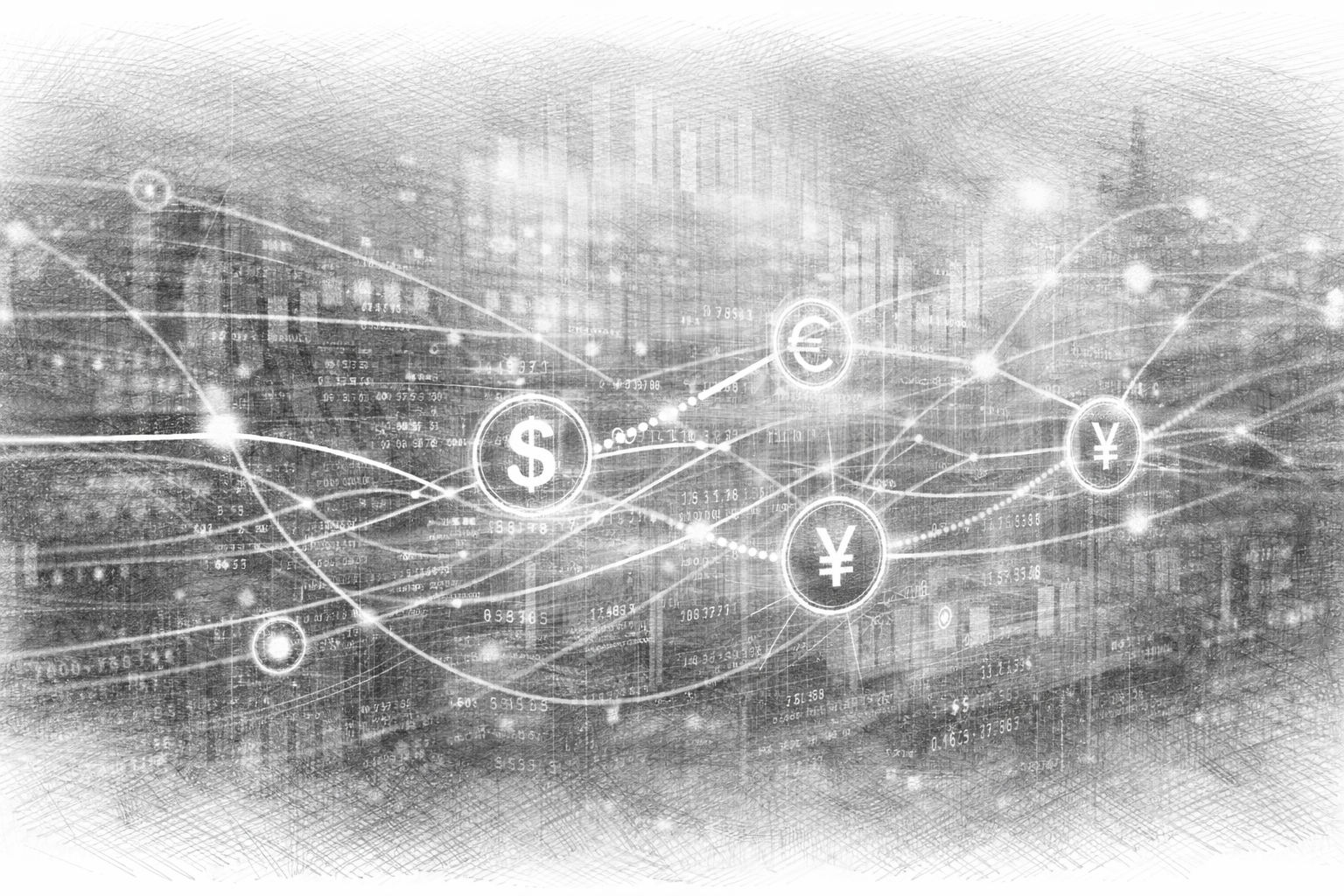
The US dollar is still the dominant reserve currency in the world today. It plays a central role in international trade, on the financial markets, in commodities and as a reserve currency for central banks. This position has grown historically and is based not only on political influence, but also on depth, liquidity and confidence in the underlying markets.
The BRICS countries also operate in this reality. They trade in dollars, hold dollar reserves and are dependent on dollar-based financial structures in many areas. Anyone who concludes from this that BRICS wants to replace the dollar in the short term is misjudging both the dependencies and the interests of the countries involved.
The actual criticism of the BRICS countries is not directed against the dollar per se, but against the one-sidedness of the dependency. Countries that use a single currency for large parts of their foreign trade, financing or reserves make themselves vulnerable - for example to interest rate policy, financial market volatility or geopolitical tensions.
From this perspective, the discussion about currencies is not an ideological one, but a risk policy one. It is about diversification, not confrontation.
Local currencies instead of global fantasies
Against this backdrop, BRICS initiatives focus primarily on expanding trade in local currencies. This means that bilateral or regional trade relations are increasingly being conducted without a detour via the dollar - for example between China and Brazil, India and Russia or other partners.
This is not a revolutionary step, but a technical and organizational adjustment. Such agreements also exist outside of BRICS and have been practiced for decades. What is new is the increasing systematic coordination within a larger group of states.
Payment systems: Infrastructure instead of symbolism
Another focus is on payment systems. Today, international payments are heavily dependent on a few infrastructures that are located in Western countries. For many countries, the question therefore arises as to whether it makes sense to develop additional payment channels - not as a replacement, but as a supplement.
This involves technical issues: clearing, settlement, interoperability between banks, securing transactions. These topics are complex, unspectacular and not very suitable for headlines. This is precisely why they are often ignored - even though they are crucial in the long term.
Why a BRICS world currency is unrealistic
The idea of a common BRICS currency, which is repeatedly bandied about, does not stand up to closer scrutiny. The economic prerequisites for this are lacking: inflation rates, monetary policies, capital controls and financial market depths are too different. Even in far more homogeneous economic areas, a common currency is an extremely challenging project.
Within BRICS, this is also openly seen as the case. Corresponding considerations remain theoretical or are quickly relativized. In practice, the focus is on functional solutions rather than symbolic large-scale projects.
What can actually be observed in the area of currency and payment is a gradual development. New agreements, technical adjustments, institutional learning processes. Each individual step is small, often barely perceptible. Taken together, however, they can help to reduce dependencies and expand the scope for action.
This evolutionary approach fits in with the overall character of BRICS. Instead of attacking existing structures head-on, parallel options are being developed. This is less spectacular, but much more realistic.
Why the West often misreads here
One reason for the misunderstandings lies in Western perceptions. Many debates are strongly binary: either for or against the dollar, for or against the existing system. BRICS, however, operates in a gray area. It accepts the reality of the system, but tries to secure itself better within it.
This differentiation is often lost in the public debate. Instead, every technical step is construed as a political declaration of war. This not only leads to misinterpretations, but also makes an objective debate more difficult.
In the end, it can be said that The BRICS currency and payment initiatives are an expression of a pragmatic approach to global risks. They are not aimed at dominance, but at resilience. Not to replace, but to complement. If you want to understand BRICS, this is exactly where you should start. Not with spectacular announcements, but with the quiet, technical changes. They say more about the actual intentions than any headline.
The next chapter looks outwards: How do Western states and institutions react to these developments? And why does the West often find it difficult to distinguish between justified criticism and projection?
How the West looks at BRICS - between ignorance, defense and misjudgment
For many years, BRICS hardly played a role in Western discourse. The association of states was perceived as a loose round of talks, an analytical label without political clout. In editorial offices, ministries and think tanks, BRICS was considered interesting but not decisive. They took note of the fact that countries that were growing were meeting there - but saw no reason to fundamentally question their own order.
This phase of ignorance was comfortable. It allowed the familiar categories of power and influence to be retained and global developments to be interpreted as a continuation of the familiar.

From overlooking to alerting
Over time, the tone changed. At the latest with the visible expansion of BRICS, with new members and growing international attention, a phase of over-interpretation began. In some commentaries, a previously underestimated format suddenly became an anti-Western bloc, a systemic threat or even an opponent of the West.
This shift says less about BRICS than about Western perceptions. It reflects the difficulty of accepting a world in which power is no longer clearly localized.
Projecting your own experiences
A central reason for these misjudgements lies in the projection of our own institutional experiences. The West is characterized by clearly structured alliances: the G7, the European Union, NATO. These formats are based on binding rules, fixed institutions and a common normative foundation.
BRICS works differently. It deliberately dispenses with close institutional ties, binding sanction mechanisms and a uniform understanding of values. Anyone who measures BRICS by Western standards will inevitably come to the wrong conclusions - either one of weakness or one of covert aggression.
Points of criticism - justified and abbreviated at the same time
Western criticism of BRICS is not unfounded. Frequently mentioned points include a lack of transparency, unclear decision-making processes, internal contradictions and political tensions between member states. The fact that authoritarian and democratic systems exist side by side is also viewed critically.
All these points are real. It becomes problematic when they are condensed into sweeping judgments. The internal diversity of BRICS is then not seen as a structural feature, but as proof of alleged incompetence. This overlooks the fact that it is precisely this diversity that is a prerequisite for the existence of the association.
Between moral standards and strategic blindness
Another aspect is the normative claim of the West. Europe in particular - and the European Union in particular - likes to see itself as a community of values. This claim has grown historically and has many positive aspects. However, it can lead to strategic blindness if it obscures our view of interests, power shifts and alternative forms of cooperation.
BRICS does not openly question this claim, but largely ignores it. Cooperation is not based on shared values, but on shared interests. For many Western observers, this is difficult to categorize - and is therefore often interpreted as a deficit.
There is a strong tendency to simplify in the public debate. BRICS is either portrayed as a monolithic block or as an inefficient construct with no future. Both of these relieve us from taking a closer look. Differentiated analyses that take into account internal dynamics, conflicting goals and learning processes are rarely heard.
This simplification is understandable, but dangerous. It leads to political and economic decisions being based on assumptions that only partially correspond to reality.
Western self-assurance instead of analysis
Not infrequently, the view of BRICS also serves to reassure the West. By describing the alliance as backward, contradictory or ineffective, one implicitly confirms one's own order as superior and without alternative. This may have a reassuring effect in the short term, but prevents adaptation in the long term.
History shows that power shifts are rarely linear. They often announce themselves quietly, are ignored for a long time and then suddenly perceived as a crisis. BRICS is not a revolutionary upheaval - but it is an indication that global coordinates are shifting.
The missed level of conversation
Another blind spot is the lack of real dialog. The West often talks about BRICS, but rarely with it. Joint forums are used to mark positions rather than to exchange perspectives. This perpetuates misunderstandings on both sides.
There are numerous points of contact here: Trade, climate, infrastructure, health, technology. Many of these issues are being negotiated globally anyway - often in parallel, but not together.
The Western view of BRICS currently vacillates between defense and adaptation. On the one hand, there is an impulse to defend existing structures and downplay new formats. On the other hand, there is a growing awareness that global challenges cannot be solved without the involvement of new players. This tension has not yet been resolved. It is shaping the current debate and will become increasingly important in the coming years.
In the next chapter, the focus shifts to Europe and Germany. The question is particularly acute there: How do you position yourself in a world that is no longer clearly divided into Western and non-Western camps? And which stance is sustainable in the long term - politically, economically and strategically?
China and BRICS: balance of power instead of bloc thinking
In this podcast episode, it becomes clear that China's role within the BRICS states is neither one-dimensional nor conflict-free. Although China is the dominant economic player, it is part of an alliance that deliberately aims to achieve a balance of interests. Sinologist Prof. Susanne Weigelin-Schwiedrzik explains how China's strategic actions influence the global power structure - less as an open confrontation than as a long-term shift in position. At the same time, she highlights the internal tensions within BRICS, for example between China, Russia and India, and points to historical backgrounds.

From China to Russia - How powerful is BRICS? | LOOKAUT
Europe also comes into focus: The close transatlantic ties are questioned, as is Europe's possible role as a mediating player in an increasingly multipolar world.
Europe and Germany - an uncomfortable location in a multipolar world
For Europe - and especially for Germany - BRICS is not an abstract geopolitical debate, but a very concrete question about its own position. For decades, the foreign and economic policy orientation was clear: transatlantically embedded, European-coordinated, rules-based organization. This model has enabled stability, prosperity and political influence. However, it presupposes that the world remains divided into manageable blocs.
This premise is beginning to falter. BRICS is emblematic of a world in which power is no longer clearly distributed and in which cooperation is increasingly organized like a network instead of a bloc.
Europe as a rule-maker - with dwindling leverage
The European Union traditionally sees itself as a rule-maker: standards, norms, procedures. This self-image is understandable and has earned the EU international recognition. At the same time, it is becoming increasingly apparent that rule-making loses its impact without sufficient economic and political leverage.
In a world in which more and more states are going their own way and using alternative forums, the European model is reaching its limits. BRICS does not follow the institutional logic of the EU - and has no interest in doing so. This presents Europe with the question of how to deal with players that deliberately operate outside its own regulatory framework.
Germany between morality and interest
This issue is particularly sensitive for Germany. The country is heavily export-oriented, poor in raw materials and highly dependent on stable international relations. At the same time, Germany has focused more on normative positioning in its foreign policy in recent years.
This approach is not wrong per se. It becomes problematic where moral attitudes and economic reality drift permanently apart. BRICS makes this tension visible because many of its member states are economically relevant for German companies - regardless of political differences.
In the German debate, the question increasingly arises as to whether a consistently transatlantic orientation is still sufficient. Or whether it would not make more sense to act openly on several sides - without renouncing loyalties, but also without limiting oneself.
BRICS does not force us to decide between „West“ and „non-West“. Rather, it raises the question of whether these categories are still up to date. For a country like Germany, which has historically benefited from trade, equalization and networking, this is not a trivial consideration.
Europe as a spectator or co-creator
A key risk for Europe lies in merely commenting on developments instead of actively shaping them. Those who evaluate BRICS exclusively from a distance - whether critically or defensively - forgo the opportunity to exert influence. Yet many issues can only be advanced together: Climate policy, infrastructure, healthcare, global supply chains.
This does not mean uncritically seeking every form of cooperation. But it does mean keeping channels of communication open and clearly stating interests - without overburdening them with moral exaggeration.
The danger of strategic one-sidedness
One of the lessons learned in recent years is that strategic one-sidedness makes us vulnerable. Dependencies - whether in energy, raw materials or markets - only become problematic when there are no alternatives. BRICS is perceived as attractive by many countries precisely because it opens up additional options. The key question for Europe could be:
- How do you create your own options without isolating yourself?
- How do you remain capable of acting in a world that no longer functions according to a single reference model?
Between adaptation and self-assertion
Europe is not faced with the choice of „turning towards“ BRICS or turning away from it. The real challenge lies in redefining its own role. This requires adaptability, but also self-assertion. Not every new format automatically makes sense, not every cooperation is absolutely necessary.
At the same time, we should recognize that global weightings are shifting - regardless of how we assess them. Those who ignore this reality lose room for maneuver.
The German debate is catching up
In Germany, this discussion is only just beginning. For a long time, it was assumed that economic networking and political proximity could be kept congruent in the long term. BRICS shows that this assumption is not always valid. Economic relations are increasingly developing even where political agreement is limited.
This calls for a sober reassessment of foreign trade strategies - beyond buzzwords and reflexes.
There are no clear instructions at the end of this chapter. This is not a shortcoming, but intentional. BRICS does not force Europe and Germany to make quick decisions, but it does force them to engage in honest self-reflection. What role do we want to play? Which interests are central? And where are we prepared to make compromises?
These questions cannot be answered in one article. However, they form the background for the concluding look ahead: to BRICS as an expression of a multipolar world - and to the opportunities and limitations that lie within it for all those involved.
Current survey on trust in politics and the media
Outlook - BRICS as a symptom of a world in transition
This article deliberately does not end with a conclusion in the traditional sense. The development of BRICS is too open, too dynamic and too much part of an ongoing process for that. Anyone attempting to make conclusive judgments today runs the risk of revealing more about their own expectations than about reality. BRICS is not a finished model - and obviously does not want to be.
This is precisely where its significance lies. The association of states is less an answer than an indication: of a world that is reorganizing itself without having already found a new fixed order.
BRICS as a mirror of global shifts
BRICS does not explain the world - it mirrors it. Different levels of development, political systems, interests and conflicts coexist and seek forms of coexistence. The fact that this does not result in a cohesive program is not a sign of failure, but an expression of the diversity that global politics has to deal with today.
In this sense, BRICS is less an instrument of power than an attempt at coordination. It remains fragmentary, sometimes contradictory, often cautious. However, it is precisely these characteristics that make it suitable for countries that neither want to be clearly assigned to a bloc nor can act completely alone.
The limits of the format
At the same time, the limits must not be overlooked. For the foreseeable future, BRICS will not formulate a unified foreign policy, pursue a common economic policy or follow a unified strategic line. The interests are too different, the internal tensions too great and the decision against fixed institutions too conscious.
Those who expect BRICS to be a new superpower will be disappointed. However, those who see it as a flexible framework that enables cooperation without forcing it will be more realistic.
A central misunderstanding is to expect global changes to be sudden upheavals. However, history is usually incremental. Power does not shift overnight, but over years and decades - through demographics, economics, technology and political learning processes.
BRICS fits into this pattern. It does not change the international structure abruptly, but gradually. Many effects remain invisible for a long time, others are overestimated. It is often only in retrospect that it becomes clear which developments were truly formative.
The West as part of history - not its antithesis
An important thought at the end: BRICS does not exist against the West, but alongside it. Both are part of the same global story. The assumption that there must inevitably be a winner and a loser stems from thinking in terms of clear fronts, which only does limited justice to today's world.
For Western countries - and for Europe in particular - the challenge lies less in fending off BRICS than in their own ability to adapt. Those who remain open to new formats without giving up their own principles will retain room for maneuver. On the other hand, those who exhaust themselves in isolation risk losing importance.
Openness as a strategic resource
Perhaps this is the most important lesson to be learned from developments to date: openness is not a weakness, but a strategic resource. It does not mean arbitrariness, but the ability to tolerate and productively process different interests.
BRICS offers an experimental field for this - imperfect, but real. It shows that cooperation is possible even without complete agreement. That pragmatism sometimes goes further than ideology. And that power today comes less from dominance than from networking.
The story keeps moving
How BRICS develops will depend on many factors: internal reforms, global crises, technological changes and, last but not least, the behavior of other players. Only one thing is certain: history is not finished. It will continue to be written - quietly, contradictorily and often beyond the big headlines.
This article can therefore only be a snapshot. It attempts to bring order to a complex topic without claiming to be the ultimate truth. Anyone who wants to understand BRICS must be prepared to endure uncertainty and accept ambivalence.
In the end, there are no clear instructions for action, no unambiguous judgment, no final narrative. This is not a shortcoming, but the appropriate state of affairs in a world in transition. BRICS is part of this transitional phase - no more and no less.
Perhaps the association of states will have taken on a different form in ten or twenty years' time. Perhaps it will become less important or will be transformed into other structures. Perhaps it will establish itself as a permanent element. All that is open.
However, one thing can already be said today: BRICS is forcing us to review familiar thought models. And that alone makes it relevant - regardless of how the story continues.
Sources and further content on BRICS
- BRICS Data - Official key figuresThe official data page of the BRICS countries provides current figures on population, economic output, trade, energy and raw materials. It is particularly suitable for classifying orders of magnitude and making fact-based comparisons with Western economic blocs.
- Destatis - BRICS countries in figuresThe Federal Statistical Office provides extensive data on the BRICS countries, including the economy, energy, environment and population. The site is particularly helpful for readers looking for a sober, German data perspective.
- New Development Bank (NDB)The website of the BRICS Development Bank provides information on the goals, structure and specific projects of the NDB. It shows how BRICS is trying to build up its own financial instruments without completely replacing existing international institutions.
- Council on Foreign Relations - What is BRICS?An easy-to-understand English-language analysis of the emergence, expansion and geopolitical significance of BRICS. The article classifies the association of states from a Western perspective without relying purely on headlines.
- UNCTAD - BRICS Investment ReportThe United Nations report analyzes investment flows, economic strategies and structural challenges of the BRICS countries. Of particular interest to readers interested in long-term economic trends and development models.
- UNCTAD - BRICS, climate and tradeThis study sheds light on the role of the BRICS countries in the area of conflict between climate policy, trade and economic development. It shows where common interests lie and where there are conflicts of interest.
- Federal Agency for Civic Education - BRICSA compact, easy-to-understand overview of the origin, composition and significance of the BRICS countries. Particularly suitable for readers looking for a first introduction or a factual summary in German.
- Wikipedia - New Development Bank (NDB)The article provides a detailed description of the foundation, structure and working methods of the BRICS Development Bank. A good supplement to official sources to quickly look up connections.
- Wikipedia - BRICS Summit 2023 (Johannesburg)Overview of a central turning point in BRICS development, including enlargement decisions and political objectives. The article helps to classify current debates in terms of time and content.
- Reuters - BRICS and IMF reform proposals: Latest news report on the joint position of the BRICS countries vis-à-vis international financial institutions. Reuters provides a factual insight into real political initiatives beyond speculation.

Frequently asked questions
- What exactly are the BRICS countries - and why are we suddenly hearing so much about them?
The BRICS states are an association of several large emerging and developing countries, which together represent a significant proportion of the world's population and a growing share of global economic output. For a long time, they were considered more of a loose circle of discussion. However, with the expansion of the association, new members and more concrete cooperation projects, BRICS has become more visible. At the same time, the global distribution of power is changing, which automatically attracts more attention to such formats. - Are the BRICS states an alliance against the West?
No. BRICS was neither formed as an anti-West alliance nor as an ideological antithesis to the EU or the USA. The alliance arose from the desire for better representation and greater influence in existing global structures. The fact that BRICS is sometimes perceived as a counter-project today is due more to geopolitical tensions and media exaggerations than to the original objective. - Why was BRICS founded in the first place?
The origins of BRICS lie in the financial and economic crisis from 2008, when it became clear that countries with growing economic importance had only limited influence on international decision-making processes. BRICS emerged as an attempt to coordinate interests and jointly gain more weight in the global economic and financial architecture. - How unified is BRICS really?
BRICS is anything but a homogeneous bloc. The member states differ greatly in terms of their political systems, economic structures, regional interests and strategic goals. This is precisely why BRICS relies on consensus and flexible cooperation rather than binding guidelines. Uniformity is not the goal - coexistence despite differences is. - Why is it often said that BRICS has overtaken the G7 economically?
This statement usually refers to gross domestic product according to purchasing power parity. This figure measures what people in the respective country can buy in real terms, and here BRICS is actually ahead of the G7. For international market power, financial markets and technology, however, nominal GDP plays a greater role - and the West is still ahead here. - What role does the population play in the assessment of BRICS?
Population is a long-term economic factor. A large population means potentially large labor markets, increasing consumption and long-term growth. At the same time, population size alone says little about productivity or prosperity. It is more of a strategic background factor than a short-term indicator of power. - Is BRICS economically stronger than the EU or the USA?
It depends on the scale. Overall, BRICS is very large, but very unevenly distributed economically. The EU and the USA still have significantly higher productivity, stronger financial markets and technological leadership positions. BRICS is economically relevant, but not a cohesive economic giant. - Why is there so much talk about an alleged BRICS world currency?
Because the topic generates attention. In fact, there are no realistic plans for a common BRICS currency. The economic differences between the countries are too great for that. Instead, the focus is on trade in local currencies and alternative payment methods - in other words, spreading risk, not overthrowing the system. - What does „de-dollarization“ really mean in the BRICS context?
De-dollarization here does not mean the abolition of the US dollar, but a reduction in one-sided dependency. BRICS countries want to be able to conduct certain trade and financial transactions without the dollar in order to be less susceptible to external shocks or political tensions. - Why does the West often react so nervously to BRICS?
Because BRICS calls existing models into question. The West is used to clearly structured alliances. BRICS works differently: loosely, flexibly, without fixed institutions. This form is difficult to categorize and is therefore either underestimated or overinterpreted. - Are the Western criticisms of BRICS justified?
Partly yes. BRICS suffers from internal tensions, a lack of transparency and limited assertiveness. It becomes problematic when these weaknesses are generalized and used as proof of irrelevance or threat. A differentiated view is necessary. - What role does Europe play in this new world situation?
Europe is in a difficult position. It sees itself as a rule-setter, but is losing relative economic weight. BRICS is forcing Europe to redefine its role: less normative, more strategic and more open to new forms of cooperation - without giving up its own principles. - Is Germany particularly affected by the BRICS development?
Yes, because Germany is strongly export-oriented and poor in raw materials. Many BRICS countries are important sales markets or suppliers. At the same time, Germany's foreign policy is strongly value-based. This tension between economic interests and political stance is becoming more visible through BRICS. - Does Europe have to choose between the USA and BRICS?
No. The real challenge is not an either-or decision, but maintaining several relationships at the same time. An open, multidimensional foreign trade policy makes more sense for Europe in the long term than strategic one-sidedness. - Can BRICS remain stable in the long term?
That is open. BRICS is deliberately designed to be flexible, which can promote stability, but also slows down decision-making processes. Whether this approach is sustainable in the long term depends on whether it is possible to remain capable of acting despite the growing number of members. - Which topics could shape BRICS more strongly in the future?
In addition to the economy and finance, topics such as energy, raw materials, infrastructure, digitalization, health and climate policy are likely to become increasingly important. There are global challenges in these areas in particular that can hardly be solved without broad international cooperation. - Is BRICS more of an opportunity or a risk for the West?
Both - depending on how you deal with them. Those who ignore or demonize BRICS are losing influence. Those who idealize it uncritically do likewise. As a discussion partner and cooperation format, BRICS can offer opportunities to tackle global problems more pragmatically. - What is the most important insight from the BRICS development to date?
That the world can no longer be clearly divided into fixed blocs. BRICS stands for a transitional phase in which new forms of cooperation are emerging without the old ones immediately disappearing. Those who accept this ambivalence understand the present better - and are better prepared for the future.