Reach is not ownership - Why visibility is no longer enough today

Reach vs. ownership

A good ten years ago, I happened to watch a lecture on the transition from the information society to the knowledge society. At the time, much of it still sounded theoretical, almost academic. It was about concepts such as data sovereignty, ownership of information and the question of who will actually determine what is accessible in the future - and what is not. Today, with a little distance, this lecture seems surprisingly precise. After all, much of what was described as a development back then has now become reality. More and more data has migrated to the cloud. More and more information is no longer stored on in-house systems, but in external infrastructures. And increasingly, it is no longer the user but a provider, a platform or a set of rules that decides what is possible.

To understand this development, it is worth taking a step back. The information society in which many of us grew up was not a normal state. It was a historical exception.

Read more

How AI specialists can be trained today - opportunities for companies and trainees

Train an AI specialist

Just a few years ago, artificial intelligence was a topic for research institutes and large corporations. People talked about neural networks, deep learning and speech recognition - but it hardly played a role in everyday life. Today, AI is no longer a topic for the future, but a reality: it writes texts, creates images, analyzes data and controls production processes. Whether in administration, trade or industry - it can now be found everywhere.

Read more

Digital dependency: how we have lost our self-determination to the cloud

Digital dependency with cloud systems

I've always thought it was a mistake for people to hand over their data - be it in the cloud, via apps or with any "free" services. For me, data sovereignty has never been a buzzword, but a question of self-respect. Anyone who uses technology without considering the consequences is entering into a dependency that often only becomes noticeable years later - but then has an even deeper impact.

Read more

Why ERP software alone is not enough - and how to really understand processes

ERP software: Understanding operating processes before digitalization

In many companies, it always follows the same pattern: at some point, management realizes that "something is no longer running smoothly". Perhaps processes have become too slow, errors are accumulating, or the company is increasingly losing track of figures, customers or internal processes. The call for a new software solution becomes loud - preferably a modern, powerful ERP software that "can do everything". But this is often where a fatal fallacy begins.

Read more

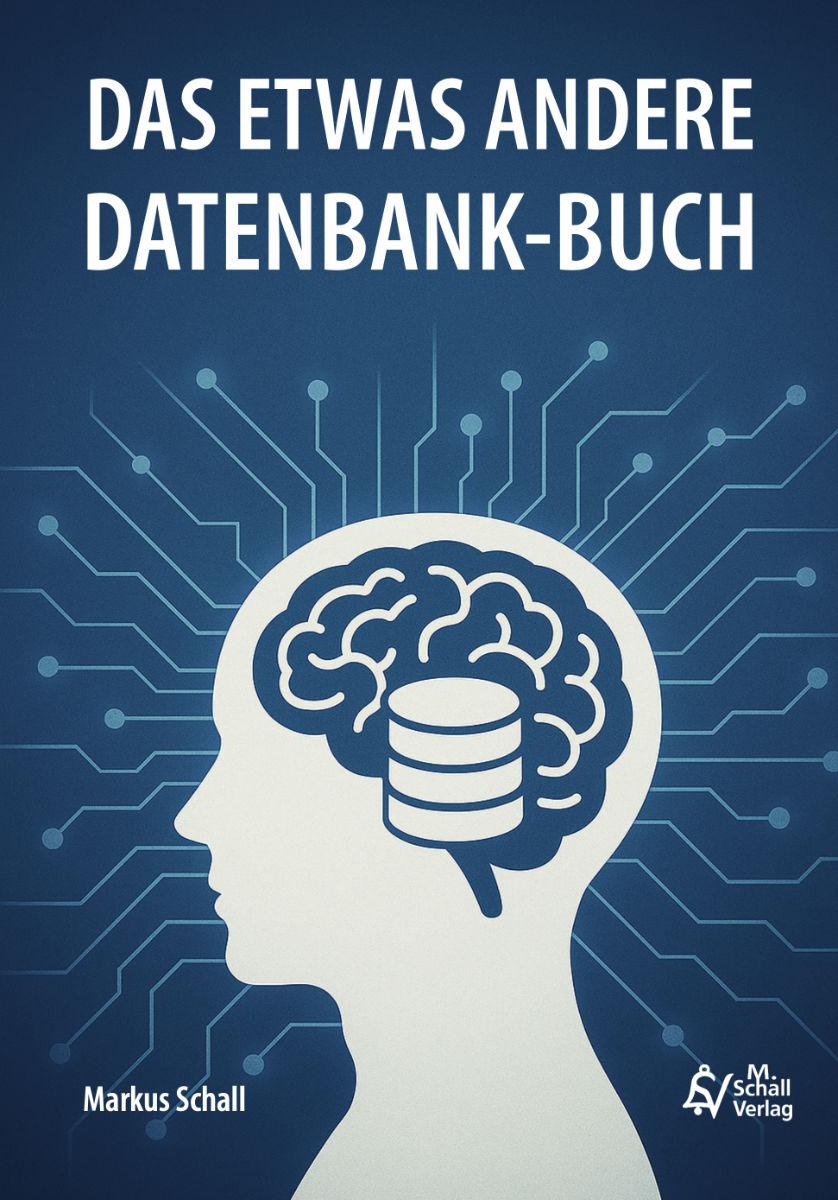
"The Unconventional Database Book" introduces the process way of thinking.

The Unconventional Database Book

What do cell phone contacts, to-do lists, calendars and even your own closet have in common? That's right: they can be displayed as tables - and that's no coincidence. Data has long since become a basic building block of our everyday lives. If you understand it, you understand the world a little better. This is exactly where "The Unconventional Database book" comes in.

Because anyone who can understand processes and backgrounds in everyday life is automatically able to design software processes quickly and intuitively and implement them in practice.

Read more