Understanding Taiwan: History, status issues and the risks of an interconnected world

Taiwan as a tipping point

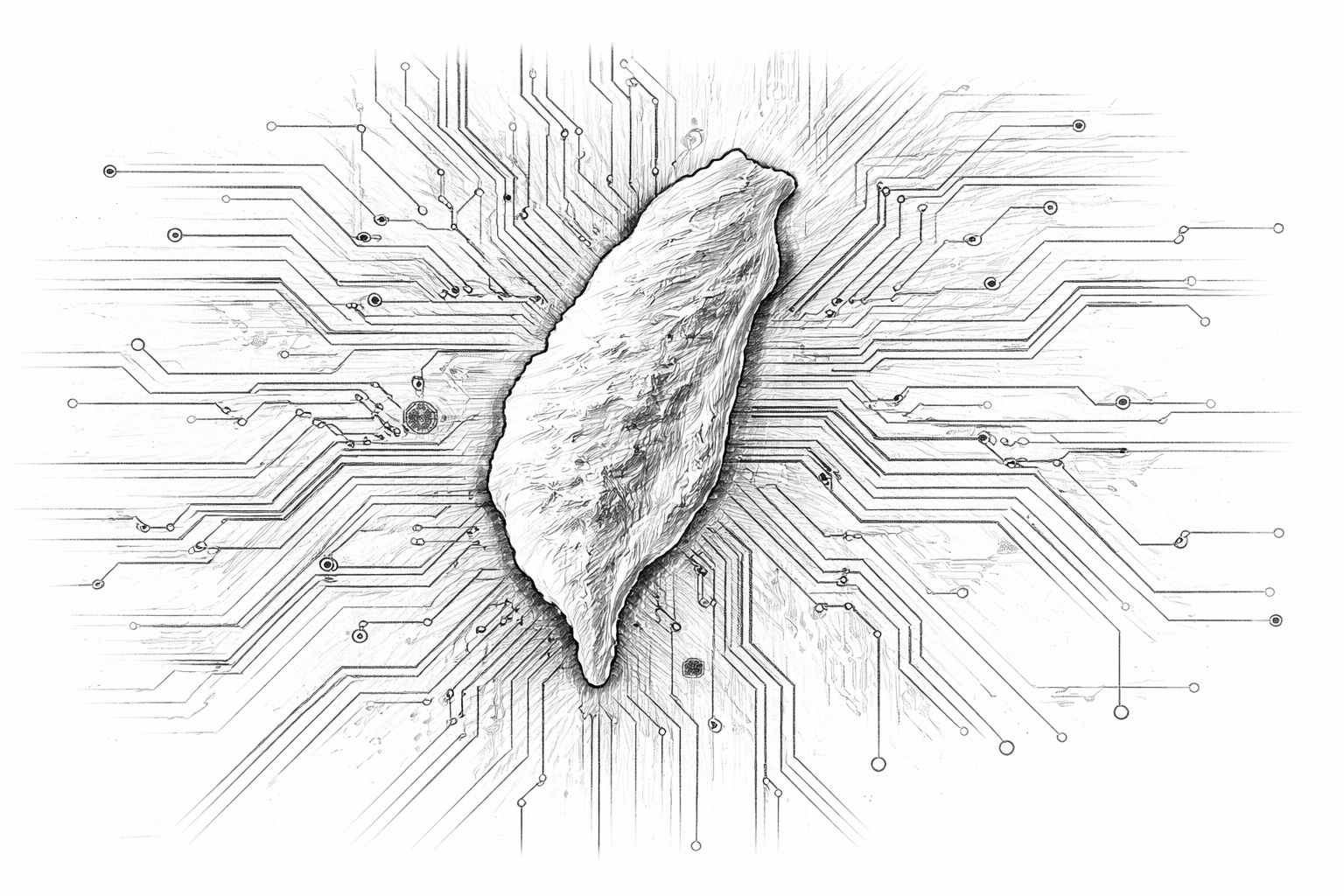
Taiwan has been in the headlines for years - sometimes because of military maneuvers in the Taiwan Strait, sometimes because of diplomatic tensions, sometimes because of the question of how reliable international rules are in an emergency. In recent days, this impression has become even more acute for many observers: the US operation in Venezuela, in which Venezuela's President Nicolás Maduro was detained, is the subject of controversial international debate, not only politically but also in terms of international law.

Why this could be relevant for Taiwan is less a question of “Who's right?”, When major players interpret rules selectively or enforce them harshly, other powers ask themselves - soberly and guided by their own interests - where their own leeway begins and ends. And it is precisely at this point that Taiwan becomes more than a distant island issue.

Read more

Rule-based world order and international law: between claim, reality and breach of law

International law and rules-based world order

For years now, I have noticed how often politicians and the media talk about a „rules-based world order“ is being discussed. The current conflict between the USA and Venezuela has brought this topic back to the fore. In the past, this term hardly ever came up, but today it almost seems like a standard reflex: if something happens somewhere, it is quickly said that we have to „defend the rules“. At the same time, I have gained the impression that the same people who refer to these rules particularly often no longer feel consistently bound by them themselves when in doubt. It was precisely this contradiction that made me wonder.

What's more, the more often you hear such terms, the more vague they seem. „Rules-based“ sounds clear, but often remains vague. And „international law“ is often used as a moral seal of approval, although it is actually a legal framework - with conditions, limits and loopholes. I have therefore decided to take a closer look at this topic. Not as a lawyer, but as someone who wants to understand what this order once was at its core - and what its real strength lay in.

Read more

Propaganda: history, methods, modern forms and how to recognize them

What is propaganda?

For many - and I felt the same way myself for a long time - propaganda was something you learned about in history lessons. A topic that seemed to be firmly established: in the Third Reich, perhaps even in the GDR, i.e. in clearly defined, authoritarian systems. We were taught that propaganda existed there because these systems needed it - and that it didn't really play a role in an open, democratic society like the Federal Republic of Germany.

This view was comfortable. And it was plausible for a long time. Because propaganda was almost always shown as something obvious: as a slogan, as a poster, as martial imagery. Something that you recognize as soon as you see it - and from which you can distance yourself internally. Today, this certainty seems fragile. Not because people have suddenly changed, but because the form of influence has changed. And that is precisely why it is worth clarifying calmly and without agitation what propaganda actually is - and what it is not.

Read more

Jeffrey Sachs warns Germany: Why Europe's security needs to be rethought

Jeffrey Sachs writes open letter to Chancellor Merz

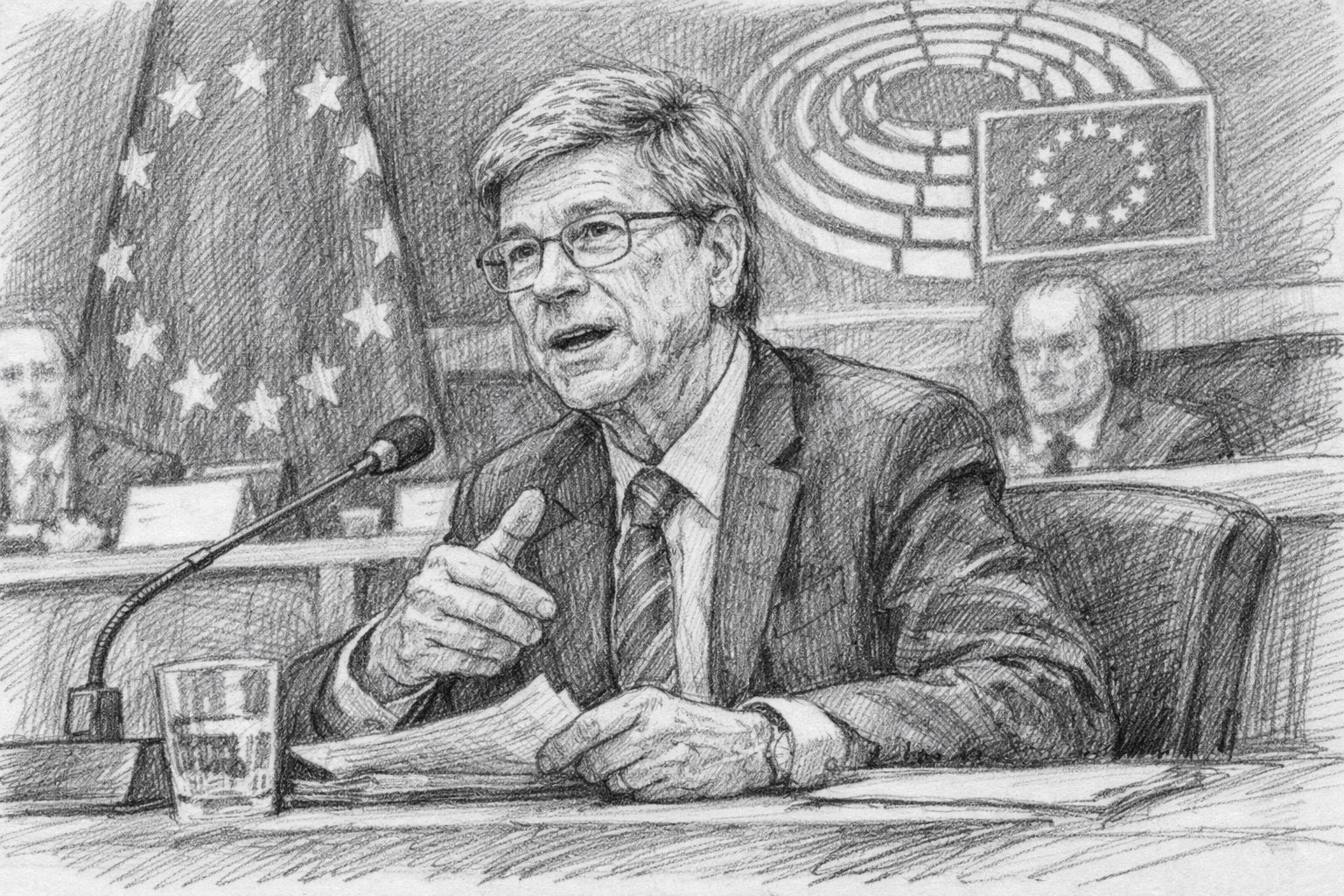
In his open letter to German Chancellor Friedrich Merz, published in the Berliner Zeitung on December 17, 2025, the well-known economist and professor Jeffrey D. Sachs speaks out with a clarity that has become rare in the current European debate. Sachs speaks not as an activist, not as a partisan and not as a commentator from a distance, but as an economist and political advisor who has worked for decades at the central interfaces of international crises, security architectures and economic upheavals. The open letter contains an unusually sharp quote:

„Learn history, Mr. Chancellor.“

Read more

Ulrike Guérot: A European between idea, university and public discourse

Ulrike Guérot and Europe

There are people whose thoughts you like to follow not because you agree with them on everything, but because they make an effort to penetrate things. For me, Ulrike Guérot is one of these voices. I have been watching her lectures for a few years now - not regularly, not ritualized, but when I come across a topic that I feel is worth listening to more closely. What strikes me is that her arguments are calm, structured and largely non-ideological.

This does not make her lectures spectacular in the media sense, but they are sustainable. You can listen to her for a long time without getting the feeling that she is trying to sell a ready-made world view. Especially at a time when political debates are often morally charged or emotionally truncated, this way of speaking seems almost old-fashioned. In the best sense of the word.

Read more

Game theory explains 25 years of geopolitics: How Europe lost its strategic role

Game theory explains 25 years of geopolitics

For many, game theory sounds like dry mathematics, like formulas, like something that only plays a role in lectures or business games. In reality, however, it is an ancient thinking tool that existed long before its academic formalization. Diplomats used it, commanders used it, captains of industry used it - long before it was even called that. In the end, it is nothing more than a sober question:

„When several players have to make decisions in an uncertain situation - what options do they have and what are the consequences?“

This kind of thinking has become surprisingly rare today. Instead of analyzing alternatives, much is narrowed down to moral narratives or spontaneous interpretations. Yet in geopolitical issues in particular, a clear analysis of the possibilities would be the foundation of any mature policy. It is precisely this old craft that I would like to take up again in this article.

Read more

Where does SARS-CoV-2 come from? A factual overview of all corona theories

SARS-CoV-2 - Corona

When the first reports of an unusual lung disease emerged in Wuhan, most of us thought it was just a side note. A new pathogen, somewhere in China - you heard something like that from time to time. But within a few weeks, the situation changed dramatically. Borders closed, schools shut down, events were canceled. There was uncertainty, and suddenly this virus affected everyone - directly.

With a little distance, you can sense today that there is still a lot going on beneath the surface. Many people have the feeling that not everything was open, not everything was clear and not everything was fully communicated at the time. Anyone who tries to find objective information about the origin of the virus quickly encounters contradictions, gaps and conflicting accounts. For this very reason, it is worth sorting through the topic calmly and clearly - without haste, without polemics, without pigeonholing.

Read more