

Something happened in Switzerland in mid-November that hardly anyone expected in this form: The country's data protection commissioners passed a clear, almost historic resolution. The message behind it is simple - and at the same time highly controversial: public authorities should no longer outsource their most sensitive data to international cloud services such as Microsoft 365 without hesitation. Why is that?
Data protection
Data protection has long been more than just a legal side issue - it has become one of the central pillars of our digital self-determination. At a time when personal data is regarded as the new currency, the sovereign handling of information is becoming a question of responsibility - for companies as well as for each individual.
This tag is used for articles that take a critical and practical look at issues relating to data storage, tracking, cloud services, state surveillance and digital autonomy. The aim is to provide guidance - beyond scaremongering, but also beyond blind faith in technology.
The new EU censorship laws: What Chatcontrol, DSA, EMFA and the AI Act mean

In an increasingly digitalized world, we spend a lot of time online: Chatting, shopping, working, informing ourselves. At the same time, the rules on how content is shared, moderated or controlled are changing. The Digital Services Act (DSA), the European Media Freedom Act (EMFA), the planned Regulation to Prevent and Combat Child Sexual Abuse (CSAR, often referred to as „chat control“) and the AI Act are key pieces of legislation proposed by the European Union (EU) to regulate the digital environment.
These regulations may seem far away at first glance - but they have an impact on you as a private individual as well as on small and medium-sized companies. This article will guide you step by step: from the question „What is planned here?“ to the background and timelines to the change of perspective: What does this mean for you in everyday life?
In the first part, we take a look at what is actually planned, which major legislative projects are currently being discussed or have already been passed and the reasons for their introduction.
The silent danger of wearables: when convenience becomes surveillance

Wearables are now part of everyday life. Many people now wear a smartwatch as a matter of course, count their steps, monitor the quality of their sleep or set reminders to take breaks during the day. And I'm happy to admit it: I also have a Apple Watch myself, and I find this technology absolutely fascinating in its own way. It can do things that would have been pure dreams of the future just a few years ago. Nevertheless, I rarely use my Apple Watch.
And just now, after the latest reports and statements from experts, I realize once again that this reticence is not so wrong. After all, many modern headphones and wearables now contain sensors that can measure far more than you might think at first glance. Not all headphones do - but the trend is clear: more and more technology is moving inconspicuously into small devices that we wear close to our bodies.
The EU's digital ID: linking, control and risks in everyday life
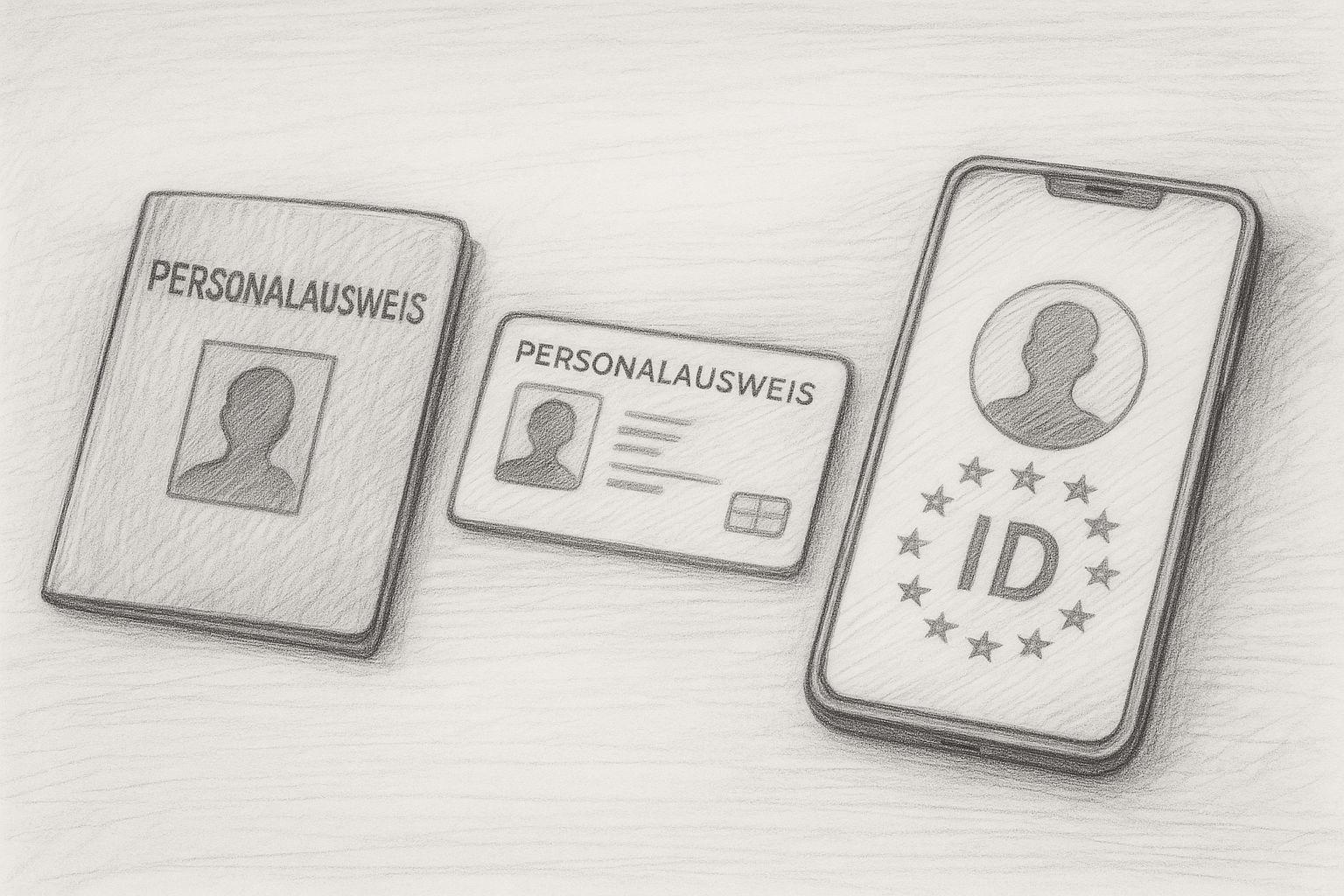
When you hear about „digital ID“, „European identity wallet“ or „EUDI wallet“, it sounds abstract at first - almost like another complicated IT project from Brussels. Many people have never consciously heard of „eIDAS 2.0“, the underlying EU regulations. And yet this project will affect almost every citizen of the European Union in the long term.
In essence, it is about something that we have been carrying around with us on paper or as a plastic card in our everyday lives for decades: official proof of our identity. Until now, we have had various documents - ID card, driver's license, health insurance card, tax ID, account login, insurance number. Each system works separately, each with its own processes, often confusing and sometimes annoying.
The EU is now pursuing the goal of merging these scattered areas of identity into a standardized digital solution.
Apple MLX vs. NVIDIA: How local AI inference works on the Mac

Anyone working with artificial intelligence today often first thinks of ChatGPT or similar online services. You type in a question, wait a few seconds - and receive an answer as if a very well-read, patient conversation partner were sitting at the other end of the line. But what is easily forgotten: Every input, every sentence, every word travels via the Internet to external servers. That's where the real work is done - on huge computers that you never get to see yourself.
In principle, a local language model works in exactly the same way - but without the Internet. The model is stored as a file on the user's own computer, is loaded into the working memory at startup and answers questions directly on the device. The technology behind it is the same: a neural network that understands language, generates texts and recognizes patterns. The only difference is that the entire calculation remains in-house. You could say: ChatGPT without the cloud.
A fact check on the electronic patient file (EPR): risks, rights and objections

The electronic patient file, or ePA for short, is one of the most ambitious digitization projects in the German healthcare system. It is intended to bundle medical information centrally - from findings and laboratory values to medication plans, vaccinations and hospital reports. The aim is to better connect doctors, therapists, pharmacies and patients, avoid duplicate examinations and improve the quality of treatment.
What sounds modern and efficient on paper raises numerous questions in practice: Who has access? How secure is the data? And above all: do I even want all my health information to be stored and accessible centrally - even if I haven't asked for it?
The digital euro is coming - what it means, what it must not do and what it could do

Public money is more than just a medium of exchange - it is a symbol of state sovereignty, a guarantor of economic order and a means for all citizens to participate freely in economic life. For centuries, cash was an expression of this freedom: anonymous, unconditionally usable, valid everywhere. With the gradual replacement of cash by digital payment methods, a central question is now being posed anew: who will control the money of the future - and under what conditions?
Forced migration at HostEurope: When emails suddenly end up in the cloud

There are decisions that self-employed people like to put off because they are inconvenient. Changing hosting providers is undoubtedly one of them. As long as the websites are running, the emails are arriving and the bills are being paid, you think: Why touch something that works?
But sometimes you realize too late that "working" no longer means "right". My web hosting provider Hosteurope was of the opinion that it had to force its customers to migrate to Microsoft 365 for a fee without their active consent. The following is my experience, which ended for me with a migration to another hosting provider.